Hater. Itโs a word that gets tossed around a lot these days. If you disagree with someone, youโre a hater. If you believe the Bible when it says something is a sin, youโre a hater. If you vote pro-life or pro-marriage, youโre a hater. Gone are the days when a Christian could stand on her convictions without being accused of hating everyone else who does not hold those same convictions.
In fact, when you first read the title of this article, Iโm betting thatโs what you thought I was saying Jesus wants us to do: hate everyone who doesnโt agree with us.
And I hate that.
I hate the fact that Satan has sold the world –ย and even the churchย – the lie that those of us who love Christ with all our hearts hate the sinners He died for.
Did you know that the Bible actually tells us to hate certain things? Not people who disagree with us or people enslaved by sin- thatโs the worldโs definition of being a hater. Luke 6:27-28 tells us:
But I say to you who hear, Love your enemies, do good to those who hate you, bless those who curse you, pray for those who abuse you.
We are not to hate, but to love, do good to, bless, and pray for those who, because they are at enmity with Christ, are at enmity with us.
But as Christians, the Bible tells us there are certain things it is good and holy for us to hate. If we donโt hate them, weโre being disobedient to our Lord.
We are to hate evil:
The fear of the Lord is hatred of evil. Pride and arrogance and the way of evil and perverted speech I hate. Proverbs 8:13
We hate evil, pride, arrogance, and perverted speech because God is good and holy. Evil stands in rebellion against Godโs person and in opposition to Godโs purposes. Pride and arrogance exalt self over God, who alone is to have preeminence in all things. Dishonest, wicked speech can damage Godโs beloved children and lead them away from Him.
We are to hate opposition to Godโs word:
Therefore I consider all your precepts to be right; I hate every false way. Psalm 119:128
When we love the Lord and His ways, we will necessarily come to hate false ways and false doctrine which defy His word and lead us, and others, away from Him.
We are to hate our own sin:
For we know that the law is spiritual, but I am of the flesh, sold under sin. For I do not understand my own actions. For I do not do what I want, but I do the very thing I hate. Romans 7:14-15
While it is good to hate evil in the world, we must also hate the evil that lurks within us in the form of sin. Those who have been born again loathe their sin and continually and sorrowfully turn from it, flinging themselves upon the mercy of Christ for forgiveness.
We are to โhateโ all things in comparison to our love for Christ:
If anyone comes to me and does not hate his own father and mother and wife and children and brothers and sisters, yes, and even his own life, he cannot be my disciple. Luke 14:26
Our devotion to Christ must run so deep that we are gladly willing to sacrifice any relationship -even with our closest family members- any worldly goods, even our lives, if required to by our Lord in His word. Our love for Him should so far surpass our affections for all others that any other love relationship seems like hate in comparison.
What a summer! From a lovely trip to visit with my family to the Open Letter to Beth Moore(by the way, ladies, you can still sign it if you haven’t already) to podcast interviews to a hurricane (everything’s fine, thanks – praise God!) to both of my young adult children’s cars dying in the same week and my husband and me playing chauffeur for them (please pray that God will provide the vehicles they need), my summer has been a non-stop whirlwind. I can’t believe next week will already be August!

But even if you’ve been around a while, I’ve updated a few things you might not have noticed:
I’ve changed theย Popular False Teachersย tab (at the top of this page) to Popular False Teachers & Unbiblical Trends. That’s because I’ve added resources on theย Enneagram and I’m planning to add info on more unbiblical trends in the future. I’ve also added information on MOPS to this tab in case I forgot to mention it.
I thinkย The Servanthood Survey (published last week) is going to be a helpful resource for churches (and individuals), so I created a new tab to have that always at the ready.
If you’ve used my discernment article on Beth Moore lately, you may have noticed that it has a new look. I’ve changed the title and the introduction, fixed broken links and added a few new ones, and added some updated material, but it’s still the same article with the same link: Living Proof You Should Follow Beth (No) Moore.
Recently, I was put in “Facebook timeout” (I couldn’t post to my Facebook page from certain devices) for sharing what the powers that be deemed to be “hate speech” – a meme that quoted 1 Timothy 2:12. If you’re on Facebook, you’re probably hearing more and more about things like this happening to Christians for posting biblical views (no matter how kindly worded).
As many are predicting, there will probably come a time when Christians who share biblical posts will be banned from Facebook. In case something like this happens to me, I’ve opened up a MeWe page. MeWe is a social media platform that’s extremely similar to Facebook, except they pride themselves on their customer service, their privacy policy, and their “no political agenda” policy (meaning they don’t censor every little thing like Facebook does). If you’re familiar with Facebook, you’ll find MeWe’s interface nearly identical, plus it has a few neat features Facebook doesn’t have.
If you’d like to connect on MeWe, set up an account, then, just search Michelle Lesley, or go directly to my page and click the “add contact” button. If you’d rather do it later, I’ve added a link to my MeWe page to theย Contact and Social Mediaย tab at the top of this page.
And finally, would you like to write up a testimony (anything from a paragraph to a full length article) for Testimony Tuesday or an article or book review for a guest post? If your theology pretty much matches up with mine (see theย Statement of Faith andย Welcomeย tabs at the top of this page), look over the articles at these two links to get a feel for what I’m looking for and drop me an e-mail so we can chat about it.

Book Report
I’ve mentioned before that I don’t write solicited book reviews, but there are extremely rare circumstances in which I will break that rule. There are also occasions when I will pick up a book of my own volition and commend it to you if I end up liking it. Today, you’re getting one of each.
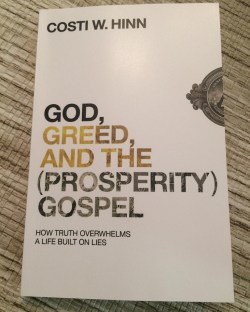
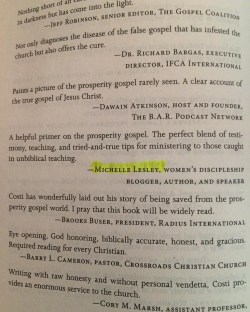
A few months ago,ย Costi Hinn reached out and asked if I’d read and write an endorsement for his new book, God, Greed, and the (Prosperity) Gospel. While his first book, Defining Deception, was an instructional introduction to the history and doctrine of the New Apostolic Reformation, I had been keeping up with Costi, and I knew that this second book was going to approach NAR/prosperity gospel false doctrine from the perspective of his personal testimony of growing up in (and being saved out of) Benny Hinn’s “ministry”. I had already heard Costi’s testimony several times and I knew my readers would find it encouraging and edifying. God, Greed, and the (Prosperity) Gospelย did not disappoint, and it is my joy to commend it to you:
A helpful primer on the prosperity gospel. The perfect blend of testimony, teaching, and tried-and-true tips for ministering to those caught in unbiblical teaching.
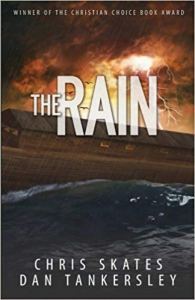
My two favorite genres of fiction are biblical historical fiction, and legal/political thrillers. Chris Skatesย writes both, so I’m looking forward to reading more of his books.
In order for me to enjoy a work of biblical historical fiction (a fictionalized account of a true Bible story), it has to be true to everything Scripture actually says happened (events, dialogue, chronology, etc.), and whatever the author “fills in the blanks” of the biblical account with has to be biblically and culturally plausible, and must not directly contradict clear Scripture.
Chris accomplished this beautifully in his first book,ย The Rain, his rendition of Noah and the ark. Chris paints a grim picture of a debauched society that refuses to repent. Noah’s wife and daughters-in-law receive names, and we get to imagine what they and Ham, Shem, and Japheth might have been like. It was interesting to ponder along with the story just how long, tedious, and treacherous the journey on the ark was. And let’s not forget the lack of light and air conditioning and…well…the lovely smells of all those animals!
The Rain is a fun, leisure time read. I think you’ll like it if you enjoy biblical historical fiction.
Stop Jumping the Gunย
Y’all know I’m all about discernment, right? I mean, I think my track record speaks for itself. But there’s an area of discernment we all need to get serious about right quick.
It’s that “right quick” part. We need to stop being reactionary and haphazardly tossing the “false teacher” label (or other spiritual aspersions) around any time somebody says something that causes us to raise an eyebrow, especiallyย when that person has an impeccable record of sound doctrine, faithful preaching, and contending for the faith once for all delivered to the saints.
Since Tuesday’s release of the Founders Ministries cinedoc trailerย By What Standard? God’s World…God’s Rules, I have been appalled at the rush to judgment regarding Tom Ascol and Albert Mohler. Neither of these brothers has committed any clear-cut sin, but I want to put the details of the accusations aside and focus on the general principle of jump-the-gun aspersion-casting against these two men and others like them.

Each of these gentlemen, as well as Founders Ministries itself, has a decades-long track record of being doctrinally sound and fighting the good fight for biblical truth – longer than some of you younger sisters have been alive. They, and other pastors, teachers, and folks in long-time doctrinally sound ministry, have earned the right to have brothers and sisters in Christ – especially mature and discerning brothers and sisters in Christ – give them the benefit of the doubt when no clear-cut sin has been committed.
Obviously, when we’re talking about high profile pastors and teachers we don’t know personally, this isn’t a local church issue, but I think we would do well to remember the principles behind 1 Timothy 5:17,19-20.
Let the elders who rule well be considered worthy of double honor, especially those who labor in preaching and teaching…Do not admit a charge against an elder except on the evidence of two or three witnesses. As for those who persist in sin, rebuke them in the presence of all, so that the rest may stand in fear.
We rebuke those who persist in sin in the presence of all. We do not make off the cuff accusations, based on a single “iffy” incident or presumptions, against doctrinally sound elders who have proven themselves faithful through the years. And we also need to remember that in situations like these we don’t know the whole behind-the-scenes story. I think we could extend some grace, give them the honor and respect Scripture says they’re due, and reserve judgment until sin is committed or the incident is resolved.
Scripture calls us to be better than this to our elders. Let’s live up to that.
Is it really God’s judgment?
My daughter texted me this shortly after the recent earthquake in California. And when your heart of hearts asks you to write an article, you write an article! (Only I didn’t think it needed to be as long as a full article, so you’re getting it here instead, Sweetie.โค)
For those of us who don’t live in California, some of the news stories we hear about the sinful things going on there leave us slack-jawed. And for Christians, our frame of reference for gobsmacking sin is the Old Testament. God dealt with sin in some pretty intense ways in the OT, not the least of which, in one case, was causing the ground to split apart and swallow sinners alive. So I guess there is precedent for God using an earthquake to deal with sin. Is itย possibleย the earthquake in California was God’s judgment upon their sin? Yes, it’s within the realm of possibility.
However, that kind of judgment is not normative, especially after the cross, and there are a lot of holes in that theory. If you’re tempted to use the line of reasoning that a natural disaster is, definitively, God’s judgment on California (or any other place) for their sin, could I just encourage you to think through the following points?
โขIn the past few months New York and Illinois have both passed hideous, from-the-bowels-of-hell laws protecting the sins of abortion and infanticide. Where are their earthquakes?
โขLouisiana just passed one of the most abortion-restrictive laws in the nation. And then we had a hurricane. Was that storm a judgment on Louisiana?
โขIf “it is time for judgment to begin at the household of God…” (1 Peter 4:17), why wasn’t Redding, California – where Bethel “Church” is located – at the epicenter of the earthquake?
โขIs it God’s judgment on sin if a tornado hits a doctrinally sound church in the Midwest?
โขNorth Korea has been at the top of the list for years as the world’s worst persecutor of Christians. Why don’t we ever hear about natural disasters there?
โขThere are scads of doctrinally sound churches (including John MacArthur’s church) and Christians in California. Wouldn’t God protect California on their account or at least get them out of California before He exercises judgment there? There’s biblical precedent for that, too.
I don’t think we can biblically say that a natural disaster isย definitely God’s judgment on California’s, or any other state’s or nation’s sin. God will judge the world in righteousness when Christ returns. Until that time, what we canย biblically say about natural disasters is that they are the result of the Fall. And that sometimes they’re the best thing in that could ever happen to someone. Because sometimes during a natural disaster, people hear the gospel or cry out to God and get saved.
I have heard pastors say that believers can sin for a โseasonโ without repentance. In regards to professing believers who follow false teachers, what is a โseasonโ? Can they continue following them for months? Years?
Is it possible that someone who is a false teacher is actually saved? Could she truly believe the biblical gospel even though, for decades, she has been terribly mishandling Godโs Word, and has been on an increasing trajectory of sin and false doctrine?
Iโve combined two questions for this edition ofย The Mailbagย because they are very closely related, if not, in fact, the same basic question.
Iโm glad you asked. This is such an important issue to think through because, unfortunately, we are surrounded by professing Christians walking down these paths.
When I hear people use the the term โseasonโ when referring to the Christian life, itโs been my experience that they usually mean โan indeterminate period of timeโ. In my mind, a โseasonโ is longer than a couple of weeks, but shorter than several decades. That really narrows it down, doesnโt it? :0) But if you asked a hundred Christians what a season is, youโd probably get a hundred different answers.
When Christians say that someone can sin โfor a seasonโ they are likely alluding to the King James translation of Hebrews 11:25:
By faith Moses, when he was come to years, refused to be called the son of Pharaohโs daughter;ย Choosing rather to suffer affliction with the people of God, than to enjoy the pleasures ofย sin for a season; Hebrews 11:24-25
You might want to take a look at someย other reliable translationsย alongside the King James. The primary emphasis of the end of verse 25 is that theย pleasureย our flesh gets from sinning is fleeting, transitory, temporary. But the KJV looks at another petal on the same rosebud and helpfully explains thatย becauseย that pleasure is temporary, the time spent happily wallowing in that sin should, consequently, also be temporary. Theย prodigal sonย is a good example of this. Once he found himself in the pigpen, sin wasnโt much fun any more, andย thatโsย when his thoughts turned to repentance.ยน
The next issues we need to tackle are sin and salvation. Hereโs what we know:
๐ย Anybody who has a basic grasp of the biblical definition of sin knows that even the most Christlike Christians still sin and thatย sinless perfectionismย is a bunch of hooey and hubris.
๐ We also know that someone whom God has reached down and genuinely savedย cannot lose her salvationย due to sin. So the issue weโre grappling with in this particular instance is not whether or not a genuine Christian canย loseย her salvation by sinning, but whether or not a person who lives in sin for a long period of time is actually saved as she professes to be.
๐ Finally, we know that there are false converts among us, whoย appear to be Christiansย for a โseason,โ and then walk away from the faith never to return, proving that they wereย never truly savedย in the first place.
So how can we tell the difference between a genuine Christian who is temporarily walking in sin and a false convert whoโs on her way out the door?
Most of the time, if sheโs still claiming to be a Christian, we canโt know with certainty.
Often, the only way to know for sure that a person who seemed to be a Christian isnโt saved is if she either a) unequivocally renounces Christianity (i.e. โI no longer believe in God,โ โI used to be a Christian,โ etc.) or b) picks up a new belief system that clearly puts her outside the camp of Christianity, (i.e. โI donโt believe in the Trinity,โ โI donโt believe Jesus was God,โ โIโm now a Mormon,โ etc.). In other words, if a personย tellsย you sheโs not a Christian, you can believe her.
But for the person who is sinning, following false teachers, or teaching false doctrine (that doesnโt conflict withย biblical soteriology), and claims to be a Christian, it can be harder to tell. Why? Because we arenโt God.
When Samuel was trying to figure out which one of Jesseโs sons to anoint as the next king of Israel, God told him something thatโs very instructive to this issue:
When they came, [Samuel] looked on Eliab and thought, โSurely the Lordโs anointed is before him.โ But the Lord said to Samuel, โDo not look on his appearance or on the height of his stature, because I have rejected him. For the Lord sees not as man sees:ย man looks on the outward appearance, but the Lord looks on the heart.โ
1 Samuel 16:6-7
Regardless of what someone appears or claims to be on the outside, only God knows the heart of each person. And thatโs really good news for us, because it relieves us of the burden of having to read another personโs heart. Thatโs Godโs job, not ours.
God judges hearts, we judge behavior.
God has given the church โ Believers โ the responsibility of seeing to the spiritual welfare of our fellow church members who are sinning. We handle the tangible, visible โactionโ part of the situation, and God works through our words and actions to handle the invisible, spiritual part of the situation in whatever way He may choose to handle it. And God has given us very clear instructions in Scripture about how to regard, evaluate, and handle these kinds of situations.
๐ God clearly explains to us throughout Scripture exactly what constitutes sin and false doctrine. We compare what someone is teaching, believing, or doing with the applicable, rightly handled, in context Scriptures. If the personโs teaching, beliefs, or behavior isnโt in compliance with those Scriptures, the person is sinning.
๐ God vests Christians with theย responsibilityย of lovingly confronting sin in our brothers and sisters and urging them to repent and be reconciled to God, and He explains to us, in Scripture, how to do this.
๐ God makes clear inย John 10ย that people He has genuinely saved โ His sheep โย will notย listen to the voice of a stranger (false teacher). I have experienced the truth of this statement myself and seen it play out in the lives of dozens of women over the years: โI went to a womenโs Bible study when I was a young Christian where they were using materials by [a false teacher]. I was really uncomfortable because I knew something was wrong, even though I wasnโt sure what it was. Years later, looking back and having learned my Bible, I now see I felt that way because I was being taught false doctrine.โ
๐ The overwhelming majority of the Scriptures dealing with false teachers seem to indicate that unrepentant false teachers are not saved. (I discussed these Scriptures in my articleย Can a False Teacher Be a Christian?.) But, again, with those who profess to believe the biblical gospel, we cannot know their hearts with certainty, and we do not have to. We evaluate their visible teaching and behavior according to Scripture and carry out the procedures for dealing with sin in the Body that God has prescribed in His Word.
How long of a โseasonโ can someone walk in sin, follow a false teacher, or teach (non-soteriological) false doctrine before we know for certain sheโs not saved? The farthest I will go is to say that the longer a person walks in increasing rebellion against God and His Word, the lessย likelyย it is that that person is genuinely saved. Saved peopleย hateย their sin. Saved people respond humbly and obediently to biblicalย correction. Saved peopleย repent. But how long that takes varies from individual to individual. Itโs impossible to put a number of days, weeks, months or years on it, and with many people who profess to be Christians while doing these things, we may never know this side of Glory.
ยนTHERE IS DISAGREEMENT AMONG SOME CHRISTIANS AS TO WHETHER THE PRODIGAL SON REPRESENTS A LOST PERSON WHO SUBSEQUENTLY GOT SAVED, OR WHETHER HE REPRESENTS SOMEONE WHO WAS SAVED, FELL INTO SIN FOR A SEASON, THEN CAME TO HIS SENSES AND REPENTED. I TEND TO BELIEVE THE FORMER DUE TO CONTEXT (SEE LUKE 15:1-2). JESUS WAS ADDRESSING PHARISEES (REPRESENTED BY THE OLDER SON) WHO WERE CRITICIZING HIM FOR RECEIVING AND EATING WITH SINNERS (GENTILES; THE LOST). AT ANY RATE, IโM ONLY USING THE PRODIGAL SON HERE TO DEMONSTRATE THE TRANSITORY NATURE OF THE PLEASURE OF SIN.
If you have a question about: a Bible passage, an aspect of theology, a current issue in Christianity, or how to biblically handle a family, life, or church situation, comment below (Iโll hold all questions in queue {unpublished} for a future edition ofย The Mailbag) or send me anย e-mail or private message. If your question is chosen for publication, your anonymity will be protected.
Has anyone ever called you a Pharisee? I’ve lost count of the number of times I’ve been called that name by professing Christians from all walks of life. And let’s not try to sugar coat it, when somebody uses that term, it’s not meant as a compliment. It can be anything from rage-fueled “Christian profanity” to a well-intentioned but biblically misinformed attempt to quash perfectly scriptural words or actions – but it’s a pejorative term, whatever the motive behind this name-calling might be.
The Bible first introduces us to the Pharisees in the gospels, during the ministry of John the Baptist, and right away, it’s clear that anybody who’s truly on God’s side of the aisle is going to have a problem with these dudes. “You brood of vipers!” is the first sentence spoken to or about the Pharisees.
But why? Why was this group of respected Jewish leaders and Bible scholars consistently painted in such a negative light by John, Jesus, and the Apostles?
Because the Pharisees were the false teachers of Jesus’ day. They were teaching the false doctrine of legalism – the idea that Jews could earn right standing with God by obeying His laws. And because they didn’t want to even come close to disobeying God’s law, they came up with their own man-made laws that were way more restrictive than God’s laws. The Pharisees required the people to obey those man-made laws and said people who broke them were sinning.
It was kind of like having a pool in your back yard with a fence around it. The pool was sin. The fence around it was God’s law. The Pharisees came along and put an additional fence around the perimeter of the property, keeping people out of the back yard altogether. Only God didn’t say we couldn’t use and enjoy the yard, He just said, “Stay out of the pool.”
And then Jesus arrived on the scene and put His foot down – God’s law reigns supreme, not man’s law. For those who follow God from the heart, His commands are notburdensome, not a yoke of slavery. And by burdening the people with laws God had not commanded, and setting those laws on equal footing with God’s laws, the Pharisees were the ones in sin.
But this just didn’t compute to the prideful, hypocritical, self-righteous Pharisees. They were so set in their ways and ensconced in their power and position that they doubled down on their false doctrine to the point that their self-deception led them to view simply obeying God’s law as written – nothing added, nothing taken away – as sin.
This is why we see the Pharisees losing their cotton-pickin’ minds over Jesus and the disciples plucking and eating (harvesting and threshing to the Pharisees) kernels of grain on the Sabbath, and Jesus healing (“working”) on the Sabbath, both of which – eating and doing acts of charity – were lawful.
The legalist Pharisees saw Jesus and His followers as antinomians – those who were a threat to the people of God by preaching license, disobedience, and “everybody can do what’s right in his own eyes.”
My, how the pendulum has swung in the other direction.
Today what we have is antinomians calling some of Jesus’ followers Pharisees because these modern-day antinomians believe that striving to obey God’s Word as written – nothing added, nothing taken away – is legalism.
Is it wrong to label everyone an antinomian who has called a brother or sister in Christ a Pharisee? After all, antinomianism is heresy. It’s a pretty serious charge – not one that should be casually and superficially flung around. Well, so is the charge of legalism, which these folks are leveling every time they call someone a Pharisee. If they’re going to dish out charges of heresy, they ought to be man or woman enough not to cry foul when that same charge is leveled against them.
But the truth is, among average, professing Christians, there are very few actual full-blown legalists or full-blown antinomians. As with nearly every other aspect of Christianity, there’s a spectrum of antinomianism and legalism with heresy on either end, and the majority of Christians falling somewhere in the middle. Most genuinely born again Christians hover somewhere around that sweet spot in the middle that we would call obedience to Scripture, but we all have a general fleshly tendency toward legalism or antinomianism. And furthermore, we can tend toward one or the other in various issues in our lives. There are issues in my life in which I tend toward antinomianism out of fear of man, or because I want to give in to the desires of my flesh. And, there are issues in my life in which I tend toward legalism out of pride or a lack of trust in God. We can all fall into the ditch of antinomianism or legalism depending on the circumstances and our personal weaknesses and sins.
So when I say that Christians today who call their brothers and sisters in Christ Pharisees are antinomians, I don’t mean that the vast majority of them are full-on heretics who think Christians can go out and sin as much as they want and nobody has to obey Scripture. Honestly, I’ve never even met anybody like that. I’m talking about Christians who tend toward antinomianism when it comes to the specific area of ecclesiology. What does that look like in the life of the church? Often, it takes the shape of overlooking sin instead of dealing with it biblically in order not to make waves or hurt someone’s feelings. It can also find itself in those who get on the bandwagon of the latest Christian – or worldly – fad, method, celebrity, or worldview, and chiding those who rightly deem it unbiblical. A few examples I’ve experienced or been told of:
Do you expect Christians to be at church every week unless Providentially hindered? That’s legalism. You’re a Pharisee.
Dare to speak up against false teachers? That’s legalism. You’re a Pharisee.
Do you believe it’s sin when women preach/teach the Scriptures to men or hold unbiblical authority over men in the gathered body of Believers? That’s legalism. You’re a Pharisee.
Have you ever asked why your church doesn’t practice church discipline? That’s legalism. You’re a Pharisee.
But who’s really the Pharisee today? Well, just like in Jesus’ day, it’s people who might (or might not) know Scripture, but they’re not handling it correctly. Sometimes, it’s well-known Christian leaders protecting their position and power. Sometimes it’s the people in the pew who like the status quo in evangelicalism, their church, or their family just fine, thank you very much, and they don’t want you bringing the Bible in and messing everything up.
Who’s today’s Pharisee? It’s often the person calling other Christians Pharisees.
As you might expect, the legalist Pharisees of Jesus’ day had hundreds of very specific, clearly defined laws you had to obey: You could only walk so many steps on the Sabbath. You had to wash your hands in a certain manner. You probably even had to fold your underwear a specific way.
Our modern-day antinomian-leaning “neo-Pharisees” have just a few nebulous, loosely defined rules of which they, not Scripture, are the final arbiters:
You can’t be unloving.
You can’t hurt people’s feelings.
You can’t rock the boat.
Why can’t we all just get along?
The modern day neo-Pharisees’ rules? You can’t be unloving, hurt people’s feelings, or rock the boat. And “Why can’t we all just get along?”.
And though it was relatively easy to count the number of steps you took on the Sabbath or make sure your underwear stacked up at a 90ยฐ angle so you could stay on the right side of the legalistic Pharisees’ rules and regulations, it’s much harder to tell whether or not you’re obeying the neo-Pharisees’ laws.
Their laws, though few in number, are subjective, broadly interpreted and applied, and constantly changing. Charges of being “unloving,” for example, are not supported by Scripture passages in their proper context clearly defining biblical love, but are based on the personal feelings and opinions of the person leveling the charge. A “peace, love, and harmony” definition of “unity” is frequently prized over fidelity to Scripture. What was right last month could suddenly be wrong next week because it has upset someone.
It’s not easy to hit such a fast-moving target, and practically anything you say or do (even if it’s straight from Scripture) that rubs the neo-Pharisee the wrong way is going to break one of these rules – man-made rules that they insist other Christians keep or those other Christians either aren’t saved or are sinning. So while the quality of their rules is antinomian-ish, the application of their rules is legalistic. This is fleshing itself out in dozens of different ways in evangelicalism.
Though the quality of their rules is antinomian-ish, the application of their rules is legalistic
Case in point: progressive Christians who have taken up the social justice cause, particularly as it relates to race. One recent example – if you don’t see whiteness (whatever that means) as wicked and something you need to renounce, you’re not being loving to people who have darker skin than yours, and you’re hurting their feelings, and you’re refusing to get along with them. So because you’re breaking these laws the neo-Pharisees have made, you’re sinning at best and not saved at worst. But what is whiteness, precisely? How can I tell whether or not I’ve fully renounced it? What if I’ve fully renounced it in the eyes of one person but not another? Who is supposed to pronounce me absolved of this so-called sin? And daring to ask any of these questions or push back against these ideas can earn you the label of Pharisee.
Another example I’m hearing more and more people say they’ve been taken to task about is tone. For some neo-Pharisees, it doesn’t matter how gently, kindly, and patiently you state a difficult biblical truth, if it hurts someone’s feelings or rocks the boat, you’ve been unloving and said it in a harsh tone. And you’ll probably get called a Pharisee.
But who is the judge of my tone or yours? One person’s “harsh tone” is another person’s “matter of fact tone”. One person’s “loving tone” is another person’s “spineless tone”. I once wrote an article about a certain false teacher about which I was told my tone was too harsh by some and too nice by others – about the same article! We all have different personal, subjective opinions about tone. The problem is that the neo-Pharisee is elevating her opinion about what constitutes an acceptable tone to the level of Scripture. Because if you use what she thinks is the wrong tone, you’re sinning.
The neo-Pharisee elevates her opinion about what constitutes an acceptable tone to the level of Scripture. Because if you use what she thinks is the wrong tone, you’re sinning.
So what is the solution to this messy morass of legalism, antinomianism, and neo-Pharisaism we suddenly find ourselves in in evangelicalism?
The Bible.
We must become good students of the Bible so we know exactly what it says – and doesn’t say. The Bible doesn’t condemn anyone as wicked based on the shade of her skin. But it does tell me I’m to love my brothers and sisters in Christ. It tells me that God shows no partiality and I shouldn’t either. The Bible doesn’t qualify which tones of voice are harsh and which are acceptable. When it talks about speaking the truth in love, it’s talking about motivation of heart – which only I can know and only God can judge – not tone of voice. Am I motivated by love? Does the Bible say we need to be faithful to the gathering of Believers or not? Does it really say women can’t preach to men or not? Is that person actually a false teacher according to Scripture or not? We need to know Scripture, so we can rightly obey Scripture, so that no one will actually be a Pharisee.
We need to *know* Scripture, so we can rightly *obey* Scripture, so that no one will actually *be* a Pharisee.
We’ve all got to do our best to present ourselves to God “as one approved, a worker who has no need to be ashamed, rightly handling the word of truth.” (2 Timothy 2:15) When I lean too far toward legalism, I need Scripture to pull me back to that sweet spot of simple biblical obedience. When you lean too far toward antinomianism, you need the Bible to bring you back to center on diligent biblical obedience. We need to help each other, iron sharpening iron, not call each other names.
Let’s get rid of Pharisaism once and for all and simply spur one another on toward holiness and obedience to God’s Word.
A couple of months ago, I “beta tested” a new feature here at the blog, which I alliteratively titledย Random Ramblings, Ruminations, and Resources.ย People seemed to like it … or … at least the majority of readers didn’t seem to hate it too much. So I decided to bring it back every once in a while when I’m feelin’ it.
I’m feelin’ it today. Buckle up, Buttercup.ย
I’m Sorry…
I need to kick things off with an apology. God has graciously seen fit to convict me that my tone has been too harsh in some of my articles recently, particularly in the first part ofย this article. If you’ve ever been offended or hurt by the tone of that or any of my other articles or remarks I’ve made on social media, I wanted to say I’m sorry and to humbly ask your forgiveness.
And even if you weren’t offended or hurt, I know where my heart was as I was writing that article and the tweet it was based on, andย I know it wasn’t right. I failed to exercise self-control and selfishly spewed my emotions in a way that was designed only to vent my own frustration and get it out of my system (which was pretty hypocritical since I was writing that we shouldn’t be slaves to our feelings!). I wasn’t even thinking about how a new Christian, someone going through a difficult time, or someone weak in the faith might have taken the tone in which I was saying those things. Romans 15:1 says:
We who are strong have an obligation to bear with the failings of the weak, and not to please ourselves.
Well, I don’t consider myself all that strong, but I guess each of us is stronger in the faith or in a stronger position of life circumstances than somebody. And for those who are weaker in the faith than I am, or walking through a time of pain or discouragement, I did the exact opposite of what this verse says to do. I pleased myself at your expense, and that’s not what someone who serves you in the name of Christ is supposed to do. So, again, my deepest apologies and I hope you’ll be able to forgive me.
If you’re so inclined, Iย wouldย like to ask you to pray for me about this. Tone is an extremely difficult and confusing sea to navigate, at least for me (that’s one of the many areas in whichย I’mย weak). It is important to speak biblical truth firmly, unequivocally, and unapologetically, but some Christians see that, in and of itself, as being harsh. It’s also important to demonstrate gentleness, kindness, and compassion, but other Christians see that as being wishy-washy or not standing firm on Scripture. I have written articles to which some have responded that I was too harsh and others have responded that I wasn’t harsh enough – to the same article! Add to that the fact that Jesus, Paul, and others in Scripture sometimes used phraseology that we would consider very harsh today…..but yet Paul says, “Imitate me as I imitate Christ.” And, add to that that there are different expectations in the evangelical mind of how women are to address things versus how men are to address things, and you can see what a fine and perplexing line it can be to walk. But I really,ย really want to get it right in God’s eyes, because I want to please Him.
I can’t promise my tone will never offend you again. That would be foolish. I have over 11,000 blog subscribers and over 10,000 social media followers. Everything I write is going to offendย somebody,ย even if I don’t mean it to. Also, I know my heart, so I know I’m going to sin again by being selfish and uncontrolled. Furthermore, I can’t attempt to please everyone. That’s not only an exercise in futility, it’s unbiblical. What I can tell you is that I will do my best to think more about how I’m coming across, edit more to keep my own words, approach, and personality from becoming a stumbling block, and pray more as I write, asking God to grow me in wisdom and self-control, in order to honor, and be pleasing to, Him.
About five years ago, I wrote an article calledย Sacrificing Truth on the Altar of Tone. While it’s incumbent on us as readers and listeners to be able to put tone aside in order to discern whether or not what the speaker or writer is saying isย true, it is also incumbent upon those of us who speak and write not to burden our hearers and readers with the necessity of doing so.
Thanks so much for your prayers as I pursue obedience to Christ in this area of my life. You are such a blessing to me, and I love and appreciate each of you.
Fill itย Filled to the Rim
Didja hear? I’m doing a women’s conference with the ever-awesomeย Amy Spreeman at the end of March. It’sย free, including a couple of meals, and it’s in Princeton, Illinois.
(In case you were wondering, that’sย not where Princeton University, former home of Jonathan Edwards, is located. That’s in Princeton, New Jersey. I know this because I was wondering about it, too, and had to look it up.)
If you’re still trying to make up your mind about whether or not to come, lemme help you:ย come. And you need to hurry up and register too. Last week the event planners said they were already at 83% capacity (one of them must have been a math major!).
Here’s all the info. Be sure to check out the app and other links for resources on accommodations.
Illinois is too far away? Being from Louisiana, I get that. Look, plan your own conference, and I’ll come to you. “Impossible!” you say, “I go to a tiny church with an even tinier budget!”. Get together with a couple of sister churches to share expenses. Do a bake sale or a garage sale or crowdfunding. Take up a love offering and/or sell tickets at a modest fee. If you’re at all able, offer a doctrinally sound conference option to the women of your church and community. Christ’s ewe lambs are hungry for truth.
UPDATE: As I go to press, this conference is at capacity (“sold out”). If the organizers are able to open up any more spots, I’ll let you know. Also, if you’ve already registered and end up not being able to attend, please contact Princeton Bible Church and let them know so they can give your spot to someone else.
Scandal in the SBC
By now you’ve probably read theย Houston Chronicleย article that came out last weekend:ย Abuse of Faith: 20 years, 700 victims: Southern Baptist sexual abuse spreads as leaders resist reforms. If you haven’t, you should, regardless of whether or not you’re Southern Baptist. But, maybe especially if you are. It’s horrifying. And the way some have responded to victims over the years is downright disgusting.
Unless God leads me differently, it’s currently my plan to write an article about this, but I wanted to take the time to give it plenty of thought and prayer. In the meantime, I commend to you this stellar article by Tom Ascol:ย Southern Baptists, Sexual Abuse, and a Far More Serious Problem. It covers a couple of points that I had already rough drafted into my own article before I read his. (So, when you read mine later, just know – it’s not plagiarism, it’s two like-minded Christians drawing the same conclusions.)
This also seems an appropriate time to share this vlog with you explaining how I decide which kinds of evangelical current events to write about, and when, and which I don’t, and why:
And Speaking of Scandals…
This has been in the hopper waiting for me to write about it since the last high profile pastor “fell from grace” (I actually can’t stand that expression. If you’re saved, you’re “in grace” and you can’t fall from it, and if you’re not saved, you’re not “in grace” so you can’t fall from it. It makes no biblical sense. But, I digress…). And, with the recent news of Harvest Bible Chapel firing James MacDonaldย after years and years of spiritual and financial abuses, I was reminded of it again.
There’s a dynamic that happens on social media that you see nearly every time something like this happens. A Christian celebrity falls and other Christians re-post the news story and/or comment about it. In the circles I run in, the comments are usually
biblically appropriate (“This is so sad,” “We need to pray for his family,” etc.). But there will always be someone who will comment to the effect of: “Why is everybody commenting and re-posting about this event? How can it possibly be fruitful or necessary to share this information?” It’s not that people are commenting unkindly, but that people are sharing this informationย at all that bothers this person.
There’s probably an extent to which this person is right, and you can share or not share as your conscience dictates, and I’ll admit that there have been times when an event has beenย so over-shared that I grew weary of the dead horse being beaten. But God has very good purposes in sinful events coming to light. And He demonstrates this Himself in Scripture.
God could have omitted from Scripture every sin, failure, and foible committed by every Bible character, and we would never have heard about them. But He graciously pulls back the veil and lets us seeย someย of them. Why? For His glory and our good. And the same could be said about the public availability of information about the sins of today’s high-profile Christians:
๐กย These stories, both in the Bible and in yesterday’s newspaper, allow us to learn, and develop a holy fear of the consequences of sin without having to go through it ourselves. “Stay home from the war and seduce my neighbor’s wife? Um, no thanks. Look how that turned out for David. I’ll just avoid that altogether.”
๐กย These stories emphasize to those in leadership that theyย mustย walk circumspectly because the world, and the church, are watching them. There is a heavy price to pay for setting a bad example.
๐กย These stories are a call to pray for everyone involved in the situation. You cannot pray about what you do not know about.
๐กย When churches and other Christian organizationsย properly handle a sinful situation, it is a testimony to the world that the church is notย “full of hypocrites” – that thereย are Christians who strive for holiness and obedience to God. It sets us apart from the world, and from “CINOs” (Christians In Name Only).
๐กย When the high-profile Christian repents and submits to church discipline, it paints a picture for the watching world of the way sin is supposed to be dealt with by the individual, and the way God and the church deal with sin in grace, mercy, forgiveness, and restoration. It can be a testimony of the gospel.
On “Dating” your Daughter…
There are a lot of great, godly dads out there. I love hearing them talk about leading their families in worship, talking about their love, hopes and dreams for their kids, and seeing them spend time with their children doing special activities. All of those things are absolutely awesome, andย more dads should be doing them.
So maybe it’s just me (it wouldn’t be the first time), but it’s a bit disquieting when I hear men label spending time with their little girls as “daddy-daughter date night” and doing things like bringing them flowers and candy, ringing the doorbell to “pick them up” for the date, dressing up as if for the prom, etc.

Listen, it’s nota sin, and the guys I know and love who do these things are doing them for all the right reasons. And, if they want to keep on using the “dating” terminology and motif, more power to them – they won’t hear a peep from me and I will still have the utmost respect for them as godly men and godly fathers.
But if I could just throw out some food for thought…
โฅ There is a difference between a father’s role and fatherly love and a (potential) husband’s role and romantic love. Are we blurring the lines and confusing our daughters when Dad mimics boyfriend? Could we, instead, make sure those lines are clearly defined and teach our daughters (and sons) the beauty and goodness of the two different roles and types of love?
โฅ We want our children to be safe from predators. If we introduce and normalize the idea that it’s good and godly for an adult man to engage in behaviors with a child that are usually associated with romantic love, is it possible that we could unwittingly be making it harder for our daughters to recognize when a predator is attempting to groom them?
โฅ If we have both sons and daughters, how is this affecting our sons? Are they getting the impression that their sisters are more special and loved by Dad than they are?
โฅ How is this affecting the relationship between mother and daughter? Is Dad showing as much attention to Mom as he is to daughter? Is there potential for any undercurrent of rivalry or jealousy for Dad’s attention to develop between Mom and daughter? Could the daughter come to see herself as being on equal footing with Mom instead of submissive to her authority?
โฅ Why is the “dating” terminology and motif necessary? Is there a biblical or practical reason why simply spending time with your daughter – whether it’s at home or even on a special outing to a restaurant, movie, etc. –ย without calling it a “date” or acting like it’s a “date” isn’t good enough?
โฅ If the purpose of “dating” your daughter is to demonstrate how her future husband should treat her, what happens when she grows up, gets married, and her good and godly husband is just kind of inept when it comes to “date night”? Have we not created an opportunity for her to unfairly compare him to Dad, find him lacking, and resent him?
โฅ If the purpose of “dating” your daughter is to demonstrate how a husband should treat his wife, couldn’t we be confusing our children by putting Dad in the role of the daughter’s “husband”? “I’mย not his wife, I’m his daughter,” she could think, “so why is he acting like my ‘husband’?” Would it not make more sense to model for our children how a husband is to treat his wife by Dad treating hisย actual wife in a godly way?
Children are very impressionable and – if you remember back to your own childhood – highly susceptible to misunderstanding things and believing things that aren’t accurate. I’m just wondering if maybe we need to think through this whole “daddy-daughter date night” thing a bit more deeply.