Mailbag

The Mailbag: Potpourri (Abuse: Grounds for divorce?… Life Groups… The women at Jesus’ tomb were NOT pastors/preachers… SBC 2026)

Welcome to another โ€œpotpourriโ€ edition of The Mailbag, where I give short(er) answers to several questions rather than a long answer to one question.

I like to take the opportunity in these potpourri editions to let new readers know about my comments/e-mail/messages policy. Iโ€™m not able to respond individually to most e-mails and messages, so here are some helpful hints for getting your questions answered more quickly. Remember, the search bar (at the very bottom of each page) can be a helpful tool!

Or maybe I answered your question already? Check out my article The Mailbag: Top 10 FAQs to see if your question has been answered and to get some helpful resources.


Is physical or sexual spousal or child abuse biblical grounds for divorce in a Christian marriage?

I hate that this question even needs to be addressed, because I wish abuse didn’t exist and no one needed this question answered.

This question was posed by a friend (who’s not in this situation, herself) on social media recently. Here’s how I answered (slightly edited):

I think this is why God only specified two objective criteria for biblical divorce – adultery and abandonment. These are much easier to measure objectively than abuse. Either someone has committed adultery or he has not. Either someone is still living in the home or he is not.

Here’s how I generally counsel Christian women in situations of spousal or child abuse (And just for the record for anyone else reading this, I’m talking about real physical or sexual abuse. “He hurt my feelings,” may be wrong or sinful, but it isn’t abuse in this context.)

  1. Anyone who lives in habitual, unrepentant sin is not a Christian, regardless of what he claims or believes himself to be (see 1 John 1:5-10, 2:3-6, 3:4-10, 5:3, Matthew 7:16-23). So, right off the bat, in cases of abuse, we’re almost certainly not dealing with a marriage in which both spouses are Christians.
  2. Step one in cases of abuse is ALWAYS to get yourself and your children to a safe place. Many abused Christian women are hesitant to do this because they are confusing or conflating getting somewhere safe with initiating a sinful divorce. That is NOT the case, and it is sad that many Christian women have to be taught that at the worst time of their lives. Getting to a safe place DOES NOT EQUAL initiating a sinful divorce. I hope everyone reading this is clear on that.
  3. The next step is to call law enforcement, report the abuse, and follow through with pressing charges, a restraining order, etc. If the abuser is in jail or prohibited from being within a certain distance of you, he has, by default, as a consequence of his own sinful behavior, abandoned you, which meets the 1 Corinthians 7:15 criterion. The government (which is to punish lawbreakers, and to which you are to submit) has taken that decision out of your hands. That is God’s grace to you.
  4. Next, assuming you’re a member of a doctrinally sound church, set up an appointment with your pastor (or a certified biblical counselor, if not) for counsel as to whether or not you should pursue a divorce. Different states have different laws, and it’s my understanding that in some states, the only way to protect yourself, your children, and your finances is via a legal divorce. Your pastor or local biblical counselor will have the resources to guide you about your specific situation.

If the husband gets genuinely saved while in jail or separated, reconciliation should be considered, as God’s preference is against divorce and for reconciliation, but that MUST be pursued with great care, much prayer, a copious amount of time and fruit-bearing, and extensive pastoral/biblical counseling. (I’ve addressed this at greater length here.)

So, all of that to say, I strongly recommend against making a blanket statement about whether or not divorce is biblically permissible in cases like abuse, on which the Bible is silent. Rather, it’s best to get to safety and work through your unique situation in the context of the local church and pastoral counsel, since that is God’s plan for us (on a case by case basis) for handling things like this.

Additional Resources:

The Mailbag: Is it all right for a Christian to get divorced?

The Mailbag: Must I reconcile with my abusive ex-husband?

From Victimhood to Victory: Biblically Helping Abused Women Heal


What are your thoughts on churches that have abandoned Bible study groups for Life Groups? Where the Life Group may or may not have a meal, then go over the sermon from Sunday morning?

In the interest of full disclosure, I lead a Life Group of women at my own church. We not only review the sermon, but also the Sunday School lesson, everyone’s personal Bible study, prayer requests and answers, evangelism, and Scripture memorization, plus any questions anyone has, or “I just need to talk,” issues. We have not “abandoned” Bible study groups, though. Our Sunday School classes are “Bible study groups,” plus I teach on a biblical topic at our monthly women’s meeting.

If your pastor is preaching the Word, and your group is reviewing, discussing, and applying the sermon, is that not Bible study?

I don’t ask that to be sassy or snarky at all, I’m asking because there are a variety of different factors at play here:

Is the pastor actually carrying out his 2 Timothy 4:1-2 mandate to “preach the Word” or are these groups discussing a sermon made up of illustrations, self help tips, and personal anecdotes from the pastor’s life?

When you say the church has “abandoned Bible study groups,” are you including Sunday School in that, or are you only talking about Bible study groups outside of Sunday School and the worship service?

Sunday School and Bible study groups are a relatively recent invention. The church survived and thrived without them for centuries.

What was the pastor’s motivation for replacing Bible study groups with sermon discussion groups?

I think this should probably be evaluated on a case by case basis. There are some situations in which it could be perfectly fine and other situations in which it could signal a theological or ecclesiological problem.


How can you say women can’t be pastors or preach to men? What about Mary and the women at Jesus’ tomb who went and preached to the disciples? What about the Great Commission? We’re all supposed to preach the gospel!

It seems like every time I say something on social media about God’s prohibition against women “pastoring,” preaching, teaching the Bible to, or exercising authority over men in the gathering of the church body, several people pop off with some version of one or both of these unbiblical arguments. The short answer is…

  • You’re conflating evangelism with pastoring and preaching. Evangelism is sharing the gospel with lost people outside the church, which all Christians are commanded to do. Pastoring and preaching is biblical instruction to saved people inside the church, which God has restricted to biblically qualified men. Evangelism and pastoring/preaching are two completely different, separate things. We have to keep our biblical categories straight.
  • Neither Mary, nor any of the other women at the tomb, were preaching or pastoring in the church. The church did not even exist at the time of Jesus’ resurrection. What these women did could barely even be compared to evangelism. All they did -in a private gathering of friends, not the church- was a) give eyewitness testimony to what they had seen at the tomb, and b) pass along a message from Jesus of where He wanted the disciples to meet Him.
  • The account of the women at Jesus’ tomb is a DEscriptive passage (narrative; it simply tells us what happened), not a PREscriptive passage (commands/instructions for Christians to follow). Descriptive passages may support, but never override prescriptive passages.
  • God does not contradict Himself or instruct people to sin.ย 

    God clearly tells us in 1 Timothy 2:11-3:7 (a prescriptive passage), that women are not to pastor, preach, teach the Bible to, or exercise authority over men in the gathering of the Body. If the gospel accounts of the women at the tomb mean that women can do those things in the gathering of the Body, then God has contradicted Himself, is a liar, and has ceased to be God.

    Furthermore, in light of God’s clear command in 1 Timothy, if what these women did was the same as pastoring or preaching to men, then God had the angel at the tomb instruct the women to sin by “preaching to men”.

For the longer answer…

Additional Resources:

Rock Your Role: Oh No She Di-int! Priscilla Didnโ€™t Preach, Deborah Didnโ€™t Dominate, and Esther Wasnโ€™t an Egalitarian

Women Preaching the Gospel? at A Word Fitly Spoken

Rock Your Role: Jill in the Pulpit? (1 Timothy 2:11-12)

The Mailbag: Counter Arguments to Egalitarianism

Sinners and False Teachers: The Women Who โ€œPastorโ€ and Preach

Rock Your Role articles


What are the issues I should be aware of at the Southern Baptist Convention this year?

Michelle, will I see you at the Convention?

This year’s annual meeting will take place June 8-9 in Orlando, Florida. Although I’d love to be there, unless someone walks up to me and hands me plane tickets and hotel reservations within the next two weeks, it’s just not in our family budget for me to attend.

If you’ll be attending as a messenger, I would encourage you to go to the Center for Baptist Leadership website and drown yourself in their articles and “Countdown to Orlando” podcast episodes so you’ll be up to speed on all the latest issues and details.

Two major things I would offer some direction on:

Vote for Willy Rice for president. He is the conservative candidate and our best shot at steering the ship back to biblical waters.

Vote FOR Dr. Albert Mohler’s “Truth and Unity” amendment to the constitution and FOR the suspension of standing rule 6 so the amendment can be debated and considered this year.

There will be numerous ancillary events going on before and during the Convention. One of these is the annual Pastors’ Conference, which any registered messenger or guest may attend.

There will also be a number of women’s (and other) events.

As I write this, there seems to be no information publicly available regarding who will be speaking at the Pastorsโ€™ Wives & Women in Ministry Conference (Monday, June 8). Call me paranoid, but it’s less than two weeks until this event, and I find this lack of information suspect, especially since I’ve run into this same brick wall over the past few years when searching for speaker information about this and other women’s events at the Convention. This event is purported to be part of the aforementioned Pastors’ Conference, but I don’t see it mentioned anywhere on the Pastors’ Conference website. (If any of my readers know who will be speaking, please let me know. Please note the exact title, date, and time of this event as there are several different events this one might be confused with. This is not the Women’s Expo or the Ministers’ Wives Luncheon {see below}, or the aforementioned Pastors’ Conference.)

The SBC Ministersโ€™ Wives Luncheon (Tuesday, June 9) will be headlined by Amy Hannon, an Arkansas pastor’s wife who has created her own hospitality brand (think: Martha Stewart or Joanna Gaines). I’ve never heard of her before, but after poking around for a few minutes, I’m hoping she might be doctrinally sound. She has a very small digital footprint, I found no obvious connections with false teachers, and I appreciated that a couple of times on her website, regarding speaking engagements, she says she speaks “to women”. If you’re familiar with Amy, let me know if she’s the real deal!

You will probably find the Annual Meeting website and app to be helpful both prior to and at the Convention.

Remember, the resolutions committee can change resolutions any way they like – even to mean the opposite of what the person who wrote and submitted the resolution intended it to mean. So read resolutions carefully before voting, and make sure you understand all other motions, proposals, etc., before voting.

Have fun, but if you’re there as a messenger, please do the duty your church sent you to do and be in the room and vote when votes are taken.


If you have a question about: a Bible passage, an aspect of theology, a current issue in Christianity, or how to biblically handle a family, life, or church situation, comment below (Iโ€™ll hold all questions in queue {unpublished} for a future edition of The Mailbag) or send me an e-mail or private message. If your question is chosen for publication, your anonymity will be protected.

Mailbag

The Mailbag: God saved me out of a false “church” … what do I do now?

Originally published May 10, 2021

God recently saved me out of __________ “church” / religion. I’m not sure what to do next. I’m scared to start looking for a new church because I don’t know what to look for in a good church, and I’m afraid I’ll choose another bad one. And how do I “do” this whole Christianity thing, anyway?

I’ve received some variant of this question dozens of times, and it makes me so happy every time I do. God is still saving people, y’all! Doesn’t that thought just encourage your socks off and fill you with joy?

Whether it’s someone coming out of the New Apostolic Reformation, Mormonism, Catholicism, a liberal/progressive “church,” or the New Age, walking through the doors of biblical Christianity is thrilling, but can also be a bit daunting.

As someone who has been in church since my parents brought me home from the hospital, it’s difficult to wrap my mind around being new to the church and the things of Christ as an adult. It must be like landing on Mars, or at least in a foreign country where you don’t know the customs and don’t really speak the language.

When you’re doing something new, it’s always best to start by reading the directions. So here are a few basic directions that might be of help to you if you find yourself newly saved out of an unbiblical system and you’re not quite sure what to do next:

1.
Believe the biblical gospel.

The first priority is making sure you understand and believe the biblical gospel. I know you’re saying you’re saved, but, considering your background and my limited knowledge of where you are spiritually, and considering the fact that sooooo many churches and professing Christians do not know or rightly teach the gospel according to Scripture, I’m not sure what you’ve been told about how to be saved, or “become a Jesus follower,” or however it was put to you, but click here for the truth:

What must I do to be saved?

I strongly urge you – even if you’re 100% positive you’re saved – to take your time and slowly and prayerfully work your way through everything on this page to make sure you understand and believe what the Bible says about how to be saved.

Once you’ve done that, if you still need some reassurance that you’re saved, you might want to work your way through my Bible study Am I Really Saved?: A First John Check-Up.

There are two reasons nailing down your belief in the biblical gospel is the first and most important priority:

  1. If you’re not genuinely saved, you need to be, or you’ll die in your sins and spend an eternity in Hell. Even if you think you’re a Christian.
  2. If you’re not saved, you’re not going to understand or accept the things of Christ, and pretty much everything in Christianity and the church is going to rub you the wrong way. First Corinthians 2:14 says: The natural [unsaved] person does not accept the things of the Spirit of God, for they are folly to him, and he is not able to understand them because they are spiritually discerned.

2.
Find a church.

The next most important thing is getting you into a doctrinally sound church where you can be taught God’s Word properly.

For Christians, membership in and faithful attendance at a doctrinally sound church is not optional, and is non-negotiable. The Bible knows nothing of “Lone Ranger” Christians. For 2000 years, even in places of harshest persecution, like first century Rome or current day North Korea, the church has found a way to meet together, even if it had to be in secret.

And yes, this means physically attending worship service and other gatherings (not watching it online), assuming you are physically/medically able to do so, and a decent church within achievable driving distance is open. (If not, you’ll have to find another way to meet together with fellow Christians.)

(Notice, I did not say, “If you’re not afraid to go,” or “a church that’s nearby”. There are Christians in the world today who, every time they meet together, are risking imprisonment, torture, and execution. And some of them travel for hours in very primitive modes of transportation just to meet with the church. Prayerfully consider, just between you and the Lord, if you might need to sacrifice your fear or drive a bit longer for the privilege of meeting with His people. Jesus didn’t promise us a bed of roses. He promised us a cross. It’s time to pick it up and carry it. This is what we signed on for.)

Go to my Searching for a new church? tab in the blue menu bar at the top of this page. Start your search for a church by reading all of the resources under What to look for in a church including all of the links contained in those resources.

When you’re finished with that, go back to the top of that page and use the search engines to find a good, solid church in your area. Personally, I would recommend starting with the Founders search engine first, then the The Master’s Seminary search engine, then the others.

When you’ve found a church, start visiting it. Set up an appointment with the pastor to ask any questions you might have. Prayerfully consider whether or not this church is a fit for you – a place where you can learn, grow, and serve. If it is, join it. If not, go back to the search engines and find another church to start visiting.

Helpful hint: You’re not going to find a perfect church. Churches are made up of imperfect saints who still sin and make mistakes. Find the best one you can and help make it better.

3.
Get plugged in.

Don’t just sneak in to the back of the sanctuary just as the Sunday morning worship service is starting and sneak back out during the final prayer.

Get invested in the life of your new church. Find a Sunday school / Bible study / small group class to join. Go to midweek services or prayer meeting. Go to fellowships and special events. Get to know people. Find a place to serve.

Be faithful in your attendance. Don’t just go only when you feel like it. Be there at least every Sunday morning unless you’re unavoidably detained. If you wanted to learn chemistry or math or underwater basket weaving, you’d show up for class, right? Well, if you want to learn and grow as a Christian, you’ve got to show up for church.

And if you ever have any questions, never be afraid to ask your pastor, elders, or teachers.

4.
Study up / Pray up

Bible study and prayer are crucial for the Christian. They help you grow, and they foster sweet fellowship with the Lord. Don’t let them loom as some big, scary, new thing that you don’t know how to do. They’re both very simple.

Prayer is simply talking to God. Tell Him what’s on your heart. Ask Him to help you and provide for you. Ask Him to help others. Thank Him for all He’s done for you. Confess your sins to Him and ask Him to forgive you. You might find some of my articles on prayer or my Bible study on prayer to be helpful.

Studying your Bible isn’t as hard as it sounds, either. Start by making sure you have a good translation. Then, pick a book of the Bible. Start at chapter 1, verse 1, and make your way through the book, verse by verse until you get to the end. Then start over again with another book. A few tips:

  • Many Christians find that about a chapter a day is a good amount to study, but take your time and study the amount of Scripture that seems to be a fit for you.
  • You might want to have a notebook and pen handy for jotting down any notes or thoughts that occur to you about the text as you’re studying.
  • If you’re new to studying the Bible, I would recommend starting by reading one (or maybe all four) of the gospels (Matthew, Mark, Luke, and John – the first four books of the New Testament). Genesis is also a good book to read as you’re getting your bearings in Bible study.
  • If you need help studying your Bible, click the Bible Studies tab in the blue menu bar at the top of this page. There are lots of resources to help you learn how to study the Bible, plus all the Bible studies I’ve written. My studies are designed to help you learn how to study the Bible in a “learn by doing” sort of way. Maybe you’d like to work through one of them until you get the hang of studying your Bible on your own.

In addition to Bible study and prayer, I would suggest reading the articles in my Basic Training series. This is sort of a “Christianity 101” series of articles. If you’re new to Christianity and the church, this should help explain some of the things we do, why we do them, and the proper biblical way they should be done.

I would also recommend that women read my Rock Your Role series of articles. This series explains what the Bible says about the role of women in the church.

Welcome to the family, and may God richly bless you as you seek to grow in Him.


If you have a question about: a Bible passage, an aspect of theology, a current issue in Christianity, or how to biblically handle a family, life, or church situation, comment below (Iโ€™ll hold all questions in queue {unpublished} for a future edition of The Mailbag) or send me an e-mail or private message. If your question is chosen for publication, your anonymity will be protected.

Holidays (Other), Parenting

Beautiful Motherhood: A Mother’s Day Bible Study

As we look ahead to Mother’s Day,
let’s check out what the Bible has to say about mothering.
This is lesson 12 of my topical Bible study:

Imperishable Beauty- A Study of Biblical Womanhood.

Read These Selected Scriptures

Questions to Consider

1. What are some attributes or character traits of a godly mother from Proverbs 31 that we can emulate? In todayโ€™s lesson, rather than attributes to emulate, weโ€™ll be focusing on Godโ€™s instructions to obey for mothers. We’ll examine how we’re to regard motherhood and our children, how we’re to train our children in godliness, how we’re to discipline our children out of ungodliness, and the example we’re to set for our children. Some of these instructions can also apply to childless women in their relationships with their spiritual children (i.e. younger women or children they disciple) and others. As you read over todayโ€™s passages, explain how childless women might apply some of these Scriptures.

2. Examine the first three passages (Psalm 127-Titus 2) together. What do these passages say about how we are to regard motherhood and our children? What should the attitude of our hearts be? In what sense are children a reward? How do we know that Psalm 127:3 does not mean that if you act in a way that pleases the Lord He will reward your good behavior with children? What does this verse mean? Is loving your children (Titus 2:4) simply a feeling of affection toward them? If so, why would young women need to be trained to love their children? When you finish today’s lesson, come back to Titus 2:4 and give a fully-orbed biblical definition of what it means to love your children.

3. Examine the next five passages (Proverbs 22-Ephesians 6) together. Why does God want us to train our children in godliness? Explain the phrase “in the way he should go” (Proverbs 22:6). How does the gospel figure in to training your child? Look carefully at the three Old Testament passages. At what age should we begin training our children in godliness and the Scriptures and how long should this training continue? Is Proverbs 22:6 an iron-clad guarantee or promise from God that if we raise our children in a godly home they will definitely get saved and turn out to be godly adults? Why not? (Scroll down to the Deuteronomy 21 passage if you need help.)

To whom are the Colossians and Ephesians verses addressed? Does this mean they don’t apply to mothers or that it’s OK for mothers to provoke their children, but not fathers? If they apply to both parents, why are they addressed to fathers? How are we not to deal with our children according to these verses? What does it mean to provoke your children? Why are we not to provoke them (Colossians), and how are we to deal with them instead (Ephesians)? Compare Ephesians 6:4b to the Old Testament verses in this section. How are they similar?

3. Examine the next three passages (Proverbs 29-Deuteronomy 21) together. What is the purpose of godly discipline? What are the biblical definitions of the words “discipline” and “reproof”? Are discipline, reproof, and training the same as punishment? Why or why not? What are some of the consequences of disciplining your child? The consequences of refusing to discipline your child? According to Proverbs 13:24, what motivates someone to discipline her child? What motivates someone to refuse to discipline her child? Are “love” and “hate” simply emotional feelings in this verse or an attitude, posture, or orientation of mindset toward the child? Look closely at Deuteronomy 21:20. Is this passage most likely talking about a very young child or an older child/teenager? According to the Deuteronomy 21 passage, does godly discipline always result in an obedient son or daughter, or can there be exceptions to the rule?

Why is it important to both train your child in godly ways and discipline him out of ungodly ways? Explain how this fits into the “put off the ungodly, put on the godlymodel of biblical sanctification.

4. Examine the last five passages (Deuteronomy 21-Matthew 10) together. What do these passages teach us about the godly example we need to set for our children?

Sometimes we see implicit instructions to parents in passages that explicitly teach children how to treat and regard their parents. For example, if there were a verse that said, “Children, love your parents,” we could learn from that verse that we need to act in a way (lovable) that makes it easier for our children to obey that Scripture. Considering this concept, look at the Exodus 20 and Proverbs 1 passages. If your children are to honor you, in what manner should you behave? What should your teaching be like if your children are not to forsake it and to consider it a “graceful garland” and a “pendant”?

What is the context of Ezekiel 16? To whom is the parent/child metaphor in this  passage addressed? Explain the phrase “like mother, like daughter”. Why is it important to set a good example for our children with our own behavior, and why was this a good metaphor for God to use in addressing Israel’s unfaithfulness to Him?

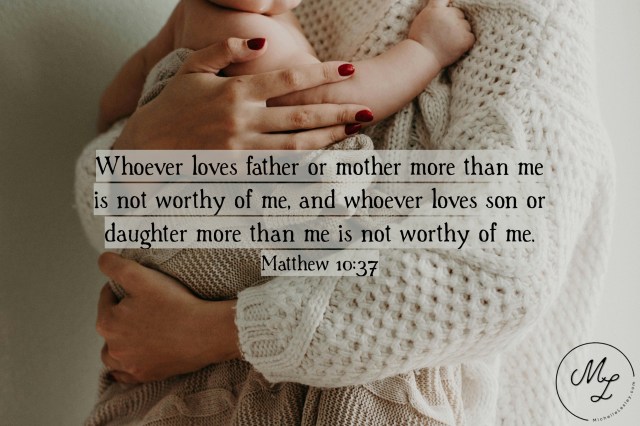
Examine the Deuteronomy 21 and Matthew 10 passages together. What is to be a mother’s highest priority – her relationship with her child, even the life of her child, or her love for, obedience to, and loyalty to Christ? Do you love Christ more than your child? If you had to choose between your child and Christ, who would you choose? What message does it send to our children when we show and tell them that we love Christ more than we love them? How can you demonstrate to your child that your highest love and loyalty is reserved for Christ?


Homework

Examine each of the instructions in Deuteronomy 6:6-9. Make a list of practical ways your family could put each of these instructions into practice and discuss it with your husband. Together, pick one of these practices and implement it with your children this week.


Suggested Memory Verse

Mailbag

The Mailbag: How can we get women to WANT to come to Bible study?

Originally published March 19, 2018

My church is blessed to have two strong ladies’ Bible study leaders – one during the week for those who are available and one on Saturday for those who cannot attend during the week – who have the discernment to choose biblical content, study, and lead scripturally sound discussion. My prayer is that more women in my church would have the desire to attend these Bible studies, not only learning and growing spiritually but also for fellowship with each other and drawing closer to each other. If you have any ideas for actually getting women to want to study God’s word with other women I would love to hear them.

Been there, done that. I once taught a women’s Bible study class that consistently had only one to two women in it. I think our maximum attendance was one day when we had a whopping…four. The other women of the church chose to attend the “fluffier” classes that were being offered, and many just didn’t attend at all.

There could be any number of spiritual and practical reasons women aren’t attending your (or another reader’s) Bible studies.

โ˜ž People are extraordinarily busy these days, especially women. Jam-packed schedules are probably the main reason for your low attendance. I’ll be honest, if I worked a full time job outside the home as well as taking care of my home and family, I’d be very unlikely to attend any Bible study class besides Sunday School. I’d want to devote that time to my family or to rest.

โ˜ž Perhaps there are more false converts in your church than you’re aware of. People who aren’t saved are not new creatures in Christ and are devoid of the Holy Spirit, so they have no organic desire to spend time in God’s Word or with God’s people beyond the minimal amount required to fulfill whatever fleshly agenda brings them to church in the first place. There’s no human way to give them the desire to attend Bible study. Only God can accomplish that by saving them.

โ˜ž If you go to a doctrinally sound church, your ladies may feel like they get plenty of good Bible study already and what theyย reallyย want is unstructured fellowship time. See my articleย All Word and No Play: The Importance of Fun and Fellowship in the Doctrinally Sound Church.

โ˜ž There may be something about the teaching style or the materials, that – even though they’re doctrinally sound – are rubbing people the wrong way. Maybe the teacher lectures and your ladies want more discussion. Maybe she talks over their heads in a very academic style. Maybe the materials are too expensive or there’s something about the book that is off-putting. Maybe your church only does “canned” (workbook, DVD, etc.) studies and what your ladies really want is to study books of the Bible, or vice versa.

โ˜ž Hopefully this isn’t the case, but if there are factions in your church, someone could be surreptitiously – out of jealousy, sowing discord, or other reasons – discouraging the women from attending.

โ˜ž The logistics of the class might be inconvenient for some. Do you offer child care for those who need it? Is the class held on a convenient day of the week and time of day? Is your church and the room you’re using for the class accessible to women with disabilities?ย 

These are just a few things that came to mind. Some of them may have to do with the class or the teacher. Others have more to do with the women themselves. What can you do to encourage more women to attend?

โœ”ย Prayย – and be ready to be in it for the long haul – that God will change hearts and give the women of your church a greater desire for His Word. In the end, God is the only One who knows all of the reasons women aren’t attending Bible study, and He is the only One with the power to transform them and overcome those reasons. Pray fervently and trust Him.

โœ”ย If you’re truly stumped as to why women aren’t attending Bible study,ย ask them. You could do so face to face, individually, or, with your pastor’s permission, send out an anonymous survey (you’ll probably get a better response this way) asking things like, “Is the lecture style teaching we offer a fit for you?” or “Would you be able to attend if we offered child care?”, and also leave space to write in comments. (Naturally, you would not be asking things like whether or not you should water down the theology of the class, but if you can remove a practical barrier to attendance, why wouldn’t you?)

โœ”ย Ask your pastor for advice. He knows the heartbeat of your congregation and will probably have some valuable counsel and suggestions.

โœ”ย Be willing to try something different in the class. If you’ve only ever done workbook studies, do a study of a book of the Bible. Maybe a Saturday class isn’t convenient for a lot of people but a Sunday class would be. “I Shall Not be Moved” is for the theology of the class, not the logistics of it.

โœ”ย Be willing to try something differentย than the class. There’s more than one way to skin a cat, and there’s more than one way to do discipleship. Bible studies are awesome, but how about taking a semester off and doing some one on one Titus 2 discipleship instead?ย Or some unstructured “let’s just sit and chat” fellowships or ladies’ night outs? Or a prayer group? Or some outreach projects? If your ladies are already getting good preaching in the worship service and good teaching in Sunday School, it’s OK to try a discipleship method other than a Bible study class.

โœ”ย Are you doing enough publicity well in advance of the class? You should start a minimum of 3-4 weeks before the class begins, and you should blitz with a variety of media: verbal announcements in multiple worship services, announce it in the church bulletin, newsletter, web site, and social media pages, have Sunday School classes announce it, send out a church-wide e-mail, put up fliers around the church, and encourage the ladies who are already attending the classes to personally, individually invite other women.

โœ”ย If your pastor is OK with it, consider having one of the women who has been a faithful member of the class give a testimony (during the worship service, in the church newsletter, or wherever appropriate) about how the class has helped and blessed her, the relationships she has built through the class, etc.

In the end, the old saying is true: “You can lead a horse to water, but you can’t make him drink.” You may bend over backwards and pray your kneecaps off and you may still have a small attendance. That’s OK. That’s on God. All you are responsible for is to pray, trust and obey Him, and be faithful to Him where He has planted you. God doesn’t measure your success by how many women attend your event, but by your faithfulness to Him.

God doesn’t measure your success by how many women attend your event, but by your faithfulness to Him.


If you have a question about: a Bible passage, an aspect of theology, a current issue in Christianity, or how to biblically handle a family, life, or church situation, comment below (Iโ€™ll hold all questions in queue {unpublished} for a future edition ofย The Mailbag) or send me anย e-mail or private message. If your question is chosen for publication, your anonymity will be protected.

Easter, Holidays (Other)

Easter with the King: The Story of Nabal, Abigail and David

Originally published April 20, 2014

The whole Bible points us to Jesus. Even the Old Testament. Even passages we’d least suspect, like the story of Nabal, Abigail, and David.

The whole Bible points us to Jesus. Even the Old Testament. Even passages we’d least suspect, like the story of Nabal, Abigail, and David.

In 2014, I led my women’s Sunday School class through a one year chronological study of the Bible. Each Sunday, I taught a lesson from that week’s reading. The lesson below is taken from week 15 of that study, which I taught on Easter Sunday. You can find the entire chronological study at the Bible Studies tab in the blue menu bar at the top of this page.

Read: 1 Samuel 25:2-42

flock of sheep in israel

I Pity the Fool (3)
The name โ€œNabalโ€ means โ€œfool.โ€ As we have seen throughout the Old Testament, names werenโ€™t just random labels. They told something about the personโ€™s character or life, where he was from, who he was related to, etc. Sometimes names were changed to reflect life circumstances: Ben-oni (son of my sorrow) to Benjamin (son of the right hand- Genesis 35:18), Naomi (pleasant) to Mara (bitter- Ruth 1:20), Simon (God has heard) to Peter (rock- Matthew 16:18).

It seems odd, even by Israelโ€™s standards, to name an infant โ€œfool,โ€ but we have no way of knowing whether this was the case or whether he acquired this name later in life after earning it by his behavior.

โ€œAbigailโ€ means โ€œMy father is joy.โ€

An Offer You Canโ€™t Refuse? (4-13, Deuteronomy 22:1-4, 18:7, 21:11, 15:7-8, Leviticus 19:10, 23:22)
This incident hits our Western ears as odd or inappropriate, even presumptuous or akin to extortion, but Middle Eastern hospitality etiquette and neighborliness, not to mention Godโ€™s Law was, and still is, much different from ours in many cases.

Nabal did not ask David to guard his shepherds and flocks. Indeed, he probably didnโ€™t even know David was doing so unless the shepherds told him when they brought the sheep in for shearing. (And since โ€œone cannot speak to himโ€ {17} maybe they didnโ€™t.) David, however, when he met up with the shepherds, took it upon himself, out of his own good will, to look out for them. Maybe he had sympathy for them because he had also been a shepherd.

michael-corleone

David and his men likely put their lives on the line numerous times protecting Nabalโ€™s livelihood. And he didnโ€™t do it with an โ€œI scratch your back; you scratch mineโ€ attitude, thinking he would later demand pay from Nabal. He also didnโ€™t take advantage of the shepherds (such as extorting sheep/goats in exchange for protection) while they were with him. David was obeying the spirit of all those โ€œgood neighbor lawsโ€ we read about (ex: Deuteronomy 22:1-4). The law is not just โ€œdonโ€™t harm your neighbor,โ€ but also, โ€œdo good to your neighbor.โ€

Remember, these shepherds were alone out in the wilderness with the flocks. There was no police force or army to protect them from raiding bands of Philistines. If the Philistines saw a thousand goats and 3000 sheep and wanted them, they just took them and captured or killed the shepherds. No legal redress, no sheep insurance. Nabalโ€™s entire portfolio was at stake. You would think once he found out what David had done โ€“for free and out of the goodness of his heartโ€”Nabal would be extremely grateful. But was he? Nope.

Davidโ€™s men arrived, explained themselves, and asked politely for whatever food Nabal could spare (kind of hard to make groceries when youโ€™re on the run living in caves). They did not demand his best, and they did not demand he provide enough for their entire company of 600 men. They had even come on a feast day when Nabal was celebrating his wealth, should have been in a good mood, and should have had plenty of extra food on hand. And notice this telling little phrase, โ€œthey said all this to Nabal in the name of David, and then they waited.โ€ (9) Now hereโ€™s one way Middle Eastern culture is similar to Southern culture. If someone was standing there telling you about all those nice things he had done for you, how long would it take before you gleefully interrupted him and offered him everything under the sun in thanks? Well, Middle Easterners arenโ€™t as shy about interrupting as we are, and furthermore, they would take it as the highest insult if you didnโ€™t take everything they offered.

Not Nabal, though. First, he pretended not to know who David was. Pretty ridiculous, since Davidโ€™s conquests were well known throughout Israel (18:7, 21:11- even outside Israel), not to mention the fact that he was next in line for the throne. Next, he insulted Davidโ€™s men by accusing them of lying about working for David. Of course, if he had been interested in finding out whether or not that was true, he could have brought his shepherds in and asked them if these were the guys who had protected them.

Davidโ€™s men went back and reported what had happened. Davidโ€™s immediate response was for everyone to โ€œstrap on his sword.โ€ It seems like kind of an extreme response to us, but we have to keep a few things in mind. First, the Law. Nabal was breaking both the letter and the spirit of it. While there was no specific law covering a band of mighty men coming to you and asking for food on a feast day, there were laws about taking care of people who were hungry and poor, such as the gleaning laws (Leviticus 19:10, 23:22).

Deuteronomy 15:7-8 says: โ€œIf among you, one of your brothers should become poor, in any of your towns within your land that the Lord your God is giving you, you shall not harden your heart or shut your hand against your poor brother, but you shall open your hand to him and lend him sufficient for his need, whatever it may be.โ€

When we read through Ruth, we saw Boaz doing a great job of fulfilling this law for Ruth and Naomi. Here, Nabal is showing the exact opposite of Boazโ€™s kindness and generosity.

Second, Nabalโ€™s actions showed disregard and ingratitude for Godโ€™s provision and blessing. God blessed Nabal with wealth and protected that wealth (through David) without Nabal even knowing about it. Do we see any evidence that Nabal was humbled that God should do such a thing for him, or thankfulness to God for what He had provided? No. We see only selfishness, stinginess, and a blatant disregard for God as sovereign provider.

Finally, Davidโ€™s response was likely an answer to Nabalโ€™s accusations. โ€œHe wants to know who David is? He wants to know whether or not my men are lying? Well, letโ€™s go show him the answer to his questions and see if he changes his tune.โ€

The Go-Between (14-31, John 12:14-15)
Abigail was quite a remarkable woman. This was not the first time Nabal had acted this way. He had a long standing history of being harsh and worthless (โ€œson of Belialโ€ is also applied to Satan in 2 Corinthians). And here, Abigail was going behind his back and defying him. This was no small thing for any wife in Israel. But for Abigail, it could have meant a beating or worse when Nabal found out. Itโ€™s possible she was even risking her life. And for what? To save him. Without his knowledge that she was saving him. Without his knowledge that he even needed saving.

www-St-Takla-org--abigail-entreats-mercy

Why in the world would Abigail want to save someone who was probably making her life a living hell? She could have just let David and his men handle Nabal. Certainly he would have gotten what he deserved. But she stepped in because it was the right thing to do. It was right to obey God by providing for David and his men. It was even right to protect her husband from his own foolishness and bringing Davidโ€™s wrath down upon himself. But even more, she did it because she loved God, and maybe even her husband, too.

She sent the gift on ahead (19) to appease Davidโ€™s wrath, then presented herself to him on Nabalโ€™s behalf. Notice that she got down off her donkey (23). Kings rode donkeys. Rich people and people of high standing rode donkeys. She left her wealth and position behind and got as low as she could get, bowing down, humbling herself, and submitting herself to David. For Nabal.

Then Abigail did something even more remarkable. She said (24-25), โ€œOn me alone, my lord, be the guilt. Please let your servant speak in your ears, and hear the words of your servant. Let not my lord regard this worthless fellow, Nabal, for as his name is, so is he.โ€ Sheโ€”a completely innocent party to Nabalโ€™s sin (25)โ€”voluntarily takes on the guilt and consequences of his sin. (Is this starting to sound familiar?) In v. 28, she asked David to โ€œPlease forgive the trespass of your servant.โ€ It wasnโ€™t her trespass, but Nabalโ€™s. She was asking forgiveness for him.

The Kingโ€™s Response (32-35)
David blessed Abigail, not just for her prudence and godliness, but also because she had satisfied his wrath and kept him from exercising it on Nabal. Her gift was sufficient, and David granted her petition to extend forgiveness to Nabal.

Happily Ever After (36-42)
Well, except for Nabal. Abigail had to tell Nabal what she had done. Sheโ€™d been gone for a while and had taken quite a bit of food out of the house. No sense trying to cover it up. Hopefully Nabal would be grateful she saved him from certain death. When she told him, did he repent? Humble himself? The text doesnโ€™t say that he did. It says โ€œhis heart died within him.โ€ Itโ€™s generally believed this means that Nabal had a stroke (especially since it further says that he โ€œbecame as stoneโ€ and lived for ten more days). Did he become enraged at what Abigail had done, and this physical exertion contributed to a stroke? We canโ€™t know for certain. What seems unlikely is that he genuinely repented, because God โ€œstruck Nabal and he died.โ€ As weโ€™ll see later with David, while we usually do suffer the consequences of our sin, God shows mercy and forgiveness to the repentant.

David was thankful he had not taken matters into his own hands and that God had handled the situation. Justice had been served. And for her faithfulness, Abigailโ€”who considered herself the lowliest of servants, only fit to wash the feet of other servantsโ€”ascended to the position of Queen. Back on her donkey where she belonged, exalted out of humility to sit at the right hand of the king.

The Backstage Gospel (Psalm 14:1, Philippians 2:6-8, 9-11)
Often, in stories like this, the characters arenโ€™t just playing themselves, theyโ€™re playing out the parts of the gospel.

Often, in stories like this, the characters arenโ€™t just playing themselves, theyโ€™re playing out the parts of the gospel.

As with Nabal, God blessed His people, Israel, richly with life, family, provisions, and all kinds of other blessings she wasnโ€™t even aware of. The people didnโ€™t ask God to do these things. God, the Good Shepherd, did these things for them out of the goodness of His own heart, the same way David had done for Nabal. But, as with Nabal the fool, โ€œThe fool says in his heart, โ€˜There is no God.โ€™ They are corrupt, they do abominable deeds, there is none who does good.โ€ (Ps. 14) The same way David presented himself to Nabal and told him what he had done for him, God, over and over, reminded Israel of the way He had protected and provided for them. But just as Nabal rejected David, so, Israel rejected God, and rebelled against Him in favor of their own sin and selfishness. And, like David, Godโ€™s wrath was inflamed.

Enter Jesus. Just as Abigail intervened on behalf of Nabal, Jesus intervened on behalf of Israel and all mankind. Just like Abigail, He laid down His life to save us. Before we ever knew Him. Before we ever knew we needed saving. Why? Why would He even want to save us Nabals? He could have let God exercise His wrath on us. We certainly deserve it. But in the same way that Abigail acted in love and in doing what was right, Jesus loved His Father and us enough to fulfill righteousness and to bring God glory by staying His hand of wrath.

Jesus laid down His life to save us. Before we ever knew Him. Before we ever knew we needed saving. Why? Why would He even want to save us Nabals?

hp-crossshadow

In the same way that Abigail got down off her donkey, leaving behind all prestige and humbling herself to the lowest position possibleโ€”a servant only worthy of washing other servantsโ€™ feetโ€” Jesus โ€œthough he was in the form of God, did not count equality with God a thing to be grasped, but emptied himself, by taking the form of a servant [one who washed other servantsโ€™ feet], being born in the likeness of men. And being found in human form, he humbled himself by becoming obedient to the point of death, even death on a cross.โ€ (Phil. 2:6-8) And for whom? Us Nabals. โ€œOn me alone, my Lord, be the guilt,โ€ Jesus said, even though, like Abigail, He was completely innocent. He voluntarily took on the guilt and consequences of our sin when He died in our place on the cross, and He did it to win forgiveness for us.

Jesus sent this offering of His life for the atonement of our sin on ahead of Himself to the Father, and Godโ€™s wrath was satisfied. Jesusโ€™ offering was sufficient, and God granted His petition to extend forgiveness to the likes of us. And just as David picked Abigail up from her humility and she ascended to the position of queen, Jesus ascended to sit at the right hand of the King, and โ€œGod has highly exalted him [Jesus] and bestowed on him the name that is above every name, so that at the name of Jesus every knee should bow, in heaven and on earth and under the earth, and every tongue confess that Jesus Christ is Lord, to the glory of God the Father.โ€ (Phil. 2:9-11)

This story didnโ€™t have a happy ending for Nabal, because Nabal didnโ€™t repent and submit himself to God. Nabal ended up taking the guilt and consequences for his sin himself (death) instead of gratefully humbling himself and being thankful for the gift of Abigailโ€™s intervention and Davidโ€™s forgiveness. But the rest of us Nabals can have a happy ending. Jesus has paid the price for our sin with His death, burial, and the resurrection we celebrate today. He completely satisfied the wrath of God on our behalf. It is finished. Forgiveness has been purchased with His blood. If we will humble ourselves, repent of our sin, and accept the beautiful gift of forgiveness God is extending to us at the request of His Son, we can be reconciled to God now and live happily in the ever after.

Jesus has paid the price for our sin with His death, burial, and resurrection. He completely satisfied the wrath of God on our behalf. It is finished. Forgiveness has been purchased with His blood.