
Mailbag

The Mailbag: Potpourri (Was John a prophet? … Christianese … Kendrick brothers movies … Confronting immodest nursing…)

Welcome to another “potpourri” edition of The Mailbag, where I give short(er) answers to several questions rather than a long answer to one question.

I like to take the opportunity in these potpourri editions to let new readers know about my comments/e-mail/messages policy. I’m not able to respond individually to most e-mails and messages, so here are some helpful hints for getting your questions answered more quickly. Remember, the search bar (at the very bottom of each page) can be a helpful tool!

Or maybe I answered your question already? Check out my article The Mailbag: Top 10 FAQs to see if your question has been answered and to get some helpful resources.


In response to the question about Simeon [in this article], would you consider John (the John that wrote Revelation) to be a prophet? I know he was an apostle but I was just wondering if he would also be considered a prophet due to all the Lord showed him regarding Revelation.

Great question! I love it when women are thinking deeply about the things of God. Since you’re asking my opinion, I didn’t delve into any scholarly works on the subject, I’m just going to give you my take on it based on what I know of Scripture.

As you probably know, in the Old Testament, there were two different types of people who prophesied:

  • Men who held the office of prophet – what we might think of as a “professional prophet,” so to speak – like Isaiah, Jeremiah, Elijah, Elisha, and so on.
  • People to whom God gave a “one and done” (or maybe twice or thrice) word of prophecy for a particular reason or moment in time, like Eldad, Medad, and the 70 elders, Saul, Eliezer, and others.

Jesus was, and is, the final, permanent occupant of the offices of prophet, priest, and king. This is why we don’t see the office of prophet or priest in the New Testament church or anyone installed as “king” over New Testament Christians.

Until the canon of Scripture was complete, however, and foretelling prophecy become obsolete, we do see occasional references to the second type of prophecy in the New Testament church. It seems to me that second category is the category John’s prophecy in Revelation would fall into. He held the office of Apostle, but not the office of prophet (since that position was filled), and God gave Him a “one and done” prophecy to communicate to us.


I’m learning so much from your articles, and I think my husband would benefit from and enjoy hearing what I’m learning. Can I share your posts with him? I don’t want YOU to be teaching my husband and break that command.

It’s always important to be obedient to God’s commands, but it’s equally important that we understand exactly what the command does and doesn’t prohibit so we can obey it properly.

For example, the sixth Commandments says, “You shall not murder,” but this Commandment doesn’t preclude self defense, capital punishment, fighting in a war, or vehemently annihilating an uppity rat or snake with a shovel (I hate rats and snakes. :0)

In the same way, the New Testament’s prohibition on women instructing men in the Scriptures doesn’t mean no male can ever learn anything – even biblical things – from a woman. For example, we see Lois and Eunice instructing Timothy in the Scriptures when he was a boy, and Priscilla, along with her husband Aquila, privately correcting and instructing Apollos.

The biblical prohibition against women teaching men in 1 Timothy 2:11-3:7 has a very specific context. Women are prohibited from preaching to or instructing men (not boys, girls, or other women), in the Scriptures (not in other subjects), or holding authority over men, in the context of the gathering of the body of Believers (the church). Women are also prohibited from holding the office of pastor or elder.

Long story short, yes, you can feel free to show your husband my articles and discuss them with him. Showing your husband one of my articles and having a private discussion with him about what you’ve learned from it doesn’t meet the criteria of the biblical prohibition against women instructing men. A blog is not the gathering of the church body, and as you can tell from the title of it, “Discipleship for Christian Women” I’m teaching you as a woman, not him as a man. The principles in these Scriptures are the applicable ones for sharing with your husband in this way, not 1 Timothy 2:12.

Additional Resources:

Rock Your Role: Jill in the Pulpit (1 Timothy 2:11-12)

Rock Your Role FAQs

Rock Your Role article series


What do you think about Teacher X? She preaches to men…he partners with a bunch of false teachers…his church seems to hold New Apostolic Reformation beliefs…she teaches evolution…

While I’m always honored when y’all ask for my thoughts on a particular teacher, if you already know a teacher is sinning by preaching to (or allowing a woman to preach to) men, yoking with false teachers, teaching false doctrine, or unrepentantly doing something else unbiblical, you don’t need my – or anyone else’s – input or approval to stop following that teacher, refuse to use that teacher’s materials, etc. You’ve done what you’re supposed to do – you’ve compared that teacher’s behavior and teaching to Scripture and found it to be contradictory. You’ve been a good Berean. Go ahead and stay away from that teacher.

You might also find my article Is She a False Teacher? 7 Steps to Figuring it Out on Your Own to be helpful.


This week two separate women from different churches and ministry settings have used the words “Too Christianese” to describe words in a song or tract that were being considered for ministry with children. I wonder where this term has come from and why this has become a catchphrase. To me it felt critical and condescending at the same time as well as limiting to the church ministry to have to feel around for words so they are not labeled in this way. I should note we live in New Zealand so I’m not sure if this line of thinking is solely a problem for here or if it is an issue elsewhere.

I think that the foundational issue here is not the word “Christianese” itself, but the underlying paradigm that’s at play.

Sometimes, as might be the case in your situation, when people say, “This has too much Christianese in it,” they’re saying, “People don’t understand biblical terms like ‘sin,’ so we should ditch those terms in favor of other words most people understand, like ‘mistakes’.”

In other words: dumb the Bible down for people. That’s not a biblical paradigm. (And yes, that’s just as much a thing in the U.S. as it apparently is in New Zealand.) The biblical approach is to use biblical terms and teach people what they mean, especially when you’re dealing with children.

On the other hand there’s a lot of churchy “inside language” we use, often without even realizing it, that can make new Christians and people who don’t have a church background feel left out because they don’t know what we’re talking about. For example: “Unspoken prayer request,” “the right hand of fellowship,” “extend grace,” “backslider,” “altar call,” “rededication.” With these sorts of non-theological terms, it might be appropriate to find a clearer way to say things, or it might be appropriate to just explain what they mean.

As to where the term “Christianese” came from and why it has become a catchphrase, I plead ignorance. :0)


We used to regularly follow and enjoy the Sherwood people/movies (i.e. the Kendrick brothers and their crowd)…We’ve pretty much moved away from them due to some theology & discernment concerns (working with/fellowships with Beth Moore, Priscilla Shirer, as well some muted undertones of the prosperity gospel) and was hoping to hear your opinion on where you’d classify them.

I guess I’d stick those movies in the same category as “Christian fiction” books, meaning that I don’t hold works of fiction to the same high standard as, say, Bible study or theology books, but that doesn’t mean anything goes, either. (I’ve explained more about that here.)

Here’s where I’d land on those movies, or any other work of Christian fiction:

  • Don’t get your theology from works of fiction. This includes any “Bible” studies, devotionals, journals, curricula, programs, or any other materials based on a novel or movie. Get your theology from the Bible, from good teaching and preaching at your church, and from theological books from trustworthy authors/teachers.
  • Think about the financial angle. Will your conscience allow you to financially support the people who made the movie, the actors in the movie, and any false teachers or false doctrine in, or associated with, the movie?
  • Evaluate your spiritual maturity and level of discernment. If you’re spiritually mature and skilled in discernment, you may be able to step around a few doctrinal “cow pies” in a novel or movie that’s otherwise generally in compliance with Scripture. If you’re a new Christian or have not honed your discernment skills, you might want to forego certain novels and movies, or at least watch or discuss them with a spiritually mature, discerning friend.

Thank you thank you for the article on being discreet when breastfeeding. There was a lady at the ballpark yesterday, walking around, and sitting down with it popped out in front of everyone!!!!! I just about lost it and don’t want to. But I need to know how to approach her nicely. I hope and pray I can.

Hang on just a sec, there. I think you might be misunderstanding something. That article was addressed to Christian women about policing their own personal behavior. It was not written to anyone about addressing other people’s behavior.

If you have a personal discipling relationship with a Christian young woman for whom this is an issue, and she’s open to it, you may want to share that article with her and disciple her in the area of modesty.

But don’t go up to random strangers and address this issue. It doesn’t matter how nicely you approach her, it’s not going to go well. And, assuming she’s lost, she’s not going to care about biblical reasons for modesty. Please trust me, and the massive number of emails and comments I got from professing Christian women who were offended by that article, on this. Avert your eyes, mind your business, and look for an opportunity to share the gospel with her instead.


If you have a question about: a Bible passage, an aspect of theology, a current issue in Christianity, or how to biblically handle a family, life, or church situation, comment below (I’ll hold all questions in queue {unpublished} for a future edition of The Mailbag) or send me an e-mail or private message. If your question is chosen for publication, your anonymity will be protected.

Mailbag

The Mailbag: Potpourri (Paul’s gospel, National repentance, Pastor search committee, Pastor’s wife teaching men)

Welcome to another “potpourri” edition of The Mailbag, where I give short(er) answers to several questions rather than a long answer to one question. I also like to take the opportunity in these potpourri editions to let new readers know about my comments/e-mail/messages policy. I’m not able to respond individually to most e-mails and messages, so here are some helpful hints for getting your questions answered more quickly. Remember, the search bar (at the very bottom of each page) can be a helpful tool!

In these potpourri editions of The Mailbag, I’d also like to address the three questions I’m most commonly asked:

“Do you know anything about [Christian pastor/teacher/author] or his/her materials? Is he/she doctrinally sound?”

Try these links: 
Popular False Teachers /
 Recommended Bible Teachers / search bar
Is She a False Teacher? 7 Steps to Figuring It Out on Your Own
(Do keep bringing me names, though. If I get enough questions about a particular teacher, I’ll probably write an article on her.)

“Can you recommend a good women’s Bible study?”

No. Here’s why:
The Mailbag: Can you recommend a good Bible study for women/teens/kids?
The Mailbag: “We need to stop relying on canned studies,” doesn’t mean, “We need to rely on doctrinally sound canned studies.”.

“You shouldn’t be warning against [popular false teacher] for [X,Y,Z] reason!”

Answering the Opposition- Responses to the Most Frequently Raised Discernment Objections


Didn’t the risen Christ give Paul the Gospel of salvation by grace through faith? Paul called it “my gospel”? Is the Great Commission the same as Paul’s gospel? Thanks!

Not exactly, but it’s great that you’re noticing those little details as you study God’s Word!

“Paul’s” gospel…

Remember Jesus Christ, risen from the dead, the offspring of David, as preached in my gospel, 2 Timothy 2:8

…is the biblical gospel of salvation that Paul preached – the good news of what Christ did to save sinners through His death, burial, and resurrection – and the call to repentance and belief.

The Great Commission…

And Jesus came and said to them, “All authority in heaven and on earth has been given to me. Go therefore and make disciples of all nations, baptizing them in the name of the Father and of the Son and of the Holy Spirit, teaching them to observe all that I have commanded you. And behold, I am with you always, to the end of the age.” Matthew 28:18-20

…is the church’s (and individual Christians’) “marching orders” to share that gospel with sinners and disciple them to maturity in Christ. It is God’s main purpose for the church.

So, in a nutshell, the gospel is what Christ did. The Great Commission is what we’re supposed to do with the gospel.


I got into quite the discussion with people today who feel that prayers of repentance for our national sins are not only unnecessary, but an affront to them because THEY did nothing wrong. I cited Daniel who prayed prayers of repentance for his nation, though he led a righteous life. They got all confused with Old Testament sacrificial law and that Christ was the ultimate sacrifice so we only need repent of our OWN sins. Could you address this, please?

Well…depending on exactly what they were saying, they may have been at least partly right. We can certainly pray that God will lead individuals in our nation to repent of whatever sins they may have committed, but we cannot repent on behalf of another person or of a nation. God does not hold us responsible for the sins of others, and we cannot repent for the sins of others. (see Ezekiel 18).

If you’re referring to Daniel’s prayer in Daniel 9, if you’ll read very carefully, you’ll notice he is confessing the sin of his people, lamenting over the sin of his people, and asking God to pour out His mercy on his people despite their sin, but he is not repenting on their behalf.

It is impossible to repent for someone else’s (let alone a whole nation’s) sin because repenting is more than:

  • confessing that sin has occurred,
  • admitting that someone is guilty for having committed that sin,
  • feeling sorrowful over sin,
  • asking forgiveness for sin, or
  • asking God to be merciful toward the sinner.

Repentance means to turn away from your sin, to forsake it, to stop doing it because you want to obey God instead. Although I’m sure he wished he could have, Daniel could not turn away from someone else’s (the nation of Israel’s) sin. And, he specifically says in verse 13: “we have not entreated the favor of the Lord our God, turning from our iniquities”.

Another thing to remember is that Daniel is interceding for God’s covenant people. They belonged to Him. They had agreed to follow Him. America is not in a covenant relationship with God. For a Christian today, interceding for the church and praying that God would lead Christians to repentance would be more analogous to what Daniel was doing.


We lost our pastor almost a year ago and are struggling to find a new one. Do you have any suggestions of where we could send the information about our church and the position in hopes of finding a suitable candidate?

I would suggest sending your information to:

The Master’s Seminary’s Pastor Search page

Founders Ministries Minister Search page

Expositors Seminary

I hope you’ll find a wonderful, godly pastor very soon!

Now, although this might not be possible for your particular church, I would like to throw something out there for the consideration of any pastor or church member who might be reading this. The most biblical model of leadership for the local church is that it be led by a plurality of elders.¹ For that primary reason, I would encourage every church that doesn’t already have this leadership structure in place to look into it and give strong, prayerful consideration to transitioning into leadership by a plurality of elders.

However, secondarily, there are practical benefits to your church being led by a plurality of elders, and avoiding being “pastorless” is a huge one. My own church recently welcomed a new pastor after being without one for two full years. That two years was a struggle. The interim pastor was a stranger to us and we were strangers to him. He did not know the ins and outs of life at our church or the strengths and weaknesses of our church. As affable as our interim pastor was, it was always in the back of everyone’s mind that he was temporary. This was not our pastor and everyone knew it. And then there were some other issues that arose during his tenure that awaited the new pastor’s arrival.

When a church is led by a plurality of elders, many of these issues can be avoided or lessened. When a lead teaching elder dies, moves, or steps down for whatever reason, there is, ideally, already another elder available to step in and take over. This elder already knows the church and the people and they know him. There’s no need to assemble and train a pastor search committee, launch a nationwide search, wait on resumes to arrive, interview candidates, present them to the church for a vote, and then hire a stranger about whom you know virtually nothing except what’s on his resume and whatever he says in his interview. The transition from elder to elder is smoother and immediate with little upheaval and relational trauma to the church body.

Just something to think about.

¹I’m not saying that churches which aren’t elder-led are apostate or intrinsically sinful, I’m just saying that if you want to get as close to the biblical model as possible, go with a plurality of elders.

I am a relatively new (about one year old –  but growing in discernment!) Christian, and I attend a small Baptist church of about 15 people in the remote area in which I live. The pastor’s wife leads both men and women in a “Bible” study group using popular (biblically questionable at best, such as Max Lucado) books instead of reading Scripture. I choose not to attend these studies, but because the church is so small, my absence is obvious and noticed. People comment that they have not seen me at “Bible” study. 

Everything else that happens in the church, the sermons, worship, prayer, are all on point biblically, thus far. My pastor is a godly man as far as I can tell, so my only issue to date is these co-ed, led by a woman, “not-Bible” studies. Should I take my concerns to my pastor? I’m already on a bit of shaky ground with the pastor’s wife. I’m reluctant to upset the apple cart any more. However, if the right thing to do is to address it and deal with potential consequences (shunning, whatever) then I want to do the right thing by my Lord and Savior. How would you guide me in this situation?

I know this is a really difficult situation to be in and I’m sorry it’s making you uncomfortable at church. Yes, when we see sin in the camp, we must speak up, so you should begin preparing to address this situation. Normally, I encourage women to go to the person most directly in charge of the issue first, which in this case would be the pastor’s wife, but I’m guessing that if you’re on “shaky ground” with her it’s because you’ve already tried to address this with her. The next step is to go to the pastor.

I would encourage you to spend a little time studying through the book of Esther, realizing that she was in a somewhat similar situation to yours: God revealed to her an ungodly situation that would harm His people, and she – at great personal risk – had to go to the man in charge and implore him to right the situation, not knowing how he would respond. It could be that God has specifically placed you in this church “for such a time as this”.

Notice that Esther asked that her people be gathered to pray for her. If you have any like-minded friends or loved ones who will pray with you as you prepare your heart to talk to your pastor, that would be beneficial. I have already prayed for you, and I am asking everyone reading this to stop and take a moment to pray for you as well.

If the pastor tells you you’re wrong or doesn’t rectify the situation, and there’s another, better church you could join, even if it’s not as convenient as this one, prayerfully consider moving your membership there. If, as you said, everything else at your current church really is doctrinally sound, and you have no other options for a doctrinally sound church to attend that’s within achievable driving distance of your house, my counsel to you would be to stay at this church, continue not to attend the “not-Bible” study, and fervently pray for God to change the hearts of your pastor and his wife.

If you stay and people continue to say, “We missed you at ‘Bible’ study!” all you have to say is, “Thank you!” or “It’s nice to be missed,” or something like that. I can’t speak for everyone, but when I say, “I missed you at _____,” to someone, it’s not a demand to know why she wasn’t there, it’s to let her know that I love her and missed fellowshipping with her. Hopefully, that’s all your fellow church members mean by saying that. If a nosy Nelly asks why you weren’t there, keep in mind that you’re not required to give her that information just because she asked. You can say something like, “I have a conflict and can’t attend,” which is truthful (you have a biblical conflict and can’t, in good conscience, attend), yet gives no one the opportunity to say that you were gossiping or trying to stir up division in the church. If she continues to pry, look her dead in the eye and keep repeating, “I have a conflict and can’t attend” until she comes to her senses and realizes it’s none of her business why you weren’t there.

Here are some resources I hope will help you:

Rock Your Role: Jill in the Pulpit

The Mailbag: How should I approach my church leaders about a false teacher they’re introducing?

Searching for a new church?


If you have a question about: a Bible passage, an aspect of theology, a current issue in Christianity, or how to biblically handle a family, life, or church situation, comment below (I’ll hold all questions in queue {unpublished} for a future edition of The Mailbag) or send me an e-mail or private message. If your question is chosen for publication, your anonymity will be protected.

Mailbag

The Mailbag: Potpourri (“Potty Prayers,” Women as Children’s/Worship Pastors, Solid churches with heretical music, Eternal Security)

Welcome to another “potpourri” edition of The Mailbag, where I give short(er) answers to several questions rather than a long answer to one question. I also like to take the opportunity in these potpourri editions to let new readers know about my comments/e-mail/messages policy. I’m not able to respond individually to most e-mails and messages, so here are some helpful hints for getting your questions answered more quickly. Remember, the search bar (at the very bottom of each page) can be a helpful tool!

In these potpourri editions of The Mailbag, I’d also like to address the three questions I’m most commonly asked:

“Do you know anything about [Christian pastor/teacher/author] or his/her materials? Is he/she doctrinally sound?”

Try these links: 
Popular False Teachers /
 Recommended Bible Teachers / search bar
Is She a False Teacher? 7 Steps to Figuring It Out on Your Own
(Do keep bringing me names, though. If I get enough questions about a particular teacher, I’ll probably write an article on her.)

“Can you recommend a good women’s Bible study?”

No. Here’s why:
The Mailbag: Can you recommend a good Bible study for women/teens/kids?
The Mailbag: “We need to stop relying on canned studies,” doesn’t mean, “We need to rely on doctrinally sound canned studies.”.

“You shouldn’t be warning against [popular false teacher] for [X,Y,Z] reason!”

Answering the Opposition- Responses to the Most Frequently Raised Discernment Objections


I know this is going to sound silly or troll-like, but I’m serious! I have a habit of praying a quick prayer when thoughts cross my mind, like “God, please help Aunt Pam to feel better from her cold today,” or “Lord, thank You for providing that salary bonus I needed.” Sometimes those same kinds of thoughts and prayers cross my mind when I’m using the bathroom. Is that wrong? Should I wait until I get out of the bathroom to think that little prayer? What about what Deuteronomy 23:14 says about using the bathroom, “that God may not see anything indecent among you and turn away from you”?

I don’t think that’s a silly or troll-like question at all, and I’ll bet there are bunches of Christians out there who do the exact same thing and now, after reading this question, are wondering the exact same thing.

First Thessalonians 5:17 instructs us to “pray without ceasing,” which means our hearts are to be constantly oriented toward prayer even though we’re not consciously praying every moment of the day. (Kind of like your compass’ needle always points north even if it’s just sitting in a drawer not being used.) For most Christians, that means we’re intermittently speaking to God, just like you described, throughout the day as things happen, as random thoughts cross our minds, as we see various things. And this becomes such a habit (a good one!) that it doesn’t occur to us to think about where we are or what we’re doing as we utter those prayers in our hearts. Honestly, I think that mindset of reflexive prayer is pleasing to God, because it embodies what it means to pray without ceasing.

Deuteronomy 23:12-14 is part of the Old Testament ceremonial law regarding, in this particular case, the way Israel was to set up camp. When you give the law a good, thorough reading, you’ll notice that the underlying principle of most of the laws is that Israel is to be set apart and holy – different – from the pagan nations surrounding them. And He gives them laws to this effect that touch every aspect of their lives so that, at every turn, throughout the course of their day, there are little reminders, through the law, to “Be holy for I am holy.” This law is just one more of those little reminders: Don’t act like animals like the pagan nations around you, Israel, and just potty willy nilly in the street or the front yard or wherever you take a notion to. Step it up and keep your camp to a higher standard, because God is with you and you are His people.

The Deuteronomy passage is not about offending God by relieving yourself. God has seen every single time every person on the planet has ever relieved himself/herself, because God is omnipresent. If that were offensive to Him, He would not have designed your body to work that way.

Although I don’t think “bathroom time” should be the only time you pray, I don’t see anything in Scripture indicating that God considers it offensive for you to reflexively pray even though you happen to be in the bathroom at that moment. However, if it offends your sensibilities, wait until you get out of the bathroom and then pray.


Would you read 1 Tim 3 1-7 to read women can’t be “overseers/leaders/official” as in they can’t be “Children pastors” or “Women Pastors” in the church with those actual titles or even as directors? The verses only say men and state guidelines on how to choose. I’ve noticed some red flags in my church with a woman Worship Leader, which I don’t agree with since she sometimes teaches in between songs, but they are also giving women the pastor title, but only for children and women.

If I’m understanding correctly, you’re asking:

  • Is it biblical for women to hold a position of leadership over the women’s ministry or children’s ministry of a church?
  • Is it biblical for a woman to be the worship leader of a church?
  • If so, is it biblical to give those women leaders the title of, for example: “Pastor of Women’s Ministry” or “Children’s Pastor”?

Here are the fast and dirty answers. Below are a couple of links where I’ve discussed these issues in more detail.

Assuming the woman is doctrinally sound, has a godly character, her husband (if she’s married) is on board, and she’s otherwise qualified for the job, it’s fine for a woman to lead women or children in the church as long as the position she holds (which will vary from church to church) doesn’t require her to preach to or teach Scripture to men, or hold unbiblical authority over men.

No, it is not biblical for a woman to be the worship leader of a church. This is supposed to be a pastoral position.

No, churches should not give any woman on staff the title of “Pastor,” even if she isn’t violating Scripture in her position. Because Scripture doesn’t permit women to be pastors it is misleading and confusing, and will probably give people the impression that she is violating Scripture and that that’s OK. Neither should the converse be true – churches should not have women on staff in any capacity that violates Scripture (preaching to/teaching men, holding authority over men) and try to conceal that fact by giving her a title (instead of “pastor”) like “minister,” “facilitator,” “coach,” “associate,” “director,” etc.

Rock Your Role: Jill in the Pulpit

Rock Your Role FAQs (see #16, 21)


We have been searching for a doctrinally sound church in the area we moved to, and unfortunately it has not been easy! The few that we have found still use a Hillsong, Bethel or Elevation music. I usually cross a church off the list quickly if they sing from those artists. But like I said, now I am finding even doctrinally sound churches are throwing some of those songs in. Do you have any insight to this dilemma?

It can be really difficult to find a doctrinally sound church these days. Unfortunately even some churches that are fairly solid use music from these groups. The first thing I would recommend is that you check out the Searching for a new church? tab in the blue menu bar at the top of this page, just to make sure you haven’t overlooked any doctrinally sound churches in your area. There are lots of church search engines there and other resources that might help.

My counsel would be to find the most doctrinally sound church you possibly can (following your husband’s leadership, of course, if you’re married, {and assuming, in this particular case, that he’s saved}), attend for a while to get a feel for whether or not it’s a fit for your family, and set up an appointment with the pastor to ask any questions you might have (check out the articles under “What to look for in a church” at the “Searching…” tab for suggestions of questions you may want to ask). (I would recommend the appointment with the pastor regardless of how perfect the church seems.)

If the church uses Bethel, etc. music, this would be the time to gently and lovingly address it with the pastor, but let him know that this is a reason you’re a bit reticent about joining the church so he’ll understand the seriousness of the problem. I would approach the subject giving him the benefit of the doubt that he simply doesn’t know the problems with these groups (the vast majority of pastors are ignorant of things like this – they shouldn’t be, but it is what it is).

If he seems open, you might want to ask if you can send him some information. (You can find links on all three groups at the “Popular False Teachers & Unbiblical Trends” tab. Pick the 2 or 3 most convincing links for each group and send those rather than sending him the link to that tab. For someone who’s ignorant in the area of discernment, opening up that tab would be information overload, and he’ll tune it out.) If he says yes, send the links and then touch base with him again in a couple of weeks to get his reaction.

The only other counsel I would offer you is to remember that no church is perfect, and God may put you into a particular church to help it with those imperfections.

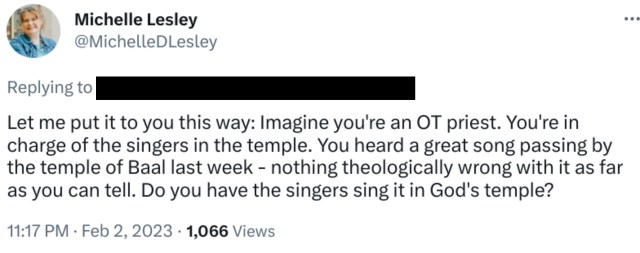
I would now like to take a moment to highlight this reader’s question for pastors and ministers of music. This is yet one more reason it is detrimental to your church to use music from Bethel, Jesus Culture, Hillsong, Elevation, any musician connected these groups (such as Phil Wickham who’s very prolific and has strong ties to Bethel), or any other musician who isn’t doctrinally sound (after you have thoroughly vetted him/her/them.) regardless of how biblical the lyrics of any particular song of theirs that you’re using might be. You could potentially be turning away solid, mature, discerning Believers who might otherwise be interested in joining your church. The woman who sent in this question is not the first to ask me something like this – not by a long shot. This issue is increasingly of concern to Christians looking for a solid church. (For that reason, I do not list churches – even Reformed or seemingly otherwise doctrinally sound churches – on my Reader Recommended Churches list, who use music from heretical sources like these.)

When a visitor walks into your sanctuary for the first time, your worship service is the “face” of your church to her. What kind of a first impression are you making? When you use music by doctrinally unsound musicians, it does not say, “We’re really a doctrinally sound church – honest! We only use songs from these groups whose lyrics are biblical.”. It says, “This church has leaders who aren’t discerning,” or “If this church uses music by these heretical groups, what other doctrinal problems does it have?”. Why put that stumbling block out there when there is plenty of music available with biblical lyrics written/performed by doctrinally sound musicians?

And there’s another stumbling block that using this type of music puts in front of weaker brothers and sisters that you may not have realized. I have heard from a number of Christians whom God graciously saved and rescued out of the pit of “churches” similar to Bethel, Hillsong, and Elevation. They tell me that when they walk into what they think is a doctrinally sound church and hear music from these and other heretical sources, it triggers a form of spiritual PTSD. It’s traumatizing to them. They immediately become fearful that your church is mere steps from turning into one of these types of “churches.” Will they grow out of that reflexive reaction? Yes, someday, as God continues to sanctify them. In the meantime, do you want the music at your church to cause them unnecessary anxiety? I hope not.

Even for Christians who have not come out of “churches” like these but are knowledgeable about their heretical theology, using these songs in your worship service is putting a stumbling block in front of them, too. Take me, for example. I’ve studied these groups. I’ve seen their heresy and the damage they do to both the Kingdom and to the individuals who follow them. And because of that, I’ve zealously spoken out against them. If I visit your church and an Elevation song suddenly flashes up on the screen, my ability to worship is completely derailed in grief that your church would use a song from that source – especially if you know about their theology and are well acquainted with music from doctrinally sound sources that you could have used instead. I cannot sin against my conscience by singing those songs. Consider me a “weaker brother” if you like, but do you care more about me as your sister in Christ, or your “right” to use music from these sources? What about Paul’s posture in 1 Corinthians 8:9-13?

But take care that this right of yours does not somehow become a stumbling block to the weak. For if anyone sees you who have knowledge eating in an idol’s temple, will he not be encouraged, if his conscience is weak, to eat food offered to idols? And so by your knowledge this weak person is destroyed, the brother for whom Christ died. Thus, sinning against your brothers and wounding their conscience when it is weak, you sin against Christ. Therefore, if food makes my brother stumble, I will never eat meat, lest I make my brother stumble.

If this was true in Paul’s personal life, shouldn’t it surely be true of our worship services? If you wouldn’t put a Christmas tree or portrayals of Jesus in your sanctuary because it might offend a brother in Christ, why would you use worship music that causes offense to your brothers and sisters?

Finally, what is the proactively good reason for intentionally choosing music from a heretical source? In other words, when you’re selecting music for the worship service, why would you choose, say, a Hillsong song about God’s glory, or Psalm 23, or the crucifixion, when you could just as easily choose a song from a doctrinally sound source about any of those things – a source that isn’t a stumbling block to anyone, won’t give anyone the wrong impression about your church, won’t lead anyone to follow a heretical “church,” and won’t use your church’s offerings to support a heretical “church”? What makes the Hillsong song you’re choosing better than the song from the doctrinally sound source? It doesn’t seem to me that there’s a good enough reason to use songs from these sources that outweighs all the good, biblical reasons not to use them.

There is simply no good reason for a doctrinally sound church to use music from heretical sources like these.

The Mailbag: False Doctrine in Contemporary Christian Music

Why Our Church No Longer Plays Bethel or Hillsong Music (or Elevation or Jesus Culture), and Neither Should Yours

Hillsong’s Theology of Music and Worship

The Mailbag: Should Christians listen to “Reckless Love”?


Hello there. I read your blog about Priscilla Shirer being a false teacher. Read some parts of your blog. Found your recommended preachers with sound doctrine. I don’t know what denomination you’re in. But I just wanted to ask if you believe if we can lose our salvation?

Hi there! I’m a Reformed Southern Baptist. You can read more about my denomination and my beliefs at the Statement of Faith tab and the Welcome tab (both in the blue menu bar at the top of this page.

No, I do not believe genuinely regenerated Christians can lose their salvation because that’s not what the Bible teaches. I discussed this at length, including the relevant Scriptures, in my article The Mailbag: Can unforgiveness cause you to you lose your salvation?.


If you have a question about: a Bible passage, an aspect of theology, a current issue in Christianity, or how to biblically handle a family, life, or church situation, comment below (I’ll hold all questions in queue {unpublished} for a future edition of The Mailbag) or send me an e-mail or private message. If your question is chosen for publication, your anonymity will be protected.

Mailbag

The Mailbag: Potpourri (Civil disobedience, Bearing one another’s burdens, Does our obedience please God?…)

Welcome to another “potpourri” edition of The Mailbag, where I give short(er) answers to several questions rather than a long answer to one question. I also like to take the opportunity in these potpourri editions to let new readers know about my comments/e-mail/messages policy. I’m not able to respond individually to most e-mails and messages, so here are some helpful hints for getting your questions answered more quickly. Remember, the search bar (at the very bottom of each page) can be a helpful tool!

In these potpourri editions of The Mailbag, I’d also like to address the three questions I’m most commonly asked:

“Do you know anything about [Christian pastor/teacher/author] or his/her materials? Is he/she doctrinally sound?”

Try these links: 
Popular False Teachers /
 Recommended Bible Teachers / search bar
Is She a False Teacher? 7 Steps to Figuring It Out on Your Own
(Do keep bringing me names, though. If I get enough questions about a particular teacher, I’ll probably write an article on her.)

“Can you recommend a good women’s Bible study?”

No. Here’s why:
The Mailbag: Can you recommend a good Bible study for women/teens/kids?
The Mailbag: “We need to stop relying on canned studies,” doesn’t mean, “We need to rely on doctrinally sound canned studies.”.

“You shouldn’t be warning against [popular false teacher] for [X,Y,Z] reason!”

Answering the Opposition- Responses to the Most Frequently Raised Discernment Objections


What are ways to help carry other Christians’ burdens? I’ve been praying for guidance in this area.

What a completely awesome question! It’s so encouraging to hear from readers who are striving to carry out God’s Word.

Galatians 6:2 tells us:

Bear one another’s burdens, and so fulfill the law of Christ.

Now, typically, we tend to think this verse means to help our brothers and sisters in Christ through difficult times in their lives: “weeping with those who weep” due to the loss of a loved one, helping out with a financial need, offering a word of encouragement to someone who’s down, etc. These are all good things that we should be doing. And the Bible does teach us to help others in these ways, it just doesn’t quite teach that in this particular verse.

Let’s take a look at the context of verse 2 and a couple of cross-references:

Brothers, if anyone is caught in any transgression, you who are spiritual should restore him in a spirit of gentleness. Keep watch on yourself, lest you too be tempted. Bear one another’s burdens, and so fulfill the law of Christ.
Galatians 6:1-2

See? Verse 2 isn’t really talking about helping the fam through the tough times. It’s talking about the obligation we have to our brothers and sisters (and they to us) to watch out for them, help them avoid temptation and sin, and, if they fall into sin, urgently, yet gently, pull them back to where they ought to be. The cross-references for Galatians 6:2 help us to see this even more clearly:

We who are strong have an obligation to bear with the failings of the weak, and not to please ourselves. Let each of us please his neighbor for his good, to build him up.
Romans 15:1-2

And we urge you, brothers, admonish the idle, encourage the fainthearted, help the weak, be patient with them all.
1 Thessalonians 5:14

So, Galatians 6:2 may have a bit of a different meaning than we thought it had, but in either of these senses – helping others through difficult times, or restoring a sinner – how do we “bear one another’s burdens”?

Pray– The most important thing you can do in either of these situations is to pray. Pray for the person you’re trying to help. Pray that God will give you the wisdom to say and do what’s godly in the situation. Pray that He will intervene and work things out as only He can. And be sure to let the person know you’re praying for her. If anyone has ever told you she’s praying for you, you know just how meaningful and encouraging that is.

Remove stumbling blocks– For example: If you’re helping someone who struggles with the temptation to drunkenness, don’t offer her a glass of wine when she comes over for dinner. Many men (yes ladies, even Christian men in your own church) fight a constant battle with lust. Help bear their burden by taking an extra look in the mirror to make sure your outfit isn’t cut too low, high, or tight before you go out or go to church. Whatever we can do on our part to avoid making things harder for someone who’s struggling with temptation is helping to bear their burden.

Ask her– No two people are alike. No two situations are alike. The only way to know how best to help another person is to ask her. If there’s something you’ve found helpful in a similar situation, you can suggest that and ask her if she feels like that would be helpful to her as well, but ask before doing it (see “Just do it./DON’T just do it.” in this article). Sometimes the things I find helpful aren’t the same things you find helpful.

Ask your pastor– In order to really pursue “bearing one anothers’ burdens” well in your own church, have a sit down with your pastor and get his guidance and counsel. He may know of a situation that’s just begging for someone like you to step in and be helpful. Just think of that – God could use you to be the answer to your pastor’s or a fellow church member’s prayers! And even if there’s not a specific situation he could assign you to, at the very least, just the fact that you asked will be a huge encouragement to your pastor.

The Mailbag: Ministering to the Bereaved


My church teaches that “man” and “woman” in 1 Timothy 2:11-15 isn’t the correct translation, that it should be “husband” and “wife,” because this passage is about marital submission, not women teaching in the church. Is this true?

I’ve answered this question before, but I’ve received it again twice in the last couple of weeks. I don’t know if that’s just coincidence, or if there’s been an uptick in this error, but if it’s the latter, I want to make sure you have the right information at hand.

The short answer to this question is no. This is eisegesis. Bible translators are hired for their expertise in the biblical languages (which is not a skill set the average pastor teaching this error has). If it were supposed to be translated as “husband” and “wife” they would have translated it that way. Check out all of the reliable English translations of the Bible. Across the board, they all translate it as “man” and “woman”. Even the unreliable versions/paraphrases of the Bible (like The Message and The Passion “Translation”) translate it as “man” and “woman”. This is just another silly and preposterous attempt to smuggle an unbiblical teaching (i.e. It’s OK for women to preach to/teach/hold authority over men) into the church.

For the longer, more detailed answer, see the second section of The Mailbag: Potpourri (Heretical church music, Mistranslating 1 Tim. 2:12, Books for women…).


I’m struggling to get a handle on how the idea that our obedience is pleasing to God fits with the idea that God is pleased with us because of Christ’s righteousness in us. I know our obedience to God doesn’t save us or keep us saved, but in what way is our obedience pleasing to God? Can you help me sort this out?

Another phenomenal question from a godly woman who’s a good student of the Bible!

You’re quite right in saying that our obedience to God cannot and does not save us or keep us from losing our salvation, so let’s box that one up and shove it out of the way. You’re also right in saying that God is pleased with us because of Christ’s righteousness that was imputed to us at the moment of salvation rather than any so called “righteousness” we have on our own. But God can be pleased with more than one thing about us, right? And He can be pleased with different things in different ways, can’t He?

So to answer your question: Yes, for Christians, our obedience, springing from our love for Christ, is pleasing to God.

Think of it like a parent-child relationship (an illustration God often uses in Scripture).

When you have a baby, you are pleased with and love that baby simply because he exists and has been born into your family. He doesn’t have to do anything spectacular to earn your good pleasure with him (In fact, he’s doing all kinds of things, like pooping and crying all night, that aren’t pleasing at all!). He’s your child. You’re pleased by that fact. End of story.

Now, if you see your child busily cleaning his room, being kind to his sister, saying please and thank you, etc., those things that he’s doing are also pleasing to you, but is that what makes him your child? Of course not. He’s your child because he was born into your family. He would be your child whether he was doing those good things or making a mess, hitting his sister, and being rude. But it’s more pleasing to you when he’s obedient out of love for you.

Being pleased with your child’s behavior is a separate matter from being pleased by the simple fact that he’s your child. It is the same way with those of us who have been born into God’s family and are now His children. He is pleased by the fact that we were born into His family and are robed in the righteousness of Christ, and He is pleased when we show our love for Him by obeying Him.

Check out these Scriptures about our obedience and good works – as Christians – being pleasing to the Lord.


What are your views on civil disobedience? Do you believe it can be a sin since it involves the refusal to submit to authority?

This question came in as a response to lesson 4 of Living Stones: A Study of 1&2 Peter, which dealt largely with submission to authority.

Civil disobedience – intentionally breaking a civil or criminal law, or disobeying the command of a governmental authority because you don’t feel you can, in good conscience, obey it – can be a sin. It also can be obedience to God. It totally depends on the situation, the law you’re contemplating breaking, and what the Bible says about it.

Submission to the authorities in our lives – including governmental authorities – is a huge theme of the New Testament. Romans 13:1-2 says:

Let every person be subject to the governing authorities. For there is no authority except from God, and those that exist have been instituted by God. Therefore whoever resists the authorities resists what God has appointed, and those who resist will incur judgment.

God has put certain people in certain positions of governmental authority. He says we are to submit to them, and that, if we don’t, we’re rebelling against Him and will incur judgment. This is a command straight from the lips of God that we are to take just as seriously as all His other commands.

The only exception to submitting to the authorities in our lives – whether it’s the government, our husbands, our pastors, or our employers (and for children, their parents)- is when that authority requests or requires that we disobey God’s (rightly handled, in context) written Word. No human being has the authority to go over God’s head, cancel His clear commands, and expect to be obeyed. God is our ultimate authority.

One of the clearest examples of this in in Acts 5. The high priest and other Jewish leadership arrest and imprison the apostles for preaching the gospel (which Jesus had commanded them to do in the Great Commission). In the middle of the night, God opens the prison doors and commands the apostles to go back to the temple and keep preaching the gospel. The high priest hauls them in again and says, “Why are you doing this? We commanded you to stop teaching this.”. And Peter says, “We must obey God rather than men.”

Our ultimate example, is, of course, Jesus, who always obeyed God even though the governing authorities eventually convicted Him of a capital offense and executed Him as a criminal as a consequence of that very obedience.

We obey God first and foremost and above all human authorities, no matter the cost.

So if you’re thinking about disobeying a human (governmental or otherwise) authority, consider these things first:

• Do you know your Bible, rightly handled, in context, inside and out on the issue at hand?

• Can you objectively differentiate between “This command clearly conflicts with Scripture,” and “I personally don’t like this command even though it doesn’t conflict with Scripture.”?

• Are you absolutely certain the human authority is requesting/requiring that you disobey clear Scripture (either ordering you to do something God has forbidden or ordering you not to do something God has commanded)?

• Do you fully understand the fact that if the human authority is not requesting/requiring that you actually disobey clear Scripture, and you refuse to comply, that you are disobeying God (sinning) by refusing to submit to the human authority He has established?

• Have you counted the cost? What will the consequences be if you disobey God? What will the consequences be if you disobey the human authority? Are you ready to “man up” and accept the consequences with grace and godliness?


I really enjoyed reading your article about the women’s conference you just spoke at. Will you be coming to my area soon?

I hope so! There are two ways to catch an event I’m speaking at in your area:

1. Keep an eye on the “2020 Calendar” section of my Speaking Engagements tab (in the blue menu bar at the top of this page). I’ve got several more events in the works. When I get them finalized, I’ll post the details there and announce them on social media.

2. If you want to attend an event that’s really close to home, contact me to see if I’m available, and set up an event at your own church! There’s lots of great information at my Speaking Engagements tab on how to set up a women’s event at your church.


If you have a question about: a Bible passage, an aspect of theology, a current issue in Christianity, or how to biblically handle a family, life, or church situation, comment below (I’ll hold all questions in queue {unpublished} for a future edition of The Mailbag) or send me an e-mail or private message. If your question is chosen for publication, your anonymity will be protected.