Random Ramblings Ruminations Resources

Random Ramblings, Ruminations, and Resources

A couple of months ago, I “beta tested” a new feature here at the blog, which I alliteratively titledย Random Ramblings, Ruminations, and Resources.ย People seemed to like it … or … at least the majority of readers didn’t seem to hate it too much. So I decided to bring it back every once in a while when I’m feelin’ it.

I’m feelin’ it today. Buckle up, Buttercup.ย 

I’m Sorry…

I need to kick things off with an apology. God has graciously seen fit to convict me that my tone has been too harsh in some of my articles recently, particularly in the first part ofย this article. If you’ve ever been offended or hurt by the tone of that or any of my other articles or remarks I’ve made on social media, I wanted to say I’m sorry and to humbly ask your forgiveness.

And even if you weren’t offended or hurt, I know where my heart was as I was writing that article and the tweet it was based on, andย I know it wasn’t right. I failed to exercise self-control and selfishly spewed my emotions in a way that was designed only to vent my own frustration and get it out of my system (which was pretty hypocritical since I was writing that we shouldn’t be slaves to our feelings!). I wasn’t even thinking about how a new Christian, someone going through a difficult time, or someone weak in the faith might have taken the tone in which I was saying those things. Romans 15:1 says:

We who are strong have an obligation to bear with the failings of the weak, and not to please ourselves.

Well, I don’t consider myself all that strong, but I guess each of us is stronger in the faith or in a stronger position of life circumstances than somebody. And for those who are weaker in the faith than I am, or walking through a time of pain or discouragement, I did the exact opposite of what this verse says to do. I pleased myself at your expense, and that’s not what someone who serves you in the name of Christ is supposed to do. So, again, my deepest apologies and I hope you’ll be able to forgive me.

If you’re so inclined, Iย wouldย like to ask you to pray for me about this. Tone is an extremely difficult and confusing sea to navigate, at least for me (that’s one of the many areas in whichย I’mย weak). It is important to speak biblical truth firmly, unequivocally, and unapologetically, but some Christians see that, in and of itself, as being harsh. It’s also important to demonstrate gentleness, kindness, and compassion, but other Christians see that as being wishy-washy or not standing firm on Scripture. I have written articles to which some have responded that I was too harsh and others have responded that I wasn’t harsh enough – to the same article! Add to that the fact that Jesus, Paul, and others in Scripture sometimes used phraseology that we would consider very harsh today…..but yet Paul says, “Imitate me as I imitate Christ.” And, add to that that there are different expectations in the evangelical mind of how women are to address things versus how men are to address things, and you can see what a fine and perplexing line it can be to walk. But I really,ย really want to get it right in God’s eyes, because I want to please Him.

I can’t promise my tone will never offend you again. That would be foolish. I have over 11,000 blog subscribers and over 10,000 social media followers. Everything I write is going to offendย somebody,ย even if I don’t mean it to. Also, I know my heart, so I know I’m going to sin again by being selfish and uncontrolled. Furthermore, I can’t attempt to please everyone. That’s not only an exercise in futility, it’s unbiblical. What I can tell you is that I will do my best to think more about how I’m coming across, edit more to keep my own words, approach, and personality from becoming a stumbling block, and pray more as I write, asking God to grow me in wisdom and self-control, in order to honor, and be pleasing to, Him.

About five years ago, I wrote an article calledย Sacrificing Truth on the Altar of Tone. While it’s incumbent on us as readers and listeners to be able to put tone aside in order to discern whether or not what the speaker or writer is saying isย true, it is also incumbent upon those of us who speak and write not to burden our hearers and readers with the necessity of doing so.

Thanks so much for your prayers as I pursue obedience to Christ in this area of my life. You are such a blessing to me, and I love and appreciate each of you.

Fill itย Filled to the Rim

Didja hear? I’m doing a women’s conference with the ever-awesomeย Amy Spreeman at the end of March. It’sย free, including a couple of meals, and it’s in Princeton, Illinois.

(In case you were wondering, that’sย not where Princeton University, former home of Jonathan Edwards, is located. That’s in Princeton, New Jersey. I know this because I was wondering about it, too, and had to look it up.)
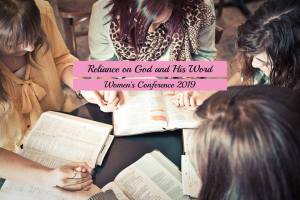
If you’re still trying to make up your mind about whether or not to come, lemme help you:ย come. And you need to hurry up and register too. Last week the event planners said they were already at 83% capacity (one of them must have been a math major!).

Here’s all the info. Be sure to check out the app and other links for resources on accommodations.

Illinois is too far away? Being from Louisiana, I get that. Look, plan your own conference, and I’ll come to you. “Impossible!” you say, “I go to a tiny church with an even tinier budget!”. Get together with a couple of sister churches to share expenses. Do a bake sale or a garage sale or crowdfunding. Take up a love offering and/or sell tickets at a modest fee. If you’re at all able, offer a doctrinally sound conference option to the women of your church and community. Christ’s ewe lambs are hungry for truth.

UPDATE: As I go to press, this conference is at capacity (“sold out”). If the organizers are able to open up any more spots, I’ll let you know. Also, if you’ve already registered and end up not being able to attend, please contact Princeton Bible Church and let them know so they can give your spot to someone else.

Scandal in the SBC

By now you’ve probably read theย Houston Chronicleย article that came out last weekend:ย Abuse of Faith: 20 years, 700 victims: Southern Baptist sexual abuse spreads as leaders resist reforms. If you haven’t, you should, regardless of whether or not you’re Southern Baptist. But, maybe especially if you are. It’s horrifying. And the way some have responded to victims over the years is downright disgusting.

Unless God leads me differently, it’s currently my plan to write an article about this, but I wanted to take the time to give it plenty of thought and prayer. In the meantime, I commend to you this stellar article by Tom Ascol:ย Southern Baptists, Sexual Abuse, and a Far More Serious Problem. It covers a couple of points that I had already rough drafted into my own article before I read his. (So, when you read mine later, just know – it’s not plagiarism, it’s two like-minded Christians drawing the same conclusions.)

This also seems an appropriate time to share this vlog with you explaining how I decide which kinds of evangelical current events to write about, and when, and which I don’t, and why:

And Speaking of Scandals…

This has been in the hopper waiting for me to write about it since the last high profile pastor “fell from grace” (I actually can’t stand that expression. If you’re saved, you’re “in grace” and you can’t fall from it, and if you’re not saved, you’re not “in grace” so you can’t fall from it. It makes no biblical sense. But, I digress…). And, with the recent news of Harvest Bible Chapel firing James MacDonaldย after years and years of spiritual and financial abuses, I was reminded of it again.

There’s a dynamic that happens on social media that you see nearly every time something like this happens. A Christian celebrity falls and other Christians re-post the news story and/or comment about it. In the circles I run in, the comments are usually

biblically appropriate (“This is so sad,” “We need to pray for his family,” etc.). But there will always be someone who will comment to the effect of: “Why is everybody commenting and re-posting about this event? How can it possibly be fruitful or necessary to share this information?” It’s not that people are commenting unkindly, but that people are sharing this informationย at all that bothers this person.

There’s probably an extent to which this person is right, and you can share or not share as your conscience dictates, and I’ll admit that there have been times when an event has beenย so over-shared that I grew weary of the dead horse being beaten. But God has very good purposes in sinful events coming to light. And He demonstrates this Himself in Scripture.

God could have omitted from Scripture every sin, failure, and foible committed by every Bible character, and we would never have heard about them. But He graciously pulls back the veil and lets us seeย someย of them. Why? For His glory and our good. And the same could be said about the public availability of information about the sins of today’s high-profile Christians:

๐Ÿ’กย These stories, both in the Bible and in yesterday’s newspaper, allow us to learn, and develop a holy fear of the consequences of sin without having to go through it ourselves. “Stay home from the war and seduce my neighbor’s wife? Um, no thanks. Look how that turned out for David. I’ll just avoid that altogether.”

๐Ÿ’กย These stories emphasize to those in leadership that theyย mustย walk circumspectly because the world, and the church, are watching them. There is a heavy price to pay for setting a bad example.

๐Ÿ’กย These stories are a reminder that we cannot hide our sin.

๐Ÿ’กย These stories are a call to pray for everyone involved in the situation. You cannot pray about what you do not know about.

๐Ÿ’กย When churches and other Christian organizationsย properly handle a sinful situation, it is a testimony to the world that the church is notย “full of hypocrites” – that thereย are Christians who strive for holiness and obedience to God. It sets us apart from the world, and from “CINOs” (Christians In Name Only).

๐Ÿ’กย When the high-profile Christian repents and submits to church discipline, it paints a picture for the watching world of the way sin is supposed to be dealt with by the individual, and the way God and the church deal with sin in grace, mercy, forgiveness, and restoration. It can be a testimony of the gospel.

On “Dating” your Daughter…

There are a lot of great, godly dads out there. I love hearing them talk about leading their families in worship, talking about their love, hopes and dreams for their kids, and seeing them spend time with their children doing special activities. All of those things are absolutely awesome, andย more dads should be doing them.

So maybe it’s just me (it wouldn’t be the first time), but it’s a bit disquieting when I hear men label spending time with their little girls as “daddy-daughter date night” and doing things like bringing them flowers and candy, ringing the doorbell to “pick them up” for the date, dressing up as if for the prom, etc.

Listen, it’s not a sin, and the guys I know and love who do these things are doing them for all the right reasons. And, if they want to keep on using the “dating” terminology and motif, more power to them – they won’t hear a peep from me and I will still have the utmost respect for them as godly men and godly fathers.

But if I could just throw out some food for thought…

โ™ฅ There is a difference between a father’s role and fatherly love and a (potential) husband’s role and romantic love. Are we blurring the lines and confusing our daughters when Dad mimics boyfriend? Could we, instead, make sure those lines are clearly defined and teach our daughters (and sons) the beauty and goodness of the two different roles and types of love?

โ™ฅ We want our children to be safe from predators. If we introduce and normalize the idea that it’s good and godly for an adult man to engage in behaviors with a child that are usually associated with romantic love, is it possible that we could unwittingly be making it harder for our daughters to recognize when a predator is attempting to groom them?

โ™ฅ If we have both sons and daughters, how is this affecting our sons? Are they getting the impression that their sisters are more special and loved by Dad than they are?

โ™ฅ How is this affecting the relationship between mother and daughter? Is Dad showing as much attention to Mom as he is to daughter? Is there potential for any undercurrent of rivalry or jealousy for Dad’s attention to develop between Mom and daughter? Could the daughter come to see herself as being on equal footing with Mom instead of submissive to her authority?

โ™ฅ Why is the “dating” terminology and motif necessary? Is there a biblical or practical reason why simply spending time with your daughter – whether it’s at home or even on a special outing to a restaurant, movie, etc. –ย without calling it a “date” or acting like it’s a “date” isn’t good enough?

โ™ฅ If the purpose of “dating” your daughter is to demonstrate how her future husband should treat her, what happens when she grows up, gets married, and her good and godly husband is just kind of inept when it comes to “date night”? Have we not created an opportunity for her to unfairly compare him to Dad, find him lacking, and resent him?

โ™ฅ If the purpose of “dating” your daughter is to demonstrate how a husband should treat his wife, couldn’t we be confusing our children by putting Dad in the role of the daughter’s “husband”? “I’mย not his wife, I’m his daughter,” she could think, “so why is he acting like my ‘husband’?” Would it not make more sense to model for our children how a husband is to treat his wife by Dad treating hisย actual wife in a godly way?

Children are very impressionable and – if you remember back to your own childhood – highly susceptible to misunderstanding things and believing things that aren’t accurate. I’m just wondering if maybe we need to think through this whole “daddy-daughter date night” thing a bit more deeply.

Biblical Womanhood Bible Study

Imperishable Beauty: Lesson 12- Beautiful Motherhood

Previous Lessons: 1, 2, 3, 4, 5, 6, 7, 8, 9, 10, 11

Read These Selected Scriptures

In lesson 11, we looked at God’s design for women who are wives. Lesson 12 focuses on the beauty of being a godly mother.

Questions to Consider

1. In lessons 2 and 3 (links above) we took a look at some of the attributes of a godly mother that we can emulate. What are some of those attributes or character traits from Proverbs 31?ย In todayโ€™s lesson, rather than attributes to emulate, weโ€™ll be focusing on Godโ€™s instructions to obey for mothers. We’ll examine how we’re toย regard motherhood and our children, how we’re toย train our children in godliness, how we’re toย discipline our children out of ungodliness, and theย exampleย we’re to set for our children.ย Some of these instructions can also apply to childless women in their relationships with their spiritual children (i.e. younger women or children they disciple) and others. As you read over todayโ€™s passages, explain how childless women might apply some of these Scriptures.

2. Examine the first three passages (Psalm 127-Titus 2) together. What do these passages say about how we are to regardย motherhood and our children? What should the attitude of our hearts be? In what sense are children a reward? How do we know that Psalm 127:3 does not mean that if you act in a way that pleases the Lord He will reward your good behavior with children? What doesย this verse mean? Is loving your children (Titus 2:4) simply a feeling of affection toward them? If so, why would young women need to be trained to love their children?ย When you finish today’s lesson, come back to Titus 2:4 and give a fully-orbed biblical definition of what it means to love your children.

3. Examine the next five passages (Proverbs 22-Ephesians 6) together. Why does God want us toย train our children in godliness? Explain the phrase “in the way he should go” (Proverbs 22:6). How does the gospel figure in to training your child? Look carefully at the three Old Testament passages. At what age should we begin training our children in godliness and the Scriptures and how long should this training continue? Is Proverbs 22:6 an iron-clad guarantee or promise from God that if we raise our children in a godly home they will definitely get saved and turn out to be godly adults? Why not? (Scroll down to the Deuteronomy 21 passage if you need help.)

To whom are the Colossians and Ephesians verses addressed? Does this mean they don’t apply to mothers or that it’s OK for mothers to provoke their children, but not fathers? If they apply to both parents, why are they addressed to fathers? How are weย not to deal with our children according to these verses? What does it mean to provoke your children? Why are we not to provoke them (Colossians), and how are we to deal with them instead (Ephesians)? Compare Ephesians 6:4b to the Old Testament verses in this section. How are they similar?

3. Examine the next three passages (Proverbs 29-Deuteronomy 21) together. What is the purpose of godlyย discipline? What are the biblical definitions of the words “discipline” and “reproof”? Are discipline, reproof, and training the same as punishment? Why or why not? What are some of the consequences of disciplining your child? The consequences of refusing to discipline your child? According to Proverbs 13:24, what motivates someone to discipline her child? What motivates someone to refuse to discipline her child? Are “love” and “hate” simply emotional feelings in this verse or an attitude, posture, or orientation of mindset toward the child? Look closely at Deuteronomy 21:20. Is this passage most likely talking about a very young child or an older child/teenager? According to the Deuteronomy 21 passage, does godly disciplineย always result in an obedient son or daughter, or can there be exceptions to the rule?

Why is it important to both train your child in godly waysย and discipline him out of ungodly ways? Explain how this fits into the “put off the ungodly, put on the godlymodel of biblical sanctification.

4. Examine the last five passages (Deuteronomy 21-Matthew 10) together. What do these passages teach us about the godlyย exampleย we need to set for our children?

Sometimes we see implicit instructions to parents in passages that explicitly teach children how to treat and regard their parents. For example, if there were a verse that said, “Children, love your parents,” we could learn from that verse that we need to act in a way (lovable) that makes it easier for our children to obey that Scripture. Considering this concept, look at the Exodus 20 and Proverbs 1 passages. If your children are to honor you, in what manner should you behave? What should your teaching be like if your children are not to forsake it and to consider it a “graceful garland” and a “pendant”?

What is the context of Ezekiel 16? To whom is the parent/child metaphor in thisย  passage addressed? Explain the phrase “like mother, like daughter”. Why is it important to set a good example for our children with our own behavior, and why was this a good metaphor for God to use in addressing Israel’s unfaithfulness to Him?

Examine the Deuteronomy 21 and Matthew 10 passages together. What is to be a mother’s highest priority – her relationship with her child, even the life of her child, or her love for, obedience to, and loyalty to Christ? Do you love Christ more than your child? If you had to choose between your child and Christ, whom would you choose? What message does it send to our children when we show and tell them that we love Christ more than we love them? How can you demonstrate to your child that your highest love and loyalty is reserved for Christ?


Homework

Examine each of the instructions in Deuteronomy 6:6-9. Make a list of practical ways your family could put each of these instructions into practice and discuss it with your husband. Together, pick one of these practices and implement it with your children this week.


Suggested Memory Verse

Whoever loves father or mother more than me is not worthy of me, and whoever loves son or daughter more than me is not worthy of me.
Matthew 10:37

Favorite Finds

Favorite Finds ~ January 14, 2019

Here are a few of my favorite recent online findsโ€ฆ

It’s a few years old, but this excellent episode of theย Issues, Etc. radio show:ย This Week in Pop-American Christianity: Priscilla Shirer on Hearing the Voice of God recently came across my news feed. Many false teachers (in this case, Priscilla Shirer)ย twist or misunderstand John 10 to mean that, if you’re a Christian, God will speak to you audibly. That’s not what it means, as anyone who takes the time to read the passage in context can attest. Pastor and podcasterย Chris Rosebroughย explains simply, carefully, and biblically, why this teaching is wrong and what John 10 actually means.


“I get dozens of emails each month from parents whose teens are leaving the church or being swept away by a false version of Jesus and the gospel…In this list Iโ€™ve compiled ten critical topics for the modern teen.” Great for youth directors and parents of teens, but the adults in your church probably need to read this too. Check out Ten Theological Topics for Parents of Modern Teens by our friend Costi Hinnย on his blog,ย For the Gospel.

 

Pornography is usually addressed as a “men’s problem”, but, increasingly, women are succumbing to this insidious temptation. Stephanie offers pastors three suggestions (these would be helpful for anyone) for counseling and discipling women who participate in the sin of pornography in her 9Marks articleย Helping Women Who Struggle with Pornography.

 

Thoroughly and knowledgeably written by Denny Burk (head of CBMW),ย What Does It Mean That Women Should โ€œRemain Quietโ€ in Church? (1 Timothy 2)ย from Crosswayย is one of the best commentaries I’ve ever read on 1 Timothy 2:11-14. I’ve added it as a resource to my own article on that passage:ย Rock Your Role: Jill in the Pulpit.


Fasting mirrors the hunger we should have for Christ. Do Christians Fast Because Food and Drink Are Bad? fromย Crosswayย explains more.

Christmas, Mailbag

The Mailbag: My kid knows the truth about Santa. What if he tells his friends who don’t?

We have raised our five year old to know that Santa Claus isn’t real. Now that he’s getting old enough to have conversations with his little friends, how do we explain to him what to say to them when they talk about believing in Santa? I don’t want him to crush their dreams but I also don’t want to teach him to perpetuate the lie for his friends.

This is a great question, and one my husband and I also had to address with our own children, since we raised them to know that Santa Claus isn’t real.

Before I tackle your question, I’d like to address Christian parents who tell their children Santa Claus is real, that he is the one who brings their presents, etc.:

I’m sure you have the best of intentions and only want to make Christmas fun for your children, but when you tell them these things about Santa Claus, you are lying.

Santa Claus isnโ€™t real. If you tell your children he is, or that he is the one who brings their presents, or that he knows whether theyโ€™ve been naughty or nice, youโ€™re lying. The Bible says that lying is a sin, period. Thereโ€™s no exception for jolly old elves who pass out toys (or for tooth fairies or Easter bunnies, either, for that matter). And not only is lying a sin, it is extraordinarily hypocritical to lie to your children about Santa Claus and then turn around later and punish them when they lie about something. Lying to your children about Santa Claus teaches them that itโ€™s OK to lie (i.e. sin) when you want to or when it would be to your advantage.
Excerpted from: The Mailbag: What should we tell our kids (and grandkids) about Santa Claus?

And this reader has raised another ripple effect of your sin of lying. You’ve now put your brothers and sisters in Christ in the difficult position of figuring out how not to blow your cover when their child (who knows the truth) interacts with yours. Do they teach their child to take part in your lie, or do they risk their child telling the truth, disappointing your child and possibly angering you? And think about the pressure on a five year old child to try to keep something like that a secret, knowing someone will be disappointed if he doesn’t. You’ve created a no-win situation for people you are supposed to self-sacrificially love, encourage, and edify.

Our sin always negatively affects others.

We did our best to thread the needle by teaching our children to stay out of it. Every year, we reminded our kids – before family gatherings, play dates, etc. – that some kids believe Santa is real. If a friend inquired, “What did you ask Santa for this year?”, our kids could reply, “I asked my parents for a bike.” If any of their friends asked them if Santa was real, we told our kids to tell their friends to ask their parents.

You might want to give something like that a try, or maybe you can come up with a different solution that’s helpful to the situation. Don’t fret about it, though. Most kids learn the truth about Santa between ages 5 to 10, and most of them learn it from their friends. If you have a friend who freaks out at you because your five year old told the truth about something, it could be time to reevaluate that friendship, or at least the level of intimacy of that friendship. (And if it’s a family member, well…this, too, shall pass.)

However you teach your child to handle the situation, be sure you’re not conveying the idea that we cover up the sin (the lie that Santa is real) of others. We tried to go at it from the angle of our kids telling the other kids, “That’s a topic that should stay between you and your parents.” It’s pretty much the same way we later handled the situation of what to do if your friends ask you where babies come from (“You need to ask your parents about that.”)

Also keep in mind that, even though it may feel like you’re the Grinch if your child spills the beans about Santa, you’re not, despite the fact that others may treat you that way. If you’re humbly doing what is right in God’s eyes and the other person is doing what is wrong, you’re not the problem in that situation.


If you have a question about: a Bible passage, an aspect of theology, a current issue in Christianity, or how to biblically handle a family, life, or church situation, comment below (Iโ€™ll hold all questions in queue {unpublished} for a future edition of The Mailbag) or send me an e-mail or private message. If your question is chosen for publication, your anonymity will be protected.

Mailbag

The Mailbag: Potpourri (A rabbi, Rosaria, and a boy mom walk into a blog…)

Welcome to another โ€œpotpourriโ€ edition ofย The Mailbag, where I give short(er) answers to several questions rather than a long answer to one question. I also like to take the opportunity in these potpourri editions to let new readers know about my comments/e-mail/messages policy. Iโ€™m not able to respond individually to most e-mails and messages, so here are someย helpful hintsย for getting your questions answered more quickly.ย Remember, the search bar can be a helpful tool!


Do you have any recommendations for mothers raising Godly men? I became a believer after I was married and my husband is not a believer yet.

As a mom to five boys myself, the best advice I can offer you is this: If you want to raise godly men, be a godly woman. Model godliness for your boys. Study your Bible, and teach them to study their Bibles. Pray, and teach them to pray. Be faithful to your church, find a way to serve there, and teach them to do the same. Obey God’s Word, and teach them to be obedient. When you sin, use it as an opportunity to teach them about repentance and forgiveness. Ask God for wisdom, strength, guidance, and patience. Pray for your boys’ salvation. Submit to your husband. Pray for him and for his salvation.

Some other resources you may find helpful:

Your pastorย – Set up an appointment with your pastor to get some counsel. This is part of his job in shepherding you. It would also be very helpful to find an older, doctrinally sound sister in Christ at your church (preferably one who has raised boys) and ask her to mentor/disciple you.

Imperishable Beauty: A Study of Biblical Womanhoodย – If you’d like to learn more about being a godly woman, join our current Bible study here on the blog.

Bringing Up Boysย by James Dobson – Although I wouldn’t endorse everything from Dobson, I found this book to be helpful years ago when my sons were young. (I have an older edition of the book, so I can’t vouch for any revisions in this newer edition.)

Six Ways to Raise a Godly Man

Parenting Articles


Are you preaching to men here? Are you instructing them?

This has been my frustration with this whole issue. I read the Bible a lot and can see so very much deception here in the West but feel like I am not allowed to say anything to the males who are deceived. And there are many, many false teachers who are male.

I’m not preaching to men or instructing them in that article. As I stated in the conclusion:

…in the end, this article is not meant to be a castigation of pastors or other Christian men, but an impassioned plea from a church lady who wants to see her sisters make it out alive. Help us. Please.

But even if that article had been instructive to men, that’s not a violation of Scripture. What the Bible prohibits is women preaching to men, instructing men in the Bible, and holding authority over men in the gathered body of Believers – the church setting. A blog is not the church. I think these articles may help as you study through this issue:

Rock Your Role: Jill in the Pulpit
Rock Your Role FAQs
Are Female Bloggers Violating Scripture by “Teaching” Men?
The Mailbag: Is it OK for Christian men to read Christian womenโ€™s blogs?

The Bible also does not prohibit you from having a conversation with a male friend or relative to scripturally discourage him from following a false teacher or being a false teacher. (Obviously, you should use biblical wisdom about appearances and temptation when meeting with someone of the opposite sex, though.) That’s essentially what Priscilla and Aquila did when they corrected Apollos – they took him aside privately and explained the gospel more accurately to him.

I would just encourage you to think about your relationship with the man you’re considering talking to. Are you the best person for the job? Not because you’re a woman, but perhaps there’s someone he’s closer to or looks up to as a mentor whose correction might make more of an impact. What about you and your husband (if you’re married and he’s biblically able) approaching this man together as Priscilla and Aquila did? Just some things to consider.


Could you recommend your most trusted watchdog or heresy sites? Iโ€™m trying to find info on [a certain rabbi] as my mom has asked me to watch his teachings.

Well…if he’s a rabbi, he is – by definition – not a Christian, so you should not believe anything he says about God, Jesus, the Bible, church, theology, etc. If any Christian discernment sites have anything on him it will probably beย Berean Research, Pirate Christian’s Blogs, or Fighting for the Faith. These are the sites I most often use for researching false teachers. I’ve listed a few other helpful discernment sitesย here (see #6).


In a recent article you said, “Iโ€™ve often cited the false teaching that prayer is a ‘two-way conversation’ (you talk to God and then He talks back to you).”

Are you saying that God never “talks” to us in reply to our prayers/talking to Him? Or are you saying that the idea of God talking to us as we talk to each other is wrong? (Thanks so much, in advance, for taking time to answer. I really think assuming things makes us vulnerable to misunderstanding…. May God bless you!)

May God bless you too, and thanks for your question.

The answer to both of your questions is “yes”. God does not “talk” to us, and the idea that He talks to us is biblically incorrect. God hasย alreadyย spoken to us, and even went so far as to have His words written down for us – it’s called the Bible. I’ve explained more about this in my article Basic Training: The Bible is Sufficient.


“You made a bunch of allegations in this article but didn’t back them up with any evidence.”

“You mentioned [a particular word, phrase, or concept] in your article. I don’t understand what that is. Can you please explain?”

Hyperlinks, y’all. They’re called hyperlinks. And you need to click on them to find the information you’re looking for.

If youโ€™re reading one of my articles and you see a word inย redย thatโ€™s underlined when you hover over it (other sites might use other colors), clicking on it will take you to another article or resource that will provide you with more information. It’s a little bit like a footnote in a book.

If I stopped to explain every concept I thought people might not understand, gave the full details of every incident I allude to, or wrote out every Scripture that supports the point I’m making, my articles would be tediously long (even more so than usual!). Hyperlinks are a convenient way to provide you with the details, information, or Scriptures you need without adding unbearable length to the article.

All you have to do is click on them.


Our church recently did a book study on “The Gospel Comes with a House Key” by Rosaria Butterfield. The book’s theme is “radical hospitality”. She and her husband invite non-believing people into their home for meals etc. They place no boundaries on this, many are strangers to them.

Concerns my husband and I had were the lack of safety for their family, and the spiritual danger of being yoked together with unbelievers. When we expressed our concerns, no one else spoke up in agreement with us. We have no problem inviting non-believers into our home, we just want to have some idea of who they are. What is your opinion of this book?

I haven’t read the book, but I have listened to two or three interviews with Rosaria in which she talked about the book and the way she and her husband practice hospitality, so I’ve heard her explain how they open their home to those in their neighborhood whom they may not necessarily know. (For those who aren’t familiar with Rosaria – I do not follow her closely, but from what I know of her, and the people who endorse her, she is doctrinally sound.)

The Butterfields’ Methodย The Bible tells us to practice hospitality, but it doesn’t specify precisely how we are to do that. That’s because the Bible has to be applicable to all people across all cultures, contexts, and time. Hospitality will look different even between two families in the same church who are next-door neighbors.

You and your husband are not the Butterfields. You do not live in their town or neighborhood. Your family is different from theirs. And all of that is perfectlyย fine.ย God does not call or expect Christians to be carbon copies of each others. That means the way you practice hospitality may not look exactly like the way the Butterfields practice hospitality. And that’s perfectly fine, and biblical, too.

I don’t think the purpose of Rosaria’s book was to say, “This is the definition of hospitality and this is how every Christian has to practice it.”. I think the purpose was to explore the topic of hospitality and stress its importance. Her description of the specific way her family practices hospitality serves as an example of one way to practice it if that would be a fit for your family.

The Butterfields’ Safety I can understand why, in this day and age, you would be concerned about their safety and the security of their home. They have chosen to accept this risk and practice hospitality this way.

There are two “no-no’s” that go along with your concern and their decision. Your concern does not mean they have to change their decision (not saying you think that, but a surprising number of Christians do), and their decision does not get to dictate the way your family practices hospitality.ย That we practice hospitality is a biblical command. The way we practice hospitality is a matter of Christian liberty and wisdom for each individual family.

Yoking with Unbelievers The mere act of inviting unbelievers to your home for a meal or social event is not a violation of Scripture, especially when the end game is to share the gospel with them. This is the kind of hospitality Jesus practiced with unbelievers, except He didn’t have a home to invite them to. He went to their homes.

The only danger of yoking with unbelievers that could come with practicing this kind of hospitality is getting too intimate with unbelieving friends you’ve made and allowing them to pull you away from Christ and into disobedience. For Christians who are mature enough to stand firm in the faith and keep a wise amount of distance with unbelieving friends, the Butterfields’ method of hospitality should not present a problem in this respect. If your family is more spiritually vulnerable, it would probably be wise to consider other ways of practicing hospitality.


It’s wonderful that you’re considering ways to practice hospitality. I would suggest you and your husband pray for wisdom and guidance. Brainstorm some ways you could tweak what the Butterfields do so it’s a fit for your family, or come up with your own unique way of practicing hospitality.


If you have a question about: a Bible passage, an aspect of theology, a current issue in Christianity, or how to biblically handle a family, life, or church situation, comment below (Iโ€™ll hold all questions in queue {unpublished} for a future edition ofย The Mailbag) or send me anย e-mail or private message. If your question is chosen for publication, your anonymity will be protected.