Mailbag

The Mailbag: Potpourri (“Potty Prayers,” Women as Children’s/Worship Pastors, Solid churches with heretical music, Eternal Security)

Welcome to another “potpourri” edition of The Mailbag, where I give short(er) answers to several questions rather than a long answer to one question. I also like to take the opportunity in these potpourri editions to let new readers know about my comments/e-mail/messages policy. I’m not able to respond individually to most e-mails and messages, so here are some helpful hints for getting your questions answered more quickly. Remember, the search bar (at the very bottom of each page) can be a helpful tool!

In these potpourri editions of The Mailbag, I’d also like to address the three questions I’m most commonly asked:

“Do you know anything about [Christian pastor/teacher/author] or his/her materials? Is he/she doctrinally sound?”

Try these links: 
Popular False Teachers /
 Recommended Bible Teachers / search bar
Is She a False Teacher? 7 Steps to Figuring It Out on Your Own
(Do keep bringing me names, though. If I get enough questions about a particular teacher, I’ll probably write an article on her.)

“Can you recommend a good women’s Bible study?”

No. Here’s why:
The Mailbag: Can you recommend a good Bible study for women/teens/kids?
The Mailbag: “We need to stop relying on canned studies,” doesn’t mean, “We need to rely on doctrinally sound canned studies.”.

“You shouldn’t be warning against [popular false teacher] for [X,Y,Z] reason!”

Answering the Opposition- Responses to the Most Frequently Raised Discernment Objections


I know this is going to sound silly or troll-like, but I’m serious! I have a habit of praying a quick prayer when thoughts cross my mind, like “God, please help Aunt Pam to feel better from her cold today,” or “Lord, thank You for providing that salary bonus I needed.” Sometimes those same kinds of thoughts and prayers cross my mind when I’m using the bathroom. Is that wrong? Should I wait until I get out of the bathroom to think that little prayer? What about what Deuteronomy 23:14 says about using the bathroom, “that God may not see anything indecent among you and turn away from you”?

I don’t think that’s a silly or troll-like question at all, and I’ll bet there are bunches of Christians out there who do the exact same thing and now, after reading this question, are wondering the exact same thing.

First Thessalonians 5:17 instructs us to “pray without ceasing,” which means our hearts are to be constantly oriented toward prayer even though we’re not consciously praying every moment of the day. (Kind of like your compass’ needle always points north even if it’s just sitting in a drawer not being used.) For most Christians, that means we’re intermittently speaking to God, just like you described, throughout the day as things happen, as random thoughts cross our minds, as we see various things. And this becomes such a habit (a good one!) that it doesn’t occur to us to think about where we are or what we’re doing as we utter those prayers in our hearts. Honestly, I think that mindset of reflexive prayer is pleasing to God, because it embodies what it means to pray without ceasing.

Deuteronomy 23:12-14 is part of the Old Testament ceremonial law regarding, in this particular case, the way Israel was to set up camp. When you give the law a good, thorough reading, you’ll notice that the underlying principle of most of the laws is that Israel is to be set apart and holy – different – from the pagan nations surrounding them. And He gives them laws to this effect that touch every aspect of their lives so that, at every turn, throughout the course of their day, there are little reminders, through the law, to “Be holy for I am holy.” This law is just one more of those little reminders: Don’t act like animals like the pagan nations around you, Israel, and just potty willy nilly in the street or the front yard or wherever you take a notion to. Step it up and keep your camp to a higher standard, because God is with you and you are His people.

The Deuteronomy passage is not about offending God by relieving yourself. God has seen every single time every person on the planet has ever relieved himself/herself, because God is omnipresent. If that were offensive to Him, He would not have designed your body to work that way.

Although I don’t think “bathroom time” should be the only time you pray, I don’t see anything in Scripture indicating that God considers it offensive for you to reflexively pray even though you happen to be in the bathroom at that moment. However, if it offends your sensibilities, wait until you get out of the bathroom and then pray.


Would you read 1 Tim 3 1-7 to read women can’t be “overseers/leaders/official” as in they can’t be “Children pastors” or “Women Pastors” in the church with those actual titles or even as directors? The verses only say men and state guidelines on how to choose. I’ve noticed some red flags in my church with a woman Worship Leader, which I don’t agree with since she sometimes teaches in between songs, but they are also giving women the pastor title, but only for children and women.

If I’m understanding correctly, you’re asking:

  • Is it biblical for women to hold a position of leadership over the women’s ministry or children’s ministry of a church?
  • Is it biblical for a woman to be the worship leader of a church?
  • If so, is it biblical to give those women leaders the title of, for example: “Pastor of Women’s Ministry” or “Children’s Pastor”?

Here are the fast and dirty answers. Below are a couple of links where I’ve discussed these issues in more detail.

Assuming the woman is doctrinally sound, has a godly character, her husband (if she’s married) is on board, and she’s otherwise qualified for the job, it’s fine for a woman to lead women or children in the church as long as the position she holds (which will vary from church to church) doesn’t require her to preach to or teach Scripture to men, or hold unbiblical authority over men.

No, it is not biblical for a woman to be the worship leader of a church. This is supposed to be a pastoral position.

No, churches should not give any woman on staff the title of “Pastor,” even if she isn’t violating Scripture in her position. Because Scripture doesn’t permit women to be pastors it is misleading and confusing, and will probably give people the impression that she is violating Scripture and that that’s OK. Neither should the converse be true – churches should not have women on staff in any capacity that violates Scripture (preaching to/teaching men, holding authority over men) and try to conceal that fact by giving her a title (instead of “pastor”) like “minister,” “facilitator,” “coach,” “associate,” “director,” etc.

Rock Your Role: Jill in the Pulpit

Rock Your Role FAQs (see #16, 21)


We have been searching for a doctrinally sound church in the area we moved to, and unfortunately it has not been easy! The few that we have found still use a Hillsong, Bethel or Elevation music. I usually cross a church off the list quickly if they sing from those artists. But like I said, now I am finding even doctrinally sound churches are throwing some of those songs in. Do you have any insight to this dilemma?

It can be really difficult to find a doctrinally sound church these days. Unfortunately even some churches that are fairly solid use music from these groups. The first thing I would recommend is that you check out the Searching for a new church? tab in the blue menu bar at the top of this page, just to make sure you haven’t overlooked any doctrinally sound churches in your area. There are lots of church search engines there and other resources that might help.

My counsel would be to find the most doctrinally sound church you possibly can (following your husband’s leadership, of course, if you’re married, {and assuming, in this particular case, that he’s saved}), attend for a while to get a feel for whether or not it’s a fit for your family, and set up an appointment with the pastor to ask any questions you might have (check out the articles under “What to look for in a church” at the “Searching…” tab for suggestions of questions you may want to ask). (I would recommend the appointment with the pastor regardless of how perfect the church seems.)

If the church uses Bethel, etc. music, this would be the time to gently and lovingly address it with the pastor, but let him know that this is a reason you’re a bit reticent about joining the church so he’ll understand the seriousness of the problem. I would approach the subject giving him the benefit of the doubt that he simply doesn’t know the problems with these groups (the vast majority of pastors are ignorant of things like this – they shouldn’t be, but it is what it is).

If he seems open, you might want to ask if you can send him some information. (You can find links on all three groups at the “Popular False Teachers & Unbiblical Trends” tab. Pick the 2 or 3 most convincing links for each group and send those rather than sending him the link to that tab. For someone who’s ignorant in the area of discernment, opening up that tab would be information overload, and he’ll tune it out.) If he says yes, send the links and then touch base with him again in a couple of weeks to get his reaction.

The only other counsel I would offer you is to remember that no church is perfect, and God may put you into a particular church to help it with those imperfections.

I would now like to take a moment to highlight this reader’s question for pastors and ministers of music. This is yet one more reason it is detrimental to your church to use music from Bethel, Jesus Culture, Hillsong, Elevation, any musician connected these groups (such as Phil Wickham who’s very prolific and has strong ties to Bethel), or any other musician who isn’t doctrinally sound (after you have thoroughly vetted him/her/them.) regardless of how biblical the lyrics of any particular song of theirs that you’re using might be. You could potentially be turning away solid, mature, discerning Believers who might otherwise be interested in joining your church. The woman who sent in this question is not the first to ask me something like this – not by a long shot. This issue is increasingly of concern to Christians looking for a solid church. (For that reason, I do not list churches – even Reformed or seemingly otherwise doctrinally sound churches – on my Reader Recommended Churches list, who use music from heretical sources like these.)

When a visitor walks into your sanctuary for the first time, your worship service is the “face” of your church to her. What kind of a first impression are you making? When you use music by doctrinally unsound musicians, it does not say, “We’re really a doctrinally sound church – honest! We only use songs from these groups whose lyrics are biblical.”. It says, “This church has leaders who aren’t discerning,” or “If this church uses music by these heretical groups, what other doctrinal problems does it have?”. Why put that stumbling block out there when there is plenty of music available with biblical lyrics written/performed by doctrinally sound musicians?

And there’s another stumbling block that using this type of music puts in front of weaker brothers and sisters that you may not have realized. I have heard from a number of Christians whom God graciously saved and rescued out of the pit of “churches” similar to Bethel, Hillsong, and Elevation. They tell me that when they walk into what they think is a doctrinally sound church and hear music from these and other heretical sources, it triggers a form of spiritual PTSD. It’s traumatizing to them. They immediately become fearful that your church is mere steps from turning into one of these types of “churches.” Will they grow out of that reflexive reaction? Yes, someday, as God continues to sanctify them. In the meantime, do you want the music at your church to cause them unnecessary anxiety? I hope not.

Even for Christians who have not come out of “churches” like these but are knowledgeable about their heretical theology, using these songs in your worship service is putting a stumbling block in front of them, too. Take me, for example. I’ve studied these groups. I’ve seen their heresy and the damage they do to both the Kingdom and to the individuals who follow them. And because of that, I’ve zealously spoken out against them. If I visit your church and an Elevation song suddenly flashes up on the screen, my ability to worship is completely derailed in grief that your church would use a song from that source – especially if you know about their theology and are well acquainted with music from doctrinally sound sources that you could have used instead. I cannot sin against my conscience by singing those songs. Consider me a “weaker brother” if you like, but do you care more about me as your sister in Christ, or your “right” to use music from these sources? What about Paul’s posture in 1 Corinthians 8:9-13?

But take care that this right of yours does not somehow become a stumbling block to the weak. For if anyone sees you who have knowledge eating in an idol’s temple, will he not be encouraged, if his conscience is weak, to eat food offered to idols? And so by your knowledge this weak person is destroyed, the brother for whom Christ died. Thus, sinning against your brothers and wounding their conscience when it is weak, you sin against Christ. Therefore, if food makes my brother stumble, I will never eat meat, lest I make my brother stumble.

If this was true in Paul’s personal life, shouldn’t it surely be true of our worship services? If you wouldn’t put a Christmas tree or portrayals of Jesus in your sanctuary because it might offend a brother in Christ, why would you use worship music that causes offense to your brothers and sisters?

Finally, what is the proactively good reason for intentionally choosing music from a heretical source? In other words, when you’re selecting music for the worship service, why would you choose, say, a Hillsong song about God’s glory, or Psalm 23, or the crucifixion, when you could just as easily choose a song from a doctrinally sound source about any of those things – a source that isn’t a stumbling block to anyone, won’t give anyone the wrong impression about your church, won’t lead anyone to follow a heretical “church,” and won’t use your church’s offerings to support a heretical “church”? What makes the Hillsong song you’re choosing better than the song from the doctrinally sound source? It doesn’t seem to me that there’s a good enough reason to use songs from these sources that outweighs all the good, biblical reasons not to use them.
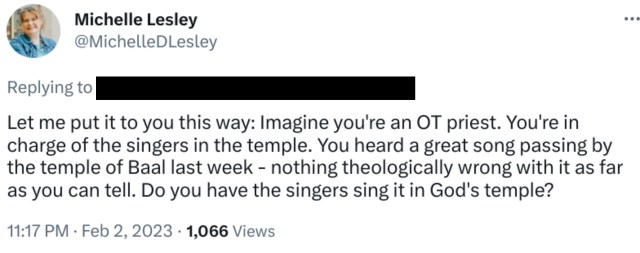
There is simply no good reason for a doctrinally sound church to use music from heretical sources like these.

The Mailbag: False Doctrine in Contemporary Christian Music

Why Our Church No Longer Plays Bethel or Hillsong Music (or Elevation or Jesus Culture), and Neither Should Yours

Hillsong’s Theology of Music and Worship

The Mailbag: Should Christians listen to “Reckless Love”?


Hello there. I read your blog about Priscilla Shirer being a false teacher. Read some parts of your blog. Found your recommended preachers with sound doctrine. I don’t know what denomination you’re in. But I just wanted to ask if you believe if we can lose our salvation?

Hi there! I’m a Reformed Southern Baptist. You can read more about my denomination and my beliefs at the Statement of Faith tab and the Welcome tab (both in the blue menu bar at the top of this page.

No, I do not believe genuinely regenerated Christians can lose their salvation because that’s not what the Bible teaches. I discussed this at length, including the relevant Scriptures, in my article The Mailbag: Can unforgiveness cause you to you lose your salvation?.


If you have a question about: a Bible passage, an aspect of theology, a current issue in Christianity, or how to biblically handle a family, life, or church situation, comment below (I’ll hold all questions in queue {unpublished} for a future edition of The Mailbag) or send me an e-mail or private message. If your question is chosen for publication, your anonymity will be protected.

Discernment, Doctrinally Sound Teachers, False Doctrine, False Teachers, New Apostolic Reformation, Sermons

Justin Peters: The Modern Prophets and Faith Healers Utterly Destroyed by COVID-19


Last week, Justin Peters released this excellent teaching video demonstrating how the COVID-19 virus totally debunks the claims of these heretical charlatans. Prophets and miraculous healers, they are not. Invest the time to watch it, and consider sharing it (kindly and lovingly, of course) with those you know who are enamored with this kind of “Christianity.”

Discernment, Sermons

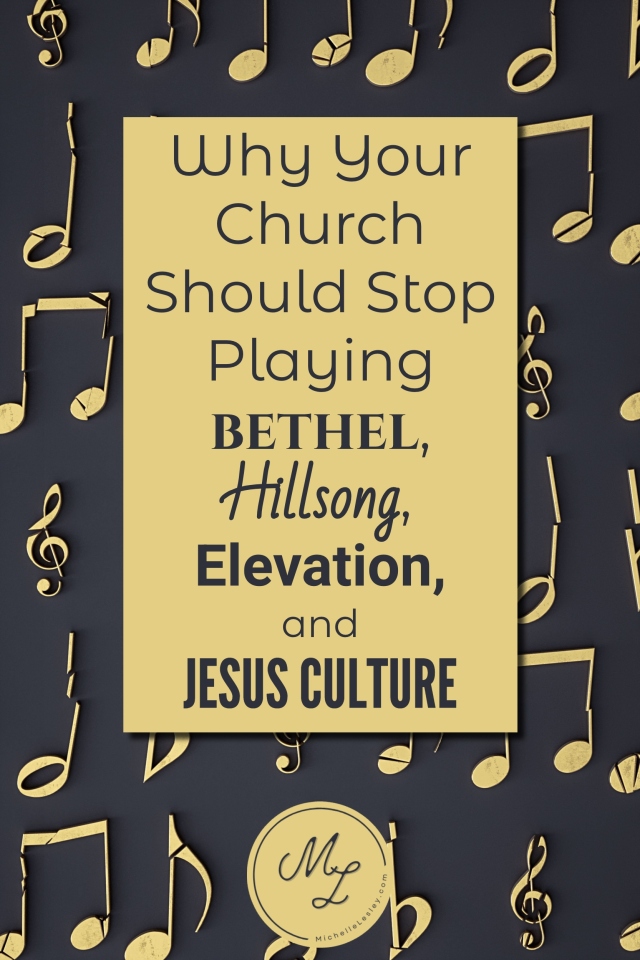
Why Your Church Should Stop Playing Bethel, Hillsong, Elevation, and Jesus Culture

If you prefer listening to reading, check out our A Word Fitly Spoken podcast episode, Discord: Why Your Church Should Reject Bethel Hillsong and Elevation Music, based on this article.


While this article deals primarily with Bethel, Hillsong, Elevation, and Jesus Culture, they are by no means the only heretical music sources to be avoided. Phil Wickham, for example, is just as prolific as these groups and his music is used by just as many churches. With his strong ties to Bethel, he should be included under the umbrella of Bethel as you consider the remainder of this article. There are numerous other unbiblical musicians who should be avoided for these same (and other) reasons. You can find a sampling of them in my article The Mailbag: False Doctrine in Contemporary Christian Music.


Justin Peters and Todd Friel discuss the theological problems with Bethel, Jesus Culture, Hillsong, and Elevation music and why your church shouldn’t use their music in this video interview: Why Your Church Shouldn’t Play Bethel and Hillsong Music.

Is it wrong to sing songs from Bethel if they are theologically correct? In this episode of Redeeming Truth, Pastors Costi Hinn, Dale Thackrah, and Kyle Swanson provide insight into the dangers of supporting ministries like Bethel [and Hillsong, Jesus Culture and Elevation Music], that have a false understanding of who Christ is.

If you are looking for theologically accurate worship music to listen to or sing in your church, they have put together a Spotify worship playlist that you can listen to. Costi has also written an excellent companion article on his blog: Should Your Church Sing Jesus Culture & Bethel Music?

Excerpted from my article The Mailbag: False Doctrine in Contemporary Christian Music

“It’s imperative for churches to be discerning about the CCM they use in worship. If Jane Churchmember hears a CCM song in church and likes it, she’s likely to Google the song (probably right there in church- I’ve done it!), find out who sings it, and begin following that artist. Worship pastors who use CCM have a responsibility to vet the artists who perform the songs they select for the worship service to make sure they’re not sending Jane into the arms of a heretic. Additionally, music costs money, and you don’t want your church’s offerings supporting false doctrine.

Now, every time I address the subject of being discerning about worship music and that churches should not use worship music from heretical sources (such as Bethel, Hillsong, and Elevation) someone who’s defending using music from these heretical sources [will say]:

Well, [insert name of hymn writer here] wrote lots of perfectly biblical hymns, but he had some theological problems too, and you’re not recommending we get rid of all of his hymns.

Well, first of all, maybe we should more closely examine the theology of some of our most prolific hymnists and stop using their music because of what they believed. Quick – off the top of your head, name the three we should start with…

…And that’s what separates the errant hymnist from Bethel, et al. Most Christians, even those who prefer hymns over CCM, could probably not name three people who wrote hymns, let alone tell you anything about their theology. But if you ask the average Christian to name three top Christian artists, she could rattle them off in a second.

Most hymn writers have been dead for up to hundreds of years. They don’t have Facebook pages you can follow, nobody’s playing their stuff on KLOVE, they’re not on tour to promote their latest album, they don’t have thousands of followers worldwide, and their music is in the public domain, so your church isn’t financially supporting them or their work. If you wanted to follow their errant theology, you’d have to hit the books to research and study it. Contemporary musicians’ theology is only a click away on YouTube, social media, live streamed concerts and conferences, and on their web sites. Nobody is following dead hymnists’ false doctrine, but hordes are following contemporary musicians’ heresy.”


Excerpted from my articles on Bethel, Hillsong, and Elevation:

If you came here looking for a critique of individual [Bethel, Hillsong, or Elevation] songs, that’s not really what this is about. Everything connected to [these “pastors”] – [the “churches,” the music companies] (as entities and all individual songs), all [“church” and music] personnel, materials, programs, and events – are all fruit of the poisonous tree [of the false teacher who heads everything up]. No, you cannot biblically pick and choose songs from [any of these organizations] that don’t seem to overtly violate Scripture. The Bible never tells us to “chew up the meat and spit out the bones.” It says:

I appeal to you, brothers, to watch out for those who cause divisions and create obstacles contrary to the doctrine that you have been taught; avoid them. For such persons do not serve our Lord Christ, but their own appetites, and by smooth talk and flattery they deceive the hearts of the naive. Romans 16:17-18

“Watch out” for false teachers. “Avoid them.” That includes everything about them: all their materials, books, events, music, social media, etc. Would the God who breathed out these words of Scripture be pleased if we ourselves, or our churches, use materials by people who “do not serve our Lord Christ”?

Excerpted from my article The Mailbag: Potpourri (…Solid churches with heretical music…)

“We have been searching for a doctrinally sound church in the area we moved to, and unfortunately it has not been easy! The few that we have found still use Hillsong, Bethel or Elevation music. I usually cross a church off the list quickly if they sing from those artists. But like I said, now I am finding even doctrinally sound churches are throwing some of those songs in. Do you have any insight to this dilemma?”

for pastors and ministers of music: This is yet one more reason it is detrimental to your church to use music from Bethel, Jesus Culture, Hillsong, Elevation, any musician connected these groups (such as Phil Wickham, who’s very prolific and has strong ties to Bethel), or any other musician who isn’t doctrinally sound (after you have thoroughly vetted him/her/them.) regardless of how biblical the lyrics of any particular song of theirs that you’re using might be. You could potentially be turning away solid, mature, discerning Believers who might otherwise be interested in joining your church. The woman who sent in this question is not the first to ask me something like this – not by a long shot. This issue is increasingly of concern to Christians looking for a solid church. (For that reason, I do not list churches – even Reformed or seemingly otherwise doctrinally sound churches – on my Reader Recommended Churches list who use music from heretical sources like these.)

When a visitor walks into your sanctuary for the first time, your worship service is the “face” of your church to her. What kind of a first impression are you making? When you use music by doctrinally unsound musicians, it does not say, “We’re really a doctrinally sound church – honest! We only use songs from these groups whose lyrics are biblical.”. It says, “This church has leaders who aren’t discerning,” or “If this church uses music by these heretical groups, what other doctrinal problems does it have?”. Why put that stumbling block out there when there is plenty of music available with biblical lyrics written/performed by doctrinally sound musicians?

And there’s another stumbling block that using this type of music puts in front of weaker brothers and sisters that you may not have realized. I have heard from a number of Christians whom God graciously saved and rescued out of the pit of “churches” similar to Bethel, Hillsong, and Elevation. They tell me that when they walk into what they think is a doctrinally sound church and hear music from these and other heretical sources, it triggers a form of spiritual PTSD. It’s traumatizing to them. They immediately become fearful that your church is mere steps from turning into one of these types of “churches.” Will they grow out of that reflexive reaction? Yes, some day, as God continues to sanctify them. In the meantime, do you want the music at your church to cause them unnecessary anxiety? I hope not.

Even for Christians who have not come out of “churches” like these but are knowledgeable about their heretical theology, using these songs in your worship service is putting a stumbling block in front of them, too. Take me, for example. I’ve studied these groups. I’ve seen their heresy and the damage they do to both the Kingdom and to the individuals who follow them. And because of that, I’ve zealously spoken out against them. If I visit your church and an Elevation song suddenly flashes up on the screen, my ability to worship is completely derailed in grief that your church would use a song from that source – especially if you know about their theology and are well acquainted with music from doctrinally sound sources that you could have used instead. I cannot sin against my conscience by singing those songs. Consider me a “weaker brother” if you like, but do you care more about me as your sister in Christ, or your “right” to use music from these sources? What about Paul’s posture in 1 Corinthians 8:9-13?

But take care that this right of yours does not somehow become a stumbling block to the weak. For if anyone sees you who have knowledge eating in an idol’s temple, will he not be encouraged, if his conscience is weak, to eat food offered to idols? And so by your knowledge this weak person is destroyed, the brother for whom Christ died. Thus, sinning against your brothers and wounding their conscience when it is weak, you sin against Christ. Therefore, if food makes my brother stumble, I will never eat meat, lest I make my brother stumble.

If this was true in Paul’s personal life, shouldn’t it surely be true of our worship services? If you wouldn’t put a Christmas tree or portrayals of Jesus in your sanctuary because it might offend a brother in Christ, why would you use worship music that causes offense to your brothers and sisters?

Finally, what is the proactively good reason for intentionally choosing music from a heretical source? In other words, when you’re selecting music for the worship service, why would you choose, say, a Hillsong song about God’s glory, or Psalm 23, or the crucifixion, when you could just as easily choose a song from a doctrinally sound source about any of those things – a source that isn’t a stumbling block to anyone, won’t give anyone the wrong impression about your church, won’t lead anyone to follow a heretical “church,” and won’t use your church’s offerings to support a heretical “church”? What makes the Hillsong song you’re choosing better than the song from the doctrinally sound source? It doesn’t seem to me that there’s a good enough reason to use songs from these sources that outweighs all the good, biblical reasons not to use them.

There is simply no good reason for a doctrinally sound church to use music from heretical sources like these.

There is simply no good reason for a doctrinally sound church to use music from heretical sources like Bethel, Jesus Culture, Hillsong, and Elevation.


Additional Resources

Stop Singing Hillsong, Bethel, Jesus Culture, and Elevation by Scott Aniol

The Mailbag: “I Speak Jesus,” Charity Gayle, and How to Vet Christian Music

Why I Don’t Sing the Songs of Hillsong and Jesus Culture by Dan Cogan

Why Fundamental Baptist Churches Must Avoid Bethel Music by Spencer Smith

Bethel Church (Redding, CA)/Bethel Music/Jesus Culture

Hillsong/Brian & Bobbie Houston

Elevation/Elevation Music

The Mailbag: What Is the New Apostolic Reformation?

The Mailbag: Should Christians Listen to Reckless Love?

God’s Not Like, “Whatever, Dude,” About How He’s Approached in Worship

The Mailbag: False Doctrine in Contemporary Christian Music

Hillsong’s Theology of Music and Worship

Mailbag, New Apostolic Reformation

The Mailbag: My friend just graduated from “prophecy school”


What would you say to a woman who just graduated from a “school of prophecy“? How do you handle this subject in a graceful way to help her see the truth?

Wow, that’s a tough one! These prophecy, healing, and other apostolic gifts “schools” similar to Bethel’s notorious School of Supernatural Ministry, are popping up everywhere and leading people astray into damnable New Apostolic Reformation heresy.

We love our friends and don’t want to see them deceived by false doctrine, but it can be a difficult topic to address. Why? Because when you get down to the nitty gritty of loving false doctrine and false teachers, the foundational issue is idolatry. And when people love their idols enough to follow them for years, and invest a lot of time, energy, and money in their idols’ schools, conferences, or materials, it’s very likely their reaction to being told they’re following an idol is not going to be…shall we say…pleasant and polite.

Fear of a negative reaction, however, is not something that should keep us from loving our friends enough to speak biblical truth to them. Remember what the Bible says:

Faithful are the wounds of a friend; profuse are the kisses of an enemy. Proverbs 27:6

In other words, if you’re a faithful, godly friend, you’ll risk hurting your friend’s feelings with kindly spoken Scriptural truth. If you lie to her or affirm her in falsehood in order to preserve her feelings, you’re her enemy, not her friend.

Ironically, in this situation, if you’re a true friend to this woman, you will likely lose your friendship with her. If she’s excitedly telling you about the prophecy school she just graduated from, she doesn’t want a true, godly friend who’s looking out for her best spiritual interests and will tell her that she just wasted precious time and money on something that’s dangerously unbiblical. She wants the kisses of the enemy to affirm her in her beliefs.

But, again, that’s OK. It really is OK if your “friend” chooses false doctrine over you (In which case, she isn’t being a good friend to you, is she?). It might be painful, but with the help and comfort of the Holy Spirit, you will not only survive, God will bless you.

“Do not think that I have come to bring peace to the earth. I have not come to bring peace, but a sword. For I have come to set a man against his father, and a daughter against her mother, and a daughter-in-law against her mother-in-law. And a person’s enemies will be those of his own household. Whoever loves father or mother more than me is not worthy of me, and whoever loves son or daughter more than me is not worthy of me. And whoever does not take his cross and follow me is not worthy of me. Whoever finds his life will lose it, and whoever loses his life for my sake will find it. Matthew 10:34-39

Jesus said, “Truly, I say to you, there is no one who has left house or brothers or sisters or mother or father or children or lands, for my sake and for the gospel, who will not receive a hundredfold now in this time, houses and brothers and sisters and mothers and children and lands, with persecutions, and in the age to come eternal life. Mark 10:29-30

So, here are my suggestions for responding to your friend in a godly way.

Pray for yourself. Pray that God will help you speak boldly, yet kindly, to your friend. That He will give you the right words to say. That He will prepare your heart for the possibility of losing this friend by trying to help her.

 Pray for your friend. Pray for her salvation. People who are this far gone into heresy are not saved. (See John 10.) Pray that the Holy Spirit will open her eyes to the deception she’s under and the biblical truth you’re speaking to her.

Remember that you don’t have to say everything in one conversation. In fact, depending on the situation, it’s probably better that you don’t. Most women don’t respond well emotionally to drinking from a fire hose of informational rebuke, and she will probably not hear about 90% of what you say. Shorter conversations over a protracted period of time (as you’re continually praying for her) are much more likely to be effective.

✢ Asking questions is helpful. Instead of sitting down with an, “OK, girlfriend, here’s how it is,” approach, try asking your friend questions about the prophecy school and her beliefs. This will help in two ways. First, it helps you get up to speed on exactly what she was taught at this prophecy school and where she is, spiritually, so you’ll be able to give an informed response. Second, asking questions gives the conversation an “I care about you,” tone, which most women will respond to better than an “I’m here to set you straight because you’re wrong,” tone. If you demonstrate by your questions that you care about her and want to learn what she believes, she will be much more likely to reciprocate and listen when you share what you believe.

✢ Share the gospel. A really good verse to keep in mind during this whole process is 1 Corinthians 2:14:

The natural person does not accept the things of the Spirit of God, for they are folly to him, and he is not able to understand them because they are spiritually discerned.

Here’s what this means in your situation: You can perfectly present – the right tone, an uber-caring demeanor, all the right verses, the exact right words – every biblical argument against the things your friend was taught at prophecy school and she’s still not going to “get it” if she’s not saved. It will be “folly” to her and she will not be “able to understand them,” because she does not have the Holy Spirit indwelling her. Saved people embrace and submit to Scripture even when it’s hard because the Holy Spirit enables them to. Lost people kick against Scripture’s requirements because they’re devoid of the Holy Spirit.

Your friend needs the gospel first. You may want to show her my article Basic Training: The Gospel or some of the Scriptures in it, and ask some questions like,  “What do you think this article is trying to say?” or “What did the prophecy school teach you about this passage?” or “You said the prophecy school taught you _____. How does that match up with this verse?”. Another great question for assessing someone’s understanding of the gospel is, “If I had five minutes to live and I asked you how I could go to Heaven when I died, how would you answer me?”.

Once she’s saved, the Holy Spirit will do the heavy lifting of correcting her theology. He is the one who will have to open her heart and mind to the truth of Scripture.

✢ Give her a graduation gift: A MacArthur Study Bible (I’d recommend the ESV translation.). Tuck in a bookmark with the gospel printed on it.

Share biblical resources. If your friend is open to it, give her gospel-centered, Scripture-rich books to read, sermons to listen to, podcast recommendations, etc. Invite her to services and events at your doctrinally sound church. (Do this occasionally. Don’t bombard her constantly.)

✢ Share Lindsay’s testimony. Last year, Lindsay Davis, while a student at Bethel’s School of Supernatural Ministry, got saved after viewing the film American Gospel (a wonderful biblical resource to share with your friend), and was subsequently expelled for sharing the gospel with her fellow students and questioning the unbiblical teaching at the school. Lindsay has given her testimony in dozens of video, audio, and print interviews. Just Google “Lindsay Davis testimony” or “Lindsay Davis Bethel” and choose the one you think your friend would respond to best.


I hope things go well when you talk with your friend. I’m taking a moment to pray for both of you now, and I ask that everyone reading this would do the same.

Additional Resources:

Basic Training: The Bible Is Our Authority

Basic Training: The Bible Is Sufficient

Weak Women and the Idolatry of Personal Experience

God’s Not Like “Whatever, Dude,” About The Way He’s Approached in Worship

Clinging to the Golden Calf: 7 Godly Responses When Someone Says You’re Following a False Teacher

Words with Friends: How to contend with loved ones at A Word Fitly Spoken

Words With Friends at Berean Examiner


If you have a question about: a Bible passage, an aspect of theology, a current issue in Christianity, or how to biblically handle a family, life, or church situation, comment below (I’ll hold all questions in queue {unpublished} for a future edition of The Mailbag) or send me an e-mail or private message. If your question is chosen for publication, your anonymity will be protected.

Random Ramblings Ruminations Resources

Random Ramblings, Ruminations, and Resources


Some days you wake up and you just don’t know what to write about, and it’s a beautiful fall day – which is rare as hens’ teeth in south Louisiana – and you just don’t feel like writing, anyway. Writer’s block: it’s the bane of a blogger’s existence.

I have a Google Docs file I’ve entitled “Scratch Pad”. Whenever I get a good idea for an article, I jot down the gist of it there. Then, when it’s one of those “meh” weeks when I’m not overwhelmingly passionate about anything in particular, I can thumb through those ideas for some inspiration.

It’s one of those “meh” weeks.

I started sifting through my scratch pad, and I noticed some of those article starters had been on the list for a while, mostly because they could really be addressed in a paragraph or two and didn’t need to be stretched out into a whole article.

(Are you bored, yet? I feel like you’re bored. I’m already bored and I’m the one writing this thing.)

So today is going to be a “clean out the fridge” day with some short random ramblings and ruminations on a variety of topics, with maybe a helpful resource thrown in here and there if I think about it. I’m just going to set it all out there on the counter and, hopefully, you’ll see something that looks appetizing.

This may or may not become a regular (monthly or every other month or whenever) feature. I don’t know. It depends on how often I wake up feeling “meh” and whether or not y’all like it, so shoot me some feedback on this one, and we’ll go from there.

Helloooooooo? Is anybody still with me?

I see that hand!

Here we go…

The apostle Paula

There’s this…lady…on Twitter. She’s very sincere and passionate about her theology – most of which seems to be pretty doctrinally sound. I have no doubt that she has the best of intentions with her tweets, and that she’s a sister in Christ, but…well, let’s just say she has some…um…issues…which, at this point, she’s not willing to be discipled out of. She’s kind of a Servus Christi meets Steven Anderson meets Westboro (so EVERYTHING SHE TWEETS IS IN ALL CAPS AND VERY EXTREME AND INTENSE) but with fairly decent theology.
A while back, she asked me something along the lines of (I forgot to bookmark her question to me) what I thought of the way she presented the gospel to the lost (which included a lot of in depth Reformed theological concepts). This was my answer to her, in case it might be helpful to you…

OK, everything you’ve said is technically biblically correct and that’s really good! But it’s not just about having the facts right. If you want to be an effective witness you have to have the facts right AND the right approach. And I know you want to be effective- also good!

If I could just offer you a few things to think about:

–Reformed theology is great. I believe it. I think everybody should believe it. But lost people aren’t going to get it (1 Corinthians 2:14). They aren’t going to understand terms like sheep, elect, justification, etc., and that’s OK. They can learn that after they’re saved. I would suggest finding a way to simplify – not water down – just explain things in a simpler way that even a child could understand: “God is perfect and holy. You’re not because you’ve sinned by lying, coveting, etc. The punishment for sin is an eternity in Hell. Jesus paid the penalty for your sin by His death on the cross, burial, and resurrection so you don’t have to spend eternity in Hell. If you turn sorrowfully from your sin and trust in His finished work on the cross, He will save and forgive you.” Something like that.

–It could just be the way you’re coming across on Twitter, and maybe you don’t sound like this in real life, but you’re coming across as judgmental and condemning rather than, “I love you and I can’t bear the thought of you continuing in this life or in eternity without Jesus.” Most people today are really looking for somebody to love them. It’s like the old saying goes: “People don’t care how much you know until they know how much you care.”

–I think it would be better to leave off the persecution part [she had included something in the gospel presentation about how Christians should expect to be harshly persecuted], NOT because it isn’t true, but because repentance and trusting Christ is overwhelming enough for the moment. Persecution is not something we hide and we definitely don’t go the other way and tell people everything will be awesome if they get saved, but you don’t want to put a fire hose up to the mouth of a baby who can barely handle a bottle, either.

She didn’t agree with me, said I was peddling a seeker-driven, watered down gospel that would send people to Hell, and decided she needed to harass me on a regular basis, so, unfortunately, I had to part ways with her. Eh, what can you do? 🤷

A book report

My reading habits have been terrible over the past couple of years. I blame social media and TV. (Embarrassingly, that’s one of the main reasons that, with extremely rare exception, I don’t write solicited book reviews.)

But I had been wanting to get my hands on Costi Hinn’s and Anthony Wood’s book, Defining Deception, ever since it first came out. I finally got around to ordering it, I just finished reading it, and now I want to commend it to you.

It’s good. Get it. Read it.

If your church uses Bethel or Jesus Culture music, give a copy to your pastor and minister of music. (Actually, get all of your pastors copies anyway. It’s Pastor Appreciation Month, and I don’t know a pastor who doesn’t love a good book.)

First of all, it’s short. I mean, if it were any shorter, it would be a booklet, not a book. So even if you’re a reading schlub like me, you could finish it in under a week. Some of you book nerds could sit down and finish it in a couple of hours.

It’s basically a primer on the New Apostolic Reformation, using Bethel as the iconic NAR exemplar (which it is). You get a history of the NAR including key figures in its founding and growth, an explanation of the theological problems and heresies within the movement, a brief course in basic pneumatology, several appendices which answer more specific questions readers might have, and more. And it’s all helpfully written at a level any Joe or Jane in the pew without a seminary degree can understand.

This NAR garbage is making its way into average churches like yours. Read up and be prepared.

Hearing voices

Remember earlier this year when Vice President Pence had made some sort of comment about God speaking to him and The View’s maven of mockery, Joy Behar, chortled:

“It’s one thing to talk to Jesus, it’s another thing for Jesus to talk to you. That’s mental illness…”

(I told you some of this stuff had been sitting in the hopper for a while.)

It pains me to have to say this because I despise everything Joy stands for, as well as her smug, derisive, self-righteous, condescending, supercilious, insulting attitude toward anything conservative or Christian, but unless Brother Mike was talking about God speaking to Him through Scripture…

…she was technically right.

Ouch. That hurt more than I thought it would.

Now, hang on before you start hurling those stones at me. I’m not saying that otherwise sane people who think they’re hearing God speak to them are mentally ill. They’re theologically wrong, but they’re not insane.

Here’s where she’s technically correct. In the era in which Joy came of age – before everybody and their dog started receiving extra-biblical revelation – if you were hearing voices in your head that nobody else could hear, whether you said it was God, or the devil, or Elvis talking to you, you were carted off to to a nice little institution and sedated. Heavily.

I happen to know this because when I was working on my bachelor’s degree in psychology (toward the end of that era), I did a lot of course work in abnormal psych (no idea where I was going with that, I just found it gruesomely interesting) and hearing non-existent voices telling you what to do was one of the criteria that pointed toward a formal diagnosis of schizophrenia or psychosis.

I don’t know if Joy or anybody else mentioned that, but that was my first impression of her comment about mental illness. I’ve been saying the same thing ever since I was in college- if Christians keep claiming they’re hearing God speak audibly to them, the world is going to start thinking they’re crazy. Because when it comes down to the price of eggs, there’s no outwardly demonstrable difference between observing a sane person hearing God tell her what to do and observing a schizophrenic hearing God tell her what to do. In the world’s eyes- why are we calling the first person a Christian and the second person insane?

Just one more reason to stick to sola Scriptura and the sufficiency of Scripture.

Is there an echo in here?

Sometimes I think social media has warped people’s brains.

Let me ask you something: If a pugnacious stranger knocked on your front door and started yelling at you, insulting you, and spewing all kinds of unbiblical garbage, would you welcome him into your living room with a humble smile on your face and put up with being treated that way on the off chance that you might learn something from his perspective on the issue, or to prove to others how open-minded you are?

Yeah, I wouldn’t either. In fact, I’d lock the door and probably call the police.

And yet those very people (and various SuperChristians who are apparently way more spiritually mature than I am, at least in their own opinion) demand that that kind of behavior be graciously tolerated and accepted on Twitter and Facebook, sneeringly accusing those of us who either refuse to engage with them, or block them, of living in a little “Christian bubble” or “holy huddle” or “echo chamber”.

Look, if you’re on social media for the purpose of verbally abusing people who think differently from you or to argue with strangers, I guess that’s your business (although if you claim to be a Christian you need to stop doing those things and repent), but that’s not why I’m on social media.

I’m on social media to keep up with far away friends and family, to promote my ministry, to help people I can help (who want to be helped), and to network and fellowship with like-minded Believers.

I’ve had lots of wonderful conversations with kind and polite people – Believers and unbelievers – who see things differently than I do, and I’m all for that.

But I’m not going to engage with rude, abusive people who are out looking for a fight. I’m just not. That would ruin the enjoyment I get out of social media. And if you want to call that “living in an echo chamber”, go right ahead. That doesn’t shame me in the least. I have nothing to prove about my level of open-mindedness and there’s nothing in Scripture that says I have to engage with people like that or subject myself to their abuse in order for God to consider me loving or tolerant or open-minded. The End.

A plea to the pastors

One of my recent Twitter threads:

Pastors- The women of your church need to be taught how to properly handle/study the Bible itself. Not Bible study books/DVDs – the Bible.

Many of them are so biblically ignorant I can’t explain to them why their favorite teacher is a false teacher because they have no frame of reference for comprehending such a thing and therefore just assume I’m (or anyone else who warns them is) being mean and hateful. They believe anything the false teacher says, not because she’s biblical, but because they like her and she makes them feel good.

For. the. love. please stop depending on canned studies (even the few doctrinally sound ones out there) in your women’s Bible study/Sunday school classes and get someone to teach who actually knows how to teach God’s Word and can teach them how to study God’s Word for themselves at home.

They are falling for false doctrine either because no one has properly taught them the gospel and they’re false converts or because they don’t know enough of the Bible to know that what they’re hearing conflicts with God’s Word. I can’t even simply tell women to compare what they’re hearing to Scripture because they have no idea what that means, why they should do it, or how to do it.

Don’t just assume they know the gospel or know their Bibles or are getting what you’re preaching. Some of them are not. A lady I know recently told me how excited she was about the new Joyce Meyer book she had just ordered. This was after three years of her faithfully sitting under doctrinally sound preaching. You’ve got to be intentional and proactive and make sure they are being properly trained in God’s Word.

I know I’m preaching to the choir with most of the pastors who follow me and are already doing a great job of training the women in your church. But if you could just double check to make sure. Please. We’re losing a generation of women to “feel-ology” and it breaks my heart.

McBible Study and the Famine of God’s Word

Bible Studies