Discernment

Celebrate Recovery

If you are considering commenting or sending me an e-mail objecting to the fact that I warn against certain teachers or ministries, please click here and read this article first. Your objection is most likely answered here. I won’t be publishing comments or answering emails that are answered by this article.


This article is kept continuously updated as needed.


I get lots of questions about particular authors, pastors, Bible teachers, ministries, and evangelical fads and trends, and whether or not I recommend them. Some of the best known can be found in the blue menu bar at the top of this page at my Popular False Teachers tab. The ministry below is one I’ve been asked about recently, so I’ve done a quick check (this is brief research, not exhaustive) on it.

Below are the biblical criteria I use when deciding whether or not to recommend a teacher, ministry, etc.

Generally speaking, in order for me to recommend a teacher, speaker, author, or ministry, he/she/it has to meet three criteria:

a) A female teacher cannot currently and unrepentantly preach to or teach men in violation of 1 Timothy 2:12. A male teacher or pastor cannot allow women to carry out this violation of Scripture in his ministry. The pastor or teacher cannot currently and unrepentantly be living in any other sin (for example, cohabiting with her boyfriend or living as a homosexual). A ministry or trend cannot allow or encourage any of these things.

b) The pastor, teacher, ministry, or trend cannot currently and unrepentantly be partnering with, yoked to, or frequently appearing with false teachers. This is a violation of Scripture.

c) The pastor, teacher, or ministry cannot currently and unrepentantly be teaching false doctrine.

I recommend against any teacher, ministry, or evangelical trend that violates one or more of these biblical tenets.

If you’d like to check out some pastors and teachers I heartily recommend, click the Recommended Bible Teachers tab in the blue menu bar at the top of this page.


Celebrate Recovery
Not Recommended

Celebrate Recovery (CR) was created by John Baker, a member of false teacher Rick Warren’s Saddleback “Church”. It was “born out of the heart of Saddleback Church” with Rick’s approval and under his oversight, and, as you might expect, is fraught with unbiblical issues at nearly every turn. In the U.S. and abroad, over 35,000 churches and many secular organizations and businesses now offer Celebrate Recovery programs, and over 5 million people have completed CRs “Step Study” program.

CR is open to professing Christians as well as the lost (in the CR program at Saddleback, non-Christians make up over 70% of CR participants – see below), and is modeled after secular 12 step programs (ex: Alcoholics Anonymous). Adapting worldly means and methods for use in the church (though characteristic of Saddleback) is not biblical. The biblical means for helping a lost person deal with addiction is to call him to repent and believe the gospel, and, if he gets saved, disciple him in obedience to God’s Word. The biblical means for helping a saved person who is committing the sin of drunkenness is to follow the steps of church discipline (beginning with a one on one call to repentance and restoration) commanded in Matthew 18, and if he repents, disciple him in obedience to God’s Word.

That CR adapts worldly means and methods is abundantly evident below in the video introduction to CR (found on the CR website’s What is Celebrate Recovery? page):

  • Notice Johnny Baker (son of founder John Baker) and his wife Jeni start with the typical AA introduction: Johnny: “Hi, I’m Johnny and (rather than “and I’m an alcoholic”) I struggle with…” Jeni: “Hi Johnny!”.
  • Rather than finding their identity in Christ who has graciously saved them out of their sin, they identity themselves by their pet sins and/or problems. This teaches people to see themselves (and presents them to others) as helpless and non-responsible victims rather than victors through Christ.
  • The terms they use to identify themselves are secular and psychologized (“addiction” “co-dependency” “adult child of family dysfunction”) rather than biblical (the sin of drunkenness, fear/idolatry of man, and sinful family relationships, bitterness, unforgiveness, or whatever “adult child of family dysfunction” actually means. Jeni defines this term at the 5:30 mark as growing up in a “dysfunctional family that caused hurt in your life…which I think we pretty much all have.” That definition doesn’t do much to clear things up).
  • In the caption “PastorS of Celebrate Recovery” there are two biblical issues: First, Celebrate Recovery is not a church, it’s a parachurch ministry (if it’s functioning as a church, that brings us to three biblical issues with this caption). Biblically, only churches have pastors. If what is meant by “pastors” is that they are “directors” of CR divisions (as the CR website’s Our Team page says) then that is what the caption should say rather than adulterating a biblical term which has a specific meaning.

    Second, Scripture expressly forbids women from serving as pastors.

    And all of that is in the first nine seconds of this 21 minute video.

Another issue made plain in the video is that Celebrate Recovery teaches a false gospel:

At 3:24ff, speaking to lost people, Johnny gives an incomplete (and partially false) presentation of the gospel as a means of differentiating secular recovery programs from CR. Notice the number of times he says “We believe…” instead of “the Bible says…” or simply stating the terms of the gospel as irrefutable fact. This leaves room for lost people to infer, “These are their beliefs, but they don’t have to be mine.”

The facts Johnny states about Jesus’ life and that He sent the Holy Spirit are technically correct, but what’s missing? Repentance and faith. No mention is made of personal repentance of sin or placing one’s faith in Christ – as the Bible defines it – anywhere in this video. In this particular segment, Johnny skips directly from “Jesus died as a sacrifice for our sin, rose again, and lives now,” to “He sent the Holy Spirit to live inside of us.” That is a false gospel. The indwelling Holy Spirit is a sign, seal, and guarantee of our salvation, and salvation does not take place without the repentance of sin and placing one’s faith in Christ.

Johnny goes on to say that “that [the indwelling Holy Spirit] is what gives us the power to find healing from our hurts, hang-ups, and habits”. But the lost people he’s talking to do not have the indwelling Holy Spirit to help them because they’re still lost, because CR’s “gospel” doesn’t call them to repent and believe.

Further evidence of CR’s false gospel can be found near the end of the video. At 20:11ff, Johnny quotes Romans 3:23, and then proceeds to define sin as “mistakes”. That’s unbiblical. A “mistake” is accidentally calling your son by your daughter’s name, or taking the wrong exit off the interstate, or forgetting to carry the one. Mistakes are, by definition, unintentional and usually morally neutral. Sin is always immoral and frequently intentional. We are born with a sinful nature, but we also choose to sin.

Johnny further describes sin as “hurting other people” and “other people hurting us,” and that’s partially true, but that’s where he stops. Again, this is unbiblical. Sin is primarily rebellion against God. God taught us this way back in Psalm 51 where David, repenting of his sin with Bathsheba said, “Against You [God], You only, have I sinned and done what is evil in Your sight.” God is the first, last, and ultimate object of our sin.

You’ll probably also notice that even though Johnny uses the word “sin” a few times, he never speaks in biblical terms about everyone’s need to repent of their sin. Rather the terminology he uses is “hurts, hang-ups, and habits” (instead of “sin”) and “healing from your hurts” (instead of “repentance”). This likely stems from the idea in secular recovery groups like AA that alcoholism is a “disease” you need to “heal” and “recover” from like the flu or the chicken pox.

This medical model of sin is completely unbiblical because it removes personal culpability and responsibility for sin, i.e. you can’t help “catching” alcoholism (the sin of drunkenness) any more than you can help catching the flu. Nowhere does Scripture suggest that we need to “heal” and “recover” from sin. Jesus commands us to repent.

Sin is breaking God’s law and rebelling against the holy God of the universe. That’s not the same thing as a “mistake” or “hurting/being hurt by others” or “hurts, hang-ups, and habits”. And we don’t need to “heal” from our sin, we need to repent of it, forsake it, and mortify it.

Finally, Johnny (probably not even realizing he’s doing so) substitutes CR for the biblical gospel. Follow what he’s saying:

All have sinned >> sin = mistakes/hurting others/others hurting us >> we’ve all made mistakes/hurt others/others have hurt us >> “that means all of us qualify for Celebrate Recovery”

Whereas the Bible says:

All have sinned >> sin = rebellion against God >>
we all qualify for the gospel

Celebrate Recovery is not the gospel, nor a substitute for the gospel, for drunkards or drug addicts or anyone else. The gospel is the gospel. And the gospel is what we all need.

Another dangerous and unbiblical component of this concept of “sin is hurting others” is that the CR “gospel” conflates sinning against others with being sinned against under the banner of “hurts”. There is an enormous difference between a man getting drunk and beating his wife half to death and a wife who has been beaten half to death by her drunkard husband.

The Bible puts those two people in two different categories and addresses them discretely and justly. The man has sinned. The wife has been sinned against. The man needs to be brought to justice and repent. The wife needs to be cared for, helped to heal, and ultimately, to forgive.

CR throws both the husband and the wife into the same category because it doesn’t have a biblical definition of sin. The husband needs to “heal” and “recover” from his “addiction” and whatever “hurts” led him to “hurt someone else”. The wife needs to “heal” from being hurt by someone else. Treating the one who sinned and the one sinned against as though they’re the same by placing them in the same “recovery” program is damaging to both because it teaches the sinner he’s not responsible for his actions and has no need to repent, and it teaches the one sinned against that she’s no different from the one who sinned against her.

Now let’s take a look at some of the unbiblical 8 Principles and 12 Steps of the Celebrate Recovery program:

It’s a little confusing as to why CR has both 12 Steps and 8 Principles of recovery, but if I’m understanding it correctly, CR’s 12 Steps are designed to be sort of a bridge to assimilate people already familiar with the 12 steps of secular recovery groups (such as AA) into CR. CR’s 12 Steps are almost identical to the secular 12 steps. (The most noticeable difference is that the phrase “God, as we understand Him” has been changed to simply, “God”.)

The 8 Principles are CR’s own so-called “Christ centered” version of the secular 12 steps, supposedly based on the Beatitudes, and following the acrostic “R-E-C-O-V-E-R-Y”. But the ideas in the 8 Principles are very similar to the ideas in the secular 12 steps. So similar, in fact that each Principle is followed by a notation as to which of the 12 steps it corresponds to. For example, Principle 5 (“V” in the acrostic) corresponds to steps 6 and 7 of the secular 12 steps. And, although it should go without saying, the Beatitudes aren’t about hurts, addictions, or recovery.

So, on the macro-level, CR has taken a worldly philosophy and attempted to “Christianize” it slightly in order to appeal to the lost, which, again is typical of the way Saddleback – the original seeker driven “church” – tends to operate, and which, as I mentioned earlier, is unbiblical.

But what about the micro-level of the individual Principles?

Principle R1, the first half of V, and E2 aren’t bad. It would be better if CR actually cited and explained the Scriptures that teach these concepts and used biblical terminology, but overall these small snippets of the 8 principles are mostly aligned with Scripture. 2.5 principles. Out of 8.

Principle E1 is problematic:

Earnestly believe that God exists, that I matter to Him and that He has the power to help me recover.

Believing that God exists, that you matter to Him, and that He’s powerful is not the same thing as being born again by repentance and faith in Christ. Not by a long shot. The Egyptians at the Red Sea believed in God’s existence and power. The prophets of Baal all believed in God’s existence and power (right before Elijah slaughtered them all). And they definitely mattered to God, just not in a good way.

The issue here is that the unbeliever is not indwelt and empowered by the Holy Spirit to resist and flee from sin. It’s not that God isn’t powerful, it’s that as an unbeliever you don’t have access to, or a right to that power.

Principle C is another big nope:

Consciously choose to commit all my life and will
to Christ’s care and control.

Biblically, there’s no such animal. As an unbeliever, you cannot just make a fleshly decision of the will to commit all of your life and will to Christ’s care and control. It cannot be done without repentance, faith, and regeneration in response to the biblical gospel.

Principle O:

Openly examine and confess my faults to myself,
to God, and to someone I trust.

Sins. “Sins” is the word you’re looking for, not faults. Faults are not equivalent to sins. “Confess your sins to one another,” is what the Bible says. And while confession is a good thing, it’s not the same thing as repentance. A murderer can confess his crime, but feel completely justified in having done it, and be perfectly willing to do it again if given the chance. Repentance is grieving from the heart that you have sinned against a holy God, wishing you had never done it, and striving never to do it again. Also, look who comes first here in this line of confession – not God, but self.

The second half of principle V

Voluntarily submit to any and all changes God wants to make in my life and humbly ask Him to remove my character defects.

As I said above, the first half isn’t bad. The second half isn’t going to work for lost people because it doesn’t biblically identify their problem, which is sin, not “character defects”. And God is not going to remove their sin without repentance and faith in Christ. And if they’re trying to circumvent repentance, faith, and the biblical gospel in order to steal what they want from God, they’re not asking “humbly,” they’re asking pridefully.

Principle R2 is great if you’re saved, since all Christians are supposed to be doing these things anyway…

Reserve a daily time with God for self-examination, Bible reading, and prayer in order to know God and His will for my life and to gain the power to follow His will.

But not so great if you’re in the majority of CR participants who are lost. “The natural person does not accept the things of the Spirit of God, for they are folly to him, and he is not able to understand them because they are spiritually discerned,” 1 Corinthians 2:14 (emphasis, mine) tells us. And a lost person cannot “gain the power to follow His will” without the indwelling Holy Spirit.

Principle Y takes us back into false gospel territory:

Yield myself to God to be used to bring this Good News to others,
both by my example and my words.

Hold the phone, Henrietta. “This Good News” – capital G, capital N? What “Good News”? The “Good News” of Celebrate Recovery? That is out and out heresy. (And God doesn’t “use” people to bring heresy to others except as a judgment against them.) The only capital G, capital N “Good News” is the Good News of the biblical gospel, which CR has repeatedly failed to present and instead has substituted its own false gospel which is devoid of sin, faith, and repentance.

A final point to consider, and not a minor one, is the fact that Celebrate Recovery is embraced by the world. Contrary to what the powers that be at CR think, that is not a good thing. From the History of Celebrate Recovery page on the CR website:

“Celebrate Recovery is the number one outreach ministry at Saddleback Church, with over 70 percent of its members now coming from outside the church….Celebrate Recovery is not just growing in churches, but in recovery houses, rescue missions, universities, and prisons around the world. New Mexico was the first state to adopt Celebrate Recovery into its state prison system and now has Celebrate Recovery pods in all its state prisons. In August 2004, Celebrate Recovery was announced as California’s state-approved substance abuse program for prisons...We are part of a movement that God is blessing.”

God does not “bless” heresy and worldliness. And if we’re walking in obedience to Scripture and preaching and teaching the true biblical gospel the world will hate us, not love us. I’ll just let Scripture speak to those points:

If the world hates you, know that it has hated me [Jesus] before it hated you. If you were of the world, the world would love you as its own; but because you are not of the world, but I chose you out of the world, therefore the world hates you. John 15:18-19

Do not be surprised, brothers, that the world hates you. 1 John 3:13

They are from the world; therefore they speak from the world, and the world listens to them. 1 John 4:5

You adulterous people! Do you not know that friendship with the world is enmity with God? Therefore whoever wishes to be a friend of the world makes himself an enemy of God. James 4:4

I am astonished that you are so quickly deserting him who called you in the grace of Christ and are turning to a different gospel— not that there is another one, but there are some who trouble you and want to distort the gospel of Christ. But even if we or an angel from heaven should preach to you a gospel contrary to the one we preached to you, let him be accursed. As we have said before, so now I say again: If anyone is preaching to you a gospel contrary to the one you received, let him be accursed. For am I now seeking the approval of man, or of God? Or am I trying to please man? If I were still trying to please man, I would not be a servant of Christ. Galatians 1:6-10

These findings barely scratch the surface of Celebrate Recovery’s means, methods, and philosophy, but I think Christians who value sound doctrine will agree that this information is more than sufficient to warn people away from this unbiblical “ministry”.

If you aren’t a Christian and you need help with any sort of addiction or other problem, let me give you step 1 of Jesus’ program for addressing that: Repent and believe the gospel. Once you’re saved (or if you’re already saved as you’re reading this), find a doctrinally sound church, make an appointment with your pastor, and ask him to point you to someone who can disciple you in obedience to God’s Word. (If you absolutely can’t find a doctrinally sound church in your area, you could seek out an ACBC certified biblical counselor.)

The question is not, “Does Celebrate Recovery ‘work’?”. That’s pragmatism. The question is, “Is Celebrate Recovery biblical?”. And the answer to that question is a resounding no. Celebrate Recovery’s very foundations are unbiblical, and Jesus stressed just how crucial biblical foundations are:

Everyone then who hears these words of mine and does them will be like a wise man who built his house on the rock. And the rain fell, and the floods came, and the winds blew and beat on that house, but it did not fall, because it had been founded on the rock. And everyone who hears these words of mine and does not do them will be like a foolish man who built his house on the sand. And the rain fell, and the floods came, and the winds blew and beat against that house, and it fell, and great was the fall of it.

Matthew 7:24-27

Additional Resources

An Analysis of Celebrate Recovery Addictions Program at the Association of Certified Biblical Counselors (ACBC)

I am not thoroughly familiar with the websites below. I do not endorse anything on these sites that deviates from Scripture or conflicts with my beliefs as outlined in the “Welcome” or “Statement of Faith” tabs in the blue menu bar at the top of this page.

A Way Which Seemeth Right at The Berean Call (This link is not a blanket endorsement of this blog or author, only this particular article.)

Celebrate Recovery (several articles, plus many more resources on secular/Christian recovery) at The Way R122 Ministries


Christian women, Discernment

Throwback Thursday ~ Women In Combat

Originally published March 18, 2016

Over the last few months, there’s been a lot of talk about the possibility of future U.S. military drafts including young women in addition to young men. I’ve admired godly male friends who have spoken out vehemently against this and expressed concern about the government trying to press their daughters or wives into service. Some even vowed to lay their lives down protecting their women from having to face the horrors and dangers of war.

But I wonder if these men – husbands, fathers, pastors, elders – know that many of their wives, daughters, and sisters in Christ are already in the trenches fighting off the enemy with every ounce of our strength and every weapon at our disposal.

It’s not a war for territory or political control or freedom from dictatorial tyranny.

It’s a battle for the purity of the Bride. And the souls of our sisters.

Daily. Weekly. At church. On line. In our families. We strap on our Swords, march out to the front and engage in hand to hand combat with the Enemy.

His troops: false teachers.

His weapon of mass destruction: false doctrine.

Sometimes we stand as a shield between grenade-lobbing grunts and weak sisters who don’t know how to fight, or even that they’re in a war. Who want nothing more than to knock us down into the mud as they desert our King and join our foes.

Sometimes we infiltrate the enemy camp to bring back intelligence on his troops to our commanders and generals, only to be ignored, reprimanded, or dishonorably discharged from the unit.

Sometimes we stand as guards at the walls of our churches, watching the adversary advance, sounding the alarm, and standing in stunned disbelief as our commanding officers smilingly welcome the enemy troops through the gate.

Why? Why, in a field of pink, are there so few Green Berets? Why is it that so many women are out on the front lines battling this insidious rival while most of our brothers in arms seem to be AWOL?

men1

As Steve Lawson famously said a few years ago, “Give us some men who know the truth!”

And to that I respond with a hearty amen. But with much love and respect to Brother Steve, I would add:

Give us some men who will DEFEND the truth.

And the weak women the enemy seeks to capture.

And the strong women who should be protected, working safely away from the line of fire to support the troops and nurse the casualties back to health.

Give us men who will…

…thoroughly vet any curricula, books, or materials used by their church’s Bible study classes.

…train all of their church’s teachers to properly handle and exegete the word of God.

…take a close look at the authors of the books and blogs their wives or church members are reading and the speakers at the conferences and retreats they’re attending.

…examine the doctrine of the singers their daughters or youth listen to and the leaders of the youth camps they attend.

…speak out with godly boldness (not jerkiness- godly boldness) against false doctrine and false teachers on social media, in Sunday School, in the sanctuary, in their homes, and in every arena in which they have influence.

…join the few brave brothers who are already standing in the gap to present a united front to ward off the enemy.

Godly men on active duty in their churches, homes, and in the public square are out there. I’m privileged to know several. But they need a bigger band of brothers to join them in fighting the good fight.

We need men who will gird up, gear up, and stand up. Because some women in combat are wounded, battle fatigued, and in need of some R&R. And we can’t keep fighting this battle without a few more good men.

1 cor 16 13
Uncategorized

The Word on Wednesdays

Hi ladies! I hope you’ve been enjoying The Word on Wednesday Bible study lessons and resources, and that you’re looking forward to our new study as much as I am.

I’ve been taking a break on Wednesdays getting ready for our new study. I hope you’ll enjoy it and that it will edify you as you seek to grow in Christ and His Word. (The picture above does not mean we will be studying James. :0)

Unless Providentially hindered, I hope to announce the new study in the next few weeks. Stay tuned, and keep an eye on the blog on Wednesdays.

In the meantime, I’ll be posting some articles from the archives that I think you’ll find helpful as we make our way toward our next study. Here is this week’s article:

Wednesday’s Word

Wednesday is Bible study day here on the blog. In my Wednesday’s Word Bible study series you’ll find miscellaneous, one lesson Bible studies from each book of the Bible. One chapter of Scripture followed by study questions. This sampler series demonstrates that there’s nothing to be afraid of when approaching those “lesser known” books and that every book of the Bible is valuable and worth studying.

Wednesday’s Word ~ Psalm 139

O Lord, you have searched me and known me!
You know when I sit down and when I rise up;
    you discern my thoughts from afar.
You search out my path and my lying down
    and are acquainted with all my ways.
Even before a word is on my tongue,
    behold, O Lord, you know it altogether… Continue reading…

Southern Baptist/SBC

SBC21: Aftermath, Thoughts, and Where Do We Go From Here?

Photo courtesy of sbcannualmeeting.net

Well, the fat lady has sung. And it was one doozy of a requiem.

The 2021 annual meeting of the Southern Baptist Convention ended Wednesday…

That’s not a list of everything that happened, but it’s a few of the more major dismal moments.

It was not good. It is not good. And I am gobsmacked and slack-jawed over the sunshine and rainbows comments I’m seeing and hearing from a few people about the wonderful progress and decisions that were made, and that the SBC’s brightest days are ahead.

Are you kidding me? Is it truly possible to be that blind to what’s going on around you and still be able to pull your socks on every morning?

So I had a few random thoughts I wanted to share to wrap things up and bring this whole ugly nightmare of a convention to an end.

Autonomy of the Local Church

If there were ever a time to remember the autonomy of the local Southern Baptist church and be thankful for it, this is it.

While the SBC president can certainly influence the churches and direction of the Southern Baptist Convention with his bully pulpit (which only extends as far as people actually listen to him), and he does make various decisions that may indirectly affect your church, he’s not the Pope. He does not have the power to hand down edicts that your church is obligated to obey. Ostensibly, with regard to his authority, you and your church can operate in 100% defiance of everything he stands for and still be in friendly cooperation with the SBC. The same goes for SBC resolutions, all of which are non-binding upon you and your church.

CRT/I, Racial Issues, and Resolution 9

This year, the big push among doctrinally sound Southern Baptists was to repudiate Critical Race Theory/Intersectionality.

Tom Ascol made an important motion to rescind 2019’s Resolution 9 which affirmed CRT as a “useful analytical tool” for dealing with issues of race. His motion was ruled procedurally out of order because previous years’ resolutions cannot be rescinded.

Disturbingly, the resolutions committee declined to present the Resolution on the Incompatibility of Critical Race Theory and Intersectionality with the Baptist Faith and Message – which was spearheaded by SBC presidential candidate, Mike Stone (and co-submitted by over 1300 other Southern Baptists who signed on) to the messengers to vote on. They also declined to present several other (at my last count, four) anti-CRT/I resolutions.

Instead, they put all of these into their resolutions committee Cuisinart and poured us a tall glass of watered-down Resolution 2, “On the Sufficiency of Scripture for Race and Racial Reconciliation“. Now, had this resolution been presented two years ago instead of Resolution 9, it would have been fine. Not super impactful, but fine. But in the wake of the past two years of dealing with the Resolution 9 debacle, it was a toothless, cowardly display of fence-sitting meant to placate those on the anti-CRT side and hopefully not offend those on the pro-CRT side.

And when messengers didn’t bow and scrape in thanks and obeisance to the resolutions committee for throwing them this moldy crust of bread from their royal table, but instead objected, resolutions committee chair (and former SBC president), James Merritt, went on an angry, condescending, insulting tirade.

“If some people were as passionate about the gospel as they are about [decrying] Critical Race Theory, we’d win this world to Christ tomorrow!” he shamefully bellowed.

And a significant number of messengers cheered.

Never mind that CRT is antithetical to the gospel. Never mind that it’s being taught in our seminaries and even some of our churches. And never mind that the majority of Christians most passionately against CRT are against it precisely because they are so passionate about the gospel.

If you’re a doctrinally sound Southern Baptist who sees the dangers and heresies in Critical Race Theory and you want it eradicated from the SBC, the message is clear: The leadership wants you to sit down and shut up about it. And so do a lot of your fellow Southern Baptists. They don’t care, and they’re tired of hearing about it.

Ignorance, Laziness, and
Liberalism by Default

I’m going to take a page out of James Merritt’s book and “just say this bluntly and plainly”.

Too many messengers are ignorant of the issues in the Southern Baptist Convention, the candidates for various offices, and, frankly, their Bibles, and yet they attend the annual meeting and vote in ignorance anyway, just blindly trusting whoever happens to be on stage at the moment.

Stop it.

You’re damaging the convention, and hurting your fellow Southern Baptists in the process, because you’re playing right into the liberals’ hand. They are using you – your ignorance and gullibility – to further their ungodly causes and ideologies. Because a lot of the people running this shebang aren’t biblically trustworthy.

They get up there and smooth talk you with the forked tongue of Eden’s serpent, and just like Eve – instead of planting both feet firmly on God’s Word, standing up to them and declaring, “Thus saith the Lord,” – you get suckered in and fall for it.

Stop it.

It is one thing to be ignorant1 about something. We are all ignorant about various things. But if you’re going to represent your church and your fellow Southern Baptists as a messenger, by gum, you’d better at least attempt to know what’s going on, whether or not what you’re voting on is biblical, and what the implications are going to be.

Some of you knew exponentially more about the candidates and their positions on the issues in the last U.S. presidential election than you knew about any of the candidates for president of the SBC. You wouldn’t think of going into a secular voting booth and casting a ballot for candidates or laws at the local, state, or national level without informing yourself. And when you attend your own church’s business meetings you ask questions, and you know the issues and the people you’re voting on.

Don’t you think your decisions on the issues, the president, and other leaders of your own denomination – the largest expression of the visible church in the world – deserves at least as much attention, study, and vetting as you give those other elections and issues? Is it really too much to ask that you take the responsibility of being a messenger seriously?

As I said, it’s one thing to be ignorant, but if you know you’re ignorant about a candidate or an issue, and you know you’ve been given the responsibility of representing your church and millions of other Southern Baptists by voting on that candidate or issue, and you choose not to lift a finger to inform yourself about them and what the Bible says about them, I’m sorry, but you’re being sinfully lazy.

Nowhere does the Bible ever hint that choosing to remain ignorant is a virtue. Rather Proverbs admonishes us:

The wise lay up knowledge…
Every prudent man acts with knowledge, but a fool flaunts his folly.
An intelligent heart acquires knowledge, and the ear of the wise seeks knowledge.

Proverbs 10:14a, 13:16, 18:15

You want to attend the convention mainly for the fellowship? Great. Have at it. Fellowship is important, and it’s one of my favorite parts of the many conferences I speak at and attend. But do it on your own dime, and don’t attend as one of your church’s allotted messengers. Give that slot to someone else who’s serious about the issues and about doing the Lord’s business at the convention.

There’s no excuse for showing up to vote at the convention without at least trying to be informed.

Just stop it.

We just need to get back to evangelism!”

Before, during, and now, after, the annual meeting, I’ve heard a lot of people say, “We just need to get back to evangelism in the SBC and stop dividing over all these other issues.”

If you think that, you’re missing a crucial point that you need to grasp:

We should not be evangelizing anybody with a false or adulterated gospel. And that’s what “all these other issues” are about…

NAMB (the North American Mission Board) is literally adding social justice to the gospel and requiring its church planters to teach a false gospel.

False teachers – promoted, endorsed, and financed by LifeWay – have been running rampant in the SBC for decades.

Critical Race Theory foments strife, bitterness, worldliness, and unforgiveness.

Women preaching and serving as “pastors” teaches the false doctrine that, “It’s fine for God’s people to ignore Scripture and do what’s right in their own eyes.”

Just as Priscilla and Aquila took Apollos aside and corrected him when he was preaching an incomplete, incorrect gospel, these issues, and many more, need to be biblically corrected before anybody attempts to evangelize.

As Ecclesiastes 3:1 says, “For everything there is a season, and a time for every matter under heaven.” And Matthew 7 tells us to build our house on the rock of Christ, of sound doctrine, not on sand.

It is time to correct sin and lies before evangelizing. We must have a sure foundation ourselves, first, before we implore others to build their house on that foundation.

Evangelizing with a false gospel just makes people twice as fit for Hell as they already are.

A time to mourn…

In dealing with the devastating results of the convention, I have appreciated the Barnabases out there who have encouraged us all to remember that God is sovereign, that the true church will prevail, and so many other precious truths and promises from God’s Word. That is right and good.

But let’s not miss or ignore the fact that there’s also “a time to weep” and “a time to mourn“.

This is that time.

Just as it is appropriate to encourage and be encouraged that God’s got this, it is also totally appropriate to take some time to mourn over the visible church throwing away sound doctrine with both hands and running after sin and false doctrine.

This “time to weep and mourn” is also right and good.

Now what?

From what I’m reading and hearing from scores of Southern Baptists and their pastors, a number of doctrinally sound churches are probably going to cut ties with the SBC within the next year. And who could blame them? They’ve been fighting to take the ship for years and now, they discern, there’s no ship left to take.

But many leaders in the conservative stream are urging against that, pleading with them to hang in there and fight. Rome wasn’t built in a day. After all, for how many hundreds of years did the prophets cry out to Israel to repent and return to God? Were they wasting their time?

Honestly, I think both sides make an excellent point, so I guess it’s a good thing God hasn’t called me to make the final decision on this for my tribe, my church, or my family.

So, church ladies, where do we go from here? Here’s my encouragement to you…

Should I stay or should I go?

I dealt with the question of leaving the SBC in Monday’s Mailbag article, When is it time to leave the SBC? and I still mean every word of it. If you haven’t yet read it, I urge you to do so and give the contents some prayerful consideration.

One thing I would add to that article is this: I heard from a lady who – before the convention was even over – told she was already beginning her search for a new, non-SBC church.

I would urge you not to react and make decisions out of emotionalism. If you’re in a doctrinally sound SBC church, don’t jump ship immediately. Take a bare minimum of several weeks to settle down, make an appointment with your pastor, and calmly and patiently talk to him about all of this. And, as I said in the article, make every effort to follow his leadership if at all possible.

Be prayerful and gracious.

Pray for your pastor, elders, church, and husband as they are all working through this issue. This is really going to be a tough one for pastors. No matter which way they lead their churches – to hang in there for a while and fight, or to leave immediately – somebody’s going to be upset with them.

If that somebody is you, be kind. Be patient. Be loving. If you absolutely have to leave your church, do so graciously, not making a big stink or showing your baser nature on the way out the door.

Inform, inform, inform.

Again, one of the primary weaknesses in the convention is that so many Southern Baptists are ignorant about the issues and the leadership. If you and your church decide to stay in and fight the good fight, one of the most helpful things you can do is to inform yourself and see if you can find a way to help inform others.

Ask your pastor if there’s any way you can help him or your church in that regard. You might also want to check with your local SBC association and (if he’s favorably disposed) ask the Director if there’s anything you can do (write a regular column in the newsletter, organize an informational event, etc.) to help Southern Baptists in your area get informed.

There are two organizations I would suggest you and your church follow and/or join to keep abreast of the issues: Founders Ministries and the Conservative Baptist Network. (Founders is more Calvinistic, and CBN is more traditionalist, but both are open to and friendly toward everyone.) And you should probably follow Tom Buck on Twitter, too.

What about the offering plate?

If your church is Southern Baptist, it is, by definition, contributing financially to the SBC at the national level. That’s a requirement for being “in friendly cooperation” (affiliated) with the SBC.

Most churches give a percentage of their offerings to the Cooperative Program, which is sort of like a “general fund” from which monies are disbursed to various entities of the SBC: IMB, NAMB, the six seminaries, the ERLC, Guidestone Finanacial Resources, and the Executive Committee.

Over the last few years, a significant number of churches decided they could no longer, in good conscience, financially support the ERLC due to its worldly stances and unbiblical actions. So instead of sending their offerings in to the Cooperative Program, they sent the money directly to SBC entities they felt more comfortable supporting.

But if you’ve been keeping up with the issues, you know that CRT is being taught in our seminaries, NAMB is attaching social justice to the gospel, I’d bet you dollars to doughnuts that there are unbiblical issues afoot at IMB (you’ll have to do the research on that one), and then there’s the ERLC.

Maybe you’re not comfortable with your family’s offerings going to the Cooperative Program or a particular entity(s). What to do?

First, you need to talk to your pastor or the head of your finance committee and find out exactly where your church’s offerings are going. If you learn they’re going to the Cooperative Program or to any entity you know is promoting something unbiblical, discuss your concerns with your pastor. He may not be aware of the issues (although he should be). Perhaps he will lead your church to alter its giving to the SBC in a way that aligns with your conscience.

If not, and your conscience will not allow you to financially contribute to the SBC at the national level the way your church has currently designated, ask your pastor for his advice about earmarking your family’s offerings to support your own church and other non-SBC ministries your church supports.

If your church is looking for an alternative to NAMB and IMB but still wants to support missions, may I suggest two?

The Master’s Academy International (TMAI) – TMAI originated with The Master’s Seminary (Grace Community Church / John MacArthur) and trains indigenous pastors to plant and pastor churches in their native countries. Not only is this ministry doctrinally sound, it is much more efficient and economical to train a pastor who already lives in the area, and knows the people, culture, and language, than it is to train and relocate an American to a foreign country.

Heartcry Missionary Society – Founded by Paul Washer, Heartcry’s approach is very similar to TMAI’s: training, supporting, and supplying materials to indigenous pastors and missionaries.

Be a pal

If you’ve already left the SBC, or were never in it, I need to let you know that angrily ranting and raving that doctrinally sound Christians should have left the SBC years ago, smug “I told you so’s,” and strutting how great your denomination or non-denominational status is, are not helping anybody.

Many of your Southern Baptist brothers and sisters are basically mourning the death of the only way of church life, polity, and ecclesiastical structure and connection they’ve ever known.

I’m not trying to exaggerate, here.

I’ve been a Southern Baptist since the day I was born, and I’ve been an active, invested member of one Southern Baptist church or another all of my 52 years. I grew up in GA’s and Acteens, taught Mission Friends, did my time in BYW and WMU, and faithfully gave to Annie Armstrong and Lottie Moon every year. I attended a Southern Baptist university, was a Southern Baptist minister of music’s wife, and my husband attended an SBC seminary. I served as our local association’s prayer coordinator, VBS music trainer, and discipleship conference planner and speaker. I helped plant a Southern Baptist church. I’ve provided the special music for our local associational meetings, and served as a messenger at both associational and national SBC annual meetings. And I’ve been doing everything I can for the past thirteen years of blogging, speaking, and podcasting to raise awareness about the issues in the SBC and call for a return to scriptural fidelity.

This has been my life. And it hurts. And I’m sure others feel the same way.

Yes, we know that local church life will go on – probably even better – after the SBC, that independent churches and other denominations are great, that God doesn’t need the SBC, yada yada yada.

But for crying out loud, give us a minute to grieve and gather ourselves.

Give a hug. A kind, supportive word. An “I’m praying for you…your church…the SBC.” Just…be a pal.

It’s been a rough week for the SBC and those of us still in it. Will the convention ever repent and return to obedience to Scripture? Only time will tell, and only God knows.


Additional Resources:

The “Get Out Now” Perspective:

SBC 2021: What Went Wrong and Can it Be Recovered? by Jon Harris on the Conversations that Matter podcast

8 Reasons to Leave the SBC by Jon Harris on the Conversations that Matter podcast

Russell Fuller on the State of the SBC by Jon Harris on the Conversations that Matter podcast

The “Stay In and Fight – Here’s How” Perspective:

The 2021 Southern Baptist Convention: What Just Happened? by Tom Ascol for Founders Ministries

Breaking Down the SBC Annual Meeting, Pastor Mike Stone Joins Us on Wretched with Todd Friel

How SBC Churches May Discriminately Support Convention Causes by Tom Ascol for Founders Ministries

Five Things Concerned Southern Baptist Churches Can Do Right Now by Tom Ascol for Founders Ministries

#SBC21 Shenanigans: Resolution 9, President Ed Litton, Whistleblowers and a Watching World on The Sword and The Trowel Podcast


1The word “ignorant” isn’t pejorative. It simply means you don’t know something. Again, we are all ignorant of a great many things in life, myself included.

Holidays (Other), Old Testament, Parenting

Throwback Thursday ~ Bad Dad David?

Originally published June 16, 2019

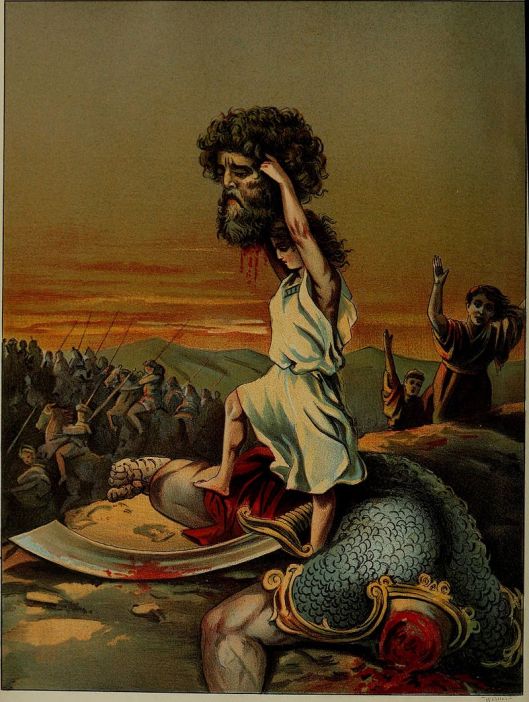
I recently finished reading through the life of David during my quiet time. When we think of David, the first thing to jump to mind is probably “and Goliath” or “and Bathsheba” or maybe that he was a king or a psalmist. But have you ever thought of David and the first thing to come to mind was “lousy father”? I haven’t. And the Bible doesn’t explicitly tell us that he was a bad dad. And, let’s face it, even the most godly parents in the world can have a kid or two who turn out to be prodigals. But if you look at how some of David’s children turned out, you have to at least wonder about his parenting skills.

First you’ve got Amnon – as disgusting a specimen of a human being as ever walked the planet. He makes himself physically ill lusting day after day for his half sisterTamar. That’s a lot of lust. But at least – at least – he keeps it to himself. For a while, that is.

Amnon’s got an equally disgusting cousin, Jonadab – who, instead of smacking him senseless when Amnon shamelessly confesses his dastardly daydreams – devises a scheme to help Amnon indulge his foul and festering flesh by tricking David into making Tamar available to him. David sends Tamar to Amnon’s house, and Tamar pleads with him not to force himself on her.

(While Tamar is pleading with her pustule of a brother, she says something interesting: “Please speak to the king, for he will not withhold me from you.” Now, arguably, it’s likely she was just saying whatever she could think of in the moment to get away from Amnon and didn’t really believe David would allow Amnon to marry her. But if she did believe that to be true, that definitely says something about David. Because, by that time in Israel’s history, intermarriage between two people who shared a parent was big-time illegal with severe consequences for the offenders. And David and everybody else in the kingdom knew that. Did David’s children think he would break the law for them and excuse them from punishment? And for such a nauseating reason?)

But Amnon ignores Tamar’s heartbreaking pleas and forcibly rapes her. He rapes his sister. David finds out what happened and is understandably angry. But does he follow the law and have Amnon executed? Nope. (So we at least have our answer to the question of whether or not David would break the law for his children.) If David did anything about the situation, the Bible doesn’t record it.

Fast forward two whole years. David has still not made his rapist son face the music, so Absalom, Tamar’s full brother, metes out his own brand of justice, putting Amnon to death.

Fast forward a few more years and Absalom thinks, “I believe I’d make a better king than dear old Dad.” So he sets about manipulating and stealing the hearts of his countrymen away from David and stages a bloodless coup. David ends up having to flee for his life from his own son. Meanwhile, Absalom moves into the palace, sets up a love nest on the roof where everybody can see, and sleeps with David’s concubines. Then, Absalom gathers up an army to hunt David – his father – down in order to kill him and secure his throne.

David’s men fight valiantly for him, risking their own lives. Joab, the commander of David’s army – perhaps considering David’s command to “deal gently” with Absalom as ludicrous after all Absalom has done – seizes an opportune moment, and kills Absalom. David flips out in grief, so much so that Joab has to rebuke him: all these men risked their lives to save you, David, and you’re crying and moaning over this wretch who was trying to kill you! Snap out of it or they’re going to turn on you! Fortunately, David has the sense to listen to him.

After some more wars, some famine, and a “sin-sus,” Adonijah decides he can pull off the coup his brother Absalom so spectacularly failed at. David is old and sickly, and it should be easy for Adonijah to make a grab for the throne. And in the description of Adonijah, here’s what was said that initially got me thinking David wasn’t Dad of the year:

His [Adonijah’s] father [David] had never at any time displeased him [Adonijah] by asking, “Why have you done thus and so?” 

Are you picking up what the author of 1 Kings is laying down? David was an indulgent father. He had never at any time questioned his son’s actions or intervened in a way that upset him. He let Adonijah run wild and do what he wanted to do. And the way Amnon and Absalom acted, it’s reasonable to surmise that David raised them the same way, along with all the rest of his children. It’s a miracle Solomon turned out as well as he did (at least until his wives drew him away from the Lord into idol worship). Reading the first nine chapters of Proverbs, I can’t help but wonder if Solomon observed David’s parenting and was determined not to follow his poor example. Listen to my instructions, son. Get wisdom. Don’t be a fool.

Sometimes Bible characters set a great example for us. David, a man after God’s own heart, set many. But sometimes God lets us see their poor and sinful behavior so we can learn not to follow their example. Moms and Dads, let’s make sure we are men and women after God’s own heart when it comes to parenting our kids.

Happy Father’s Day, y’all.