Bible Study

You Have What it Takes to Lead a BIBLE Study?

Originally published February 1, 2019

I am so sick of women’s ministry/discipleship/”Bible” study that centers around narcissistic navel-gazing, I could vomit. My hurts, my feelings, my opinions, my self image.

Newsflash- You’re not the only person on the planet who’s ever been hurt or had problems.

And wallowing in the hurt and your emotions has never been the way to heal and feel better. Healing from the hurt comes from taking your focus off yourself and placing it on Christ: studying the actual Bible, obeying His commands, walking in holiness, praying, worshiping, serving others.

These canned “Bible” studies that masquerade as teaching the Bible – maybe even have the name of a book of the Bible in the title – yet all the “study” questions are about you, your preferences, and how you feel, are doing you no favors, ladies. They are keeping you enslaved to your hurts and self idolatry so you’ll continue to buy more and more of these books. Don’t be naive. Lifeway, CBDยน, and all the major “Christian” publishers know that there’s no money to be made in telling you to study your Bible. If you study your Bible you might actually grow in Christ, learn to glorify Him instead of your own opinions, heal from your hurts, and learn to handle your problems in a biblical way. And then all these divangelistas – whose main function in life seems to be exegeting stories from their own lives and telling you all about their pain- will be out of a job because you won’t need them, their books, their DVDs, their conferences, their simulcasts, or their merch, any more.

The Christian retail machine doesn’t make money when you follow what the Bible says to do: sit under good preaching and teaching at your own church, disciple women in your own church, be discipled by godly older women in your church, serve your church, attend your church like your life depends on it (because your spiritual life does), study your Bible every day, live in obedience to Christ. 

You’re being played and you’re being used by Big Christian Retail, ladies. Stop clinging to the pretty little gilded shackles they have locked around your wrists. Break free and experience the freedom in Christ that can only come from walking faithfully with Him in His Word.

I’m no prophet, nor a son of a prophet, but sometimes I think I might have a tiny inkling of how Jeremiah felt when he said:

If I say, โ€œI will not mention him,
or speak any more in his name,โ€
there is in my heart as it were a burning fire
shut up in my bones,
and I am weary with holding it in,
and I cannot.
Jeremiah 20:9

When I see the way so many professing Christian pastors, leaders, and teachers in the public eye damage the spiritual lives of their followers by adulterating God’s Word, biblical anger wells up inside me. And sometimes, the pressure gets to be too much and it finds a way to escape, like it did the other day when I tweeted the remarks above.

hate with a holy, biblical hatred what the Christian retail machine, overall, has done to Christians, particularly Christian women, by feeding them fluff and false doctrine.

Go back and read the robust theological thoughts and writings of some of the women who helped usher in the Reformation. And then go stick your head in the door of the average women’s “Bible” study at the church down the street and listen to the teaching and comments. We didn’t get to where we are today without somebody poisoning the water hole.

So it was with no small sense of irony that two days after I had let the fire loose on Twitter, I found myself clicking – with much trepidation – on an article from Lifeway Women that popped up in my feed: You Have What It Takes to Lead a Bible Study.

It was written by a darling young lady named Mickey who made several very good points and was charming and encouraging. I’m certain she wanted the article to be helpful and edifying, and I have no points of contention with her personally. This article was a work product. It expresses Lifeway’s position, not necessarily Mickey’s personal thoughts and opinions. (I wrote for a Lifeway publication once. Believe me, if what you’ve written doesn’t match what they’re trying to convey, they edit it until it does. Which, as a business, they certainly have a right to do.)

“What might Lifeway Women think qualifies someone to leadยฒ a Bible study?” I wondered, as I waited for the page to load. “I have what it takes? What does it take in their eyes?”

The first point of the article was to address women’s feelings of inadequacy about leading a Bible study and reassure them. Feelings. Not what the Bible says about teaching God’s Word, or the qualifications for doing so, or even the other women’s need for the teaching of Scripture. Feelings. For Lifeway, the major obstacle to overcome for a woman who’s on the fence about teaching a Bible study is her feelings of inadequacy.

And how did Lifeway address those feelings of inadequacy and offer reassurance? Again, not with Scripture (indeed, no Scriptures are quoted or even referenced in the article), but by exegeting a personal anecdote from the author’s life. “I felt inadequate too, but then I gave it a try and I was successful. So if you’re feeling inadequate to lead, just give it a try. You’ll be successful, too.” It may be an oversimplification, but that’s the take away.

If this methodology sounds familiar to you, maybe it’s because you’ve worked through one of Lifeway’s most popular women’s “Bible” studies. Generally speaking, this is the core of the majority of Lifeway’s women’s “Bible” study products: your feelings and the exegesis of personal stories from the author’s life to relate to and address those feelings.

The article went on to quote a recent Lifeway Women survey which asked women,

“What is the biggest obstacle keeping you from leading a Bible study?โ€

Know what the number one answer was? “I donโ€™t feel like I know enough to lead.” (Again with the feelz.)

Is it any wonder, when, for decades now, evangelical women have been fed a steady diet of nothing but girlfriend stories that they feel inadequate to teach the Bible? Of course they feel inadequate! They don’t know their Bibles because the materials they’ve been getting from Lifeway all this time haven’t taught them the Bible. They likely know more about their favorite author than they do about Jesus. Most of them probably correctly feel inadequate because they don’t know enough to lead.

Feelings of inadequacy aren’t wrong simply because they make you feel bad. Sometimes your feelings of inadequacy are wrong because you’re neurotic or unrealistically anxious, and sometimes they’re right because you don’t have the skills to handle the task you’re attempting. We’ve all watched enough American Idol auditions to know that.

Our feelings need to be informed, molded, and submitted to the facts of God’s written Word. And what does God’s written Word have to say about whether or not you have what it takes to lead a Bible study?

Not many of you should become teachers, my brothers, for you know that we who teach will be judged with greater strictness.
James 3:1

Where Lifeway issues a blanket “anybody can do it” encouragement to the hundreds of women (whom Lifeway has never laid eyes on and has no idea whether or not they’re biblically qualified to teach God’s Word) reading this article – “…trust me, friend, you have what it takes, too” – the Bible says that teaching Scripture is a solemn, weighty ministry fraught with the burden of responsibility of imparting God’s Word correctly. And precisely because of that, “not many” should become teachers.

Do your best to present yourself to God as one approved, a worker who has no need to be ashamed, rightly handling the word of truth.
2 Timothy 2:15

What does Lifeway think qualifies someone to lead a Bible study? “…a willing spirit, an open heart for new friendships, and thirst for more of God.” Is that what the Bible says about qualifying for the lofty responsibility of teaching God’s Word? No. The Bible says we need to work hard at studying, understanding, and rightly handling God’s Word so that we don’t end up twisting it or teaching something that conflicts with it. We need to be able to stand before God unashamed to say, “I worked hard, and studied long, and did my very best to teach your Word accurately.”

And the Lord’s servant must not be quarrelsome but kind to everyone, able to teach, patiently enduring evil, correcting his opponents with gentleness.
2 Timothy 2:24-25a

Lifeway seems to think getting over your feelings of inadequacy means you have what it takes to lead a Bible study. The Bible says there’s a much higher standard. Are you even able to teach – to accurately explain what God’s Word says, in a way women can understand, and help them correctly apply it to their lives? Are you quarrelsome? Kind? Able to endure evil patiently? Do you know and can you handle Scripture well enough to correct someone who makes an unbiblical argument, and can you do it gently?

Older women likewise are to be reverent in behavior, not slanderers or slaves to much wine. They are to teach what is good, and so train the young women to love their husbands and children, to be self-controlled, pure, working at home, kind, and submissive to their own husbands, that the word of God may not be reviled.
Titus 2:3-5

Lifeway doesn’t address the character needed to teach the Bible. The Bible says you’re to be mature and behave reverently, you’re not to gossip or slander others, and you’re not be controlled by alcohol (or anything else, for that matter).

While one of Lifeway’s tips for leading a small group is to choose a study that fits the “interests, preferences, and characteristics” of the women in your group, the Bible doesn’t really care what they’re interested in or prefer to learn. It prescribes what they need to learn. Do you know “what is good” according to Scripture? You have to know that if you’re going to teach it. And you also have to know what the Bible says about wives loving and submitting to their husbands, loving their children, being self-controlled, kind, and pure, and working at home, if you’re going to teach those things.

 The Bible says you have to know your Bible to teach a women’s Bible study. You have to have certain skills, abilities, and character traits. Not just anybody can do it. Not just anybody should do it.

Do you have what it takes to lead a Bible study? If you want to know, don’t check with Lifeway. Check your Bible.


ยนChristianbook.com – It used to be called Christian Book Distributors. Old habits die hard. :0)

Additional Resources:

Bible Studies

Basic Training: Bible Studies and Sermons

ยฒMcBible Study and the Famine of God’s Word
After I finished writing You Have What it Takes to Lead a BIBLE Study? I noticed that the Lifeway article exclusively used the phrase “lead a Bible study” rather than “teach a Bible study.” This is likely due to the fact that many Lifeway studies do not require the leader to teach so much as to play a DVD of a popular Lifeway author teaching. It is probably also intentional – to encourage women to lead without that pesky little need to be biblically qualified to teach. However, most people still rightly understand “leading a Bible study” to mean teaching the Bible, thus the survey response of “I don’t feel like I know enough to lead,” and Mickey’s own fear that “I donโ€™t know enough about the Bible to lead…”. You don’t need to know much about the Bible to push a button on a DVD player. McBible Study and the Famine of God’s Word addresses this harmful practice and the need for the church to have trained teachers teaching the Bible.

4 Ways Weโ€™re Getting Womenโ€™s Discipleship Wrong, and How We Can Get it Right!

The Mailbag: โ€œWe need to stop relying on canned studies,โ€ doesnโ€™t mean, โ€œWe need to rely on doctrinally sound canned studies.โ€.

Bible Study, Mailbag

The Mailbag: As a newly doctrinally sound Christian, should I stop journaling? (How to journal biblically.)

Originally published April 2, 2018

I recently posted this on social media:

I just finished filling up another Bible study journal. My oldest one goes back to June 2002 – nearly 24 years ago. My second to last child was two months old then, and now all three of my grandbabies are older than that. A few years are missing. Probably the years I read through the Bible in a year. I don’t usually journal that. A handful of the oldest entries have quotes from Joyce Meyer, Russell Moore, Matt Chandler, and Experiencing God – people I wouldn’t touch with a 10 foot pole now, because either they, or I, changed. It is incredible to look back over God’s faithfulness and see how much He has grown me over the years. Taking notes during your Bible study time: ๐Ÿ’ฏ would recommend. Show me your journal in the comments if you like!

In response, a few ladies asked some questions about how to take notes on the text of Scripture and what sorts of things to write down. My answer was similar to what I’ve written in this article, so I thought it might be time to re-run it…


I just read your January 9th blog on Careyโ€™s story. That is me regarding the journaling. I have journaled for 10 years and have saved them all. Now I donโ€™t know if I should stop altogether. I already threw out all my Sarah Young books, Beth Moore, Lysa, etc. Itโ€™s like Iโ€™m starting over after 32 years as a Christian. I just found you this week through Justin Peters and Iโ€™m so grateful. So should I stop journaling too? I did automatic writing- ugg!

Don’t we serve a wonderful God? His mercies are not only new every morning, they are new even after 32 years! I’m so thrilled for you that God has opened your eyes and given you a fresh start. (P.S. Stick with Justin’s stuff. He is awesome.)

The word “journaling” gets tossed around a lot these days. Coloring in your Bible has come to be known as “Bible art journaling”. Then there’s the type of mystical or contemplative “journaling” you’ve touched on which can include automatic writing (one of the reasons Sarah Young’s Jesus Calling is false doctrine and should be avoided like the Plague).

But there is a type of journaling you can do in conjunction with your personal Bible study and prayer time which is perfectly biblical. If it would help you to differentiate this type of biblical journaling from the mystical journaling you’ve done in the past, you might want to call it “taking notes” or “written Bible study” or something like that, instead. But if you need to put some time and space between the unbiblical type of journaling you used to do and beginning to journal again in a biblical way, it’s perfectly OK to take as long of a break from journaling as you need.

When it comes to journaling in a biblical way, it might help to look at studying the Bible through the lens of studying for a college class.

A lot of students go into college thinking that all they need to do is show up for class, write down whatever the teacher says will be on the test, read the chapter, and they’ll learn what they need to learn. But if you go through freshman orientation or take a study skills class, one of the learning strategies you’ll be taught is how to study your textbook.

First of all, you read the material in an organized way. Most people going to college don’t have to be told this, but when you sit down to study, say, a history book, you start at the beginning of the book and you work your way through to the end. You don’t start by reading two paragraphs out of the middle of chapter 7, then move on to the last three sentences of chapter 49, then the first half of chapter 1.

Do you see where I’m going with this? That’s how people โ€œstudyโ€ the Bible sometimes, and it’s just as crazy to study the Bible that way as it would be to study a history book, or math book, or science book that way.

So you’re reading along in an organized way. Take notes. Write down any questions you might have about the text, words you need to look up, etc. Write down what you learn about God from that text, or how the characters in that text set an example for you of something you should or shouldnโ€™t do. Write down any commands from the text that you need to obey. Write down how the passage points to Christ. Write down anything the text reminds you to pray about. Write down anything God is convicting you about as you read the text. Write down any practical applications the text has for situations in your life. Write down a careful summary of the text. Write down any other Scriptures the text youโ€™re reading reminds you of.

You might want to highlight or underline things in your Bible that you want to remember.

As you’re studying your Bible you’ll probably notice some footnotes. Take a look at those footnotes and see if there are any cross-references listed. A cross reference is a Scripture that’s related to the Scripture you’re reading that might help explain it a little bit better. So look up those cross-references and maybe make some notes on them.

This kind of “journaling” can be very helpful as you study your Bible. You might also want to jot down anything you’re praying about and, later, how God answers. You could include any notes you take on your pastor’s sermons or points you want to remember from the Sunday School lesson. Keeping these journals and looking back over them from time to time is an excellent way to see how God is growing you in the knowledge of His Word, your trust in Him, and your obedience.

If writing is the way you best process your thoughts and the information you’re learning, then by all means, continue journaling! Just make sure you’re doing it in a biblical way.


Additional Resources:

10 Simple Steps to Plain Vanilla Bible Study

Rightly Dividing: 12 Doโ€™s and Donโ€™ts for Effective Bible Study

Bible Study Articles and Resources

Bible Studies


If you have a question about: a Bible passage, an aspect of theology, a current issue in Christianity, or how to biblically handle a family, life, or church situation, comment below (Iโ€™ll hold all questions in queue {unpublished} for a future edition of The Mailbag) or send me an e-mail or private message. If your question is chosen for publication, your anonymity will be protected.

Mailbag

The Mailbag: Potpourri (Stop fooling around with false teachers x 2… Broken links & typos… Omitting “the” Holy Spirit)

Welcome to another โ€œpotpourriโ€ edition of The Mailbag, where I give short(er) answers to several questions rather than a long answer to one question.

I like to take the opportunity in these potpourri editions to let new readers know about my comments/e-mail/messages policy. Iโ€™m not able to respond individually to most e-mails and messages, so here are some helpful hints for getting your questions answered more quickly. Remember, the search bar (at the very bottom of each page) can be a helpful tool!

Or maybe I answered your question already? Check out my article The Mailbag: Top 10 FAQs to see if your question has been answered and to get some helpful resources.


This comment was left on my article Guest Post: Lauren Daigle and the Fruit of โ€œLosing her Religionโ€.*

The depth of faith in Jesus that Lauren Daigle conveys through her music has helped me to worship and pray on my knees through some very difficult times. God has spoken to me time and again through the words of her songs. God is using her in a beautiful way. Every time I hear her sing, I am pointed to God who is the supplier of all my needs. I did a Google search to find her testimony of when she was 15 to share with my 15 year old daughter and found this article. I am surprised to hear such a different view.

That’s because this “view” is telling you the truth according to Scripture instead of scratching your itching ears like all the others, and unfortunately, that’s a rarity. God is using Lauren, all right. He’s using her as judgment against those who fall for the unbiblical things she puts out there. She and her music are just stroking your fleshly feelings, not bringing you closer to God. Nothing you’ve said in this comment has any basis in Scripture. It’s all fleshly desires which are not from God, but from the world. And you definitely shouldn’t be infecting your daughter with this garbage.

Now, I know your feelings are probably all shaken up after reading that. Good. Use that. Let it motivate you to stop being led around by the nose by your feelings, grow up in Christ, engage the beautiful brain God gave you, pick up your Bible, and start studying it in a serious, systematic way so you can learn the truth of God’s Word instead of the lies you’re being fed by someone masquerading as an angel of light. You don’t have time to mess around with this junk any more. Your daughter is already 15. She’ll be out on her own before you know it. You’ve got to be a spiritually mature woman of God so you can train her to be a spiritually mature woman of God before it’s too late. (And for any readers who are fooling around with any other false teachers, all of this goes for you, too.)

Homework assignment:

  • Carefully and prayerfully study through the Scriptures and materials at the What Must I Do to be Saved? tab in the blue menu bar at the top of this page, and make sure you’ve repented and believed the biblical gospel. I’m not saying you’re definitely not saved, I’m saying sometimes the reason someone is deceived into thinking the ungodly is godly is because she’s not saved (see also John 10 and 1 Corinthians 2:14). I have no idea whether or not you’re saved, and I don’t need to know, but you need to know for sure.
  • If you’re not a faithful, invested member of a doctrinally sound local church, go to the Searching for a new church? tab in the blue menu bar at the top of this page, and start scouring the church search engines for a good church near you. If you’re a member of a church you think is doctrinally sound, go to that same tab, scroll down to the “What to look for in a church” section and start comparing your church to the items there. If your church doesn’t match up, scroll back up to the search engines and start looking for a new church. You need to be in a solid church sitting under pastors and teachers who rightly handle God’s Word and feed you copious amounts of it.

(For any readers who already have your undies in a bunch about the tone of this answer not being “loving” enough, I will be glad to hear your comments after you’ve memorized Ephesians 4:11-16 and meditated on it every day for a month.)

*It just occurs to me that we haven’t had a good guest post in a while. If your theology pretty much matches up with mine (as outlined in the โ€œWelcomeโ€ and โ€œStatement of Faithโ€ tabs in the blue menu bar at the top of this page) and youโ€™d like to contribute a guest post, drop me an e-mail at MichelleLesley1@yahoo.com, and letโ€™s chat about it. (Two things, just to save you a little time: a) email me before writing the article, b) it will have to be an original article, not a re-post of something you’ve written for your own blog.)


When I click on [a link in a particular article on Michelle’s blog] it takes me some place that looks dangerous. Iโ€™m leaving this here because I couldnโ€™t find where to email you. Thanks!

No, thank you! I am always so grateful when readers let me know that a link is broken or that they’ve found a typo or some other grammatical error. If you find something like that, please let me know – I want to fix it!

In the case of broken links, often what has happened is that, at some point after I posted the link, whoever wrote the article I linked to deleted the article or the entire website. Or maybe she started a new blog or website and moved the article there, and I didn’t know about it. The transient nature of the internet – gotta love it. Or not.

My email address can be found at the Contact & Social Media tab (let’s all say it together! :0) “in the blue menu bar at the top of this page”. All I ask is that anyone who’s considering emailing me please read the information under the heading Important information. Please read before e-mailing. before emailing me.


Iโ€™m not sure if [Priscilla Shirer] has always harbored unbiblical doctrine or has in the more recent past had a fall. If the latter is the case (not knowing the timeline), my question is: are books sheโ€™s previously written alright to read or should I avoid all teachings, even ones from the past? This has been a recurring theme for my husband and I (sic) as weโ€™ve had a few conversations with friends who have been deceived by false teachers.

It’s really great that you want to be discerning about the materials you consume. Way to go!

I’m asked this question fairly regularly, most often about Priscilla Shirer and Beth Moore. “Has she always been a false teacher or did she start off biblical and later went off the rails?”

I can’t say definitively, but my best guess is that Beth Moore has never been doctrinally sound because Beth Moore’s continual trajectory away from holiness and sound doctrine indicates that she is not a Believer. (I mean, if you’re a Believer, with the Holy Spirit living inside you and sanctifying you, you grow more like Christ and in alignment with Scripture over the years, not less.) And if you’re not a Believer, well, a broken clock might be right twice a day, but that does not a qualified Bible teacher make at any point in her career.

I’m slightly less familiar with Priscilla Shirer’s doings over the last few decades, but her trajectory away from sound doctrine seems similar. I participated in a group study of her book, He Speaks to Me, shortly after it came out in 2005, and (as you can surmise from the title) she was already teaching extra-biblical revelation at that point. And that was almost 20 years ago when her career was just starting to take off.

There’s also another issue at play here. You may think there was nothing unbiblical in a false teacher’s older works, but – think about it – if you’re a genuinely regenerated Christian, that means God has been growing you in all aspects of Christlikeness over the years, including discernment. Was that teacher actually doctrinally sound back then, or were you just less discerning and less knowledgeable of Scripture? If you go back and re-read those books now, you might be surprised at what jumps out at you!

My advice? Why go dumpster diving in search of a diamond which might turn out to be a dirty piece of plastic when you can go into a nice clean, reputable jewelry store and buy what you know is a diamond? In other words, stop fooling around with people who have proved themselves to be false teachers. If you’re looking for a Bible study, go straight to the source and study directly from the text of Scripture. If you’re looking for a theology or “Christian living” type of book, go to trustworthy, tried and true pastors and authors who have stayed faithful to Christ and His Word for decades.


Do you know why some Christians leave out the article โ€œtheโ€ when speaking about the Holy Spirit and the Father? Do you know what the original Scriptures sayโ€ฆโ€theโ€ or no โ€œtheโ€ when referring to them? I understand leaving the article out when addressing them directly in prayer, but it just sounds strange to me when speaking โ€œaboutโ€ them. Iโ€™m wondering if either way is fine.

So, if it’s been a while since you’ve studied grammar, basically what this reader is saying is that some evangelicals have developed the practice of using “Holy Spirit” (and apparently “Father” now, too) like they’re God’s first name or nickname. Like, “Father answered one of my prayers!” or “Holy Spirit really blessed me today!”. I don’t know, to me it sounds like you’re calling these members of the Trinity “Bob” or something. It just hits my ear, and this reader’s ear, and maybe your ear funny. English speakers have been saying “the Father” and “the Holy Spirit” for hundreds of years now and old habits die hard.

It’s not sinful or unbiblical to talk this way if you’re a doctrinally sound Christian who’s speaking reverently and not regarding the Godhead as your homeboys, it’s just weird.

If you find yourself speaking this way, I would just suggest you ask yourself a couple of questions: “Why did I start doing this?” and “From whom did I learn this?”

If you started doing this because, as the reader suggested, the original Greek does not use “the article ‘the’,” that’s fine, assuming the original Greek is what you speak on a daily basis. But I suspect it’s not. I suspect you speak 21st century English, or the reader would not have picked up on this little quirk of yours. You speak English, so use the rules of English grammar.

In Spanish, the adjective comes after the noun, so you would say, “I have a car blue,” whereas, in English the adjective comes before the noun, and that’s why we say, “I have a blue car.” You don’t apply Greek grammar when speaking English any more than you would apply Spanish grammar when speaking English because that doesn’t make any sense. Every language has its own grammatical rules.

Greek – even the Greek the Bible was written in – isn’t some magical heavenly language. It was just the common language of the time that most literate people could read. That’s why God chose that language. If He were writing the Bible today, He’d probably write it in English for the same reason. So there’s no need to import bits and pieces of Greek grammar into our English conversations as pretense to greater holiness

The only issue with omitting “the” in front of “Father” and “Holy Spirit” is that this is typically a practice of some of the deepest, darkest corners of the New Apostolic Reformation. You hear that omitted “the,” and you’re probably about to hear some off the wall “prophecies,” speaking in “tongues,” decreeing/declaring, and more, close on its heels. Even if the person dropping the “the” is someone you know to be doctrinally sound, unless that person is new to the English language, she probably picked it up from somebody in, or influenced by, the NAR. I noted this way back in 2014 in my article Top 10 NAR* and Seeker-Driven Buzzwords (see #7).

Omitting “the”? It’s not sinful, just weird.


If you have a question about: a Bible passage, an aspect of theology, a current issue in Christianity, or how to biblically handle a family, life, or church situation, comment below (Iโ€™ll hold all questions in queue {unpublished} for a future edition of The Mailbag) or send me an e-mail or private message. If your question is chosen for publication, your anonymity will be protected.

Random Ramblings Ruminations Resources

Random Ramblings, Ruminations, and Resources

Can you believe it’s been almost two whole years since I published a 4R?

Some of you are like, “What’s a 4R? Does it come with French fries or a house salad?”

No, silly rabbit. It’s just shorter than writing out “Random Ramblings, Ruminations, and Resources”. Try to keep up.

If you’re new to the blog or your memory is so terrible that you don’t have the capacity to commit every microscopic nuance of my blog to memory…

…I have a Google Docs file Iโ€™ve entitled โ€œScratch Padโ€. Whenever I get a good idea for an article, I jot down the gist of it there. Then, when itโ€™s one of those โ€œmehโ€ weeks when Iโ€™m not overwhelmingly passionate about anything in particular, or when I just want to address several small things rather than one big thing, I can thumb through those ideas for some inspiration. And sometimes, I throw in some announcements, updates, and other stuff, too.

So – if you’re tracking – 4R is basically stuff and things and whatnot and such.

And GIFs. Wonderful, wonderful GIFs.

OK, enough chit chat. Let’s get this party started…

Sold Out, But Keep An Eye Out

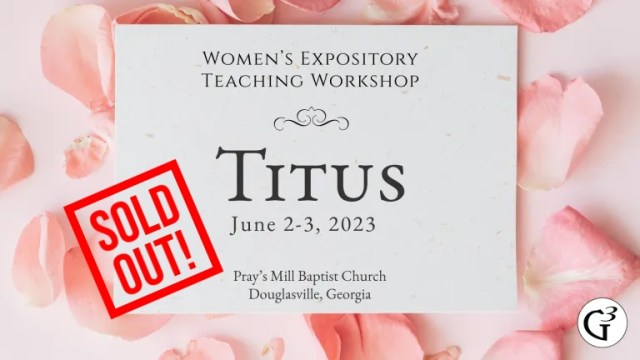
Finally. Finally, finally, FINALLY – hallelujah! – G3 Ministries is holding its first ever Expository Teaching Workshop for Women… and I’m sorry to tell you…it’s already sold out. Like, within just a few days of them barely announcing it at all. That’s how many godly women desperately want to be trained to properly teach God’s Word to other women and children.

Why am I telling you this if it’s sold out? Because I’m hoping G3 will continue to hold more of these in the future and I want you to be able to go! My advice? Connect with G3 (follow them on social media, get the app, sign up for their email list, etc.) so you’ll be one of the first to know when the next workshop will be held, and register immediately when it’s announced.

(If you managed to get registered for this one before it sold out, I will see you there!)

I Do It Myself

“I do it myself.”

Whether youโ€™re a mom, an aunt, a grandmother, or babysitter, youโ€™ve heard a toddler say this at some point. Maybe heโ€™s trying to put on a sock, or sheโ€™s trying to fit a puzzle piece into a puzzle. Weโ€™re standing right there, ready and able to show them how to do it or do it for them, and yet, “I do it myself.”. That child would rather struggle with that sock or puzzle piece for five, ten, fifteen minutes than let us help.

Why?

Because that child knows something about life that we donโ€™t know about Bible study. “I do it myself” brings with it rewards that having someone show you, or do it for you, just doesnโ€™t. It brings with it the joy of figuring it out for yourself, the satisfaction of accomplishment, the firsthand learning that sticks with you that spoon feeding just doesnโ€™t bring.

That child doesnโ€™t want you breathing down his neck. He will fight you off if you try to help. Because he knows that “I do it myself” is better. That child grows past the milk of spoon feeding, and someone else showing him how, or doing it for him, to the meat of growing in maturity and independence and self-feeding.

Why is it that so many Christians never grow past the milk of someone spoon feeding them Bible study to the “I do it myself” of studying straight from the text of Scripture?

“I do it myself” is a normal part of child development. If a child never moved into the “I do it myself” stage we would consider that child unhealthy. We would take him to the doctor to find out whatโ€™s wrong. Why donโ€™t we see that as unhealthy in our spiritual lives, in our Bible study lives?

We need to learn this concept when it comes to individual Bible study. Canned studies, a “mommy” breathing down your neck, showing you how to do it, or doing it for you, gets in the way of what you can learn – what God can uniquely tailor to you as an individual – when you do it yourself.

Yes, you may struggle. Yes, there will be trial and error. Yes, you probably wonโ€™t know what youโ€™re doing at first. But that is part of the learning process. You canโ€™t gain mastery of a skill if you never attempt to do it by yourself. And when it comes to mastering the skill of Bible study, the joy is not in, “Look at me, I did it all by myself!” but in, “Wow! God really did speak to me through His Word! Look how God has grown me! God showed me this great and amazing thing!”.

God gets the glory. We rejoice in His work in us through His Word. That joy is absent, and can never be achieved, when someone else is showing us how or doing it for us. Itโ€™s a joy we’ll never experience without “I do it myself.”

And speaking of Bible studies…

I know, I know, normally by this time of the year I’ve already started our new spring Bible study on the blog. That’s because, normally, sometime around October-ish, I’ve already prayerfully decided what book, passage, or topic the study is going to center on, and I’ve started my preparatory study and writing.

This year, for whatever reason God may have ordained, I have really struggled to settle down on the subject of our next study. I have been back and forth and forth and back in prayer about a number of different ideas.

Late last week, I started working on what I thought would be the right passage for the study, but it still just didn’t feel right. You know, like when you accidentally put your left shoe on your right foot? It’s still a good shoe, it’s just in the wrong place at the moment. And I started thinking… “What about a topical study on discernment? Maybe that would be a good idea.”. Several passages started coming to mind, but I didn’t have time to give it much thought…

…until a few hours later, when a reader emailed me looking for a Bible study on -you guessed it- discernment.

So I got up yesterday morning, and I started studying and sketching out an outline, and this time the shoe fit. I need a little time to study, so we won’t be starting right away, but our next Bible study will be a topical study on the subject of biblical discernment.

I debated whether or not to share that experience with y’all, because a lot of evangelicals would say that was “God ‘speaking’ to me”.

It wasn’t.

There was no Divine voice. There were no words. (That’s what the word “speaking” means. Words mean things.) God no longer talks to people directly the way He spoke to our fathers before us.

That was God answering my prayers for wisdom and guidance. That was God providentially arranging circumstances in His perfect timing. That was God helping me make up my mind.

God’s normal providence is wonderful.

Flashback (I hope)

Well, here’s a blast from the fairly recent past that ought to just bless your socks right off your little tootsies. Occasionally, I dabble (read: goof off) in various forms of creative writing. Here’s a little ditty I wrote (to be sung in your head to the tune of The Beatles’ Yesterday) a couple of years ago during that which shall not be named. Have fun. :0)

Quarantine

Quarantine

It’s a result of COVID-19

Stay at home and simply do nothing

Oh I am tired of quarantine

Quarantine

I can only see friends on a screen

But work is now a pants-less Zoom meeting

There are some perks to quarantine

Toilet paperโ€™s gone

And from church we stay away๐Ÿ˜ญ

Iโ€™ve gained 20 pounds

From Netflix and snacks all day

Quarantine

Many weeks of social distancing

Wash your hands and cover when coughing

Weโ€™ll see an end to quarantine 

We will survive this quarantine๐Ÿ˜ƒ

There’s a song in the air…

I really enjoy listening to these brothers. I get a kick out of the fact that they’re doing Southern gospel all the way over in India. (Maybe they’re in southern India! :0) But they sing other styles, too. Check out the Living Stones Quartet’s channel!

Uncategorized

The Word on Wednesdays

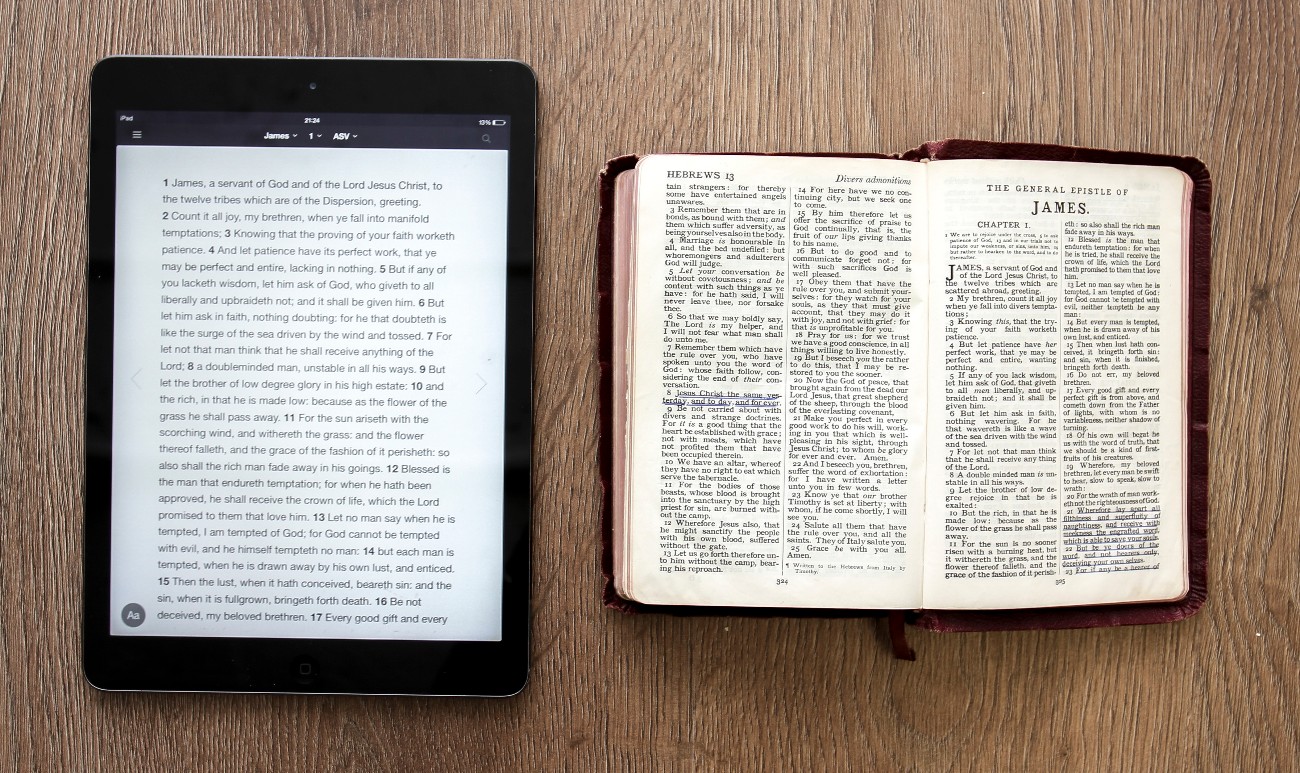
Hi ladies! I hope youโ€™re looking forward to our next new Bible study as much as I am. I’m in the middle of my second time through the text we’ll be studying, and I can hardly wait to introduce it to you! I think youโ€™ll enjoy it and that it will edify you as you seek to grow in Christ and His Word. (The picture above does not mean we will be studying James. :0) Stay tuned to start soon, and keep an eye on the blog on Wednesdays.

In the meantime, I’ll be posting some Bible study articles and lessons from the archives that I think youโ€™ll find helpful as we make our way toward our next study. (This week’s lesson is actually not from the archives, it’s new, but the Wednesday’s Word study {see below} it’s now part of is from the archives. Apparently, when I originally wrote the WW series, I took a break somewhere in the middle to write my Bible study on the book of 1 John, and I never went back and wrote a stand alone lesson from 1 John for the WW series. So I’ve remedied that with the lesson published today. Clear as mud, right? :0)

Here is this weekโ€™s lesson:

Wednesday’s Word

Wednesday is Bible study day here on the blog. In my Wednesday’s Word Bible study series youโ€™ll find miscellaneous, one lesson Bible studies from each book of the Bible. One chapter of Scripture followed by study questions. This sampler series demonstrates that thereโ€™s nothing to be afraid of when approaching those โ€œlesser knownโ€ books and that every book of the Bible is valuable and worth studying.

Wednesday’s Word ~ 1 John 4

Beloved,ย do not believe every spirit, butย test the spirits to see whether they are from God, forย manyย false prophetsย have gone out into the world.ย 2ย By this you know the Spirit of God:ย every spirit that confesses thatย Jesus Christ has come in the flesh is from God,ย 3ย and every spiritย that does not confess Jesus is not from God. This is the spirit of the antichrist, which you heard was coming andย now is in the world already…Continue reading..