Complementarianism

Throwback Thursday ~ Toxic (Evangelical) Femininity

Originally published August 24, 2018

Toxic masculinity. It’s a buzzword that’s gaining momentum as it’s bandied about in pop culture like a shuttlecock over a badminton net. There’s a clinical definition of the term (which, in the ivory towers of the scholarly world is, properly, “hegemonic masculinity“):

Hegemonic masculinity is defined as a practice that legitimizes men’s dominant position in society and justifies the subordination of women, and other marginalized ways of being a man. Conceptually, hegemonic masculinity proposes to explain how and why men maintain dominant social roles over women, and other gender identities, which are perceived as “feminine” in a given society.

And then there’s the sort of similar working definition of the huddled masses: Anything a man does that others – especially women – don’t like that can, by any stretch of the imagination, be blamed on the fact that he’s a man.

If a man cuts you off in traffic, it’s not that he’s a jerk or didn’t see you, it’s toxic masculinity. If a man holds a door open for a woman, it’s not that he’s polite and helpful, it’s toxic masculinity. If a man leaves his socks on the bathroom floor, it’s not that he’s sloppy and has no home training, it’s toxic masculinity. In other words, he’s not doing these things because he’s a polite or rude or aggressive or helpful human being, it’s because he’s a man who just wants to keep women down and exercise dominance over them.

Pardon my French, but what a bunch of malarkey.

Yes, I’m sure there’s a fringe element of men out there who consciously think they’re better than women, that women shouldn’t have any rights or hold any positions of responsibility, blah, blah, blah. And you know what? They’re considered fringe kooks, and rightly so. But I’m not buying this business of these elitist gnostics telling us that every little move a man makes is a subconscious act of belittling women or exercising domination over them, and neither should you. It’s like the race-baiters who say that every single white person is racist, deep down, and this latent racism manifests itself in everything we do, from the way we tie our shoes to the breakfast cereal we buy at the store. We’re just not aware of it, supposedly.

Poppycock.

Want to know where this notion of toxic masculinity came from? It sprang from the loins of toxic feminism. Zoom out and look at the big picture. This is a manufactured concept, baptized in the (assumed) credibility of academia, designed to help women leverage power and control over men. How? By denigrating them at every turn, thereby convincing the world that men are intrinsically bad and women are good and must be elevated to prominence. Call me crazy if you want to, but it doesn’t take a prophet or the son of a prophet to look down the road and see that the feminist end game here is a matriarchal world where women rule and men drool. And there are plenty of brazen females out there who would openly and unashamedly admit this.

That, however, is not my concern. Sinners gonna sin, and God’s going to deal with them in His own way and in His own good time.

My concern is the way this attitude is fleshing (pun intended) itself out in Christian families and the visible church, and creeping into evangelical women’s (and men’s) hearts. Because, whether or not we’d like to admit it, this worldliness is advancing upon us, and we need to be aware of – and biblically approach – the facets of this issue that are already at our doorstep:

On the Top of the World Looking Down on Creation

I actually laughed out loud when reading some of the academic definitions of so-called toxic masculinity. There seemed to be an air of, “We just don’t understand it! This pattern of male dominance seems to transcend all cultures and time periods!”

Well here’s a really academic response to that: Duh.

I mean, you have to wonder if these researchers and scholars have ever said to  themselves, “I wonder if there’s a reason for that. I wonder if this tendency in men that defies time and culture can be traced back to a pinpointed source.”

There is, and it can. It’s called Creation, and God is the one responsible. God created man first and then woman. God created husbands to lead and wives to be helpers. God set up the Old Testament patriarchal society that became the nation of Israel, which was led by male tribal heads and, later, male kings. God established male leadership in the temple, and subsequently, in the church. The major and minor prophets were male, Jesus was male, the apostles were male, the writers of Scripture were male. And all of this traces back to that one moment in Genesis 2 in which God decided to create man first and hard-wire him to lead, protect, and git ‘er done. Broadlyยน speaking, the reason we see a generalยน pattern of male leadership across time and culture is because God set those wheels in motion.

As Christians, we recognize that sinful men sometimes abuse the positions of leadership God has given them, but that doesn’t negate the entire pattern and call for us to turn it on its head. We study our Bibles and embrace and submit to the way God has instructed men and women to behave in the roles He has bestowed upon us.

Come on, Baby, (Don’t) Do the Woke-Emotion

One of the components of God’s creative work that adds inexplicable beauty to this world is the tender-heartedness, passion, and empathy He built into women in a uniquely feminine way. Emotions. Feelings. God created them, and they are good. What a dreary and heartless world this would be if women didn’t bring nurturing, caring, sympathy, and love to the table. God uses us to soften the hard edges of life and make the planet pleasantly inhabitable.

But along with that good gift comes the challenge to steward it wisely and in obedience to God so that we may use it to glorify Him rather than dishonoring Him.

I see Christian women wisely stewarding their emotions to the glory of God every day as they care for their husbands and families, friends and co-workers, and serve in their churches. It is a beautiful picture of the mature fruit of biblical womanhood.

Unfortunately, I also see the exact opposite. I see (ostensibly) Christian women who scream like banshees any time their pastor preaches on the passages of Scripture dealing with women’s roles in marriage or the church. I’ve seen women who claim to believe and follow the Bible throw an everloving fit when someone points out – from Scripture – that their favorite women’s “Bible” study author is a false teacher. I see women formulating their beliefs and practices about God, worship, the Bible, their own behavior, their families, and their churches based on their own personal opinions, experiences, and feelings rather than on rightly handled Scripture.

And, just like secular feminists demand domination over men because they feel oppressed, have experienced sexism, or resent the world’s history of male dominion, I see Christian women letting their emotions rule the day as they demand unbiblical solutions to their real or perceived personal experiences with men and male leadership.

The anger, the outrage, the hurt feelings, and being offended are nearly as evident in evangelicalism as they are in society at large.

Godly women are not ruled by their feelings. We are ruled by the Bible. We make our feelings submit to and obey God’s Word. We don’t make decisions based on what we like or don’t like, or what makes us feel good about ourselves. We base our decisions on what the Bible says. When our feathers get ruffled, we take a step back and evaluate the situation with rightly handled Scripture. Maybe we’re upset because someone actually sinned against us, but maybe we’re upset because our pride or vanity was wounded, or our unbiblical notions were biblically challenged, or because God used someone to expose an idol we’re worshiping. Maybe it’s not that the other person sinned, but that we’re in sin. Those hurt feelings could be a wake up call from God to humble ourselves and repent.
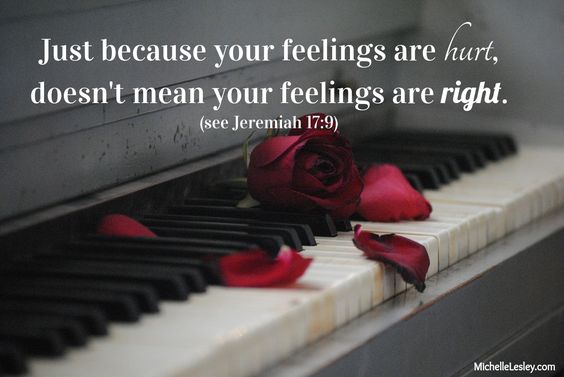
Ladies, we must learn to put our feelings aside and act on the objective truth of God’s Word instead of our fickle and deceptive emotions. If we display the same sorts of fleshly emotionalism as unsaved women, how are we being salt and light in the world, pointing the way to Christ? We’re supposed to be set apart and different from the world.

Why Can’t a Woman Be More Like a Man?

Because – speaking of salt and light – embracing and submitting to our biblical roles in the family and in the church sets us apart from the world. Now, more than ever, we have a unique opportunity to be counter-cultural – simply by obeying God’s Word.

Women being hired as pastors and teaching and exercising authority over men in the church and leading denominations and becoming popular evangelical conference speakers with co-ed audiences – that’s what the world expects because that’s the way they do things. But a Christian woman who happily puts her foot down and refuses to teach men in the church setting or joyfully insists on submitting to her husband? That’s different. It’s against the grain, not the norm.

Remember that out of the ordinary burning bush that caught Moses’ attention and he turned aside out of curiosity to investigate? And remember how, when Moses was watching it burn, wondering what in the world was going on, that God called to him out of that fiery shrub – “Follow Me.”? God can do the same thing with our obedience to Scripture.

Lost people see this anomaly of our “weird” behavior, and they want to know what in the world is going on. Why do we act differently than they do? And that’s when we get to explain it to them. We get to share the gospel. God can call to them out of our passionate burning for Christ and His Word, “Follow Me.”.

People in darkness gravitate toward light. Salt makes people thirsty. Do we care more about giving them the Light of the World and the Living Water or our own selfish and fleshly desires for power and position? Our embrace of and obedience to the biblical roles God has laid out for us as Christian women is one gateway to sharing the gospel with the lost.

Toxic femininity is worldly and fleshly. It has no place in Christian homes and churches. How do we combat it? We take up the sword. We submit to the authority and sufficiency of Scripture. We recognize that God is the authority in our lives, not self, and that we are to obey Him at any cost – even at the cost of our convenience and pleasure. We trade our desires for His.


ยนI’m well aware that there are plenty of exceptions to this generalization. I’m referring to a broad pattern across time and culture, here. There are many biblical ways women can contribute and lead in the family, society, and the church.

Mailbag

The Mailbag: Potpourri (Teaching hubby the Bible… Generational sin… Blood moons… God honors women preaching?… Remarriage forbidden)

Welcome to another โ€œpotpourriโ€ edition of The Mailbag, where I give short(er) answers to several questions rather than a long answer to one question.

I like to take the opportunity in these potpourri editions to let new readers know about my comments/e-mail/messages policy. Iโ€™m not able to respond individually to most e-mails and messages, so here are some helpful hints for getting your questions answered more quickly. Remember, the search bar (at the very bottom of each page) can be a helpful tool!

Or maybe I answered your question already? Check out my article The Mailbag: Top 10 FAQs to see if your question has been answered and to get some helpful resources.


A comment left on my Rock Your Role FAQs article…

How would this apply within marriage? My husband does not read the Bible..he claims to believe in God, but I donโ€™t actually see him seeking. Is it wrong for me to share with him what I learn or read in my Bible? Thank you for your advice!!

I know that having an unsaved or less spiritually mature husband can be really difficult. I’m sure this is a question many of my readers are struggling with.

When you say, “How would this apply within marriage?” I’m not really sure if “this” means a specific question and answer within that article or if “this” means the biblical prohibition against women teaching men, in general. I’m going to go with the latter since I can’t guess the former. :0)

The biblical prohibition against women teaching the Bible to men has a very specific context: the gathering of the church body. Your marriage is not the gathering of the church body.

It is perfectly fine and biblical for you to share what you’re learning from the Bible with your husband if he is open and receptive to it. But, and this is important, it is also perfectly fine and biblical for you not to share what you’re learning from the Bible with him if he is not open and receptive to it, if it makes him angry, or if he tells you to stop nagging or preaching at him.

A lot of women in the New Testament church were in the very same position. They were saved, and their husbands were not. First Peter 3:1-6 was written just for them, and for you. I would recommend studying that passage as well as 1 Corinthians 7:16, Ephesians 5:22-33, and Proverbs 31:10-31 to guide your own behavior as a godly wife. And, if you think it would be helpful, you may want to work through my Bible study on biblical womanhood.

My article The Mailbag: Can I share the gospel with my unsaved husband? is another good resource. If you need help presenting the gospel to your husband, check out the What must I do to be saved? tab in the blue menu bar at the top of this page.

One more suggestion: Think about making an appointment with your pastor for some biblical counsel on being a gospel influence on your husband. You may want to also ask him to point you to (or you may already know) a godly older woman in your church who has walked faithfully through the situation of having an unsaved husband, and who can disciple you through this.


Do you have any information about the generational sin/curses teaching? Iโ€™d love to understand if this is a false teaching and if it isโ€ฆunderstand what the Bible really says. I donโ€™t buy into the fact my great great grandma was sinful and that is why someone in the family is messed up.

You’re correct, this idea is diametrically opposed to what Scripture teaches. Certainly our children can be hurt or negatively impacted by the sins we commit. They can learn sinful behavior from watching us sin. And we are all sinners by nature. But children don’t genetically inherit a particular sin(s) – say, for example, profanity or adultery – from their parents. And God doesn’t punish us for the sins of our parents or ancestors.

The absolute best resource for refuting this false idea is Ezekiel 18. It is so beautifully clear and such a wonderful picture of the gospel smack dab in the middle of the Old Testament. Give it a good study.

Additionally, we released a podcast episode a while back called What Do We Do with the Guilt of Generational Sin? that may help.


Does โ€œThe moon turning to bloodโ€ refer to what we consider a โ€œblood moonโ€?

Not as it pertains to being a sign of Jesus’ return, no. I think you’ll find this article and this article to be helpful.


Do you think it’s possible for God to “honour” a women’s preaching that is bringing people to Christ?

This is really two separate questions about women preaching. Let’s break it down:

1. Can God graciously save someone, despite the fact that he’s sitting under a woman who’s sinning by pretending to be a pastor? Yes. He also saves people who are currently Mormons, currently being abused, etc. God can save anyone despite someone else’s sin.

2. Does the fact that God saves someone who’s under the influence or authority of someone who’s sinning mean that God approves of or honors the sin being committed? No. God doesn’t honor people for sinning.

God doesn’t honor or approve of Mormon false teachers just because someone happens to hear enough actual Bible to get saved while still in Mormonism. Mormonism is still idolatry, and that Mormon leader is still committing the sin of teaching false doctrine. Or, let’s say a pastor is secretly abusing his son. If the son gets saved during one of Dad’s sermons does that mean God honors or approves of the abuse? Of course not. It’s a display of God’s mercy and grace that God still saves people despite other people’s sin.

The same applies to someone who gets saved despite sitting under a woman who’s sinning by pretending to be a pastor.

Additionally, granting for argument’s sake that she’s actually preaching the biblical gospel, the fact that the woman “pastor” got that part right doesn’t excuse or make up for her sin of rebelling against God’s Word. If I work in a soup kitchen all week long, but every Saturday I go out and murder somebody, we know that my good works during the week don’t outweigh, excuse, or make up for the sin of murder. I still need to repent of being a murderer, and the woman “pastor” still has to repent from rebelling against God’s Word regarding her role in the church.


I was widowed a year ago, and a divorced man asked me to marry him but my pastor said it was absolutely forbidden. Can you please help me with this issue? The entire world is divorced!

Let me first offer my condolences for the loss of your husband. I can’t imagine how difficult that must be.

Have you asked your pastor to explain why* he said this? I’m not exactly sure of his reasoning, so let me just offer a few general thoughts.

One reason your pastor might have said this is that he holds to what’s called the permanence view of marriage. This view essentially says there are no biblical grounds for divorce (for anyone) and, thus, no biblical allowance for remarriage.

On the other hand, he may believe (as I, and many other Christians do) that, while reconciliation of a marriage is always the first and best goal, and that, in most cases, divorce is a sin, there are certain circumstances (chiefly adultery and abandonment) in which the Bible allows for divorce as a last resort. If that’s the case, depending on the circumstances of your gentleman friend’s divorce, your pastor may be saying that his divorce was not biblical, and, therefore, the two of you should not marry.

Finally, your pastor may have reasons aside from the divorce that would cause him to tell you not to marry this gentleman. Perhaps your pastor knows that he isn’t saved, that he is cheating on you, that he’s engaging in criminal activity, etc. I hope that’s not the case, but that’s the only other possibility I could think of.

I would suggest you talk to your pastor about this, hear him out on his reasoning, and compare his reasoning to rightly handled, in context Scripture. It could very well be that he’s offering you good, biblical counsel. Or…not.

*Readers, I’m not faulting anyone for asking me a question like this, but I often receive questions about why a certain person – whether it’s a false teacher, your husband, your pastor, a friend, whoever – did or said something, or what he meant by what he said or did. Generally speaking, I have no way of knowing why a particular person said or did a particular thing or what it meant. I can only speculate. If you want to know why someone did or said something, or what he meant, it’s best to go to that person and ask him or her directly.


If you have a question about: a Bible passage, an aspect of theology, a current issue in Christianity, or how to biblically handle a family, life, or church situation, comment below (Iโ€™ll hold all questions in queue {unpublished} for a future edition of The Mailbag) or send me an e-mail or private message. If your question is chosen for publication, your anonymity will be protected.

Podcast Appearances

Interview with Doreen Virtue on Beth Moore

It was such a pleasure to once again appear on my friend Doreen Virtue’s videocast. We had a warm time of fellowship around the Word discussing Beth Moore, false doctrine, the sufficiency of Scripture, the role of women in the church, and more.

I encourage you to check out Doreen’s website, and follow her on social media. Doreen is most active on Instagram, but you can also catch her on Facebook. Be sure to subscribe to Doreen’s YouTube channel so you won’t miss any of her videos. I also highly recommend Doreen’s book, Deceived No More.

Articles / resources mentioned or touched on in the videocast:

Basic Training: The Bible Is Sufficient

Living Proof You Should Follow Beth (No) Moore

Rock Your Role: Jill in the Pulpit

The Mailbag: Counter Arguments to Egalitarianism

Rock Your Role: Oh No She Di-int! Priscilla Didnโ€™t Preach, Deborah Didnโ€™t Dominate, and Esther Wasnโ€™t an Egalitarian

Rock Your Role FAQs

A Word Fitly Spoken Podcast

The Mailbag (This isn’t a newsletter, but a weekly {Mondays} blog article.)

Popular False Teachers & Unbiblical Trends

Recommended Bible Teachers

Bible Studies

Speaking Engagements


Got a podcast of your own or have a podcasting friend who needs a guest? Need a speaker for a womenโ€™s conference or church event? Click the Speaking Engagements tab in the blue menu bar at the top of this page, drop me an e-mail, and letโ€™s chat!

Mailbag

The Mailbag: Asked and Answered

Good Monday morning, readers. It is an honor and a joy to serve you in Christ. Welcome to all the newbies and to you seasoned veterans of the blog.

Because some of y’all are new, you aren’t yet aware of all of the resources here to help you. Or maybe you’ve been around a while and haven’t noticed something that might be helpful. Let’s remedy that!

First, if you’re new (or if you’ve never read it), check out Blog Orientation for New Readers and Old Friends. It’s like a Cliffs Notes intro to the blog.

Second, be sure to familiarize yourself with all of the tabs in the blue menu bar at the top of the page. That’s where I keep the info I’m most frequently asked about.

Third, there’s a search bar at the bottom of every page (and one in the blue menu bar at the top of every page) which might help you find what you need.

Fourth, if you don’t find your question answered in one of these ways or below, you might want to check previous Asked & Answered articles and The Mailbag: Top 10 FAQs.

And finally, let me get you new readers some answers to the questions several of you have asked. Some of you long time friends may have missed these along the way, so I hope they’ll be helpful to you, too!


Is it appropriate for a woman chaplain to teach men, evangelizing and then answering questions using the Bible to present truth in nursing home one on one or in a coed worship service at the nursing home?

I think I must have a number of followers who visit and care for those in nursing homes, because I’ve received several questions over the years about nursing home ministry. Can I just take a moment to say – thank you so much. What a blessing and an encouragement you must be to those precious ladies and gentlemen.

Let’s unravel your question just a bit because there are several issues at play:

First of all, should a woman even be a chaplain? I don’t want to give an across the board “no” because “chaplain” is such a catch-all term these days, and different organizations (hospitals, prisons, the military, nursing homes, etc.) probably all have different job descriptions for their chaplains which may or may not require a woman in that position to violate Scripture.

But if I were asked, “Should women be chaplains?” and I had to give a yes or no answer, my answer would be no, for the simple reason that most lost people (or even Christians) aren’t going to differentiate a chaplain from a pastor. To them, a chaplain is just a pastor who works in a hospital (or wherever) instead of a church. And it’s unbiblical for women to be pastors, so you don’t want to give the evil appearance of someone living in unrepentant sin. Even if you’re not technically violating Scripture in your position, you appear to be.

OK, for your next several questions, it’s immaterial whether or not these things take place in a nursing home:

Is it OK for women to evangelize (share the plan of salvation with a lost person) and answer biblical questions one on one with a man? Yes. Carefully and with wisdom: Rock Your Role FAQs #11

Is it OK for a woman to evangelize (share the plan of salvation with lost people) a co-ed group? Not if she’s essentially preaching a sermon and functioning as a preacher, which is what I’m inferring by your use of the term “worship service”. Rock Your Role FAQs #11

If it’s something more akin to you hanging out with 5 or 6 friends, some male and some female, and you start sharing the gospel with them, that’s different. That’s really more like a one on one situation.

Is it OK for a woman to preach/teach in or lead a co-ed worship service? No, regardless of the venue or her title. Rock Your Role FAQs #7 Rock Your Role: Jill in the Pulpit


This comment was mentioned in your article: โ€œHaving a blog in the public square for women that men trespass on is not the same thing as intentionally and unrepentantly preaching to men in the church setting as Iโ€™ve explained in further detail in this article.โ€ Is Priscilla Shirer the pastor of a church? (โ€œChurch settingโ€ was mentioned above.) I thought what she did was teach in seminars/conferences…Has she ever taken a stance that itโ€™s okay for women to be pastors of churches? (I donโ€™t believe women should be church pastors.) Please help clarify this for me. Thank you and God bless!

Great question! I think the confusion here is over the definition of the church, or “church setting”. I’ve clarified that in my article Rock Your Role FAQs #7.

I don’t know whether or not Priscilla Shirer has ever flat out said, “It’s OK for women to be pastors of churches,” but she yokes with and is friends with women “pastors” and she has preached the Sunday sermon in churches like she did just a couple of weeks ago at Joel Osteen’s “church”.


I discovered again that my husband is looking at pornography.

Oh honey, I am so sorry. I am going to strenuously recommend that you make an appointment with your pastor to get the counsel you need (even without your husband if he won’t go).

The Mailbag: You need to set up an appointment with your pastor for counselโ€ฆ

Biblical Resources on Pornography


Is it Biblical for me to be a worship leader? I have men on the team (one of them my husband) and I obviously help them to learn the music and I pick the music…I will introduce a new song and talk about it and sometimes read a Scripture that ties in with the song, but I don’t expound on the Scripture. I also pray for the body during worship. Is this Biblical?

I know this is a hard answer to hear, but no, that’s not a position you should be serving in. You need to repent and step down. Rock Your Role FAQs #16

And if, as you mentioned in your email, you are in a church that has let you hold the position of worship leader for several years, allowed you to use music from Bethel, Hillsong, Elevation, etc., and was an environment that was conducive to your being steeped in false doctrine for many years, you almost certainly need to find a new, doctrinally sound church.


How would you react if attending a church that still promotes Beth Moore and Priscilla Shirer Bible studies and others?

I know that’s a tough spot to be in. I’ve been there myself. Here are some resources I hope will help:

The Mailbag: How should I approach my church leaders about a false teacher theyโ€™re introducing?

The Mailbag: How to Leave a Church

Searching for a new church?


I know what you’ve said about disposing of books by false teachers [3rd section], but what if it’s a false teacher’s study Bible? I don’t know if I should be burning a Bible.

It’s very interesting that I’ve gotten this exact same question twice in the past few days, one about Joyce Meyer’s study Bible and another about the Tony Evans study Bible. Yes, definitely get rid of those and praise God for opening your eyes to the false doctrine these teachers espouse!

I would still recommend disposing of a study Bible in the same ways I described in the article linked above for disposing of a regular book by a false teacher.

I understand the visceral aversion to throwing away, destroying, or burning a Bible, and, believe me, that aversion comes from a very good place in your heart and mind. You love and revere God’s Word. You see it as high and holy. That is a good and right perspective to have. But let me offer you a couple of thoughts here.

Just for a moment, compare (I’m not saying these two things are equivalent) properly disposing of a study Bible by a false teacher, or even a regular Bible that’s old or damaged and no longer usable, to properly disposing of an American flag.

If you’re a patriotic American, you’re probably familiar with the U.S. flag code that tells us that the proper way to dispose of a flag that has been sullied, damaged, or is old and no longer usable is to burn it respectfully.

Just as properly and respectfully disposing of a flag by burning it is not the same thing as burning it in rage-fueled protest because you hate America, properly and respectfully disposing of a Bible that has been sullied and damaged by false teaching (or a regular Bible that’s too old or physically damaged to be used) by burning it is not the same thing as burning a Bible in rage because you hate God. Don’t forget, God can see into your heart and understands exactly why you’re burning that Bible. He’s the one who put the desire in your heart to get rid of it in the first place.

Also, in the same way that the flag you hold in your hands that needs to be disposed of is, fundamentally, simply a piece of cloth, the Bible you hold in your hands that needs to be disposed of is, fundamentally, simply paper.

Hear me carefully. I’m not saying we shouldn’t treat our Bibles (or the flag) respectfully. What I’m saying is there’s nothing supernatural or mystical about the paper pages you hold in your hands. The Bible is waaaaaaaay bigger than that. It can’t be contained by paper and ink. It goes far beyond paper and ink. It’s living and active. It stands forever.

Be careful not to slip across the line from conceptual reverence for the Word of God in toto into superstition about the paper pages you hold in your hands. Respectfully disposing of a Bible isn’t going to cause bad things to happen to you. Again, God sees your heart. He knows exactly what you’re doing and why.

If you’d like, make a little ceremony of it around your chiminea or fireplace. Say a prayer thanking God for His Word and thanking Him for opening your eyes to false teaching. Read part or all of Psalm 119, one of these passages, or another passage that extols God’s Word. Sing a hymn about the Scriptures, like Holy Bible, Book Divine, Standing on the Promises, Every Promise, or Wonderful Words of Life1.

Don’t be afraid to properly dispose of study Bibles by false teachers. You’re not disrespecting the paper pages of God’s Word, you’re doing it because you respect the heart of God’s Word.

1I didn’t vet any of these artists/groups, and I’m not endorsing any of them who conflict with Scripture or my statement of faith. These videos are just to give you an idea of how each song goes.


If you have a question about: a Bible passage, an aspect of theology, a current issue in Christianity, or how to biblically handle a family, life, or church situation, comment below (Iโ€™ll hold all questions in queue {unpublished} for a future edition of The Mailbag) or send me an e-mail or private message. If your question is chosen for publication, your anonymity will be protected.

Mailbag

The Mailbag: Potpourri (“Potty Prayers,” Women as Children’s/Worship Pastors, Solid churches with heretical music, Eternal Security)

Welcome to another โ€œpotpourriโ€ edition of The Mailbag, where I give short(er) answers to several questions rather than a long answer to one question. I also like to take the opportunity in these potpourri editions to let new readers know about my comments/e-mail/messages policy. Iโ€™m not able to respond individually to most e-mails and messages, so here are some helpful hints for getting your questions answered more quickly. Remember, the search bar (at the very bottom of each page) can be a helpful tool!

In these potpourri editions of The Mailbag, I’d also like to address the three questions I’m most commonly asked:

“Do you know anything about [Christian pastor/teacher/author] or his/her materials? Is he/she doctrinally sound?”

Try these links: 
Popular False Teachers /
 Recommended Bible Teachers / search bar
Is She a False Teacher? 7 Steps to Figuring It Out on Your Own
(Do keep bringing me names, though. If I get enough questions about a particular teacher, I’ll probably write an article on her.)

“Can you recommend a good women’s Bible study?”

No. Here’s why:
The Mailbag: Can you recommend a good Bible study for women/teens/kids?
The Mailbag: โ€œWe need to stop relying on canned studies,โ€ doesnโ€™t mean, โ€œWe need to rely on doctrinally sound canned studies.โ€.

“You shouldn’t be warning against [popular false teacher] for [X,Y,Z] reason!”

Answering the Opposition- Responses to the Most Frequently Raised Discernment Objections


I know this is going to sound silly or troll-like, but I’m serious! I have a habit of praying a quick prayer when thoughts cross my mind, like “God, please help Aunt Pam to feel better from her cold today,” or “Lord, thank You for providing that salary bonus I needed.” Sometimes those same kinds of thoughts and prayers cross my mind when I’m using the bathroom. Is that wrong? Should I wait until I get out of the bathroom to think that little prayer? What about what Deuteronomy 23:14 says about using the bathroom, “that God may not see anything indecent among you and turn away from you”?

I don’t think that’s a silly or troll-like question at all, and I’ll bet there are bunches of Christians out there who do the exact same thing and now, after reading this question, are wondering the exact same thing.

First Thessalonians 5:17 instructs us to “pray without ceasing,” which means our hearts are to be constantly oriented toward prayer even though we’re not consciously praying every moment of the day. (Kind of like your compass’ needle always points north even if it’s just sitting in a drawer not being used.) For most Christians, that means we’re intermittently speaking to God, just like you described, throughout the day as things happen, as random thoughts cross our minds, as we see various things. And this becomes such a habit (a good one!) that it doesn’t occur to us to think about where we are or what we’re doing as we utter those prayers in our hearts. Honestly, I think that mindset of reflexive prayer is pleasing to God, because it embodies what it means to pray without ceasing.

Deuteronomy 23:12-14 is part of the Old Testament ceremonial law regarding, in this particular case, the way Israel was to set up camp. When you give the law a good, thorough reading, you’ll notice that the underlying principle of most of the laws is that Israel is to be set apart and holy – different – from the pagan nations surrounding them. And He gives them laws to this effect that touch every aspect of their lives so that, at every turn, throughout the course of their day, there are little reminders, through the law, to “Be holy for I am holy.” This law is just one more of those little reminders: Don’t act like animals like the pagan nations around you, Israel, and just potty willy nilly in the street or the front yard or wherever you take a notion to. Step it up and keep your camp to a higher standard, because God is with you and you are His people.

The Deuteronomy passage is not about offending God by relieving yourself. God has seen every single time every person on the planet has ever relieved himself/herself, because God is omnipresent. If that were offensive to Him, He would not have designed your body to work that way.

Although I don’t think “bathroom time” should be the only time you pray, I don’t see anything in Scripture indicating that God considers it offensive for you to reflexively pray even though you happen to be in the bathroom at that moment. However, if it offends your sensibilities, wait until you get out of the bathroom and then pray.


Would you read 1 Tim 3 1-7 to read women can’t be “overseers/leaders/official” as in they can’t be “Children pastors” or “Women Pastors” in the church with those actual titles or even as directors? The verses only say men and state guidelines on how to choose. I’ve noticed some red flags in my church with a woman Worship Leader, which I don’t agree with since she sometimes teaches in between songs, but they are also giving women the pastor title, but only for children and women.

If I’m understanding correctly, you’re asking:

  • Is it biblical for women to hold a position of leadership over the women’s ministry or children’s ministry of a church?
  • Is it biblical for a woman to be the worship leader of a church?
  • If so, is it biblical to give those women leaders the title of, for example: “Pastor of Women’s Ministry” or “Children’s Pastor”?

Here are the fast and dirty answers. Below are a couple of links where I’ve discussed these issues in more detail.

Assuming the woman is doctrinally sound, has a godly character, her husband (if she’s married) is on board, and she’s otherwise qualified for the job, it’s fine for a woman to lead women or children in the church as long as the position she holds (which will vary from church to church) doesn’t require her to preach to or teach Scripture to men, or hold unbiblical authority over men.

No, it is not biblical for a woman to be the worship leader of a church. This is supposed to be a pastoral position.

No, churches should not give any woman on staff the title of “Pastor,” even if she isn’t violating Scripture in her position. Because Scripture doesn’t permit women to be pastors it is misleading and confusing, and will probably give people the impression that she is violating Scripture and that that’s OK. Neither should the converse be true – churches should not have women on staff in any capacity that violates Scripture (preaching to/teaching men, holding authority over men) and try to conceal that fact by giving her a title (instead of “pastor”) like “minister,” “facilitator,” “coach,” “associate,” “director,” etc.

Rock Your Role: Jill in the Pulpit

Rock Your Role FAQs (see #16, 21)


We have been searching for a doctrinally sound church in the area we moved to, and unfortunately it has not been easy! The few that we have found still use a Hillsong, Bethel or Elevation music. I usually cross a church off the list quickly if they sing from those artists. But like I said, now I am finding even doctrinally sound churches are throwing some of those songs in. Do you have any insight to this dilemma?

It can be really difficult to find a doctrinally sound church these days. Unfortunately even some churches that are fairly solid use music from these groups. The first thing I would recommend is that you check out the Searching for a new church? tab in the blue menu bar at the top of this page, just to make sure you haven’t overlooked any doctrinally sound churches in your area. There are lots of church search engines there and other resources that might help.

My counsel would be to find the most doctrinally sound church you possibly can (following your husband’s leadership, of course, if you’re married, {and assuming, in this particular case, that he’s saved}), attend for a while to get a feel for whether or not it’s a fit for your family, and set up an appointment with the pastor to ask any questions you might have (check out the articles under “What to look for in a church” at the “Searching…” tab for suggestions of questions you may want to ask). (I would recommend the appointment with the pastor regardless of how perfect the church seems.)

If the church uses Bethel, etc. music, this would be the time to gently and lovingly address it with the pastor, but let him know that this is a reason you’re a bit reticent about joining the church so he’ll understand the seriousness of the problem. I would approach the subject giving him the benefit of the doubt that he simply doesn’t know the problems with these groups (the vast majority of pastors are ignorant of things like this – they shouldn’t be, but it is what it is).

If he seems open, you might want to ask if you can send him some information. (You can find links on all three groups at the “Popular False Teachers & Unbiblical Trends” tab. Pick the 2 or 3 most convincing links for each group and send those rather than sending him the link to that tab. For someone who’s ignorant in the area of discernment, opening up that tab would be information overload, and he’ll tune it out.) If he says yes, send the links and then touch base with him again in a couple of weeks to get his reaction.

The only other counsel I would offer you is to remember that no church is perfect, and God may put you into a particular church to help it with those imperfections.

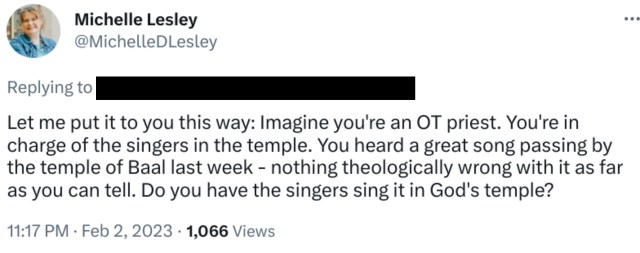
I would now like to take a moment to highlight this reader’s question for pastors and ministers of music. This is yet one more reason it is detrimental to your church to use music from Bethel, Jesus Culture, Hillsong, Elevation, any musician connected these groups (such as Phil Wickham who’s very prolific and has strong ties to Bethel), or any other musician who isn’t doctrinally sound (after you have thoroughly vetted him/her/them.) regardlessย of how biblical the lyrics of any particular song of theirs that you’re using might be. You could potentially be turning away solid, mature, discerning Believers who might otherwise be interested in joining your church. The woman who sent in this question is not the first to ask me something like this – not by a long shot. This issue is increasingly of concern to Christians looking for a solid church. (For that reason, I do not list churches – even Reformed or seemingly otherwise doctrinally sound churches – on my Reader Recommended Churches list, who use music from heretical sources like these.)

When a visitor walks into your sanctuary for the first time, your worship service is the “face” of your church to her. What kind of a first impression are you making? When you use music by doctrinally unsound musicians, it does not say, “We’re really a doctrinally sound church – honest! We only use songs from these groups whose lyrics are biblical.”. It says, “This church has leaders who aren’t discerning,” or “If this church uses music by these heretical groups, what other doctrinal problems does it have?”. Why put that stumbling block out there when there is plenty of music available with biblical lyrics written/performed by doctrinally sound musicians?

And there’s another stumbling block that using this type of music puts in front of weaker brothers and sisters that you may not have realized. I have heard from a number of Christians whom God graciously saved and rescued out of the pit of “churches” similar to Bethel, Hillsong, and Elevation. They tell me that when they walk into what they think is a doctrinally sound church and hear music from these and other heretical sources, it triggers a form of spiritual PTSD. It’s traumatizing to them. They immediately become fearful that your church is mere steps from turning into one of these types of “churches.” Will they grow out of that reflexive reaction? Yes, someday, as God continues to sanctify them. In the meantime, do you want the music at your church to cause them unnecessary anxiety? I hope not.

Even for Christians who have not come out of “churches” like these but are knowledgeable about their heretical theology, using these songs in your worship service is putting a stumbling block in front of them, too. Take me, for example. I’ve studied these groups. I’ve seen their heresy and the damage they do to both the Kingdom and to the individuals who follow them. And because of that, I’ve zealously spoken out against them. If I visit your church and an Elevation song suddenly flashes up on the screen, my ability to worship is completely derailed in grief that your church would use a song from that source – especially if you know about their theology and are well acquainted with music from doctrinally sound sources that you could have used instead. I cannot sin against my conscience by singing those songs. Consider me a “weaker brother” if you like, but do you care more about me as your sister in Christ, or your “right” to use music from these sources? What about Paul’s posture in 1 Corinthians 8:9-13?

But take care that this right of yours does not somehow become a stumbling block to the weak. For if anyone sees you who have knowledge eating in an idol’s temple, will he not be encouraged, if his conscience is weak, to eat food offered to idols? And so by your knowledge this weak person is destroyed, the brother for whom Christ died. Thus, sinning against your brothers and wounding their conscience when it is weak, you sin against Christ. Therefore, if food makes my brother stumble, I will never eat meat, lest I make my brother stumble.

If this was true in Paul’s personal life, shouldn’t it surely be true of our worship services? If you wouldn’t put a Christmas tree or portrayals of Jesus in your sanctuary because it might offend a brother in Christ, why would you use worship music that causes offense to your brothers and sisters?

Finally, what is the proactively good reason for intentionally choosing music from a heretical source? In other words, when you’re selecting music for the worship service, why would you choose, say, a Hillsong song about God’s glory, or Psalm 23, or the crucifixion, when you could just as easily choose a song from a doctrinally sound source about any of those things – a source that isn’t a stumbling block to anyone, won’t give anyone the wrong impression about your church, won’t lead anyone to follow a heretical “church,” and won’t use your church’s offerings to support a heretical “church”? What makes the Hillsong song you’re choosing better than the song from the doctrinally sound source? It doesn’t seem to me that there’s a good enough reason to use songs from these sources that outweighs all the good, biblical reasons not to use them.

There is simply no good reason for a doctrinally sound church to use music from heretical sources like these.

The Mailbag: False Doctrine in Contemporary Christian Music

Why Our Church No Longer Plays Bethel or Hillsong Music (or Elevation or Jesus Culture), and Neither Should Yours

Hillsongโ€™s Theology of Music and Worship

The Mailbag: Should Christians listen to โ€œReckless Loveโ€?


Hello there. I read your blog about Priscilla Shirer being a false teacher. Read some parts of your blog. Found your recommended preachers with sound doctrine. I don’t know what denomination you’re in. But I just wanted to ask if you believe if we can lose our salvation?

Hi there! I’m a Reformed Southern Baptist. You can read more about my denomination and my beliefs at the Statement of Faith tab and the Welcome tab (both in the blue menu bar at the top of this page.

No, I do not believe genuinely regenerated Christians can lose their salvation because that’s not what the Bible teaches. I discussed this at length, including the relevant Scriptures, in my article The Mailbag: Can unforgiveness cause you to you lose your salvation?.


If you have a question about: a Bible passage, an aspect of theology, a current issue in Christianity, or how to biblically handle a family, life, or church situation, comment below (Iโ€™ll hold all questions in queue {unpublished} for a future edition of The Mailbag) or send me an e-mail or private message. If your question is chosen for publication, your anonymity will be protected.