This article crosses a line…it’s bashing…mean-hearted…We shouldn’t be looking to twist a knife or bask in “I warned you” glory…so settled in our sense of rightness that we can’t grieve for those who are struggling.
…reading that [we should pray for Beth Moore’s salvation] after all the condescension comes off as more of a southern “bless her heart”.
…this article comes across as sanctimonious with zero grace. It complete [sic] discounts the power of God to transform the most wayward heart….ostracizing and belittling those leaders who fall…I felt a lot of smugness in the article…lack of grace and love…[coming] from a place of superiority…[being] gleeful when sin comes to light…take on the role of judge and executioner…
Michelle: So it’s OK for you to bash me, but it’s not OK for me to “bash” Beth?
I’m not bashing you.
Whenever I post an article about Beth Moore or another false teacher, I invariably get comments like this on social media, the gist of which is that I’m being unloving for saying that she is a false teacher, for rebuking her sin, for recommending that Christian women not receive teaching from her, for my “tone” of using stark language, and so on. (I always find it ironic that the commenter is usually bashing me even as she’s accusing me of “bashing” the false teacher.)
Such was the case last Friday when I posted my article Bye-Bye Beth: What Beth Moore’s Split with the SBC Means. I’ve posted excerpts above from several comments about the article made by one woman – not to single her out, but because her accusations and phraseology typify so well the pushback I often receive from those of the “You’re being unloving” persuasion. There were a few other women who responded in the same vein on the same Facebook post(s), so this lady – who, I must say, was much more polite and articulate in expressing her thoughts than most usually are – was not alone in her viewpoint.
I have not excerpted this lady’s comments in order to take them out of context or misrepresent her, but because her comments were far too many and too lengthy to post in full. Assuming they have not been deleted, If you would like to read her comments (and those of the other dissenting women) in full to make sure I’m presenting an accurate picture of the thrust of their sentiments, I would encourage you to do so here, here, and here. (Please do not address these women any further. They have spoken their minds in full, and they have been addressed sufficiently. There is no need to pile on.)
So to those who would accuse me of being unloving or hateful, who shame me that “Jesus would never talk to people that way,” who think my wording is too harsh, unkind, not gentle enough, etc., here’s my answer…
You’re defining “love” as my saying something in a way that you’re comfortable with and doesn’t offend your sensibilities.
That’s not how the Bible defines it. And that’s why Jesus was able to speak to the Pharisees…
…woe to you, scribes and Pharisees, hypocrites! For you shut the kingdom of heaven in people’s faces…you make him twice as much a child of hell as yourselves. Woe to you, blind guides!…You blind fools!…You blind men!…full of greed and self-indulgence…you are like whitewashed tombs, which outwardly appear beautiful, but within are full of dead people’s bones and all uncleanness…you are full of hypocrisy and lawlessness…you are sons of those who murdered the prophets. Fill up, then, the measure of your fathers. You serpents, you brood of vipers, how are you to escape being sentenced to hell?..on you may come all the righteous blood shed on earth, from the blood of righteous Abel to the blood of Zechariah the son of Barachiah, whom you murdered between the sanctuary and the altar.
Matthew 23
…and God was able to speak about His idolatrous people…
And the Babylonians came to her into the bed of love, and they defiled her with their whoring lust. And after she was defiled by them, she turned from them in disgust. When she carried on her whoring so openly and flaunted her nakedness, I turned in disgust from her, as I had turned in disgust from her sister. Yet she increased her whoring, remembering the days of her youth, when she played the whore in the land of Egypt and lusted after her lovers there, whose members were like those of donkeys, and whose issue was like that of horses. Thus you longed for the lewdness of your youth, when the Egyptians handled your bosom and pressed your young breasts.”
Ezekiel 23:17-21
…so much more harshly and starkly than I’ve spoken about Beth in this article, and yet He is still the perfect embodiment of love, and the perfect example of love to us.
Using your definition of love, if you’re going to be fair and consistent, if you accuse me of speaking in an unloving way in this article, you have to accuse God of speaking in an unloving way in Ezekiel 23 and Jesus of speaking in an unloving way in Matthew 23.
But the Bible defines love like this:
God is love. In this the love of God was made manifest among us, that God sent his only Son into the world, so that we might live through him. In this is love, not that we have loved God but that he loved us and sent his Son to be the propitiation for our sins. Beloved, if God so loved us, we also ought to love one another. 1 John 4:8b-11
For God so loved the world, that he gave his only Son, that whoever believes in him should not perish but have eternal life. John 3:16
but God shows his love for us in that while we were still sinners, Christ died for us. Romans 5:8
Because God is love, God alone has the right to define love. And God defines love as the redemption, restoration, and reconciliation of man to Himself. Love isn’t someone making you feel good about yourself or the world or your circumstances. Love isn’t being outwardly “nice”: always being the epitome of sweetness, never confronting anyone, affirming everything, never hurting anyone’s feelings, never saying or doing anything that makes anyone uncomfortable.
Because God is love, God alone has the right to define love. And God defines love as the redemption, restoration, and reconciliation of man to Himself.
While the world looks at a person’s outward, observable behavior and pronounces her loving or unloving depending on how pleasing that behavior is to others, God looks at a person’s heart and pronounces her loving or unloving to the extent that her motives match His.
…the Lord sees not as man sees: man looks on the outward appearance, but the Lord looks on the heart.
1 Samuel 16:7b
God defines love as cooperating with Him in rescuing the perishing, building up the church, and showcasing His glory. Sometimes that’s going to look like binding up the brokenhearted or healing the untouchable leper, and sometimes that’s going to look clearing the temple or calling false teachers a brood of vipers. While the world would call the former “loving” and the latter “hateful” based on what those behaviors look like, God calls both loving if they spring from a heart motivated to rescue, redeem, restore, and reconcile.
Sometimes biblical love looks like binding up the brokenhearted or healing the untouchable leper, and sometimes it looks like clearing the temple or calling false teachers a brood of vipers.
So, when you say I’m being “unloving” to use stringent language about false teachers (like God, Jesus, the prophets, and the apostles did), and I say you’re wrong, it’s because we’re using two different definitions of love. You’re using a worldly definition of love based on how pleasing my outward behavior was to you. I’m using God’s definition of love that’s based on the motivation of my heart. You cannot tell me I’m not demonstrating biblical love in a situation like this because you don’t know the motivation of my heart. I do. The article in question (like so many others about which I’m accused of being unloving) was motivated by love – God’s definition of love – for
Beth – that God would graciously remove the scales from her eyes and save her
Beth’s fans – that God would open their eyes to deception they’re believing and lead them to repentance and sound doctrine
Discerning Christians – that they might be encouraged not to let their guard down but to keep contending for the faith once for all delivered to saints
The church – that it would cleanse out the leaven of false teaching so that Christ might present her to Himself in splendor, without spot or wrinkle or any such thing, that she might be holy and without blemish.
and the Southern Baptist Convention – that it might forsake the idols of money, power, and celebrity, and return to its first love, Christ.
But it was also motivated by another component of love which the worldly definition of love, being worldly, is completely oblivious to. You see, the world’s definition of love only concerns itself with the “horizontal” love between one human being and another. But God’s definition of love finds its origin in Himself. He is the foundation and the culmination of love. He is both the starting gun and the finish line in the race of love. Where there is no vertical love of God, there is no horizontal love between people. There may be friendship, attraction, affection, attachment, and emotion, but there is no true love.
God’s definition of love finds its origin in Himself. Where there’s no vertical love of God, there is no horizontal love between people. So any biblical -rather than worldly- definition of love must start and finish with love for God.
And so any biblical – rather than worldly – definition of love must start and finish with love for God. Only a heart that loves Him because He first loved me can extend that same redemptive, restorative love to others.
And though I have never, and will never, this side of Glory, love Him as completely and perfectly as I should – as I want to – those articles that offend your sensibilities, that you feel justified in berating me about because they don’t meet your standards, those articles are rooted in and motivated by love for the Christ whom I serve. I would not continue to do what I do and take the abuse I take for it if I did not love Him.
I’ve heard this whole “tone police” perspective a million times. I’ve prayed about it. I’ve considered it. I’ve weighed the motivations of my heart. And in cases in which I know before the Lord that my motives have truly been unloving, I’ve repented. But the astronomically overwhelming majority of accusations I receive are not from people concerned with the biblical definition of love, but from people using a worldly definition of love whose personal sensibilities have been offended. People who wish to correct me from the authority and standard of their feelings, not from the authority and standard of God’s Word.
And as I’ve prayed, and studied, and weighed, and considered all of these things, the conclusion the Lord has graciously led me to is that there’s no way I will ever please every single one of the thousands of people who hear me. Just like Jesus’ words didn’t please all the people who heard Him, or John the Baptist’s words, or Peter’s, or Paul’s, or Noah’s, or Ezekiel’s, or Jeremiah’s, or… (you know, I’m starting to think I’m in good company!)
So rather than trying to please man, I’m going to strive to please God. If my conscience is clear before Him, that’s all that matters.
The fear of man lays a snare, but whoever trusts in the Lord is safe. Proverbs 29:25
For am I now seeking the approval of man, or of God? Or am I trying to please man? If I were still trying to please man, I would not be a servant of Christ. Galatians 1:10
If you have a question about: a Bible passage, an aspect of theology, a current issue in Christianity, or how to biblically handle a family, life, or church situation, comment below (I’ll hold all questions in queue {unpublished} for a future edition of The Mailbag) or send me an e-mail or private message. If your question is chosen for publication, your anonymity will be protected.
If you are considering commenting or sending me an e-mail objecting to the fact that I warn against certain teachers, please click here and read this article first. Your objection is most likely answered here. I won’t be publishing comments or answering emails that are answered by this article.
This article is kept continuously updated as needed.
I get lots of questions about particular authors, pastors, and Bible teachers, and whether or not I recommend them. Some of the best known can be found above at my Popular False Teachers tab. The teacher below is someone I’ve been asked about recently, so I’ve done a quick check (this is brief research, not exhaustive) on him.
Generally speaking, in order for me to recommend a teacher, speaker, or author, he or she has to meet three criteria:
a) A female teacher cannot currently and unrepentantly preach to or teach men in violation of 1 Timothy 2:12. A male teacher or pastor cannot allow women to carry out this violation of Scripture in his ministry. The pastor or teacher cannot currently and unrepentantly be living in any other sin (for example, cohabiting with her boyfriend or living as a homosexual).
b) The pastor or teacher cannot currently and unrepentantly be partnering with or frequently appearing with false teachers. This is a violation of Scripture.
c) The pastor or teacher cannot currently and unrepentantly be teaching false doctrine.
I am not very familiar with most of the teachers I’m asked about (there are so many out there!) and have not had the opportunity to examine their writings or hear them speak, so most of the “quick checking” I do involves items a and b (although in order to partner with false teachers (b) it is reasonable to assume their doctrine is acceptable to the false teacher and that they are not teaching anything that would conflict with the false teacher’s doctrine). Partnering with false teachers and women preaching to men are each sufficient biblical reasons not to follow a pastor, teacher, or author, or use his/her materials.
Just to be clear, “not recommended” is a spectrum. On one end of this spectrum are people like Nancy Leigh DeMoss Wolgemuth and Kay Arthur. These are people I would not label as false teachers because their doctrine is generally sound, but because of some red flags I’m seeing with them, you won’t find me proactively endorsing them or suggesting them as a good resource, either. There are better people you could be listening to. On the other end of the spectrum are people like Joyce Meyer and Rachel Held Evans- complete heretics whose teachings, if believed, might lead you to an eternity in Hell. Most of the teachers I review fall somewhere in the middle of this spectrum (leaning toward the latter).
If you’d like to check out some pastors and teachers I heartily recommend, click the Recommended Bible Teachers tab at the top of this page.
The Daily Grace Co. Not Recommended
(Listen to the abbreviated A Word Fitly Spoken podcast version of this article: Glad You Asked: Discernment- part 2. The segment on The Daily Grace Co. begins at approximately 25:36)
“The Daily Grace Co. exists to equip disciples to know and love God and His Word by creating beautiful, theologically rich, and accessible resources so that God may be glorified and the gospel made known.”
The Daily Grace Co. (henceforth, “DG”) started out in 2014 as a small, “kitchen table” publisher of Bible studies. Today, “We offer over 50 Bible Studies, both topical and on books of the Bible. Over the past 10 years, we’ve shipped over 3 million Bible studies that have helped individuals grow in their love and knowledge of God’s word.” DG has also expanded into a parachurch ministry, with podcasts, magazines, live chats, speaking engagements, online Bible study “communities,” and their own DG conference.
According to the Meet the Team page of DG’s website. Kristin Schmucker is the “CEO and Visionary for” DG. She is married to Jeremy. “Jeremy’s role as President [of DG] is to implement the vision of the CEO.”
Depending on which part of the website you read, DGC employs between 51 and 64 people, which they’re looking to double by 2025. This is no longer a kitchen table “ministry” of one or two or a handful of Christian women volunteering their spare time to write a few Bible studies and put out a podcast. This is a full blown production business. They have a large headquarters building in Spring, Texas. When they say Daily Grace Company, they mean it. It’s a company.
Now, let’s be absolutely clear from the get go. There is nothing unbiblical, in and of itself, about Christians running a successful company and/or parachurch ministry, selling Christian books and products, and making a reasonable profit. I know of several such companies and parachurch ministries which manage to do so while maintaining sound doctrine, and without compromising on Scripture. The issues with DG are not that it is a successful business and ministry, but the way it became, and continues to be, a successful business and ministry.
When it comes to doing business in evangelicalism, you have two choices: you can stick to Scripture no matter what, and let the financial chips fall where they may, or you can pursue profit and opportunities to expand your reach by compromising – a little or a lot – on Scripture. Look at how many millions your major false teachers are worth and how famous they are compared to even the most prolific doctrinally sound pastor or teacher you can think of. The bottom line is, you can turn a decent, legitimate, and biblical profit by sticking to Scripture and sound doctrine, but there’s much more money to be made and fame to be achieved by scratching itching ears and compromising on Scripture. As Jesus so wisely said:
No one can serve two masters, for either he will hate the one and love the other, or he will be devoted to the one and despise the other. You cannot serve God and money.
Matthew 6:24
And one of the ways to expand both your reach and your profit margin is to hitch your wagon to the stars of false teachers.
Partnering with, and Influenced by False Teachers (Including Female “Pastors”/Preachers)
In the spring of 2024, I learned that DG had hosted what they call a pop up shop at IF:Gathering 2024. A pop up shop is a booth at a conference or other event where DG sells its products. They give 10% of the profits to the organization hosting the event. From the size of the IF crowd it appears the arrangement was mutually financially beneficial. But at what cost? Scripture commands us not to partner with false teachers.
DG also had a merchandise space at IF:Gathering 2023 and helped sponsor the conference by donating attendee swag bags. Notice, too, in this post from Jeremy, that he mentions sitting under teaching from the “keynote speakers”. You can find a list of IF 2023 speakers here and see for yourself that they are mostly women (IF speakers are typically women “pastors,” women who preach to men, false teachers, and woke). So, Jeremy, the president of DG, violates Scripture’s prohibition on women instructing men in the Scriptures by voluntarily sitting under the teaching of women.
I scrolled through the DG podcast feed and took note of a few of their problematic guests with recognizable names, which have included Chrystal Evans Hurst (false teacher and Tony Evans‘ daughter, Priscilla Shirer‘s sister), Jen Wilkin, both of whom preach to men, and Sharon Hodde Miller, who is a female “pastor”. In one podcast episode I listened to, Kristin positively quoted Craig Groeschel on leadership.
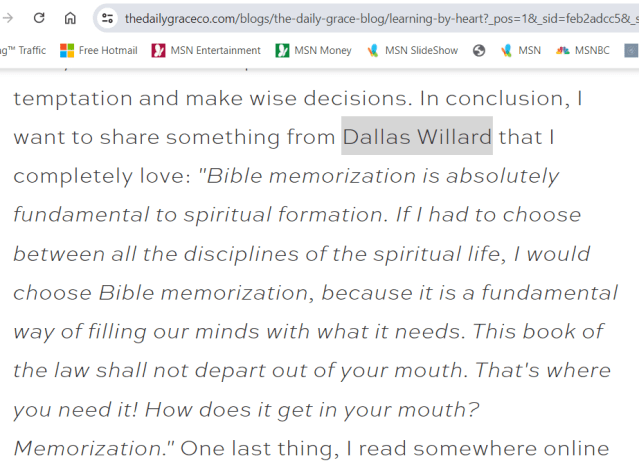
In this blog article (originally published in DG’s Be Still magazine, issue #1) titled Learning By Heart, Melissa Emma describes taking part in false teacher Beth Moore’s Scripture memory program. She cites a quote fromAnn Voskamp as the reason for selecting her “word for the year“. She also positively quotes false teacher Dallas Willard.
In another blog article, Goals for 2017, the author says of Beth Moore’s book, Praying God’s Word, that she “can’t wait to dig into it to learn how to unlock the power of praying Scripture” as though Beth holds some mystical key – over and above Scripture – that will “unlock” some magical “power” of prayer. When it comes to biblical practices, such as prayer, the Bible is sufficient to teach us all we need to know. And when the disciples point blank asked Jesus to teach them to pray, He – God Himself – looked them in the eye and told them (and us) exactly how He wants us to pray. But she’d rather look to a false teacher to “unlock” this “power”. She also raves over a Lysa Terkeurst book she read, a Tara Leigh Cobble D-Group she participated in, and a Beth Moore Scripture memory program she took part in.
Here’s Kristin with another positive quote of Beth Moore:
Here, Kristin says she’s “grateful to be able to attend Bible Study with [Beth Moore] who wrote the first Bible study that I ever did.”
(It is unclear exactly what Kristin means by attending a study “with” Beth Moore. As far as I’ve been able to ascertain, Kristin and Beth do not go to the same church. However, their ministry headquarters are in proximity to each other, and Beth has taught Bible studies at her ministry headquarters, so perhaps it’s one of those Bible studies Kristin is referring to.)
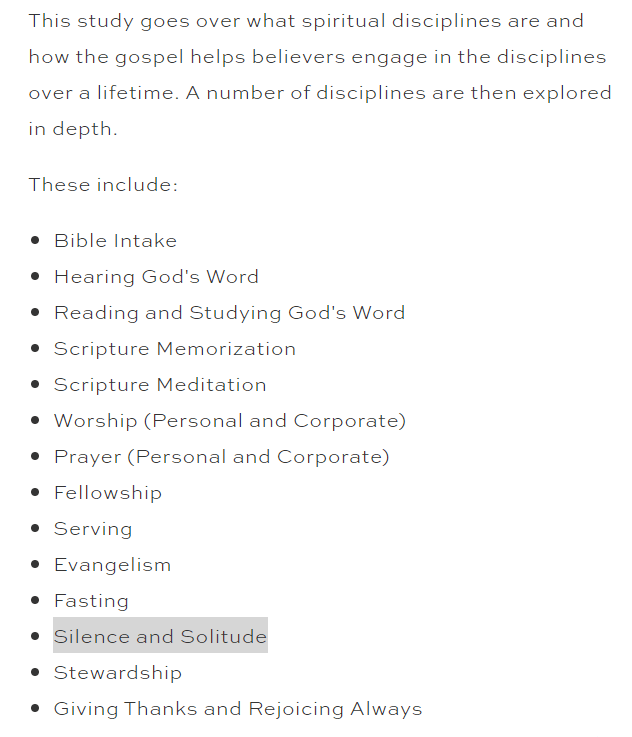
One of the clearest examples of DG teaching mysticism and spiritual formation is Jennie Heideman’s June 2021 blog article, How to Practice Solitude. Now, before we even get into the content of the article, I want you to think about that title and stop and mentally flip back through your Bible. Which passage(s) of the Bible teach us about solitude, the need to “practice” it, and how to practice it? If you can’t think of any, there’s a reason for that. There aren’t any. Solitude is not a biblical spiritual discipline1.
Here’s how Jennie defines the practice of solitude:
Solitude allows us to spend time with God. But instead ofspending time with God through studying the Scripture or meditating, we are spending time with God by just being. Just like you don’t need to talk constantly with your spouse when you spend time together, spending time with God through solitude involves just being together with Him. And as we spend time with God in this way, He gives us His presence, words, direction, and peace.
So, if you were thinking, “Oh, ‘solitude’ must mean finding a quiet place, alone, to pray and study my Bible,” that’s not what Jennie means. She explicitly says “instead of” studying Scripture, you’re “just being” with God. You’re not praying, you’re not reading your Bible, you’re alone, it’s quiet. Exactly what is it you’re doing during this time of solitude? The only thing I can envision looks scarily like transcendental / New Age meditation or contemplative prayer.
And again, where does the Bible teach this practice of “just being together with God”? It doesn’t. God is omnipresent. From eternity past to eternity future, He has always been, and always will be constantly present in every millimeter of the entire universe. You are never outside of God’s presence or not “with God”. Here’s what the Bible says:
Where can I go from Your Spirit? Or where can I flee from Your presence? If I ascend to heaven, You are there; If I make my bed in Sheol, behold, You are there. If I lift up the wings of the dawn, If I dwell in the remotest part of the sea, Even there Your hand will lead me, And Your right hand will lay hold of me. Psalm 139:7-10
And Jesus promised us:
…and behold, I am with you always, even to the end of the age. Matthew 28:20b
And let’s take a closer look at that last sentence of her definition of solitude:
And as we spend time with God in this way, He gives us His presence, words, direction, and peace.
Where does the Bible teach this?
What passage of Scripture says that if we “practice solitude” God will “give us His presence”? It doesn’t. As we’ve already seen, God is always with us because He’s omnipresent, plus, as Believers, the Holy Spirit indwells us. You couldn’t get away from God’s presence if you wanted to. Nobody could. What Jennie is talking about is some sort of phantasmagorical goose bumps. A mystical feeling of what is supposedly “God’s presence”. And that’s not taught in Scripture either. That’s the idolatry of feelings and experiences.
Where does Scripture say that if we “practice solitude” God will give us His “words” and “direction”? It doesn’t. God instructs us in His written Word that when we want His words and His direction, we go to rightly handled Scripture. Scripture is sufficient for all things pertaining to life and godliness.
Finally, where does Scripture say that if we “practice solitude” God will give us “peace”? It doesn’t. Our peace was purchased on the cross with Christ’s blood. He is our peace and peace is a fruit of the Spirit in us. But again, Jennie isn’t talking about biblical peace. She’s teaching you to idolize a feeling of peace.
Jennie tries to play the “Jesus card” in order to legitimize what she’s teaching:
And one of the things that Jesus did was practice solitude... Jesus gave us the example of solitude as a way to draw closer to God. In fact, there are at least 22 recorded instances of Jesus seeking solitude to be with His Father.
Where? Where is even one of those 22 recorded instances? Jennie provides no links, no Scripture references. Why? Because Jesus did not give us an example of solitude in Scripture the way Jennie defines it, and she knows it. The closest things Jesus did to “practicing solitude” that I can think of are in verses like…
Matthew 14:23a– “And after he had dismissed the crowds, he went up on the mountain by himself to pray.”
Mark 1:35- And rising very early in the morning, while it was still dark, he departed and went out to a desolate place, and there he prayed.
Luke 5:16- But he would withdraw to desolate places and pray.
Jesus didn’t seek solitude to “just be together with” God. He prayed.
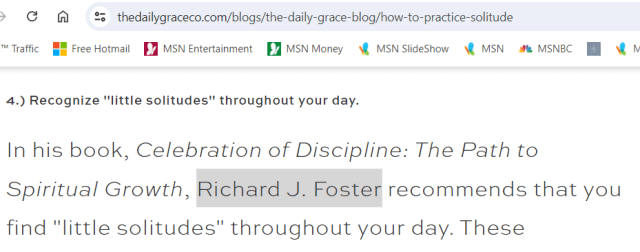
Finally, there’s this recommendation. Richard Foster is the “founding father” of the Spiritual Formation movement.
And, as previously mentioned, in the article Learning By Heart, Melissa Emma quotes false teacher Dallas Willard on Spiritual Formation.
While DG doesn’t seem to overtly teach the use of the Enneagram or spend much time on it, it’s clear the Enneagram is part of the culture of DG.
In DG podcast episode 21: Ask Us Anything, the hosts take questions from DG followers, one of which is, “What are your Enneagram numbers?” (36:13). Amy and I have posted a number of episodes of A Word Fitly Spoken answering listeners’ questions, and one question we’ve never been asked is “What are your Enneagram numbers?” most likely because we’ve taught on several episodes that the Enneagram is unbiblical. Why would DG followers think this question would be welcomed? Because DG presents itself as an organization followers surmise would be Enneagram-friendly. And they’re right, it is.
In the episode, though the hosts clarify that our identity is in Christ, they say of the Enneagram, “We personally think that the Enneagram can be fun, it can be helpful in our relationships, and looking at the way we tend to react to things, and analyzing ourselves…”. They’ve both clearly taken the Enneagram test and are well-versed in the meanings of the numbers, because they each know their own numbers right off the bat and have guessed each other’s numbers.
One of my own followers contacted me to let me know that she had previously applied for a job at DG, and one of the questions on the application asked what her Enneagram number was.
“We are not experts. We are not black; we don’t know what it is like to be black in America,” they introduce one of the episodes by saying. That’s true. But they do have (currently) four other staffers who are black, who do know what it’s like to be black in America. It’s impossible to tell whether any or all of them worked at DG at the time these episodes were recorded, so one is left to wonder:
If any/all of them were employed by DG at the time of the recordings, why was a white woman chosen for the interview over a black staffer?
If none of them were employed by DG at the time of the recordings, that means DG was a very white company until fairly recently. It doesn’t speak well of their track record of diversity in hiring at all. Currently, there are only four black staffers pictured on DG’s Meet the Team page. Four. Out of 51. And only one is involved in content creation (at what seems to be the same level Aubrey was – staff writer).
But I’m getting a little ahead of myself. Back to the episodes. Neither episode is dated, but the latter (How Can We Respond…) sounds like it was recorded shortly after the deaths of Ahmaud Arbery (February 2020), Breonna Taylor (March 2020), and George Floyd (May 2020).
Both episodes seemed to go point by point through the woke playbook of the time:
The women never think to question whether or not the narrative they’re hearing from the world is true, but proceed to label the worldly definition of racism as “sin” anyway. “God is a God of justice, and one day He’ll set everything right.” Their assumption is that the injustice is being reported accurately (by lost people in the media, BLM, etc.), and is, indeed, actual injustice, and white people will get the justice they deserve.
They unquestioningly take for granted that the Arbery, Taylor, and Floyd incidents were all definitively instances of “racial injustice” with no other mitigating factors.
Clearly influenced by worldly ideas and worldviews from the likes of non-Christians such as Robin DiAngelo and Ibram X Kendi, they repeatedly remarked on white people’s supposedly inherent racism (“white fragility,” “white privilege,” “whiteness,” etc.) A few examples from the “How Can We Respond…? episode (my remarks are in parentheses following the quotes):
27:01- “…the implicit biases, and evil prejudices in all of our hearts should be exposed…”
22:37- “… doing justice, correcting oppression, pleading the cause of those who are silenced and unheard, these things are not optional for the Believer. They are a requirement.” (In the context in which the women are speaking, this is a mishandling of Scripture. Additionally, they are using God’s Word to beat white people over the head until their unbiblical feelings of guilt over this legalism prompt them to do what the worldly race agenda wants.)
22:18- “Black image bearers have been mistreated and devalued, and I have sinned against them and against God by remaining in the comfort of my own privilege through inaction.”
21:37- “We have to evaluate our own hearts.” (She then quotes Psalm 139:23-24, which is David’s plea for God to examine his heart, not for us to examine our own hearts, so… more mishandled Scripture, there.)…
…”I think that our tendency might be to defend ourselves and say, ‘But I’m not racist,’ find ways to justify ourselves, but we have to acknowledge that because of our fallen nature we all have prejudices and we will all struggle with racism to some degree… we need to recognize our own racism… He’s the one who can reveal those sinful patterns and tendencies that we might not even recognize in ourselves.” (So, either God, or we white people {notice, there’s no call for black people to examine their hearts for racism}, or both are to examine our hearts, but the only acceptable conclusion we’re allowed to reach after doing so is that we’re racists.)
20:22- “Be willing to listen to our black neighbors… we need to listen with humility, and not defensiveness. We need to listen with the assumption that we are the ones who have something to learn from this conversation.” (White people need to listen, not black people. White people need to learn, not black people. White people are the sinners when it comes to issues of race, not black people.)
11:00- “Our tendency may be to only want to hear from people who look like us when it comes to the Word of God …It is so important that we …are looking to hear people’s voices who are different from us… especially on the Word of God.” (This is a very unbiblical hermeneutic called standpoint epistemology. Basically, it says that we can’t truly understand what a passage of Scripture means until we hear what it means to black people, women, homosexuals, etc.)
1:44- “Pursuing racial reconciliation is part of our preparation for Heaven, right?” (Excuse me, but where does the Bible teach this?)
0:14- We want to be faithful to do this work of racial reconciliation because that is the ministry that we’ve been given, the ministry of reconciliation.” (This is a complete twisting of 2 Corinthians 5:18-20. We have not been given the ministry of reconciling the races -mainly lost people- to one another. We have been given the ministry of reconciling lost people to Christ.)
Now all these things are from God, who reconciled us to Himself through Christ and gave us the ministry of reconciliation, namely, that God was in Christ reconciling the world to Himself, not counting their transgressions against them, and He has committed to us the word of reconciliation. So then, we are ambassadors for Christ, as God is pleading through us. We beg you on behalf of Christ, be reconciled to God.
2 Corinthians 5:18-20
In the “Beauty of … Diversity in the Church” episode:
Churches are pressured to pursue diversity based on a popular mishandling of Revelation 7:9, essentially, that because “every nation, tribe, and tongue” will be gathered around the Throne in Heaven, churches have to make sure they look like this now. Only there’s no explanation of how to do this if, say, your church is smack in the middle of China and there are only Chinese people around. There’s also no expectation for black churches in America to pursue diversity by reaching out to white people.
Individuals are called to proactively pursue diversity in their own lives, perhaps by moving to a more diverse neighborhood, changing gyms, or joining a more diverse church. (Or maybe by finding a new job at a company that has more than four black employees out of 51. Of course, if white people flock to diverse organizations, won’t those organizations become more white and less diverse? Won’t that decrease the number of “black spaces”? It’s a pickle, I’ll tell ya.)
Overall, DG’s position on race seems to be in line with other organizations that have been labeled “wokevangelical” (such as The Gospel Coalition): they’ve adopted the secular worldview on race and racism and covered it with a thin veneer of Christiany-sounding legalism which they support with mishandled Scripture and misplaced white guilt.
“God told me.” “Sit quietly and listen for God to speak.” “Hearing God’s voice.” The unbiblical idea that God verbally and/or audibly talks to Christians today on the regular is completely unbiblical. God has already spoken. He speaks to us through His written Word, where He has made abundantly clear that Scripture is not only sufficient as we seek to follow Christ, it is actually better, preferable, and more reliable than supposed voices from the sky or in your head.
DG has a habit of appearing to align with the doctrine of biblical sufficiency while simultaneously teaching extra-biblical revelation. It’s slick enough (unintentionally, I’m sure) that you might miss it if you’re not paying attention.
In the second paragraph the author pays lip service to “[listening] to God’s (sic) as He speaks through Scripture” [from the context, the word “voice” seems to have been left out after “God’s”], but throughout the rest of the article, the “through Scripture” part is nowhere to be found and it’s easy to infer that she’s talking about extra-biblical revelation. For example:
…solitude allows you to hear the voice of God. However, it can be challenging to listen to the voice of God if you don’t practice Bible intake because it will be hard to decipher between your thoughts and God’s words.
If you’re “hearing the voice of God” through Scripture, this statement makes no sense. If you’re “practicing Bible intake” (this isn’t defined, so I can only surmise it means some form of reading, listening to, or being taught the Bible), there will be zero difficulty “deciphering between your thoughts and God’s words” because your thoughts are in your head and God’s words are on the page of Scripture in front of you. You cannot “listen to the voice of God through Scripture” if you’re not “practicing Bible intake”. She’s talking about extra-biblical revelation here.
But instead of spending time with God through studying the Scripture…solitude involves just being together with Him. And as we spend time with God in this way, He gives us His … words…
The author explicitly says we can receive “His words” by practicing solitude instead of studying Scripture.
And in this DG post, you’re again misled to believe that “solitude” is a biblical spiritual discipline and that, “When we take time away from people, distractions, and noise, we quiet our hearts to listen to God’s voice.” If you’re supposedly “listening to God’s voice” by reading your Bible, a) why doesn’t this post say so, and b) why do you need to “practice solitude” to hear what God is saying in His written Word?
In DG podcast episode 87: Learning the Voice of God, the hosts repeatedly stressed that we need to read Scripture in order to learn the voice of God and God’s tone of voice instead of saying Scripture is the voice of God. It was very confusing, but after listening to the episode twice, I finally figured out why I was confused. “Learn the voice of God/God’s tone of voice” – which the hosts never clearly defined – may be cutesy little aesthetical phrases, but they are neither biblical terminology nor biblical concepts. The Bible never speaks of “learning the voice of God” or “God’s tone of voice”.
The Bible does not teach us that that we’re to learn what the voice of God “sounds like” by reading Scripture so that when He allegedly speaks to us outside of Scripture, or we hear one of the many “voices” of our culture or evangelicalism speaking to us, we’ll know whether or not it matches up with “God’s voice”.
When Paul, one of the many religious “voices” at the time, came to Berea and began to teach, the Bereans did not say to themselves, “Well, my goodness, we had better learn the voice of God so we’ll know whether or not that’s what we’re hearing through Paul.” No, what does the Bible say?The Bible says, in Acts 17:11, they were “examining the Scriptures daily to see if these things were so“. “Look it up,” not “learn God’s voice”.
Ironically, the hosts spoke for a bit about “learning God’s voice” for the purposes of discernment, so that we would recognize that false teachers and false doctrine are “not God’s voice”. But this doesn’t even seem to work for the hosts themselves (who recommend a Jen Wilkin resource in this same episode), Kristin Schmucker (and her aforementioned fawning over Beth Moore and other false teachers), Jeremy Schmucker (who loves him some IF:Gathering and sits under the teaching of women), and others who work at DG who promote the Enneagram, teach Spiritual Formation and worldly social justice, tout false teachers they love, and who have welcomed women “pastors” and women who preach to men onto the DG podcast.
Other Concerns
I want to preface this section by emphasizing the word “concerns”. I see some things in Kristin’s example to others (both employees at DG, and DG followers) that concern me. I am not saying that they are necessarily sin or false doctrine (unless otherwise stated below) because a) I don’t have enough detailed information to know, and/or b) there’s some degree of Christian liberty in some of these areas. It is possible that with more information it might become apparent that some of these issues are sin. It is equally possible that with more information my concerns would be completely allayed.
I do not take the legalistic position that no woman can ever work outside the home for any reason. I’ve written numerous times (here and here, for example) that there are seasons and circumstances in which it may be perfectly biblical for women to work outside the home. However, except in the direst of circumstances, the childrearing years are not one of those seasons or circumstances. A wife and mother’s primary responsibility, according to Scripture, is to focus on caring for her husband and children, and to manage her own household.
By her own admission in various interviews, Kristin’s children were little (I believe she has said “toddlers,” if I’m not mistaken) when she started the company, and she and Jeremy still have five children at home.
Jeremy’s bio on the DG website reads: “In 2020 Jeremy and Kristin adopted two children from Costa Rica, completing their home with five children, ages 6-11.” That means in 2024, their oldest child is turning 15 and their youngest, 10. This year (2024) is DG’s tenth anniversary. Kristin has been at this for ten years.
Mom is CEO of this company. Dad is president. I don’t know any specifics about how many hours a week they work, but common sense would tell you those are not part time jobs. Typically, CEOs and presidents of companies that size put in more than a regular 40 hour week. It seems like a reasonable inference to observe that Kristin’s primary focus on a day to day basis is not on caring for her husband and children and managing her household, but on running her company.
(I’m not saying she doesn’t love her husband and children or questioning her relationship with them, I’m simply saying there are only 24 hours in a day, and it would seem that Kristin spends more of those hours on her business than on raising her children and managing her home.)
This might not be as concerning were it not for the fact that DG’s target audience is Christian young women, most of whom are of the age when they’re getting married and having children. They look up to Kristin – who is very publicly transparent about her work and her family – as an example of Christian womanhood. Instead of following Scripture’s admonition to be an older woman who teaches what is good: that younger women should be “workers at home” if at all possible, she teaches by her example that “what is good” is to exchange the primacy of caring for one’s husband and children, and managing one’s household, for managing a business.
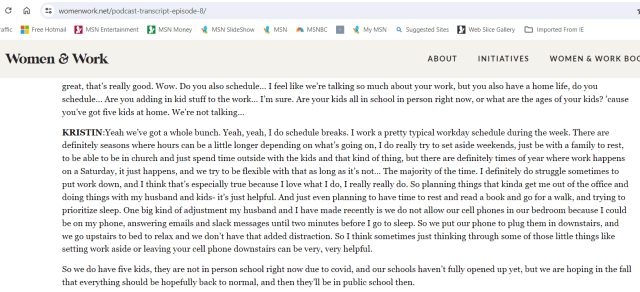
And DG doesn’t just teach this by way of the example Kristin sets. It was also evident in DG podcast episode 252: Women and Work, which primarily focused on women working outside the home.
There was no discussion of Scripture, such as Titus 2:5, about the role of wives and mothers in the family. No discussion about what’s best for kids or the family. No discussion about making sacrifices to stay home, because that’s what’s normative and ideal according to Scripture. Nothing other than a hat tip to “Maybe you’re a stay at home mom,” in a list of all other kinds of work (i.e. “Maybe you’re a doctor, maybe you’re a teacher, maybe you’re a stay at home mom…”).
And it’s not surprising. DG was founded by and is made up of women who work outside the home and see this as some sort of divine “calling”. (There were several comments about working outside the home being a “calling”: “We felt fully called.“ “what God calls us to,” and so on. I inferred they were talking about a feeling or “God verbally told me to…” as calling. In other words, more extra-biblical revelation.)
You’re not going to be encouraged as a stay at home mom or to become a stay at home mom by this company. Subtly or overtly, the message you’ll receive from DG is that it’s glamorous, exhilarating, and purposeful to discover what God is really “calling” you to do … instead of being a “keeper at home”.
Marriage, Complementarity, and Biblical Man/Womanhood
Kristin is the “CEO and Visionary for” DG. “Jeremy’s role as President [of DG] is to implement the vision of the CEO.”
Kristin is the boss. Her husband works for her, carrying out her wishes and her directives. They spend the majority of their waking hours with her in charge. Think about that in light of what the Bible teaches about headship and submission in marriage, and about how that work dynamic would impact a marriage.
I listened to DG podcast episode 254: Women and Leadership, in which Kristin described starting the company, and I found a few of her remarks telling. She said that in Christian circles, “Men don’t always affirm your leadership. My husband has been my biggest cheerleader as I’ve led The Daily Grace Co for the past ten years.”.
Although it is loving and in keeping with Scripture for a husband to support his wife in her biblical pursuits, Jeremy has, for the past ten years, cheered Kristin on as she…
prioritized building a business over building their home
became his boss
became the primary provider for their household
followed and partnered with false teachers, including women who preach to men
What would their example of marriage look like to the women who follow DG and look up to Kristin if Jeremy had pursued biblical headship in his home in these areas over the past ten years? How much more spiritually healthy would their marriage and family be?
This “woman in charge” dynamic has trickled down and permeated DG in general. Of the 51 employees pictured on the Meet the Team page of the website, only ten of them are men. There are eight people on the “content team” (these are the people who -I have to assume, because it doesn’t actually say- write the Bible studies, books, blog, and other content). Of those eight, zero are men. This is a female-run, and driven company.
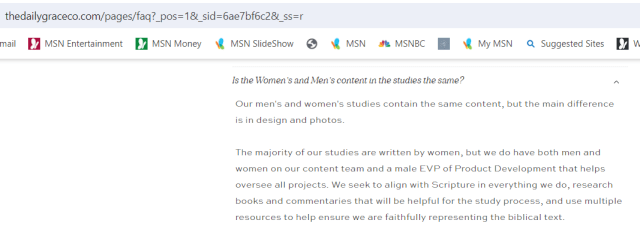
That wouldn’t be as big of a deal if they produced content exclusively for women, but, as their FAQ page says, “Our men’s and women’s studies contain the same content, but the main difference is in design and photos.”.
So you have women writing Bible studies for men. Technically, this doesn’t violate the letter of the law in Scripture, because the prohibition regarding women teaching men is in the context of the gathering of the church body, not authoring a book, but it certainly violates the spirit (which is why I have a note on the Bible studies page of my website asking men not to use my studies).
(Additionally, while Kristin, Jeremy, and the other two members of the executive team all have their degrees (but not which schools or seminaries) listed, there is zero information listed for the content creators besides their names. Who are these women? What is their theology? What sort of training or degrees do they have that qualify them to write Bible studies and theology books?)
Always Be Closing
The overall tone of DG’s website is that it’s a merch site with tons of stuff to sell. But while they sell a few Bibley accessories like t-shirts and stickers and coffee cups, most of what they’re selling is content merch: Bible study books and leader kits, verse and prayer cards, magazines (two, quarterly), journals, “handbooks” (theology/Bible reference books), a membership to access their online Bible study groups, and so on.
You just feel like you’re being sold from the moment you arrive at the website. It’s push, push, push. Product, product, product. And their product is Bible study. In fact, in a video promoting one of their theology books (Diving into the Theology Handbook, previously featured on the DG website), the woman promoting it calls it a “product” twice in the space of five minutes.
With this overwhelming “always be closing” mood of the website, I can’t help but be reminded of Jesus clearing the temple and rebuking the sellers to stop making it a house of merchandise. In fairness, DG is a business, not the temple or the church, but when the product they’re packaging and pushing is the Bible, it sure feels similar.
The Sensuality of Frenetic Aesthetic
An equally over the top tenor of DG is its emphasis on aesthetic. You are just bombarded with this soft, feminine, “Christian girl Instagram influencer” vibe on every page of the website and in every product they’re selling you. Mind you, there’s nothing sinful about soft lit pictures of flowers and cups of coffee and whatnot, but if you’ve ever heard the old saying in advertising, “Sell the sizzle, not the steak,” you’ll have some idea of what I’m getting at. It feels like 95% of what you see is sizzle, and, yes, there’s a steak under there somewhere, but you don’t know a whole lot about it, and the sizzle is what captures most of your attention, anyway.
Emphasizing this point, on the home page of the DG website, you can find what appears to be the DG motto or mission statement: “The Daily Grace Co. createsBeautiful, Theologically Rich & Accessible Resources that equip disciples to know and love God and His Word.” Notice, they “create” these resources. It’s artistic creativity of beauty that’s emphasized first. “Beautiful” is the very first descriptor and it comes before “theologically rich”.
In the aforementioned video selling the DG Theology Handbook (which looks like it’s supposed to be an introduction to systematic theology), the woman in the video flips through the pages which are saturated with beautiful Instagrammy images and infographics, and she makes a point of saying, and demonstrating, what a beautiful coffee table book it would make. I don’t think I’ve ever heard another theology book marketed that way.
So what’s the problem? God created beauty, didn’t He? Of course He did, but like everything else, beauty has to come under submission to biblical principle and function.
Amy and I have talked several times on A Word Fitly Spoken about women being drawn away from sound doctrine by sensuality. Not the sexual definition of that word, but the but the classical definition: “appealing to the senses” – your five senses of sight, hearing, taste, touch, and smell. “SENSE-uality”.
It’s exactly what Eve experienced in the Garden. Genesis 3:6 says:
So when the woman saw that the tree was good for food, and that it was a delight to the eyes, and that the tree was to be desired to make one wise, she took of its fruit and ate…
Eve saw that the tree was good for food and that it was a delight to the eyes. That’s visual sensuality. (And don’t let it escape your notice that this was Satan’s weapon of choice against a woman.) The sensuality of the experience captivated Eve. She was wooed by, and acted on her senses rather than objectively and dispassionately evaluating the reality of the situation, the content of what the serpent was saying, and how it conflicted with God’s clear command. We often fall into the same trap.
I’m pointing this out, not to compare DG to Satan, but to remind all of us not to let our passions and senses lead us. We need to think, discern, and make decisions rationally and objectively, based on the hard, cold facts, not the fancy window dressing.
There’s nothing intrinsically wrong with a beautiful aesthetic, just as there’s nothing wrong with a beautiful piece of fruit. But the truth of God’s Word comes first and reigns over all. Bible before beauty.
Financial Translucency
Something else I found troubling is the Daily Grace Foundation page. It tells you DG is financially supporting missionaries, Bible translation, and various discipleship orgs, but it’s very brief and doesn’t say specifically who or what they’re financing. That’s not financial transparency. When you spend your money at DG, some of it is going to these undisclosed organizations you know nothing about. For all you know, these orgs could be run by or affiliated with false teachers, women “pastors,” people who are woke, etc. Or they could be perfectly doctrinally sound. Who knows? That’s the point. You don’t know.
A Parachurch “Church”
A final concern about DG is something Amy and I have discussed on our podcast: parachurch Bible study with no pastoral oversight. It’s not just that DG sells Bible study books and paraphernalia, they also have a daily Bible teaching podcast, and you can buy a monthly membership to their online community, The Daily Grace Collective, an online platform where you study the Bible “in community”. (The Bible study books they’ll be using, however, are, of course, sold separately.)
The community you study the Bible with is your church, not an online, unsupervised group of strangers. Listen to what DG’s page selling the Collective recently said (this has apparently been removed):
“Does this sound like you? You deeply desire to grow in your love and knowledge of God and His Word. You want to be connected to a community that is serious about their faith and encouraging one another towards spiritual growth…The Daily Grace Collective is a membership community with the goal of pursuing consistency, community, and spiritual growth together.”
“a community that is serious about their faith and encouraging one another towards spiritual growth” – that’s church.
“a membership community with the goal of pursuing consistency, community, and spiritual growth together.” – that’s church.
The Daily Grace Co, a parachurch organization, has actually created a parachurch church. There is absolutely no biblical mandate or warrant for such a thing. If you want membership in a community, encouragement toward spiritual growth, and Bible study, go to church. Join a Bible study class your pastor and elders can oversee so they can make sure it stays doctrinally sound. Sit under the teaching of your doctrinally sound pastors, elders, and teachers. The church is God’s plan.
One thing I heard in one of the DG podcast episodes above on racism, with which I wholeheartedly agree, is that “we should be after one another’s sanctification.” DG believes that confronting fellow Christians about things they say and do which are unbiblical is a good thing, and that when a fellow Christian lovingly confronts us in this way, we should “listen with humility, not in defensiveness,” consider what she has to say, be challenged by it, and repent. I hope Kristin, the whole DG team, and any DG fans who have had their feathers ruffled by this article, will practice this aspect of what DG preaches with regard to the things I’ve said here.
What’s the bottom line? I wouldn’t put The Daily Grace Co. on the level of a Benny Hinn or a Kenneth Copeland. They’re not wild-eyed heretics who will drag your soul off to Hell, but there are these several issues that, collectively, force me to say, “You don’t need this. You can do better.”
Ladies, quit picking through the pile of poo of popular women’s Bible study hoping to find a diamond chip. Just study straight from your Bible and go to church. That’s where the real diamonds are, and that’s all any of us really need.
Many thanks to my research team for providing some of the links and information above. If you’d like to become part of my research team, click here.
1There’s a bit of confusion these days in evangelicalism over some of the terms the spiritual formation movement uses. Spiritual Formation is an unbiblical system of mysticism led by people like Richard Foster and the late Dallas Willard. The term “Spiritual Formation” should not be used by doctrinally sound churches/Christians (as some do) as a trendy term for biblical discipleship or training in Christian character because it will be confused with the aforementioned system of mysticism.
Until the Spiritual Formation movement came along and co-opted it to include unbiblical practices (like solitude, as mentioned in the article above), spiritual disciplines was legitimate terminology for practices taught in Scripture that help us to grow in Christ: Bible reading, prayer, worship, Scripture memory, giving, serving the church, evangelism, etc. Many doctrinally sound churches and Christians still use this term correctly and it does not mean they’re into mysticism or Spiritual Formation. (One example is Don Whitney in his excellent and doctrinally sound book, Spiritual Disciplines for the Christian Life.) However, because it’s confusing to so many, churches may want to use a term like “the ordinary means of grace” or “biblical discipleship practices”.
2I realize I’m repetitiously citing some of these articles. I read multiple DG articles and listened to several DG podcast episodes, but these just happen to provide excellent examples of the points I’m making.
Listen in as Dave and I discuss marks of a false teacher, your responsibility to be a careful listener at church, conferences and other events, issues with The Gospel Coalition, LifeWay Women, and Crossway, the importance of the local church, and more!
(I misspoke at the 30:01 mark. When I said, “The Gospel Coalition is less progressive…” I meant to say “LifeWay Women is less progressive…”)
Be sure to check out Dave’s website, Servants of Grace, where you’ll find an abundance of great teaching, podcasts, and materials, as well as his social media links- and give Dave a follow!
Articles / resources mentioned or touched on in the episode:
Got a podcast of your own or have a podcasting friend who needs a guest? Need a speaker for a women’s conference or church event? Click the “Speaking Engagements” tab in the blue menu bar at the top of this page, drop me an e-mail, and let’s chat!
Answer a fool according to his folly, lest he be wise in his own eyes. Proverbs 26:5
There’s a lot of foolishness masquerading as Christianity these days. Occasionally, I get e-mails and messages showcasing this type of foolishness. It needs to be biblically corrected so these folks can stop “being wise in their own eyes,” repent, and believe and practice the truth of Scripture. From time to time, I share those e-mails in The Mailbag with a biblical corrective, not only so the e-mail writer can be admonished by Scripture, but to provide you with Scriptures and reasoning you can use if you’re ever confronted with this kind of foolishness.
To answer a fool according to his folly (or in the case of most of the foolishness addressed to me – a professing Christian acting the fool by spouting unbiblical folly) is to stand toe to toe with him and firmly and biblically address his unbiblical foolishness without backing down or letting him run roughshod over you – sometimes even mirroring his own words back to him to help him see his hypocrisy. Some Christians think holding your ground, refusing to compromise on biblical truth, and offering correction in this way is unkind or unloving. It is not. Not if you’re going by the Bible’s definition of love rather than the world’s definition (“be nice” “accept everything” “don’t confront”), and not when you’re dealing with a pridefully stubborn person. One of the most unloving things a Christian can do is to see a professing brother or sister in biblical error and ignore it rather than trying to help that person see the truth of God’s Word. Jesus, Paul, Peter, Jude, John, Jeremiah, Isaiah, and many others, did this plenty of times in Scripture, and, often, much more stringently that I and other 21st century Christians do. Sometimes love – real, biblical love – has to be tough in order to reach someone’s heart.
You can read more in the “Answering a Fool” series here.
If you’re on pretty much any form of social media, you know foolishness abounds. Such was the case, recently on X (the artist formerly known as Twitter). But it gave me some great teaching and evangelism opportunities.
I’d like everyone to be aware of the fact that these people were commenting and leveling these accusations against me on my own post. I’ve made it a practice not go on to other people’s posts (especially those I don’t follow) and comment to them in this manner.
Immediately below is my post (it’s clickable if you’d like to read more), followed by three different comments on my post and my responses (with some modifications) to each of them.
I honestly don't care that you're an expert in eschatology, and you read the Puritans, and you're a Sabbatarian, and an abolitionist, and patriarchal, and you can argue all the finer points of theology- if those things don't form Christlike *character* in you, they're worthless.
Thomas, my friend, that is a foolish and unbiblical way of responding to my statement, but it does provide a great opportunity for a teaching moment.
1. I did not address the idea of perfection in my comment. I didn’t say anyone is or isn’t, should or shouldn’t be, can or can’t be perfect. Perfection was not the topic, so your response makes no sense.
2. This response is virtue signaling. It’s meant to demonstrate that you are more virtuous than I am. That’s a form of pride.
3. This response is meant to shame me when I have said nothing unbiblical or worthy of shaming. I don’t know if you’re a Believer or not, but if you are, that’s not only unbiblical, but very unloving toward a sister in Christ.
4. The topic I was addressing in my comment was unChristlike character. Your response was basically, “You’re not perfect so you can’t address unbiblical behavior.” As you said, no one but Jesus is perfect. So I guess that means no Christian can ever address any issue of sin because no Christian is perfect? That’s certainly not a biblical idea.
5. If no one is perfect and therefore I shouldn’t be addressing unbiblical behavior, why are you addressing what you feel to be my unbiblical behavior by responding this way to me? Are you perfect and therefore allowed to call my comment into question?
6. Your X bio proclaims you to be “just another voice in the wilderness.” That’s an allusion to John the Baptist. He called out a lot of sin and called a lot of people to repentance – much more stringently than I did in my comment. Was he perfect, or only Jesus? Perhaps he shouldn’t have rebuked Herod’s sin of adultery since he was not perfect himself. (You might want to study up on John the Baptist a little more.)
7. Would you have responded the same way if I were remarking on any other sin? What if I had made a negative remark about bank robbery or child abuse? Would you have responded, “Jesus is perfect, we are not, unless you are?”.
Or is it that I can only say that something is unbiblical or wrong if you agree it’s unbiblical or wrong, or that the world generally agrees is wrong? If that’s the case, you or society have just become my authority on right and wrong rather than Scripture.
So thank you, Thomas, for giving us this example of an unbiblical response and giving me the opportunity to make it a teaching moment. I hope it’s been edifying and helpful to you.
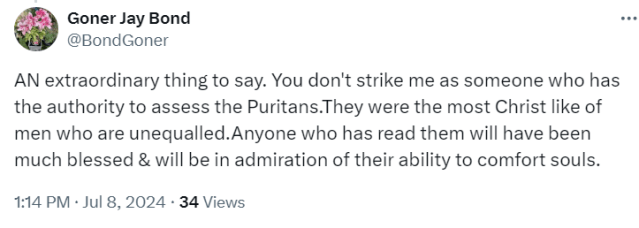
Your comment is an extraordinary thing to say. You don’t strike me as someone who has the authority to assess me or whether or not I have the authority to assess anyone/anything else. You don’t follow me and this is the first time, to my recollection, that we’ve ever interacted, so where did you get the authority you feel gives you the right to assess me?
Your authority to assess me is called into question even further by your lack of reading comprehension skills. My comment was not, by any stretch of the imagination, an assessment of the Puritans or how valuable reading them might be. It was an assessment of people who, despite reading the Puritans (plus the other things I mentioned), lack Christlike character. I would encourage you to go back to my OP and read slowly and carefully for understanding.
Goner’s response was to call me prideful, belligerent, and “arrogance personified”. That’s the type of childish, unsubstantial response you can expect when you point out someone’s hypocrisy and/or that he is wrong about something. Rather than manning up, owning it, and apologizing, he will turn around like an eight year old and call you a doody-head because he knows what you’re saying is right. He doesn’t like that you’re right, and he wants to defend himself, but he hasn’t a leg to stand on, so this is what he’s reduced to. I’m embarrassed for grown adults with jobs and driver’s licenses who act this way. It’s one of the reasons I usually ignore comments like the ones I’m sharing today.
A) You’re assuming facts not in evidence.
B) If “ALL” the Christians you know genuinely think they’re better than everybody else, then you might know some people who claim to be Christians, but you don’t know any who actually are Christians.
However, it’s been my experience that people like you assume Christians think they’re better than everybody else, when, in reality we think nothing of the sort.
What’s actually happening in that situation is that because the Holy Spirit abides in that Christian, you’re feeling Him, in all His holiness, convicting you of your sins so that you can repent and believe the gospel.
You don’t like that feeling, so you deflect it by sublimating your feelings of guilt and conviction into an assumption that that Christian thinks he’s better than you.
This allows you to – arrogantly – feel superior to him, and that feeling of superiority dulls the guilt and conviction you’re feeling, so you feel better.
That is what’s actually happening.
I suspect that’s what’s going on in your heart right now, leading you to make this comment. So, striking while the iron is hot, let me take this opportunity to encourage you to carefully and prayerfully consider the materials and Scriptures here, and repent and believe the gospel.
I haven’t heard back from Tony yet, and maybe I won’t, but unless he actually responds to the conviction of the Holy Spirit in repentance and faith in Christ, my guess is that he’ll respond kind of like Goner did, because…
The natural person does not accept the things of the Spirit of God, for they are folly to him, and he is not able to understand them because they are spiritually discerned.
1 Corinthians 2:14
And at that point, I’m obligated to discontinue the discourse out of obedience to Scripture:
Do not give dogs what is holy, and do not throw your pearls before pigs, lest they trample them underfoot and turn to attack you.
Matthew 7:6
This social media generation (myself included – often) has failed to wisely distinguish between answering a fool according to his folly and the fact that you cannot argue a blind man into seeing. Let’s allow these two passages remind us of that and inform, guard, and guide our interactions online.
If you’d like to follow me on social media (as long as it’s not to argue!), click the Contact and Social Media tab in the blue menu bar at the top of this page.
If you have a question about: a Bible passage, an aspect of theology, a current issue in Christianity, or how to biblically handle a family, life, or church situation, comment below (I’ll hold all questions in queue {unpublished} for a future edition of The Mailbag) or send me an e-mail or private message. If your question is chosen for publication, your anonymity will be protected.
Or maybe I answered your question already? Check out my article The Mailbag: Top 10 FAQs to see if your question has been answered and to get some helpful resources.
My oldest daughter is turning 12 this week, and I see a lot of heart issues in her that I would like to help her with. She is a triplet, and also has three younger siblings, and I think she feels like she doesn’t get as much attention from me because of the neediness of the other children, which has turned into bitterness and disrespectful attitudes in her. Is there a book that you know of that I could take her through that would help us both with these things? Really, anything directed at her age discussing how to be a godly older sister. I want to be a good mom for her, raising her to be a kind and loving older sister, but I feel like I am failing.
Being a mom is pretty challenging, and we all have moments and seasons when we feel like we’re failing. Ask the best, most godly mom you know, and I’m sure she’ll agree. Sometimes, it’s because we have failed, which means we need to repent – to God and to our children – and obey Him. But often, we take those feelings of failure upon ourselves when we’re truly doing our best, and/or when the situation is unavoidable or isn’t our fault.
Let me give you a few resources that may help…
First, you’ll want to get your own heart and mind in order – according to Scripture – about your feelings of failure. Check out my article: Guilt and Shame- Burden or Blessing?
Your daughter is the perfect age for the two of you to study the Bible together. If she’s not yet a Believer, you’ll want to explain the gospel to her. If she is a Believer, study through a book of the Bible together. The Bible is a book, it’s directed at her age, and it addresses all of the things you’ve mentioned both textually and transformatively. (If I may be a little blunt: your daughter needs godly parenting from the best people for the job – you and your husband – and either salvation or sanctification by the Holy Spirit more than she needs to read a book written by someone else.) If you’d like, the two of you might also enjoy working through my Bible study Imperishable Beauty: A Study of Biblical Womanhood. Studying Scripture together will also help address the issue of her feeling like she’s not getting enough attention from you.
And don’t forget to pray for your daughter on your own, with your husband, and with her. Prayer is also transformative. It will help you, your husband, and your daughter get on the same page with God.
Finally, let your church be the resource for you that God wants it to be. This is a textbook Titus 2:3-5 situation. Find a godly older woman in your church or in your family, and ask for her help and guidance. If you don’t know anyone like that, set up an appointment with your pastor for counsel and ask him to point you in the direction of a godly older woman who can disciple you through this.
Although doctrinally sound books can sometimes be helpful, the means and methods God has prescribed in Scripture – the Word, prayer, and the church – should always be our “Plan A”.
I’m 19 years of age and I’m currently at war with my parents because I told them I wanted to start wearing pants. They believe my salvation is not real because I’m going against Deuteronomy 22:5…..And it has made me so confused about my stand with God. Am I really sinning against God or am I misunderstanding something?
I think there’s definitely some misunderstanding and some sin going on here, but maybe not like you might be thinking. Let’s sort it out according to Scripture.
In and of itself, it is not a sin for a Christian woman to wear modest women’s pants. If your parents genuinely think you’re not saved solely because you want to wear modest women’s pants, then they are misunderstanding Deuteronomy 22:5 (and possibly the New Testament concept of Christians being under the covenant of grace rather than the Mosaic covenant). I’ve explained all of this in detail in my article The Mailbag: May Christian Women Wear Pants?.
However there aresins being committed in this situation that you may not have considered. If you’re “at war” with your parents about this or any other issue of adiaphora/Christian liberty, you’re probably committing the sins of pride, dishonoring/disobeying your parents, failing to live at peace with them so far as you’re able, and failing to bear with their weakness in this area. (Your parents may also be committing some of these sins as well as provoking you to anger, but you can only control whether or not you’re sinning, and how you react to their sins.) I would encourage you to study the Scriptures I’ve linked here, ask God to humble you and help you understand whether or not you’ve sinned in any of these areas, and, if you have, repent – to God and to your parents.
Now, there is one more dynamic at play here: It doesn’t sound like you’re married, so are you still living under your parents’ roof and/or financial support (e.g. You live in a dorm or apartment they’re paying for, they’re paying for your education, etc.) or are you living on your own and supporting yourself? Those are two different kettles of fish.
Your parents have the right to make the rules for their house, and they have the right to decide what they will and won’t support financially, even if those rules and conditions seem wrong, ridiculous, or unfair to you. At nineteen, you are an adult, and you have the right to decide whether you want to live under those rules in their house, and whether you want to abide by the conditions under which they will financially support you. It’s just a question of which is more important to you at this point in your life – housing and financial support or wearing pants. If you want to live at their house and/or receive their money, you need to humble yourself and abide by their rules without complaining. If you want to wear pants, you need to move out and pay your own way.
A few final thoughts:
If you’re still living at home or receiving financial support from your parents, you can lovingly and humbly ask if they might be open to the compromise of you wearing split skirts or palazzo pants / skirts. Go into this conversation prepared to graciously accept an answer of “no”.
Give 1 Peter 3:1-6 a good study. This passage is not about the parent-child relationship, but about Christian wives softening their unsaved husbands’ hearts to the gospel by their godly, submissive behavior. Are there any principles you can glean from this passage that can be applied to your relationship with your parents as you submit to their authority in their home and under their financial support?
When you do move out and support yourself, you’re free to wear modest women’s pants whenever you like, but Scripture doesn’t allow us to exercise our Christian liberties in ways that unnecessarily offend others. In other words, when you go visit your parents, put on a skirt.
I am curious as to why Kenneth Copeland and Rhema Bible College [founded by Kenneth Hagin] are NOT on your list of false teachers. Thank you for your ministry but I believe these are important ones to highlight as well.
I agree, the two Kenneths are/were rank heretics, and Rhema “Bible” College knows nothing of the Bible. No one should have anything to do with any of them.
Here’s why they (and a number of other blatant heretics) are not listed at my Popular False Teachers & Unbiblical Trends tab (in the blue menu bar at the top of this page). Let’s start with an excerpt from that page that perhaps you didn’t see:
Please understand that this isnot a comprehensive list of every false teacher inexistence (there are thousands of them, so that would be impossible)… I provide information here largely in answer to questions from my readers. In other words, if you don’t see it, it’s either because I haven’t been asked about it, or I haven’t had time to get to it yet. The names you see are simply some of the most well-known teachers my readers have inquired about.
Generally speaking, my audience consists mostly of Christian women in passable to vibrantly doctrinally sound churches. They’re not asking me if the Kenneths are false teachers; they can watch or listen to five minutes of either of those guys and know.
Women who are so undiscerning that they’re following these guys are almost certainly not saved (and aren’t following me). What they need is to repent and believe the gospel, or they’re neither going to understand why, nor believe that the Kenneths are heretics, and, like the pigs and dogs they are, spiritually speaking, they’re going to turn and attack me for trying to convince them
There are tens of thousands of false teachers out there. I am one person with a husband, family, church responsibilities, friends, a podcast, speaking engagements, and other topics I have to blog about. I have to spend my time, not on the obvious false teachers, but on the more subtle ones my readers are actually asking about.
I have also attempted to help out readers who don’t find the false teacher they’re looking for on the list (again, from my Popular False Teachers & Unbiblical Trends page):
In this article, you’ll not only learn how to research teachers for yourself (a skill every Christian should develop), you’ll also find a list of trustworthy discernment ministries who may have the information you’re looking for.
If you have a question about: a Bible passage, an aspect of theology, a current issue in Christianity, or how to biblically handle a family, life, or church situation, comment below (I’ll hold all questions in queue {unpublished} for a future edition of The Mailbag) or send me an e-mail or private message. If your question is chosen for publication, your anonymity will be protected.