Faith

Risky Business


Recently, I’ve been hearing a lot of preachers and divangelistas out there teaching that Christians have to constantly take “risks” as proof that we’re growing in Christ, that we have to perform acts of faith that take us outside of our comfort zone, that we have to dare to attempt things that could never be done without God’s direct, miraculous intervention or empowerment.

Well, I’d like to challenge all the proponents of that teaching to take a risk that (I hope) won’t be out of their comfort zone and doesn’t require any miraculous intervention from God:

Find the prescriptive passage of Scripture, chapter and verse, in context, rightly divided, that teaches this “risk doctrine”.

Because I don’t see it.

I see 1 Thessalonians 4:9-11 exhorting us to love the bretheren, live quietly, work with our own hands, and walk wisely before outsiders.

I see Titus 2:1-10 telling Christian men and women to learn to be, and teach others to be, submissive, self-controlled, loving, reverent, and kind.

I see the book of 1 John saying that salvation is evidenced by loving Christ, obeying God’s word, shunning worldliness, and confessing our sin.

I don’t see a single Bible character deciding “Hmmm…I’d better come up with some kind of daring deed to do to prove my faith.”

Moses was minding his own business tending sheep when God spoke to Him from the burning bush and called on him to confront Pharaoh and lead Israel out of Egypt. Moses’ response? “Send somebody else.”

David wanted to do a great thing for the Lord by building the temple, and God said no.

Paul and the apostles simply obeyed God’s command to preach the gospel. Their earthly reward? Persecution and martyrdom.

Sometimes, as we walk in daily obedience to God’s word, situations will arise that are scary. Circumstances in which we must trust Scripture over our experiences. Life events that require us to obey God’s word even if we lose a job or a friend. Times when we have to believe that God is doing what is best even if it isn’t the outcome we wanted. That’s not a risk; that’s walking in faith and obedience, depending on Christ to carry us through whatever He places in our path.

But the Bible doesn’t say anywhere that we have to prove our faith or growth in Christ by proactively coming up with some big, fat, hairy risk to take, stepping outside of our comfort zone, and daring to do what can only be done by the power of God.

In fact, that kind of thing sounds eerily similar to what Satan tempted Jesus to do. Among other things, Satan tempted Jesus to prove Himself by literally “stepping out on faith” – right off the top of the temple – and trusting God to catch Him. And what did Jesus do? He went straight to God’s word and obeyed it by saying no. “You shall not put the Lord your God to the test.” It didn’t work that way for Jesus, and it doesn’t work that way for us.

The Bible teaches us to act in wisdom, to walk in obedience to Scripture, to trust God even when it’s scary or inconvenient or counter-intuitive. But for a pastor or teacher to say that Christians have to commit acts of derring do as proof of our faith or level of growth?

That’s risky business.

Discernment

Discernment: What’s Love Got to Do with It?

…so that we may no longer be children, tossed to and fro by the waves and carried about by every wind of doctrine, by human cunning, by craftiness in deceitful schemes. Rather, speaking the truth in love, we are to grow up in every way into him who is the head, into Christ…

Ephesians 4:14-15

Christians who know what discernment is have a variety of perspectives about how it should be practiced. Should we teach about false doctrine at all or just make sure our church is teaching sound doctrine? Should we name the names of false teachers or speak about them anonymously? Should we warn people away from false teachers or just pray for them privately? What’s the biblical precedent for using a stringent tone when speaking of those who teach false doctrine?

Recently, I’ve been thinking a lot about the phrase “speaking the truth in love” from Ephesians 4:15 as it pertains to speaking and writing about false doctrine and false teachers.

Many Christian women have the mistaken idea that “speaking the truth in love” equals being “nice.” We’re always smilingly sweet and never say anything that might hurt someone’s feelings or could rock the boat at church.

Many Christian women have the mistaken idea that “speaking the truth in love” equals being “nice.”

Are we to be kind? Yes. Are we to do our best not to hurt others? Of course. Should we be making waves over every little thing that rubs us the wrong way? Absolutely not. We are to deny ourselves, setting aside our personal preferences and, in many cases, even our own rights, to the point of laying down our lives for others.

We need to understand the distinction between personal preferences and biblical doctrine. We die *to* personal preferences. We die *for* the purity of biblical doctrine.

But we need to understand the distinction between personal preferences and biblical doctrine. And that’s where I think a lot of people get confused. We die to personal preferences. We die for the purity of biblical doctrine. The enemy is stealthily infiltrating and conquering church after church with false doctrine. We are at war. And that’s going to mean ruffling feathers, rocking the boat, and hurting feelings sometimes. Because the full armor of God doesn’t come with a white flag or a pen for signing peace treaties.

The full armor of God doesn’t come with a white flag or a pen for signing peace treaties.

But how do we war for the truth “in love”?

Well, think about the concept and practice of “love.” Love always has an object. We don’t just say, “I love.” We say, “I love my children,” or “I love peanut butter and chocolate ice cream.” Speaking the truth “in love” is not as much about our demeanor or tone of voice as it is about the object of our love. It’s our love for others that compels us to speak biblical truth. And it’s that same love for others that should drive the manner in which we speak the truth.

So when it comes to speaking the truth about false doctrine, how should we be motivated by love? And love for whom?

We love Christ– As Christians, our love for Christ should motivate everything we do. If we’re speaking truth from fleshly motives such as pride, the desire to make a name for ourselves, or the competitive drive to win an argument, everything we say can be 100% factually right and we can still be spiritually in the wrong because the motive of our heart is wrong. God isn’t a debate judge awarding us points for compelling arguments. God weighs the heart.

We love God’s Word– To love Christ is to love the Bible because Scripture is literally God Himself speaking to us. Besides the cleansing of the temple, the passage in which we see Jesus’ righteous anger displayed most clearly is Matthew 23. Here, Jesus delivers a scorching rebuke to the scribes and Pharisees for twisting God’s Word and, in doing so, leading people away from the truth of Scripture. It is only natural for those of us who have the mind of Christ and are indwelt by the Holy Spirit to have that same love for God’s word and feel righteous anger over the maligning of it.

We love the church– To love Christ is also to love His bride, the church. Christ gave his life to cleanse the church “so that he might present the church to himself in splendor, without spot or wrinkle or any such thing, that she might be holy and without blemish.” Seeing Christ’s bride blemished and corrupted by false doctrine should grieve us deeply and motivate us to call the church to be cleansed “by the washing of water with the Word.”

We love the captives– Paul speaks of false teachers “who creep into households and capture weak women.” Often, the women who follow false teachers simply don’t know any better. Though Scripture is clear that they’re complicit in their own captivity, they are casualties and prisoners of war held hostage by the enemy. We are to love them enough to show them the truth of God’s word so that “they may come to their senses and escape from the snare of the devil, after being captured by him to do his will.”

We love the enemyEvery Christian was at one time an enemy of the cross. Every last one of us. Until someone loved us enough to intervene with the truth of the gospel. False teachers – those who, despite biblical correction, unrepentantly teach doctrine which is plainly refuted by Scripture – have made themselves enemies of the cross, even if they call themselves “Christian,” even if they wear the title of “pastor,” even if they’re holding a Bible in their hands and refer to it occasionally as they “teach” us.

In the same way that a loving sister would not turn a blind eye and hope for the best if her sibling began using drugs and became increasingly addicted, it is not loving to stand idly by and allow false teachers to continue to sink deeper and deeper into Satan’s clutches by doing his bidding without making every effort to stop them in order to rescue them.

*It is not loving* to stand idly by and allow false teachers to continue to sink deeper and deeper into Satan’s clutches by doing his bidding without making every effort to stop them in order to rescue them.

Sometimes – just as with the drug abuser – this can be accomplished early on with a private word of correction. And sometimes – as with the addict – more extreme measures of “tough love” and intervention must be employed. But we always love them enough to desire that they come to repentance and embrace the truth.


Our love for these also drives the manner in which we speak truth to them. A good soldier would never deal with a civilian casualty in the same way he would fight off an enemy bent on waging war. Likewise, part of discernment is knowing who the enemy is (and is not) and dealing with people in a biblically appropriate way. This requires humility, wisdom, thorough proficiency with our tools and weapons, unceasing prayer, and complete dependence on and self-crucifying love for our King. We trust in Him and His Word to guide us in the wise and loving way to humbly speak His truth.

Discernment. Speaking truth. What’s love got to do with it?

Everything.

Wednesday's Word

Wednesday’s Word ~ Titus 2

titus 2 3 4

Titus 2

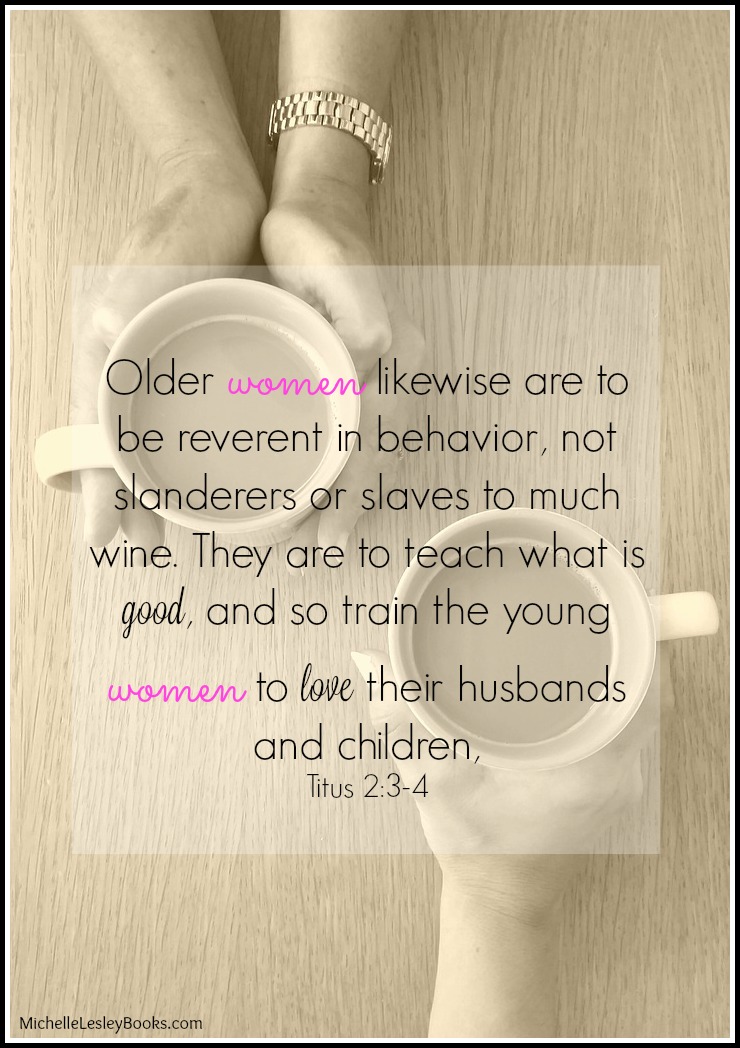
But as for you, teach what accords with sound doctrine. Older men are to be sober-minded, dignified, self-controlled, sound in faith, in love, and in steadfastness. Older women likewise are to be reverent in behavior, not slanderers or slaves to much wine. They are to teach what is good, and so train the young women to love their husbands and children, to be self-controlled, pure, working at home, kind, andsubmissive to their own husbands, that the word of God may not be reviled. Likewise, urge the younger men to be self-controlled. Show yourself in all respects to be a model of good works, and in your teaching show integrity, dignity, and sound speech that cannot be condemned, so that an opponent may be put to shame, having nothing evil to say about us. Bondservants are to be submissive to their own masters in everything; they are to be well-pleasing, not argumentative, 10 not pilfering, but showing all good faith, so that in everything they may adorn the doctrine of God our Savior.

11 For the grace of God has appeared, bringing salvation for all people, 12 training us to renounce ungodliness and worldly passions, and to live self-controlled, upright, and godly lives in the present age, 13 waiting for our blessed hope, the appearing of the glory of our great God and Savior Jesus Christ, 14 who gave himself for us to redeem us from all lawlessness and to purify for himself a people for his own possession who are zealous for good works.

15 Declare these things; exhort and rebuke with all authority. Let no one disregard you.


The Holy Bible, English Standard Version Copyright © 2001 by Crossway Bibles, a publishing ministry of Good News Publishers.


Questions to Consider:

1. Who wrote the book of Titus? Who was the audience of the book of Titus? Which genre of biblical literature is Titus (history, poetry, epistle, etc.)? What is the theme of Titus? If you have a few minutes, read the whole book – all three chapters (the longest of which is 16 verses) – of Titus.

2. In verses 2-12 Paul addresses character attributes that certain people are to display. Who are the people, and what are the attributes he mentions for each? What are the similar or dissimilar attributes these people are to display? How does the word “likewise” (3,6) connect similar attributes?

O____ M__ (2):

O____ W____ (3):

Y____ W____ (4-5):

Y____ M__ (6):

T____ (“yourself”) (7-8):

B________ (9-10):

A__ P____ (11-12):

3. Verses 3-5 outline two very important roles for older and younger women in the church. What is the role of older women? Younger women? Examine the things older women are to teach and younger women are to learn. What are some practical ways you can carry out these instructions in your life and in the church as an older or younger woman?

4. How can we apply Paul’s instructions to “bondservants” (9-10) to our lives today? What can we learn from these verses about being a godly employee?

5. What do verses 5, 8, 10, and 14, tell us is the reason for believers to be people of godly character? What is the main idea of this chapter?

Christian women, Church, Discernment

And the top article of 2015 is…

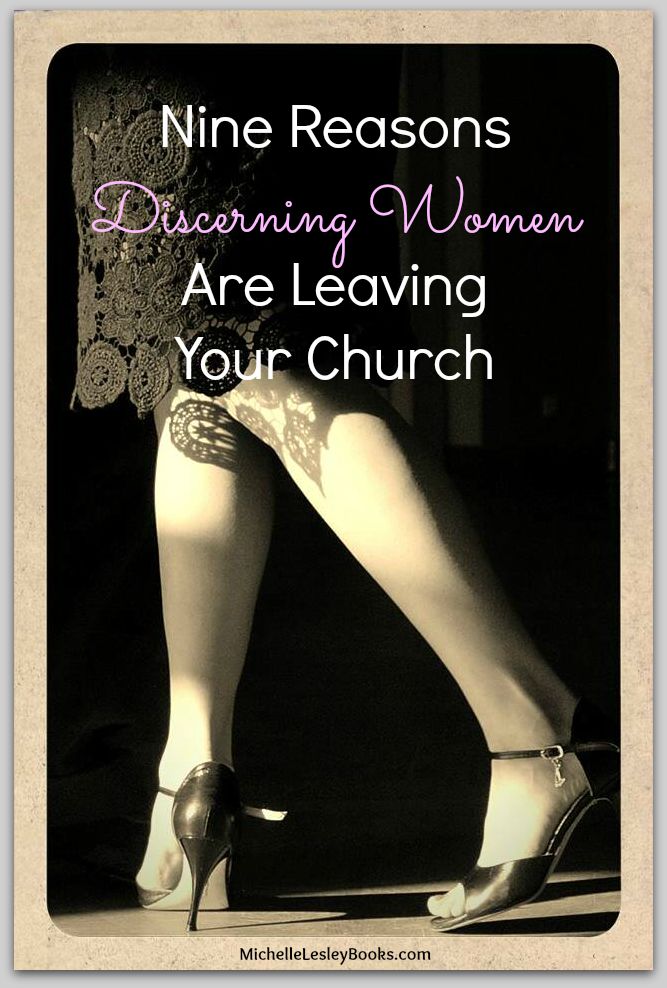
At the end of the year lots of bloggers re-publish their top post(s), so I thought I’d jump on the bandwagon. Nine Reasons practically went viral this year (well, viral for me, anyway) with a whopping 100,000 views, followed by:

Leaving Lysa: Why You Shouldn’t Be Following Lysa TerKeurst or Proverbs 31 Ministries

Five Reasons It’s Time to Start Exercising “Moore” Discernment (Beth Moore)

Going Beyond Scripture: Why It’s Time to Say Good-Bye to Priscilla Shirer and Going Beyond Ministries

and

10 Biblically Sound Blogs and Podcasts by Christian Women

rounding out the top five articles of 2015. And now, without further ado, I bring you my top article of 2015:
9 disc women leave

Earlier this week, Thom Rainer, president and CEO of LifeWay, pubished a blog article entitled “Six Reasons Why Women May Be Leaving Your Church.” Although I am not particularly a fan of Dr. Rainer (due to his allowing heretical materials to be sold at LifeWay), I thought this article was a good one, and I agreed with several of the issues he raised, especially, that these issues need to be addressed by church leadership.

As a ministry wife and someone in the field of women’s ministry myself, I, too, have noticed women leaving the church. Not just women in general, but a certain subset of church-attending ladies: discerning women. While Scripture is pretty clear that we can expect women (and men) who are false converts to eventually fall away from the gathering of believers, why are godly, genuinely regenerated women who love Christ, His word, and His church, leaving their local churches?

1. Eisegetical or otherwise unbiblical preaching
Discerning women don’t want to hear pastors twist God’s word. The Bible is not about us, our problems, and making all our hopes and dreams come true. We don’t want to hear seeker-driven or Word of Faith false doctrine. We don’t need self-improvement motivational speeches or a list of life tips to follow. We want to hear a pastor rightly handle God’s word from a trustworthy translation and simply exegete the text.

2. The worship hour has become a variety show
Skits, guest stars, movie clips, dance routines, rock concerts, elaborate sets, light shows, and smoke machines. We didn’t sign on for Saturday Night Live on Sunday. This is supposed to be church. Get rid of all that junk, turn the lights on, give us solid preaching, prayer, and some theologically sound songs we can actually sing, and maybe we’ll stick around.

*3. Women in improper places of church leadership
The Bible could not be more clear that women are not to be pastors, instruct men in the Scriptures, or hold authority over men in other capacities in the church. If your church has a female pastor, worship leader, or elders, or if women are teaching and leading men in Sunday school, small groups, or from the platform in the worship service, or if women are heading up certain committees, departments, or ministries which place them in improper authority over men, you’re disobeying Scripture, and we don’t want to help you do that by attending your church.

4. Children are being entertained, not trained
There’s nothing wrong with a bit of play time or crafts for younger children, but we want our children trained in the Scriptures, not entertained for a couple of hours. We want their teachers to open God’s word and read and explain it to them at a level they can understand. We want them memorizing verses, learning to pray, and demonstrating an age-appropriate comprehension of the gospel. We want them to understand that church is joyful, yet, serious, not a Jesus-laced party at Chuck E. Cheese. We need church to bolster the Scriptural training we’re giving our kids at home.

5. Women’s “Bible” Studies
The majority (and I don’t use that term flippantly) of churches holding women’s Bible studies are using materials written by Beth Moore, Priscilla Shirer, Joyce Meyer, Lysa TerKeurst, Sarah Young, and others who teach unbiblical ideas and false doctrine. Not minor denominational differences of opinion. Not secondary and tertiary unimportant issues that can be overlooked. False doctrine. While we long to study God’s word with other women, discerning women will not sacrifice sound doctrine nor the integrity of Scripture to do so.

6. Ecumenism
Is your church partnering with other “churches” whose orthodoxy and/or orthopraxy are at odds with Scripture? “Churches” which approve of homosexuality or female pastors, or which hold to an unbiblical soteriology (grace plus works, baptismal regeneration, Mary as co-redemptrix with Christ, etc.)? Are you partnering with those who deny the biblical Christ altogether such as Muslims, Jews, Jehovah’s Witnesses, Hindus, Mormons, or Buddhists? Discerning women know Scripture forbids yoking ourselves to unbelievers and we want no part of it.

7. Ageism
Look around at your pastor and staff, your lay leadership, your music team, the “face” of your church. How many of those people are over 40? Usually, discernment and spiritual maturity come through walking with the Lord over many years, yet, increasingly, churches are run by twentysomething pastors, staff, and other leadership, who are often spiritually immature and/or lack the wisdom and life experience that come with age. The counsel and wisdom mature, godly men and women have to offer is brushed off as old fashioned, and middle aged and older church members feel alienated and unwanted. Discerning women value the wisdom and teaching of their godly elders.

8. The “troublemaker” label
Discerning women who see unbiblical things happening in their churches and stand up for what God’s word says about biblical ecclesiology and teaching are often villified and labeled as troublemakers. We are called haters, threats to unity, complainers, gossips, negative, and a myriad of other scornful names. All this for wanting things done according to Scripture. Can you blame us for shaking the dust off our high heels and leaving?

9. Spineless or stiff-necked pastors
Discerning women have little respect for, and find themselves unable to submit to the authority of pastors who see people in their churches acting overtly sinful or propagating false teaching yet are so afraid of confrontation that they will not set things right. By the same token, we cannot continue to attend a church in which we bring scriptural evidence of false teaching or sin to the pastor and he outright denies the biblical truth we present to him. We cannot be members of churches in which pastors will not submit to Scripture or carry out biblical mandates.


Frequently, the discerning women you see tearfully leaving your church have been there for years. Sometimes they leave your church because it was never doctrinally sound to begin with, and God has opened their eyes to this as they grow and mature in Christ. Sometimes they leave because false doctrine and unbiblical practices have crept in and taken over a church that was once a refuge of trustworthy biblical teaching. Either way, these things should not be.

Maybe it’s not that discerning women are leaving the church**, but that the church is leaving them.


*If you disagree with this point and are considering writing a comment arguing that women SHOULD be pastors and have other unbiblical positions of leadership, please save yourself some time, because I will not be printing it. As it says in my “welcome” tab (top of this page), I do not print false doctrine without refuting it, and at the moment, I do not have the time. If you are truly interested in what the Bible ACTUALLY says about the proper role of women in the church, click here and explore the Scriptures that address this topic.

**While it may be necessary to leave a church that is not operating biblically, Hebrews 10:24-25 makes it clear that meeting together for worship and the teaching of God’s word is not optional for Christians. Please see my follow up article, Six Ways Not to Forsake the Assembly for more on this topic.


I’ve closed comments for this article since it’s a reprint, but you can comment at the original article if you’d like.


 

Wednesday's Word

Wednesday’s Word ~ Malachi 4

mal 4 2

Malachi 4

“For behold, the day is coming, burning like an oven, when all the arrogant and all evildoers will be stubble. The day that is coming shall set them ablaze, says the Lord of hosts, so that it will leave them neither root nor branch. But for you who fear my name, the sun of righteousness shall rise with healing in its wings. You shall go out leaping like calves from the stall. And you shall tread down the wicked, for they will be ashes under the soles of your feet, on the day when I act, says the Lord of hosts.

“Remember the law of my servant Moses, the statutes and rules that I commanded him at Horeb for all Israel.

“Behold, I will send you Elijah the prophet before the great and awesome day of the Lord comes. And he will turn the hearts of fathers to their children and the hearts of children to their fathers, lest I come andstrike the land with a decree of utter destruction.”


The Holy Bible, English Standard Version Copyright © 2001 by Crossway Bibles, a publishing ministry of Good News Publishers.


Questions To Consider:

1. Which genre (history, wisdom, poetry, prophecy, epistle, etc.) is the book of Malachi? What is the overall tone or theme of this chapter?

2. Some prophecies have a “near” meaning (something that will happen in the near future to the people the prophet is currently talking to), some have a “far” meaning (something that will happen far in the future in another context), and some have both. Which would you say is the case for this passage? In either or both cases, who is the audience for this prophecy? What is the near and/or far meaning?

3. How does God contrast the wicked with those who fear the Lord in verses 1-3? Why does God say to “Remember the law of my servant Moses…”? (4) How does verse 4 fit with verses 1-3?

4. What are some possible connections between verses 5-6 and Luke 1:13, 16-17, Matthew 11:13-14, and Revelation 11:3?

5. What are some general truths we can learn from this passage as we look ahead to Christ’s second coming?