Celebrity Pastors, Discernment

Throwback Thursday ~ Stricter Judgment, Even for MY Favorite Teacher

Originally published September 29, 2017

Itโ€™s a funny thing that itโ€™s so easy for us to see the far away faults and foibles of others, but the ones in our own hearts โ€“ the sins and hypocrisy we know most intimately โ€“ are constantly in our spiritual blind spot. Jesus understood this all too well and admonished us to make sure our own hands are clean before taking the tweezers to the mote in a sisterโ€™s eye.

Often, itโ€™s not that weโ€™re ignoring the plank thatโ€™s obscuring our vision, weโ€™re just not even aware that itโ€™s there. When I evaluate my own heart to confess my sins to the Lord, the ones that weigh heaviest on my spirit are not those that I know Iโ€™ve committed and need to repent of, itโ€™s the ones Iโ€™m sure are lurking somewhereโ€ฆ but I canโ€™t quite put my finger on them.

One of the subtle hypocrisies theologically orthodox, blameless and upright, discerning Christians can have trouble seeing in ourselves is our failure to hold our favorite pastors and teachers to the same biblical standards we apply to other pastors and teachers.

We correctly criticize Steven Furtick and Beth Moore for palling around with the likes of Joyce Meyer and T.D. Jakes, but when Lauren Chandler speaks at IF:Gathering several years in a row, co-hosts a summer Bible study with Beth Moore, and publicly declares her desire to meet Christine Caine, suddenly, itโ€™s โ€œtouch not mine anointedโ€ just because sheโ€™s married to our darling Matt1?

What if John MacArthur decided it would be a good idea to invite Joel Osteen to speak at ShepCon next year?

Or it came to light that Elisabeth Elliot preached to men?

Or you found out Paul Washer was a drunkard?

Would you make excuses for them? Sweep this stuff under the rug and continue to listen to their sermons and read their books without batting an eye?

Pastors and teachers donโ€™t get a pass on sin just because theyโ€™re Reformed, or discerning, or have a virtually unblemished record of doctrinal soundness, or because theyโ€™re โ€œone of the good guys.โ€

Pastors and teachers donโ€™t get a pass on sin just because theyโ€™re Reformed, or discerning, or have a virtually unblemished record of doctrinal soundness, or because theyโ€™re โ€œone of the good guys.โ€ If theyโ€™re called to account, and they repent and strive toward holiness, hallelujah! Thatโ€™s what God requires of all Christians โ€“ that we walk before Him blamelessly and bear fruit in keeping with repentance. But if they unrepentantly persist in sin despite biblical correction, thereโ€™s a problem there- with their own hearts, and with ours, if we knowingly turn a blind eye to their willful disobedience just because theyโ€™re our favorites.

God makes it clear throughout His Word that pastors, teachers, and others in positions of spiritual leadership bear a grave responsibility to set a godly example for those who look to them for teaching and guidance. And, in certain ways, God requires a higher standard for those in spiritual leadership than He requires of Christians He has not called to lead.

โ€ฆNo man of the offspring of Aaron the priest who has a blemish shall come near to offer the Lordโ€™s food offerings; since he has a blemish, he shall not come near to offer the bread of his God. He may eat the bread of his God, both of the most holy and of the holy things, but he shall not go through the veil or approach the altar, because he has a blemish, that he may not profane my sanctuaries, for I am the Lord who sanctifies themโ€ฆ
Leviticus 21

โ€ฆAnd Moses said to Aaron and to Eleazar and Ithamar his sons, โ€œDo not let the hair of your heads hang loose, and do not tear your clothes, lest you die, and wrath come upon all the congregation; but let your brothers, the whole house of Israel, bewail the burning that the Lord has kindled. And do not go outside the entrance of the tent of meeting, lest you die, for the anointing oil of the Lord is upon you.โ€ And they did according to the word of Mosesโ€ฆ
Leviticus 10:1-11

Let no one despise you for your youth, but set the believers an example in speech, in conduct, in love, in faith, in purity.
1 Timothy 4:12

Show yourself in all respects to be a model of good works, and in your teaching show integrity, dignity, and sound speech that cannot be condemned, so that an opponent may be put to shame, having nothing evil to say about us.
Titus 2:7-8

not domineering over those in your charge, but being examples to the flock.
1 Peter 5:3

Brothers, join in imitating me, and keep your eyes on those who walk according to the example you have in us.
Philippians 3:17

Be imitators of me, as I am of Christ.
1 Corinthians 11:1

But if that servant says to himself, โ€˜My master is delayed in coming,โ€™ and begins to beat the male and female servants, and to eat and drink and get drunk, the master of that servant will come on a day when he does not expect him and at an hour he does not know, and will cut him in pieces and put him with the unfaithful. And that servant who knew his masterโ€™s will but did not get ready or act according to his will, will receive a severe beating. But the one who did not know, and did what deserved a beating, will receive a light beating. Everyone to whom much was given, of him much will be required, and from him to whom they entrusted much, they will demand the more.
Luke 12:45-48

you then who teach others, do you not teach yourself? While you preach against stealing, do you steal? You who say that one must not commit adultery, do you commit adultery? You who abhor idols, do you rob temples? You who boast in the law dishonor God by breaking the law. 
Romans 2:21-23

Not many of you should become teachers, my brothers, for you know that we who teach will be judged with greater strictness. 
James 3:1

As the passages above allude to, sound doctrine, while crucial, is not Godโ€™s only requirement for pastors and teachers. They are also required to rebuke those who contradict sound doctrine (not befriend them or join them on the conference dais). And Paul outlines the numerous behavioral requirements for pastors, elders, and deacons not once but twice, even going so far as to say that deacons must โ€œprove themselves blamelessโ€ and that โ€œan overseer, as Godโ€™s steward, must be above reproach.โ€ Right theology does not excuse wrong behavior.

Right theology does not excuse wrong behavior.

Why, then, when Godโ€™s standards for those who lead are so high, are we quick to sweep aside unrepentant wrongdoing by the teachers we hold most dear, sometimes even holding them to lower standards than we would hold ourselves? โ€œI would never preach to men, but Iโ€™ll give Teacher X a pass on it.โ€ โ€œThereโ€™s no way Iโ€™d partner with a false teacher, but itโ€™s not a big deal that Preacher Y does it.โ€

The Jesus who says โ€œbe perfect as your Heavenly Father is perfect,โ€ who says that even one sin is one sin too many, is not a God who is OK with His people glossing over disobedience. God wants sin dealt with, repented of, and forsaken, especially in those who lead, because receiving correction and repenting of sin sets a rare and phenomenal biblical example for Christians to follow.

The Jesus who says โ€œbe perfect as your Heavenly Father is perfect,โ€ who says that even one sin is one sin too many, is not a God who is OK with His people glossing over disobedience.

Do we go off the deep end and reject a trustworthy teacher the first time she does something a little iffy? Of course not. But should we step back, keep a closer, more objective eye on her and her trajectory as time goes by to see if she corrects her course? Yes. Should we stop following her if she continues to dive deeper and deeper into sin with no signs of turning around? Even if sheโ€™s always been doctrinally sound? Even if sheโ€™s complementarian? Even if she attends a church with a good theological reputation? Even if weโ€™ve enjoyed all of her books thus far? Definitely.

Letโ€™s shed some light on those blind spots our favorite teachers occupy and let our highest loyalty be to Christ, His Word, and His standards for leadership.


ยนSadly (click link on Lauren Chandler’s name), since the original publication of this article, Matt Chandler should no longer be “our darling Matt,” either.

Discernment, False Teachers, Social Media

Throwback Thursday ~ Four Reasons Why It Matters Who We Share, Pin, and Re-Tweet

Originally published May 22, 2014


facebook-large

Scroll…scroll…wince…

Scroll…scroll…wince…

I find myself wincing a bit when I see people โ€“who I know genuinely love Jesusโ€”sharing, pinning, and re-tweeting quotes from false teachers such as Joel Osteen, Joyce Meyer, T.D. Jakes, and Christine Caine, just to name a few. Why? What’s wrong with the encouraging, even biblical, at times, things these people say?

First of all, let me back up a little. What is a โ€œfalse teacherโ€? A false teacher is someone who is billed as a Christian pastor or Bible teacher who habitually and unrepentantly writes, teaches, or preaches things that conflict with the clear teaching of Scripture. For example, all four of the people I listed above teach some version of the prosperity gospel, the false teaching that is most rampant in the Western church today. Additionally, T.D. Jakes adheres to the false doctrine of modalism, and Joyce Meyer and Christine Caine blatantly disobey the Bibleโ€™s teaching that women are not to be pastors or instruct men in the Scriptures in the church.

These days, it can be difficult to keep up with who teaches sound doctrine and who does not, especially when pastors and teachers we thought were theologically orthodox seem to be turning apostate at an alarming rate. I myself have been a fan of more than one popular writer/teacher/preacher that I later realized was a false teacher (Joyce Meyer was one of them.) as I delved into what they actually taught and believed and compared it to Godโ€™s word. I know first hand that itโ€™s easy to think that these people are good biblical teachers and preachers when what they say sounds good, makes us feel good, and has an occasional Bible verse sprinkled in.

th (1)

Because Iโ€™ve been there myself and know how easy it can be to be drawn in by false teachers, I donโ€™t have any less respect for folks who re-tweet the occasional Osteen-ism of the day. In fact, I have more respect for them, because I know they love the Lord, theyโ€™re making an effort to find biblical teaching to listen to, and they have the courage to try to share the gospel with their friends and family via social media. Those are all fantastically good things, and they are to be commended.

But, still, the quotes we share and the people who said them matter. Why?

The quotes we share and the people who said them matter. Here are four reasons why…

1.
Lost peopleโ€™s eternities are at stake.

Seriously? From hitting the โ€œshareโ€ button on a false teacherโ€™s status? Seriously. I donโ€™t think thatโ€™s overstating the gravity of the matter. Thereโ€™s no way to take the possibility of an eternity in hell too seriously.

Think about it: You have an unsaved Facebook friend. Sheโ€™s getting to the point in her life where she figures itโ€™s time to get her stuff together, so she starts looking into this whole Jesus thing. Where to start? Sheโ€™s never even set foot inside a church. Aha! She remembers youโ€™re a Christian. Maybe youโ€™ll have a good lead for her. As sheโ€™s thinking about all this, you share Joyce Meyerโ€™s status, and it appears in your friendโ€™s news feed. โ€œAh,โ€ your friend thinks, โ€œthis must be a good Bible teacher if my Christian friend follows her.โ€ So she โ€œlikesโ€ Joyce Meyerโ€™s Facebook page and follows her on Twitter. Then she starts watching her on TV. Buys some of her books. Maybe attends one of her conferences. Because your friend has zero knowledge of the Bible, she believes everything Joyce Meyer says. It sounds good. It makes her feel good. Sheโ€™s hearing a few out of context Bible verses here and there. But the problem is that Joyce Meyer doesnโ€™t teach the Jesus of the Bible. She teaches a false god of her own creation. And if your friend doesnโ€™t put her faith in the true Jesus of the Bible, sheโ€™s just as lost as she was before. Only now she thinks sheโ€™s a Christian. And you canโ€™t convince her otherwise.

Sound far fetched? Maybe. Maybe not. But if thereโ€™s even the slightest chance something like that could happen, is it really worth justifying that status share? Furthermore, is it worth even following a teacher who could lead someone you love to an eternity in hell?

2.
It gives false teachers free publicity and a broader platform.

One thing I was very surprised to learn when I first began the process of having my book published1 is that publishers want non-fiction writers to have a built in audience, or โ€œplatform,โ€ before they will publish your book. That means youโ€™re already doing speaking engagements and/or have a decent sized ministry, have lots of followers on social media, etc. As I once explained to someone, โ€œYou donโ€™t get your book published and then become [celebrity Bible teacher] you have to be [celebrity Bible teacher] in order to get published.โ€

human-334110_640

Social media stats are a big factor in a celebrity preacherโ€™s/teacherโ€™s platform. If T.D. Jakes suddenly lost the majority of his social media followers, you can bet the TV stations heโ€™s on and the conferences he gets invited to would be taking a serious look at whether or not theyโ€™d continue to affiliate with him, because it would indicate that his audience is shrinking.

Conversely, when we re-pin, re-post, or re-tweet these folks, their social media stats go up. They not only get a broader platform on social media from which to spread their unbiblical teaching, they continue to get more book, radio, TV, and other media deals, get invited to speak at more conferences, and even start exporting their false teaching overseas (โ€œmissionsโ€) to people who have never heard the gospel before and have no way of knowing theyโ€™re being lied to.

When we promote false teachers on social media, we bear some of the responsibility for the spread of their false doctrine.

If anyone comes to you and does not bring this teaching, do not receive him into your house or give him any greeting, for whoever greets him takes part in his wicked works.

2 John 10-11

When we promote false teachers on social media, we bear some of the responsibility for the spread of their false doctrine.

3.
It is disobedient to Scripture.

Often, when a Christian is told sheโ€™s following a false teacher, the common response is, โ€œOh, I just chew up the meat and spit out the bones,โ€ meaning that she takes to heart the โ€œgoodโ€ things the false teacher has to say and ignores the bad.

The question is: where does the Bible say this is the correct way to deal with false teachers? Answer: it doesnโ€™t. In fact Scripture says exactly the opposite.

For starters, Galatians 1:6-9 says that if anyone preaches a different gospel (such as the prosperity gospel) from the one thatโ€™s set down in Scripture, โ€œlet him be accursed.โ€ โ€œAccursedโ€ means โ€œdamned,โ€ sentenced to hell for eternity.

1 Timothy 4:7 and Titus 3:10 say that we are to have nothing to do with people who teach โ€œirreverent or silly mythsโ€ or cause division by teaching false doctrine.

2 Corinthians 6:14-16 tells us not to be joined together or partner with unbelievers, lawlessness, darkness, Belial (the devil), or idols.

1 Corinthians 5:7-13 tells us that when a person infiltrates the church who claims to be a Christian, yet is greedy, an idolater, or a swindlerโ€” all of which are things that prosperity preachers are guilty ofโ€” we are to โ€œcleanse out the old leaven.โ€ We are โ€œnot to associateโ€ with them. We are to โ€œpurge the evil person from among you.โ€

Titus 1:10-16 says of false teachers, โ€œThey must be silenced,โ€ because they teach โ€œfor shameful gain what they ought not to teach.โ€ Paul instructs Titus to โ€œrebuke them sharply,โ€ and that, โ€œthey profess to know God, but they deny him by their works. They are detestable, disobedient, unfit for any good work.โ€

The entire second chapter of 2 Peter paints a dismal picture of the motives, the behavior, and the fate of false teachers:

โ€œBecause of them, the way of truth will be blasphemed.โ€

โ€œIn their greed they will exploit you with false words.โ€

They will โ€œbe destroyed in their destruction, suffering wrong as the wage for their wrongdoing.โ€

โ€œThey are blots and blemishes, reveling in their deceptions, while they feast with you.โ€

โ€œThey entice unsteady souls.โ€

โ€œFor them the gloom of utter darkness has been reserved.โ€

โ€œThey promise them [people who listen to their false teaching] freedom, but they themselves are slaves of corruption.โ€

The entire epistle of Jude is dedicated to exhorting Christians to โ€œcontend for the faith that was once for all delivered to the saints.โ€ Of false teachers, Jude says:

โ€œCertain people have crept in unnoticed who long ago were designated for this condemnation, ungodly people, who pervert the grace of our God into sensuality and deny our only Master and Lord, Jesus Christโ€ฆWoe to them!โ€

Thereโ€™s more, because a large portion of the New Testament is dedicated to exhorting Christians to stay away from false doctrine and rebuke those who teach it, but I think you get the picture. Is it obedient to Christ and to His word to follow and promote someone He says is damnable? People who teach another gospel, such as the prosperity gospel, are the enemies of Christ. Who are we going to side with, Christ or His enemies?

People who teach another gospel, such as the prosperity gospel, are the enemies of Christ. Who are we going to side with, Christ or His enemies?

 4.
It is unloving and disloyal to our Master.

th

Think about the person you love the most in this world. Maybe itโ€™s your spouse, your child, a parent, or a friend. Next, think about your favorite celebrity, perhaps a movie star, a TV personality, or a famous author or athlete. Now try to imagine that that celebrity, in interviews with journalists, on talk shows he appears on, at personal appearances and speaking engagements, in books he writes, etc., routinely tells lies about the character of your dearest loved one. And thousands, maybe millions, of people believe him.

Would you continue to be a fan of that celebrity?

What if your loved one found out you were a fan of that celebrity? How would she feel to know you were a fan of someone who spreads lies about her?

If we wouldnโ€™t follow someone who lies about a loved one, how much less should we as Christians have anything to do with a celebrity preacher, teacher, or author who drags the name of our precious Savior through the mud and lies about the gospel?

How can we as Christians have anything to do with a celebrity preacher, teacher, or author who drags the name of our precious Savior through the mud and lies about the gospel?

Friends, for all of these reasons and more, letโ€™s stop promoting these false teachers on social media by publicizing their quotes and other materials. Looking for an encouraging quote to share? Thereโ€™s nothing better than a verse of Scripture. Because Scripture can offer people something that false teachers canโ€™t: truth and hope. As Jesus Himself said,

โ€œSanctify them in the truth; your word is truth.โ€ John 17:17


ยนMy book, Jacob, Journaling the Journey is no longer in print, and thatโ€™s a good thing! I wrote it before learning good hermeneutics and how to handle Godโ€™s Word properly. You can probably still find copies of it at online merchants, but I would not recommend that you buy or use it. If you want a good Bible study, the best thing is to simply pick up the Bible and study it for yourself. Right now, I have no plans to rewrite Jacob for future re-release.

Church, Discernment

Throwback Thursday ~ Nine Reasons Discerning Women Are Leaving Your Church

Originally published July 24, 2015

Earlier this week, Thom Rainer, president and CEO of LifeWay, pubished a blog article entitled Six Reasons Why Women May Be Leaving Your Church. Although I am not particularly a fan of Dr. Rainer (due to his allowing materials from false teachers to be sold at LifeWay), I thought this article was a good one, and I agreed with several of the issues he raised, especially, that these issues need to be addressed by church leadership.

As a ministry wife and someone in the field of women’s ministry myself, I, too, have noticed women leaving the church. Not just women in general, but a certain subset of church-attending ladies: discerning women. While Scripture is pretty clear that we can expect women (and men) who are false converts to eventually fall away from the gathering of believers, why are godly, genuinely regenerated women who love Christ, His word, and His church, leaving their local churches?

While Scripture is pretty clear that we can expect false converts to eventually fall away, why are godly, genuinely regenerated women who love Christ, His word, and His church, leaving their local churches?

1.
Eisegetical or otherwise unbiblical preaching

Discerning women don’t want to hear pastors twist God’s word. The Bible is not about us, our problems, and making all our hopes and dreams come true. We don’t want to hear seeker-driven or Word of Faith false doctrine. We don’t need self-improvement motivational speeches or a list of life tips to follow. We want to hear a pastor rightly handle God’s word from a trustworthy translation and simply exegete the text.

2.
The worship hour has become a variety show

Skits, guest stars, movie clips, dance routines, rock concerts, elaborate sets, light shows, and smoke machines. We didn’t sign on for Saturday Night Live on Sunday. This is supposed to be church. Get rid of all that junk, turn the lights on, give us solid preaching, prayer, and some theologically sound songs we can actually sing, and maybe we’ll stick around.

We didn’t sign on for Saturday Night Live on Sunday. This is supposed to be church.

3.
Women in improper places of church leadership

The Bible could not be more clear that women are not to be pastors, instruct men in the Scriptures, or hold authority over men in other capacities in the church. If your church has a female pastor, worship leader, or elders, or if women are teaching and leading men in Sunday school, small groups, or from the platform in the worship service, or if women are heading up certain committees, departments, or ministries which place them in improper authority over men, you’re disobeying Scripture, and we don’t want to help you do that by attending your church.

4.
Children are being entertained, not trained

There’s nothing wrong with a bit of play time or crafts for younger children, but we want our children trained in the Scriptures, not entertained for a couple of hours. We want their teachers to open God’s word and read and explain it to them at a level they can understand. We want them memorizing verses, learning to pray, and demonstrating an age-appropriate comprehension of the gospel. We want them to understand that church is joyful, yet, serious, not a Jesus-laced party at Chuck E. Cheese. We need church to bolster the Scriptural training we’re giving our kids at home.

5.
Women’s “Bible” Studies

The majority (and I don’t use that term flippantly) of churches holding women’s Bible studies are using materials written by Beth Moore, Priscilla Shirer, Joyce Meyer, Lysa TerKeurst, Sarah Young, and others who teach unbiblical ideas and false doctrine. Not minor denominational differences of opinion. Not secondary and tertiary unimportant issues that can be overlooked. False doctrine. While we long to study God’s Word with other women, discerning women will not sacrifice sound doctrine nor the integrity of Scripture to do so.

While we long to study God’s Word with other women, discerning women will not sacrifice sound doctrine nor the integrity of Scripture to do so.

6.
Ecumenism

Is your church partnering with other “churches” whose orthodoxy and/or orthopraxy are at odds with Scripture? “Churches” which approve of homosexuality or female pastors, or which hold to an unbiblical soteriology (grace plus works, baptismal regeneration, Mary as co-redemptrix with Christ, etc.)? Are you partnering with those who deny the biblical Christ altogether such as Muslims, Jews, Jehovah’s Witnesses, Hindus, Mormons, or Buddhists? Discerning women know Scripture forbids yoking ourselves to unbelievers and we want no part of it.

7.
Ageism

Look around at your pastor and staff, your lay leadership, your music team, the “face” of your church. How many of those people are over 40? Usually, discernment and spiritual maturity come through walking with the Lord over many years, yet, increasingly, by design, churches are run by twentysomething pastors, staff, and other leadership, who are often spiritually immature and/or lack the wisdom and life experience that come with age. The staff is often specifically structured this way in order to attract young people to the church. The counsel and wisdom mature, godly men and women have to offer is brushed off as old fashioned, and middle aged and older church members feel alienated and unwanted. While there are those among the twentysomething set who are godly and growing into maturity, discerning women value the wisdom and teaching of their godly elders.

8.
The “troublemaker” label

Discerning women who see unbiblical things happening in their churches and stand up for what God’s Word says about biblical ecclesiology and teaching are often vilified and labeled as troublemakers. We are called haters, threats to unity, complainers, gossips, negative, and a myriad of other scornful names. All this for wanting things done according to Scripture. Can you blame us for shaking the dust off our high heels and leaving?

Discerning women are often vilified and labeled as troublemakers. Can you blame us for shaking the dust off our high heels and leaving?

9.
Spineless or stiff-necked pastors

Discerning women have little respect for, and find themselves unable to submit to the authority of pastors who see people in their churches acting overtly sinful or propagating false teaching yet are so afraid of confrontation that they will not set things right. By the same token, we cannot continue to attend a church in which we bring scriptural evidence of false teaching or sin to the pastor and he outright denies the biblical truth we present to him. We cannot be members of churches in which pastors will not submit to Scripture or carry out biblical mandates.

Frequently, the discerning women you see tearfully leaving your church have been there for years. Sometimes they leave your church because it was never doctrinally sound to begin with, and God has opened their eyes to this as they grow and mature in Christ. Sometimes they leave because false doctrine and unbiblical practices have crept in and taken over a church that was once a refuge of trustworthy biblical teaching. Either way, these things should not be.

Maybe it’s not that discerning women are leaving the church, but that the church is leaving them.

Maybe it’s not that discerning women are leaving the church, but that the church is leaving them.


Additional Resources

Rock Your Role articles

Searching for a new church?

Discernment, False Doctrine, Southern Baptist/SBC

A Naked Emperor in the Southern Baptist Convention

Originally published April 6, 2018

Think back to your childhood. Remember the story, The Emperor’s New Clothes?

Once upon a time, there lived an emperor. One day two swindlers came to his palace and told him they could weave cloth for his royal robes that was magical: to those who were foolish or unfit for their jobs, it would appear invisible. Only the wise and worthy would be able to see this fine fabric. The emperor hastily agreed to pay the “weavers” an exorbitant amount of money to make him such an amazing garment, thinking he would use it to weed out anyone unfit for royal service.

The weavers set about pretending to weave. From time to time, the emperor sent various folk to check on the progress the weavers were making, and – though in reality, none of them could see the non-existent fabric – all reported back that the garments were coming along nicely and the cloth was beautiful. But strangely enough, when the emperor himself looked in on the weavers, they held up the magnificent fabric, and he could not see it. Not wanting word to leak out that he was unfit to serve as emperor, he pretended to examine the cloth and complimented the weavers lavishly on their fine work.

Finally, the weavers informed the emperor that the garments were finished. They had the emperor strip down to his skivvies and pretended to help him on with his fine new “garments”. Word had spread among the emperor’s subjects about the magical properties of the fabric, and as the royal procession made its way through town, all shouted out praise for the emperor’s fine new clothes.

All. Except for one little boy.

“But he hasn’t got anything on!” the boy shouted.

It took the innocent honesty of a simple child to shock the emperor’s subjects back to their senses. The truth spread like wildfire, and the crowd began to cry out: “The emperor is naked!” “The emperor has no clothes on!” “He’s not wearing anything!”

But did the emperor admit to his foolishness, return to the palace, and get dressed? No. Sadly the story ends this way:

“The Emperor shivered, for he suspected they were right. But he thought, ‘This procession has got to go on.’ So he walked more proudly than ever, as his noblemen held high the train that wasn’t there at all.”ยน

And so the “emperor” of leadership in the Southern Baptist Convention and those who carry its train march proudly on, despite the cries of simple peasants and innocent little children crying at the top of our lungs, “The emperor is naked!” “There are issues that need to be addressed, here!” “Listen to us!”

You’ll note that the story doesn’t say that the emperor was a cruel man, that he overtaxed the people, oppressed them into slavery, was a warmonger, or was in any other way an evil leader. In fact, one could argue that he had good intentions of making sure the people who served at various posts in his empire were of the finest caliber.

And while there are many issues that need to be addressed in my denomination, I think this could generally be said of the leadership of the Southern Baptist Convention as well. Call me a Pollyanna, but I have no reason to believe our denominational leadership – as a whole – is evil or has anything less than the best of intentions for the SBC.

There are many good and praiseworthy things going on in SBC life. We have hundreds of doctrinally sound pastors faithfully preaching the gospel week in and week out. Discernment and biblical literacy among Southern Baptist church members is slowly but steadily growing. The SBC takes a public, biblical stand on abortion and homosexuality while many other denominations do not. Our organizational structure for funding and sending out missionaries, while sometimes flawed in its execution, is without peer. Southern Baptist Disaster Reliefย is one of the finest relief organizations in the world. And there’s so much more. Find a godly Kingdom effort going on somewhere, and you’ll probably find a Southern Baptist involved in it. By the grace of God, while we’re far from perfect, we’re getting a lot of thingsย right.

But even benevolent emperors get things wrong sometimes, and, Southern Baptist leadership, your drawers are flapping in the breeze on this oneยฒ:

Sin. The public sin our leaders commit that we excuse and the public sin our leaders commit that we discipline, and the fact that there’s a discrepancy between the two.

Southern Baptist leadership, your drawers are flapping in the breeze on this one.

Recently, Frank Page, president and chief executive officer of the Executive Committee of the Southern Baptist Convention (one of the top positions of SBC leadership at the national level) resigned his position due to “a morally inappropriate relationship in the recent past,” which, we are left with little choice but to assume means “adultery”. (As an aside, Christians, when confessing sin, let’s knock off the the terminological hem-hawing and call a spade a spade. “I had a six month extra-marital romantic and sexual relationship with a married woman in my church,” or whatever. You don’t have to give all the gory details or name names, but, for crying out loud, if you’re going to confess, confess- don’t finesse.)

It was right and biblical for Dr. Page to publicly confess and express sorrow over his sin as well as to resign (it would also have been right and biblical for the SBC to remove him had he refused to resign, which, undoubtedly would have happened). He sinned against God, his family, the woman and her family, his church, his co-workers, and the entire denomination. He publicly embarrassed the Southern Baptist Convention and gave unbelievers fodder for scoffing when the report of his sin made the national news. This was a case of a well known Southern Baptist leader whose public, observable sin was handled biblically by SBC leadership. I am thankful for this witness to Christians and to the world that sin is not to be swept under the rug, but that sinners are to repent, be disciplined, and then be restored to fellowship (although, in cases like this, not leadership).

But we don’t handle all cases of public sin that way. Some public sin we reward by making the sinner into a wealthy, lauded celebrity.

“Impossible!” you say?

Check the shelves at LifeWay. Select twenty average SBC churches with women’s ministries and see whose books, DVDs, and simulcasts are being used again and again. Peruse the speakers at popular SBC conferences.

You’ll find names like Beth Moore, Priscilla Shirer, Lysa TerKeurst, Christine Caine, Ann Voskamp, Sarah Young, Andy Stanley, Steven Furtick, Rick Warren, and T.D. Jakes, just to name a few.

Have they committed adultery? Voiced approval of of homosexuality? Committed theft, abused their spouses, or promoted pornography? No. But those aren’t the only types of sins the Bible prohibits.

Every single one of them teaches false doctrine, from Sarah Young’s blasphemous “channeling” of Jesus, to T.D. Jakes’ denial of the Trinity, to Christine Caine’s Word of Faith heresy, to Lysa TerKeurst’s teaching of contemplative prayer.

All of these women who do speaking engagements unashamedly and unrepentantly preach to co-ed audiences. All of these men allow women to preach to co-ed audiences from their pulpits.

All of them who join in ministry with others have yoked or affiliated themselves with false teachers. Beth Moore and Joyce Meyer. Priscilla Shirer and T.D. Jakes. Steven Furtick and Joyce Meyer and T.D. Jakes. Rick Warren and the Pope.

Scripture plainly prohibits the teaching of false doctrine. It’s a major theme of the New Testament, for goodness sake. The Bible tells us that women are not to preach to men or exercise authority over them in the gathered body of Believers. And God’s Word makes very clear that we are to have nothing to do with false teachers, especially not partnering with them in “ministry”.

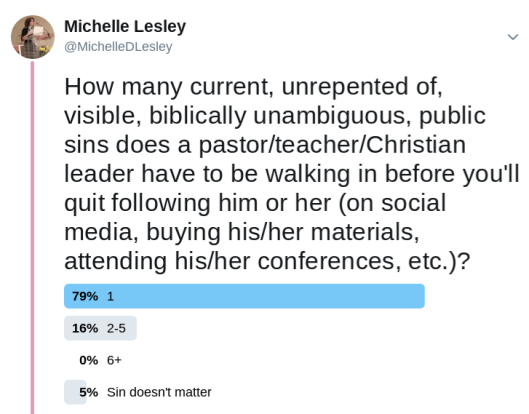
In the wake of Frank Page’s resignation, I asked this poll question on Twitter

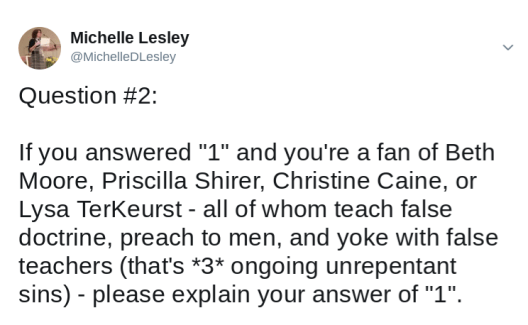
followed by this one

Why are Southern Baptists leaders so quick to – rightly and biblically – oust Frank Page for, as far as we know, one isolated sin which he publicly confessed to and repented of, and yet overlook three major – and much more publicly observable and harmful to Southern Baptists – ongoing sins from pastors and teachers who have been rebuked and refuse to repent? Why, instead of disciplining them for their sin, do those in leadership give them fat book deals, invite them to speak at all the cool conferences, fawn over them on social media, and make them into celebrities?

How many sins will it take to disqualify and discipline these people? Four? Eleven? Ninety-six? Is there any amount of sin these pastors and teachers, and those like them, can commit that will cause those in SBC leadership to pull their materials off the shelves of LifeWay, deny them a seat at the table, and urge them to repent and step down from their positions?

I’ve been a Southern Baptist from the day I was born. I’ve been taught since the cradle roll that if God’s Word says not to do something and you do it anyway, that’s a sin. If God’s Word says to do something and you don’t do it, that’s a sin. And that sin is sin in the eyes of God.

Well is it, or isn’t it, Emperor?

If sin is sin in God’s eyes, why aren’t you treating Beth Moore’s sin like Frank Page’s sin? Why are you rewarding her for her sin and disciplining him for his?

Why does the SBC reward some sins while disciplining others?

The Bible says in James 3:1:

Not many of you should become teachers, my brothers, for you know that we who teach will be judged with greater strictness.

Those who teach and lead bear more responsibility to teach sound doctrine and walk worthy because they are teaching and leading us by example.

Why are all the aforementioned pastors and teachers better examples to us in their rebellion and unrepentant sin than Frank Page was in his repentance of sin?

Why?

Southern Baptist peasants and little children see right through your foolishness on parade on this issue and we want answers. Biblical answers.

Don’t just stand there shivering, suspecting we are right, but thinking, “This procession has got to go on,” and walking more proudly than ever. Go back to the palace. Repent. Clothe yourselves with humility and obedience to Scripture, and come back and lead us rightly. Biblically.

Because the Emperor of Southern Baptist leadership has been naked for far too long.

The Emperor of Southern Baptist leadership has been naked for far too long.


ยนH.C. Andersen Centret (The Hans Christian Andersen Centre). The Emperor’s New ClothesAccessed April 5, 2018.

ยฒI am well aware that this is not the only problem in the SBC that needs to be addressed. It would be impossible to address every issue in one article, so this time I’ve chosen to focus on this one particular issue.

Discernment, False Teachers

Is She a False Teacher? 7 Steps to Figuring it Out on Your Own

Originally published July 22, 2016

“What are your thoughts about  _____?
Is she doctrinally sound? Is she a false teacher?”

That’s probably the number one question I’m asked by readers. It gives me so much joy each time I receive that question because it’s encouraging to hear from Christian women who don’t want to be led astray and want to worship Christ in spirit and in truth.

I’m delighted to answer readers’ questions about various teachers (You can find information about many of today’s best known evangelical personalities and ministries under my “Popular False Teachers & Unbiblical Trends” tab at the top of this page.) but, unfortunately, my answers often take a while. I’ve never heard of many of the teachers I’m asked about, and, even with the ones I’m familiar with, in order to give a fair and biblically accurate answer, I have to research each of them. That frequently takes at least several days of work. The less famous the teacher is, the less information there is out there about her, and the longer it takes. And that weighs on me because I know a lot of you, when you write to me about a certain teacher, need answers now.

It also weighs on me because I don’t want you to just take my word for things. I am a fallible, sinful human being. I get things wrong. I miss things. I make mistakes. Also, I’m not going to be around forever (well, not on this planet anyway!)

For these reasons, and because the ability to vet the personalities and teachers you follow is an important spiritual skill every Christian should hone and teach others, I want you to be able to research these people for yourself. “Teach a (wo)man to fish…” and all that, you know. Here are the seven steps I take to discover whether or not a teacher is doctrinally sound.

1. Know your Bible

This. is. not. optional. Get a trustworthy translation (read: not The Message, The Passion “Translation,” a Joyce Meyer Study Bible, etc.) and study it forwards, backwards, and upside down if you have to. Find, join, and faithfully attend (also not optional) a doctrinally sound church that will immerse you in the depths of God’s Word through its preaching and teaching. Listen to good sermon podcasts or an audio Bible during the week. Memorize Scripture. Learn good hermeneutics. Every Christian should be doing these things by default anyway, and one by-product of knowing your Bible is that when you see or hear a statement by a teacher, you often won’t have to do a lick of research to determine whether or not you’re being taught biblical truth. The Scriptures will already be in your heart and mind for comparison.

2. Pray

One of the things I ask of God during my regular prayer time is that He would protect me from being deceived by false teachers, that He would continue to grow me in wisdom and discernment, and that He would develop the mind of Christ in me. It’s also a good idea to pray for wisdom and discernment, and for trustworthy information, before researching a teacher.

3. Know your criteria

One of the arguments I frequently hear when warning people away from a false teacher is “But every teacher makes mistakes!” (see #7 here) Of course every teacher makes mistakes in her teaching, and every teacher sins. A sin or a mistake doesn’t qualify someone as a false teacher. What you’re looking for is repentance and correction.

A trustworthy, biblical teacher teaches sound biblical doctrine and avoids known sin nearly without exception. When those exceptions occur and someone brings it to her attention, she listens, is teachable, repents, and corrects her error (Apollos is a great biblical example of this). False teachers, on the other hand, unrepentantly persist in sin or teaching false doctrine despite biblical correction. Often, they exhibit complete unteachability (as do their followers), deriding those biblically calling them to account as haters, divisive, slanderers, scoffers, jealous, etc.

When I research a teacher, I examine three fundamental areas of her life and teaching: a) Does she currently and unrepentantly preach to men? (Or, if the teacher is male: Does he allow women to preach to mixed audiences from his pulpit or in his stead? Is his wife co-pastor of the church? Are there any women on his church’s staff in pastoral positions?) b) Does she endorse and/or partner with known false teachers or ministries? c) Does the doctrine she teaches and practices line up with Scripture? These aren’t the only things that make someone a false teacher, but they’re three of the most prominent and important.

4. Criteria a: Women teaching men

This is a scriptural litmus test that can help give you a quick answer as to whether you should be following a certain teacher or not. The Bible tells us that women are not to preach to, teach the Bible to, or exercise authority over men in the gathered body of believers. Not in the four walls of a church, not on a simulcast, not at a Christian conference. Period. (Click here for more information.)

And it’s not a so-called secondary issue, either. It’s a sin. A preacher or teacher who unrepentantly disobeys this Scripture is no different from one who disobeys Scripture by viewing pornography, embezzling church funds, or teaching that homosexuality or abortion are OK. Scripture is Scripture. It’s all inspired by God the Holy Spirit. There aren’t any instructions to the church that it’s OK with God if you twist their context, brush them aside, or disobey them. If a female teacher currently and unrepentantly preaches to men or a male teacher allows women to do so in his church or ministry, that’s not a teacher you should be following.

Furthermore, a woman preaching to men is itself false doctrine. When a woman preaches to men, her behavior is teaching the false doctrine that itโ€™s perfectly fine to disobey Scripture if you want to. That if you donโ€™t like a certain command of Scripture, itโ€™s OK to just ignore it. If your pastor stepped into the pulpit Sunday morning and said in words that itโ€™s OK to disobey or ignore Scriptureโ€™s commands, your church would run him out of town on a rail, and rightly so. There’s no difference between your pastor saying it in words and a woman acting it out with her behavior.

Finally, women teaching men and women teaching other false doctrine are highly correlated. I have researched scores of women teachers. Every single one of them who unrepentantly teaches men also teaches false doctrine in some other aspect of her theology (usually progressivism, Word of Faith {prosperity gospel} or New Apostolic Reformation). In other words, if a woman teaches men, you can just about take it to the bank that she also teaches additional false doctrine.

How to find out if the teacher is disobeying Scripture in this area?

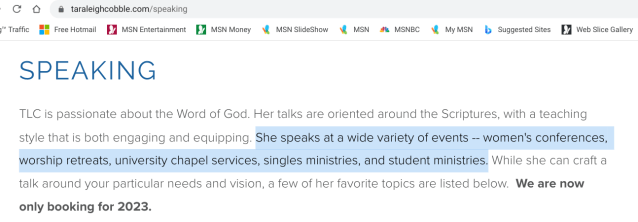
Check YouTube and Vimeo for videos of the female teacher speaking at various events. Are men clearly present in the audience?

Consider the events the female teacher speaks at. Does she speak exclusively at events for women, or does she also speak at co-ed events?

Examine the speaking engagement calendar on the female teacher’s web site. Is she scheduled to speak at Anytown Baptist Church at 11:00 a.m. on a Sunday? She’s probably giving the sermon that morning. (Some female teachers purposely leave these preaching engagements off their events calendars and social media to avoid biblical rebuke.)

For (male) preachers / pastors, check the sermon archives and the “meet our staff” sections of the church web site. Are women serving on staff as “pastors” or in positions of authority over men? Do the sermon archives feature female speakers who have preached to the whole congregation?

5. Criteria b: Partnering with false teachers

Scripture is abundantly clear that we are to have nothing to do with false teachers. Nothing. John tells us that even to greet them is to take part in their wicked works. To publicly praise, point people to, or partner with false teachers is even worse.

Finding out if the teacher you’re researching praises or partners with false teachers is another biblical litmus test that can help quickly determine whether you should be following her or not.

The easiest way to do this is with an internet search engine. Type the name of the teacher you’re researching into the search bar followed by the names of at least a few well known false teachers or ministries (for example: Jane Smith Joel Osteen). You may wish to try names like Joel Osteen, T.D. Jakes, Andy Stanley, Joyce Meyer, Beth Moore, Christine Caine, Hillsong, Bethel, IF: Gathering, Proverbs 31 Ministries, etc.

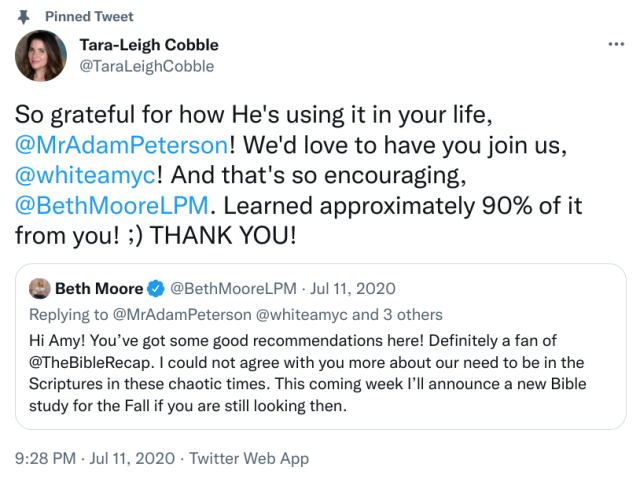
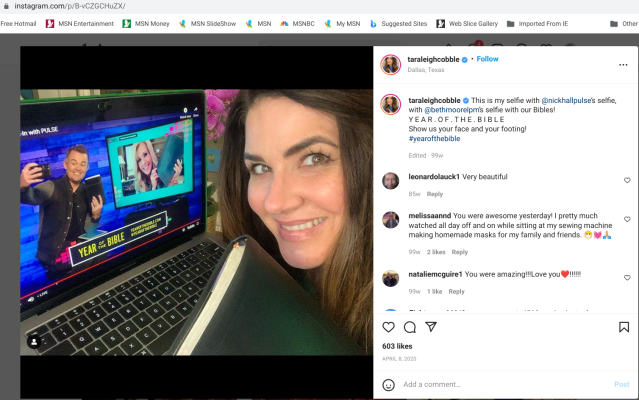
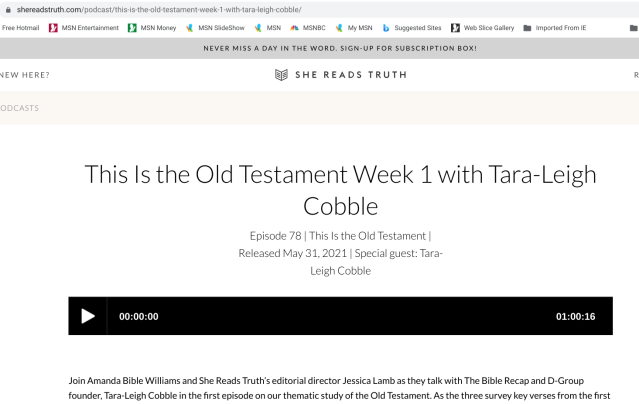
Examine the results. Are there a lot of connections between the teacher you’re researching and known false teachers? Does she frequently and favorably quote, comment on, or re-post false teachers on her social media pages? Does she make a habit of sharing the stage with or appearing alongside false teachers at conferences and other events? Do false teachers praise her, invite her to speak at their churches and conferences, or write endorsements of her materials?

Birds of a feather flock together. If you lie down with dogs, you get up with fleas. Bad company corrupts good morals. It’s all true. A teacher who frequently, favorably, and unrepentantly associates herself with false teachers should be avoided.

6. Criteria c: Biblical doctrine

If a teacher has failed criteria a and/or b, that’s sufficient. You should not be receiving teaching from that person. Those two criteria will quickly weed out about 90% of false teachers out there today. However, “passing” both criteria a & b, while a fair indicator that you’re probably dealing with a doctrinally sound teacher, is not sufficient. A teacher can operate biblically in those two areas and still teach or practice unbiblical doctrine. You must examine the doctrine and practices of the teacher you’re considering following to see if they’re biblical, and that can take some time and energy.

Does the teacher have a statement of faith or “what I believe” section of her web site? Examine it. Are all of the tenets biblical and backed up with chapter and verse Scripture? Are the tenets specific, detailed, and clear cut as opposed to general and nebulous? A solid statement of faith can be helpful, but keep in mind that a significant number of churches and ministries have perfectly biblical statements of faith “on paper” yet do not faithfully adhere to to those principles in teaching and practice. (Another red flag that can be helpful to look for on a teacher’s website: Does s/he go by the title “Apostle” or “Prophet/Prophetess”? If so, s/he’s a false teacher. There are no more apostles and prophets. Furthermore, people who go by those titles are New Apostolic Reformation heretics 99+% of the time. While the term “bishop” is sometimes used in doctrinally sound theological camps, most of the time this title is going to indicate Catholic or New Apostolic Reformation heresy.)

Ask doctrinally sound, trustworthy friends if they’re familiar with the teacher’s doctrine. There are also many theologically solid Facebook groups you can join and ask your fellow members their impressions of various teachers. There are a lot of Christians out there who have read a lot of books and listened to a lot of teaching. They can be very helpful resources.

What do reputable, doctrinally sound teachers and ministries have to say about the teacher, her teachings, or the Scripture or doctrine in question? I regularly use and highly recommend the following sites1:

(Some of these folks vet teachers in more than one category, so check them all if you need to. And note that many below have more than one link.)

(Mostly) Word of Faith (prosperity gospel) / New Apostolic
Reformation (NAR) Teachers & Ministries:

Berean Research (Amy Spreeman)

Dawn Hill (The Lovesick Scribe) (Website)

Steve Kozar (Website)

Justin Peters

Chris Rosebrough (Archives)

(Mostly) New Age / Mysticism Teachers & Ministries:

Christian Answers for the New Age (Website) (Marcia Montenegro)

Doreen Virtue

(Mostly) Progressive / Woke Teachers & Ministries:

Protestia

Woke Preacher Clips

(Mostly) Pop Evangelical Teachers & Ministries:

The End Time (Elizabeth Prata)

Think on These Things (Gary Gilley)

Doctrinal Questions and Issues:

Got Questions

Grace to You


Here’s what you should be looking for in preaching and teaching. Read the person’s materials or listen to her teaching. Take notes. When the teacher makes an assertion, ask yourself, “Where, in context, does the Bible say that?” When the teacher cites a passage of Scripture, look it up and see if she’s using it in context. Does the teacher primarily use one reliable translation of the Bible when teaching, or does she skip around through various translations and paraphrases while teaching to make sure the verses use certain words that fit with the theme or idea she’s teaching? Does she engage in gimmickry or does she simply teach the Word? Is the centerpiece of her teaching a correctly exegeted passage of Scripture, or does her teaching revolve around a story, movie, prop, idea, theme, topic, or illustration that comes from outside of Scripture? Does she frequently allegorize Scripture? Does she make every Scripture about you, your hopes and dreams, your experiences? Does she spend more time correctly handling and teaching Scripture or telling stories, jokes, and illustrations? These are all things to watch and listen for. If a teacher consistently mishandles, misunderstands, or misapplies Scripture, she’s not a teacher you should be following.

7. Check the date

When you’re researching a teacher, check the date on the evidence you’re examining. Is it old or fairly current? We all grow and mature over the years in our walk with the Lord. Are you seeing red flags in the teacher’s older materials? Try to find out if she has repented and corrected those unbiblical teachings or behaviors. If so, and she’s currently teaching and behaving in a way that lines up with Scripture, forgive her. It is not fair or biblical to hold past sin against someone when she has repented and Christ has forgiven her. She, and her recent materials, should only be avoided if she is currently and unrepentantly teaching and/or practicing false doctrine.


Before receiving teaching from anyone, it’s important that we examine that teacher’s doctrine and practices in light of Scripture. God commends the Bereans for receiving Paul’s word with eagerness, yet examining the Scriptures to see if what he was teaching them lined up with the Bible. May we be as vigilant and noble as they in our quest to know Christ and His word.

1These sites are run by fallen human beings. They sometimes sin or get things wrong. Do your best to double check their evidence and conclusions. If you have a question or concern, contact the ministry. I do not personally always agree with every single piece of information published by any of these ministries, but they are all generally doctrinally sound.