Prayer, Sanctification, Throwback Thursday, Worship

Throwback Thursday ~ Great Expectations

Originally published February 6, 2014expectgreatthings-necklace (1)

Do we expect too much from God? Is that even possible?

No.

Yes.

Well, kinda.

You see, I’m not talking about expecting something and God being unable to deliver it. That’s just plain silly when talking about our omnipotent God. No, what I’m talking about is whether or not the expectations we come up with are grounded in biblical reality.

What do we mean when we talk about “praying expectantly” or coming to a time of corporate worship, study, or prayer, and “expecting God to do something”? Just what is it we are expecting God to do?

Could it be that He’s already doing something and we’re just not seeing it?

Sometimes, when we read God’s word, we expect God to do something just as “big” as He did in Moses’, Paul’s, or some other Bible hero’s life. We forget that the Bible is sort of like a “highlight reel” of the events in the lives of a handful of people that God drafted to be part of His visible activity at that moment in history.

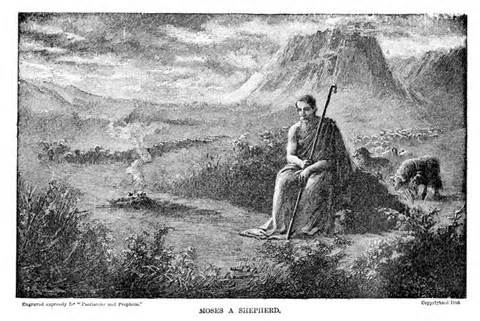
We focus on the moments Moses had at the burning bush or walking through the Red Sea, and that’s what we want, too. r643167_4468740But we forget that Moses’ life wasn’t like that every day. We forget about the eighty years he spent wandering around the desert, half in the day to day monotony of shepherding on the back side of Midian, the other half, wandering around the wilderness with the people of Israel.

Eighty years of nothing special. Day after day of ordinary. Week after week of God not “showing up” and doing something amazing. Eighty years. That’s a lifetime for most of us.

Was God any less at work in Moses’ eighty years of desert thwandering than He was when He gave Moses the Law or spoke to him face to face or sent manna? Of course not. During those days, God was protecting Moses from the heat and wild animals, providing food and shelter for him, blessing him with a wife and children, directing his steps, teaching him obedience and trust.
Just like He does for us.

Have you read a Bible passage this week that allowed you to see more of God’s glory? God is doing something. He’s revealing Himself to you.

Are you praying for someone’s salvation? God is doing something. He’s working on the heart of that person.

Did you have a place to sleep last night and food on your table today? God is doing something. He’s providing for your needs.

Do you leave church on Sundays having been fed the truth of God’s word by your pastor? God is doing something. He’s growing you to spiritual maturity.

Is it possible that we’re expecting God to do something in our lives that isn’t in His particular plan for us? You aren’t Moses, and neither am I. Neither were the million or so other Israelites Moses led out of Egypt, and neither have the billions of other people been who have inhabited earth since Creation. Moses was Moses. You are you. God doesn’t have the same plan for your life He had for Moses’ life.

And, by the way, have you ever noticed that most of the people in the Bible through whom God did something “big” were not expecting it or asking for it? Moses wasn’t expecting God to show up in that burning bush. David wasn’t asking God to do great things in his life when Samuel dropped by to anoint him as the next king. Both of them were hanging out with the sheep when God called them. Paul thought he was already an awesome servant of God when he got knocked off his high horse. Mary wasn’t expecting to be expecting. She was just a teenage girl growing up and learning how to run a household.

1 Thessalonians 4:10b-12 says:

But we urge you, brothers to do this more and more, and to aspire to live quietly, and to mind your own affairs, and to work with your hands, as we instructed you, so that you may walk properly before outsiders and be dependent on no one.

That’s what all of those Bible characters were doing when God chose them. Just regular people living regular lives doing regular work. Just like billions of other people through whom God has not chosen to do anything big and spectacular.

keep-calm-god-is-at-workBut that doesn’t mean God hasn’t been “doing something” in all of our lives. In fact, the vast majority of the work God does in our lives every single day goes unnoticed and unappreciated.

So, instead of setting our expectations on those very rare “wow factor” works of God that seem so appealing, maybe we should be asking Him to open our eyes to, and make us thankful for, all of the things He’s already doing in our lives. Instead of having great expectations of things that God has never promised us, maybe we should ask Him for, and expect Him to, do what He has promised:

Forgiveness for our sin

Christ-likeness

Provision for our needs

Endurance

The ability and opportunity to help others

Faithfulness

Humility

Patience

The opportunity to share the gospel

Because “all the promises of God find their Yes in him.” You can expect it.

Wednesday's Word

Wednesday’s Word ~ Philemon

philemon 6

Philemon

Paul, a prisoner for Christ Jesus, and Timothy our brother,

To Philemon our beloved fellow worker 2 and Apphia our sister and Archippus our fellow soldier, and the church in your house:

3 Grace to you and peace from God our Father and the Lord Jesus Christ.

4 I thank my God always when I remember you in my prayers, 5 because I hear of your love and of the faith that you have toward the Lord Jesus and for all the saints, 6 and I pray that the sharing of your faith may become effective for the full knowledge of every good thing that is in us for the sake of Christ. 7 For I have derived much joy and comfort from your love, my brother, because the hearts of the saints have been refreshed through you.

8 Accordingly, though I am bold enough in Christ to command you to do what is required, 9 yet for love’s sake I prefer to appeal to you—I, Paul, an old man and now a prisoner also for Christ Jesus— 10 I appeal to you for my child, Onesimus, whose father I became in my imprisonment. 11 (Formerly he was useless to you, but now he is indeed useful to you and to me.) 12 I am sending him back to you, sending my very heart. 13 I would have been glad to keep him with me, in order that he might serve me on your behalf during my imprisonment for the gospel, 14 but I preferred to do nothing without your consent in order that your goodness might not be by compulsion but of your own accord. 15 For this perhaps is why he was parted from you for a while, that you might have him back forever, 16 no longer as a bondservant but more than a bondservant, as a beloved brother—especially to me, but how much more to you, both in the flesh and in the Lord.

17 So if you consider me your partner, receive him as you would receive me. 18 If he has wronged you at all, or owes you anything, charge that to my account. 19 I, Paul, write this with my own hand: I will repay it—to say nothing of your owing me even your own self. 20 Yes, brother, I want some benefit from you in the Lord. Refresh my heart in Christ.

21 Confident of your obedience, I write to you, knowing that you will do even more than I say. 22 At the same time, prepare a guest room for me, for I am hoping that through your prayers I will be graciously given to you.

23 Epaphras, my fellow prisoner in Christ Jesus, sends greetings to you, 24 and so do Mark, Aristarchus, Demas, and Luke, my fellow workers.

25 The grace of the Lord Jesus Christ be with your spirit.


The Holy Bible, English Standard Version Copyright © 2001 by Crossway Bibles, a publishing ministry of Good News Publishers.


Questions to Consider:

1. Who is the author (1,19) of this letter, and to whom (1) was it written? Who are Onesimus and Philemon? What was the purpose of this letter?

2. What is the overall tone of this letter? Is it rebuking? Tender? Friendly? What are some words and phrases which enlighten you to Paul’s tone? What kind of relationship did Paul and Philemon have? (1, 4-7)

3. How does Paul’s instruction to Philemon to consider his returning slave as a brother in Christ (15-16) relate to Galatians 3:28? How do both of these passages speak to the issue of different roles yet equal worth in Christ? Does God’s love for you depend on your station in life?

4. What does Paul mean in verse 19 when he says Philemon owes “me even your own self”? How much do we owe to the person(s) who shared the gospel with us? Have you ever thanked God for the person who shared the gospel with you? 

5. Many people think the Bible condones the kind of slavery that was legal in the United States in earlier centuries. Does it seem as though the book of Philemon would support that assertion? Why or why not?

Guest Posts

Guest Post: Itching Ears

Since I’ve had to temporarily cut back on blogging I’ve asked some friends to contribute guest posts. If your theology pretty much matches up with mine (as outlined in the “Welcome” and “Statement of Faith” tabs) and you’d like to contribute a guest post, drop me an e-mail at MichelleLesley1@yahoo.com, and let’s chat about it.michael coughlin itching ears

Itching Ears
by Michael Coughlin

Itching ears abound in 2016. If you are reading this blog, you likely value discernment to a great deal. Consider a section of Scripture such as 2 Timothy 4:3-4:

For the time is coming when people will not endure sound teaching, but having itching ears they will accumulate for themselves teachers to suit their own passions, and will turn away from listening to the truth and wander off into myths.

What we see here is the contrast between those who will desire sound teaching and those who will not. False teachers will be propped up by people with ‘itching ears’ to satisfy their own lusts.

The picture painted is striking. As I write this, I am imagining if my ears were itchy how I’d be unable to avoid scratching them. In fact, just thinking about it made my ear tingle, and I had to satisfy the itch! The analogy extends to other activities as well. There is a nearly unavoidable response by unregenerate man to his or her lust to attempt to satisfy those passions. The only mode of satisfaction which must be avoided is that of repentance toward sin and faith in Christ. Anything else goes.

In comes your friendly neighborhood spiritual leader/false teacher. You know the type. He or she is likable in some important way, speaking in a way which boosts self-esteems, smiling a lot, and using the word “God” or the phrase “God’s Word” like they were called to it! This false teacher may even proclaim the name of Jesus unashamedly. These folks are like a fingernail on the itch…they possess exactly what is needed to temporarily satisfy the longing!

So, good, discerning people like you and I investigate them. We watch a few sermons, read some of their websites or publications, and we write a post on a blog warning the brethren of the insidiousness of the false teacher. Maybe we throw out a tweet or two reminding people we love that this teacher will lead them away from God. Who knows, a Facebook group could ensue…and even be warranted. We use phrases like, “love rejoices in truth!” And we really believe that and mean it.

But I have noticed something which occurs once in a while which I think is ungodly and detracts from our real message. It seems to occur in media where shorter quips are thrown out, like Twitter, but can happen everywhere. Now I’m going to say something that to some people will be difficult to swallow:

Not every time a bad or false teacher says something are they wrong.

Yes, you read that right. Joel Osteen, Joyce Meyer, TD Jakes, Benny Hinn and Paula White are all right sometimes. Each of the examples above are folks who, made in God’s image, cannot help but agree with at least some things God has said. Just like the atheist who actually lives according to God’s precepts which are written on his heart…these people have an understanding of some of the things of God. Think about it…when they actually do quote Scripture they are saying something true.

I know, I know…”but they twist it,” you say! Yes, often they do. But not EVERY TIME, to be sure. The trend that most concerns me is the trend I see which is to take a single sentence or two out of the context that was given and absolutely lambaste a false teacher for their heretical beliefs. If anyone did that with the theologians you like and I look up to as well, we’d be annoyed. Good men (including Jesus, John, Paul) have made statements that, out of the context the statement was uttered, would be terribly evil or at least inane.

How many times has someone reminded you Jesus said “Judge not?” It would be easy to make a case for sinless perfection being taught by the Apostle John from 1 John, if you take a few verses out of context. And Paul? I don’t know how many times I’ve heard the ‘Paul was a misogynist’ argument based on a handful of instructions concerning women. And honestly, I can see how it would sound like it out of context.

My point is this – we ought to give the most ardent false teacher the same treatment as we give the Bible and good teachers in regard to judging the things they say in context. Not because they deserve it, but because it is the right thing to do. When we attack something that someone didn’t exactly say, we commit an error which is easily refuted by those who are being led astray by these folks, and we come out looking like the fools who can’t even be honest about what the person we are attacking really meant.

We owe it to our great God and Savior Jesus Christ to honestly present and assess opposing teachings to His wonderful doctrines. It is scholarly to make cases for biblical teaching against the best possible arguments against it. It is immature and dishonest to mischaracterize your opposition’s argument, and no honor is given to God in that process.

Application: So what do we do with this knowledge? Commit with me to ensure that you will treat false teachers’ statements like we would treat our favorite preacher’s statement, evaluating them in context. It may take a little effort, but it will be worth it. Most of the world’s false teachers say enough wicked, contradictory-to-Scripture things that you don’t have to reach too hard to find something to expose them for what they are!


Michael Coughlin is a street evangelist from Ohio. He and his wife, Erin have 5 children. You can find him on Twitter, at his blog, or on Sermon Audio.


ALTHOUGH I DO MY BEST TO THOROUGHLY VET THE THEOLOGY OF THE BLOGGERS WHO SUBMIT GUEST POSTS, IT IS ALWAYS POSSIBLE FOR THINGS TO SLIP THROUGH THE CRACKS. PLEASE MAKE SURE ANY BLOGGER YOU FOLLOW, INCLUDING ME, RIGHTLY AND FAITHFULLY HANDLES GOD’S WORD AND HOLDS TO SOUND BIBLICAL DOCTRINE.


Guest Posts

Guest Post: A Portrait of the Heaven-Bound Slave

Since I’ve had to temporarily cut back on blogging I’ve asked some friends to contribute guest posts. If your theology pretty much matches up with mine (as outlined in the “Welcome” and “Statement of Faith” tabs) and you’d like to contribute a guest post, drop me an e-mail at MichelleLesley1@yahoo.com, and let’s chat about it.

Kesha talents

A Portrait of the Heaven-Bound Slave
By: Kesha Griffin

When you think of the character of a Christian, what comes to mind? For some, we may think of loving, patient, kindness, giving, self-less, etc. (at least I hope this describes most Christians you know). Although all of these characteristics are important, I think many of us overlook one trait that our Lord often spoke about and held in high regard…faithfulness. In fact, the Bible teaches us that faithfulness (to the Word, to God, to His work) is a mark of a true believer. Sadly, we often hear how faithful God is to us (and He is), but rarely hear about the importance of being a faithful servant to our Master.

The Parable of the Talent is a great depiction of a faithful Christian. In Matthew 25:14-30, Jesus is speaking to His disciples about the kingdom of heaven and begins telling them this parable of the talents. The parable involves a master, his three slaves, and the master’s talents (a measurement of gold, silver, money, etc.).The master represents Christ and the slaves represent believers and unbelievers. The story as told by Jesus, says the master was going away on a journey, and entrusted his slaves with his talents to manage while he was away. When the master returns home from his journey, his slaves show him what they did with the talents they were given.

Let’s examine the slaves in more detail:

#1- The Slave’s Portion
The master gave each slave a talent. The talent did not belong to the slave, it was entrusted to the slave. It belonged to the master (vs 14). Also notice, that the master gave each slave the amount he wanted them to have; One slave had five talents, one had two talents, and the other slave was given one talent. Finally, notice that the amount of the talents given to each slave was given according to their own ability (vs 15). The slaves didn’t ask the master to give them a certain amount of talents, the master decided how much, and to whom.

#2- The Slave’s Character
In the parable, two of the slaves immediately went out and starting working. This implies they had a sense of urgency, didn’t waste any time, and were eager to do the work of their master. It also appears these slaves were hard-working, searched for opportunity, put in effort, for the Scripture says they “went and traded” (vs 16). Lastly, not only did these slaves spend their time working diligently for their master, they found opportunities to make more for their master. They both doubled what was initially given to them.

The parable also reveals the character of the last slave. Although this slave was only given one talent, he went away, dug a hole and hid the money (vs 18). This implies that he didn’t want to work, there was no sense of urgency, and no desire to please his master. In fact, the Scripture says, he was “lazy and wicked” (vs 26). After burying his talent in the ground, he must have spent the rest of his time doing…whatever he wanted to do. His life was free from toiling for his master, he could do as he pleased.

Not only was this slave lazy but he had several excuses as to why he didn’t work for his master. He blamed his master, to the point of attacking the master’s character, saying that his master was a “hard” man (vs 24), and he blamed fear, said he was afraid (vs 25). He also tried to cover up his lack of effort by presenting the master the one talent he was entrusted with, as if he honestly wanted to please his master (vs 25).

#3- The Slave’s Reward
The two slaves who diligently worked for their master, both doubled their portion originally entrusted to them. Notice that although one slave ended up with ten talents, and the other four talents, they both received the same reward. The master commended them both and gave them more. How thrilled the slaves must have been to fulfill their obligated duty to work for the master, and to be rewarded by Him for doing so. What joy to hear their master say “Well done, good and faithful slave. You were faithful with a few things, I will put you in charge of many things; enter into the joy of your master.” (vs 21 and 23)

Sadly, the wicked and lazy slave received condemnation and punishment from the master (vs 26-28). The one talent he had was taken and given to the slave who had the most. His master called him a worthless slave and cast him into outer darkness, a place of “weeping and gnashing of teeth” (vs 30). How tragic.

It seems like a harsh punishment for a slave who was simply lazy right? Well, let me suggest that this lazy slave was not simply lazy. He is a depiction of an unbeliever. A person who is wicked, and who doesn’t have a relationship with the Master. Notice the slave didn’t want to work or even attempt to please the master (buried the talent in the ground). He didn’t appear to know (personally/intimately) the master well, he accused the master of being a hard man. He didn’t make the most of the talent that was given to him, not even investing it in the bank to gain interest (vs 27). He was disobedient, not wanting to do as the master instructed, and lived his life for himself, not for the master.

Faithfulness is a characteristic of a true believer. Although not perfectly, are we truly living for Jesus, working diligently to make the most of all he has given us (our time, spiritual gifts, money, etc.), like a faithful slave? Is it our goal to please our Master? When Jesus comes to “settle the account” with us, will we hear the Master say “Well done my good and faithful slave…enter in”?


Kesha LOVES finding hidden treasures buried in Scripture and learning how to apply them to daily living. Her heart’s desire is that every Christian woman is equipped with sound doctrine, so that she may know God truthfully and intimately, and learn how to fight life with the sword, the Word of God. Follow Kesha at treasuresbykesha.com and on Twitter: @MrsKeshaGriffin and @treasurebyKesha.


ALTHOUGH I DO MY BEST TO THOROUGHLY VET THE THEOLOGY OF THE BLOGGERS who submit guest posts, IT IS ALWAYS POSSIBLE FOR THINGS TO SLIP THROUGH THE CRACKS. PLEASE MAKE SURE ANY BLOGGER YOU FOLLOW, INCLUDING ME, RIGHTLY AND FAITHFULLY HANDLES GOD’S WORD AND HOLDS TO SOUND BIBLICAL DOCTRINE.
Faith

Risky Business


Recently, I’ve been hearing a lot of preachers and divangelistas out there teaching that Christians have to constantly take “risks” as proof that we’re growing in Christ, that we have to perform acts of faith that take us outside of our comfort zone, that we have to dare to attempt things that could never be done without God’s direct, miraculous intervention or empowerment.

Well, I’d like to challenge all the proponents of that teaching to take a risk that (I hope) won’t be out of their comfort zone and doesn’t require any miraculous intervention from God:

Find the prescriptive passage of Scripture, chapter and verse, in context, rightly divided, that teaches this “risk doctrine”.

Because I don’t see it.

I see 1 Thessalonians 4:9-11 exhorting us to love the bretheren, live quietly, work with our own hands, and walk wisely before outsiders.

I see Titus 2:1-10 telling Christian men and women to learn to be, and teach others to be, submissive, self-controlled, loving, reverent, and kind.

I see the book of 1 John saying that salvation is evidenced by loving Christ, obeying God’s word, shunning worldliness, and confessing our sin.

I don’t see a single Bible character deciding “Hmmm…I’d better come up with some kind of daring deed to do to prove my faith.”

Moses was minding his own business tending sheep when God spoke to Him from the burning bush and called on him to confront Pharaoh and lead Israel out of Egypt. Moses’ response? “Send somebody else.”

David wanted to do a great thing for the Lord by building the temple, and God said no.

Paul and the apostles simply obeyed God’s command to preach the gospel. Their earthly reward? Persecution and martyrdom.

Sometimes, as we walk in daily obedience to God’s word, situations will arise that are scary. Circumstances in which we must trust Scripture over our experiences. Life events that require us to obey God’s word even if we lose a job or a friend. Times when we have to believe that God is doing what is best even if it isn’t the outcome we wanted. That’s not a risk; that’s walking in faith and obedience, depending on Christ to carry us through whatever He places in our path.

But the Bible doesn’t say anywhere that we have to prove our faith or growth in Christ by proactively coming up with some big, fat, hairy risk to take, stepping outside of our comfort zone, and daring to do what can only be done by the power of God.

In fact, that kind of thing sounds eerily similar to what Satan tempted Jesus to do. Among other things, Satan tempted Jesus to prove Himself by literally “stepping out on faith” – right off the top of the temple – and trusting God to catch Him. And what did Jesus do? He went straight to God’s word and obeyed it by saying no. “You shall not put the Lord your God to the test.” It didn’t work that way for Jesus, and it doesn’t work that way for us.

The Bible teaches us to act in wisdom, to walk in obedience to Scripture, to trust God even when it’s scary or inconvenient or counter-intuitive. But for a pastor or teacher to say that Christians have to commit acts of derring do as proof of our faith or level of growth?

That’s risky business.