Christian women, Parenting

Throwback Tuesday ~ Avoiding the Creepers: Six Ways to Raise a Biblically Strong Woman

Originally published May 15, 2015

But understand this, that in the last days there will come times of difficulty. For people will be lovers of self, lovers of money, proud, arrogant, abusive, disobedient to their parents, ungrateful, unholy, heartless, unappeasable, slanderous, without self-control, brutal, not loving good, treacherous, reckless, swollen with conceit, lovers of pleasure rather than lovers of God, having the appearance of godliness, but denying its power. Avoid such people. For among them are those who creep into households and capture weak women, burdened with sins and led astray by various passions, always learning and never able to arrive at a knowledge of the truth. 
2 Timothy 3:1-7

If someone were to ask you, โ€œWhat kind of person do you want to raise your daughter to be?โ€ how would you answer? Caring? Independent? Loyal? Kind?

Iโ€™m betting none of us would answer โ€œweak,โ€ โ€œburdened with sins,โ€ โ€œeasily led astray by her passions,โ€ or โ€œunable to arrive at a knowledge of the truth.โ€ Yet in these last days in which we find ourselves, thatโ€™s exactly what many good-hearted Christian mothers with nothing but the best of intentions are raising their daughters to be. Itโ€™s not that they want their daughters to grow up to be spiritually weak or led astray by sin or unbiblical teaching, itโ€™s just that they lack the skills and tools necessary for properly training their daughters in the Scriptures and godliness.

Maybe youโ€™re one of those moms. You want to train your daughter to be a wise, godly, discerning woman, but youโ€™re not quite sure how. Hey, we all have those areas of our lives that we need a little help with. As an older mom myself, maybe I can lend a hand.

My daughter is almost twenty, and while sheโ€™s nowhere near perfect, by the grace of God, she is a godly young lady. Looking back, there are many things my husband and I did wrong as parents. But God, in His mercy, covered our failures and saw all of us through as He taught us through His word how to raise a biblically strong woman.

6 Ways to Raise a Biblically Strong Woman

1. Set an example.

Our daughters learn by watching us. Faithfully study your Bible, pray, attend church, obey Godโ€™s word, submit to your husband, repent and ask forgiveness when you sin, and serve others and your church together.

2. Learn, and teach your daughter, good hermeneutics.

Hermeneutics is just a fancy word for rightly handling Godโ€™s word. Use a reliable Bible translation. Understand Scripture in its immediate and overall context. What was the authorโ€™s intended meaning, his audience, genre, and culture? Point your daughter to Christ as you study Godโ€™s word together.

3. Find a doctrinally sound church, join it, and attend faithfully as a family.

Study Godโ€™s word and compare everything thatโ€™s preached and taught to Scripture (in context). Does your churchโ€™s teaching line up? Then be committed to attending every single week, not just when you feel like it or when thereโ€™s nothing better to do. Instill in your daughter a love for, and a commitment to, the church.

4. Fight the fluff.

Unfortunately, many of the most popular preachers, teachers, and Christian authors (including womenโ€™s Bible study authors) teach and write things that may sound good and make us feel good, but are in direct conflict with Scripture. These are the very people Paul was speaking of in 2 Timothy 3. Teach your daughter to follow only trustworthy teachers whose theology is in line with Scripture.

5. Bring prayer and Scripture into every situation.

She canโ€™t find her favorite doll? Kids picking on her at school? She wants to wear clothes that barely cover her? Discuss what the Bible say about these things. Pray together about them. Lead your daughter into prayer and Scripture as part of daily life, and it will teach her that God is to have authority over every aspect of our lives and that we are to obey Him in all things.

6. Teach her how to share the gospel.

If youโ€™re not sure how to properly present the gospel to someone, learn. You canโ€™t lead your daughter to Christ if you canโ€™t share the gospel with her. If your daughter is already saved, make sure she knows how to share the gospel correctly. The Great Commission was the last instruction Christ gave us before leaving earth, and we are all to be about the business of carrying it out until He returns.

The 2 Timothy passage at the beginning of this article is our commission to guard our households against ungodly ways and people โ€“ even those who may falsely call themselves Christians โ€“ who might creep in and steal our daughtersโ€™ hearts and minds away from Christ. He has charged us to train them in godliness, and we must faithfully answer His call to raise wise, discerning, and biblically strong women of God.

What advice would you offer moms who want to raise
biblically strong women?


This article was originally published at Kaylene Yoder’s Blog.

And for all you boy moms, be sure to check out…

Six Ways to Raise a Godly Man

Mailbag

The Mailbag: Potpourri (Imprecatory prayers, Woman leading co-ed small group, LifeWay litmus test…)

Welcome to another โ€œpotpourriโ€ edition of The Mailbag, where I give short(er) answers to several questions rather than a long answer to one question.

I like to take the opportunity in these potpourri editions to let new readers know about my comments/e-mail/messages policy. Iโ€™m not able to respond individually to most e-mails and messages, so here are some helpful hints for getting your questions answered more quickly. Remember, the search bar (at the very bottom of each page) can be a helpful tool!

Or maybe I answered your question already? Check out my article The Mailbag: Top 10 FAQs to see if your question has been answered and to get some helpful resources.


I tried subscribing to your blog using the email subscription box, but I wasn’t able to. Here’s my email address. Can you do it for me?

First of all, thank you so much to all of you who subscribe (or are trying to) to the blog via email. I really appreciate it.

I’ve received this question from two or three of y’all over the past couple of weeks, so I reached out to WordPress (my blog host) just to make sure there wasn’t anything technologically wrong. They checked things on their end and said everything seemed to be working fine, and indicated that a number of people had been successful in subscribing to the blog via email in recent days. So, after chatting with the customer service guy for a few minutes here are some suggestions we came up with if you’re having trouble subscribing via email:

  • Unfortunately, I cannot subscribe to the blog for you. You have to do it yourself, so sending me your email address and asking me to subscribe for you won’t work.
  • Try using a different device. For example, if you’re trying to subscribe on your phone, switch to your computer, or try using a friend’s phone.
  • Try clearing your browser cache
  • Make sure you’re typing in your email address correctly- no typos – and into the correct box (the one that says “enter your email address”).
  • If all else fails, ask a friend who’s there with you to help.
  • If nothing works, you can always follow me on social media. I post my blog articles on my social media accounts every day.

Is it OK for Christians to pray imprecatory prayers against evil people?

I’m going to say “yes,” but with some New Testament provisos:

Examine your heart first. What is motivating you to want to pray an imprecatory prayer against this person? Do you hate her? Want revenge? Are you jealous of her? If the motive of your heart is ungodly, you need to deal with that first. You should not enter into any sort of prayer about anything if your motives are sinful (unless, of course, you’re praying that God will change your motives!)

Just as God’s greatest desire for you was for you to repent and be forgiven in Christ, that should be your greatest desire for others. Do you desire, from the heart, that God would save this person, or do you find yourself hoping God will hurt her or send her to Hell? Again, examine the motives of your heart.

It’s never wrong to ask God to stop someone from sinning or to protect you or others from that person’s sin. (Which is not the same as an imprecatory prayer).

Is the person you want to pray the imprecatory prayer against someone you know personally? If so, a better prayer would be to ask God to help you love her, forgive her, and give you opportunities to be a godly influence on her.

Is the person you want to pray the imprecatory prayer against someone you don’t know and have virtually no access to such as a well known false teacher or an evil governmental leader? This is probably the best fit for praying what we would think of as an imprecatory prayer. When I pray for false teachers, here’s what that prayer generally sounds like:

Dear Lord- I pray for Teacher X. Would you please pour out your grace and mercy on her, give her the gift of repentance, and graciously save her? However, You know all things, and you know whether or not she will be saved. If You know she will not bow the knee to Christ, I am asking You to please remove her from all positions and relationships of influence she has. Even though I know that You may be using her as an instrument of judgment against those who want their itching ears scratched, I am asking you to show mercy – to her, to them, and to the visible church – by sitting her down and shutting her up. But whatever You decide, I trust You.

Some people would probably say that’s not really an imprecatory prayer, and I might agree with them, but, to me, that’s what an imprecatory prayer sounds like when run through a New Testament filter.


We have a co-ed small group in our home which my husband leads, however due to work, sometimes he is gone. There isnโ€™t another person who feels comfortable enough to lead so I usually just keep us on track by getting us through our questions which are based on Sundayโ€™s sermon. So, does this mean that when my husband is gone, we should cancel our Small Group?

Though it is very servant-hearted and loving toward your husband and church for you to be willing, you should not be leading the group when your husband is gone. There would be nothing wrong with reading aloud some questions you’ve been provided if that’s all it was, but I would assume the leader has to at least provide some biblical guidance. What if someone answers a question with false doctrine that needs to be biblically corrected? What if no one can answer the question and answering it yourself requires you to teach Scripture to the group? That’s going to put you in the position of possibly violating Scripture and/or your conscience by teaching the Bible to a mixed group. That’s not fair to you or to the group.

Here are some things I would suggest:

  • If your husband can change his work schedule around or change the date or time of the small group meeting so he doesn’t have to be absent (at all or as much), that would be helpful.
  • Your husband should talk things over with your pastor and ask him for suggestions of other men (outside the group) who can lead when he has to be gone.
  • I’m sorry, but there’s no other way to say this (and please understand, this is not directed at you, personally, but a general statement about so many churches these days). The men in your group need to man up. I’m sorry they feel uncomfortable, but that has never been a biblical excuse for men failing to do what God has called them to do – lead. Barak felt uncomfortable doing what God had called him to do, and look how that turned out. Godly men manage to find a way to do things that make them uncomfortable all the time out of obedience to Christ. Your husband can mentor them, the pastor can train them, whatever. They all need to get together, figure it out, and step up. This shouldn’t be something you even need to worry about. It’s not your burden to carry, it’s theirs.

    And besides that, you’re uncomfortable too, aren’t you? At least uncomfortable enough to write and ask me whether or not you should be doing this or if the meeting should be canceled. So you – a woman – feel uncomfortable about doing something you shouldn’t be doing but you have to do it anyway, but these men feel uncomfortable about doing something they should be doing – leading – and they don’t have to do it because they feel uncomfortable? Does that sound biblical? Or even fair?

Perhaps it’s time for evangelical pastors and elders to start giving some thought to what is going on in the culture of their churches that makes men comfortable slacking off and shoving their God-given responsibilities off onto the shoulders of women.

So no, it shouldn’t come down to you leading or canceling the meeting all together. The best and healthiest thing that could happen here is for the men to step up and lead.

Additional Resources:

Adam 3.0: Meanwhile, Back in the Garden, Itโ€™s Deja Vu All Over Again

The Mailbag: I Have to Preach Because No Man Will Step Up


Iโ€™ve discovered your podcast and started listening to the one on how to study the Bible. You speak of LifeWay in it. Am I to avoid ANY and all books and authors they sell/endorse on their website? Like Mr. X Preacher and Mr. Y Author? I have a library full of books listed on LifeWay!

Thank you so much for listening in to A Word Fitly Spoken!

I’m sorry, but I think you may have misunderstood what I said on our How to Study the Bible – And How Not To! episode.

We started off the episode by discussing how not to study the Bible, and one of our first points was that you should not use “Bible” studies authored by false teachers. I gave a list of some of the best selling women’s “Bible” study authors to avoid (Beth Moore, Lysa TerKeurst, Priscilla Shirer, Christine Caine, etc.), and then I followed that up by saying this:

And Iโ€™m going to add one more. This is actually the first time Iโ€™m publicly saying this, and as a Southern Baptist, it pains me to say it, but if you need a quick way to rule someone out without doing hours of research on an author youโ€™re not familiar with, I would avoid any author or conference speaker promoted by LifeWay Women – thatโ€™s the womenโ€™s division of LifeWay.

Now hear me, Iโ€™m not saying that every woman in LifeWay Womenโ€™s stable of womenโ€™s Bible study authors is necessarily unbiblical or a false teacher, but the majority of them are – certainly enough that I feel comfortable saying you could use their endorsement as a litmus test of who to avoid.

I was specifically talking about authors and conference speakers endorsed and promoted by LifeWay Women (the women’s division of LifeWay). I wasn’t talking about LifeWay in general, and I wasn’t saying that every single author you can find in LifeWay’s online store is a false teacher.

What I was trying to get across is this: Say you’ve heard of a new women’s Bible study by Jane Doe. You’ve never heard of her and don’t know anything about her, but you’ve heard other women raving about her. You’re wondering, “Is Jane Doe doctrinally sound?”.

I’m saying if you go to the LifeWay Women website and you see Jane’s picture plastered all over the place as their latest and greatest author and conference speaker, she’s probably not doctrinally sound, and if you don’t have time to read the book and compare all of her teachings to Scripture, you can take their endorsement of her as a signal that you should probably avoid her.

A brief note on the two particular men you mentioned. I would not recommend either of them – not because their materials are sold by LifeWay, but because there are theological issues with both of them. If you want to listen to or read some godly pastors and authors who rightly handle Scripture and will help you grow properly in Christ, please check out the Recommended Bible Teachers tab in the blue menu bar at the top of this page. (If you need the list narrowed down a little, I would recommend starting with John MacArthur, Steve Lawson, Gabriel Hughes, or Josh Buice).


Iโ€™m trying to remember the name of a recent release book that warns of singing the Hillsong/Bethel songs in church but Iโ€™m drawing a blank! Can you help me? I thought Costi Hinn wrote it but he just helped promote it maybe?

I personally haven’t read any recent books that I recall mentioning this (lots of blog articles, videos, podcasts, etc., but not books).

It is possible that Costi mentioned this in one or both of his books, Defining Deception or God, Greed, and the Prosperity Gospel (both of which I would highly recommend). I’ve read both, but it’s been a couple of years, so I don’t remember whether or not he specifically mentioned churches using Hillsong, Bethel, etc., music in either of them. I know he has mentioned it several times on his blog and podcast.

The only other book that keeps coming to mind is Blessed: A History of the American Prosperity Gospel by Kate Bowler. It’s not really recent, and I only read part of it when it first came out (2013), so I don’t know if she deals with that subject or not. But it keeps coming to mind, so I thought I’d mention it. (And if nothing else, it’s a very good reference book.)

Readers, any ideas which book (not online articles, podcasts, videos, etc. – BOOK) this sister might be thinking about?
Comment below.


If you have a question about: a Bible passage, an aspect of theology, a current issue in Christianity, or how to biblically handle a family, life, or church situation, comment below (Iโ€™ll hold all questions in queue {unpublished} for a future edition of The Mailbag) or send me an e-mail or private message. If your question is chosen for publication, your anonymity will be protected.


Mailbag

The Mailbag: Potpourri (“Potty Prayers,” Women as Children’s/Worship Pastors, Solid churches with heretical music, Eternal Security)

Welcome to another โ€œpotpourriโ€ edition of The Mailbag, where I give short(er) answers to several questions rather than a long answer to one question. I also like to take the opportunity in these potpourri editions to let new readers know about my comments/e-mail/messages policy. Iโ€™m not able to respond individually to most e-mails and messages, so here are some helpful hints for getting your questions answered more quickly. Remember, the search bar (at the very bottom of each page) can be a helpful tool!

In these potpourri editions of The Mailbag, I’d also like to address the three questions I’m most commonly asked:

“Do you know anything about [Christian pastor/teacher/author] or his/her materials? Is he/she doctrinally sound?”

Try these links: 
Popular False Teachers /
 Recommended Bible Teachers / search bar
Is She a False Teacher? 7 Steps to Figuring It Out on Your Own
(Do keep bringing me names, though. If I get enough questions about a particular teacher, I’ll probably write an article on her.)

“Can you recommend a good women’s Bible study?”

No. Here’s why:
The Mailbag: Can you recommend a good Bible study for women/teens/kids?
The Mailbag: โ€œWe need to stop relying on canned studies,โ€ doesnโ€™t mean, โ€œWe need to rely on doctrinally sound canned studies.โ€.

“You shouldn’t be warning against [popular false teacher] for [X,Y,Z] reason!”

Answering the Opposition- Responses to the Most Frequently Raised Discernment Objections


I know this is going to sound silly or troll-like, but I’m serious! I have a habit of praying a quick prayer when thoughts cross my mind, like “God, please help Aunt Pam to feel better from her cold today,” or “Lord, thank You for providing that salary bonus I needed.” Sometimes those same kinds of thoughts and prayers cross my mind when I’m using the bathroom. Is that wrong? Should I wait until I get out of the bathroom to think that little prayer? What about what Deuteronomy 23:14 says about using the bathroom, “that God may not see anything indecent among you and turn away from you”?

I don’t think that’s a silly or troll-like question at all, and I’ll bet there are bunches of Christians out there who do the exact same thing and now, after reading this question, are wondering the exact same thing.

First Thessalonians 5:17 instructs us to “pray without ceasing,” which means our hearts are to be constantly oriented toward prayer even though we’re not consciously praying every moment of the day. (Kind of like your compass’ needle always points north even if it’s just sitting in a drawer not being used.) For most Christians, that means we’re intermittently speaking to God, just like you described, throughout the day as things happen, as random thoughts cross our minds, as we see various things. And this becomes such a habit (a good one!) that it doesn’t occur to us to think about where we are or what we’re doing as we utter those prayers in our hearts. Honestly, I think that mindset of reflexive prayer is pleasing to God, because it embodies what it means to pray without ceasing.

Deuteronomy 23:12-14 is part of the Old Testament ceremonial law regarding, in this particular case, the way Israel was to set up camp. When you give the law a good, thorough reading, you’ll notice that the underlying principle of most of the laws is that Israel is to be set apart and holy – different – from the pagan nations surrounding them. And He gives them laws to this effect that touch every aspect of their lives so that, at every turn, throughout the course of their day, there are little reminders, through the law, to “Be holy for I am holy.” This law is just one more of those little reminders: Don’t act like animals like the pagan nations around you, Israel, and just potty willy nilly in the street or the front yard or wherever you take a notion to. Step it up and keep your camp to a higher standard, because God is with you and you are His people.

The Deuteronomy passage is not about offending God by relieving yourself. God has seen every single time every person on the planet has ever relieved himself/herself, because God is omnipresent. If that were offensive to Him, He would not have designed your body to work that way.

Although I don’t think “bathroom time” should be the only time you pray, I don’t see anything in Scripture indicating that God considers it offensive for you to reflexively pray even though you happen to be in the bathroom at that moment. However, if it offends your sensibilities, wait until you get out of the bathroom and then pray.


Would you read 1 Tim 3 1-7 to read women can’t be “overseers/leaders/official” as in they can’t be “Children pastors” or “Women Pastors” in the church with those actual titles or even as directors? The verses only say men and state guidelines on how to choose. I’ve noticed some red flags in my church with a woman Worship Leader, which I don’t agree with since she sometimes teaches in between songs, but they are also giving women the pastor title, but only for children and women.

If I’m understanding correctly, you’re asking:

  • Is it biblical for women to hold a position of leadership over the women’s ministry or children’s ministry of a church?
  • Is it biblical for a woman to be the worship leader of a church?
  • If so, is it biblical to give those women leaders the title of, for example: “Pastor of Women’s Ministry” or “Children’s Pastor”?

Here are the fast and dirty answers. Below are a couple of links where I’ve discussed these issues in more detail.

Assuming the woman is doctrinally sound, has a godly character, her husband (if she’s married) is on board, and she’s otherwise qualified for the job, it’s fine for a woman to lead women or children in the church as long as the position she holds (which will vary from church to church) doesn’t require her to preach to or teach Scripture to men, or hold unbiblical authority over men.

No, it is not biblical for a woman to be the worship leader of a church. This is supposed to be a pastoral position.

No, churches should not give any woman on staff the title of “Pastor,” even if she isn’t violating Scripture in her position. Because Scripture doesn’t permit women to be pastors it is misleading and confusing, and will probably give people the impression that she is violating Scripture and that that’s OK. Neither should the converse be true – churches should not have women on staff in any capacity that violates Scripture (preaching to/teaching men, holding authority over men) and try to conceal that fact by giving her a title (instead of “pastor”) like “minister,” “facilitator,” “coach,” “associate,” “director,” etc.

Rock Your Role: Jill in the Pulpit

Rock Your Role FAQs (see #16, 21)


We have been searching for a doctrinally sound church in the area we moved to, and unfortunately it has not been easy! The few that we have found still use a Hillsong, Bethel or Elevation music. I usually cross a church off the list quickly if they sing from those artists. But like I said, now I am finding even doctrinally sound churches are throwing some of those songs in. Do you have any insight to this dilemma?

It can be really difficult to find a doctrinally sound church these days. Unfortunately even some churches that are fairly solid use music from these groups. The first thing I would recommend is that you check out the Searching for a new church? tab in the blue menu bar at the top of this page, just to make sure you haven’t overlooked any doctrinally sound churches in your area. There are lots of church search engines there and other resources that might help.

My counsel would be to find the most doctrinally sound church you possibly can (following your husband’s leadership, of course, if you’re married, {and assuming, in this particular case, that he’s saved}), attend for a while to get a feel for whether or not it’s a fit for your family, and set up an appointment with the pastor to ask any questions you might have (check out the articles under “What to look for in a church” at the “Searching…” tab for suggestions of questions you may want to ask). (I would recommend the appointment with the pastor regardless of how perfect the church seems.)

If the church uses Bethel, etc. music, this would be the time to gently and lovingly address it with the pastor, but let him know that this is a reason you’re a bit reticent about joining the church so he’ll understand the seriousness of the problem. I would approach the subject giving him the benefit of the doubt that he simply doesn’t know the problems with these groups (the vast majority of pastors are ignorant of things like this – they shouldn’t be, but it is what it is).

If he seems open, you might want to ask if you can send him some information. (You can find links on all three groups at the “Popular False Teachers & Unbiblical Trends” tab. Pick the 2 or 3 most convincing links for each group and send those rather than sending him the link to that tab. For someone who’s ignorant in the area of discernment, opening up that tab would be information overload, and he’ll tune it out.) If he says yes, send the links and then touch base with him again in a couple of weeks to get his reaction.

The only other counsel I would offer you is to remember that no church is perfect, and God may put you into a particular church to help it with those imperfections.

I would now like to take a moment to highlight this reader’s question for pastors and ministers of music. This is yet one more reason it is detrimental to your church to use music from Bethel, Jesus Culture, Hillsong, Elevation, any musician connected these groups (such as Phil Wickham who’s very prolific and has strong ties to Bethel), or any other musician who isn’t doctrinally sound (after you have thoroughly vetted him/her/them.) regardlessย of how biblical the lyrics of any particular song of theirs that you’re using might be. You could potentially be turning away solid, mature, discerning Believers who might otherwise be interested in joining your church. The woman who sent in this question is not the first to ask me something like this – not by a long shot. This issue is increasingly of concern to Christians looking for a solid church. (For that reason, I do not list churches – even Reformed or seemingly otherwise doctrinally sound churches – on my Reader Recommended Churches list, who use music from heretical sources like these.)

When a visitor walks into your sanctuary for the first time, your worship service is the “face” of your church to her. What kind of a first impression are you making? When you use music by doctrinally unsound musicians, it does not say, “We’re really a doctrinally sound church – honest! We only use songs from these groups whose lyrics are biblical.”. It says, “This church has leaders who aren’t discerning,” or “If this church uses music by these heretical groups, what other doctrinal problems does it have?”. Why put that stumbling block out there when there is plenty of music available with biblical lyrics written/performed by doctrinally sound musicians?

And there’s another stumbling block that using this type of music puts in front of weaker brothers and sisters that you may not have realized. I have heard from a number of Christians whom God graciously saved and rescued out of the pit of “churches” similar to Bethel, Hillsong, and Elevation. They tell me that when they walk into what they think is a doctrinally sound church and hear music from these and other heretical sources, it triggers a form of spiritual PTSD. It’s traumatizing to them. They immediately become fearful that your church is mere steps from turning into one of these types of “churches.” Will they grow out of that reflexive reaction? Yes, someday, as God continues to sanctify them. In the meantime, do you want the music at your church to cause them unnecessary anxiety? I hope not.

Even for Christians who have not come out of “churches” like these but are knowledgeable about their heretical theology, using these songs in your worship service is putting a stumbling block in front of them, too. Take me, for example. I’ve studied these groups. I’ve seen their heresy and the damage they do to both the Kingdom and to the individuals who follow them. And because of that, I’ve zealously spoken out against them. If I visit your church and an Elevation song suddenly flashes up on the screen, my ability to worship is completely derailed in grief that your church would use a song from that source – especially if you know about their theology and are well acquainted with music from doctrinally sound sources that you could have used instead. I cannot sin against my conscience by singing those songs. Consider me a “weaker brother” if you like, but do you care more about me as your sister in Christ, or your “right” to use music from these sources? What about Paul’s posture in 1 Corinthians 8:9-13?

But take care that this right of yours does not somehow become a stumbling block to the weak. For if anyone sees you who have knowledge eating in an idol’s temple, will he not be encouraged, if his conscience is weak, to eat food offered to idols? And so by your knowledge this weak person is destroyed, the brother for whom Christ died. Thus, sinning against your brothers and wounding their conscience when it is weak, you sin against Christ. Therefore, if food makes my brother stumble, I will never eat meat, lest I make my brother stumble.

If this was true in Paul’s personal life, shouldn’t it surely be true of our worship services? If you wouldn’t put a Christmas tree or portrayals of Jesus in your sanctuary because it might offend a brother in Christ, why would you use worship music that causes offense to your brothers and sisters?

Finally, what is the proactively good reason for intentionally choosing music from a heretical source? In other words, when you’re selecting music for the worship service, why would you choose, say, a Hillsong song about God’s glory, or Psalm 23, or the crucifixion, when you could just as easily choose a song from a doctrinally sound source about any of those things – a source that isn’t a stumbling block to anyone, won’t give anyone the wrong impression about your church, won’t lead anyone to follow a heretical “church,” and won’t use your church’s offerings to support a heretical “church”? What makes the Hillsong song you’re choosing better than the song from the doctrinally sound source? It doesn’t seem to me that there’s a good enough reason to use songs from these sources that outweighs all the good, biblical reasons not to use them.

There is simply no good reason for a doctrinally sound church to use music from heretical sources like these.

The Mailbag: False Doctrine in Contemporary Christian Music

Why Our Church No Longer Plays Bethel or Hillsong Music (or Elevation or Jesus Culture), and Neither Should Yours

Hillsongโ€™s Theology of Music and Worship

The Mailbag: Should Christians listen to โ€œReckless Loveโ€?


Hello there. I read your blog about Priscilla Shirer being a false teacher. Read some parts of your blog. Found your recommended preachers with sound doctrine. I don’t know what denomination you’re in. But I just wanted to ask if you believe if we can lose our salvation?

Hi there! I’m a Reformed Southern Baptist. You can read more about my denomination and my beliefs at the Statement of Faith tab and the Welcome tab (both in the blue menu bar at the top of this page.

No, I do not believe genuinely regenerated Christians can lose their salvation because that’s not what the Bible teaches. I discussed this at length, including the relevant Scriptures, in my article The Mailbag: Can unforgiveness cause you to you lose your salvation?.


If you have a question about: a Bible passage, an aspect of theology, a current issue in Christianity, or how to biblically handle a family, life, or church situation, comment below (Iโ€™ll hold all questions in queue {unpublished} for a future edition of The Mailbag) or send me an e-mail or private message. If your question is chosen for publication, your anonymity will be protected.

Favorite Finds

Favorite Finds ~ ALL THE FREEBIES! ~ April 14, 2020


Here are a few of my favorite online findsโ€ฆand this time, they’re allย FREE!

Scripture TypeHave you worked all the jigsaw puzzles in the house and watched all the movies and listened to all the podcasts? How do you feel about coloring or painting?ย Scripture Typeย is offering lots of their beautiful Bible verses and Christian quotes in coloring page format (you can also download the full color originals as wallpaper/lock screen for your computer, tablet, or phone). Great for keeping the kids busy too!

Tell you what – let’s make this even more fun. You download one of the coloring pages and get crafty with it – color it, paint it, embroider it on a pillow, paint it on your car…whatever…and send me a decent quality picture of it, and I’ll feature it on my social media pages (let me know if it’s OK to include your name in the post). I can’t wait to see your creativity!


ย  But if you still have a hankering to watch a movie, you might consider giving RedeemTV a try. It is basically a “Christian” and family friendly Netflix (and yes, it’s really free!). I say “Christian” because, just having done a brief scroll through, I can already see that some of their offerings aren’t going to meet the biblical definition of Christianity. But I did notice several movies that look promising (I’ve watched some of the biographies of the Reformers, which were good, and I’ve heard nothing but rave reviews of the animated Pilgrim’s Progress movie.). You’ll need to have your discernment radar on high alert and ditch anything that doesn’t match up with rightly handled Scripture.
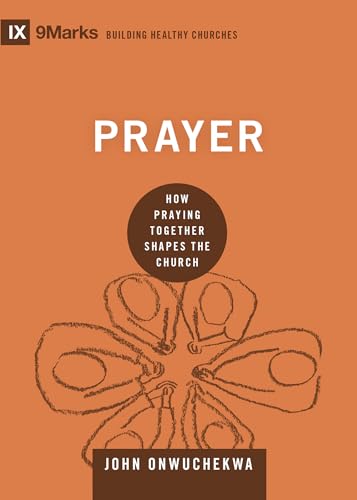
 

Prayer: How Praying Together Shapes the Church (9Marks: Building Healthy Churches): Onwuchekwa, John

Or how about a good book to read? Check out John Onwuchekwa’s contribution to 9Marks’ Building Healthy Churches series: Prayer: How Praying Together Shapes the Church.

And if you’d like to write a review of this book (or another one) as a guest post for the blog, drop me an e-mail, and let’s chat about it.


Trustworthy Bible Teaching and Discipleship Resources

Ligonier is going all out with the freebies! They are offeringย their entire library of teaching series available to stream and the study guidesย that accompany many of these series free “until at least June 30”. Dig in and get what’s probably the content equivalent of a seminary degree during quarantine!


How were people saved in the Old Testament? Ever wondered about that?


The resources listed above are not to be understood as a blanket endorsement for the websites on which they appear, or of everything the author or subject of the resource says or does. I do not endorse any person, website, or resource that conflicts with Scripture or the theology outlined in the Statement of Faith and Welcome tabs at the top of this page.
Favorite Finds

Favorite Finds ~ January 14, 2020

Here are a few of my favorite online findsโ€ฆ

“How can I know with certainty what the Bible is saying? How can I be certain what books really belong in the Bible? How can I be sure that my interpretation of any text is correct, and, still more, what its proper application is…?” Have you ever tried to explain a biblical principle to someone only to hear the retort, “But Thatโ€™s Just Your Interpretation!“?ย D.A. Carson has some helpful words for us in the latest issue of Themelios.

 

“Pastors, I have a plea for you. Please, love your women enough to warn them against false teachers. It isnโ€™t enough to simply teach the good stuff; if they donโ€™t know what is out there that is not good and why it isnโ€™t good? They will continue to fall for it.”ย Check outย Amy Spreeman’sย article,ย When Seemingly Solid Pastors Fail to Protect Women.


“Christianity is sexist!” “The Bible is patriarchal and just wants to keep women down!” We hear these tired arguments trotted out again and again, but are they really true? No, Eric Davis explains in his excellent article over at Cripplegate, 10 Reasons Why the Bible Regards Women Higher than All Other Systems, “The fact is…the Bible regards women higher than any other ideology, religion, philosophy, or system in history. Nothing teaches a higher view of women than biblical Christianity.”


Crossway has an interesting infographic for us on a study they conducted on prayer: “Over 14,000 people recently shared about various aspects of their prayer lives with us…we invite you to dig into the data, looking at established prayer habits, common pain points, and useful practices and tools for prayer.” Take a look at Infographic: How Is Your Prayer Life?.


Hermeneutics is the lens through which we view Scripture. Dr. Dane Ortlund helpfully explains some right and wrong lenses to use when studying Scripture in 6 Ways Not to Read the Bible (a brief excerpt from a longer seminar). Are you handling Scripture correctly?


The resources listed above are not to be understood as a blanket endorsement for the websites on which they appear, or of everything the author or subject of the resource says or does. I do not endorse any person, website, or resource that conflicts with Scripture or the theology outlined in the Statement of Faith and Welcome tabs at the top of this page.