Church, Discernment

Throwback Thursday ~ Nine Reasons Discerning Women Are Leaving Your Church

Originally published July 24, 2015

Earlier this week, Thom Rainer, president and CEO of LifeWay, pubished a blog article entitled Six Reasons Why Women May Be Leaving Your Church. Although I am not particularly a fan of Dr. Rainer (due to his allowing materials from false teachers to be sold at LifeWay), I thought this article was a good one, and I agreed with several of the issues he raised, especially, that these issues need to be addressed by church leadership.

As a ministry wife and someone in the field of women’s ministry myself, I, too, have noticed women leaving the church. Not just women in general, but a certain subset of church-attending ladies: discerning women. While Scripture is pretty clear that we can expect women (and men) who are false converts to eventually fall away from the gathering of believers, why are godly, genuinely regenerated women who love Christ, His word, and His church, leaving their local churches?

While Scripture is pretty clear that we can expect false converts to eventually fall away, why are godly, genuinely regenerated women who love Christ, His word, and His church, leaving their local churches?

1.
Eisegetical or otherwise unbiblical preaching

Discerning women don’t want to hear pastors twist God’s word. The Bible is not about us, our problems, and making all our hopes and dreams come true. We don’t want to hear seeker-driven or Word of Faith false doctrine. We don’t need self-improvement motivational speeches or a list of life tips to follow. We want to hear a pastor rightly handle God’s word from a trustworthy translation and simply exegete the text.

2.
The worship hour has become a variety show

Skits, guest stars, movie clips, dance routines, rock concerts, elaborate sets, light shows, and smoke machines. We didn’t sign on for Saturday Night Live on Sunday. This is supposed to be church. Get rid of all that junk, turn the lights on, give us solid preaching, prayer, and some theologically sound songs we can actually sing, and maybe we’ll stick around.

We didn’t sign on for Saturday Night Live on Sunday. This is supposed to be church.

3.
Women in improper places of church leadership

The Bible could not be more clear that women are not to be pastors, instruct men in the Scriptures, or hold authority over men in other capacities in the church. If your church has a female pastor, worship leader, or elders, or if women are teaching and leading men in Sunday school, small groups, or from the platform in the worship service, or if women are heading up certain committees, departments, or ministries which place them in improper authority over men, you’re disobeying Scripture, and we don’t want to help you do that by attending your church.

4.
Children are being entertained, not trained

There’s nothing wrong with a bit of play time or crafts for younger children, but we want our children trained in the Scriptures, not entertained for a couple of hours. We want their teachers to open God’s word and read and explain it to them at a level they can understand. We want them memorizing verses, learning to pray, and demonstrating an age-appropriate comprehension of the gospel. We want them to understand that church is joyful, yet, serious, not a Jesus-laced party at Chuck E. Cheese. We need church to bolster the Scriptural training we’re giving our kids at home.

5.
Women’s “Bible” Studies

The majority (and I don’t use that term flippantly) of churches holding women’s Bible studies are using materials written by Beth Moore, Priscilla Shirer, Joyce Meyer, Lysa TerKeurst, Sarah Young, and others who teach unbiblical ideas and false doctrine. Not minor denominational differences of opinion. Not secondary and tertiary unimportant issues that can be overlooked. False doctrine. While we long to study God’s Word with other women, discerning women will not sacrifice sound doctrine nor the integrity of Scripture to do so.

While we long to study God’s Word with other women, discerning women will not sacrifice sound doctrine nor the integrity of Scripture to do so.

6.
Ecumenism

Is your church partnering with other “churches” whose orthodoxy and/or orthopraxy are at odds with Scripture? “Churches” which approve of homosexuality or female pastors, or which hold to an unbiblical soteriology (grace plus works, baptismal regeneration, Mary as co-redemptrix with Christ, etc.)? Are you partnering with those who deny the biblical Christ altogether such as Muslims, Jews, Jehovah’s Witnesses, Hindus, Mormons, or Buddhists? Discerning women know Scripture forbids yoking ourselves to unbelievers and we want no part of it.

7.
Ageism

Look around at your pastor and staff, your lay leadership, your music team, the “face” of your church. How many of those people are over 40? Usually, discernment and spiritual maturity come through walking with the Lord over many years, yet, increasingly, by design, churches are run by twentysomething pastors, staff, and other leadership, who are often spiritually immature and/or lack the wisdom and life experience that come with age. The staff is often specifically structured this way in order to attract young people to the church. The counsel and wisdom mature, godly men and women have to offer is brushed off as old fashioned, and middle aged and older church members feel alienated and unwanted. While there are those among the twentysomething set who are godly and growing into maturity, discerning women value the wisdom and teaching of their godly elders.

8.
The “troublemaker” label

Discerning women who see unbiblical things happening in their churches and stand up for what God’s Word says about biblical ecclesiology and teaching are often vilified and labeled as troublemakers. We are called haters, threats to unity, complainers, gossips, negative, and a myriad of other scornful names. All this for wanting things done according to Scripture. Can you blame us for shaking the dust off our high heels and leaving?

Discerning women are often vilified and labeled as troublemakers. Can you blame us for shaking the dust off our high heels and leaving?

9.
Spineless or stiff-necked pastors

Discerning women have little respect for, and find themselves unable to submit to the authority of pastors who see people in their churches acting overtly sinful or propagating false teaching yet are so afraid of confrontation that they will not set things right. By the same token, we cannot continue to attend a church in which we bring scriptural evidence of false teaching or sin to the pastor and he outright denies the biblical truth we present to him. We cannot be members of churches in which pastors will not submit to Scripture or carry out biblical mandates.

Frequently, the discerning women you see tearfully leaving your church have been there for years. Sometimes they leave your church because it was never doctrinally sound to begin with, and God has opened their eyes to this as they grow and mature in Christ. Sometimes they leave because false doctrine and unbiblical practices have crept in and taken over a church that was once a refuge of trustworthy biblical teaching. Either way, these things should not be.

Maybe it’s not that discerning women are leaving the church, but that the church is leaving them.

Maybe it’s not that discerning women are leaving the church, but that the church is leaving them.


Additional Resources

Rock Your Role articles

Searching for a new church?

Podcast Appearances

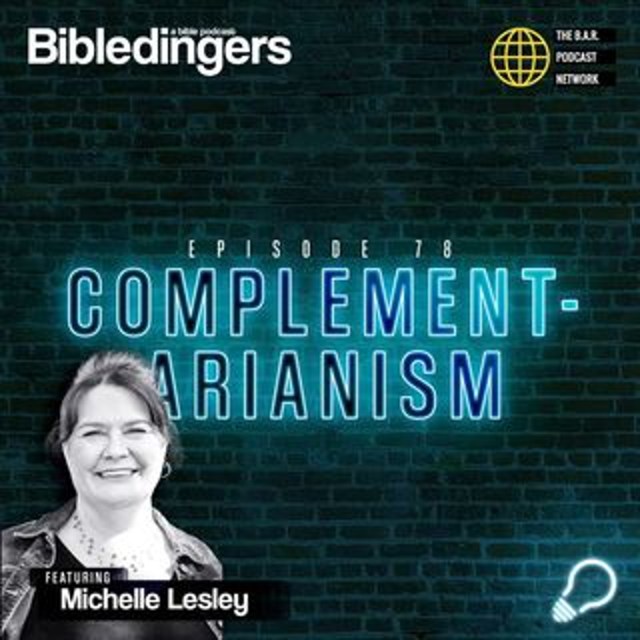
Podcast Guest Appearance – Bibledingers

Don’t worry, this episode was not about complementing Arians! :0)

It was so great to sit down and chat with my new friends Ryan and Nick over at Bibledingers recently!

We talked about all things complementarian – the biblical foundation for the complementarian position, the Scriptures egalitarians twist to try to justify their position, godly women in the Bible, and the crucial roles women play in the church and the home. The guys even had some great words of wisdom for all you husbands out there!

Listen in here or check out episode 78 of Bibledingers on your favorite podcast platform!

Be sure to visit the Bibledingers website for blog articles, videos, gear, and all the Bibledingers’ social media links. Subscribe and follow!


Articles / resources mentioned or touched on in the episode:

Rock Your Role: All Things Being Equal

Rock Your Role article series

The Mailbag: Counter Arguments to Egalitarianism


Got a podcast of your own or have a podcasting friend who needs a guest? Need a speaker for a womenโ€™s conference or church event? Click the โ€œSpeaking Engagementsโ€ tab in the blue menu bar at the top of this page, drop me an e-mail, and letโ€™s chat!

Guest Posts

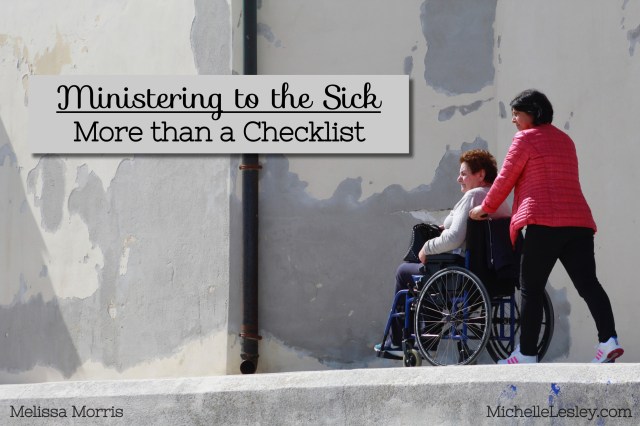
Guest Post: Ministering to the Sick: More than a Checklist

If your theology pretty much matches up with mine (as outlined in my โ€œWelcomeโ€ and โ€œStatement of Faithโ€ tabs in the blue menu bar at the top of this page) and youโ€™d like to contribute a guest post, drop me an e-mail, and letโ€™s chat about it.

Note from Michelle: (Update: 2024) At the time Melissa wrote this article for my blog, her theology was doctrinally sound. Unfortunately, since that time, she has has adopted some unbiblical beliefs which I cannot endorse. However, because this article is practical advice, rather than biblical/theological in nature, I have chosen to leave it up on the blog. I hope it will help you as you minister to family, friends, and church members.


Ministering to the Sick: More than a Checklist
by: Melissa Morris

Someone gets sick. Someone has surgery. Someone is going through cancer treatments. Until ten years ago when I had my own life threatening/life changing illness, I was guilty (unintentionally) of treating these opportunities as a checklist to be done and not really considering the person. Make a meal, give them a call, drop them off at the doctor โ€“ I mean, what’s wrong with that? People should be thankful that we care enough to be involved, right?

As the body of Christ, we have a huge responsibility to help out when illnesses occur. In the midst of all of the chaos, there is a person who has had his or her world turned upside down by a diagnosis or a surgery. People are individuals and so are diagnoses and treatment plans. There’s not only the physical side of sickness, there are also the emotional, mental and spiritual aspects to consider. It shouldn’t be a โ€œfill in the blankโ€ approach, it should be based on the individual.

Instead of treating our ministry as โ€œone size fits allโ€, what are some things we need to consider to effectively and practically minister to someone experiencing an illness?

Cancer treatments and doctor’s appointments

It’s more than giving someone a ride.

When my mom found out she had cancer, we needed help getting her to and from the cancer center. We live 45 minutes from the hospital where she would be receiving  her treatments. She had radiation treatments five days a week for six weeks. 

We had several people volunteer to take her, and it soon became evident that not everyone fully comprehends that it’s more than a ride.

When providing cancer patients with a ride to treatments, it’s important to understand several things. They are weak, before and after the treatments. Whatever the extent of the disease they are fighting, it is wreaking havoc on their bodies. They may be experiencing pain, nausea, vomiting, bathroom issues, and more. Therefore, they may need physical assistance walking, going to the bathroom, carrying their things and staying hydrated. When you offer to give someone a ride to treatments and you are the only one with them, they are expecting some things from you. Please understand that it’s more than dropping them off at the door of the hospital, coming back to pick them up, and dropping them off at the door when you get them home, especially if you are leaving them alone.

What can you do?

  • Remember that it’s not about you. You may be tempted to take the opportunity, especially if you are making a long trip, to do some shopping or errands while you wait. While this is not entirely wrong, there are some things you need to consider.
  • Walk with them to the office where they are receiving their treatments. Make sure they don’t need a wheelchair or some sort of assistive device to get them there.ย 
  • Check with them and see if they would be more comfortable if you waited for them in the waiting room before you go off to run errands. Sometimes it makes a patient feel better if they know someone is close by. The staff there might also need you to be available if there is an emergency or the patient needs something.
  • If you do leave the patient, make sure you arrive back in a timely manner so that they don’t have to wait for you when they are done.ย 
  • When you arrive back at their home, make sure they get inside safely and have everything they need before you leave them. Help them get comfortable, get something to eat or drink, go to the bathroom, etc. It might be awhile before someone gets home to be with them.
  • Don’t plan anything else that day โ€“ there will be times when the person receiving the treatments might need extra care. For example, there were times when my mom went for radiation and she was dehydrated. This required her to go to the medication oncology lab and receive fluids before they would send her home. This could take a couple of hours.

Taking Food/Other Items

I live in the South, and I’m a Baptist. We treat any and every illness with food. There’s a special joy in preparing someone a dish and delivering it to them. There’s also the comfort you feel in receiving a meal from someone and you know that they prepared it with love. You sure don’t feel like cooking when you’re going through an illness. 

It seems like an easy thing to do, but when I experienced surgery and a colostomy, my diet completely changed. We received so many wonderful, heartfelt meals, but to my dismay, there were many things that I wasn’t allowed to eat anymore. Some people come home with a new diagnosis of diabetes. Some have food allergies. Cancer patients might be experiencing nausea and vomiting/diarrhea. So, what can we do to make our meal ministry more effective?

  • I know we like the element of surprise, but to make it easier on everyone, it would be best to call and ask if the person has any dietary restrictions. It doesn’t do much good to take someone a meal they can’t eat, no matter how good it might taste.
  • If they can’t have certain things, consider taking prepackaged food items that they can easily put together themselves, but still ask for preferences and restrictions. Some examples:

    Crackers

    Canned meat/soups/fruits/vegetables (I know that fresh fruits and vegetables are ideal, however, when someone is recovering from an illness, they may not feel like eating a lot at one time. The fresh food might spoil before they can eat it.ย  Prepackaged and canned allows for the person to use the food when it benefits them).

    Sandwich meats and bread

    If you live in an area that provides meal delivery from restaurants, offer to pay for their orders for a specified amount of time.

    Offer to grocery shop for them and help put items away when you deliver the groceries.

    Offer to prepare and refrigerate simple items that can be microwaved or warmed up easily.

There are other items that might be needed that we might not think about. 

  • Cleaning supplies.
  • Toilet paper, napkins, paper towels.
  • Hygiene items (deodorant, soap, feminine products, etc.)
  • Medications (over the counter and prescription)

They also might need you to run errands for them, to the post office or to pick up prescriptions. Whatever the need may be, communicate with the person so that your efforts can be beneficial to them.

Visits

I love to talk. In fact, after I had major surgery, the nurses told my mom that I would sleep all night from the anesthesia. I woke up at midnight and talked all night long!

But as much as I love to talk, when I was recovering, I wanted to rest. I had been in the hospital for ten days, not knowing if I was going to make it back home or not. I was discharged home with IV antibiotics around the clock for seven more days. I had nurses coming in daily for wound care and colostomy training. I didn’t get much sleep in the hospital, and, for a while, I wasn’t getting much sleep at home.

Before visiting, call the person and see what a good time might be to show up. As I was talking with Michelle about this article, we discussed that the old theory is to โ€œjust show upโ€. I had people show up to see me that I would have enjoyed visiting with, but I was either sleeping or having a visit from the nurse. If the person recovering has a caregiver, that caregiver might be taking an opportunity to rest while the patient is resting. 

What do I say? (or NOT say)

Some people said some crazy things to me and to my mom while we were dealing with recovery/cancer treatments.

  • My mom had a pastor who she thought a lot of visit her the day after she found out her initial diagnosis but before we found out the extent of the disease process. He seemed in a bad mood when he got there, preoccupied and distracted. My mom shared with him that she wasn’t afraid, that she had lived 67 years (at the time) and if the diagnosis was not good, she’d had a wonderful life and she was ready to meet Jesus. He looked up at her and rudely said, โ€œWell, you might only have 67 more days, have you ever thought about that?โ€
  • A friend of my mom’s from church came to see her and pray with her. As they talked, this โ€œfriendโ€ said, โ€œWell, Pat, you know you have this cancer because you have sin in your life.”.
  • I woke up extremely depressed one day, so I actually reached out to someone I thought was a close friend via text and said I needed someone to talk to. Five days later, I got a text back that said, โ€œHope you found someone to talk to.โ€.

Don’t be that person โ€“ if you’re in a bad mood, visit another day, and as I was taught, if you can’t say something nice (or encouraging), don’t say anything at all. When I worked in healthcare, we were taught to leave our personal lives outside the door when we came to work, because they would be there for us to pick up when we went home. 

What else?

I never realized until I became disabled how many things there are around the house that need to be done.

  • Cleaning
  • Laundry
  • Yard work/mowing
  • Errands
  • Taking care of the kids

There might be adaptations that need to be made to the home, or adaptive equipment put in place (grab bars, a handicap toilet, etc.)

The person might need help with bathing and dressing for a while, and this might not be something insurance covers. I needed daily wound care and my insurance only covered three days a week. I was blessed to have nurses in my life that covered the other four days. If you are a nurse or a C.N.A., you could offer your time and services. Even if you’re not, you can be trained in some instances to help with certain medical issues.

One of the biggest issues many deal with is the financial strain not working can put on a person. If the illness ends up being a permanent disability, it can take years (it took 3ยฝ for me) to receive benefits through Social Security. I would hate to think where I would have been had the Lord not given me a wonderful mother and a few anonymous donors to make it through. Even with those things, I had to sell my car, and some of my instruments and sound equipment just to get medication and colostomy supplies. People may also need help filling out applications for assistance, disability, or in-home services. 

Some of the things from our previous lists can carry over if the illness becomes a permanent disability.

Whatever the situation, keep this one thing in mind: be available. If you can’t meet the need of the person, help seek out someone who can.

It is my prayer that this will assist you in more effectively serving those in your community.  And remember, somebody can’t do everything, but everybody can do something.


Melissa is a retired long term care/hospice social worker/bereavement counselor. Compelled to give up her career due to illness, she now spends her time raising her two cousins, singing and writing songs, and traveling to different churches and organizations sharing music and laughter.


Complementarianism, Rock Your Role

Throwback Thursday ~ Rock Your Role: All Things Being Equal (Galatians 3:28)

Originally published August 21, 2015

Being a church lady can be really confusing at times, am I right? There are so many questions and Scriptures to sort through and figure out. We want to serve the body of Christ in a godly way, but sometimes it’s hard to know how to go about that.

Rock Your Role is a new series I’m starting today that will examine all of the “go to” Scriptures that help us understand our role as women in the church. Some of these passages are – let’s just be honest – tough. Tough to understand. Tough to accept.

As we tackle tough passages like these, it’s important to ask ourselves a few equally tough questions, search our hearts, and answer honestly. Before reading each article in the Rock Your Role series, I’d like to ask you to prayerfully consider these questions:

1. Do I really believe God’s rightly handled, in context, written Word has the final say when it comes to what I (and the church) should believe and do?

2. If so, am I truly willing to “put my money where my mouth is” and back up that belief with action and obedience, even if I don’t initially like or fully understand a certain biblical concept or command?

3. Is this passage a tough one for me because it challenges my preconceived notions and opinions? Am I willing to put my ideas aside and hear what God’s Word has to say so I can obey it?

Ready to dive in? Let’s get started with…

There is neither Jew nor Greek, there is neither slave nor free, there is no male and female, for you are all one in Christ Jesus.
Galatians 3:28

For those of you who have been around the blog for a while, you might be surprised that I’m kicking things off with this verse. I’m about as complementarian as they come, and Galatians 3:28 is the rallying cry for egalitarians. But this verse is foundational to our understanding of the role of women in the church because it tells us who we are in Christ.

Before we zero in on verse 28, though, let’s zoom out and look at the book of Galatians as a whole. Galatians was written by Paul to the churches at Galatia to combat the false doctrine of the Judaizers- those who taught that the Gentiles must first become Jews (be circumcised and follow the Mosaic law) before they could become Christians. The Galatians were being seduced by this teaching, allowing it into their churches, and many were being drawn away from the truth of the gospel. Paul wrote to straighten them out and remind them – and us – that we are justified (saved and made right with God) through repentance and faith in Christ, not by keeping the law.

Galatians 3 is a perfect showcase for Paul’s theme of justification by faith. Take a moment and read the whole chapter now.

Paul reminds the Galatians that they were saved by faith, not works of the law, just like Abraham was. Paul explains that the law came with a curse attached for those who disobeyed it, but that Christ redeemed us from that curse. In fact, the whole purpose of the law was to teach us we can’t keep it and push us to faith in Christ as our only hope for salvation.

Wait a second. What’s all this talk about the law and faith and salvation and stuff? Isn’t this passage about women being equal to men and that they can serve in any capacity or office in the church that men can?

Wait a second. What’s all this talk about the law and faith and salvation and stuff? Isn’t this passage about women being equal to men and that they can serve in any capacity or office in the church that men can? Umโ€ฆno. No, it’s not.

Um…no. No, it’s not. And that’s where the wheels fall off of the egalitarian argument. The entirety of Galatians chapter three is about salvation by faith instead of works. It says nothing about women serving in the same roles in the church as men. Nada. Zip. Zero.

It tells us something better. Something far more precious to the women of that time – and to us – than we realize. Let’s look at verse 28 in its immediate context:

But now that faith has come, we are no longer under a guardian, 26 for in Christ Jesus you are all sons of God, through faith. 27 For as many of you as were baptized into Christ have put on Christ. 28 There is neither Jew nor Greek, there is neither slave nor free, there is no male and female, for you are all one in Christ Jesus. 29 And if you are Christ’s, then you are Abraham’s offspring, heirs according to promise.

Do you see that? We’re no longer under the guardianship of the law. Anyone can come to Christ in repentance and faith- Jew or Gentile, slave or free, male or female, all are welcome. The ground is level at the foot of the cross. No one is more important than anybody else. We are all equally saved, equally loved, equally forgiven of our sin, equally precious in God’s eyes. In a time when women were considered less important, less valuable, less intelligent, less everything than men, this would have been joyous news, indeed. It should be to us, as well.

But equality in salvation does not translate to equality in church roles. A king and a pauper might have worshiped side by side in the Galatian church, but when it came to the role of giving, the church would not have expected the same offering from the pauper as from the king. This didn’t make the king more important than the pauper, it just gave him a different area of responsibility because of who he was. Likewise, men and women are equally saved and forgiven in God’s eyes, but still fulfill different roles in the body of Christ because of who they are.

Equality in salvation does not translate to equality in church roles.

Let me illustrate this another way. My husband and I have 6 children. Each and every one of us are all equally Lesleys even though I married into the family and the rest of them were born into the family. No family member is more loved or important than another. However, we all have different roles, which come with different blessings and responsibilities. My 12 year old might not be able to drive the car, but he doesn’t have to work eight hours a day and pay bills, either. I no longer have to do homework (thank you, Lord!), but I do have to do housework. Our family would not operate in a healthy way if I tried to take on my son’s role or my husband tried to take on my role.

It’s the same way in the church. God loves, forgives, and saves each one of us equally. But he also loves us each individually. And it’s because of that individual love that He gives each of us unique roles to fill in the church so that it will operate in a healthy way. As we’ll see throughout this series, the role of women in the church is precious and vital to the well being of the body of Christ. So is the role of men. They are both equally important, yet God has specially gifted women to fulfill the roles He has designed for us just as He has specially gifted men to fulfill the roles He has designed for them.

Ladies, you have a Savior who loves and values you as a woman, and your role in the church is no less important than any man’s just because it’s different from his role. There are no second class citizens in God’s kingdom.

Ladies, you have a Savior who loves and values you as a *woman,* and your role in the church is no less important than any man’s just because it’s different from his role.

Mailbag

The Mailbag: Potpourri (Cremationโ€ฆ ID-ing false teachersโ€ฆ Church membershipโ€ฆ Women translators)

Welcome to another โ€œpotpourriโ€ edition of The Mailbag, where I give short(er) answers to several questions rather than a long answer to one question.

I like to take the opportunity in these potpourri editions to let new readers know about my comments/e-mail/messages policy. Iโ€™m not able to respond individually to most e-mails and messages, so here are some helpful hints for getting your questions answered more quickly. Remember, the search bar (at the very bottom of each page) can be a helpful tool!

Or maybe I answered your question already? Check out my article The Mailbag: Top 10 FAQs to see if your question has been answered and to get some helpful resources.


I canโ€™t find any Scripture about cremation. Is this practice another pagan tradition Christians have accepted? I, myself was thinking itโ€™s okay, but now Iโ€™m unsure. Thanks.

Thank you so much for setting a super example for us all by a) wanting to do the godly thing about this, and b) searching the Scriptures to find your answer.

You didn’t find any Scriptures about cremation because Scripture doesn’t mention cremation, and there are no related biblical principles that directly indicate that we either should or shouldn’t participate in cremation. And, no, the way cremation is practiced today in Western culture, it is not a pagan practice. Therefore, cremation is an issue of adiaphora, or Christian liberty.

I think Todd Friel has done a good job of answering this question from his “burial is preferable” perspective…

…but I don’t find it compelling enough to move me from my “either way is fine with me” perspective, and I feel like some of the things he says are stretching it just a tiny bit. A few reasons:

  • In the same way that the overwhelming majority of people – even many Christians – don’t make the Ephesians 5 connection between husband and Christ, and wife and church in a wedding ceremony unless it’s explicitly explained to them, the overwhelming majority of people – even many Christians – aren’t going to make the connection between burying someone and the resurrection of the dead at a funeral unless it’s explicitly explained to them. Naturally, I’m all for those explicit explanations during those respective ceremonies. I’m just saying it’s not an automatic connection most people make merely from witnessing a wedding or burial.
  • If you’re buried long enough, your remains are going to decompose and disintegrate, just like someone who is cremated, dies in a fire, is buried or lost at sea, is eaten by a wild animal, etc. If you’re being buried instead of cremated because you want to be sure you have a body to be resurrected into, I would encourage you to do a little more study on the science of the decomposition of the human body. God is able to resurrect every saint no matter what happened to her body after death. And besides, you’re getting a new body anyway.
  • I think a perfectly biblical, and possibly even more strongly Scripturally supported argument could be made for stewardship. Burial is typically much more expensive than cremation. What about the person who would rather be cremated and give the difference in cost to his church? What about a struggling family who could scrape together enough for a cremation, but would have to go into debt for a burial?

This is an issue you will have to pray about, talk with your family about, and maybe even discuss with your pastor. If your conscience would bother you to be either buried or cremated, don’t violate your conscience. A few more resources that may help:

Burial vs. Cremation on Wretched TV

What does the Bible say about cremation? at Got Questions

What does the Bible say about cremation? by John MacArthur


Is Prophetess X a false teacher?

What do you think about the teaching of Apostle Y?

Can I get your thoughts on LifeWay Women’s newest divangelista1?

I’ve received several questions along these lines in recent weeks. Lemme just give you the quick and easy answers to these.

I would never literally bet my life on something, but if I were so inclined, I would feel perfectly comfortable betting that nobody who goes by the title Prophet/Prophetess or Apostle is doctrinally sound. In my experience, everyone I’ve encountered who has gone by one of those titles has been a New Apostolic Reformation heretic (NAR doctrine is literal heresy – another gospel). So, if you come across somebody who goes by one of those titles, there’s no need to sweat whether or not you should read her books or follow him on social media, just avoid all of them them all together.

I’ve mentioned this before, but I don’t think it has caught on widely, yet. It pains me to say this, but if you’re trying to find out if a certain female author or teacher is doctrinally sound and you need a quick rule out without doing hours of research on an someone youโ€™re not familiar with, I would recommend avoiding any author or conference speaker platformed or promoted by LifeWay Women (the womenโ€™s division of LifeWay).

I’m not saying every author and teacher LifeWay Women features is necessarily a heretic or false teacher, I’m just saying that enough of them are that it’s reasonable to draw the conclusion that that’s mainly the type of woman they like to promote. (I mean, you don’t see them promoting women like me or Susan Heck or Martha Peace, do you?) I’ve written articles on many of their featured teachers. I’m not familiar with all of them, but all of the ones I am familiar with are biblically problematic.

And, of course, you can always use my article Is She a False Teacher? 7 Steps to Figuring it Out on Yourย Own for tips on researching any of these or other teachers.

Can I please, one more time, beg y’all to stop searching for the diamond chip in the pile of Women’s “Bible” study poo and just study directly from the text of Scripture? You don’t have to vet the Bible or worry whether or not the Author is doctrinally sound. God took care of all that for us.

And if you’re looking for some great women to follow on social media, blogs, or podcasts, or some wonderful pastors to listen to in your leisure time, click here.

1“Divangelista” is just a slang term I coined because the phrase “popular women’s ‘Bible’ study authors” is too long and cumbersome for writing. It’s a combination of the words “diva” and “evangelical” and rhymes with “Sandinista” (if you’re old enough to remember them) for no particular reason.


I came out of the New Age and am looking for a good church. I went to your recommended list and found a church I was interested in. It looked great at first, but it appears they have a rather strange ‘membership’ proposition. It consists of you going to membership classes, then in front of a panel of elders, then you have to attend for up to six months before your ‘interview’. Honestly, I find this bizarre, unusual and is this really necessary? Please could you comment, or get back to me as we have been looking for a spiritual home for a few years now. Thanks.

I’m so happy for you that the Lord is leading you to seek out a doctrinally sound church!

If I were to hazard a guess, I would say, based on no other information than what you’ve given me, that this is probably a very doctrinally sound church. Typically, the reason churches have membership processes like this is that they’re trying to make sure, as best they can, that they don’t admit lost people into membership. The membership classes are for you to learn about the church – their doctrine, their practices, etc. The six month waiting period and the interview are for the church to get to know you and observe the fruit of your life – to see whether your walk matches your talk, so to speak. During this process, they can get a pretty good idea of whether or not you’re actually saved and growing in holiness, and you can get a good idea of whether or not this church is a good fit for you and your family.

Here’s what I would suggest. If I’m understanding correctly, you read all of this information on the church’s website, right? Why don’t you try visiting the church for several weeks and see if it even seems like a church you’re interested in. If not, the membership process is moot. If so, set up an appointment with the pastor or appropriate elder and ask him any questions you may have about the membership process.

If you end up needing to find another church, be sure you carefully peruse all of the church search engines and other resources at the Searching for a new church? tab in the blue menu bar at the top of this page.

I would also encourage you to listen to this brief sermon series my pastor preached earlier this year about church membership. (Our membership process is similar to, though not quite as extensive as the one you described.)


I agree with you about womenโ€™s preaching. But I have a question, what do you think about when a woman translates the message of the preacher? Iโ€™m a missionary in Mexico and over here they donโ€™t see a problem with women preaching in most of the churches. So one time at our church my husband gave his testimony in English to the American community and I translated in Spanish, and the other day someone asked me when I would like to preach on Sunday at the Mexican church and I was like โ€œno thank you, I donโ€™t think that is something I will ever doโ€ but this person said: you have preached already. When you translated for your husbandโ€ฆ. I personally donโ€™t think is the same. But what are your thoughts?

You are correct. Translating and preaching/teaching are not the same thing, and a woman translating for a pastor or teacher is not something that falls under the biblical prohibition against women pastoring, preaching, or instructing men in the Scriptures. I, myself, have translated for worship services in the past.

That being said, because of the confusion and biblical ignorance of the people you’re working with, it sounds like the wisest thing would be for a man to translate if at all possible, and for you to take the women aside and disciple them in a proper understanding of the Scriptures that govern the role of women in the church.


We understand and agree with the value and Biblical reasoning behind church membership. We are in a small town with limited church options. The most solid church here is a church that requires believerโ€™s baptism for membership. My husband would be more in line with paedo baptism and was baptized as an infant. He is a solid, Biblical, regenerate believer. Because of this we cannot be members. I have no idea what we should do in this situation.

OK, let’s take a deep breath and put things into biblical perspective. As you know, church membership is very important and shouldn’t be treated as trivial, but in a situation like this in which you’ve done everything you possibly can to pursue membership, but it’s impossible, your husband is not sinning by not going through the formal membership process. (You didn’t specify, but from your message, it sounds like you either have been baptized as a Believer or would be willing to submit to credo baptism.) Let me offer you a few thoughts:

  • (This first thought is for my unmarried readers, and is not meant as a criticism of you.) Single ladies considering marriage – it is extremely important that you and your intended be as close to 100% agreement in your theology as humanly possible before you get married. As you can see from this dear sister’s dilemma, differing views on things like baptism are not a “no big deal” proposition, and can cause issues in your marriage and in parenting.
  • If you haven’t already done so, the two of you need to make an appointment with the pastor and discuss your concerns, beliefs, and questions. Some churches have a provisional type of membership for situations like this.
  • Have you thoroughly scoured all of the church search engines at the Searching for a new church? tab in the blue menu bar at the top of this page? Perhaps there’s a new church you’re not aware of, or another church in a neighboring town that would be a better fit for your family.

If this church is absolutely the only option available, and you’ve talked with the pastor, my counsel would be for you to go through the membership process (assuming you’re credo baptist) and for both of you to attend and serve faithfully, as far as is possible (most churches don’t allow non-members to serve in certain ways or positions). If your husband’s convictions about baptism change at some point, he can then pursue membership.

And, as I suggested to the previous reader who asked about church membership, I would also encourage you to listen to this brief sermon series my pastor preached earlier this year about church membership. I think you’ll find it encouraging.


If you have a question about: a Bible passage, an aspect of theology, a current issue in Christianity, or how to biblically handle a family, life, or church situation, comment below (Iโ€™ll hold all questions in queue {unpublished} for a future edition of The Mailbag) or send me an e-mail or private message. If your question is chosen for publication, your anonymity will be protected.