Parenting

Do You Trust God with Your Kids?: 8 Ways to Parent Your Children Like God “Parents” You

The world can be a scary place if you have kids. There’s the danger of online predators luring kids into meeting them in person. Kids can take inappropriate pictures of themselves or their peers only to have those pictures spread around on the web. Porn sites abound. Drugs and alcohol seem to be easy for kids to come by. There are kidnappers and sex traffickers and child molesters lurking where you least expect them, even in the church. And, society would have us believe, every teenager is having sex.

It’s a blessing from God that there are so many ways to protect our kids. There are all kinds of software locks and blocks and filters you can put on your electronics in order to keep your kids safer when it comes to technology. There are phone apps that allow you to track your child’s location, and do it yourself drug testing kits, and breathalyzer attachments you can put on your car to keep your child from driving drunk. And then there are the more “analog” precautions of keeping the family computer in a common room, scrolling through your child’s phone log every day and asking about each call or text, banning sleepovers, and never letting her spend time alone with friends.

Certainly, we should use wisdom about the activities we let our kids take part in. Maybe some of those locks, blocks, and filters, or restrictions on places she can go and people she can see would be a wise idea for your family, especially if your child has proved herself untrustworthy with the freedom you’ve already given her.

But, increasingly, as I hear Christian parents in a near frenzy about installing multiple security measures on their electronics or the car and making all kinds of restrictions on activities with friends – not to clamp down on a rebellious child, but to prevent children from getting into trouble who have never showed any signs of rebellion – I have to wonder, what’s the foundational mindset here?

Are we putting these safety measures in place because we’ve prayed about it andย  believe it’s reasonable, godly wisdom, or are we putting these safety measures in place out of the fear of evil, or because we trust devices and restrictions more than we trust God and our kids? For the Christian, it’s not that it’s wrong or bad to take precautions – indeed, God doesn’t want us to be careless or foolish – it’s the motivation for the precautions we take that we need to examine.

Do we really trust God with our kids, or are we taking matters into our own hands out of fear?

Trusting God can be scary. We can’t see Him, hear Him, or touch Him, and He never promised us a life free from difficult or painful circumstances. It’s much easier and more comforting to our flesh to trust something tangible. Something that guarantees us it’ll do what we want it to do. It reminds me of an event that took place toward the end of King Asa’s life in 2 Chronicles 16.

Asa was one of the good kings of Judah. He “did what was good and right in the eyes of the Lord his God. He took away the foreign altars and the high places and broke down the pillars and cut down the Asherim and commanded Judah to seek the Lord, the God of their fathers, and to keep the law and the commandment.” (2 Chronicles 14:2-4) But one day, Baasha, king of Israel, came up against Judah. Did Asa cry out to the Lord, trusting Him to help, as he had years before when the Ethiopian army came out against him? No. Asa’s response was to gather up a truckload of silver and gold from the palace and the temple and bribe the king of Syria to break his covenant with Israel and attack them. Instead of fully trusting in the Lord and seeking His help and guidance, Asa took matters into his own hands and attempted to protect Judah with his own strength.
We love our children. We don’t want to see them hurt or fall into sin. We want to do whatever we can to protect them. Those are all good and godly desires of the heart. But we must make sure we are seeking and trusting God and His ways firstย instead of acting upon our fears and relying on our own strength.

What are God’s ways? How does He “Father” us? How can we imitate our Heavenly Father as we parent?

1. God makes clear that He is the Father and we are the children.
Throughout Scripture, God is crystal clear that He is the one in charge. He made us, He sets the rules, He provides for us, He protects and cares for us, He knows what’s best for us. Because of all this, He instructs us, our responsibility is to be obedient children.

Do you and your children understand that you are the parent? That you are in charge and that they are to obey? That you make the rules and they are to follow them? Are the roles of parent and child clearly defined in your home with a godly authority structure in place?

2. God spells out what He expects from us.
The Bible is chock full of explicit commands. Sometimes God tells us what to do. Sometimes He tells us what not to do. Often, He explains why He is telling us to do or not do a certain thing. We can always rest assured that all of His commands are for our own good, the good of others, and the glory of God, and that they flow out of His great love for us. But God never accepts excuses for disobedience. He expects us to obey.

Have you thoughtfully and prayerfully developed rules for the online and offline activities your child participates in? Have you sat her down and lovingly explained the rules to her, answering any questions she might have? Does she have a clear understanding of what the rules are and how to obey them? Does she grasp your expectation that she will obey the rules without excuses?

3. God warns us of the consequences and dangers of disobedience and the blessings of obedience.
God doesn’t hide the unpleasant truth from us that the wages of sin is death. In fact, He gives us enough of a description of that eternal death to help us understand that we don’t want to go there. He explains that He disciplines those He loves in order to keep them away from sin and harm. But God also reminds us of the blessings of obedience – that it will help us flourish, grow in joy, and bring glory to God.

Have you warned your child of the consequences for disobeying your rules about her activities? Do you carefully and consistently enforce those consequences? Have you explained to her that theย reason there are disciplinary consequences for her disobedience is to protect her from danger and sin? It’s neither necessary nor appropriate to go into all of the specific, terrifying details of child trafficking or the disgusting elements of pornography, but our children must have an age-appropriate understanding of the very real dangers that are out there.

And it’s just as important to explain the blessings of obedience to your child: she won’t have to live in fear or in shame, she’ll be protecting her purity for marriage, her health, or her life, her parents will trust her, and she’ll be acting in a way that’s pleasing to God. Maybe you’ll even be more inclined to give her extra privileges.

4. God doesn’t give the consequencesย before the sin.
Look at what Jesus said in Matthew 5:29-30 with regard to lust:

If your right eye causes you to sin, tear it out and throw it away. For it is better that you lose one of your members than that your whole body be thrown into hell. And if your right hand causes you to sin, cut it off and throw it away. For it is better that you lose one of your members than that your whole body go into hell.

Jesus doesn’t tell us to gouge out an eye or cut off a hand as a precaution toย preventย lust that has not taken place. He tells us to respond toย sinย with an appropriate consequence.

Is there any way you might be “maiming” your child to prevent her from committing sin – especially sin she’s never shown an interest in or temptation to? Maybe it’s time to reconsider that rule or restriction? Conversely, do you have a child who struggles with a particular sin? She may need your love and your help mortifying that sin by “gouging out the eye” of the internet or “cutting off the hand” of that destructive friendship.

5. God wants our obedience to be motivated by our love for Him.
God doesn’t want us to obey Him because we have an unbiblical view of Him as a mean old ogre and we’re terrified of Him. He also doesn’t want us to obey Him in order to get something from Him, to impress others, or just to go through the motions. God wantsย us toย want to obey Him because we love Him.

Have you fostered an environment of sacrificial love for your children in your home? Do you lay down what you want or how you feel to do what’s best for them? Do you invest time in them, pouring the gospel into them, teaching them God’s Word, and demonstrating that we obey Christ because we love Him? Do you take time to talk and play with your children? Do you tell them you’re proud of them? Discipline them and say no when necessary? Are you generous with hugs, “I love you’s”, and encouragement? Do you encourage them to develop their talents and skills? Having parents who love their children in a godly way doesn’t guarantee obedience, but it does encourage it.

6. God doesn’t micromanage every move we make.
At least not the way humans sometimes micromanage. Have you ever noticed that there are no commands in the Bible like, “Thou shalt wear blue socks every Tuesday,” or “Thou shalt not stay up past 11:38 p.m.”? Regulating every little thing we do isn’t God’s way. He loves us and cares for us, He tells us what He expects from us and the consequences of obeying and disobeying Him, and then He gives us space within those parameters to make decisions that are aligned with His will as revealed in His Word. As long as we’re not violating any of His principles or commands and we’re exercising godly wisdom, it’s fine with Him if we want to wear red socks on Tuesday or stay up until midnight.

Our children need space to make decisions within the confines of the rules we’ve set up, especially children who haven’t given us any reason not to exercise reasonable trust in them. Nitpicking, checking, regulating, and hovering over every little move your child makes is smothering and frustrating to her. It says, “I don’t trust you to do what’s right without constant monitoring from me.”

7. God allows us to fail.
I once read the biography of a girl who went blind. She enrolled in a life skills class at a school for the blind to learn how to navigate the world. During orientation, her counselor showed her around the common room of the dorm she was staying in. The counselor took her hand, placed it on the protruding mantel of the fireplace and said, “This is a sharp corner. You’ll need to watch out for it.” The girl gasped, “That’s dangerous! Why don’t you put some padding on it?”. The counselor replied, “You need to learn to be carefulย and aware of your surroundings. Nobody’s going to pad the sharp corners of the world for you.”

God doesn’t pad the sharp corners of the world for us, either. He doesn’t put us in a protective little bubble where we’ll never be hurt or fail or sin. He gives us everything we need for life and godliness in His Word and allows us to obey or disobey Him. Even when we fail, give in to temptation, and sin.

Consider that your child needs to learn the skill of facing and resisting temptation on her own. Give her enough age appropriate, situation appropriate freedom to do that – and to fail at it and repent – in the spiritual safety of your home. One day you won’t be there to put a lock on the computer. God will hold her responsible for her own sin. Will your child have developed the spiritual strength to say no to temptation when there’s nobody to stop her?

8. God is always there.
He’s not a “helicopter parent,” but He’s always there to listen to us, help us, nurture us, and be our Wonderful Counselor and Everlasting Father.

If you are a parent, job one is not your career, it’s parenting. Generally speaking (yes, there are sometimes exceptions and exigent circumstances), that means, Mom, your primary vocation is to raise your own children. Don’t just assume you have to work outside the home. Prayย fervently for God to make a way for you to raise your children. Be creative and look for ways to get out of the workforce and get home. Slash every possible expense. Move. Eat at home. Home school instead of private school. Sell a vehicle. Bargain hunt. Find a way to earn money from home. Make the effort. Your children don’t just need any random person to raise them, they needย you.


Are we imitating our Heavenly Father in the way we parent? Do we cry out to Him for wisdom in the rules and restrictions we set for our children, trusting Him to help us and to protect our children? Or do we live in fear of what might happen, worrying and trying to protect our children in our own strength?

As much as we’d like to sometimes, we canโ€™t build walls around our children to protect them from every sin or from anything bad ever happening to them. That is not how God deals with us. He loves, cares, and provides for us. He disciplines us appropriately when we need it. He clearly spells out what He expects from us. He warns us of the dangers and consequences of disobedience and teaches us the blessings of obedience. It’s then up to us to decide whether we love Him enough to obey Him, or if we’d rather go our own way.

Do we parent our children like God “parents” us?
Book Reviews

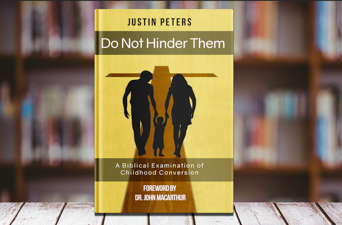
A Review of Justin Peters’ “Do Not Hinder Them”

As I’ve mentioned before, solicited book reviews are not part of my regular repertoire here at the blog. In fact, for a variety of reasons, I have a policy against writing them.

But when one of your heroes in the faith asks, you make an exception. And, for me, Justin Peters is one of those heroes in the faith (even more so because I’m sure he wouldn’t want me calling him that).

I introduced Justin this way in my article, A Few MORE Good Men: 10 Doctrinally Sound Male Teachers:

โ€œJustin Peters Ministries exists to preach the Gospel of Jesus Christ to the lost and to help equip the saved to โ€˜speak the truth in loveโ€™ (Ephesians 4:15). Great care is taken to preach and teach Godโ€™s Word in its proper context and simply let the text speak for itself.โ€

The first thing I ever noticed about Justin Peters is his striking example of biblical meekness. Justin is soft-spoken and peaceable, but firm in his gospel convictions and aflame with the desire for the lost to come to salvation. You must read Justinโ€™s testimony of coming to know Christ after years in seminary and ministry as a false convert. What Justin is perhaps best known for is his teaching and discernment ministry exposing the Word of Faith movement. It started with a trip to a faith healer as a teen to have his own cerebral palsy healed and grew into Clouds Without Water, a seminar designed to educate the church on the history, growth, and metastasization of the Word of Faith heresy.

But Justin doesn’t limit himself to discernment ministry, and his new book, Do Not Hinder Them: A Biblical Examination of Childhood Conversion, opens the door to another of his theological interests- salvation and baptism, especially as they pertain to children.

A simple, yet fundamental, point of theology which needs to be understood in order to grasp the concept of the book is the difference between credo-baptism and paedo-baptism. Credo-baptism is also called “believer’s baptism.” This means that a new believer stands before the church, professes her faith in Christ, and is then baptized out of obedience to Him- to demonstrate that she has passed from death unto life and now wishes to be identified as a follower of Christ. Credo-baptists believe strongly that baptism is only to be administered to professing believers.

Paedo-baptism is infant baptism. It is administered to all babies and children (by definition, unable to profess faith in Christ) by a number of Protestant denominations as a symbol that a child has been born into a covenant (believing) family who will raise her in the nurture and admonition of the Lord and the knowledge of the gospel.

There’s an angst that Bible believing credo-baptist parents often experience, which, undoubtedly, is foreign to paedo-baptist parents:

My young child has come to me claiming to have asked Jesus into her heart and wants to be baptized. How can I tell if she’s really saved and that it’s right for her to be baptized at this age?

It’s a long standing dilemma for Southern Baptists like Justin…and me. My mother happened to mention in passing a few years ago that I had begged to be baptized when I was about six. It made sense because that’s about the time all of my little friends were being baptized, but, I was very surprised to hear this story because, as an adult, I had no recollection of it whatsoever, and I can guarantee you I wasn’t saved at the time. My parents wisely said no.

As parents ourselves, my husband and I have faced the same struggle. Five of our six children were baptized as young children. One is not currently walking with the Lord and two of them were re-baptized later at their own request when they realized they had not been saved the first go round.

This is the central issue Justin tackles in Do Not Hinder Them.

But don’t be fooled by the title of the book. While it’s a must read for Christian parents, pastors, and those who work in children’s ministry, you also need to read this book if…

…you’ve ever wondered if you’re really saved.
…you’re wondering if that loved one (of any age) who claims to be a Christian is really saved.
…you’re a paedo-baptist wanting to get a better grip on credo-baptist beliefs and struggles
…you’re brand new to the study of theology and are looking for a resource that will easily help you to “dip a toe in the water” (so to speak)

In other words, though Justin addresses the issue of genuine conversion as it applies to children seeking baptism, the question of “How can I know if I/my loved one is really saved?” is one we all face at some point in our walk with Christ. So, while there may be a few parts of this book that don’t apply if you’re not a pastor, children’s ministry worker, or parent, most of it is helpful for every Christian.

One of the foundational issues Justin cites as having gotten us into the muck and mire of baptizing unregenerate children, only to have them “walk away” from the Lord (though, indeed, they were never saved in the first place) as teens or young adults – sullying the name of Christ and His church – or to seek a second baptism once they realize they were unsaved the first time, is the fact that we have so watered down the gospel and the soteriology our churches subscribe to and practice. “Getting saved” has been reduced to parroting a sinner’s prayer, or mental assent to a simplistic set of facts that even the demons believe. There is little to no presentation of sin and rebellion, guilt before a holy God, God’s wrath toward the sinner, and the eternal punishment of sin. And when was the last time you heard a pastor urge someone contemplating following Jesus to count the cost of being His disciple? Instead, it’s, “Don’t you want to go to Heaven when you die?” or “Just believe A, B, and C, and you’re saved!” or “God loves you and has a wonderful plan for your life!” Rarely are young children mature enough in their thinking to be able to grasp the true nature and meaning of why they need a Savior and what repentance, regeneration, and discipleship really entail.

And that’s largely our fault. As Christian parents, we understandably want our children “in,” safe from an eternity in Hell. So we make it as easy as possible for them to complete the transaction. Instead of raising our children up to understand and attain to the high bar of the demands of the gospel, we lower the bar so far that even the youngest child can toddle right over it. In the end, the problem is not that we’re baptizing unsaved babes as our paedo-baptist brothers and sisters do, but that we’re presenting a false gospel that creates false converts who hang their eternity on having repeated a prayer and passed through the baptistry.

The second key issue Justin says has contributed to the epidemic of baptizing unregenerate children is the fact that we base our decision to baptize them solely on their verbal profession of faith rather than on the fruit of a changed life.

I remember all too well the worry over my own small children’s salvation in this regard. How could I tell if they were really saved or not? They had been in church and raised in a Christian home all their lives- they knew all the right answers to give when we questioned them about their salvation experiences.

As Justin wisely points out, this is often the case with “church kids.” They know how to repeat back what they’ve learned in Sunday School, and, because they’ve been raised in a godly atmosphere, they’re likely already good kids, outwardly behaving in what looks like a Christlike way. When they come to us and say, “I’ve asked Jesus into my heart,” how can we tell if it’s genuine saving faith?

Most of the time, the answer is- we can’t. Until, that is, that faith has been tested and their testimony proven true through the refining process of trial, temptation, and persecution. Until he is able to bear fruit in keeping with the repentance he claims. Does your child freely choose obedience to Christ over giving in to temptation? Does he cling to Christ during times of difficulty? Does he visibly stand for Christ when ridiculed for doing so by his peers? What five year old even faces such situations?

And that’s precisely Justin’s point. We rush our children through the baptismal waters as soon as they claim to have received Christ rather than waiting to see their faith prove out over the ensuing years. Your five year won’t face the temptation to use drugs or engage in sex. But your teenager will. It’s unlikely a gang of kindergartners will surround your child and mock his belief in Christ and biblical values. Sophomores and juniors do so gleefully. How does your young adult, who claims to be born again, handle these types of situations? When it’s his choice, not yours, does he consistently and unrepentantly go along with the worldly crowd or does he bear up and walk faithfully with Christ? Justin suggests, and I can’t help but agree, that the testing of our children’s faith that comes with age and independence, and the fruits of Christlikeness they bear – such as: godly sorrow over sin, personal holiness, hunger for the Word, and increasing discernment –  are a much more reliable barometer of their spiritual state than the “right answers” they are able to give as small children. It is for this reason that Justin suggests postponing baptism until the late teens or early 20s, while encouraging and nurturing our children’s faith as they grow and mature.

Do Not Hinder Them so effectively addresses these matters of concern to the church that I unhesitatingly recommend it to all Christians. Justin writes in a simple, unassuming style that even the newest believer would be comfortable with, and explains complicated theological terms and issues with ease. The book is chock full of helpful footnotes rife with Scripture references and supplementary resources, and is only 112 pages long, making it an easy evening’s read. Do Not Hinder Them is available in soft cover format (not available in e-book format at this time) and is endorsed by Dr. John MacArthur. You can purchase a copy at Justin’s web site or on Amazon.


All brown “pull quotes” in this article are taken from:
Peters, Justin. Do Not Hinder Them: A Biblical Examination of Childhood Conversion. Justin Peters Ministries, 2017.

Mailbag

The Mailbag: Should I Risk Another Pregnancy?

mailbag


Mailbag

The Mailbag: How Can Christian Moms Raise Godly Men?

mailbag

How would you, as a Christian woman, raise a son to become a man in our modern effeminate culture? Obviously, fathers are ultimately responsible for this task (a woman can teach a boy many things, but she can’t teach him how to be a man), however, mothers do play a critical role.

This is such a great question. So great, in fact, that when I went to start answering it, I discovered I already had! Here’s an article I wrote for Kaylene Yoder’s blog last year: Six Ways to Raise a Godly Man.

godly-man

Boys. Arenโ€™t they phenomenal? My husband and I have five boys ranging in age from 12 to 28. Theyโ€™re loud, theyโ€™re gross, theyโ€™re physical, and I wouldnโ€™t trade them for girls in a hot minute. While I love my daughter and the precious relationship we have as girls, I genuinely feel like God specially crafted me to be a mom of boys.

But boys will be boys, and girls will be girls, and sometimes, as โ€œgirls,โ€ we moms need to think outside the pretty pink box of femininity in order to relate to, and rightly raise, these extraordinary creatures God has blessed us with.ย Here are six ways Iโ€™ve learned through the years to raise a Godly man.

1. Remember youโ€™re raising boys.

Despite what you might hear from the scientific community, boys and girls are not the same except for genitalia. The way God wired them to see and relate to the world, think, react, and solve problems, is completely different from the way God wired girls to do these things. In 1 Corinthians 16:13, Paul tells the men of the church at Corinth:

Be watchful, stand firm in the faith, act like men, be strong.

Thereโ€™s a certain way that men (and boys) act, and itโ€™s not the same as the way girls act. God made them that way, and we must parent them like theyโ€™re boys, not anatomically male girls.

2. Make way for Daddy.

There have been so many times I have been tempted to baby my boys over bumps and bruises or give them a light scolding for disobedience. It took a lot of lip biting to stand out of the way while my husband told them to walk it off or got out the paddle for correction. But husbands know better than we do what itโ€™s like to be a little (or big) boy. Point your boys to your husband as an example, and make sure youโ€™re not getting in the way as they relate to each other โ€œman to manโ€.

3. Tell them to take a lap.

One thing that moms often donโ€™t realize about boys is that they are wired to need physical activity for their emotional, behavioral, and educational well being. Require them to sit still and be quiet for hours at a time, and you may have a son who gets that need for physicality out of his system by acting out behaviorally.ย God created boys with a need to run, throw, and hit, so honor His design by letting them.

4. Show them what a godly woman looks like.

They wonโ€™t be able to find a godly woman to marry one day if they donโ€™t know what one looks like. Show them. Study your Bible. Pray. Repent and apologize when you sin. Submit to your husband. Manage your home well. Be hospitable. Serve your family and your church. Give them a gold standard to shoot for.

Many women have done excellently, but you surpass them all.
Proverbs 31:29

5. Instruct them, from a womanโ€™s point of view, godly ways to honor women.

Because boys donโ€™t think the way girls do, they need to be taught how women like to be treated by men. Boys tend to have an โ€œevery man for himselfโ€ mindset, so things like โ€œladies first,โ€ opening doors for women, keeping bodily functions to themselves, and helping out around the house donโ€™t always occur to them. They have to be proactively taught these things as a way of โ€œserving one another in loveโ€ (Galatians 5:13).

(Oh, and by the way, they will never learn to keep bodily functions to themselves. Ever. Sorry.)

6. Realize the impact of your role in building godly men.ย 

Samuel, Jesus, Timothy. Godly men, all. And every one of them had a godly mother โ€“ Hannah, Mary, Eunice โ€“ who raised them to love and serve God. Donโ€™t ever think of yourself as โ€œjust a mom.โ€ God has given mothers the enormous responsibility and privilege of pouring the gospel into little boys and raising them to godly manhood. Thank Him for that and steward your influence well.

Boys are strange and wonderful little beings. Thereโ€™s nothing like being a mom of boys to drive you crazy, drive you to your knees in prayer, and drive you to rise to the challenge of being a godly mom raising godly men.


If you have a question about:ย a well known Christian author/leader, a Bible passage, an aspect of theology, a current issue in Christianity, or how to biblically handle a family, life, or church situation, comment below (Iโ€™ll hold all questions in queue {unpublished} for a future edition of The Mailbag) or send me an e-mail or private message. If your question is chosen for publication, your anonymity will be protected.

Parenting

Throwback Thursday ~ Homemade Catechism: 11 Scriptures for Real Life Parenting Situations

Originally published September 24, 2015

ย Catechism isnโ€™t as widely used as it once was, which I think is a real shame. Itโ€™s a way of teaching doctrine and Scripture to children in a brief question and answer format. The child memorizes the answers and repeats them back to the teacher or parent when asked. Perhaps youโ€™ve heard this question and answer before:

What is the chief end of man?

Manโ€™s chief end is to glorify God, and to enjoy Him forever.

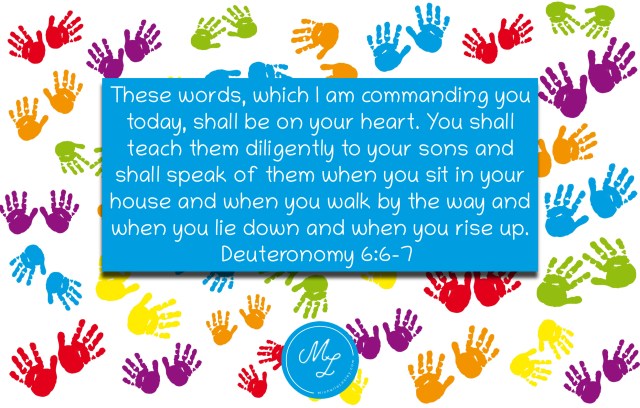
Thatโ€™s from the Westminster Shorter Catechism, which you might enjoy working on with your children. But even if a formal catechism isnโ€™t a fit for your family, God still requires us to train our children in the Scriptures. God tells the people of Israel in Deuteronomy 6:6-7:

The Bible isnโ€™t to be relegated to family worship time or church. Weโ€™re to saturate our homes and our lives with it. Ephesians 6:4 reinforces this thought in the New Testament, exhorting fathers to bring children up โ€œin the discipline and instruction of the Lord.โ€ Scripture is to inform every aspect of our parenting.

Teaching your children the Bible might sound like a big task, and it is, but, if you think about it, we already catechize our children in so many ways weโ€™re not even aware of. How many times have you asked your child, โ€œWhatโ€™s the magic word?โ€ or โ€œWhat do you say to Aunt Margaret for the nice present?โ€ It usually doesnโ€™t take long for them to get the hang of coming up with the right answer.

So donโ€™t be scared. If youโ€™ll take things moment by moment, intentionally bring Scripture into the circumstances that come up in every day life, and explain how it relates to those circumstances, youโ€™ll be surprised at how quickly your children will grasp and apply the verses youโ€™re teaching them. And theyโ€™ll be learning the most important lesson of all: Godโ€™s Word is authoritative, and we are to obey it in every situation in life.

Hereโ€™s the informal โ€œLesley Family Catechismโ€ that we have formulated and implemented over the years. Maybe with a few tweaks here and there, it would work for your family.

Q: Youโ€™ve done ________ to disobey me. What does the Bible say about obeying Mommy?

A. Children, obey your parents in the Lord, for this is right. Ephesians 6:1

Itโ€™s hard for little kids to remember all the doโ€™s and donโ€™tโ€™s in the Bible, so God made it easy on them. One commandment that covers all the others: obey your parents. (Colossians 3:20 is very similar.)

2.

Q: Hitting your brother is not right. What does Jesus say about how weโ€™re to treat each other?

A. โ€œSo whatever you wish that others would do to you, do also to them, for this is the Law and the Prophets.โ€ Matthew 7:12

3.

Q: I know your friend was ugly to you, and that hurts, but what does God say about forgiveness?

A. Be kind to one another, tenderhearted, forgiving one another, as God in Christ forgave you. Ephesians 4:32

4.

Q. God takes lying seriously. You cannot tell a lie and then when youโ€™re caught, say, โ€œI was just joking.โ€ What does the Bible tell us about doing that?

A. Like a madman who throws firebrands, arrows, and death is the man who deceives his neighbor and says, โ€œI am only joking!โ€ Proverbs 26:18-19

5.

Q. You are a thirteen year old, not a three year old. What does the Bible tell us about acting childish?

A. When I was a child, I spoke like a child, I thought like a child, I reasoned like a child. When I became a man, I gave up childish ways. 1 Corinthians 13:11

This verse has been very beneficial with our teenage children, especially the boys. We have always emphasized to them that we are trying to raise them to be godly men.

6.

Q. You may have done the right (or wrong) thing, but what was the attitude of your heart? How does God see you when He looks at you?

A. For the Lord sees not as man sees: man looks on the outward appearance, but the Lord looks on the heart. 1 Samuel 16:7b

Itโ€™s important for our children to understand that God doesnโ€™t judge them merely by their external behaviors, whether theyโ€™ve tried hard out of love for Him and failed, or gritted their teeth and done what was right with a rotten attitude. This can lead to the incorrect understanding of the gospel that many people have today: โ€œIf my good deeds outweigh my bad deeds, Iโ€™ll go to Heaven,โ€  or โ€œBeing a Christian is just being a good person.โ€ God looks at our hearts, sees sinners in need of forgiveness, and offers us grace and mercy through repentance and faith in the shed blood of Christ for our sin.

7.

Q. What do you mean, you hate your sister? You have confessed Christ as Savior. What does the Bible tell us about Christians loving their brothers and sisters?

A. If anyone says, โ€œI love God,โ€ and hates his brother, he is a liar; for he who does not love his brother whom he has seen cannot love God whom he has not seen. 1 John 4:20

In the context of this verse, and the book of 1 John, โ€œbrotherโ€ doesnโ€™t mean โ€œsibling,โ€ it normally means โ€œbrother in Christ.โ€ Still, in addition to fellow Christians, we are called to love our enemies and love our neighbors as ourselves, so weโ€™re to show brotherly love to all.

8.

Q. Youโ€™re doing an awful lot of complaining and arguing right now. What does Godโ€™s word say about that?

A. Do all things without grumbling or disputing, Philippians 2:14

9.

Q. I know that what youโ€™re telling me isnโ€™t true. What does the Bible say about lying?

A. Lying lips are an abomination to the Lord, but those who act faithfully are his delight. Proverbs 12:22

10.

Q. You seem to be acting selfishly, pridefully, always wanting the first and best, and insisting on getting your own way. What does Scripture say about that?

A. Do nothing from selfish ambition or conceit, but in humility count others more significant than yourselves. Let each of you look not only to his own interests, but also to the interests of others. Philippians 2:3-4

11.

Q. It seems like you flew off the handle in anger. What does the Bible say about that?

A. Know this, my beloved brothers: let every person be quick to hear, slow to speak, slow to anger; for the anger of man does not produce the righteousness of God. James 1:19-20


Working on memorizing these or other Scriptures with your children is a wonderful opportunity to teach them what Godโ€™s word means and to begin sharing the gospel with them at a very young age. And youโ€™ll know itโ€™s sinking in when you start hearing them say, โ€œMom, youโ€™re doing ________. What does the Bible say about that?”