When my husband and I have looked for a new church in the past, we’ve had our choices narrowed down for us because we are comfortable in our denomination and are not looking to change. When you’re starting from scratch, you have a lot more choices to wade through, so it can be more difficult. Here are a few guidelines I’d suggest.
1. The absolute most important thing is to find a church that preaches and teaches only what matches up with what the Bible says, and all of what the Bible says. In other words, they shouldn’t be teaching anything that’s clearly contrary to Scripture and they shouldn’t be leaving things out that are unpopular because they’re afraid they won’t attract as many people.
2. Pray about it. Ask God to lead you to exactly the right church in which to serve Him.
3. If you were raised in a particular denomination and felt comfortable in it, that might be a good place to start, either at the same church or a different church of the same denomination.
4. Ask around. Ask Christian friends about their churches and try visiting with them one Sunday. If you end up joining, you have the bonus of already knowing someone.
5. Do your homework. If there’s a particular church or denomination you’re interested in, chances are, they have a web site. There will probably be a section on the web site called “Our Statement of Faith” or something like that. Check that out and make sure all the tenets line up with Scripture. (But do bear in mind a significant number of churches have a perfectly biblical statement of faith “on paper” but they do not adhere to it in practice, or they are unbiblical in an area the statement of faith doesn’t cover. The best a statement of faith can do for you is to weed out some of the really bad churches. It’s not a guarantee that a church is good.) A lot of churches also have their pastor’s sermons and/or their music on line, so you can get a feel for how things go on Sundays. You’ll also be able to find out when services start, what kinds of programs are available, whether or not they have a nursery, etc.
6. “Interview” churches. Most pastors I know would be thrilled to death if a prospective visitor would call up and make an appointment to come in and talk to them about the church. Ask him whatever you want, find out what’s required for membership, share your concerns, etc. He should be able to answer your queries openly and honestly. I would be very leery about attending a church if the pastor seemed secretive about general doctrinal issues, his own background, or church activities. Sometimes just meeting with the pastor will give you an idea of whether or not you want to give the church a try.
7. Try it on for size. You might fall in love with the first church you try, or it might be like shoe shopping and you have to try several before you find one that fits.
Don’t give up. God has a place for you somewhere.
Additional Resources
Searching for a new church? Lots of great church search engines, plus check out the “What to look for in a church” section, especially if you’re a new Believer or coming out of an unbiblical church background.
It’s almost the new year! Are you making a resolution to start having a personal, daily Bible study time? Would you like to improve on the way you study your Bible? Maybe you’re looking for a Bible reading plan, or maybe you’re just looking to change things up a little?
If that sounds like you, give a listen to this December 2020 episode of A Word Fitly Spoken:
Amy and I discuss what our own Bible study times look like, plus some other helpful methods and resources. We also discuss false doctrine and false teachers to avoid as you’re studying your Bible.
This episode is a great way to kick off the new year. And don’t forget to subscribe to A Word Fitly Spoken on your favorite podcast platform!
Ladies, the Christian retailing machine isn’t doing us any favors when it comes to Bible study and theology.
First, they’ve created the impression that in order to study God’s word, we have to buy a book, workbook, or DVD by a Christian author. Next, they show us the materials we have to choose from by cordoning off part of the store or web site under the heading “Women’s Bible Study.” Finally, they fill the shelves in that department with materials penned almost exclusively by women, the majority of whom (even at supposedly trustworthy Christian retailers) are false teachers.
Let’s think outside that box, shall we?
First, you do not have to use someone’s book to study the Bible. In fact, I recommend that you don’t. Just pick up your Bible and study it in a systematic way. Next, if you do decide to use a Bible study book or other resource, it does not have to be written by a woman (though there are some great female teachers at the Recommended Bible Teachers tab in the blue menu bar at the top of this page). If you limit yourself to women authors, you’re going to miss out on some wonderful teaching by the many doctrinally sound male teachers out there. Let me introduce you to a few of my favorite pastors and male authors of Bible studies and other great Christian books and resources.
IMPORTANT REMINDER: Don’t take my (or anyone else’s) word for it that any ministry, podcast, book, or blog is biblical in its doctrine. You MUST do the work of comparing with Scripture everything you read and hear. If it doesn’t match up with God’s word (in context), chuck it.
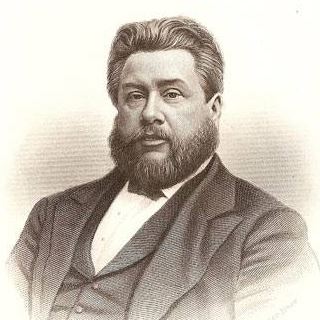
Charles Spurgeon– “The Prince of Preachers,” Spurgeon was “England’s best-known preacher for most of the second half of the nineteenth century…Spurgeon frequently preached to audiences numbering more than 10,000.” Most of his works are still in print in both hardcover and e-book format, and many are available online for free. You may wish to use his commentaries to aid in your study of the Word. The brief devotions in Spurgeons’ Morning and Evening are a favorite of many, and you’re sure to be edified by his many other books as well. FacebookXInstagram
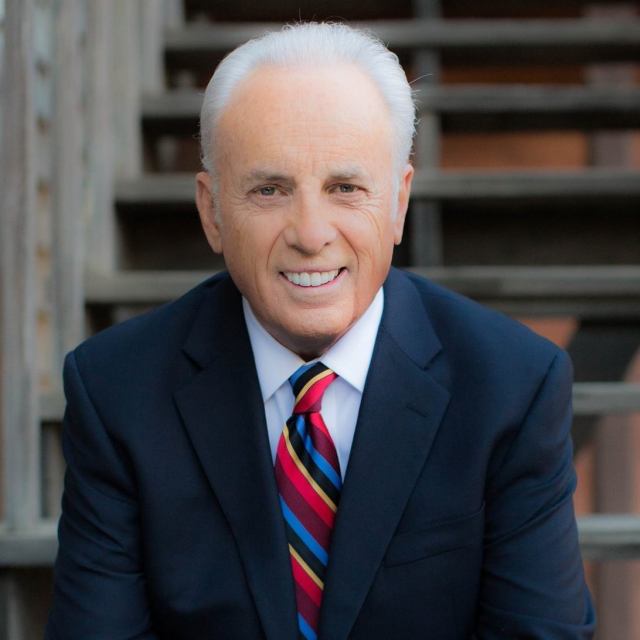
John MacArthur– “John MacArthur is the pastor-teacher of Grace Community Church in Sun Valley, California, as well as an author, conference speaker, president of The Master’s College and Seminary, and featured teacher with the Grace to You media ministry.” Dr. MacArthur has written approximately 400 books, including study guides, commenataries, Bible studies, and more. You might enjoy one of his free on line daily devotions, one of his study books, a sermon on the passage of Scripture you’re studying, or one of his books on a variety of biblical topics. FacebookXInstagram
Todd Friel– Todd is the host of the Wretched podcast and television show, an outstanding resource dealing with discernment, evangelism, the church, theological aspects of current events, and various other topics. “Witness Wednesday” (the weekly episode airing on Wednesdays) is a great way to get “boots on the ground” training in how to share the gospel. Todd has produced a myriad of materials for both churches and individuals on biblical topics such as marriage, church history, parenting, anxiety, pornography, and more. FacebookXInstagram
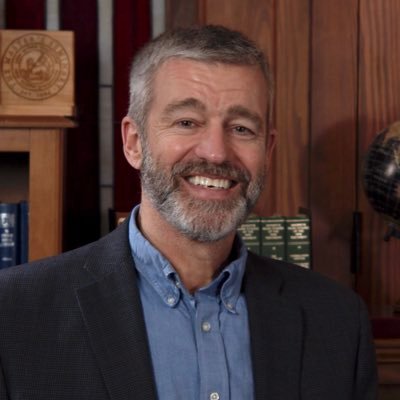
Paul Washer– An echo of Paul the Apostle, Paul Washer served as a missionary in Peru for ten years where he also founded the HeartCry Missionary Society. HeartCry now supports church planters in Peru and indigenous missionaries world wide. Paul is a challenging author and a sought after speaker who boldly exhorts the church. Be sure to explore his books, sermons, Bible study lessons, and videos. FacebookXInstagram
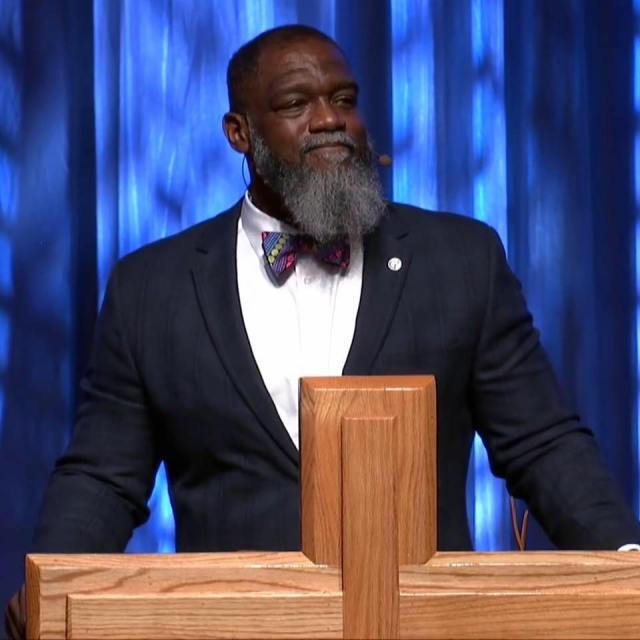
Voddie Baucham– “Voddie Baucham is a husband, father, grandfather, former pastor, church planter, best-selling author, and professor. He was the founding Dean,” and former “Senior Lecturer in the School of Divinity at the African Christian University in Lusaka, Zambia. He is also a founding faculty member of the Institute of Public Theology,” and Founders Seminary.
Voddie specializes in cultural apologetics, and has been instrumental in shedding light on and pushing back against Critical Race Theory, among other issues, when speaking at conferences and other events. Listen to one of Voddie’s many fine sermons and check out his books and other materials on a variety of biblical topics. FacebookXInstagram
Chris Rosebrough– If you’re looking for Chris’ previously daily podcast, Fighting for the Faith, that pirate ship has sailed. Chris is still the Captain of Pirate Christian Radio where you can find oodles of useful articles and audio, but the Aletheia is now docked at the Port of YouTube where Chris creates informative discernment videos on a variety of false teachers, false doctrines, and current events in evangelicalism. He is also the pastor of Kongsvinger Lutheran Church in Oslo, Minnesota, and quite an accomplished photographer. FacebookXInstagram
R. C. Sproul– “Dr. Sproul was founder of Ligonier Ministries, founding pastor of Saint Andrew’s Chapel in Sanford, Fla., first president of Reformation Bible College, and executive editor of Tabletalk magazine. His radio program, Renewing Your Mind, is still broadcast daily on hundreds of radio stations around the world and can also be heard online. He was author of more than one hundred books,” which you can find at Ligonier along with teaching materials on nearly any passage you’re studying, as well as other biblical books, music, and other resources.FacebookXInstagram
Phil Johnson– “Phil is the Executive Director of Grace to You. He has been closely associated with John MacArthur since 1981 and edits most of John’s major books…Phil was an editor at Moody Press before coming to Grace Community Church. He is an elder at Grace Community Church and pastors the GraceLife fellowship group.” Phil is an amazing lecturer and preacher with an incredible depth of knowledge of church and biblical history. You’ll enjoy the theological richness of Phil’s sermons (check out his “Bible Q & A” teachings) and be challenged by his blog articles at Pyromaniacs. FacebookXInstagram
Steve Kozar– Steve runs an amazing discernment ministry called The Messed Up Church, which has a four-fold purpose: “Confronting and exposing apostasy, explaining biblical orthodoxy, rebuilding shattered faith by the light of the gospel from God’s Word, and returning to the Reformation principle of Sola Gratia, Sola Fide, and Sola Scriptura. … The Messed Up Church is the discernment website for people who don’t like discernment websites.” Be sure to check out Steve’s blog articles (I especially appreciate his Cornucopias on false teachers and movements, and you’ll find many of them linked to my own discernment articles.) and his YouTube channel, featuring a wealth of discernment videos on who and what to mark and avoid. Steve is also an extremely talented painter, so be sure to visit his art stores here and here. Follow Steve on X and Instagram.
You can always find these – and more great Christian men and women to follow – at the Recommended Bible Teachers, Authors, etc. tab in the blue menu bar at the top of this page.
“Can you recommend a book on how to submit to my husband?”
“What’s a good book on biblical womanhood?”
“I’m going through [difficult life circumstance]. Can you suggest a good book on how I can cope with that?”
I’ll bet if someone did a study to find out which demographic of people reads the most books, it would be Christians. Christians are readers – there’s no denying that – and that’s a good thing.
It always makes my heart smile when a reader asks if I can recommend a good (read: biblical, and by a doctrinally sound author) book on a particular area of sanctification or a life issue she’s struggling with. That tells me she wants to learn what the Bible says and obey it. And that is no small thing in evangelicalism today.
Hear me: Reading good, doctrinally sound books is a good thing.
But – just as with any other good thing – too much of a good thing isn’t the best thing. And letting a good thing veer out of its lane isn’t the best thing.
If you dedicate twelve hours every day to prayer, you’ll never get to the laundry, the bills, the cooking, and the cleaning. If the baby is running a fever and you exegete a chapter of the Bible instead of giving her some medicine or taking her to the doctor, you’re misapplying your Bible study time.
And, while it may not be quite as obvious, we can sometimes face the same challenge with good books.
In my experience there are two general dilemmas that motivate today’s Christian to seek out a good book.
The first is: “I don’t know what the Bible says about _____ topic. I need a book that will teach me so I can correctly understand what Scripture says about it.” For example, a few weeks ago in a Mailbag article, I answered a lady who wanted to know about the eternal destiny of unborn babies who die. Among other resources, I recommended John MacArthur’s book which explains the Scriptures and theology related to that topic.
The second dilemma is: “I know Scripture teaches that Christians are supposed to _____. How do I carry that out in my day to day life?” Or, “I have this difficult situation in my life. What specific things do I do to navigate or handle it in a godly way?” For example, “How do I submit to my husband?” or, the lady from the aforementioned Mailbag article might have asked, “What should walking through the grief of losing a child look like in my daily life?”
The first dilemma is easy and appropriate to plug a book into. The second? Not so much.
Why? Because in the second dilemma we’re asking good books to get out of their lane and perform a task they’re not suited to perform: sanctification. When you’re trying to drive a nail into a board, a hammer is the proper tool for the job, not a screwdriver. You can bang on the nail with the screwdriver, and you might even drive the nail into the wood a millimeter or two, but the bottom line is, you need a hammer. That doesn’t make hammers good and screwdrivers bad, it just means you use the appropriate tool for the job at hand.
And in cases of, “Where does the rubber of Scripture meet the road of my unique, individual life?” the right tool for the job at hand – the method God has prescribed in His Word – is not reaching for a book written by man, it’s God’s sanctifying work in your heart and life. And that’s a big pot of gumbo with a lot of different ingredients in it:
Studying your Bible
Prayer- for help, for wisdom, for guidance, for strength
Obedience to the Word
Faith, trust, and utter dependence on God
Getting good counsel from godly friends and loved ones, your pastor, or spiritually mature women in your church
And the final ingredient that goes into the pot? Action. Step out on faith in God and His Word to help you and guide you, and just do it. Try. Figure it out as you go.
If you want to learn how to ride a bicycle, you’re eventually going to have to stop reading books about bicycles and get on one and ride. Feel that balance and coordination of muscle movements in your own body. Learn by doing.
And, guess what? You’re going to fall down a few times. You’re going to try things that don’t work. You’re going to sin (and repent and be forgiven). And you’ll learn and grow from that. Falling is part of the learning and growing process of sanctification.
for the righteous falls seven times and rises again, Proverbs 24:16a
The steps of a man are established by the Lord, when he delights in his way; though he fall, he shall not be cast headlong, for the Lord upholds his hand. Psalm 37:23-24
I think we believe that success is in not falling. It’s not. It’s in getting back up and learning mastery of the skill.
The Bible never says we won’t fall. It says that when we do, God is holding our hand, and He’ll help us get back up.
But learning and growing and falling can be a messy, frustrating process that takes a long time. And what we want is a fast, streamlined formula that bypasses the mess and gives us guaranteed results. And, without even realizing it, we can fall into the mindset of thinking that the right book will be the magic bullet to solve our problem. We want a book to tell us what to do to keep from falling – and we think that’s mastery or success. But it isn’t. Mastery and success come from doing, from going through the process. We want a book to tell us how to get the right answer to our problem, but while the right answer is important, the growth, maturing, and mastery of going through the process is more important to our spiritual growth.
…work out your own salvation with fear and trembling, for it is God who works in you, both to will and to work for his good pleasure.
Philippians 2:12b-13
And it’s not just that walking through the process of working out your own salvation with the Lord and His Word rather than reaching for a book is the way God has prescribed, it’s that God’s way is far superior to reaching for a book, because God’s way is divinely powered by the Holy Spirit.
When you pick up a book written by a human being, it can give you practical tips and good advice and maybe even point you to some passages of Scripture you should study. But the Bible doesn’t just tell us what to do and give us some good ideas, it is actually, literally transformative as we are reading it.
For the word of God is living and active, sharper than any two-edged sword, piercing to the division of soul and of spirit, of joints and of marrow, and discerning the thoughts and intentions of the heart.
Hebrews 4:12
The Holy Spirit moves in and around and through His Word as you’re reading it to supernaturally work to conform your heart and mind to the image of Christ. That’s something you can’t get from any other book, no matter who wrote it or how doctrinally sound it is.
And one of the most amazing things about the Holy Spirit’s supernatural work through His Word is that it’s personal. Books, by definition, have to be “one size fits all” – generally applicable to a wide audience. They can’t tell you what submitting to your husband in your marriage in your life circumstances is going to look like at 10:17 a.m. next Tuesday. But Scripture can, as God uses it to sanctify you.
But there’s one other aspect of the knee jerk, “I need a book” mindset that we need to be really careful about.
If, every time there’s an issue in our lives, our reflex reaction is to get on social media and ask for book recommendations instead of turning to the Word, prayer, and godly counsel, is that not a subtle, functional denial of the sufficiency of Scripture?
All Scripture is breathed out by God and profitable for teaching, for reproof, for correction, and for training in righteousness, that the man of God may be complete, equipped for every good work. 2 Timothy 3:16-17
His divine power has granted to us all things that pertain to life and godliness, through the knowledge of him who called us… 2 Peter 1:3a
When the Bible says it will make us complete, equipped for every good work and all things that pertain to life and godliness, that’s exactly what it means: Every. All. We do not need other books in order to handle life’s situations in a godly way. And every Believer who came along before Christian books were a thing is proof of that. Good books aren’t a bad thing, and they can be helpful, but the Bible says it is sufficient – all we need – for anything that comes our way.
But when we reach for a book before we reach for the Bible, aren’t we saying with our actions, “The Bible’s not enough. I need more. I need something better.”?
I can’t answer that for you and you can’t answer that for me, but it’s a good thing to ask ourselves and answer honestly before God.
Good, solid, doctrinally sound books aren’t the bad guy. They can be wonderfully helpful and encouraging. But let’s make sure we’re submitting to God’s prescribed methods of sanctification, esteeming and depending on God’s supernatural work in our hearts through His Word, and not accidentally eroding the sufficiency of Scripture.
Let’s be people of the Book, before we’re people of the books.
We’ve got to stop meeting like this…only once or twice a year, that is. When I first started 4R, I kind of envisioned it as a four or five times a year feature, and now we’re at about once a year. Well, life happens, I guess.
Have you been following the story of James Coates, Pastor of GraceLife Church in Edmonton, Alberta, Canada? He was recently arrested and imprisoned for obeying God rather than men by refusing to stop holding church services and refusing to bar those who desperately wanted to attend from coming in to worship, among other official Covid-related reasons that were given. The restrictions on gathering in that particular are are so strict they have effectively shuttered churches. (No, they cannot hold services outside {Have you ever been to Canada in February? I haven’t, and even I know that’s a ridiculous suggestion.} No, “online church” is not the same as gathering in person and it is not a biblical long-term substitute for gathering in person.)
I’m not alerting you to this situation in order to debate whether or not James and GLC should have given in to the draconian demands of their local government. (Frankly, I was shocked and downright embarrassed at some of the cruel and critical comments that were made about James and GLC- by people who profess to be Christians – on my social media platforms Wednesday when I posted about this. And after everything I’ve seen in ministry, it takes a lot to shock and embarrass me. Those folks ought to be ashamed of themselves. No such comments will be allowed on this article or my social media platforms. They will be deleted and you will be blocked.)
I’m asking you to pray.
Pray for James, his wife, Erin, and their children, and GLC. (If the name Erin Coates sounds familiar it might be because she was one of my sister speakers at the Open Hearts in a Closed World online conference last summer, and coming up again this summer.)
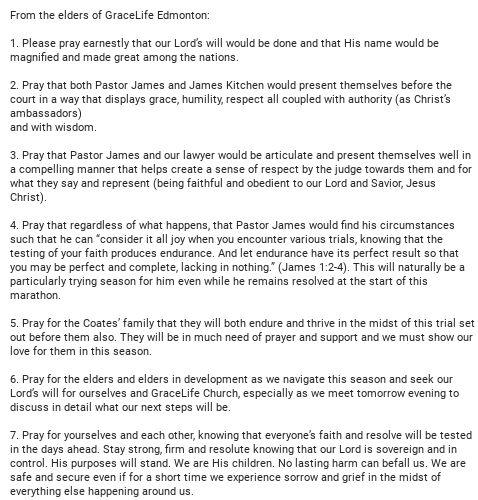
The elders of GLC have suggested these prayer points:
Erin’s Instagram handle is @erincoates80 if you’d like to follow her. Here is her most recent update as of the time I’m writing this:
“What is something tangible you can do? Open your churches. Worship Christ. Practice the one anothers, sing your hearts out, let your pastor see your eyes as he preaches the word of God to you. Don’t underestimate this task in your life. Obey Christ with all you have.”
You’ve heard that old joke, right? One Sunday morning, the minister of music announced from the pulpit, “In honor of Miss Doretha’s 80th birthday, we’re going to let her choose three hymns today.” Miss Doretha jumped breathlessly to her feet, scanned the room, and began pointing: “I’ll take him, him, and him!”
Well some young whippersnapper took it upon herself (a few years ago, but I only saw it recently) to pick 10 Christian Hymns That Need to Be Put to Rest. At least I’m inferring from the tone of the article that the author, Jennifer, is a young whippersnapper, because – I’m sorry, I’m honestly not trying to be mean here, but to me she comes off as a bit immature and shallow.
Or maybe I’m just old and curmudgeonly, having reached the “GET OFF MY LAWN!” stage of life.
Jennifer’s argument for putting several of these hymns out to pasture seems to be, “This hymn is too hard for people to understand,” or “People don’t understand what these words mean”.
By her logic, we should ditch the King James Version of the Bible, the Puritans (certainly Jonathan Edwards – my stars, have you ever tried to read his stuff?), the Reformers, and the early church fathers.
Schools should stop teaching Shakespeare, Beowulf, and Chaucer. And we should probably get rid of some of our patriotic songs too (I mean who knows what a “rampart” is, anyway?)
It’s just further reflective of the worldly attitude of dumbing things down to the level of people’s sloth (excuse me – “laziness” – since some may not know what “sloth” means).
How about, instead of getting rid of hymns and words people don’t understand, pastors and ministers of music take a second and teach the congregation what those words and hymns mean? Or the congregation could pull their phones out and Google it. We do that with everything else – why not do it with hard words and build our vocabularies and our knowledge base?
But there are some hymns that need to go due to theological issues with their lyrics. I’ve got two picks and then I’ll let you get in on the game. Click on the titles for lyrics. (Please note, I don’t really know anything about the people performing these songs, but I’m guessing I wouldn’t recommend them since it’s pretty hard to find doctrinally sound Christians singing songs that aren’t.)
It pains me to list this hymn as one that needs to be put to rest because I’ve been singing it all my life and have a deep sentimental attachment to it. Also the music is lovely, and I really do think the hymnist’s heart was in the right place when he wrote it. But…
The entire tenor of the first verse reminds me of a mom nagging her reluctant child to befriend the snaggle-toothed, bespectacled, nerdy little kid on the playground who’s running around offering his entire Hot Wheels collection if somebody – anybody – will just please, pleeeeeeeeeze, be his friend. Jesus is not some pitiful little weirdo whose day would be made if you would do Him the honor of sitting at His lunch table. He is loving and kind, yes, but He is also King of Kings and Lord of Lords, and we humbly bow the knee to Him.
And don’t even get me started on verse two. People who are dead in their sins can’t “take one step toward the Savior,” my friend. Christ has to raise us from the dead to new life in Christ.
This was the (depending on your age) Shout to the Lord, or Oceans, or Way Maker of my day, kiddies, and I have lots of fond memories attached to it, too. It was the song you sang at youth camp, and sometimes – if your minister of youth and music was cool, like ours was – during Sunday night church. (Some of my contemporaries will remember that we used to yell out, “Praise God!” after the phrase, “I’ll shout it from the mountaintop.”).
Whether or not the composer intended to base the opening words of this song – “It only takes a spark to get a fire going” – in Scripture, it evokes James 3:5b, which, in the most popular modern translation around the time this song was written said:
Consider what a great forest is set on fire by a small spark.
Which would be all well and good except for context, context, context. Because James 3:3-6 says:
When we put bits into the mouths of horses to make them obey us, we can turn the whole animal. 4 Or take ships as an example. Although they are so large and are driven by strong winds, they are steered by a very small rudder wherever the pilot wants to go. 5 Likewise, the tongue is a small part of the body, but it makes great boasts. Consider what a great forest is set on fire by a small spark. 6 The tongue also is a fire, a world of evil among the parts of the body. It corrupts the whole body, sets the whole course of one’s life on fire, and is itself set on fire by hell.
What do you think? Are there any hymns you think could be mothballed because of their unbiblical lyrics? Comment below and share. But play by the rules:
It has to be a non-contemporary hymn. Let’s say anything written between the first century and 1980.
The original audience of Hebrews was first century Christians from Jewish backgrounds. Slavery to Law-keeping was so ingrained that the Holy Spirit gave them a chapter of “Old Testament Survey” (let the seminarian understand).
In this portion of the chapter, He demonstrates to them that the central figure of their faith, the one in whom they had their biological, tribal, and spiritual inheritance – Abraham – left them a legacy, not of Law-keeping, but of faith. Abraham believed God, and that is what was credited to him as righteousness, not any good deeds that he might have done. And, indeed that is the preeminent truth of the entire Old Testament: faith in God and in the Christ to come, not good works.
We are part of that same spiritual legacy of faith today. No amount of good works will save you: being a nice person will not save you, going to church, giving offerings, and serving at church will not save you, being baptized will not save you, praying to saints and other religious rituals will not save you, parroting a “sinner’s prayer” will not save you.
Only repenting of your sin and trusting that Christ’s death, burial, and resurrection paid the penalty for your sin of an eternity in hell will save you.
If you’ve never placed your faith in Jesus and been completely changed into a new creature in Christ with Christlike desires and a hatred for sin, how about doing that today? Check out the What Must I Do to Be Saved? tab in the blue menu bar at the top of this page for more information.