Christian women, Idolatry, Sanctification, Women

Little Women

Originally published June 13, 2014

I’d rather have Jesus than men’s applause
I’d rather be faithful to His dear cause
I’d rather have Jesus than worldwide fame
I’d rather be true to His holy name

We sang this lovely hymn in church the other day, and it was perfect timing. For the past couple of weeks, I’ve been thinking about women I’ve known across the years, women I’ve known of (but not personally) across the years, and the woman I’ve known best across the years, me. And I’ve been thinking about how and where we find our worth, fulfillment, and contentment and where we should find it: in Christ.

I don’t know about you, but one of the sins I constantly struggle against is coveting. It’s a sin we don’t think about very much. A private one that, often, nobody knows about except God and me.

Coveting is a sin we don’t think about very much. A private one that, often, nobody knows about except God and me.

And you know what I covet? What I think we all covet? Men’s applause. Worldwide fame. Or, at least, fame in my little corner of the world.

When we were children in Sunday school, coveting was sometimes explained to us as “wanting for ourselves what someone else has.” Her new doll. His fancier bike. It’s a decent kid-level definition, but in the same way that Jesus reminded us that the root sin of murder is hate and the root sin of adultery is lust we need to mature in our understanding of coveting, and realize that it also has a root sin: discontentment. Sometimes, it’s discontentment with what we have (greed), and sometimes it’s discontentment with who we are.

And who are we?

As Believers, we are children of the God of the universe who, despite our sin and rebellion against Him, loved us enough to lay down His own life to rescue us. He listens to us. He accepts us. He provides for us. And don’t even get me started on Heaven.

And if contemplating all that isn’t enough, the Bible tellsย us to be content. So why aren’t we? Why would we rather have Jesus and men’s applause, and worldwide fame?

Because, as John Calvin so aptly put it, “Man’s nature, so to speak, is a perpetual factory of idols.” Our sinful flesh is always looking to gratify itself rather than glorify God. Any time our hearts say, “God’s not enough. I want more,” we’re committing idolatry, because whatever the “more” is, it’s other than God and lesser than God, and we’re seeking it instead of seeking God. And, as women, one of the biggest “more” idols we seek is feeling good about ourselves, or feeling worthy of love and acceptance.

Our sinful flesh is always looking to gratify itself rather than glorify God.

But instead of looking to Christ and letting Him define for us a right perspective of ourselves, we hit the crack pipe of the praise of men. It’s fast. It’s cheap. It’s easy. And the high is nearly instantaneous.

Instead of looking to Christ and letting Him define for us a right perspective of ourselves, we hit the crack pipe of the praise of men. It’s fast. It’s cheap. It’s easy. And the high is nearly instantaneous.

How? Allow me to introduce you to some frenemies of mine:

Mother and Daughter Hugging

Marla MegaMom- Marla lives for and through her kids. Their successes are her successes. Their failures, her failures. She subtly or overtly pressures her kids to achieve because if they fail she’s afraid others won’t see her as a good mom. And being a failure as a mom means being a failure in life.

Woman Singing

Dina Diva- Dina literally seeks the applause of others. She’s the top church soloist and the star of every Christmas production. She’s a public speaker or an instrumentalist or an actress, anything that can be done on a stage. Dina doesn’t feel good about herself unless people are clapping for her.

woman-164299_640-1978279293

Veronica Victim- Poor Veronica. Everything in her life is always going wrong at home, at work, at church, with friends, with her health, with her car, with her dog. Nobody understands just how hard Veronica has it, so she makes it her life’s mission to let people know. In every story she tells, Veronica is the victim, and somebody else (or everybody else) is the bad guy. Please feel sorry for Veronica, because that’s the only way she can feel better about herself.

woman_angel_costume_kindlephoto-8131448

Helen the Heroine- Helen is Veronica’s cousin. In every story Helen tells, she’s the heroine, the paragon of virtue, the one who did everything right – short of severing a limb – to make everything work out, and somebody else is the bad guy. Helen is divorced and the bad guy is usually her ex-husband, but she’s versataile enough to apply her story telling skills to situations at work, church, with friends, etc. Helen thinks if you don’t see her as a heroine, she’s worthless.

super-woman-halloween-adult-costume-aef98eb9
Photo courtesy of CostumeCollection.com.au

Sally Superwoman- Sally does everything, and she does it superbly. She’s employee of the year at work and world’s best wife and mom at home. She’s a gourmet cook, flawlessly recreates every cake and craft on Pinterest, and her house looks like a photo shoot for Better Homes and Gardens. Other women know she’s got it all together, so she keeps all her plates spinning at a furious pace, because if one of them fell where would she be?

MP900178801

Popular Polly- Polly is everybody’s friend. She’s one of the sweetest people you’ll ever meet with never a cross word for, or about, anybody. She agrees with (or at least doesn’t obviously disagree with) whatever is being said by the person she’s talking to at the moment, so it can be hard to pin down what she really believes. When someone unfriends/unfollows Polly on social media, she takes it personally, wondering what she did wrong. She only likes herself if enough other people like her.

reading-216862_640

Know It All Nettie- Maybe she’s got multiple degrees, or maybe she’s just well read, but Nettie is an expert. In everything. She sees it as her calling to educate people, starting a lot of sentences with, “Well, actually…” and rarely asking questions that would reveal her lack of knowledge on a subject. Ignorance is a weakness in Nettie’s mind, and she wants to be seen as strong.
MP900427741_kindlephoto-8317786

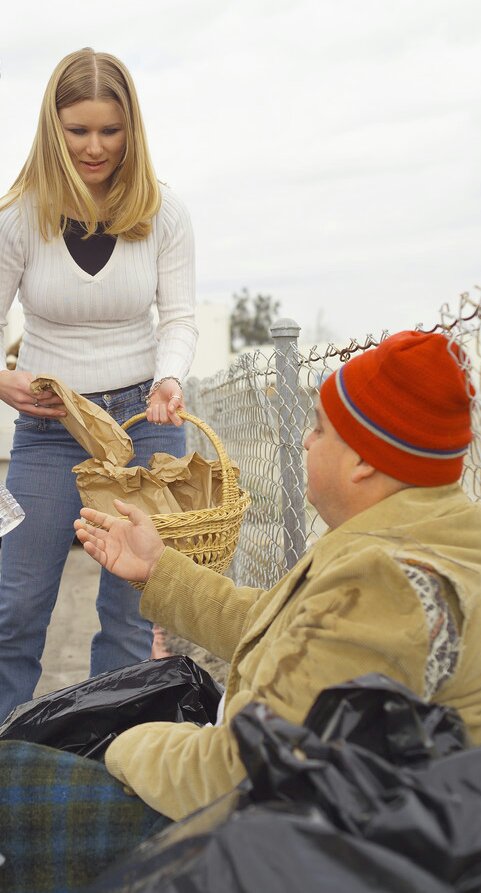
Maisy the Martyr- Whenever there’s a request for helpers at church, someone to pull overtime or fill in for a co-worker, volunteers at the soup kitchen, the fulfillment of the smallest need of her family, Maisy will be there, working tirelessly. She secretly gets angry when no one recognizes her for all her hard work or when people take advantage of her, but she’s afraid to say no because she’s afraid people will be upset with her, and what kind of person would she be then?

Woman Doing Sit-ups

Let’s Get Physical Phyllis- Whether she’s one to wear revealing clothes so all the men stare or she’s an organic, vegan workout queen, or she’s a clotheshorse, Phyllis is all about one thing: her body and how it looks. Did a construction worker whilstle at her today? A co-worker compliment her outfit? If not, maybe Phyllis had better lose a few more pounds or get that plastic surgery she’s been considering. After all, if people stop looking, she’s nothing.

man-315069_640

Man-datory Maude- Maude always has a man. Always. Preferably an awesome one, but even a mediocre or lousy man is better than no man at all. Why? It’s tangible proof somebody wants her. Otherwise, how will people be able to see she’s a worthwhile person?

MP900289528

Take Charge Tallulah- Follow? You must be joking, darling. Tallulah was born to lead and plays second fiddle to no one. She’s the chair of every committee she’s on, and always the one to round up the worker bees and start doling out orders. No points for second place. If you’re not first, you’re last. Tallulah needs the submission of others to feel self confident.

Are you one of these women? Or, if you’re as Sybil as I am, maybe you’re all of these women to one extent or another. Little women, all. Little, because Maisy, Helen, Sally, and all the rest are coveting and settling for crumbs of approval from others when God is offering them the whole bakery of His delight in them. Little, because they’re zeroing in on one tiny aspect of their lives to earn the praise of men instead of lifting their eyes to the broad expanse of Heaven and focusing on the Christ who loves them and has set them free to rest in His acceptance of them through His shed blood.

There’s nothing wrong with eating right or being friendly, or serving, singing, or teaching. Those are all good things. But just as God can take the most evil things and use them for good, we, because of our sinful nature, have a tendency to take good things and use them for evil. And evil isn’t too strong a word when we’re talking about taking the good gifts and talents God has given us and using them to pursue idolatry.

Just as God can take the most evil things and use them for good, we, because of our sinful nature, have a tendency to take good things and use them for evil.

So what can we do? Romans 12:21 tells us, “Do not be overcome by evil, but overcome evil with good.” When that evil coveting of praise and notoriety rears its ugly head:

  • Overcome it by confessing your coveting and idolatry and asking God to forgive you for it.
  • Overcome it by asking God to help you do everything for His glory, so that men will praise Him and make His name famous instead of yours.
  • Overcome it by letting go and saying no. If you’re Dina, it’s OK to let somebody else have the leading role. If you’re Maude, it’s OK to stay home on date night. If you’re Veronica and someone asks how you’re doing, it’s OK to smile and say, “Fine.”
  • Overcome it by preaching the gospel to yourself. Remember how big God is, how small and weak you are and the lengths of love that He went to to save you anyway. Not because of who you are, but because of who He is. Rest in that, and praise and thank God for it.

And let’s have no more of these little women.

Christian women, Heaven

Weak Women and the Idolatry of Personal Experience

Originally published April 17, 2015

Well, here we go again. Another child claims to have taken another trip to Heaven complete with another face to face conversation with Jesus. Oh, and the child’s mother has written a book about it which prosperity pimp, T.D. Jakes, has optioned for his second unbiblical “I went to Heaven” movie. (Heaven is for Real was the first one.)

The gist of the story is that this sweet little girl, Annabel, was climbing a tree when a branch broke, causing her to fall head first, thirty feet into a hollow tree, where she was stuck for five hours. It’s unclear from the reports I’ve read whether this was actually a near death experience, the reports mentioning only that she was “unconscious” at some point (this is when she supposedly “went to Heaven”), and that she was rescued without injury. Additionally, Annabel had suffered for years with a very serious intenstinal disease, and after her accident, became asymptomatic.

These are nice people. Sincere people. The kind of people I’d probably be friends with if they went to my church.

And they have nicely, sincerely, and with the best of intentions fallen into what I think is the number one theological error facing Christian women today, namely, believing and trusting in human experience over God’s Word.

It’s perhaps the number one theological error facing Christian women today: believing and trusting in human experience over God’s Word.

Now, I don’t doubt the facts of this story: that Annabel had a dangerous and frightening accident, that she lost consciousness and had some sort of experience before awakening, that she had a serious intestinal disease, and that, in God’s perfect timing, He chose to heal Annabel shortly after this tree accident.

And the reason I don’t doubt any of that is that it is all based in verifiable fact (unless someone comes forward with documented evidence to the contrary) and none of it conflicts with God’s Word.

But an actual “trip to Heaven”? That’s not based in verifiable fact and it does conflict with God’s Word.

If you feel upset with me right now for saying that, I’d like to ask you to examine why that is. Why are you upset? On what do you base your belief that this child (or anyone else outside of documented cases in Scripture) has actually made a real trip to Heaven and come back to tell about it? Her say so? This child was nine years old when this happened. Nine. Colton Burpo (Heaven is for Real) was three. Alex Malarkey (The Boy Who Came Back from Heaven– which Alex has been recanting for years) was six.

Have you ever spent any time talking to a nine year old, a six year old, a three year old? A lot of them will tell you they believe in Santa Claus and the tooth fairy, or that they have an imaginary friend, or that they’re a super hero. They’re very sincere and they aren’t lying, but they’re also very wrong because their beliefs are not based in fact and are strongly influenced by their immaturity. So why are we so quick to believe, based solely on their own say so, that the experiences these children had while unconscious were actual trips to Heaven?

For the same reason we love chick flicks and fairy tales and Hallmark movies, ladies. These stories appeal to our emotions. They make us feel good just like a rich piece of chocolate on a stressful day. And when you slap the “God” label on a story of childlike wonder coming out of a nice Christian family, our belief not only makes us feel good, we also feel justified in believing the story.

And God’s word says that kind of mindset is not for strong, discerning, godly women, it’s for weak women.

But understand this, that in the last days there will come times of difficulty. For people will be lovers of self, lovers of money, proud, arrogant, abusive, disobedient to their parents, ungrateful, unholy, heartless, unappeasable, slanderous, without self-control, brutal, not loving good, treacherous, reckless, swollen with conceit, lovers of pleasure rather than lovers of God, having the appearance of godliness, but denying its power. Avoid such people. For among them are those who creep into households and capture weak women, burdened with sins and led astray by various passions, always learning and never able to arrive at a knowledge of the truth.

2 Timothy 3:1-7

When we hold these “I went to Heaven” experiences (whether from children or adults) up to the light of Scripture, they crumble, from Hebrews 9:27, to the descriptions of God, Jesus, and Heaven that clearly contradict Scripture (and contradict the descriptions from other people who supposedly went to Heaven and came back), to the sufficiency of Scripture, to the stark difference between Paul’s and John’s scripturally verified trips to Heaven and the trips supposedly being taken today (interestingly, Paul was stricken with a “thorn” after his trip to Heaven “to keep me from becoming conceited because of the surpassing greatness of the revelations” while Annabel’s healing is being offered, in a whirlwind of publicity events, as proof that she went to Heaven), to the fact that the Bible doesn’t say anywhere that this kind of spiritual experience is valid or appropriate for Christians today.

The people who claim to have gone to Heaven had some sort of experience while unconscious, no doubt, but if they say that experience was an actual trip to Heaven, they are either mistaken or lying. It could have been a dream, a hallucination, an experience initiated by demons (let’s not forget that Satan was once an angel and continues to disguise himself as an angel of light), or a lie they’ve concocted, as was the case with Alex Malarkey. Yet, for some reason, Christian women, who, if asked point blank, would say that they believe the Bible is our ultimate authority for Christian belief, plunk down money for these books, movies, and other accessories, and eat these stories up with a spoon without ever engaging their brains and checking these supposed eyewitness accounts of Heaven against Scripture.

For some reason, women who would *say* they believe the Bible is our ultimate authority, eat these stories up with a spoon without ever engaging their brains and checking these supposed eyewitness accounts against Scripture.

But “heavenly tourism” stories aren’t the only area in which we’re choosing to believe someone’s experience over Scripture.

Do you follow someone like Joyce Meyer, Beth Moore, Priscilla Shirer, Christine Caine, Lysa TerKeurst, or Paula White? These women all say that God “called” them to do what they do, which includes preaching to and instructing men in the church setting. Do you believe them when they say God “called” them? If so, you’re believing their supposed experience over the crystal clear Word of God in 1 Timothy 2:11-3:7 (and plenty of other passages) which expressly forbids women from instructing men in the Scriptures or holding authority over men in the church.

And even putting aside the false and unbiblical doctrine these women teach, how many times have you heard one of them begin a sermon or teaching – not by reading God’s word and accurately teaching what the Bible says- but by telling a story about how God ostensibly “spoke” to them, acted in their lives in some way, or sent them a dream or a sign, and then basing their teaching on that experience rather than on God’s word? If you heed that kind of teaching, you’re believing their experience, not God’s Word.

What about when it hits a little closer to home? You know God’s Word says that homosexuality is a sin, but your 20 year old comes home and announces he’s marrying his boyfriend. So you just throw out that part of God’s Word in favor of a happy experience with your son. You defend your right to swear like a sailor despite what God’s Word says to the contrary. You “feel” that it was just fine for you to divorce your husband because you fell out of love with him, even though that’s not a biblically acceptable reason for divorce.

Ladies, if God’s word says it ain’t so, it ain’t so, no matter what you or I or anyone else experiences to the contrary.

Ladies, if God’s Word says it ain’t so, it ain’t so, no matter what you or I or anyone else experiences to the contrary. And it doesn’t matter how real or vivid or intense that experience was or how right or godly it seemed– God’s Word, and God’s Word alone defines reality, truth, existence, right and wrong. And we’d better get with the program and submit to its authority. If not, well, I guess we’ll prove the truth of what Paul said by choosing to be those women he talked about: weak, burdened with sins, led astray by our emotions, and always learning yet never able to arrive at a knowledge of the truth.

God doesn’t want you to be weak. He wants you to be a mighty woman of His word.

God doesn’t want you to be weak. He wants you to be a mighty woman of His word.

Sanctify them in the truth; your word is truth.
John 17:17


90 Minutes in Heaven on the Big Screen?

The Burpo-Malarkey Doctrine

Heaven Tourism

LifeWay Christian Stores Remove All โ€˜Heaven Tourismโ€™ Books From Shelves After โ€˜Boy Who Came Back From Heavenโ€™ Story Confirmed as a Lie

Christian women, Complementarianism, Mailbag

The Mailbag: Is it biblical for women to carry out The Great Commission?

Originally published June 18, 2018

Last week, I received some questions from a Facebook follower regarding my article Basic Training: The Great Commission. I thought they were very insightful and that other readers might have the same questions, so I’m sharing and expanding on my answers to her here. (I’ve edited/condensed the reader’s questions and comments {in bold type} for the sake of brevity.)

Given my understanding of what Jesus is commanding, and comparing it with other examples in the New Testament, it’s not for women to do the Great Commission. Our role is not to make disciples, teach, or baptize, but to keep the home, edify other women believers, etc. The Great Commission is for men, not women, to do because…

1. The Great Commission requires teaching and baptizing.

2. Jesus was speaking the Great Commission to His disciples, who were all male.

3. We don’t see any specific New Testament examples of women sharing the gospel with the lost through their own witness or example.

4. Because we don’t see any specific New Testament examples of women sharing the gospel or any explicit commands for women to share the gospel, it violates the regulative principle for women to share the gospel with the lost.

This reader’s questions really got me thinking and digging. I love questions that make me think hard and dig into Scripture and theology for answers!

First, let me briefly address the points of this issue that are not in dispute. As I understand her, the reader is in full agreement with Titus 2:3-5 and the example of Lois and Eunice. She agrees with the biblical principles of women training their own children in the gospel and discipling Christian women (already saved) inside the church. Her questions have mainly to do with sharing the gospel with the lost outside the church – evangelism.

Next, before we dive into the reader’s questions themselves, it is very important to distinguish between two types of Scripture:

Broadly speaking, there are two main types of Scripture: descriptive and prescriptive. Descriptive passages describe something that happened: Noah built an ark. Esther became queen. Paul got shipwrecked. These passages simply tell us what happened to somebody. Prescriptive passages are commands or statements to obey. Donโ€™t lie. Share the gospel. Forgive others.

If we wanted to know how to have a godly marriage, for example, we would look at passages like Ephesians 5:22-33, 1 Corinthians 7, and Exodus 20:14,17. These are all passages that clearly tell us what to do and what not to do in order to have a godly marriage.

What we would not do is look at Davidโ€™s and Solomonโ€™s lives and conclude that polygamy is Godโ€™s design for marriage. We would not read about Hosea and assume that God wants Christian men to marry prostitutes. We would not read the story of the woman at the well and think that being married five times and then shacking up with number six is OK with Jesus.

Descriptive passages may support, but never trump, the clear instruction of prescriptive passages.ยน

Now, let’s see if we can come to some biblical conclusions on her questions:

1. The Great Commission requires teaching and baptizing.

Teaching:
Often, when we’re looking at women’s roles in the church and being obedient to 1 Timothy 2:12, people conflate evangelism with teaching. Teaching Scripture to saved people inside the church gathering is not the same thing as sharing the gospel with lost people outside the church gathering. They are two separate, distinct things. First Timothy 2:12 (and other prohibitive passages) only prohibits the former, not the latter. The Great Commission, and the New Testament overall, commands the latter.

Teaching Scripture to saved people inside the church gathering is not the same thing as sharing the gospel with lost people outside the church gathering. They are two separate, distinct things.

As Christian women we want to be sure we keep these two things straight and carry out The Great Commission in the way God has prescribed for women to carry it out. May we share the gospel with a lost man or woman “as we are going”? Yes. If that person is a man, once he is saved is it biblically appropriate for a woman to teach and disciple him? No. If he is saved, he is supposed to be joined to a local church. Once inside the church body, he is to be taught Scripture and discipled by men.

As Christian women we want to be sure we keep teaching and evangelism straight and carry out The Great Commission in the way God has prescribed for *women* to carry it out.

Here are some resources which may be of further help:

Rock Your Role: Jill in the Pulpit

Rock Your Role FAQs (see #11 for using wisdom on sharing the gospel with men)

Basic Training: 7 Reasons Church is Not Optional and Non-Negotiable for Christians

Women Preaching the Gospel? at A Word Fitly Spoken (This is sort of the opposite {and unbiblical} argument: “Because the Bible says ‘preach the gospel’ -meaning, we’re to evangelize- that means women can preach in church, too!”. I thought you might find it interesting.)

Baptism:
When it comes to teaching inside the church, we have clear, prescriptive passages that specifically tell us what women are not to do. With evangelism, we also have clear commands in The Great Commission, and elsewhere, that disciples of Christ are to share the gospel.

But when it comes to baptism, we don’t have a clear “this or that person should or should not perform baptisms” passage, so we need to look at the principles and precedents surrounding baptism.

The people specifically named as personally performing baptisms in the New Testament were John the Baptist (who baptized Jesus), the twelve apostles, Philip the Evangelist, Paul and/or Silas, and Paul. All of these were men, and all held pastoral or pastoral/elder-type formal leadership positions in the embryonic or infancy stages of the church. All of them were commissioned, ordained, or set apart to their positions by God, Jesus, or the church. We do not see any New Testament instances of random church members – male or female – performing baptisms, only those in positions of church leadership.

Additionally, baptism is a formal, official, consecrated ordinance of the church, not a casual, personal, relational activity between individuals, friends, or loved ones. It should no more be administered by any church member who wants to do it than the Lord’s Supper should be. Both ordinances should be administered by an ordained pastor or elder of the church. That leaves out women as well as most men. Does the responsibility of pastors to baptize mean that men who aren’t pastors shouldn’t carry out the Great Commission? Of course not. We – men and women – share the gospel with someone, and if that person gets saved, part of our responsibility is to do what we can to get him plugged in to a local church where a pastor can baptize him. We don’t have to baptize him ourselves in order to be fulfilling The Great Commission.

Basic Training: Baptism

2. Jesus was speaking the Great Commission to His disciples, who were all male.
Yes, they were all male. They were all apostles, too. But first and foremost, they were all disciples – followers of Christ – just as Christians are today. Our identity in Christ – who we are, spiritually – trumps what we are, physically (male or female), and what we do (different roles and behaviors) as a result of who and what we are. Galatians 3:28 tells us:

There is neither Jew nor Greek, there is neither slave nor free, there is no male and female, for you are all one in Christ Jesus.

In Christ, there is only one type of being: Christian. There is only one kind of spiritual DNA. There’s no XX and XY. There’s just X. Ontologically, Christians are all the same kind of spiritual being.

The Great Commission is based on who the disciples, and we, are – followers of Christ – just as many of the other things that Jesus taught His disciples were. For example, when the disciples said, “Lord, teach us to pray,” and Jesus responded with the Lord’s Prayer, did Jesus mean that only the Twelve, or only men should use it as their model in prayer? When Jesus washed the disciples’ feet, did He mean that only the disciples or only men should serve one another in humility? When Peter asked Jesus how many times he had to forgive, did “seventy times seven” apply only to Peter, only to the disciples, or only to men? Of course not. Christ’s instructions to His followers apply to all who follow Him. It is in the way in which we carry these instructions out that Christ differentiates and delegates divergent and discrete responsibilities to men, women, and church leadership.

As disciples, we are to carry out The Great Commission. As Christian women, we carry it out in a different way from men and pastors.

As disciples, we are to carry out The Great Commission. As Christian women, we carry it out in a *different way* from men and pastors.

3. We don’t see any specific New Testament examples of women sharing the gospel with the lost through their own witness or example.
We don’t see any specific verses that say something along the lines of “Miriam shared the gospel with Simon, and he got saved,” that’s true. But how about these…

โœขThe woman at the well in John 4: “So the woman left her water jar and went away into town and said to the people, ‘Come, see a man who told me all that I ever did. Can this be the Christ?’ They went out of the town and were coming to him.” (28-30)

โœขThe widow (and townswomen) of Nain in Luke 7: “Fear seized them all, and they glorified God, saying, ‘A great prophet has arisen among us!’ and ‘God has visited his people!’ And this report about him spread through the whole of Judea and all the surrounding country.” (16-17)

โœขThe friends of Tabitha in Acts 9: ” And he gave her his hand and raised her up. Then, calling the saints and widows, he presented her alive. And it became known throughout all Joppa, and many believed in the Lord.” (41-42)

โœขLydia in Acts 16: “The Lord opened her heart to pay attention to what was said by Paul. And after she was baptized, and her household as well…” (14-15)

โœข1 Corinthians 7:12-16: “If any woman has a husband who is an unbeliever, and he consents to live with her, she should not divorce him. For the unbelieving husband is made holy because of his wife…For how do you know, wife, whether you will save your husband?”

โœข1 Peter 3:1-6: “Likewise, wives, be subject to your own husbands, so that even if some do not obey the word, they may be won without a word by the conduct of their wives.”

The first four examples imply that various women, to one degree or another, were pointing people to Jesus. But, again, these are descriptive passages. They lend a bit of support to the idea of women sharing the gospel with others, but we build doctrine on prescriptive passages like The Great Commission. The last two examples are prescriptive passages instructing women in sharing the gospel with their lost husbands. These passages are supportive of women sharing the gospel.

4. Because we don’t see any specific New Testament examples of women sharing the gospel or any explicit commands for women to share the gospel, it violates the regulative principle for women to share the gospel with the lost.
Well, as I mentioned above, we do see descriptive passages that at least hint at women sharing the gospel, and we also see prescriptive passages that explicitly instruct women in sharing the gospel with their lost husbands. But The Great Commission and other passages that are general commands to all followers of Christ to share the gospel are the strong and emphatic passages we draw doctrine from, not the more tangential passages. So even if the regulative principle did apply to evangelism, it would be supported by Scripture.

But the regulative principle doesn’t apply to evangelism as the full terminology – the regulative principle of worship – helps us to understand. The regulative principle applies to the corporate worship service, not evangelism, not marriage, not finances, not employment, not parenting, nor any other biblical issue. Just corporate worship.

Are women to carry out The Great Commission? Yes. We are to carry it out in the way Christ has prescribed for godly Christian women.

Are women to carry out The Great Commission? Yes. We are to carry it out in the way Christ has prescribed for godly Christian women.


ยนRock Your Role: Oh No She Di-int! Priscilla Didnโ€™t Preach, Deborah Didnโ€™t Dominate, and Esther Wasnโ€™t an Egalitarian

If you have a question about: a Bible passage, an aspect of theology, a current issue in Christianity, or how to biblically handle a family, life, or church situation, comment below (Iโ€™ll hold all questions in queue {unpublished} for a future edition of The Mailbag) or send me an e-mail or private message. If your question is chosen for publication, your anonymity will be protected.

Christian women

Throwback Thursday ~ Sacrificing Truth on the Altar of Tone

Originally Published April 17, 2014

Ladies, do you believe in womanโ€™s intuition? Do you have it? Iโ€™m not talking about premonitions– having a feeling that some future event is going to take place- I mean intuition. Being able, for example, to sense from a friendโ€™s tone of voice that sheโ€™s having a bad day, noticing from the body language of two people who are โ€œjust friendsโ€ that romance is brewing beneath the surface, or discerning the tension between two people who are seemingly cordial to one another.

wonder-woman-552109_1280

Maybe men have this โ€œsuper powerโ€ too, but Iโ€™ve noticed it more with women. I believe it might have something to do with the way God has hard wired us. Nothing against men here (yโ€™all are awesome in your own masculine way), but we women generally tend to be more sensitive to and concerned about other peopleโ€™s feelings, we listen โ€œbetween the lines,โ€ and we hear and analyze tone of voice more. Itโ€™s one of the great things about the way God has created us that helps us as we nurture, comfort, and care for others.

But lately, Iโ€™m noticing that this โ€œsuper powerโ€ of ours can also be a super problem.

Our sensitivity to tone (of voice, of writing, someoneโ€™s demeanor, etc.) is a hindrance rather than a help to us when we refuse to evaluate the content of what someone is saying to us simply because his manner of speaking, writing, or behavior has offended our sensibilities. This is especially harmful when that content is biblical truth.

Our sensitivity to tone is a hindrance rather than a help to us when we refuse to evaluate the *content* of what someone is saying simply because his manner of speaking, writing, or behavior has offended our sensibilities.

I have recently observed several instances of this, all involving women who, at best, found it difficult (with some outright refusing) to put aside their feelings of offense at the writerโ€™s or speakerโ€™s tone in order to compare the content of his speech or writing to Scripture to see if it might be true. (And, by the way, the speech and writing Iโ€™m referring to here are sermons, commentary, and articles, not someone writing or speaking to these women personally.) I can sympathize. It’s happened to me plenty of times.

Often, when we hear a fellow Christian put biblical truth bluntly in black and white and it rubs us the wrong way, our first reaction is to quote part of Ephesians 4:15 and chastise him for failing to โ€œspeak the truth in love.โ€ But is that the only point of Ephesians 4? Letโ€™s take a look at it in context:

And he gave theย apostles, the prophets, theย evangelists, the shepherdsย and teachers,ย to equip the saints for the work of ministry, forย building upย the body of Christ,ย until we all attain toย the unity of the faith and of the knowledge of the Son of God,ย to mature manhood,ย to the measure of the stature ofย the fullness of Christ,ย so that we may no longer be children,ย tossed to and fro by the waves and carried about by every wind of doctrine, by human cunning, by craftiness inย deceitful schemes.ย Rather,ย speaking the truth in love, we are toย grow up in every way into him who isย the head, into Christ,ย from whom the whole body, joined and held together by every joint with which it is equipped,ย when each part is working properly, makes the body grow so that it builds itself up in love.

Ephesians 4:11-16 (emphasis mine)

When I was in elementary school, one of the reading comprehension tasks we were often assigned was to find the โ€œmain ideaโ€ of a piece of writing. So, what is the โ€œmain ideaโ€ of this passage in Ephesians 4? Iโ€™ll even make it multiple choice (my favorite!).

Is the main idea of the passage:

a) Teachers and preachers should speak the truth in love so that they will not offend anyone.

b) A discussion of the different types of leadership roles in the church.

c) Christian leaders are to equip church members to grow to spiritual maturity which builds spiritually healthy and unified churches.

While the passage touches on some of the ideas in a and b, the main point is c. Weโ€™re to grow up. We are to listen to preachers, teachers, and writers who rightly handle Godโ€™s word, even if we come across one every now and then who steps on our toes with his demeanor or tone.

And it’s important to remember that just because our feelings are hurt doesn’t necessarily mean the other person sinned or did anything wrong. Sometimes you and I take things the wrong way because we’re not listening, we’re not understanding, or because we’re incorrectly reading our own hurts and past experiences into what the other person is saying. And none of that is her fault.

Sometimes the reason we’re offended is because the other person is speaking or writing simply and directly without wrapping her words in fourteen pillows of feelings-coddling. (Believe it or not, this is the way people used to speak all the time before feelings became such an idol in our culture. You could just say things without all the caveats.) We’ve grown so used to everyone walking on egg shells and tiptoeing around everyone’s feelings when we write and speak, lest anyone be “triggered,” that when someone simply says what she has to say without beating around the bush, we take offense that she hasn’t bent over backwards in her wording to make sure our feelings haven’t been hurt. And that’s not her fault, either.

And finally, sometimes we think -or claim– our feelings have been hurt by the other person’s tone, when, really what’s happening is that the Holy Spirit is convicting us, or we know she’s right in what she’s saying but we’re too proud to admit it. And those things aren’t her fault, either.

Just because someone says something and you get offended doesn’t automatically mean she’s at fault. Sometimes the fault is yours.

Just because someone says something and you get offended doesn’t automatically mean she’s at fault. Sometimes the fault is yours.

Look, I know itโ€™s hard. There are people out there who offend me sometimes, too, but persevering through the offense will grow us into mature women of Christ and make our churches healthier.

Statistically speaking, more women regularly attend church these days than men. And when I say โ€œmore,โ€ I mean 61% women to 39% men. Can you imagine the impact it would have on the health of our churches if all of those women were pursuing spiritual maturity through biblical truth and sound doctrine?

Instead, we are often like a little girl in a burning building. The fireman is vehemently insisting that the little girl come with him to escape, and she refuses to move because he hasnโ€™t said it nicely enough.

We are often like a little girl in a burning building. The fireman is vehemently insisting that the little girl come with him to escape, and she refuses to move because he hasnโ€™t said it nicely enough.

Ladies, I say this to all of us (including me) in love, because true love is desiring whatโ€™s best for someone:

Itโ€™s time for us to grow up. Itโ€™s time to stop taking our dollies and stomping home from the playground in a huff every time somebody speaks or writes strenuously. Itโ€™s time to stop crying about our hurt feelings, put on our big girl panties and be women.

Itโ€™s time to stop taking our dollies and stomping home from the playground in a huff every time somebody speaks or writes strenuously. Itโ€™s time to stop crying about our hurt feelings, put on our big girl panties and be *women*.

Discerning women. Berean women. Women of Godโ€™s word. Women who can handle having our feathers ruffled and come out on the other side stronger for it.

9283e86a7bd7185b880df318c7681846

Too often, we make the mistake of equating a soft tone of voice and a sweet disposition with โ€œloveโ€.  But many of the people who speak with this kind of โ€œloveโ€ are not speaking the truth. They are smooth talking, charismatic con men selling snake oil for our souls.

Too often, we make the mistake of equating a soft tone of voice and a sweet disposition with โ€œloveโ€.  But many of the people who speak with this kind of โ€œloveโ€ are not speaking the truth.

If weโ€™re not careful, we can become people who โ€œwill not endure sound teaching, but having itching ears they will accumulate for themselves teachers to suit their own passions, and will turn away from listening to the truth and wander off into mythsโ€ (2 Timothy 4:3-4), or โ€œweak women, burdened with sins and led astray by various passions, always learning and never able to arrive at a knowledge of the truthโ€ (2 Timothy 3:6b-7), or even โ€œchildren unwilling to hear the instruction of the Lord; who sayโ€ฆโ€œDo not prophesy to us what is right; speak to us smooth things, prophesy illusions,โ€ (Isaiah 30:9-11).

We forget that our Master, the perfect embodiment of love, didnโ€™t always speak softly and act politely when the gospel was at stake. Because there are things out there that are much more important than our feelings, and biblical truth is one of them.

There are things out there that are much more important than our feelings, and biblical truth is one of them.

Additional Resources

Discernment: What’s Love Got to Do with It?

Christian women, Discernment, Men

Throwback Thursday ~ Women and False Teachers: Why Men Don’t Get It, and Why It’s Imperative That They Do

Originally published September 22, 2017

Confession time: Sometimes – OK, often – I think my brain works more like a man’s than a woman’s. You’ve got a problem? Suck it up- here’s the solution. The mall? A perfectly horrifying way to ruin a Saturday. And why do we have to hug people hello and goodbye when we see each other multiple times a week?

I’ve always been more comfortable around men, and when I was single, I had mostly male friends. They’re generallyยน less mysterious and easier to figure out than women, and they don’t usually play those manipulative emotional games some women can be notorious for. If a man says he wants a cheese sandwich, there’s no hidden “you don’t bring me flowers often enough” meaning there. He just wants a cheese sandwich. I like that. It’s pretty much how I operate.

Which makes me the perfect person for God to plunk down smack dab in the middle of women’s ministry, right?

Harrumph.

God just has this way about Him of stretching us and growing us beyond our comfortable little confines. I used to be terrified of walking into a room full of women (They’re so unpredictable! You never know when a big emotional scene might break out!) But after years of teaching and discipling women, developing close friendships with women, serving and ministering to women, I now walk into that room and see precious sisters, created oh so tenderly and intricately by God’s loving hands.

God purposefully and intentionally made each woman unique, but with common traits and perspectives that bind us together as sisters and differentiate us from men. And because men aren’t wired by God the same way women are, sometimes they’re just not going to get the way women think about things, approach people, or respond to issues. Sometimes (shopping, flowers, hugginess) that’s no big deal. They can shrug their shoulders, extend grace, and make space for the women in their lives to think, feel, and react differently than men would without really taking the time to understand why.

There’s at least one biblical issue women respond to differently at the core level of their spiritual DNA than men do. And men, it’s crucial that you get it on this one.

But there’s at least one biblical issue women respond to differently at the core level of their spiritual DNA than men do. And men, it’s crucial that you get it on this one. You’re the pastors. The elders. The husbands. The fathers. The ones responsible before God for leading your churches and your families in doctrinally sound spiritual growth. You’ve got to get this for the sake of the girls and women you lead:

Women respond differently to false teachers than men do.

And, ladies, we need to understand this about ourselves, too.

It started, not with the advent of modern feminism, or the church age, or even the Fall. It started in the Garden.

Genesis 3 begins…

Now the serpent was more crafty than any other beast of the field that the Lord God had made. He said to the woman

Have you ever wondered why the serpent approached Eve instead of Adam?

Before sin entered the world, before that snake in the grass even thought up his dastardly plan of deception, there was a void in the world. None of the animals or birds could fill it. Neither could Adam. God determined that, in order to make His creation complete, there was a need for woman to fill that void. So He reached down with His own two hands (so to speak) and personally crafted a woman.

God had made both animals and Adam out of cold, dead dirt. Not so with woman. God made woman out of soft, warm, living flesh, already coursing with life. God made man to tend the ground from which he had come. God made woman to tend the man from which she had come.

God made man to tend the ground from which he had come. God made woman to tend the man from which she had come.

And in the same way that God used a different method for creating man and woman and gave them different modes of work, He also gave them different mental and emotional makeups.

God created women with some incredible strengths. Women are usually much better nurturers than men. We’re often better at negotiating, compromising, and making peace between opposing parties. We’re more sensitive to what others are going through and how to treat people in a kind and compassionate way. We bear up under certain pains and stressors better than men do. We’re usually better communicators than men. And, frequently it’s much easier for women to trust, love, and give the benefit of the doubt to others.

And along with those unique strengths come unique challenges that we have to watch out for and that men need some insight about.

We’re kinder and more compassionate, so we have to be careful about people who would take advantage of that. Nurturing is great for raising our children, but if we baby them all their lives, that’s not healthy. Being trusting is a fantastic character trait, but it’s imperative that we be vigilant not to put our trust in the wrong person.

Could it be that the serpent approached Eve instead of Adam because he thought she would be more trusting, give him the benefit of the doubt, and thus be easier to deceive?

First Timothy 2:14 echoes this idea. In 1 Timothy 2:11-14, God explains that women are not to teach men or exercise authority over men in the gathered body of Believers – the church. He gives two reasons for this in verses 13-14. The first reason (13) is the Creative order: “Adam was formed first, then Eve”. God’s second reason is in verse 14:

and Adam was not deceived, but the woman was deceived and became a transgressor.

It’s interesting that verse 13 refers to the specific woman, Eve, but verse 14 uses the more generic term “the woman.” Are women, as a whole, more likely to be victimized by deceivers than men are? Scripture seems to point us that direction.

In 2 Timothy 3:1-9, Paul warns Timothy that people – including those in the church – will become more and more degenerate during the last days. There will even be those who have an outer facade of godliness but are not operating by the power and indwelling of the Holy Spirit (5). In other words: false teachers. Verses 6-7 tell us that among these false teachers are those…

…who creep into households and capture weak women, burdened with sins and led astray by various passions, always learning and never able to arrive at a knowledge of the truth.

In verse 16 of this same chapter we read that “all Scripture is breathed out by God,” and we know that God never makes mistakes or chooses His words haphazardly. So we know there’s a reason God uses the words “weak women” here. Not weak men, not weak Christians, not weak people – weak women. God graciously gives a warning to women not to be taken in by these false teachers, and an exhortation to men – particularly pastors, since this is a pastoral epistle – to protect the women of their churches and families against those who would prey upon tenderhearted, trusting women.

One reason these women are weak is that they’re led astray by various passions. Today, the word “passion” or “passionate” often has a sexual connotation, but that’s not the only meaning, especially not here. Dictionary.com defines passion as “any powerful or compelling emotion or feeling, as love or hate; a strong or extravagant fondness, enthusiasm, or desire for anything.” Merriam-Webster says passion is, “the emotions as distinguished from reason; a strong liking or desire for or devotion to some activity, object, or concept.”

As with so many other valuable characteristics God has blessed women with, passion is a two-edged sword. God wants us to have a passion for holiness, pursing Christ, and biblical ministry to others, but we have to be extremely careful to steward that passion with the reins, bit, and bridle of discernment and knowledge of the Scriptures. Otherwise, we will pour our passion – our powerful and compelling loyalty, enthusiasm, fondness, and love – into the wrong teachers and doctrines.

Which brings us full circle to Eve, because that’s where her train jumped the tracks.

But the serpent said to the woman, โ€œYou will not surely die. For God knows that when you eat of it your eyes will be opened, and you will be like God, knowing good and evil.โ€ So when the woman saw that the tree was good for food, and that it was a delight to the eyes, and that the tree was to be desired to make one wise, she took of its fruit and ate, and she also gave some to her husband who was with her, and he ate.
Genesis 3:4-6 

Notice the serpent doesn’t invite Eve to do something blatantly evil. “God knows…” “…you will be like God.” He’s tempting her to do something she thinks is godly. Then Eve takes her eyes off God and His Word and looks instead at the tree.

๐ŸƒIt was good for food The fruit would satisfy a felt need. It was practical. She and Adam needed supper. Here was an easy solution. And, besides, it looked delicious and nutritious.

๐ŸƒIt was a delight to the eyes– The fruit appealed to Eve’s sense of beauty. It looked good to her.

๐ŸƒIt was to be desired to make one wise– Eve had a passion to grow in wisdom and godliness, and this beautiful, appealing, practical, attractive fruit seemed, in her eyes, the best and most enjoyable way to reach that goal.

This is the same way women are being deceived today. The attractive “tree” (Ever notice that most false teachers are at least somewhat physically attractive – “a delight to the eyes”?) extends a branch with lovely-looking, supposedly nutritious fruit on it which she says will lead to godly wisdom and growth (even though her teaching conflicts with God’s written Word). And it’ll be delicious too. Those who bite the apple will feast on love, positive thoughts, encouragement, and self-esteem-building teaching. It’s too appealing to the woman’s senses – and she’s too weak in her knowledge of Scripture and her desire to obey it – to pass up. She succumbs to the passions of her senses, plucks the fruit, and eats.

And then a fascinating phenomenon begins to take place. The weak woman feeds her passions with the fruit of false doctrine, and then she begins to pour that passion – that intense, compelling loyalty, love, fondness, and enthusiasm – into the false teacher herself. As anyone who has ever tried to gently open a devotee’s eyes can attest, hell hath no fury like a confronted Beth Moore disciple. I have seen women defend their favorite false teachers – against clear Scripture, mind you – with a viciousness I’m not sure I could muster to protect my own children against physical harm.

Men may enjoy a particular false teacher, but women worship them.

Men may enjoy a particular false teacher, but women worship them.

And this is the crux of the difference that men rarely grasp when the topic of discernment comes up. I’ve talked to countless pastors who don’t understand why simply preaching and teaching sound doctrine from the pulpit and in the Sunday School class isn’t sufficient to protect their churches from the infiltration of false doctrine and false teachers. This is why.

I’ve talked to countless pastors who don’t understand why simply preaching and teaching sound doctrine isn’t sufficient to protect their churches from false doctrine and false teachers. This. is. why.

Maybe a man will hear hear a biblical truth, realize the preacher he’s been listening to conflicts with it, and simply walk away. A woman won’t. Because, not only has the teaching a woman listens to inextricably wrapped its tentacles around the very core of her soul, she has also formed an emotional bond with the teacher that’s almost impossible to break. She loves her. And she will nearly always choose that loving, bonded “relationship” over biblical truth, giving the teacher the benefit of the doubt and making excuses for her every step of the way.

A woman will nearly always choose that loving, bonded “relationship” with the teacher over biblical truth, giving the teacher the benefit of the doubt and making excuses for her every step of the way.

The Holy Spirit gets it. He understands the power false teachers wield over weak women and the destruction false teaching in general brings upon the church, so He inspired Paul to write Titus 1:9:

[A pastor] must hold firm to the trustworthy word as taught, so that he may be able to give instruction in sound doctrine and also to rebuke those who contradict it.

Pastors who only preach sound doctrine are only doing half their job.

Pastors who only preach sound doctrine are only doing half their job. And notice that this verse doesn’t merely say to “rebuke teaching that contradicts sound doctrine” in a generic sort of way. It says rebuke “those who” contradict it. “Those who” are people. Specific people. People with names.

Many pastors and teachers don’t want to name names of false teachers. They’ll quote false teachers, allude to them, describe them, and drop hints as to their identity, hoping against hope their church members will figure out who they’re talking about and stop following them. But they don’t want to call specific names. I understand the fear of naming names. It opens pastors up to attack by the aforementioned disciples of false teachers. I’ve experienced their venom, and believe me, nobody wants to go through that.

Guys – pastors, teachers, husbands – I’m telling you the women you’re preaching to, the women who are in the tightest clutches of false teachers aren’t getting your veiled allusions to generic, unnamed “false teachers”.

But guys – pastors, teachers, husbands – I’m telling you the women you’re preaching to, the women who are in the tightest clutches of false teachers aren’t getting it. They are not going to hear your veiled allusions to “some Christian authors who say…” or “the pastor of one of the largest churches in America teaches…” and think you’re talking about the false teacher they’re following. They think you’re talking about somebody else. The guy their neighbor is following. That crazy preacher on TBN. But not my favorite Southern Baptist “Bible” study teacher who’s a best seller at LifeWay and is touted on social media by well known pastors.

It takes courage – manly courage – to stand up in front of your congregation, class, or wife and warn them against specific false teachers, but that’s what godly men – who love the women in their churches and families and want to see them spiritually healthy – do.

We need your help, men. The church needs your help. Your family needs your help. Please get this so you can help other “Eves” not to be deceived and weak women to become strong followers of Christ, not false teachers.


ยนIf it’s not abundantly clear from context, please understand that I’m speaking in generalities in this article. Naturally, individuals vary.


Additional Resources

Popular False Teachers & Unbiblical Trends

Is She a False Teacher? 7 Steps to Figuring it Out on Your Own

Clinging to the Golden Calf: 7 Godly Responses When Someone Says Youโ€™re Following a False Teacher

Basic Training: Being Berean- 8 Steps for Comparing Teaching toย Scripture

Do You MIND? : Five Reasons for Pastors to Mind What Their Brides Areย Reading

Women In Combat