Uncategorized

A Jolly Good Show: Recommended Recent Podcast Episodes

I’m like y’all. I listen to podcasts – probably some of the same ones you listen to. Here are a few particular episodes that have caught my ear lately. (I’m sure there are bunches more great episodes out there, I just haven’t had time to listen to as many podcasts as I’d like.)

Let’s just get the “tooting my own horn” part out of the way right up front. Well…it’s not so much tooting my own horn as sharing a resource with you that I think will be helpful and encouraging.

Earlier this summer on A Word Fitly Spoken, Amy and I released Pride, Pronouns & Prodigals, an episode designed to help you navigate the division and difficulties the platforming of perversion has caused in our society, among our friends, and even in our families. What can you do to be loving, yet faithful to Scripture, if your job requires you to use untrue pronouns for a co-worker? Should you attend a family member’s homosexual “wedding”? What if your adult child chooses a lifestyle of sexual immorality? We talked through these situations and more, taking you back to Scripture, as always.

Maybe it’s because the topic of worship has been on my mind a lot lately, or maybe (more likely) it’s because my friend Chris Huff – a former minister of music with a lot of experience in this particular Matter of Theology – really knows his stuff, but I enjoyed immensely Chris’ teaching on worship in his episode A Retrieval of the Word “Worship”.

At the risk of breaking the entire internet1, I learned a lot from the Sabbath Refresher episode of the What Have You podcast. It’s always fascinating to me to learn about other families’ traditions, so listening to Rachel Jankovic and Nancy Wilson describe how they have hosted Sabbath dinner over the years provided an interesting perspective on family dynamics and practicing hospitality. They also shared a lot of practical tips that would be helpful for anybody who’s having company over for dinner.
If you think Romans 13 means that We the People have to bow and scrape to megalomaniacal tyrants, listen to the Governor Ron DeSantis & the Doctrine of the Lesser Magistrate episode of The Sword and the Trowel podcast – and think again. Pastors Tom Ascol and Jared Longshore discuss the biblical need for, and the duty of Christians to stand together and resist tyranny. This would be a great one to pass along to your pastor, your husband, and all of the other Christian men in your life. It’s quite encouraging. Quit you like men, my brothers.
This isn’t a recommendation of one particular episode. It’s a recommendation of every episode. WWUTT is the only podcast I listen to daily, and the only one of which I never miss a weekday episode. Monday – Wednesday, Pastor Gabriel Hughes teaches through a New Testament book (currently, 1 Corinthians), Thursdays he teaches through an Old Testament book (currently, Proverbs), and on Fridays he answers questions from the listeners, usually with his charming wife, Beki.

You might enjoy making WWUTT part of your daily Bible study routine. Study the passage Gabe will be teaching that day, then listen to the podcast to hear his commentary and compare notes.

You need to listen to this podcast. I am personally offended that it’s not number 1 on the charts every week. Let’s get it there. :0)


1I am totally, completely, and thoroughly aware that some of you have strong feelings about Doug Wilson and his family. This is not a blanket endorsement of him, his theology, any instance in which he may have erred, or anyone in his family. This is also not some sort of signal that my own theology is changing in any way. I just enjoyed a podcast episode about tablecloths, centerpieces, and feeding numerous people. That’s it. For. the. love. – please don’t send me any links from websites or social media accounts obsessed with hating Doug Wilson. Comments containing Wilson-related histrionics will not be published.


Bible Study, Mailbag

The Mailbag: What Is the Verse Mapping Method of Bible Study?

Originally published June 19, 2017

What is the “verse mapping” method of Bible study? Do you recommend it?ย A friend was asking about it and she is a big follower of Proverbs 31 Ministries, which was a red flag for me.

This is an excellent question, because there are lots of different Bible study methods out there, some good, some not. And you want to make sure you’re using a method that will help you correctly understand the text so you can grow in your faith.

I had never heard of verse mapping either, so I did what I usually do when I’ve never heard of something but want to know what it is- I Googled it. And several red flags popped up for me too.

The first hit I got was this article written by someone who thinks Beth Moore is an exemplary Bible teacher and that The Message is a reliable translation. She linked to an article on verse mapping at Proverbs 31, whose author says we need to “listen to God’s voice“. The Proverbs 31 article linked to another blogger – “the one who taught us how to verse map” – who recommended closing your eyes, letting your Bible fall open and pointing to a random verse as one way to choose a verse to map.

The rest of the first two pages of search results all seemed to be from Christian women’s blogs, none of whom I was familiar with. That’s not to say there’s necessarily anything wrong with those women or their blogs, I’m just saying I didn’t see any well known, doctrinally sound ministries recommending verse mapping in the most popular Google results.

I get the impression from these articles that verse mapping methodology can be a bit fluid. The first blogger used a journal and made copious notes (her method appeared to me to be more akin to inductive Bible study). The other two used an index card and wrote very few notes. So it would seem there’s no one set way to do verse mapping, but the general idea is to pick a Bible verse and dissect it (in various ways, depending on which method of verse mapping you’re using) as your daily Bible study format.

Separating the method itself away from the taint of false teachers, some of the recommended techniques in verse mapping are solid and could be very helpful, such as using commentaries, looking words up in the original Greek or Hebrew, writing down what is happening in the verse, and looking at the immediate context of the verse. These are all good principles of biblical hermeneutics, and if you use them as part of a systematic study of a book of the Bible or as part of a study on a biblical topic, your understanding of God’s word will be greatly aided.

The problem is, a) using it as your sole form of Bible study isn’t going to teach you all that studying longer passages of the Bible will, and b) those aforementioned good techniques are mixed in with some bad techniques, so you have to be discerning enough to tell which is which. And, chances are, if you’re discerning enough to do that, you’re probably a good student of the Bible who’sย alreadyย using the good techniques of verse mapping, so you don’t really need it.

The bad techniques?

1. Choosing random verses to dissect
There’s more to the context of a verse than just the couple of verses that immediately precede and follow it. There’s how the verse fits into its chapter, book, testament, and the overall narrative of Scripture. If you skip through Scripture picking out a verse here and a verse there to analyze you’re going to misunderstand those verses because you’re not going to know the larger context they fit into in their own immediate story and the story arc of redemption. Can you imagine studying any other piece of literature – a Shakespearean sonnet, the Declaration of Independence, a medical journal article – this way, picking out a random sentence or two here and there? Of course not. Then why would we study the Bible this way?

2. Personalizing the verse
One of the techniques verse mapping recommends is to cross out all general referents (you, they, we, etc.) and replace them with your own name. Do not do this.

First and foremost this exhibits utter disdain for the God of the universe who wrote the Bible. If He wanted your name to be in Scripture, it would already be there. You don’t get to change, even temporarily, what He wrote, and to think it’s OK to do so is arrogant and irreverent. These are the very words of God Himself- do you really dare to change them?

Second, it’s an extremely self-centered way to look at Scripture. The Bible isn’t about you and it wasn’t written to you. When those words were penned, there were real, live people – just as important as you – on the other end, and none of them were you because you hadn’t been born yet.

Third, doing this will almost certainly give you a wrong understanding of the verse. “You” doesn’t always mean you personally, Buttercup. Sometimes “you” means Israel. Sometimes “you” means the church. Sometimes “you” means Amos or Cain or Judas or Philemon. Sometimes “you” means God. Sometimes “you” even means Satan. And sticking your name in for one of these “you’s” is going to lead you away from a correct understanding of Scripture, not toward it.

3. Focus on anything that jumps out at you
Again, this is a very self-centered way to look at Scripture. Just because something jumps out at you doesn’t mean it’s the main point of the verse or that it has significant spiritual import. Certainly, if there’s a word in the verse that you don’t understand you should look it up. Or, if you find some concept in the verse interesting, go ahead and search out the cross-references for clarity. But don’t assume that word you’ve looked up or that concept you find interesting is the meaning of the verse just because it happened to catch your attention. When we study the Bible, we search for what God meant by that verse.

4. Find verses that minister to you
Now I ask you, if you follow that guideline, how often are you going to pick verses out of Leviticus that have nothing to do with your life today? When will you pick verses that step on your toes and convict you of sin? Will you ever examine hard verses that take a lot of historical and cultural understanding? At the risk of sounding like a broken record, this is a self-centered way to look at Scripture. Yes, the Bible can bring us comfort and reassurance, but the Bible isn’t a bottle of aspirin. You don’t just pop a couple of verses whenever you have a headache. The Bible isn’t there to minister to you. It’s there to equip you to minister to God, the church, your family, the lost. There’s a reason God wants pastors to preach the whole counsel of God – we need all of God’s word, even the parts that don’t “minister” to us.

In conclusion, I would not recommend verse mapping as a whole the way it is presented in the aforementioned articles, but some of the individual techniques I noted can be helpful as part of your regular, systematic study of Scripture.

If you need a little help learning how to study your Bible using good study habits, click the Bible Studies tab at the top of this page.


If you have a question about: a Bible passage, an aspect of theology, a current issue in Christianity, or how to biblically handle a family, life, or church situation, comment below (Iโ€™ll hold all questions in queue {unpublished} for a future edition of The Mailbag) or send me an e-mail or private message. If your question is chosen for publication, your anonymity will be protected.

Podcast Appearances

Interview with Doreen Virtue on Beth Moore

It was such a pleasure to once again appear on my friend Doreen Virtue’s videocast. We had a warm time of fellowship around the Word discussing Beth Moore, false doctrine, the sufficiency of Scripture, the role of women in the church, and more.

I encourage you to check out Doreen’s website, and follow her on social media. Doreen is most active on Instagram, but you can also catch her on Facebook. Be sure to subscribe to Doreen’s YouTube channel so you won’t miss any of her videos. I also highly recommend Doreen’s book, Deceived No More.

Articles / resources mentioned or touched on in the videocast:

Basic Training: The Bible Is Sufficient

Living Proof You Should Follow Beth (No) Moore

Rock Your Role: Jill in the Pulpit

The Mailbag: Counter Arguments to Egalitarianism

Rock Your Role: Oh No She Di-int! Priscilla Didnโ€™t Preach, Deborah Didnโ€™t Dominate, and Esther Wasnโ€™t an Egalitarian

Rock Your Role FAQs

A Word Fitly Spoken Podcast

The Mailbag (This isn’t a newsletter, but a weekly {Mondays} blog article.)

Popular False Teachers & Unbiblical Trends

Recommended Bible Teachers

Bible Studies

Speaking Engagements


Got a podcast of your own or have a podcasting friend who needs a guest? Need a speaker for a womenโ€™s conference or church event? Click the Speaking Engagements tab in the blue menu bar at the top of this page, drop me an e-mail, and letโ€™s chat!

Judges Bible Study

Judges ~ Lesson 6

Previous Lessons: 1, 2, 3, 4, 5,

Read Judges 6

Questions to Consider

1. Go back to lesson 3 (link above) and review your answer to the first part of question 5, Israel’s pattern of sin and repentance in 2:16-23. How does today’s passage fit this pattern? How does today’s passage fit the theme verse of Judges (21:25), “In those days there was no king in Israel. Everyone did what was right in his own eyes.”?

2. Explain verses 1-6 in your own words. How does this set the scene for the drama that follows? What position does it put Israel in? Verse 6 says Israel was brought “very low”. How low were they brought, by Whom (ultimately), and why? Think about the desperate situation Israel was in. Were they capable of helping themselves in their own strength?

In this chapter of Israel’s history, they were “brought low” as a consequence of, and discipline for their own sin. But sometimes even the most obedient, godly people suffer extreme hardship or tragedy (sometimes because they’re godly and obedient). What is God’s overall goal in allowing people to suffer the consequences of their sin? What is God’s overall goal in allowing a godly, obedient person to suffer? Why does God use suffering to accomplish both of these goals?

3. In 7-10, why does God take the people all the way back to Egypt? What is He reminding them of about Himself and about themselves? Why do they need reminding of these things? Why do God’s people today – corporately and individually – need to be reminded of these same principles about God and ourselves?

4. Read 11-24. In what ways does this passage point us ahead to Christ?

Who is “the angel of the Lord”? (11) Many would consider this to be a Christophany. What is a Christophany, and how does this passage lend support to this being an appearance of the pre-incarnate Christ?

Compare and contrast what the angel says about Gideon’s might (12, 14) with Gideon’s self-evaluation of his own might (13, 15). Where is his is strength actually going to come from? (16a) What is the significance of the word “But” in 16a? Consider the connection between Gideon’s weakness and Christ’s strength in light of 2 Corinthians 12:7-10. (Make a mental note of this for later when we get to Samson.) Compare Israel’s weakness (6) and God’s strength, soon to be on display through Gideon. How is God glorified, and His strength magnified in our weakness?

How is Gideon being a “good Berean” in verse 17? Why is he asking for confirmation? How does this demonstrate His godliness? Does this mean Christians today should ask God for confirming signs? Why not?

What was the significance of God accepting Gideon’s offering? (21)

5. Read 25-32. What was God’s initial instruction to Gideon in 14-15a? But what had to take place first? (25-27) Why did the altar to Baal and the Asherah pole have to come down and be replaced by an altar to the one true God before Gideon went to battle with the Midianites? Who did those monuments declare – to Israel, Midian, and the rest of the world – Israel’s gods to be? What did tearing down those monuments to false gods and replacing them with an altar to God declare to Israel, Midian, and the rest of the world about who their God was? If the Baal altar and the Asherah pole had remained in place, who would have gotten the glory -in the eyes of Israel, Midian, and the rest of the world – for the victory over Midian?

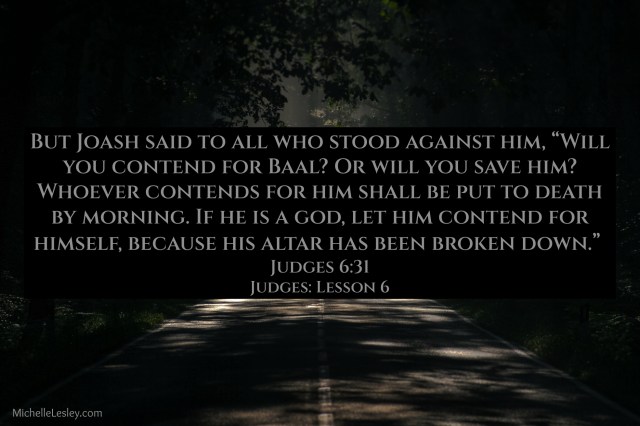
Did Baal “contend for himself” against Gideon? (31) What did this tell the Israelites about Baal’s impotence as a god?

How do these passages apply to this situation?

Consider the vehement anger with which the Israelite men reacted to their idol being torn down. (29-30) Have you ever – even in the gentlest way possible – challenged someone’s idol (told a friend she was following a false teacher, that she should give up feminism and submit to her husband, etc.)? Was her reaction in any way similar to the Israelites’ reaction? Have you ever reacted in a similar way when your own idol was challenged? What is the source of all of that vehement anger? What does this tell you about idolatry and the condition of the human heart? When it comes to idols of the heart are we really any different from these Israelites?

6. Read 33-40. Think back to 1-6 and all the horrors Midian, the Amalekites, and the people of the East have visited upon Israel for the last seven years. Now try to picture in your mind 135,000 of them – well fed, confident, and strong – drawn up in battle array. And you – the weakest guy in the weakest clan of his tribe – you’re the one who has to lead a starving, feeble army against them. Do you think you might be a little nervous and wanting some reassurance from the Lord that you really had understood His instructions correctly and that He was with you? Is it possible that’s how Gideon felt? Describe God’s mercy and compassion toward Gideon in answering and reassuring him (38, 40).

Is this passage any sort of basis for Christians testing God, or seeking a sign from God, by placing a metaphorical “fleece” before Him? Why not? (Hint: Did Gideon have a Bible? Do you?)


Homework

  • Have you ever seen the Disney movie A Bug’s Life? If so, have you ever noticed the similarities between the storyline of that movie and Judges 6:1-6? What are some of the similarities and differences? Why do you think secular storytellers and artists often mimic stories and themes from the Bible? Why is the Bible better? (Please note, I know there are numerous problems with Disney. I’m not recommending this movie nor instructing you to watch it. This assignment is for people who have already seen the movie.)
  • What is a paradox? Describe the paradoxes in today’s passage (14-16, 20-21). What are some other paradoxes in Scripture? Have you seen any of these biblical paradoxes play out in your own life? Why does God use paradoxes?
  • If you feel the need to place a “fleece” before God, seek a sign from Him, or hear Him speak to you in order to feel like you’re making a wise, godly decision, sorry to put it this bluntly, but…you’re doing it wrong. Read my article about making decisions biblically, Basic Training: 8 Steps to Finding Godโ€™s Will for Your Life.

Suggested Memory Verse

Speaking Engagements

Report Back: Staying on the Path Conference

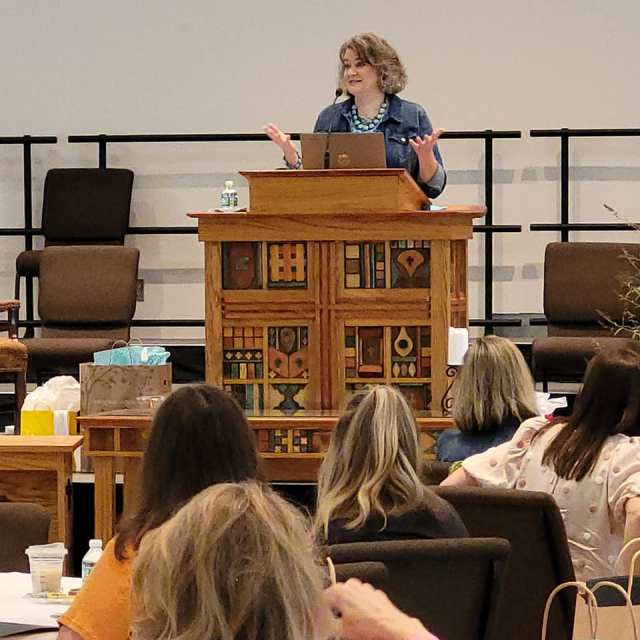
I had such a wonderful time of fellowship and teaching recently with the ladies of Providence Baptist Church in Opelika, Alabama, and their guests from the surrounding area, at the Staying on the Path in a World of Compromise women’s conference.

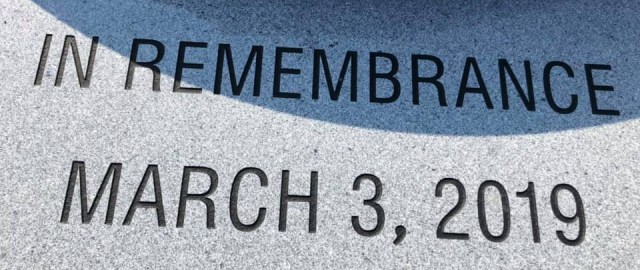
PBC was the staging area for disaster relief operations following the devastating tornado in the area in March of 2019. A beautiful memorial to the victims has been erected on the church grounds.

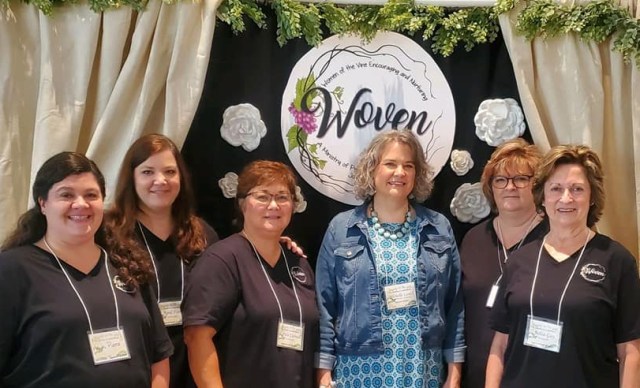
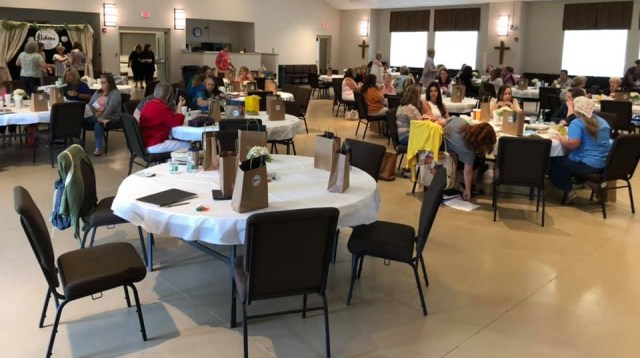
Providence’s WOVEN (Women Of the Vine Encouraging and Nurturing) women’s ministry put on a fantastic conference.

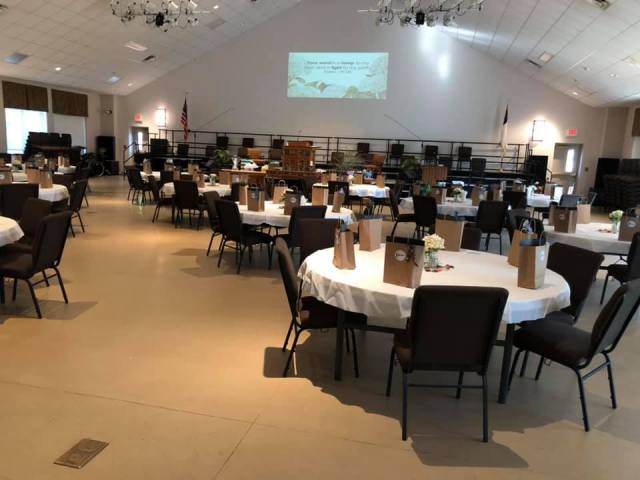
Everything was so nice and no detail was left unattended…

Here are some of the charming ladies who attended the conference…

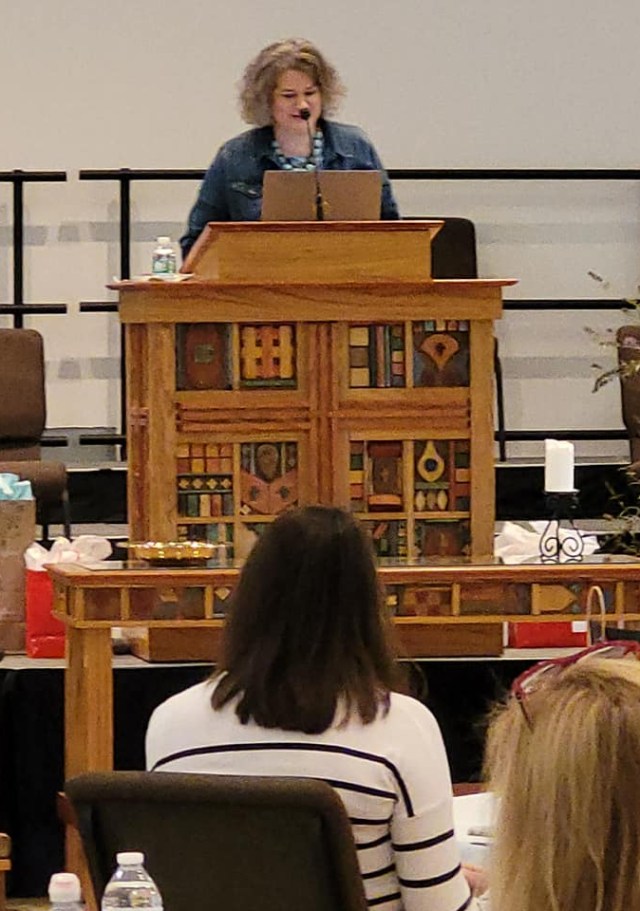
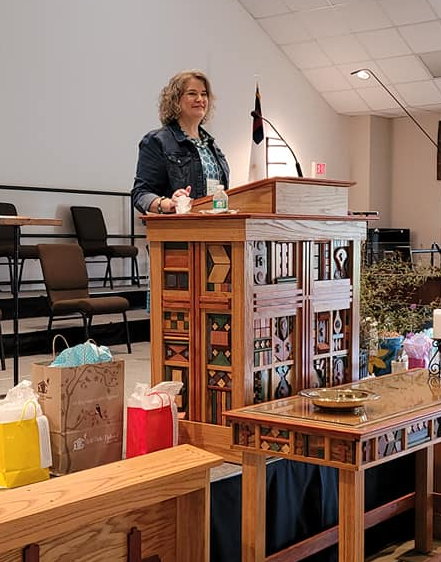
I had the pleasure of teaching three sessions, God’s Word, Our Foundation – on the necessity, authority, and sufficiency of Scripture, Discernment 101 – an introduction to discerning false doctrine and false teachers, and a great Q&A session where these ladies asked some really smart questions! (Sorry, no audio of the conference sessions at this time.)

Hostess bags are never necessary for a speaker, but I’m always so humbled and grateful to receive a special treat like this, especially after a long, tiring day of traveling. Although the contents are appreciated, the gesture of hospitality and caring is so precious and meaningful to me. I’m not especially gifted in that area, and I so admire sisters in Christ who are.

April, WOVEN’s director, machine embroidered the bag (notice the monogram
on the bag is LSU purple and gold!) and the hand towel herself. So pretty!

Many, many thanks to the conference organizers, especially April and Lynda, for taking such good care of me and making me feel so at home. It was a pleasure fellowshipping with them and with the ladies who attended the conference.


If your church or organization is ever in need of a speaker for a womenโ€™s event, Iโ€™d love to come share with your ladies as well. Click here for more information.


Photo Credits

Photos by others credited in captions

Remaining photos by Michelle Lesley