It has long been my perspective that the grit, wonder, and inspiration of true stories far surpasses anything in the fictional realm. And Paint the Wall Black only serves to bolster this belief.
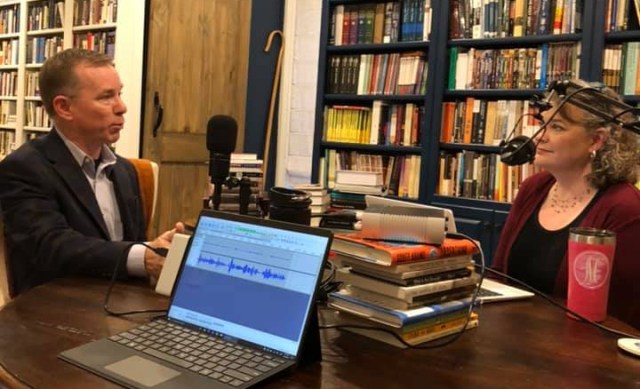
Meet Juan, a dear brother whom God graciously saved out of a number of depravities. Listen to his story of serving Christ and ministering to others through his family’s business…and what happened when he stood his ground on God’s Word on Black Lives Matter during the 2020 riots. Bonus material after the movie: Jon Harris, of the Conversations that Matter Podcast, interviews Juan and Pastor Joe.
A couple of caveats:
The filmmakers nobly attempted the herculean task of bleeping or blurring out every audible or written instance of profanity and vulgarity. But as you will see, it was impossible to edit out all of them. You will see the F-word. You will see middle fingers flying. Many pagans express themselves in such ways. If you cannot handle that, please do not watch this film.
Featuring this film on my blog does not equal an endorsement of Metro Praise International church, which, from its website, appears to be Pentecostal. Though I appreciate their strong focus on preaching the gospel and don’t doubt their confession of Christ based on what I’ve seen in this movie, Pentecostalism holds to some doctrines which are unbiblical. If you’re looking for a church in the Chicago or Dallas areas please see my Searching for a new church? resource instead.
Good Monday morning, readers. It is an honor and a joy to serve you in Christ. Welcome to all the newbies and to you seasoned veterans of the blog.
Because some of y’all are new, you aren’t yet aware of all of the resources here to help you. Or maybe you’ve been around a while and haven’t noticed something that might be helpful. Let’s remedy that!
Second, be sure to familiarize yourself with all of the tabs in the blue menu bar at the top of the page. That’s where I keep the info I’m most frequently asked about.
Third, there’s a search bar at the bottom of every page (and one in the blue menu bar at the top of every page) which might help you find what you need.
And finally, let me get you new readers some answers to the questions several of you have asked. Some of you long time friends may have missed these along the way, so I hope they’ll be helpful to you, too!
I’m throwing this question in with this Asked & Answered article because it’s coming up soon and because, though I haven’t answered it in article form, I’ve been asked and have answered multiple times on social media. This is the first year women have been asking me whether or not they should attend, and I think that should give us all pause.
I am recommending against attending or viewing TGC’s (The Gospel Coalition) women’s conference for two reasons:
The two headline speakers this year are Jackie Hill-Perry and Jen Wilkin, neither of whom I would recommend. (Reformed / Calvinistic churches, I know a lot of y’all have parked your women’s Bible study classes exclusively on Jen Wilkin because you think she’s “safe,” but it’s time to take another look. Read the article linked to her name above.)
For the last several years, TGC has been moving more and more into the woke / social justice stream of evangelicalism. I’m not saying every single speaker at this year’s women’s conference is woke or into social justice, I’m just saying that’s the way the organization has been headed, so it would not be surprising if that kind of thing is espoused at the conference.
(And, not for nothing, but my goodness is it expensive!)
The Lord has graciously opened my eyes to the fact that I was following several false teachers. Unfortunately, I have accumulated a large number of their books over the years. My question is what do I do with them now? Do I donate them? I was thinking of donating them to the MOPS ministry at my church.
Amy and I also covered this question in our most recent episode of A Word Fitly Spoken.
(Also, if your church is hosting a MOPS group, your pastor needs to know that there are serious biblical problems with some in MOPS leadership and with their books/materials.)
A lot of unbiblical things are happening at our church, but my husband seems oblivious. I want to leave and find a doctrinally sound church, but my husband wants to stay. What should I do?
And can I just say to all spouses – husbands and wives (because I’ve gotten this same question from husbands too) – if your spouse lovingly comes to you, Bible in hand, and says, “I’ve got some serious biblical issues with our church,” listen. Talk about it together. Pray about it.
And if the only reasons you’re insisting on staying at the old church are non-biblical issues like friends, fun, you’ve been there forty years and you’re comfortable, the preaching and the music are pleasant enough, you don’t want to start over meeting new people at a new church, it’s close to home, etc., can I encourage you to give some serious thought to dying to self and trying to find a new church your spouse won’t be miserable in?
If you insist – for superficial reasons – on staying somewhere your spouse – for good biblical reasons – is so uncomfortable in, you’re being selfish. Wives who do this aren’t submitting to their husbands’ spiritual leadership. Husbands who do this aren’t loving their wives or leading them in a God-honoring way. Love your spouse and put him or her first.
I’m writing you in regards to your stance on the prohibition of women teaching men in reference to 1 Timothy 2 and did not find an adequate rebuttal in your FAQ document linked in several places on your website. I must respectfully disagree and gently request your consideration of the contextual and cultural cues of the time and in that specific circumstance in which it was written.
My stance on 1 Timothy 2 is to believe, obey, and teach obedience to plain, black and white, rightly handled Scripture. Women are prohibited from holding the office of pastor or elder, preaching to men, instructing men in the Scriptures, or exercising authority over men in the gathering of the church body because the Bible says so and means so, not because people are misinterpreting the Bible based on failing to understand the culture of Ephesus at the time.
First Timothy 2:11-3:7 does not say what it says because the Ephesian women were ignorant or disruptive or false teachers. It is a pastoral epistle, which means it is basically a “policy and procedure manual” for the local church – everywhere in the world at every point in history. The church has not been getting this wrong for 2000 years and, suddenly, we enlightened folk in 21st century Western culture are going to come along and set things straight.
This article should help: The Mailbag: Counter Arguments to Egalitarianism (and for readers not yet acquainted with what the Bible teaches about the biblical roles of men and women, I would encourage you to start by reading the articles linked in the “Additional Resources” section of that article).
I am looking for a new Bible. I was looking into the She Reads Truth Bible until I saw your article about the authors being associated with known false teachers. I am looking into The Jesus Bible and maybe the (In)Courage Bible but wanted to know your input on this. I really like the resources like maps, reading plans, and book intros in the SRT Bible. Do you have input on a good Bible with room to take notes and similar resources? Does one exist that doesn’t have input from those who follow false doctrine?
If you’re looking for a good study Bible you can’t do better than the MacArthur Study Bible. I also highly recommend the Faithlife Study Bible app (which is free). I’ve discussed both a little more (with links) here. If you have to compromise on something for a good study Bible, compromise on taking notes in the Bible. You can always get a separate journal or notebook for taking notes.
I want to get baptized. Who is allowed to baptize? Can a woman baptize? Does the person have to believe in the same basic doctrines as I do (e.g. women shouldn’t preach to men or be leaders in church, homosexuality is a sin, you must believe in the full gospel to be saved etc.)?
I’m so glad you want to get baptized. Everyone who has confessed Christ as Savior should be baptized. I think my article Basic Training: Baptism will answer a lot of your questions (don’t forget the Additional Resources section at the end).
You may be able to infer the answer to your last question from the article, but in case you need a little clarity: Yes, you and the person baptizing you should be pretty much in agreement on doctrinal issues. Not because that’s what qualifies someone to baptize, but because baptism is an ordinance of the church, normally performed by the pastor or an elder of that church, and you should be baptized into a doctrinally sound church whose doctrine you agree with.
My question is about women correcting or pointing out a false belief of Scripture or interpretation to men. Am I as a woman allowed to correct or advise a Christian brother if he is teaching/preaching or spreading something that’s not Biblically sound or correct?
Yes, with a couple of provisos.
First, since you mentioned you’re a new Christian, you need to be sure you are correct about what the Bible says on the issue and that he is definitely wrong. Study your Bible hard, see what doctrinally sound pastors and Christians you trust have to say about the issue, etc. As Davy Crockett once said, “Be always sure you are right, then go ahead.”
Next, be sure you keep the “golden rule” foremost in your mind. If someone had to approach you and tell you that you were wrong about something, how would you want to be approached? Treat the other person with the same love and care.
If possible, take the person aside privately to explain his error, maybe with another friend to support you. We have a great example of this in Acts 18 with Priscilla, Aquila, and Apollos.
If it’s in a group setting, such as a Bible study class, in which it’s not possible to wait until later to speak to the teacher alone about the false doctrine he has just taught, I’ve addressed that in #5 in my article Rock Your Role FAQs.
If you have a question about: a Bible passage, an aspect of theology, a current issue in Christianity, or how to biblically handle a family, life, or church situation, comment below (I’ll hold all questions in queue {unpublished} for a future edition of The Mailbag) or send me an e-mail or private message. If your question is chosen for publication, your anonymity will be protected.
The next morning, Pastor Mike graciously made the time to sit for a brief interview with me, which I’m making available to you today for informational purposes, especially if you’re Southern Baptist.
I’m sure there are some theological topics on which Pastor Mike and I don’t see eye to eye, so this isn’t meant to be an endorsement of anything that conflicts with my theology as outlined in my Welcome and Statement of Faith tabs, nor is the fact that Pastor Mike is appearing on my blog an endorsement of any of my theology that conflicts with his positions. This interview was simply a service both of us are providing to you so that you may know where Pastor Mike stands on the issues I asked him about.
That being said, as a brother and sister in Christ who share a passion for the sufficiency of Scripture, a disdain for so-called “soft-complementarianism,” and a desire to see the Southern Baptist Convention straighten up and fly right, I feel certain we have far more in common than not. I found Pastor Mike to be a warm and caring brother, and I commend him for taking a firm, biblical stand on some issues which, sad to say, will not earn him any brownie points in certain sectors of the SBC. That takes guts, and I respect that. I thoroughly enjoyed our chat.
Listen in on the audio player above or on my YouTube channel (audio only).
I know some of y’all like transcripts when I post audio. I was not able to transcribe Pastor Mike’s portion of interview, but you may read my questions – as well as a post-interview addendum to Pastor Mike’s answer to question #2 – here.
Many thanks to Pastor Mike Stone, the Conservative Baptist Network, the Louisiana chapter of the Conservative Baptist Network, CBN Steering Council member, Pastor Lewis Richerson, and Benjamin Lesley- producer, for making this interview possible.
Need an opportunity to get together with other godly women for fellowship and good teaching? I’d love for you to come to one of my conferences!
If you haven’t checked out the calendar of events on my Speaking Engagements page (in the blue menu bar at the top of this page), here’s an update. I hope you’ll be able to attend one of these – I’d love to see you! I’ll be posting more about each of these as the dates get nearer, and I hope to add several more!
2021 Calendar:
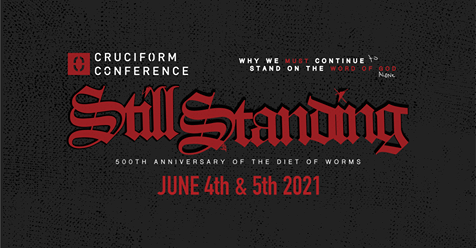
June 4-5-Cruciform Conference, Indianapolis, Indiana. Breakout sessions for women. This one is co–ed (except for my breakout sessions), so bring your husbands, ladies!
July 31- Women’s Conference, Providence Baptist Church in Opelika, Alabama. (This conference is open to women in the surrounding areas, but you must contact the church directlyfor details.)
September 11- Women’s Conference, Maranatha Baptist Church in Nashville, Arkansas. (This conference is open to women in the surrounding areas, but you must contact the church directly for details.)
September 25-26 (Sat./Sun.)- Women’s Conference, Ekalaka Bible Church in Ekalaka, Montana. (This conference is open to women in the surrounding areas, but you must contact the church directly for details.)
October 22-23- Women’s Conference, Pop-Up Church in Faber, Virginia. (This conference will be open to women in the surrounding areas, but you must contact the church directly for details.)
Newly added!
November 5-6- Women’s Conference, New Prospect Baptist Church in Lawrenceburg, Tennessee. (This conference is open to women in the surrounding areas, but you must contact the church directly for details.)
Couldn’t find a conference near you? Stay tuned. I’ve still got a few events pending that I’ll announce as soon as we can get the details ironed out.
Or, if you’re unable to attend one of the events above, host your own! I’d love to come speak to the ladies of your church or Christian organization. I have a few spots left on my 2021 calendar, and now is a great time to start planning for 2022 conference dates.
I also have a speaking engagement option that makes hosting an event easier and less expensive: speaking engagement packages. Choose from my most popular biblical topics and the most common conference formats, and we’ll send you the set speaking fee for that conference. (Of course, if you have another topic you’d like me to speak on or a format that’s unique to your event, that option is still available.)
1. Briefly review the “middle parts” (ex: merciful, poor in spirit) of the Beatitudes, the “salt and light” passage, and the “heart of the law” passage in Matthew 5:1-12, 13-16, 14-20. Now read 38-48 in light of those passages.
Summarize 38-48 in your own words. Is Jesus talking about personal offenses in this passage or crimes which require the governing authorities to mete out justice? In other words, if someone commits a murder, are the police to “turn the other cheek”? Is that what Jesus is saying here?
2. In the Beatitudes, Jesus lists the traits that define Christian character. In much of the rest of the Sermon on the Mount He fleshes out what many of these character traits look like when walked out in “real life”. Which of the traits (the “middle parts” – there could be several) listed in the Beatitudes is Jesus expanding on in 38-48? Especially note verse 45.
(Helpful hint: If you want to get those “middle parts” into your brain so you don’t have to keep flipping back to verses 1-12, here’s a helpful memory aid I discovered last week as I was preparing this lesson – there are 4 “P’s”: poor in spirit, pure in heart, peacemaker, persecuted, 3 “M’s”: mourn, meek, merciful, and 2 “R’s”: (hunger and thirst for) righteousness, reviled. You won’t have them all in order, and you won’t have the entirety of each verse, but those middle parts will stick.)
How does retaliation bland your saltiness? (13-16) How can acting in a loving way toward those who mistreat you make you saltier and brighter?
3. Review from our previous lessons (links above) the idea that the Sermon on the Mount is to the New Testament / new covenant what the Ten Commandments were to the Old Testament / old covenant.
Though retaliation and loving our enemies is not specifically mentioned in the Ten Commandments (it is dealt with elsewhere in the law), which of the Ten Commandments could be connected to instances of retaliating, or refusing to retaliate, against someone who has hurt you? For example: How could murdering or bearing false witness against someone be forms of retaliation? How could refusing to retaliate against a parent who has hurt you be a form of honoring your parent?
Are the Old Testament eye for an eye passages advocating taking personal vengeance on someone who has wronged you, or are they describing the just legal punishment for a criminal offense to be meted out by the governing authorities?
How do Jesus’ phrases “You have heard it said…but I say to you…” verbally transition the people from their focus on outward obedience to the letter of the law to zeroing in on the attitude of their hearts and the spirit of the law? Explain how loving your enemies is the heart of the law behind the Commandments you cited as answers in the paragraph above.
4. Review: Examine again the “You have heard it said…but I say to you…” proclamation. Who had the people heard it (the law) said by? Who taught them the law? How does Jesus saying, “But I say to you…” establish Jesus’ supremacy over the Pharisees, scribes, priests, etc. Imagine you’re one of these Jewish leaders and you’re hearing Jesus say this. What might your initial reaction be?
Recalling our Sermon on the Mount / Ten Commandments motif, how might Jesus’ “You have heard it said…but I say to you…” proclamation have evoked images of Moses as lawgiver, and signaled to the Jewish leaders and people that the better Moses was here?
5. When it comes to responding to someone who has wronged you, is restraining yourself from retaliating enough – a complete response – according to 38-42? How is controlling yourself and restraining yourself from retaliating, but instead doing good (38-42) demonstrating love for that person (43-48)? Compare Jesus’ “preaching” in this passage about retaliation and loving our enemies to His “practice” in these passages. How did he set the perfect example for us of loving our enemies? How does God demonstrate “common grace” love to His enemies in 45b? Why does Jesus instruct us to love our enemies? How does going above and beyond the attitudes and actions of the tax collectors and Gentiles (46,47) demonstrate that we are Christians or “sons of our Father who is in Heaven” (45)?
6. Think of the times when you’ve shared the gospel with someone. Have you ever tried to explain to someone that she is a sinner only to hear her say, “Well nobody’s perfect, but I’m better that that guy over there!” or “Maybe I’m not perfect, but I’ve never murdered anybody.”? How does verse 48 (and 46-47) help us understand that God – not other fallen, sinful people – is the perfect standard we should measure ourselves against? Will we ever measure up to His perfection? How does this help us see why we need Jesus – the perfectsacrifice for our sin – who made us perfect?
Homework
A woman who is reading this passage through the lens of an abusive marriage may wonder, “Does this passage mean I have to allow myself to be abused?”. No, it doesn’t mean that at all. This is an occasion when it’s really helpful to understand the context and culture behind the passage.
If you did the homework in lesson 6 (link above) and read my article The Mailbag: Is Lust a Sin for Women, Too?, you’ll recall the unspoken understanding of the people hearing Jesus preach the Sermon on the Mount that He was addressing the men, and any women and children who were there were basically just along for the ride. Jesus isn’t talking in this passage about a woman being abused by a man. Because He’s understood to be addressing the men, He’s also understood to be talking about an altercation between two men – equals, more or less. No one would have understood Jesus to mean (nor did He mean) that He was endorsing abuse or saying women had to be punching bags for abusers.
Think about how God designed and built men differently from the way He designed and built women. If Joe slaps both Tom and Mary in the face, who is going to be more likely to turn around and beat Joe to a pulp? Tom is – especially if he’s the same size or bigger than Joe is. Men are much more prone to, “You hit me, I kill you back.” (Any mom of two or more boys can vouch for the truth of this statement!) How does Jesus’ instruction to Tom to turn the other cheek to Joe flesh out “blessed are the meek,” “the merciful,” and “the peacemakers”? How does it tie in to the earlier passage on anger?
All of that being said, that doesn’t mean this passage only applies to men, and that if Mary slaps you in the face you can scratch her eyes out because you’re both women. Loving our enemies and treating them in a loving way might look a little different for women, but the principle is still the same. Think about an incident in which someone treated you poorly. How did you respond? What role did pride, selfishness, or anger play in your response? Did you refrain from retaliating and do good to that person? Make a plan for how you will respond the next time someone mistreats you. How can you be meek, merciful, and a peacemaker in that situation?