Church, Mailbag

The Mailbag: How can I tell if a church is doctrinally sound?

Originally published March 11, 2019


How do I know if a church is doctrinally sound? Do I base it off their statement of faith?

This is such a great question in a day when you can’t really trust that a building with the word “church” on the sign out front actually teaches and practices sound doctrine.

Because it would be impossible to cover every single aspect of doctrine that churches need to handle biblically, and because many of my readers are new to some of the deeper points of theology, what I want to do is give you some “signposts” to look for as you’re checking out a new church that will help indicate whether or not that particular church is likely to be one that handles those harder to understand points of theology in a doctrinally sound way.

First, check out these resources (and others) under my Searching for a new church? tab in the blue menu bar at the top of this page. These should be helpful if you’re unfamiliar with the biblical issues that a church should be handling correctly:

Looking for a Church Home? by Tim Challies

Church shopping? 35 Key Questions to Ask the Church at Berean Research

4 Questions to Ask Before Joining a Church by Brian Croft

How Can I Find a Good Church? 

Finding a New Church: Starting from Scratch

Six Questions for a Potential Church

If you are a brand new Christian and you aren’t sure what the answers to the questions in these articles should be, ask the person who led you to Christ, a pastor you know to be biblically trustworthy, or a friend who’s a mature Christian to help. You can also use the search bar at the top of this page to see if I’ve addressed your question. And, make liberal use of Got Questions? It’s a wonderful website that gives simple, biblical answers to all kinds of questions about the Bible, church, theology and other issues.

A church’s stance on many of these theological issues can be found in their statement of faith, which most churches post on their websites (often under the heading “What We Believe,” “Doctrinal Distinctives,” or something similar). While you’re on the church website, here are some other things to look for that can give you a fuller picture of whether or not the church is likely to be doctrinally sound.

⛪ Be wary of a church with no statement of faith on their website at all, and be cautious if they have a very simplistic statement of faith with few or no Bible verses cited to support it. Generally speaking, in my experience, the longer and more detailed a statement of faith is, and the more Scripture references it has, the more likely it is to be a doctrinally sound church. (Here and here are some typical, good statements of faith, and this one is particularly detailed.)

⛪ A few things to look for in the statement of faith:

•The Trinity: You’re looking for language along the lines of, “We believe in one God in three persons.” If you see three “modes” or three “manifestations,” that’s the language of modalism, and it is not a doctrinally sound church.

•Some churches have a section of their statement of faith on spiritual gifts or the Holy Spirit and include wording indicating whether they are a continuationist (ex: “we believe all the spiritual gifts are in operation in the church today”) or cessationist (ex: “we believe supernatural gifts such as healing and tongues have ceased”) church. Generally speaking, a church is more likely to be doctrinally sound if it holds the cessationist view. (No, I am not saying every continuationist church is heretical. I’m strictly talking probabilities here.) If there is anything in the statement of faith that indicates that a Believer will or must speak in tongues in order to be saved or as a result of salvation, or that the “baptism of the Holy Spirit” occurs separately from salvation, it is not a doctrinally sound church.

•Some churches intentionally indicate that they are complementarian in the “Marriage and Family” or “Church Leadership” section of their statement of faith by stating that the husband leads the family and the wife submits to her husband, or by explaining that the roles of pastor and elder are limited to men. It’s usually a good sign when a church makes a point of saying these things.

⛪ If you find the pastor’s name listed here, it’s not a doctrinally sound church.

⛪ If a church subscribes to a creed/confession/catechism you know to be biblical (ex: 1689 London Baptist, Westminster, Heidelberg, etc.) there’s a better chance they’re a doctrinally sound church. 

⛪ Some churches have a page on their website where they recommend books, blogs, and other resources. If they’re recommending doctrinally sound materials by trustworthy authors and teachers (click here for a few), that can be a good sign.

If they have a women’s ministry page, check out who’s speaking at the next conference they’re going to and who is the author of the Bible study materials they use.

⛪ Check the staff page and make sure they don’t have women serving as pastors/elders. (Be aware that some churches are now using titles like “Coach,” “Director,” “Facilitator,” etc. to disguise the fact that women are serving in unbiblical positions of leadership. Regardless of the way the position title is worded, women are not to serve in pastoral or elder offices or in any position in which they will be teaching or exercising authority over men.)

⛪ Check the sermon archives for a couple of things: 1) to see if they invite women or false teachers as guest preachers, and 2) does the pastor preach mainly expositorily or topically?

Keep in mind, however, that there are lots of churches out there who look perfectly doctrinally sound “on paper” but are not practicing what their website preaches. Take a look at these statements of faith for example: Lakewood (Joel Osteen), North Point (Andy Stanley), and Bethel (New Apostolic Reformation). (You can find out more about these churches/pastors here.) On the surface, and especially to those newly saved or not very familiar with the Bible, these statements of faith look fairly decent (although…notice that no Scriptures* are listed, and they are short and/or somewhat vague), but the practices of these churches may be surprising in comparison. *(Update: Since I originally wrote this article about a year ago, Lakewood has actually beefed up their statement of faith with a few Scripture references.)

Because churches’ practices and teachings often differ – sometimes significantly – from what you see in their statement of faith, you’ll have to dig deeper in order to get a better feel for the church’s doctrine. If the website posts the audio or video of their worship services, listen to several sermons. Make an appointment to go in and talk to the pastor about what the church teaches and ask any questions you might have. And visit the church for a while before joining to see how things actually go. The most a church website can do is help you weed out the churches that are definitely bad. The website cannot tell you that a church is definitely good.

If you’re looking for a new church but you aren’t sure where to start, check the church search engines and churches recommended by my readers at the Searching for a new church? tab in the blue menu bar at the top of this page.


If you have a question about: a Bible passage, an aspect of theology, a current issue in Christianity, or how to biblically handle a family, life, or church situation, comment below (I’ll hold all questions in queue {unpublished} for a future edition of The Mailbag) or send me an e-mail or private message. If your question is chosen for publication, your anonymity will be protected.
Apologetics, Bible

Without Apology: 7 Reasons Not to Be Ashamed of the Hard Parts of the Gospel

Originally published November 4, 2016

7-not-ashamed

I am not ashamed of the gospel…

Romans 1:16 is such a great verse, isn’t it? And one of the things that’s great about it is that we can all agree on it. I mean, no self-respecting Christian would dream of saying she’s ashamed of the gospel, would she? It’s a rallying cry for evangelism and for standing against persecution. Of course we’re not ashamed.

In theory. But in practice?

You see, the gospel is the good news of salvation. And, while we don’t tend to share the entire Bible when we share the gospel with someone, the good news starts in Genesis with a holy God who created a perfect world, and moves on to the first people who messed everything up with their sin, a whole bunch of subsequent people who couldn’t be faithful to God and keep His Law, Christ and His redemption of sinners, and the Revelation of the hope of His return at the end of time. So, “the gospel” really stretches from the front cover of your Bible to the back cover.

Are there any parts of it you shy away from in evangelism, discipleship, or teaching?

What about the atheist you’re witnessing to who denigrates your God for committing genocide in the Old Testament?

Were you afraid to speak up the last time you were the only Creationist in a room full of evolutionists?

Have you ever seen some poor pastor or male teacher tiptoe his way through the minefield of a passage on marital submission or the biblical role of women in ministry lest the wrath of church ladies befall him?

Are you reluctant to be known as someone who believes and will unequivocally say that homosexuality and other deviant sexual behavior is a sin?

Hey, we’ve all been there and failed. These are tough passages for sinners to hear, after all! When they come up, we should certainly approach them wisely and lovingly with people, but we should take care never to wish these things (and others) weren’t in Scripture, feel embarrassed about them, apologize for them, or act as though we have to make excuses for God about them. We need to be just as willing, bold, kind, and comfortable saying, “The world did not evolve, God created it,” and “You must repent of homosexuality along with all your other sin,” as we are saying, “God is love.” Why?

1. The Bible is God’s word.

Scripture is the very words of the God of the universe. It’s not a storybook or a policy and procedure manual dreamed up by men. Scripture is God speaking to us. To be ashamed of any part of His word is to be ashamed of Him, what He has done, and who He is. We dare not.

2. The Bible glorifies God.

The mere existence of Scripture brings honor and glory to God. No other god has spoken personally, so magnificently, and in a living and active book, to his people. The Bible brings glory to God when His people believe and obey it. We exemplify His goodness and holiness to a watching world. And even when the Bible isn’t believed and obeyed, God is glorified by showing us in His word that His way is right and perfect and man’s way is not.

3. The Bible is perfect.

God didn’t leave anything out of the Bible or put anything extra in that shouldn’t be there. The Bible is perfect just the way it is. God doesn’t need us to help Him out by editing it. If He wanted it to say something different, it already would.

4. The Bible is right.

When God’s word says something is a sin, it is right. When God’s word tells us He, in His holiness, did something we think is unfair or distasteful, it is right. When God’s word requires us to do something, it is right. When someone balks at what the Bible says, it’s not the Bible that’s wrong. It’s that person’s sinful flesh that thinks it knows better than God what is good, appropriate, loving and fair. If a person comes up against the Bible, the Bible does not bend. That person bends. The knee. To God. If you are standing on the rightly divided word of God, you can be confident that you are in the right because the Bible is right. There’s no need for reticence.

5. The Bible is a blessing.

If you’ve ever studied the history of how you got the Bible sitting on your coffee table, you know just how amazing it is that you own one. Thousands of years, scores of writers, so many people who were martyred for penning it, protecting it, and translating it. How could we be ashamed of such a precious gift from God Himself?

6. The Bible is good for us.

God put those tough passages in the Bible because they’re good for you. And they’re good for the person who’s foaming at the mouth over the one you’re trying to explain to her, right now, too, she just doesn’t know it yet. God is a kind and loving Father who always does what is best for us. Those difficult passages would not be in the Bible if God didn’t want them there to benefit us in some way.

7. The Bible is useful.

 I can’t say it better than Scripture itself does:

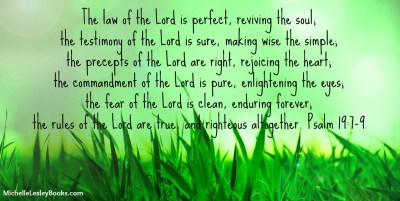
All Scripture is breathed out by God and profitable for teaching, for reproof, for correction, and for training in righteousness, that the man of God may be complete, equipped for every good work. 2 Timothy 3:16-17

God uses every verse of Scripture – even the hard ones – to save us, grow us, conform us to His will, equip us, and reveal Himself to us. Why would we deny those saving, growing words to people who desperately need to hear them by shying away from them just because they’re difficult to say or unpleasant to hear?

Steve Lawson once said, “The Bible is not hard to understand. It is just hard to swallow.” And he’s so right. It’s not difficult to understand the concept that wives should submit to their husbands or that the God who sovereignly gave people life has every right to take it away. What’s difficult for us is to humble ourselves and cede control to Someone else. We think we know best. We want to run things and make the rules. We don’t want to submit to God’s authority.

In the end, there really aren’t any tough passages. There are only passages that come up against tough hearts. Tough hearts that need to be broken by the gospel, that they might repent of their sin and be forgiven by a great and merciful God.

And that’s nothing to be ashamed of.

ps-19-7-9

Speaking Engagements, Special Events

You’re Invited to a Webinar!

Tonight’s the night! Be sure you’re registered!


Are you a discerning woman? Whether you’re just starting to learn to discern or you’ve had your “powers of discernment trained by constant practice,” we think you’ll find this Zoom webinar edifying and informative. Join Amy Spreeman and Michelle Lesley as we examine the Scriptures that pertain to discernment, contemporary false teachings to watch out for, addressing false teaching with loved ones and leaders, and more!

Date: Thursday, May 14

Time: 8:00 – 9:30 p.m. Central

To register, click here.

And be sure to share this around with the ladies of your church
and your friends and loved ones!

Uncategorized

The Word on Wednesdays

Hi ladies! I hope you enjoyed our most recent Bible study, Living Stones: A Study of 1&2 Peter which we recently wrapped up.

I’m going to be taking a break on Wednesdays getting ready for our new study. I hope you’ll enjoy it and that it will edify you as you seek to grow in Christ and His Word. (The picture above does not mean we will be studying James. :0)

So, if you haven’t quite finished with the Living Stones study, you can use this time to finish up, and I’ll also be posting some articles from the archives that I think you’ll find helpful as we make our way toward our next study. Here is this week’s article:

Watching and Warning with Ezekiel

Through the Bible in 2014 ~ Week 36 ~ Aug. 31- Sep. 6
Ezekiel 16-34
Watching and Warning with Ezekiel

Well, Ezekiel is still prophesying (and he’ll still be prophesying until Saturday :0) God is still sending out the same message through him. Again and again, God chastises His people, trying to shake some sense into them so they will repent and turn back to Him… Continue Reading


Discernment, False Doctrine, False Teachers

Exposing Deception


Are you looking forward to the Discerning Women Learn to Discern webinar Amy Spreeman and I are hosting on Thursday? (If you haven’t registered yet, there’s still time. Click here.) It’s being hosted by our very gracious friend, Bart McCurdy.

Recently, Bart hosted another online conference, Exposing Deception, featuring the teaching of Chris Rosebrough, Todd Friel, Phil Johnson, and Justin PetersIf you can’t wait until Thursday to start learning discernment, let these gents whet your appetite. (Don’t be alarmed- it seems as though the beginning portion of Chris’s session was cut off in the video, but there’s still plenty of great material here to learn from.)