Mailbag

The Mailbag: Christian Fiction Recommendations

This article is kept updated as needed.

I love to read Christian fiction but find that it can be a bit of a minefield. It can get off course theologically and may reflect the world more than biblical Christianity. Have you ever given recommendations on Christian fiction writers?

Great question! We all need a little mind candy now and then, but we don’t want it to be a vehicle for delivering bad theology to our brains.

First, let me sort of set the stage for what’s in my mind when I think of “Christian fiction.” Other people might have other definitions of this book genre, and that’s absolutely no problem, but, to me, Christian fiction has an overtly biblical message or theme and maybe even a blatant presentation of the gospel. When I think of “Christian fiction” I’m not thinking merely “family friendly” (a good clean story with nothing biblical in it), or a novel with a character in it who happens to attend church or be a Christian but there’s nothing else biblical in the book, or a fiction book on a non-biblical topic that’s written by someone who’s a Christian. So the books I’ll be recommending below will fit this definition of “Christian fiction.”

Next, I know the bulk of Christian fiction marketed to women is romance and Amish romance. And, in keeping with the “stick out like a sore thumb” weirdness that is Michelle Lesley, it’s not a genre (Christian or secular) I personally enjoy. There’s nothing wrong with it if you can find a good one and you like romances, but the books below aren’t romances simply because that’s not what I read. I tend toward biblical history novels and – I don’t know if there’s a particular name for this type – “real life scenario” contemporary Christian lit.

A few final points:

โ€ขI don’t hold Christian fiction to quite as high a theological standard as I do Christian non-fiction (theology, Bible studies, “Christian living” books, etc.). Some of the books below may have a few theological “cow pies” you’ll have to step around and ignore, but, for the most part they’re in line with biblical theology.

โ€ขMy personal standard for recommending a biblical historical fiction book (a fictionalized account of a true Bible story, such as Lynn Austin’s and Chris Skates’ books below) is that the book has to stay true to what the Bible actually says took place including the dialogue, details, and chronology, and any of the fictionalized parts have to comply with biblical principles, theme, history, and culture of the time period.

โ€ขI haven’t checked any of these authors (as I would non-fiction Christian authors) to see where they stand on the role of women in the church, and I haven’t researched any of them to discover whether they associate with false teachers.

That said, here are a few recommendations:

Karen Kingsbury– Although her older works of fiction may not be too problematic, she is not someone I’d encourage you to read because of her recent theological trajectory.

Lynn Austin– Here’s a “book report” I wrote on Lynn Austin’s Chronicles of the Kings series. I read that entire series and loved it. It was VERY good and theologically strong.

Chris Skates– Chris’ biblical historical fiction rendition of the story of Noah and his family in The Rain was a fun read.

Those are the only ones I’ve actually written about. Here are some others I’ve read and enjoyed over the years. (Quoted excerpts courtesy of Amazon.com)

Hank “The Bible Answer Man” Hannegraaff:

The Last Disciple– “As the early church begins to experience the turbulence Christ prophesied as the beginning of the last days, an enemy seeks to find Johnโ€™s letter, Revelation, and destroy it. Meanwhile the early Christians must decipher it and cling to the hope it provides as they face the greatest of all persecutions.”

(Update: A few months after the original publication of this article, Hank Hannegraaff decided to join the Greek Orthodox church. Though I read and enjoyed this fictional book of his, I would no longer recommend his non-fiction work or ministry as biblically trustworthy.)

Paul Maier:

A Skeleton in God’s Closet– “Dr. Jonathan Weber, Harvard professor and biblical scholar, is looking forward to his sabbatical year on an archaeological dig in Israel. But a spectacular find that seems to be an archaeologistโ€™s dream-come-true becomes a nightmare that many fear will be the death rattle of Christianity.”

The Constantine Codex– “While touring monasteries in Greece, Jon and his wife Shannonโ€”a seasoned archaeologistโ€”uncover an ancient biblical manuscript containing the lost ending of Mark and an additional book of the Bible. If proven authentic, the codex could forever change the way the world views the holy Word of God.”

Kathi Macias:

People of the Book– “Farah lives in Riyadh, Saudi Arabia, with her family, and wants nothing more than to develop a deeper devotion to her Muslim faith. She sees the month of Ramadan as her chance to draw nearer to Allah, and pursues that goal. All goes well until the prophet Isaโ€”Jesusโ€”appears to her in a dream and calls her to Himself.”

Joy DeKok:

Rain Dance– “What happens when a Christian woman facing a childless future and a woman seeking an abortion are waiting to see the same doctor? What if after that “chance” encounter they are unable to forget each other?”

Randy Alcorn: I’ve read and enjoyed most of Randy’s fiction books. Off the top of my head, I don’t recall any I wouldn’t recommend. Two of my favorites were:

Safely Home– “Is this the day I die? Li Quan asks himself this question daily, knowing that he might be killed for practicing his faith. American businessman Ben Fielding has no idea what his brilliant former college roommate is facing…But when they are reunited in China after twenty years, both men are shocked at what they discover about each other.”

Edge of Eternity– I would call this book a modern day Pilgrim’s Progress. “Imagine Being Pulled Into the Hereafter. While Youโ€™re Still Alive. A disillusioned business executive whose life has hit a dead-end, Nick Seagrave has lost loved ones to tragedy and his family to neglect. Now, at a point of great crisis, he unbelievably and inexplicably finds himself transported to what appears to be another world.”

Frank Peretti: Years ago, I was a big Frank Peretti fan and read most of his novels. I don’t remember any overt heresy in his work, but it’s been well over a decade since I’ve read anything by him, so that could just be my faulty memory. Most of his novels deal with spiritual warfare, so there’s the potential for some errant theology there. Read discerningly. Two of my Peretti favorites are:

This Present Darkness and Piercing the Darkness (a two book series)- “The small town of Ashton is the unexpected setting for an epic clash between good and evil as a Christian preacher and a news reporter unearth a plot to take over their small community, and eventually the world.”

There are also some books that would fall under the category of Christian fiction which I would strongly recommend against:

The Shack (or any other book) by William Paul Young: While I mentioned that I don’t hold Christian fiction to as high a theological standard as Christian non-fiction, I definitely don’t recommend any Christian fiction fraught with blatant heresy or whose main goal is to teach heresy, and that’s what Young himself has stated is one of the objectives of this book (although he doesn’t consider his views heresy). The movie based on this book releases next month (March 2017). Here are some resources that will explain the theological problems in The Shack in more detail.

Redeeming Love (the book or the movie) by Francine Rivers

The Chosen (any books or materials): Yes, it’s fiction. If you want the non-fiction version, read your Bible.

Inappropriate/Unbiblical Content: In an effort, I guess, to be cutting edge, cool, or gritty, there are novels marketed under the Christian fiction genre which contain profanity, graphic sex scenes, and glorification of other sinful behavior. I would not recommend those books regardless of the reason these types of things are included in the book.

Girl “Porn”: This is really more about what’s going on in the reader’s heart than the book itself. It’s been said that romance novels can be a form of literary “pornography” for women. I mentioned graphic sex scenes above, but I would also caution women away from non-graphic Christian romances if they cause you to create an idol in your heart of the “ideal” man that no real life man can measure up to. If you’re married, read a lot of romances, and find yourself increasingly dissatisfied (in any way) with your husband because he can’t hold a candle to the leading men in the books you’re reading, you need to put those books down and walk away from them. That’s coveting.

False Teacher Fiction: There are a few false teachers who have branched out into the fiction genre. Beth Moore and Priscilla Shirer have both recently released novels, T.D. Jakes has written some fiction, and I believe there are a few others. Even though these books may be fiction and might not even contain any false doctrine, I could not, in good conscience recommend a fiction book that could serve as a “gateway drug” to their non-fiction books.


If you have a question about: a Bible passage, an aspect of theology, a current issue in Christianity, or how to biblically handle a family, life, or church situation, comment below (Iโ€™ll hold all questions in queue {unpublished} for a future edition of The Mailbag) or send me an e-mail or private message. If your question is chosen for publication, your anonymity will be protected.
Basic Training, Salvation

Basic Training: The Gospel

For more in the Basic Training series, click here.

Let’s start at the very beginning
A very good place to start
When you read, you begin with ABC
When you sing, you begin with Do, Re, Mi…ยน

And when you talk Christianity, you begin with…

The gospel. It’s the foundation of the Christian faith. The thing all genuinely regenerated believers have in common. And it’s the ABC’s of our Basic Training series.

Without a right understanding of the gospel, none of the subsequent articles in this series will make much sense to you. In fact, you’ll find yourself standing in opposition to biblical teaching because the Bible says that only those who are born again and empowered by the Holy Spirit can embrace the things of God in their hearts:

Now we have received not the spirit of the world, but the Spirit who is from God, that we might understand the things freely given us by God. 13 And we impart this in words not taught by human wisdom but taught by the Spirit, interpreting spiritual truths to those who are spiritual. 14 The natural person does not accept the things of the Spirit of God, for they are folly to him, and he is not able to understand them because they are spiritually discerned.

But far more important than your reaction to this series of articles,

If you don’t have a clear understanding of,
and response to,
the gospel, you aren’t saved,
and you’ll spend eternity in Hell.

I know that sounds blunt, but that’s just the meat and potatoes of it, ladies. In the same way you can’t get a molecule of water unless you add exactly one atom of oxygen to exactly two atoms of hydrogen, believing whatever you feel like believing doesn’t produce a Christian. You have to “follow the recipe,” so to speak, to the letter. And that recipe is in the Bible. Let’s take a look at it.

โ™ฆ You are a sinner (you have transgressed God by breaking His law).

Therefore, just as sin came into the world through one man, and death through sin, and so death spread to all men because all sinnedโ€” Romans 5:12

as it is written: โ€œNone is righteous, no, not one; Romans 3:10

for all have sinned and fall short of the glory of God, Romans 3:23

โ™ฆ The penalty for your sin is an eternity in Hell.

For the wages of sin is death, Romans 6:23a

but for those who are self-seeking and do not obey the truth, but obey unrighteousness, there will be wrath and fury. Romans 2:8

And if anyone’s name was not found written in the book of life, he was thrown into the lake of fire. Revelation 20:15

โ™ฆ You can’t escape Hell by being a good person, having a good heart, or any other effort on your part.

We have all become like one who is unclean, and all our righteous deeds are like a polluted garment. Isaiah 64:6a

as it is written: โ€œNone is righteous, no, not one; 11 no one understands; no one seeks for God. 12 All have turned aside; together they have become worthless; no one does good, not even one.โ€ Romans 3:10-12

he saved us, not because of works done by us in righteousness, but according to his own mercy, by the washing of regeneration and renewal of the Holy Spirit, Titus 3:5

โ™ฆ Salvation (being forgiven for you sin so you can be in good standing with God) is a result of God’s mercy and grace, not something you can earn. It is a gift.

For by grace you have been saved through faith. And this is not your own doing; it is the gift of God, not a result of works, so that no one may boast. Ephesians 2:8-9

So then it depends not on human will or exertion, but on God, who has mercy. Romans 9:16

For the wages of sin is death, but the free gift of God is eternal life in Christ Jesus our Lord. Romans 6:23

โ™ฆ The gift God offers you is that, on the cross, Christ took the punishment you deserve for your sin. He will take away your sin and give you His perfect standing before God in exchange.

For Christ also suffered once for sins, the righteous for the unrighteous, that he might bring us to God, 1 Peter 3:18a

for all have sinned and fall short of the glory of God, 24 and are justified by his grace as a gift, through the redemption that is in Christ Jesus, 25 whom God put forward as a propitiation by his blood, to be received by faith. Romans 3:23-25a

For our sake he made him to be sin who knew no sin, so that in him we might become the righteousness of God. 2 Corinthians 5:21

โ™ฆ The way you receive that gift and have Christ’s righteousness “credited to your account” is to repent from (have the heart desire to turn away from and ask God’s forgiveness for) your sin and trust that Christ’s death, burial, and resurrection paid the penalty for your sin.

[Jesus said] โ€œThe time is fulfilled, and the kingdom of God is at hand; repent and believe in the gospel.โ€ Mark 1:15

Repent therefore, and turn back, that your sins may be blotted out, Acts 3:19

In him you also, when you heard the word of truth, the gospel of your salvation, and believed in him, were sealed with the promised Holy Spirit, Ephesians 1:13

because, if you confess with your mouth that Jesus is Lord and believe in your heart that God raised him from the dead, you will be saved. Romans 10:9

That’s it. That’s the gospel. Turn from your sin and trying to earn favor with God by your so-called good behavior and throw yourself on the mercy of God, trusting Christ’s finished work on the cross to forgive your sin and make you righteous in God’s eyes.

That’s what salvation – or becoming a Christian – is. Adding anything to the gospel or taking anything away from it is not salvation or biblical Christianity. It is a false gospel. Believing a false gospel will not forgive your sin, make you right with God, or take you to Heaven when you die. Unfortunately, many people believe a false gospel and there are many people who claim to be Christians, pastors, and Bible teachers who teach a false gospel.

What are some of those false gospels?

If you’re basically a good person, or your good deeds outweigh the bad, you’re OK with God, and you’ll go to Heaven when you die.

If you’ve been baptized at any point in your life and for any reason, you’re saved.

If you go to church regularly, you’re a Christian.

If you participate in communion or the Lord’s Supper, you’re a Christian.

The reason we come to Jesus is to have a better, more comfortable, or more successful life.

The reason we come to Jesus is to get healed from a medical condition, because He will make us wealthy, or because He will do cool supernatural signs and wonders in our lives.

Simply saying you’re a Christian, or believing that you are a Christian, makes you one.

If you were born in America and you’re not Jewish, Hindu, Muslim, or some other religion, you’re a Christian.

If you believe in God, you’re a Christian.

If you give mental assent to the facts about Jesus (without repenting and trusting Him), you’re saved.

If, at some point in your life you repeated the words of a “sinner’s prayer,” “accepted Jesus,” or “asked Jesus into your heart,” (even if you didn’t know what you were doing, and without true repentance and faith) you’ve been born again.

You can become a Christian without repenting from your sin.

You can believe in a “Jesus” of your own making, rather the one described in Scripture, and still be a Christian.

Are you a Christian? Have you ever felt the weight of your guilt before God and asked Him to cleanse you and make you right with Him? Do you believe and embrace that Christ’s death, burial, and resurrection satisfied God’s wrath against you for your sin?

The Bible says we should examine ourselves to discover whether or not we are truly in the faith. Take some quiet, undistracted time alone with God today and search your heart. What do you really believe? Is it the true gospel of Scripture, or something else? (If you need some help, this might be a useful tool.) Don’t put it off, it’s too important.

If you find that you’re not in Christ, talk to Him. Confess your sin and your need for Him to save you. Ask His forgiveness and declare your trust in Him.

Don’t wonder and guess any more about where you stand with God. Know.

Working together with him, then, we appeal to you not to receive the grace of God in vain. For he says, โ€œIn a favorable time I listened to you, and in a day of salvation I have helped you.โ€ Behold, now is the favorable time; behold, now is the day of salvation. 2 Corinthians 6:1-2


ยนDo-Re-Mi. Rodgers and Hammerstein, The Sound of Music, 1959.

Pop Theology, Social Media, Throwback Thursday

Throwback Thursday ~ Pop Theology: Twisted Scripture

Originally published May 22, 2015pop theology twisted scripture


Dear Pop-

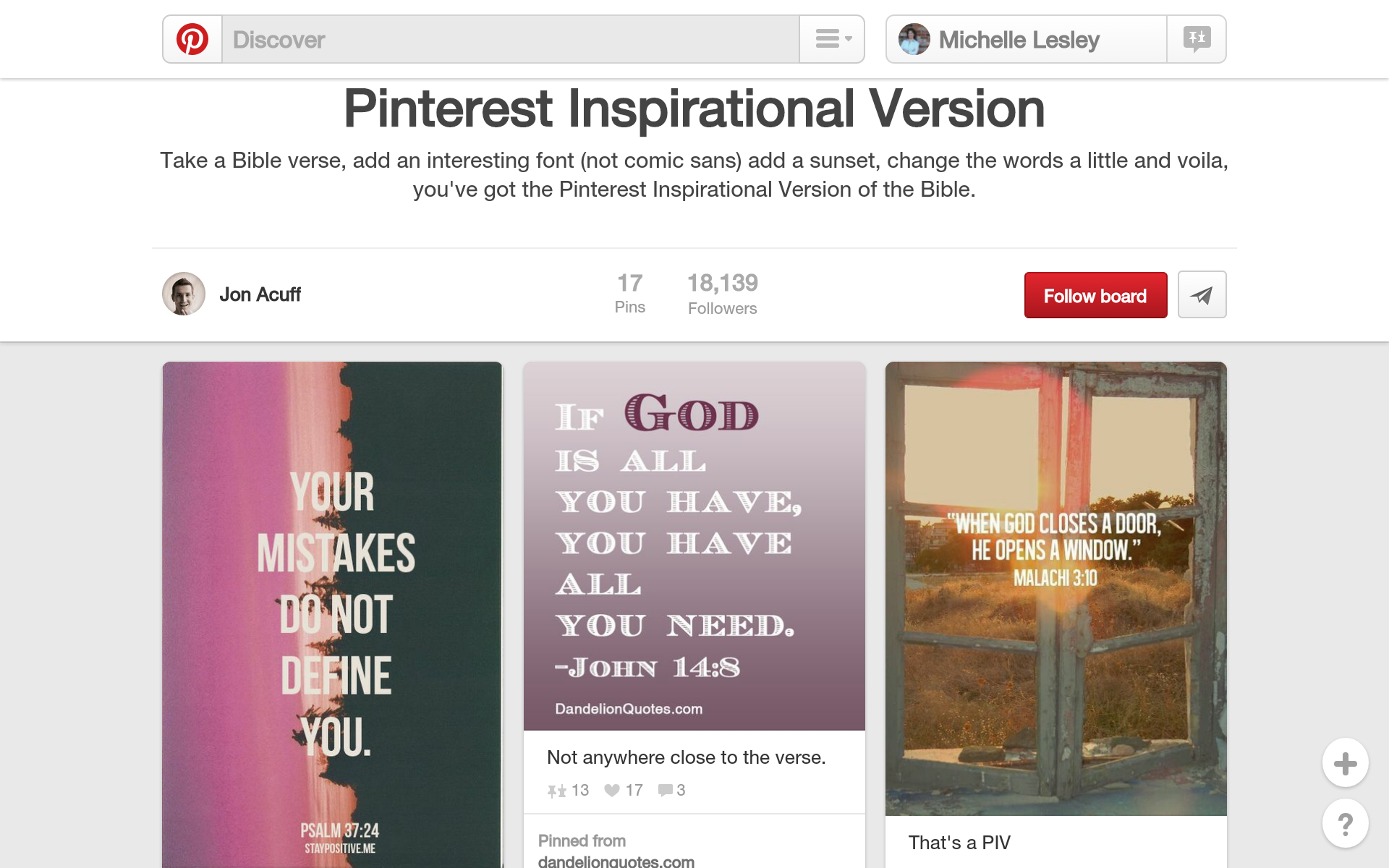
I saw this meme that I thought was a Bible verse. It had a nice thought and a Scripture reference after it, but when I turned there in my Bible, the nice thought didn’t say anything close to what the verse actually said. It turns out that someone wrote what the verse meantย to her and then put the Scripture reference after it. And there’s a whole Pinterest board dedicated to memes like this! Is it OK to handle God’s word like that? I’ve also included some other memes I found that sound fishy to me. Your thoughts?

Penny Pinterest


Screenshot_2015-04-23-08-20-50

Dear Penny,

Jon Acuff’s a fun dude, but this is dissin’ God’s word. Ain’t nobody – NO-O-O-O-O-BODY got the props to bling up the Bible. No addin’ to it. No subtractin’ from it. Bad things’ll go down, ya dig?ย ย Jots? Tittles?ย Keep your mitts off, and swing that sword right. And what up with all this “Inspirational Version”? God’s word is da bomb diggity all by its onliness, got me?


10857871_884902334876078_6947353962358613734_n

Heck to the no. Check it.


10401339_2331680386869577_7526666480006145492_n

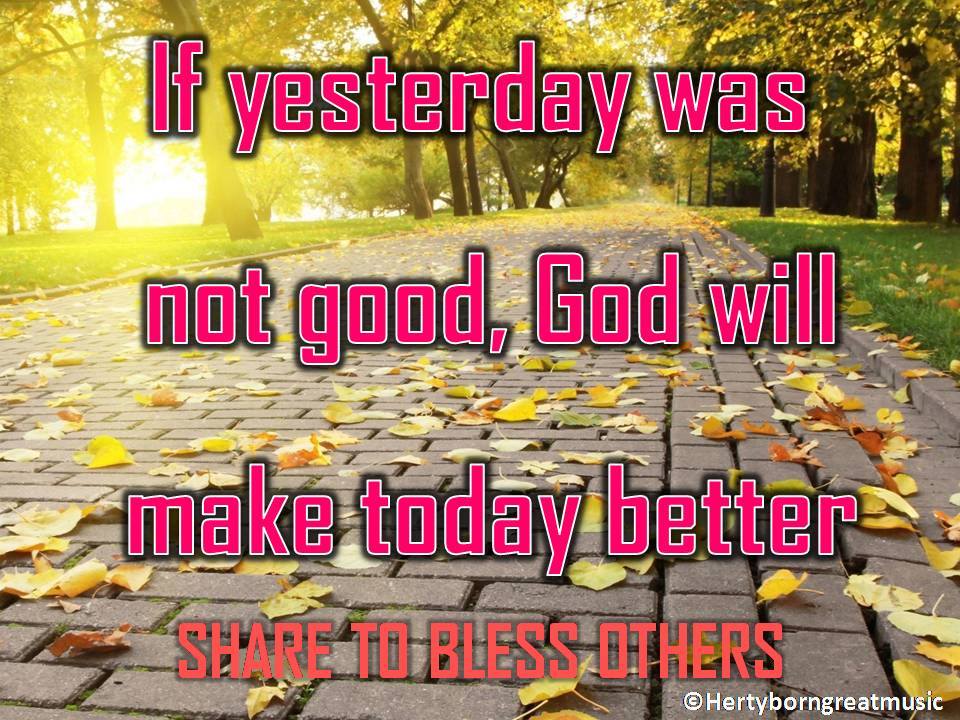
Fo’ relz? Where’s that in the Big Book? Lemme let you in on a little inside info: nowheresville. Jesus said as long as we’re hangin’ on the big blue, there’s gonna be trouble. Lots of it. But check it out- who cares? We don’t throw down our faith on havin’ a good day. We throw down our faith on Jesus, even when it’s a bad scene.


11051558_10153641788073625_1262363071_n

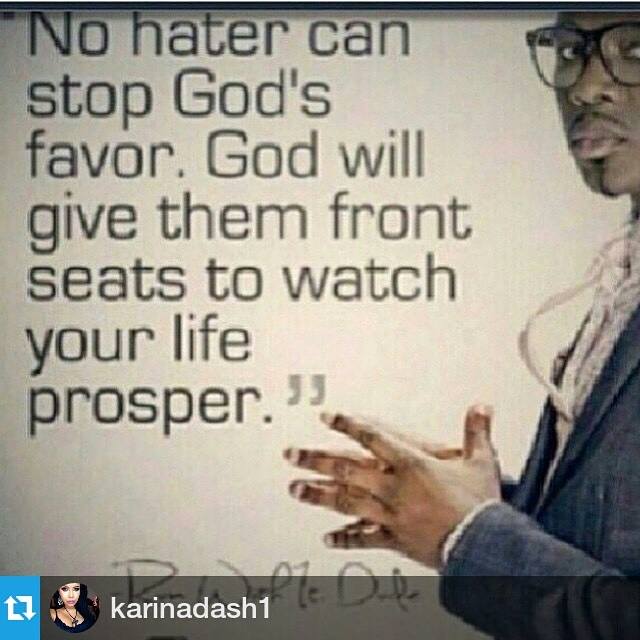
Yeah? Tell that to Jesus. His haters had front row seats to torture Him and watch Him die. Or the eleven out of Jesus’ twelve closest homeboys who were executed by their haters. Put your peeps on a copy of Foxe’s Book of Martyrsย and quit littering up social media with this mess. Kick that prosperity gospel junk to the curb.


Well, Penny. I’ve laid down the gospel 411 for ya. Keep your specs on Jesus and keep the faith.

For the Homies,
Pop

The Ten (10 Commandments Bible Study)

The Ten: Lesson 10

Previous Lessons: 1, 2, 3, 4, 5, 6, 7, 8, 9

Exodus 20:15

โ€œYou shall not steal.

Leviticus 6:1-7

The Lord spoke to Moses, saying, โ€œIf anyone sins and commits a breach of faith against the Lord by deceiving his neighbor in a matter of deposit or security, or through robbery, or if he has oppressed his neighbor or has found something lost and lied about it, swearing falselyโ€”in any of all the things that people do and sin therebyโ€” if he has sinned and has realized his guilt and will restore what he took by robbery or what he got by oppression or the deposit that was committed to him or the lost thing that he found or anything about which he has sworn falsely, he shall restore it in full and shall add a fifth to it, and give it to him to whom it belongs on the day he realizes his guilt. And he shall bring to the priest as his compensation to the Lord a ram without blemish out of the flock, or its equivalent, for a guilt offering.And the priest shall make atonement for him before the Lord, and he shall be forgiven for any of the things that one may do and thereby become guilty.โ€


Isaiah 61:8a

For I the Lord love justice; I hate robbery and wrong;


Luke 19:1-10

He entered Jericho and was passing through. And behold, there was a man named Zacchaeus. He was a chief tax collector and was rich. And he was seeking to see who Jesus was, but on account of the crowd he could not, because he was small in stature. So he ran on ahead and climbed up into a sycamore tree to see him, for he was about to pass that way. And when Jesus came to the place, he looked up and said to him, โ€œZacchaeus, hurry and come down, for I must stay at your house today.โ€ So he hurried and came down and received him joyfully. And when they saw it, they all grumbled, โ€œHe has gone in to be the guest of a man who is a sinner.โ€ And Zacchaeus stood and said to the Lord, โ€œBehold, Lord, the half of my goods I give to the poor. And if I have defrauded anyone of anything, I restore it fourfold.โ€ And Jesus said to him, โ€œToday salvation has come to this house, since he also is a son of Abraham. 10 For the Son of Man came to seek and to save the lost.โ€

1 Corinthians 6:10-11

nor thieves, nor the greedy, nor drunkards, nor revilers, nor swindlers will inherit the kingdom of God. 11 And such were some of you. But you were washed, you were sanctified, you were justified in the name of the Lord Jesus Christ and by the Spirit of our God.


Ezekiel 18:16

[He] does not oppress anyone, exacts no pledge, commits no robbery, but gives his bread to the hungry and covers the naked with a garment,

Ephesians 4:28

Let the thief no longer steal, but rather let him labor, doing honest work with his own hands, so that he may have something to share with anyone in need.


The Holy Bible, English Standard Version. ESVยฎ Permanent Text Editionยฎ (2016). Copyright ยฉ 2001 by Crossway Bibles, a publishing ministry of Good News Publishers.


Questions to Consider:

1. Going back to the immediate context of the eighth Commandment, (God is setting apart Israel as His own special people and establishing them as a nation), why would it have been important, on a societal level, that Joe Israelite refrain from stealing? How would respecting their neighbor’s rights of private ownership of property have pointed the pagan nations surrounding Israel to the one true God? How can being a law abiding citizen today be a step toward witnessing to lost people?

2. According to verses 2,5-7 of Leviticus 6, whom has a thief sinned against? Are the consequences in this passage for a repentant or unrepentant thief? (4) How was a thief to repent to his victim? (5) How was a thief to repent to God? (6-7) Were the Old Testament consequences for stealing the same as the consequences for stealing where you live? How are they alike or different? Are the OT consequences more punitive or more focused on restitution? Why do you think this was?

3. What attribute of God does Isaiah 61:8a tell us that stealing is an affront to? In what ways is stealing unjust? The Bible tells us that God is jealous for His name and reputation and that we are ambassadors for, and representatives of, Him. Are we representing God well if we steal? How does it mar God’s reputation in the eyes of others if a Christian steals?

4. Study the story of Zacchaeus in Luke 19. Tax collectors in Jesus’ time were despised for various reasons, one of which was that they would often lie to people about the actual amount owed, charge them much more, and pocket the difference, which certainly qualifies as thievery. What impact did the gospel have on Zacchaeus’ thievery? Was he repentant or unrepentant? Compare verse 8 with verse 5 of the Leviticus 6 passage. How does Zacchaeus’ amount of restitution compare with what was required of him by the law? How does Zacchaeus’ story demonstrate to us that truly being regenerated by Christ moves us from merely fulfilling the letter of the law to “going the extra mile” in obedience and servanthood?

5. What does 1 Corinthians 6:10 tell us is the penalty for unrepentant sinners such as thieves? What does verse 11 tell us about the forgiveness available for all repentant sinners? What do the words “washed,” “sanctified,” and “justified” mean in this verse? What is the difference between the people mentioned in verse 10 and those referred to in verse 11?

6. Examine the Ezekiel and Ephesians passages. In light of these verses, how would you restate the eighth Commandment as a positive (a “Thou shalt ____.” statement rather than “Thou shalt not ____.”)? What actions does God give as examples of the opposite of stealing in these two verses? What are some ways Christians can live out the opposite of stealing?


Homework:

Stealing isn’t just absconding with a tangible item that belongs to someone else. Have you ever cheated on your taxes? Stolen someone’s spouse through adultery? Stolen someone’s virginity? Pirated music or movies? Fudged your hours at work? Failed to tip appropriately or pay a worker as promised? Taken credit for someone else’s work?

Ask God to reveal to you any way you may have stolen something from someone, then follow the principles in the Leviticus and Luke passages. Repent to God and, if possible, to the person you stole from. Is there any way you can make generous restitution?

If you haven’t stolen anything, go back to the Ezekiel and Ephesians passages and think of one concrete way you can live out the opposite of stealing this week.