
Mailbag

The Mailbag: God saved me out of a false “church” … what do I do now?

Originally published May 10, 2021

God recently saved me out of __________ “church” / religion. I’m not sure what to do next. I’m scared to start looking for a new church because I don’t know what to look for in a good church, and I’m afraid I’ll choose another bad one. And how do I “do” this whole Christianity thing, anyway?

I’ve received some variant of this question dozens of times, and it makes me so happy every time I do. God is still saving people, y’all! Doesn’t that thought just encourage your socks off and fill you with joy?

Whether it’s someone coming out of the New Apostolic Reformation, Mormonism, Catholicism, a liberal/progressive “church,” or the New Age, walking through the doors of biblical Christianity is thrilling, but can also be a bit daunting.

As someone who has been in church since my parents brought me home from the hospital, it’s difficult to wrap my mind around being new to the church and the things of Christ as an adult. It must be like landing on Mars, or at least in a foreign country where you don’t know the customs and don’t really speak the language.

When you’re doing something new, it’s always best to start by reading the directions. So here are a few basic directions that might be of help to you if you find yourself newly saved out of an unbiblical system and you’re not quite sure what to do next:

1.
Believe the biblical gospel.

The first priority is making sure you understand and believe the biblical gospel. I know you’re saying you’re saved, but, considering your background and my limited knowledge of where you are spiritually, and considering the fact that sooooo many churches and professing Christians do not know or rightly teach the gospel according to Scripture, I’m not sure what you’ve been told about how to be saved, or “become a Jesus follower,” or however it was put to you, but click here for the truth:

What must I do to be saved?

I strongly urge you – even if you’re 100% positive you’re saved – to take your time and slowly and prayerfully work your way through everything on this page to make sure you understand and believe what the Bible says about how to be saved.

Once you’ve done that, if you still need some reassurance that you’re saved, you might want to work your way through my Bible study Am I Really Saved?: A First John Check-Up.

There are two reasons nailing down your belief in the biblical gospel is the first and most important priority:

  1. If you’re not genuinely saved, you need to be, or you’ll die in your sins and spend an eternity in Hell. Even if you think you’re a Christian.
  2. If you’re not saved, you’re not going to understand or accept the things of Christ, and pretty much everything in Christianity and the church is going to rub you the wrong way. First Corinthians 2:14 says: The natural [unsaved] person does not accept the things of the Spirit of God, for they are folly to him, and he is not able to understand them because they are spiritually discerned.

2.
Find a church.

The next most important thing is getting you into a doctrinally sound church where you can be taught God’s Word properly.

For Christians, membership in and faithful attendance at a doctrinally sound church is not optional, and is non-negotiable. The Bible knows nothing of “Lone Ranger” Christians. For 2000 years, even in places of harshest persecution, like first century Rome or current day North Korea, the church has found a way to meet together, even if it had to be in secret.

And yes, this means physically attending worship service and other gatherings (not watching it online), assuming you are physically/medically able to do so, and a decent church within achievable driving distance is open. (If not, you’ll have to find another way to meet together with fellow Christians.)

(Notice, I did not say, “If you’re not afraid to go,” or “a church that’s nearby”. There are Christians in the world today who, every time they meet together, are risking imprisonment, torture, and execution. And some of them travel for hours in very primitive modes of transportation just to meet with the church. Prayerfully consider, just between you and the Lord, if you might need to sacrifice your fear or drive a bit longer for the privilege of meeting with His people. Jesus didn’t promise us a bed of roses. He promised us a cross. It’s time to pick it up and carry it. This is what we signed on for.)

Go to my Searching for a new church? tab in the blue menu bar at the top of this page. Start your search for a church by reading all of the resources under What to look for in a church including all of the links contained in those resources.

When you’re finished with that, go back to the top of that page and use the search engines to find a good, solid church in your area. Personally, I would recommend starting with the Founders search engine first, then the The Master’s Seminary search engine, then the others.

When you’ve found a church, start visiting it. Set up an appointment with the pastor to ask any questions you might have. Prayerfully consider whether or not this church is a fit for you – a place where you can learn, grow, and serve. If it is, join it. If not, go back to the search engines and find another church to start visiting.

Helpful hint: You’re not going to find a perfect church. Churches are made up of imperfect saints who still sin and make mistakes. Find the best one you can and help make it better.

3.
Get plugged in.

Don’t just sneak in to the back of the sanctuary just as the Sunday morning worship service is starting and sneak back out during the final prayer.

Get invested in the life of your new church. Find a Sunday school / Bible study / small group class to join. Go to midweek services or prayer meeting. Go to fellowships and special events. Get to know people. Find a place to serve.

Be faithful in your attendance. Don’t just go only when you feel like it. Be there at least every Sunday morning unless you’re unavoidably detained. If you wanted to learn chemistry or math or underwater basket weaving, you’d show up for class, right? Well, if you want to learn and grow as a Christian, you’ve got to show up for church.

And if you ever have any questions, never be afraid to ask your pastor, elders, or teachers.

4.
Study up / Pray up

Bible study and prayer are crucial for the Christian. They help you grow, and they foster sweet fellowship with the Lord. Don’t let them loom as some big, scary, new thing that you don’t know how to do. They’re both very simple.

Prayer is simply talking to God. Tell Him what’s on your heart. Ask Him to help you and provide for you. Ask Him to help others. Thank Him for all He’s done for you. Confess your sins to Him and ask Him to forgive you. You might find some of my articles on prayer or my Bible study on prayer to be helpful.

Studying your Bible isn’t as hard as it sounds, either. Start by making sure you have a good translation. Then, pick a book of the Bible. Start at chapter 1, verse 1, and make your way through the book, verse by verse until you get to the end. Then start over again with another book. A few tips:

  • Many Christians find that about a chapter a day is a good amount to study, but take your time and study the amount of Scripture that seems to be a fit for you.
  • You might want to have a notebook and pen handy for jotting down any notes or thoughts that occur to you about the text as you’re studying.
  • If you’re new to studying the Bible, I would recommend starting by reading one (or maybe all four) of the gospels (Matthew, Mark, Luke, and John – the first four books of the New Testament). Genesis is also a good book to read as you’re getting your bearings in Bible study.
  • If you need help studying your Bible, click the Bible Studies tab in the blue menu bar at the top of this page. There are lots of resources to help you learn how to study the Bible, plus all the Bible studies I’ve written. My studies are designed to help you learn how to study the Bible in a “learn by doing” sort of way. Maybe you’d like to work through one of them until you get the hang of studying your Bible on your own.

In addition to Bible study and prayer, I would suggest reading the articles in my Basic Training series. This is sort of a “Christianity 101” series of articles. If you’re new to Christianity and the church, this should help explain some of the things we do, why we do them, and the proper biblical way they should be done.

I would also recommend that women read my Rock Your Role series of articles. This series explains what the Bible says about the role of women in the church.

Welcome to the family, and may God richly bless you as you seek to grow in Him.


If you have a question about: a Bible passage, an aspect of theology, a current issue in Christianity, or how to biblically handle a family, life, or church situation, comment below (Iโ€™ll hold all questions in queue {unpublished} for a future edition of The Mailbag) or send me an e-mail or private message. If your question is chosen for publication, your anonymity will be protected.


Evangelism

Evangelism Encouragement

Sometimes a witnessing encounter can leave us discouraged. Weโ€™ve experienced the unfathomable joy and peace of being set free from our sin, becoming new creatures in Christ, and resting assured of our eternity with Him, and all we want to do is share with others how they can have all of those riches, too! Occasionally, the fruit is ripe unto harvest, and the person weโ€™re sharing the gospel with repents and trusts Christ as Savior on the spot. But more often than not, the person rejects the gospel, maybe even lambasting us in the process.

Itโ€™s no fun to be called names or insulted for the cause of Christ, but we can get used to that knowing what the Bible says about persecution and understanding that itโ€™s to be expected from unbelievers. But how difficult it is to watch people walk away from Christ knowing the futility theyโ€™ll continue to live in and the eternity that awaits them.

If you base your success or encouragement in evangelism on whether or not someone immediately trusts Christ, youโ€™ll spend a lot of time discouraged and thinking youโ€™re a failure at sharing the gospel. Here are a few reminders to keep our focus in the right place and our evangelism mindset biblical so we can remain encouraged:

โ˜™God loves and cares for that person infinitely more than you do, and Heโ€™s concerned about that personโ€™s lostness far more than you could ever hope to be.

โ˜™Acts 2:41 is the exception, not the rule. The apostles and other New Testament Christians were often severely persecuted and ridiculed for sharing the gospel. Even Jesusโ€™ own โ€œwitnessing encountersโ€ didnโ€™t always result in someone immediately getting saved.

โ˜™Jesus said the โ€œgate [to eternal life] is narrowโ€ and โ€œthose who find it are fewโ€ (emphasis mine). We should not be surprised when many reject Christ.

โ˜™The outcome of a witnessing encounter is on the Holy Spirit, not you. You cannot convince, nag, or argue someone into genuine saving faith (and you shouldnโ€™t try because itโ€™ll probably produce a false convert). Only the Holy Spirit can do that work on a personโ€™s heart in His own timing.

โ˜™Your job is to present the gospel. If youโ€™ve done that, youโ€™ve successfully been faithful to what God has called you to do. What God chooses to do with your gospel presentation is up to Him, and you must trust Him to handle it.

โ˜™You donโ€™t know how God is working in that personโ€™s heart. Just because he doesnโ€™t trust Christ immediately doesnโ€™t mean God wonโ€™t use the gospel youโ€™ve presented to save him tomorrow or next year or in fifty years.

โ˜™Godโ€™s word never returns to Him void. It always accomplishes the purpose for which HE sent it. Our purpose is always to see people saved, but Godโ€™s purpose for His Word in that moment might be to distinguish wheat from tare, or to allow the person to harden his heart. It is never a waste of time or a failed effort to faithfully proclaim Godโ€™s word.

Donโ€™t base your encouragement or success in evangelism on the immediate results, but on whether or not youโ€™ve been faithful to obey God by sharing the gospel.

What are some passages of Scripture or words of wisdom from godly friends that have helped you stay encouraged as you share the gospel with others?


Additional Resources

What Must I Do to Be Saved?

Holy Habits for the New Year: Evangelism โ€“ with Rich Story at A Word Fitly Spoken

Truth and Love โ€“ with Mike Gendron at A Word Fitly Spoken

Witness Wednesday at Wretched Radio

Bezeugen Tract Club

Living Waters (evangelism equipping ministry)

Mailbag

The Mailbag: God saved me out of a false “church” … what do I do now?

God recently saved me out of __________ “church” / religion. I’m not sure what to do next. I’m scared to start looking for a new church because I don’t know what to look for in a good church, and I’m afraid I’ll choose another bad one. And how do I “do” this whole Christianity thing, anyway?

I’ve received some variant of this question dozens of times, and it makes me so happy every time I do. God is still saving people, y’all! Doesn’t that thought just encourage your socks off and fill you with joy?

Whether it’s someone coming out of the New Apostolic Reformation, Mormonism, Catholicism, a liberal/progressive “church,” or the New Age, walking through the doors of biblical Christianity is thrilling, but can also be a bit daunting.

As someone who has been in church since my parents brought me home from the hospital, it’s difficult to wrap my mind around being new to the church and the things of Christ as an adult. It must be like landing on Mars, or at least in a foreign country where you don’t know the customs and don’t really speak the language.

When you’re doing something new, it’s always best to start by reading the directions. So here are a few basic directions that might be of help to you if you find yourself newly saved out of an unbiblical system and you’re not quite sure what to do next:

1.
Believe the biblical gospel.

The first priority is making sure you understand and believe the biblical gospel. I know you’re saying you’re saved, but, considering your background and my limited knowledge of where you are spiritually, and considering the fact that sooooo many churches and professing Christians do not know or rightly teach the gospel according to Scripture, I’m not sure what you’ve been told about how to be saved, or “become a Jesus follower,” or however it was put to you, but click here for the truth:

What must I do to be saved?

I strongly urge you – even if you’re 100% positive you’re saved – to take your time and slowly and prayerfully work your way through everything on this page to make sure you understand and believe what the Bible says about how to be saved.

Once you’ve done that, if you still need some reassurance that you’re saved, you might want to work your way through my Bible study Am I Really Saved?: A First John Check-Up.

There are two reasons nailing down your belief in the biblical gospel is the first and most important priority:

  1. If you’re not genuinely saved, you need to be, or you’ll die in your sins and spend an eternity in Hell. Even if you think you’re a Christian.
  2. If you’re not saved, you’re not going to understand or accept the things of Christ, and pretty much everything in Christianity and the church is going to rub you the wrong way. First Corinthians 2:14 says: The natural [unsaved] person does not accept the things of the Spirit of God, for they are folly to him, and he is not able to understand them because they are spiritually discerned.

2.
Find a church.

The next most important thing is getting you into a doctrinally sound church where you can be taught God’s Word properly.

For Christians, membership in and faithful attendance at a doctrinally sound church is not optional, and is non-negotiable. The Bible knows nothing of “Lone Ranger” Christians. For 2000 years, even in places of harshest persecution, like first century Rome or current day North Korea, the church has found a way to meet together, even if it had to be in secret.

And yes, this means physically attending worship service and other gatherings (not watching it online), assuming you are physically/medically able to do so, and a decent church within achievable driving distance is open. (If not, you’ll have to find another way to meet together with fellow Christians.)

(Notice, I did not say, “If you’re not afraid to go,” or “a church that’s nearby”. There are Christians in the world today who, every time they meet together, are risking imprisonment, torture, and execution. And some of them travel for hours in very primitive modes of transportation just to meet with the church. Prayerfully consider, just between you and the Lord, if you might need to sacrifice your fear or drive a bit longer for the privilege of meeting with His people. Jesus didn’t promise us a bed of roses. He promised us a cross. It’s time to pick it up and carry it. This is what we signed on for.)

Go to my Searching for a new church? tab in the blue menu bar at the top of this page. Start your search for a church by reading all of the resources under What to look for in a church including all of the links contained in those resources.

When you’re finished with that, go back to the top of that page and use the search engines to find a good, solid church in your area. Personally, I would recommend starting with the Founders search engine first, then the The Master’s Seminary search engine, then the others.

When you’ve found a church, start visiting it. Set up an appointment with the pastor to ask any questions you might have. Prayerfully consider whether or not this church is a fit for you – a place where you can learn, grow, and serve. If it is, join it. If not, go back to the search engines and find another church to start visiting.

Helpful hint: You’re not going to find a perfect church. Churches are made up of imperfect saints who still sin and make mistakes. Find the best one you can and help make it better.

3.
Get plugged in.

Don’t just sneak in to the back of the sanctuary just as the Sunday morning worship service is starting and sneak back out during the final prayer.

Get invested in the life of your new church. Find a Sunday school / Bible study / small group class to join. Go to midweek services or prayer meeting. Go to fellowships and special events. Get to know people. Find a place to serve.

Be faithful in your attendance. Don’t just go only when you feel like it. Be there at least every Sunday morning unless you’re unavoidably detained. If you wanted to learn chemistry or math or underwater basket weaving, you’d show up for class, right? Well, if you want to learn and grow as a Christian, you’ve got to show up for church.

And if you ever have any questions, never be afraid to ask your pastor, elders, or teachers.

4.
Study up / Pray up

Bible study and prayer are crucial for the Christian. They help you grow, and they foster sweet fellowship with the Lord. Don’t let them loom as some big, scary, new thing that you don’t know how to do. They’re both very simple.

Prayer is simply talking to God. Tell Him what’s on your heart. Ask Him to help you and provide for you. Ask Him to help others. Thank Him for all He’s done for you. Confess your sins to Him and ask Him to forgive you. You might find some of my articles on prayer or my Bible study on prayer to be helpful.

Studying your Bible isn’t as hard as it sounds, either. Start by making sure you have a good translation. Then, pick a book of the Bible. Start at chapter 1, verse 1, and make your way through the book, verse by verse until you get to the end. Then start over again with another book. A few tips:

  • Many Christians find that about a chapter a day is a good amount to study, but take your time and study the amount of Scripture that seems to be a fit for you.
  • You might want to have a notebook and pen handy for jotting down any notes or thoughts that occur to you about the text as you’re studying.
  • If you’re new to studying the Bible, I would recommend starting by reading one (or maybe all four) of the gospels (Matthew, Mark, Luke, and John – the first four books of the New Testament). Genesis is also a good book to read as you’re getting your bearings in Bible study.
  • If you need help studying your Bible, click the Bible Studies tab in the blue menu bar at the top of this page. There are lots of resources to help you learn how to study the Bible, plus all the Bible studies I’ve written. My studies are designed to help you learn how to study the Bible in a “learn by doing” sort of way. Maybe you’d like to work through one of them until you get the hang of studying your Bible on your own.

In addition to Bible study and prayer, I would suggest reading the articles in my Basic Training series. This is sort of a “Christianity 101” series of articles. If you’re new to Christianity and the church, this should help explain some of the things we do, why we do them, and the proper biblical way they should be done.

I would also recommend that women read my Rock Your Role series of articles. This series explains what the Bible says about the role of women in the church.

Welcome to the family, and may God richly bless you as you seek to grow in Him.


If you have a question about: a Bible passage, an aspect of theology, a current issue in Christianity, or how to biblically handle a family, life, or church situation, comment below (Iโ€™ll hold all questions in queue {unpublished} for a future edition of The Mailbag) or send me an e-mail or private message. If your question is chosen for publication, your anonymity will be protected.
Evangelism

Evangelism Encouragement

Sometimes a witnessing encounter can leave us discouraged. Weโ€™ve experienced the unfathomable joy and peace of being set free from our sin, becoming new creatures in Christ, and resting assured of our eternity with Him, and all we want to do is share with others how they can have all of those riches, too! Occasionally, the fruit is ripe unto harvest, and the person weโ€™re sharing the gospel with repents and trusts Christ as Savior on the spot. But more often than not, the person rejects the gospel, maybe even lambasting us in the process.

Itโ€™s no fun to be called names or insulted for the cause of Christ, but we can get used to that knowing what the Bible says about persecution and understanding that itโ€™s to be expected from unbelievers. But how difficult it is to watch people walk away from Christ knowing the futility theyโ€™ll continue to live in and the eternity that awaits them.

If you base your success or encouragement in evangelism on whether or not someone immediately trusts Christ, youโ€™ll spend a lot of time discouraged and thinking youโ€™re a failure at sharing the gospel. Here are a few reminders to keep our focus in the right place and our evangelism mindset biblical so we can remain encouraged:

โ˜™God loves and cares for that person infinitely more than you do, and Heโ€™s concerned about that personโ€™s lostness far more than you could ever hope to be.

โ˜™Acts 2:41 is the exception, not the rule. The apostles and other New Testament Christians were often severely persecuted and ridiculed for sharing the gospel. Even Jesusโ€™ own โ€œwitnessing encountersโ€ didnโ€™t always result in someone immediately getting saved.

โ˜™Jesus said the โ€œgate [to eternal life] is narrowโ€ and โ€œthose who find it are fewโ€ (emphasis mine). We should not be surprised when many reject Christ.

โ˜™The outcome of a witnessing encounter is on the Holy Spirit, not you. You cannot convince, nag, or argue someone into genuine saving faith (and you shouldnโ€™t try because itโ€™ll probably produce a false convert). Only the Holy Spirit can do that work on a personโ€™s heart in His own timing.

โ˜™Your job is to present the gospel. If youโ€™ve done that, youโ€™ve successfully been faithful to what God has called you to do. What God chooses to do with your gospel presentation is up to Him, and you must trust Him to handle it.

โ˜™You donโ€™t know how God is working in that personโ€™s heart. Just because he doesnโ€™t trust Christ immediately doesnโ€™t mean God wonโ€™t use the gospel youโ€™ve presented to save him tomorrow or next year or in fifty years.

โ˜™Godโ€™s word never returns to Him void. It always accomplishes the purpose for which HE sent it. Our purpose is always to see people saved, but Godโ€™s purpose for His Word in that moment might be to distinguish wheat from tare, or to allow the person to harden his heart. It is never a waste of time or a failed effort to faithfully proclaim Godโ€™s word.

Donโ€™t base your encouragement or success in evangelism on the immediate results, but on whether or not youโ€™ve been faithful to obey God by sharing the gospel.

What are some passages of Scripture or words of wisdom from godly friends that have helped you stay encouraged as you share the gospel with others?


Additional Resources

What Must I Do to Be Saved?

Holy Habits for the New Year: Evangelism โ€“ with Rich Story at A Word Fitly Spoken

Truth and Love โ€“ with Mike Gendron at A Word Fitly Spoken

Witness Wednesday at Wretched Radio

Bezeugen Tract Club

Living Waters (evangelism equipping ministry)

Book Reviews, Guest Posts, Salvation

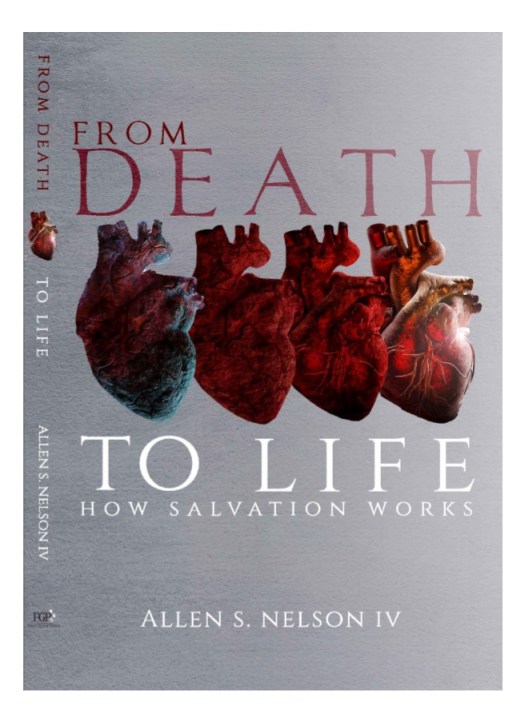
Guest Post: A Review of “From Death to Life: How Salvation Works”

If your theology pretty much matches up with mine (as outlined in the โ€œWelcomeโ€ and โ€œStatement of Faithโ€ tabs) and youโ€™d like to contribute a guest post, drop me an e-mail at MichelleLesley1@yahoo.com,
and letโ€™s chat about it.

photo credit: Stephen J. Melniszyn

A Review of Allen S. Nelson IVโ€™s
From Death to Life: How Salvation Works
by Katy B.

The most agonizing, frustrating experience in my ministry to women is the woman who claims to be โ€œsavedโ€ but gives no evidence of it. No interest in talking about Jesus, no interest in holiness, reading the Bible, going to church, serving Godโ€™s people. She has a salvation testimony (often dramatic and self-glorifying) that is superficial, shallow, and devoid of any real repentance for her sin. I suspect sheโ€™s a false convert. And I find it exceptionally difficult to talk to false converts.

In From Death to Life, Pastor Allen Nelson confronts the disaster of false conversions, linking them to a false understanding of salvation: what it is, what it does, and how it works. He writes, โ€œAsk fifteen people what it takes to be saved and itโ€™s not out of the realm of possibility that youโ€™ll get twenty different answers.โ€ (Loc 173)ยน

He makes the bold statement that โ€œthere is no spiritual life in many who claim to be Christians in America.โ€ (Loc 247) He calls them the โ€œwalking deadโ€.

How does that happen? What would cause a person to wrongly believe he or she is a Christian? He lays some of the responsibility at the feet of churches that use methods such as external manipulation, diluted gospel presentations, the altar call, and the sinnerโ€™s prayer to lead the walking dead to their false professions of faith and their false assurances of salvation. He blisters easy-believism practices that, even if well-intentioned, have done damage to churches more influenced by a fallen culture than by Godโ€™s own Word.

So how does salvation work? The author has narrowed the answer down to five main points:

1. The gospel must be proclaimed.

2. God must move.

3. The sinner must respond in faith and repentance.

4. God justifies the sinner.

5. The sinner grows in the Lord over a lifetime.

Pastor Nelson not only unpacks, but folds, hangs up, and neatly puts away each of these main points in a few short chapters. In doing so, he poses and then answersย questions such as, โ€œWhat is the true gospel?โ€, โ€œWhat is biblical repentance?โ€, โ€œWhat is saving faith?โ€, and โ€œWhat exactly is justification?โ€ His answers are delivered in a direct, engaging, accessible style with plenty of biblical illustrations and scriptural references. No theological dictionary needed.

The book includes โ€œhowto’sโ€ but doesnโ€™t read like a โ€œhowtoโ€ manual. The tone is pastoral, sometimes comfortable, sometimes convicting, but never harsh. At times, the reading felt like sitting over coffee with Pastor Nelson, asking questions about various evangelistic situations, and receiving useful advice on how to respond.

A destitute woman in a homeless shelter, eyes pallid, needle tracks running down her arms, naturally incites my heart instinct to put my arms around her, tell her Jesus loves her, and give her some money. But Pastor Nelson reminds us:

โ€œPeople need to hear more than โ€œJesus loves you,โ€ What they need to hear today is what theyโ€™ve always needed: to know that they are sinners, that they need a Savior, that Jesus is that Savior, and until and unless they come to Him in faith, they will justly spend an eternity facing the punishment of their sins.โ€ (Loc 2413)

He points out that it is vital that we all (not just the โ€œtrained professionalsโ€) know what to say when the time comes to share the gospel of Christ. And while there is no formula, it is essential that the facts of the gospel are understood. The book helpfully guides the reader in a biblical understanding of how salvation happens and presents realistic examples of responses that can be used with unbelievers/false converts in evangelistic conversations.

The chapter โ€œPlant, Water, Trust God, Repeatโ€ is a compelling warning to stick to a biblical approach to evangelizing the lost. (Throughout the book he gives examples of unbiblical approaches.) In this encouraging chapter, he discusses applying how salvation works in real life scenarios, acknowledging that it is not always easy. He doesnโ€™t present himself as a superhero evangelist.

This is a serious book, but the author can also be funny. I got a laugh out of his response to the command to โ€œask Jesus into your heartโ€. His tone, however, is utterly serious when discussing repentance:

โ€œGod doesnโ€™t beg people to repent so they can be the star player on His team. He demands repentance. He owes mankind nothing. What a fearful and insolent game we play by making repentance an optional feature to becoming a Christian, refusing to properly define it in hopes of sneaking people into the kingdom, or by flat out dismissing it altogether.โ€ (Loc 1164)

He spends a good bit of time parked on repentance, emphasizing that biblical repentance is necessary for any person to become a Christian. He asserts, โ€œRemorse does not equal repentanceโ€ and goes on to give what he calls the bare necessities of repentance.

Is it possible to know if a person has actually been converted? In the chapter on sanctification, the author acknowledges that while we canโ€™t see the heart, we can use the discernment God gives us to see evidence of true conversion. He provides a practical alliteration method to assist in discerning whether or not the gospel has actually taken root in a personโ€™s heart and the changes we would expect to see in a truly converted person.

He warns the church against haphazardly affirming people as Christians without exercising grace-filled discernment:

โ€œOften, we claim that the problem in our churches is that too many people are immature believers when the real problem is that many we call immature, actually have no life in Christ at all. They arenโ€™t growing because they arenโ€™t living.โ€ (Loc 1878)

The sanctification chapter, my favorite, thrust me to a fresh examination of my own life using his alliteration template. What evidence of salvation would others see in me? What would they discern as my motivation for life? There is plenty of self-application for the reader.

The book has three appendices. Appendix 1: The Sinnerโ€™s Prayer, Appendix 2: Acts 2 is Not an Altar Call, Appendix 3: Putting โ€œBaptistโ€ Back in Your Church. In these appendices, the author makes some โ€œsay whaaaat?!?โ€ observations that will rock your world if your church endorses these practices.

This is a short book. Although the print version is only 200 pages, there is nothing shallow about the content. The reader will step into a deep pool. Did I know how salvation works before I read the book? Yes. Have I been guilty of using unbiblical methods to try to bring about a conversion? Yes. I finished the book with an unanticipated, heart wrenching reorientation to the gospel as the power of God unto salvation. I bet Iโ€™m not the only reader who closed the book and repented.

I began by saying I find it exceptionally difficult to talk to false converts. What do you say to someone who believes she is saved when it is clear that she is not? Pastor Nelson is immeasurably supportive in reinforcing that โ€œwe must proclaim the gospel. Without it, people will go to hell. Itโ€™s as simple as that.โ€ (Loc 441)

The book left me feeling hopeful, energized, looking forward to my next evangelistic encounter. God saves sinners. God saves sinners. And he uses sinners like me to do so.

Pastor Nelson writes, โ€œEvery single one of us is charged with sharing the gospel with those God providentially places in our life.โ€ What a calling, what a staggering privilege. God could sovereignly call His own to Himself without us, but He has chosen to work through us. This book will certainly help us in our evangelism. I recommend it for everyone.

ยนKaty reviewed the Kindle edition of the book and used Kindle location numbers rather than page numbers.


Allen “Cuatro” Nelson, IV, author of From Death to Life, is the pastor of Perryville Second Baptist Church in Perryville, Arkansas, and co-host of The Rural Church Podcast. Contact Him directly via Twitter to receive a free study guide with your order of From Death to Life or a discount on bulk orders. You can also order from Amazon.

Katy canโ€™t remember when she became a Christian but is assured that, by the grace of God alone, she is a Christian. She ministers to women in her OPC church, in homeless shelters, in a prison, and sometimes at the grocery store. She is an executive with a United States health care corporation and enjoys her work, although she would rather be reading. You can find Katy on Twitter at @KatyvonBora.

ALTHOUGH I DO MY BEST TO THOROUGHLY VET THE THEOLOGY OF THOSE WHO SUBMIT GUEST POSTS, IT IS ALWAYS POSSIBLE FOR THINGS TO SLIP THROUGH THE CRACKS. PLEASE MAKE SURE ANYONE YOU FOLLOW, INCLUDING ME, RIGHTLY AND FAITHFULLY HANDLES GODโ€™S WORD AND HOLDS TO SOUND BIBLICAL DOCTRINE.