Then Satan stood against Israel and incited David to number Israel.2 So David said to Joab and the commanders of the army, “Go, number Israel, from Beersheba to Dan, and bring me a report, that I may know their number.”3 But Joab said, “May the Lord add to his people a hundred times as many as they are! Are they not, my lord the king, all of them my lord’s servants? Why then should my lord require this? Why should it be a cause of guilt for Israel?”4 But the king’s word prevailed against Joab. So Joab departed and went throughout all Israel and came back to Jerusalem.5 And Joab gave the sum of the numbering of the people to David. In all Israel there were 1,100,000 men who drew the sword, and in Judah 470,000 who drew the sword.6 But he did not include Levi and Benjamin in the numbering, for the king’s command was abhorrent to Joab.
7 But God was displeased with this thing, and he struck Israel.8 And David said to God, “I have sinned greatly in that I have done this thing. But now, please take away the iniquity of your servant, for I have acted very foolishly.”9 And the Lord spoke to Gad, David’s seer, saying,10 “Go and say to David, ‘Thus says the Lord, Three things I offer you; choose one of them, that I may do it to you.’”11 So Gad came to David and said to him, “Thus says the Lord, ‘Choose what you will:12 either three years of famine, or three months of devastation by your foes while the sword of your enemies overtakes you, or else three days of the sword of the Lord, pestilence on the land, with the angel of the Lord destroying throughout all the territory of Israel.’ Now decide what answer I shall return to him who sent me.”13 Then David said to Gad, “I am in great distress. Let me fall into the hand of the Lord, for his mercy is very great, but do not let me fall into the hand of man.”
14 So the Lord sent a pestilence on Israel, and 70,000 men of Israel fell.15 And God sent the angel to Jerusalem to destroy it, but as he was about to destroy it, the Lord saw, and he relented from the calamity. And he said to the angel who was working destruction, “It is enough; now stay your hand.” And the angel of the Lord was standing by the threshing floor of Ornan the Jebusite.16 And David lifted his eyes and saw the angel of the Lord standing between earth and heaven, and in his hand a drawn sword stretched out over Jerusalem. Then David and the elders, clothed in sackcloth, fell upon their faces.17 And David said to God, “Was it not I who gave command to number the people? It is I who have sinned and done great evil. But these sheep, what have they done? Please let your hand, O Lord my God, be against me and against my father’s house. But do not let the plague be on your people.”
18 Now the angel of the Lord had commanded Gad to say to David that David should go up and raise an altar to the Lord on the threshing floor of Ornan the Jebusite.19 So David went up at Gad’s word, which he had spoken in the name of the Lord.20 Now Ornan was threshing wheat. He turned and saw the angel, and his four sons who were with him hid themselves.21 As David came to Ornan, Ornan looked and saw David and went out from the threshing floor and paid homage to David with his face to the ground.22 And David said to Ornan, “Give me the site of the threshing floor that I may build on it an altar to the Lord—give it to me at its full price—that the plague may be averted from the people.”23 Then Ornan said to David, “Take it, and let my lord the king do what seems good to him. See, I give the oxen for burnt offerings and the threshing sledges for the wood and the wheat for a grain offering; I give it all.”24 But King David said to Ornan, “No, but I will buy them for the full price. I will not take for the Lord what is yours, nor offer burnt offerings that cost me nothing.”25 So David paid Ornan 600 shekels of gold by weight for the site.26 And David built there an altar to the Lord and presented burnt offerings and peace offerings and called on the Lord, and the Lord answered him with fire from heaven upon the altar of burnt offering.27 Then the Lord commanded the angel, and he put his sword back into its sheath.
28 At that time, when David saw that the Lord had answered him at the threshing floor of Ornan the Jebusite, he sacrificed there.29 For the tabernacle of the Lord, which Moses had made in the wilderness, and the altar of burnt offering were at that time in the high place at Gibeon,30 but David could not go before it to inquire of God, for he was afraid of the sword of the angel of the Lord.
Verse 1 says that Satan “incited” (other reliable translations say “moved,” “urged,” and “provoked”) David to sin by numbering Israel. Did David have a choice in the matter? Was he forced to sin? What are some ways you can resist Satan when he tempts you?
2. First Corinthians 10:13 says God will always provide us a way of escape from temptation. What was one way of escape God provided to David? (3)
3. What was David’s response to God’s wrath over his sin- did he attempt to justify himself or did he repent? (8) Even though God would be pouring out His wrath on Israel, which attribute of God did David focus on and depend on in making his choice? (13)
4. How did David’s sin as a leader affect those under his authority? (14) Why is it extremely important for Christians in leadership (in the home, at work, at church, etc.) to walk in obedience to the Lord? Can you think of an example of how your sin has affected those around you or under your authority? What should you have done differently in that situation?
5. What were David’s first (16) and second (26) responses to God staying His hand? Did God accept David’s worship and forgive him? Why did David insist on paying Ornan for the site and materials for the sacrifice? (23-25) Is it really a sacrifice if it doesn’t cost you anything?
Nobody could ever accuse Christianity of being easy. A religion that tells you to die to self and take up your cross daily is no walk in the park. And there’s no magical moment in this life when you’ve suddenly “arrived” at the top level of spiritual maturity where everything in the Bible makes perfect sense, your prayer life is phenomenal every day, obeying Christ’s commands is a breeze, and you’re floating around on a little cloud of holiness.
We are all messed up, muddling through, and constantly battling the flesh, from the person who got saved five minutes ago to the theologian who’s been walking with the Lord for decades.
We are all messed up, muddling through, and constantly battling the flesh, from the person who got saved five minutes ago to the theologian who’s been walking with the Lord for decades
It’s hard enough to obey the Scriptures we embrace – love one another, be kind, be truthful – but then we encounter Scriptures that, for whatever reason, we butt heads with. Scriptures to which our initial, fleshly reaction is, “No way. I’m not doing that.” We argue with them. We look for loopholes and ways we can get around them. We reason out all sorts of caveats as to why that Scripture doesn’t apply to us or why we don’t have to obey it.
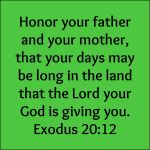
My parents hurt me deeply. There’s no way I’m going to honor the people who did that to me.
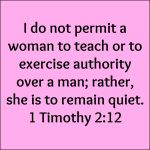
God gave me a special gifting and called me to preach. It doesn’t matter that I’m a woman.
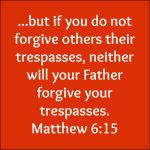
Why should I forgive him? He ruined my whole life!
You have no idea how badly she hurt me. I’ll never be able to love her or pray for her.
There’s no denying it, sometimes obeying a certain Scripture will be the hardest thing we ever do. But slaves of Christ are not given the option of saying “no” to their Master. If you’ll look in your Bible at the verse you’re struggling against, you’ll notice there’s no asterisk next to it that says, “except you.”
Slaves of Christ are not given the option of saying “no” to their Master. If you’ll look in your Bible at the verse you’re struggling against, you’ll notice there’s no asterisk next to it that says, “except you.”
When we approach one of God’s commands to Christians and decide we’re not going to obey it because we don’t want to or shouldn’t have to or it’s too hard, what we’re really doing is setting ourselves above the Bible in judgment of it and coming to the conclusion that we know better than God.
Yeah, that’s not a good idea. Especially for Christians.
Ever read the book of Job? Job went through some pretty awful stuff. Stuff that I certainly would have argued against and questioned God about just like he did. And yet, despite all of Job’s suffering, God didn’t give him a pass.
And the Lord said to Job: “Shall a faultfinder contend with the Almighty? He who argues with God, let him answer it.” Then Job answered the Lord and said: “Behold, I am of small account; what shall I answer you? I lay my hand on my mouth. I have spoken once, and I will not answer; twice, but I will proceed no further.”
Job 40:1-5
And how does this grab you?
But who are you, O man, to answer back to God? Will what is molded say to its molder, “Why have you made me like this?”Has the potter no right over the clay, to make out of the same lump one vessel for honorable use and another for dishonorable use?
Romans 9:20-21
Do you get the sense from these verses, which address very different situations, that God isn’t crazy about people questioning His sovereignty, His decisions, or His Word, regardless of their circumstances?
God is God. We are not.
God isn’t crazy about people questioning His sovereignty, His decisions, or His Word, regardless of their circumstances. God is God. We are not.
Lots of times we think we have to “feel comfortable” with a certain Scripture if we’re to obey it, but the truth is just the opposite. When we say, “Lord, I don’t want to do this, but I’m going to do it anyway because I love You, and Your Word says so,” guess what happens? God begins to change our hearts. In time, He helps us grow to embrace the Scriptures we once rejected. He helps us to love others and see them through His eyes.
When we say, “Lord, I don’t want to do this, but I’m going to do it anyway because I love You, and Your Word says so,” guess what happens? God begins to change our hearts.
Yes, it is going to be hard. There are going to be times when we have to grit our teeth, hold our noses, and obey Christ even when everything inside us screams, “NO!“
But we have a precious Savior who has promised to help us be content in any circumstance and will give us the strength to do anything He puts in front of us.
I can do all things through him who strengthens me.
Philippians 4:13
I’ve fought. I’ve cried. I’ve whined, “I can’t!” And every time God has brought me back to this verse that says, “Yes, you can, and I’ll help you.” And you know what? He did.
Examine yourselves, to see whether you are in the faith. Test yourselves. Or do you not realize this about yourselves, that Jesus Christ is in you?—unless indeed you fail to meet the test!
2 Corinthians 13:5
It’s been quite a journey through the book of 1 John! I hope you have taken the time to honestly examine your heart and your behavior against Scripture to discover whether or not you are truly in Christ.
I want to be sure that I stress once again that the checkpoints we’ve covered in the previous lessons are not things to strive to accomplish in order to earn salvation or to work your way onto God’s good side. You can’t do that. It’s impossible. Salvation is by grace through faith in Christ alone. All of the things we have looked at are the naturally occurring fruit of a person who has already been born again. (Remember our little oak tree/apple tree illustration from lesson 3?)
If you think you might be unsaved or a false convert (someone who thought she was saved, or claimed to be saved, but actually isn’t), you can know Christ as Savior today. Confess to God that you are a sinner, and turn away from your sin. Ask Christ to forgive you for your sin. Believe in Christ’s death, burial, and resurrection as payment for your sin so that you would not have to pay for it yourself with an eternity in Hell, and ask God to save you. You might wish to watch this video and the “Good News” video in the sidebar to your left. And, of course, you’re welcome to contact me with any questions.
I also want to be sure to stress to those who genuinely are born again that you are not going to be perfect in any of these areas this side of Heaven. And that doesn’t mean you aren’t saved. John’s intent in writing this letter was not for you to freak out over the sin you committed yesterday or the fact that your progress in one area seems to be slower than in other areas. He wants you to look back over the direction of your life since you were saved and see if you’re generally growing in holiness and towards more Christlikeness.
I’ve mentioned before that, when I was a kid, a popular question for youth leaders to ask was, “If you were arrested for being a Christian, would there be enough evidence to convict you?” I think that’s a good schematic to use for 1 John. As you come to the conclusion of the study, realize that you aren’t “convicted” on the basis of one or two isolated checkpoints. Rather, ask yourself, does the preponderance of the “evidence” gleaned from the checkpoints point me, beyond a shadow of a doubt, to a verdict of “saved” or a verdict of “not saved”? How would you vote if you were on the jury that was deciding the case of “Am I Really Saved?”
Here, for your convenience, are the 19 checkpoints we’ve looked at in the previous lessons:
Checkpoint 1: Do I walk in the light or the darkness? (1 John 1:6-7)
Checkpoint 2: Do I confess or deny my sin? (1 John 1:8-10)
Checkpoint 3: Do I keep God’s commands? (1 John 2:3-6)
Checkpoint 4: Do I hate others? (1 John 2:9-11)
Checkpoint 5: Do I love worldliness? (1 John 2:15-17)
Checkpoint 6: Do I want to be faithful to a doctrinally sound church? (1 John 2:18-20)
Checkpoint 7: Do I believe in the Jesus of Scripture? (1 John 2:21-25)
Checkpoint 8: Do I practice righteousness? (1 John 2:29)
Checkpoint 9: Do I make a practice of sinning or righteousness? (1 John 3:4-10)
Checkpoint 10: Do I love my brothers? (1 John 3:10-15)
Checkpoint 11: Am I bearing the fruit of love? (1 John 3:18-22)
Checkpoint 12: Do I keep the ultimate commandment? (1 John 3:23-24)
Checkpoint 13: Do I follow false teachers? (1 John 4:1-6)
Checkpoint 14: Is my motivation for love Christocentric? (1 John 4:7-12)
Checkpoint 15: Do my words and actions confess Christ? (1 John 4:13-15)
Checkpoint 16: Am I afraid of God’s judgment? (1 John 4:16-21)
Checkpoint 17: Do my love for God and my love for His people testify to each other? (1 John 5:1-3)
Checkpoint 18: Have I “overcome the world”? (1 John 5:4-5)
Checkpoint 19: Do I have God’s testimony of Christ and eternal life in my heart? (1 John 5:6-12)
It’s my prayer that, as you walk away from this study today, you will do so in full assurance and joy that you do, indeed, know Christ as Savior. Remember, that’s the whole point of the book of 1 John:
I write these things to you who believe in the name of the Son of God that you may know that you have eternal life. 1 John 5:13
If you are considering commenting or sending me an e-mail objecting to the fact that I warn against false teachers, please click here and read this article first. Your objection is most likely answered here. I won’t be publishing comments or answering emails that are answered by this article.
This article is kept continuously updated as needed.
Priscilla Shirer is a wife and mom of three boys hailing from the Dallas area. Though you may have become acquainted with her over the last several years from her roles in the movies Overcomer and War Room, she has been writing women’s Bible studies and has been a popular speaker at women’s conferences and other events for many years. Together with her husband, Jerry, she heads up Going Beyond Ministries.
When I participated in Priscilla’s DVD study He Speaks to Me several years ago, I found her to be an engaging writer, a witty storyteller, and charismatic speaker. Priscilla’s friendliness and genuine care for Christian women seem to shine through every word she speaks and writes. And to top that all off, she’s beautiful and sharp as a tack. It’s very easy to think of Priscilla and think, “What’s not to love?”
Which is why it grieves me to have to answer that question with: “Her theology.” Unfortunately, there are serious red flags about some of the things Priscilla does and teaches that Christian women who follow her, or are considering following her, need to be made aware of. And because of those issues, I deeply regret that I am not able to recommend her as I would like to. Should she repent in these areas in which she has broken Scripture and align herself with biblical principles, she would have no bigger fan than I, and I would rejoice to be able to point Christian women to her as a doctrinally sound resource.
Until that time, however, it saddens me to have to recommend that Christian women not follow Priscilla Shirer or any materials or activities from Going Beyond Ministries for the following reasons:
Preaching to Men
Priscilla unrepentantly preaches to and instructs men in the Scriptures in violation of 1 Timothy 2:12-14 (as well as other passages of Scripture that do not allow this). If you have followed me for any length of time, you have seen me raise this issue repeatedly regarding female Bible teachers and speakers. Yes, it’s a big deal and, yes, I will continue to teach and write about it. There are two crucial reasons for this.
First, this is a sin. I am finding that more and more Christians have to be told this. When the Bible says not to do something and you do it anyway, that’s a sin. And the Bible says that women are not to preach to or instruct men, or to hold authority over men in the gathered body of Believers, the church. Though the consequences of the sin of instructing men may not appear to be severe, it is just as much of a sin as any other sin you can think of: adultery, lying, stealing, drunkenness, and so on. If you wouldn’t follow a male pastor or Bible teacher who was open and unrepentant about committing adultery or shoplifting or getting plowed every weekend, why would you follow any female Bible teacher who preaches to and instructs men?
Second, almost without exception, every female Bible teacher I know of who unrepentantly instructs men also teaches other doctrinal error (usually Word of Faith, New Apostolic Reformation or seeker driven false doctrine). So instructing men is a red flag to watch for if you’re looking for a doctrinally sound teacher.
If a woman is supposedly knowledgeable enough about the Bible to be in the position of teaching and authoring, yet doesn’t understand or obey such a basic biblical truth, what does that say about the rest of her knowledge of the Bible? How can you trust that anything else she teaches you about the Bible is accurate and true?
Here are just a couple of the numerous examples of Priscilla preaching to men (see also the “Additional Resources” section below).
Priscilla partners and associates with false teachers such asJoyce Meyer, Christine Caine, Joel and Victoria Osteen, Beth Moore, and T.D. and Serita Jakes (see below). All of these people are proponents of the false and anti-biblical Word of Faith (prosperity gospel) doctrine, and the Jakeses are also modalists. Paul is quite clear that people who preach “another gospel” are “accursed”, or damned, and that we are not to partner with them. John says virtually the same thing, and adds that to partner with false teachers is to take part in their wicked works. Again, when the Bible says not to do something, and a person does it anyway, this is sin.
On October 16, 2016, Priscilla and her husband, children, and mother were in attendance at T.D. Jakes’ “church,” The Potter’s House, where, during a God’s Leading Ladies graduation ceremony, Priscilla accepted the “Lady of Destiny” award. As you can see, she has warm words of praise and admiration for Serita Jakes (T.D.’s wife).
Here’s Priscilla speaking at a women’s conference at Joel Osteen’s Lakewood “Church”. (It’s hard to see in the quick audience pans, but there are also a few men visible here and there.) :
Priscilla Shirer: Your Spiritual Assignment (Full Teaching) | Praise on TBN (August 6, 2021)
Unbiblical Teaching
Priscilla teaches Christians to “listen for God’s voice” in an unbiblical form of “prayer” called contemplative prayer. Combining elements of Eastern mysticism and New Age spirituality, this practice of emptying the mind and listening for God’s voice is found nowhere in Scripture. When the disciples asked Jesus to teach them to pray, He taught them:
Pray then like this: “Our Father in heaven, hallowed be your name. Your kingdom come, your will be done, on earth as it is in heaven. Give us this day our daily bread, and forgive us our debts, as we also have forgiven our debtors. And lead us not into temptation, but deliver us from evil. Matthew 6:9-13.
No mention of sitting in silence or listening here nor in any of the other passages in which the Bible teaches about prayer. Jesus taught us the way He wanted us to pray. Priscilla teaches something different.
Priscilla often uses poor hermeneutics when handling God’s word. Looking back over my copy of He Speaks to Me, and sifting through numerous videos of her teaching, it’s clear that her method of teaching is mainly eisegesis. She begins most lessons with a story or personal experience, uses these stories to formulate her own spiritual principles, and then adds in a smattering of Bible verses (often out of context) to support her ideas. Priscilla has also admitted in her book Discerning the Voice of God, p.39, that she reads herself into Scripture, an unbiblical practice sometimes called “narcissistic eisegesis” or “narcigesis”.
The proper method of teaching Scripture is exegesis. Exegesis is taking a passage of Scripture in context, and “leading out” of it- teaching what the passage means.
One example that best showcases Priscilla’s penchant for eisegesis and poor hermeneutics can be found in this promotional video for her study, One in a Million:
0:46- This same God was supposed to be speaking to me, teaching to me, making Himself relevant to me…in the regular rhythms of my everyday living…
Where does the Bible teach this? It doesn’t. God speaks to us and teaches us through the careful study and preaching of His word, not through subjective voices, feelings, and experiences in the “rhythms of everyday living” (what, precisely, does that phrase even mean?) Where does Priscilla get the idea that God is “supposed” to be speaking in these ways? Not from Scripture.
1:37- When these believers…who had experienced different things about God became part of my life, my eyes were opened to see God in a brand new way.
These “believers from different denominations” Priscilla references who rattled her “theological box” may have been part of Priscilla’s initial exposure to false Word of Faith teaching and false teachers such as the aforementioned Meyer, Caine, and Osteens.
Notice the emphasis around the 1:37 mark on people’s personal experiences (praying for miracles, etc.) rather than on the Bible. We do not build doctrine or what we believe about God on people’s subjective experiences. What we believe about God must come from Scripture alone. Personal experiences can be evidence of the truth of rightly handled and understood Scripture, but not vice versa.
2:57- Do you know that of the original two million Jewish people only two actually ever made it? (This is where the video above ends. The original promo video I used for this article has been deleted, {so I replaced it with the one above}, but in the original video, Priscilla goes on to say…) That’s one in a million. Well, man, if there’s only going to be a handful of people experiencing what we’ve learned on the pew…then I want one of those to be me.”
The story of Joshua and Caleb being the only ones to enter the Promised Land has absolutely no connection whatsoever with how many Christians today will be able to achieve intimacy with God. None. The Bible doesn’t say anywhere that because only two people out of two million entered the Promised Land that only “a handful of people” will be able to “experience” (there’s that word again) “what we’ve learned on the pew.”
Furthermore (since Priscilla looks to tangible experiences and anecdotal evidence as support for her ideas), both anecdotal church history and the experiences of Christians who are alive today prove this idea to be false. Untold millions of Christians over the last two thousand years have studied God’s word, grown close to Him, matured in their faith, and walked faithfully with Him throughout their lives. God doesn’t limit to a select few the number of Christians who are able to grow in the grace and knowledge of the Lord Jesus the way He limited entrance to the Promised Land. In fact, the Bible says the opposite. It is God’s plan for every Christianto grow to spiritual maturity and intimacy with Him.
But growth to spiritual maturity through the study of God’s word and faithful obedience to Him isn’t what Priscilla is offering through this study. Instead, she is dangling in front of Christian women an emotionally appealing and unbiblical carrot of miraculous and unique personal experiences with God instead of teaching them to properly study their Bibles and rely on Scripture alone for their doctrine and practices.
Though there are others, these are the major doctrinal errors in this video, which is less than four minutes of teaching from Priscilla.
1 Corinthians 4:6 says:
I have applied all these things to myself and Apollos for your benefit, brothers, that you may learn by us not to go beyond what is written, that none of you may be puffed up in favor of one against another.
It is a sad irony that Priscilla Shirer opted to name her ministry “Going Beyond,” because this is exactly what she is choosing to do right now. She goes beyond what is written in teaching men, in partnering with false teachers, in teaching unbiblical prayer practices, and in using improper hermeneutics. Therefore, it is my recommendation that women not follow, support, or receive teaching from Priscilla Shirer or Going Beyond Ministries at this time.
Additional Resources:
Disclaimer: The specific links below are provided and endorsed as evidence pertaining to this article only. I do not endorse any of these sites in so far as any of them might deviate from Scripture or conflict with my beliefs as outlined in the “Welcome” or “Statement of Faith” tabs at the top of this page.
Preaching to Men:
These are just a few of the dozens of examples available on YouTube and elsewhere of Priscilla Shirer preaching to men. If you need more examples, simply go to YouTube and type “Priscilla Shirer sermon” into the search bar.
Pink Impact ConferencePriscilla joined with faith healing “apostle” of the New Apostolic Reformation, Todd White, as well as false teachers Christine Caine, Lisa Harper, and “Pastor” Debbie Morris.
Priscilla Shirer on Hearing the Voice of God on Issues, Etc. – Pastor Chris Rosebrough explains why Priscilla’s twisting of John 10 to mean that we can hear God speak to us is unbiblical.
Examine yourselves, to see whether you are in the faith. Test yourselves. Or do you not realize this about yourselves, that Jesus Christ is in you?—unless indeed you fail to meet the test!
2 Corinthians 13:5
1 John 5:1-3
Am I Really Saved? Checkpoint 17: Do my love for God and my love for His people testify to each other?
Everyone who believes that Jesus is the Christ has been born of God, and everyone who loves the Father loves whoever has been born of him.2 By this we know that we love the children of God, when we love God and obey his commandments.3 For this is the love of God, that we keep his commandments. And his commandments are not burdensome.
John starts off chapter 5 by reminding us of the central truth of the gospel (which we covered in lesson 4): only those who believe that Jesus is the Messiah, as defined by Scripture, are truly born again. Before anything else matters, you’ve got to get that right, or you’re not a Christian.
John then moves our focus back to yet another facet of love that characterizes a Christian: the intertwining, inseparability of love for God and love for His people.
According to the last half of verse 1, all who love the Father also love whom? According to verse 2, how do we know we love God’s people? Do these two verses demonstrate circular reasoning or an unbreakable connection between loving God and loving His people? How?
What are some ways your love for God is shown by the way you love others, and vice versa?
Why is obeying God’s commandments evidence that we love Him and are saved? (3)
What does it mean that Christ’s “commandments are not burdensome”? (3) How can we understand this statement in light of Matthew 24:1-4 and 11:28-30?
1 John 5:4-5
Am I Really Saved? Checkpoint 18: Have I “overcome the world”?
4 For everyone who has been born of God overcomes the world. And this is the victory that has overcome the world—our faith.5 Who is it that overcomes the world except the one who believes that Jesus is the Son of God?
What does it mean to “overcome the world”? How can these verses shed some light on the meaning of this phrase? Does this mean Christians will always be victorious over temptation?
How does our faith enable us to overcome the world? (4) How, and from whom, do we get faith? Who is the object of our faith?
According to verse 5, is it possible for non-Christians to live in a condition of victory over sin?
Think back over your spiritual history. Can you see evidence of growth in the area of resisting temptation and putting sin to death? Do you give in to the same temptations now, and as often, as you did when you were first saved?
1 John 5:6-12
Am I Really Saved? Checkpoint 19: Do I have God’s testimony of Christ and eternal life in my heart?
6 This is he who came by water and blood—Jesus Christ; not by the water only but by the water and the blood. And the Spirit is the one who testifies, because the Spirit is the truth.7 For there are three that testify:8 the Spirit and the water and the blood; and these three agree.9 If we receive the testimony of men, the testimony of God is greater, for this is the testimony of God that he has borne concerning his Son.10 Whoever believes in the Son of God has the testimony in himself. Whoever does not believe God has made him a liar, because he has not believed in the testimony that God has borne concerning his Son.11 And this is the testimony, that God gave us eternal life, and this life is in his Son.12 Whoever has the Son has life; whoever does not have the Son of God does not have life.
Think about all the things you’ve read about Jesus in the Bible, particularly, in the four gospels. Whose testimony about Jesus are you reading and believing? For the most part, we’re reading the eyewitness testimony of the apostles – human beings – that Jesus was indeed the Christ. Wouldn’t it be great if we also had some testimony about Jesus’ deity and authority from God, personally, first hand? Well, we do, as John explains in this passage. We find God’s testimony to the deity and authority of Jesus externally, through His baptism (water) and through his death, burial, and resurrection (blood).
Remember what happened right after Jesus’ baptism?
And when Jesus was baptized, immediately he went up from the water, and behold, the heavens were opened to him, and he saw the Spirit of God descending like a dove and coming to rest on him;17 and behold, a voice from heaven said,“This is my beloved Son, with whom I am well pleased.” Matthew 3:16-17
We see the testimony of the Holy Spirit as His presence rests on Jesus, and we hear the verbal testimony of God the Father authenticating and commending Jesus. The third Person of the Trinity, Jesus Himself, testified to His own deity and messiahship by living a perfect life, dying a perfect death on our behalf, and rising again, conquering death. These are all tangible, observable testimony from God about who Jesus is. Everyone can witness this external testimony from God- both Believers and non-believers. All you have to do is read the Bible. But what about internal testimony, inside our hearts and spirits?
Look at the first sentence of verse 10. How does God’s testimony move from the merely external to internal and personal? What does the remainder of verse 10 say about who can experience having the testimony of God about Jesus “in himself”? Does everyone have this inner witness, or only Christians?
According to verse 11, what is the culmination of believing in “the testimony that God has borne concerning his Son”? Who has eternal life (12), Believers or non-believers?
Do you have the internal testimony of God about Jesus? Are you confident you have received the eternal life God promises Believers? (Note: This is very subjective. Most false converts are certain they are Believers possessing eternal life based on what they “feel” in their hearts or spirits. This checkpoint focuses on the negative aspect of this issue rather than the positive. In other words, if you know you do not believe in the external testimony about Christ and have no internal testimony from God about Christ or security about your eternity with Him, there is no reason to think you are a Believer. The “feeling” that you are a Christian and that you have eternal life, by itself, is not proof that you are actually saved.)
1 John 5:13-20
In these last few verses, John is giving final instructions, wrapping it up, and bringing it on home. He beautifully restates his reason for writing the epistle in verse 13:
I write these things to you who believe in the name of the Son of God that you may know that you have eternal life.
God wants Christians, those who believe in the name of the Son of God, to know that we are safe and secure in Christ. He doesn’t want us to be afraid of His wrath or wonder if we will spend eternity in Heaven or Hell. He wants that settled and for us to be at peace.
When we’re settled in that knowledge and peace, we can be confident that God hears us when we pray and answers us when we pray in accordance with His will.
Additionally, when we are secure in Christ, we are able to intercede and intervene when our brothers and sisters are caught in sin. Sadly, sometimes a genuine Believer can be so entrenched or caught up in willful, unrepentant sin that God – at His own sovereign discretion – will take her life in order to protect His holy name, her victims, the church, or for other reasons known only to God. This is the “sin leading to death” that John mentions.
Blessedly, this is usually not the case for Believers – John, again, reminds us that Believers don’t make a practice of sinning – and we can pray for that person, help her get out of her sin (not leading to death), and help restore her to a right relationship with Christ and the church.
Finally, when have assurance of our salvation, we have the understanding that we are from God and that the world is under the power of Satan. Therefore, we should not take part in idolatry, but, rather, “know him who is true; and we are in him who is true, in his Son Jesus Christ. He is the true God and eternal life.”
This week we’ve looked the final three checkpoints in our “Am I Really Saved?” study (But don’t go anywhere, our last lesson is next week!):
Do my love for God and my love for His people testify to each other?
Have I “overcome the world”?
Do I have God’s testimony of Christ and eternal life in my heart?
Saved people’s love for God is reflected in their love for His people, and their love for His people is evidenced by their love for, and obedience to God. Their God-given faith in Christ, gives them the victory over sin and worldliness. God gives them peace and security by testifying in their hearts that Jesus is the Christ and that they have eternal life.
Unsaved people cannot genuinely love God’s people because they do not love God. Since they have no faith in Christ, they are part of the world’s system, and it is impossible for them to live in victory over sin. Despite any emotional experiences or feelings they may have, unsaved people do not have the testimony of Christ in their hearts or the assurance of eternal life.


 1 Chronicles 21