Uncategorized

In Case You Missed It…

There’s a lot of great stuff going on in Christendom lately, and I didn’t want you to miss out (especially if you’re not on social media)! So, “in case you missed it”…

Several weeks ago, just for fun and encouragement, I put out the call on social media for women who are using one of my Bible studies – either individually or in a class – to send in some pictures of their study time. Here are the responses I’ve received so far:

Natasha lives in Kiev, Ukraine and is currently working on Imperishable Beauty: A Study of Biblical Womanhood. (She has also completed Living Stones: A Study of 1&2 Peter.) Natasha says: “I pray that God will help me understand and study His Word. And this is not easy since I have 4 children and three of them are under the age of 4โ€ฆBut God is good to me.” I’m sure many of us can relate to that!

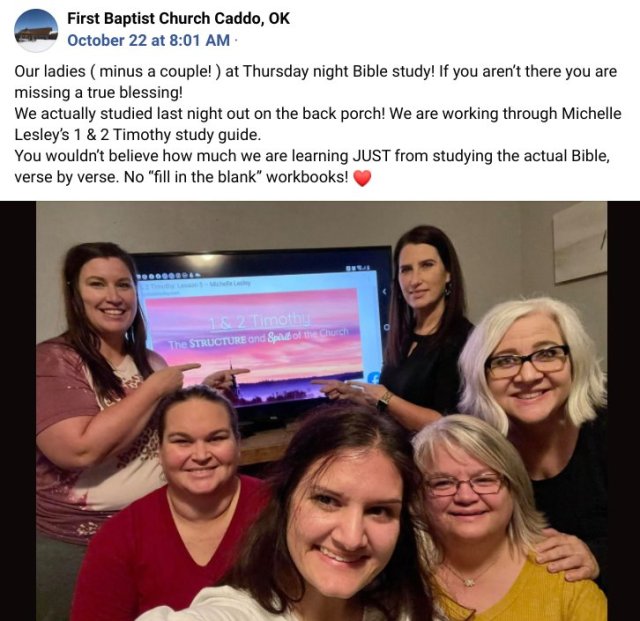
My friend, Robin Self says, “Our ladies are LOVING studying verse by verse!” They are working through 1 & 2 Timothy: The Structure and Spirit of the Church.

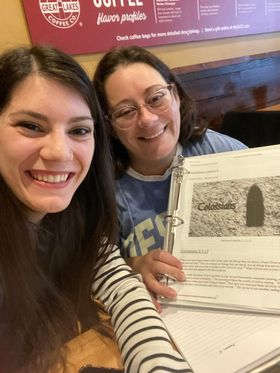
Megan says: “My friend Paige and I are working through the Colossians Bible Study!! Itโ€™s been so refreshing to actually study the Bible, not someoneโ€™s book!! We have a group on Facebook1 for people to join (WOMEN ONLY, but we’d love to have more ladies join us!) and watch any recordings if they canโ€™t meet. We got to meet in person for the first time this morning to work through the 5th lesson! Thank you so much for what you do!”

1Just a reminder, Facebook groups, pages, and Bible studies – even mine – are great, but they are not a biblical substitute for active, faithful membership in a local church.

Are you or your ladies’ group working through one of my studies? Send me a picture (email or social media private message), including the study’s title image, if possible, the name of the study you’re using, and a brief comment. I’d love to share it on social media and/or the blog!

Can you believe my A Word Fitly Spoken podcast partner, Amy Spreeman, and I have only spoken at one women’s conference together? We’d like to change that. If you’d like to book both Amy and me to speak at your next women’s event, please click here.

Did you know that G3 Ministries has a shiny new church finder? Check it out, and if your church isn’t listed, pass the link for the application page on to your pastor.

Don’t despair that you can’t find a church in your area or that there are so few listed. For a brand new site with an application process, this is quite a good number of churches. I’ve got it all linked up at my Searching for a new church? tab (in the blue menu bar at the top of this page), so you can keep checking back from time to time to see which new churches have been added.

If you’re looking for a new church right now and you can’t find anything near you on G3’s map, be sure to check out all the other wonderful church search engines and resources at Searching for a new church? I highly recommend the Founders and Master’s Seminary search engines.

And speaking of G3, the hits just keep on coming! You’ve loved their national conference, maybe you’re looking forward to a regional conference, and you’ve probably heard about their expository preaching workshops for pastors. But did you know they’ve added another workshop specially geared toward worship pastors?

Grab this link for G3’s first Biblical Worship Workshop, and pass it along to your pastor or worship pastor. (And you might want to tell them to hurry up and register. I’m really surprised it isn’t already at capacity.)

The singing portion of this video was recorded at my church. You can briefly see yours truly (at the 0:05 mark, near the top of your screen) in the pink glasses and black sweater. Fun stuff! :0)

Another reason I’m excited about this particular G3 workshop is that one of my own pastors, Laramie Minga, is going to be one of the instructors. He knows his stuff, and your pastor will really benefit from sitting under his teaching. (The other guys are good, too! :0)

Also, in case it wasn’t clear from my saying that this workshop is for pastors, this one is for men only, ladies, particularly men who are already pastors or who are on track to becoming pastors.

Interested in becoming a certified biblical counselor? Spring 2022 regional training events are coming to Baton Rouge, Louisiana, Bardstown, Kentucky, and Moore, South Carolina, so get signed up! Find out more about training and other events at the Association of Certified Biblical Counselors (ACBC) website.

Mailbag

The Mailbag: Potpourri (“Potty Prayers,” Women as Children’s/Worship Pastors, Solid churches with heretical music, Eternal Security)

Welcome to another โ€œpotpourriโ€ edition of The Mailbag, where I give short(er) answers to several questions rather than a long answer to one question. I also like to take the opportunity in these potpourri editions to let new readers know about my comments/e-mail/messages policy. Iโ€™m not able to respond individually to most e-mails and messages, so here are some helpful hints for getting your questions answered more quickly. Remember, the search bar (at the very bottom of each page) can be a helpful tool!

In these potpourri editions of The Mailbag, I’d also like to address the three questions I’m most commonly asked:

“Do you know anything about [Christian pastor/teacher/author] or his/her materials? Is he/she doctrinally sound?”

Try these links: 
Popular False Teachers /
 Recommended Bible Teachers / search bar
Is She a False Teacher? 7 Steps to Figuring It Out on Your Own
(Do keep bringing me names, though. If I get enough questions about a particular teacher, I’ll probably write an article on her.)

“Can you recommend a good women’s Bible study?”

No. Here’s why:
The Mailbag: Can you recommend a good Bible study for women/teens/kids?
The Mailbag: โ€œWe need to stop relying on canned studies,โ€ doesnโ€™t mean, โ€œWe need to rely on doctrinally sound canned studies.โ€.

“You shouldn’t be warning against [popular false teacher] for [X,Y,Z] reason!”

Answering the Opposition- Responses to the Most Frequently Raised Discernment Objections


I know this is going to sound silly or troll-like, but I’m serious! I have a habit of praying a quick prayer when thoughts cross my mind, like “God, please help Aunt Pam to feel better from her cold today,” or “Lord, thank You for providing that salary bonus I needed.” Sometimes those same kinds of thoughts and prayers cross my mind when I’m using the bathroom. Is that wrong? Should I wait until I get out of the bathroom to think that little prayer? What about what Deuteronomy 23:14 says about using the bathroom, “that God may not see anything indecent among you and turn away from you”?

I don’t think that’s a silly or troll-like question at all, and I’ll bet there are bunches of Christians out there who do the exact same thing and now, after reading this question, are wondering the exact same thing.

First Thessalonians 5:17 instructs us to “pray without ceasing,” which means our hearts are to be constantly oriented toward prayer even though we’re not consciously praying every moment of the day. (Kind of like your compass’ needle always points north even if it’s just sitting in a drawer not being used.) For most Christians, that means we’re intermittently speaking to God, just like you described, throughout the day as things happen, as random thoughts cross our minds, as we see various things. And this becomes such a habit (a good one!) that it doesn’t occur to us to think about where we are or what we’re doing as we utter those prayers in our hearts. Honestly, I think that mindset of reflexive prayer is pleasing to God, because it embodies what it means to pray without ceasing.

Deuteronomy 23:12-14 is part of the Old Testament ceremonial law regarding, in this particular case, the way Israel was to set up camp. When you give the law a good, thorough reading, you’ll notice that the underlying principle of most of the laws is that Israel is to be set apart and holy – different – from the pagan nations surrounding them. And He gives them laws to this effect that touch every aspect of their lives so that, at every turn, throughout the course of their day, there are little reminders, through the law, to “Be holy for I am holy.” This law is just one more of those little reminders: Don’t act like animals like the pagan nations around you, Israel, and just potty willy nilly in the street or the front yard or wherever you take a notion to. Step it up and keep your camp to a higher standard, because God is with you and you are His people.

The Deuteronomy passage is not about offending God by relieving yourself. God has seen every single time every person on the planet has ever relieved himself/herself, because God is omnipresent. If that were offensive to Him, He would not have designed your body to work that way.

Although I don’t think “bathroom time” should be the only time you pray, I don’t see anything in Scripture indicating that God considers it offensive for you to reflexively pray even though you happen to be in the bathroom at that moment. However, if it offends your sensibilities, wait until you get out of the bathroom and then pray.


Would you read 1 Tim 3 1-7 to read women can’t be “overseers/leaders/official” as in they can’t be “Children pastors” or “Women Pastors” in the church with those actual titles or even as directors? The verses only say men and state guidelines on how to choose. I’ve noticed some red flags in my church with a woman Worship Leader, which I don’t agree with since she sometimes teaches in between songs, but they are also giving women the pastor title, but only for children and women.

If I’m understanding correctly, you’re asking:

  • Is it biblical for women to hold a position of leadership over the women’s ministry or children’s ministry of a church?
  • Is it biblical for a woman to be the worship leader of a church?
  • If so, is it biblical to give those women leaders the title of, for example: “Pastor of Women’s Ministry” or “Children’s Pastor”?

Here are the fast and dirty answers. Below are a couple of links where I’ve discussed these issues in more detail.

Assuming the woman is doctrinally sound, has a godly character, her husband (if she’s married) is on board, and she’s otherwise qualified for the job, it’s fine for a woman to lead women or children in the church as long as the position she holds (which will vary from church to church) doesn’t require her to preach to or teach Scripture to men, or hold unbiblical authority over men.

No, it is not biblical for a woman to be the worship leader of a church. This is supposed to be a pastoral position.

No, churches should not give any woman on staff the title of “Pastor,” even if she isn’t violating Scripture in her position. Because Scripture doesn’t permit women to be pastors it is misleading and confusing, and will probably give people the impression that she is violating Scripture and that that’s OK. Neither should the converse be true – churches should not have women on staff in any capacity that violates Scripture (preaching to/teaching men, holding authority over men) and try to conceal that fact by giving her a title (instead of “pastor”) like “minister,” “facilitator,” “coach,” “associate,” “director,” etc.

Rock Your Role: Jill in the Pulpit

Rock Your Role FAQs (see #16, 21)


We have been searching for a doctrinally sound church in the area we moved to, and unfortunately it has not been easy! The few that we have found still use a Hillsong, Bethel or Elevation music. I usually cross a church off the list quickly if they sing from those artists. But like I said, now I am finding even doctrinally sound churches are throwing some of those songs in. Do you have any insight to this dilemma?

It can be really difficult to find a doctrinally sound church these days. Unfortunately even some churches that are fairly solid use music from these groups. The first thing I would recommend is that you check out the Searching for a new church? tab in the blue menu bar at the top of this page, just to make sure you haven’t overlooked any doctrinally sound churches in your area. There are lots of church search engines there and other resources that might help.

My counsel would be to find the most doctrinally sound church you possibly can (following your husband’s leadership, of course, if you’re married, {and assuming, in this particular case, that he’s saved}), attend for a while to get a feel for whether or not it’s a fit for your family, and set up an appointment with the pastor to ask any questions you might have (check out the articles under “What to look for in a church” at the “Searching…” tab for suggestions of questions you may want to ask). (I would recommend the appointment with the pastor regardless of how perfect the church seems.)

If the church uses Bethel, etc. music, this would be the time to gently and lovingly address it with the pastor, but let him know that this is a reason you’re a bit reticent about joining the church so he’ll understand the seriousness of the problem. I would approach the subject giving him the benefit of the doubt that he simply doesn’t know the problems with these groups (the vast majority of pastors are ignorant of things like this – they shouldn’t be, but it is what it is).

If he seems open, you might want to ask if you can send him some information. (You can find links on all three groups at the “Popular False Teachers & Unbiblical Trends” tab. Pick the 2 or 3 most convincing links for each group and send those rather than sending him the link to that tab. For someone who’s ignorant in the area of discernment, opening up that tab would be information overload, and he’ll tune it out.) If he says yes, send the links and then touch base with him again in a couple of weeks to get his reaction.

The only other counsel I would offer you is to remember that no church is perfect, and God may put you into a particular church to help it with those imperfections.

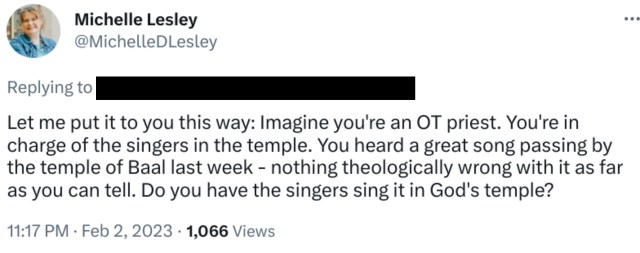
I would now like to take a moment to highlight this reader’s question for pastors and ministers of music. This is yet one more reason it is detrimental to your church to use music from Bethel, Jesus Culture, Hillsong, Elevation, any musician connected these groups (such as Phil Wickham who’s very prolific and has strong ties to Bethel), or any other musician who isn’t doctrinally sound (after you have thoroughly vetted him/her/them.) regardlessย of how biblical the lyrics of any particular song of theirs that you’re using might be. You could potentially be turning away solid, mature, discerning Believers who might otherwise be interested in joining your church. The woman who sent in this question is not the first to ask me something like this – not by a long shot. This issue is increasingly of concern to Christians looking for a solid church. (For that reason, I do not list churches – even Reformed or seemingly otherwise doctrinally sound churches – on my Reader Recommended Churches list, who use music from heretical sources like these.)

When a visitor walks into your sanctuary for the first time, your worship service is the “face” of your church to her. What kind of a first impression are you making? When you use music by doctrinally unsound musicians, it does not say, “We’re really a doctrinally sound church – honest! We only use songs from these groups whose lyrics are biblical.”. It says, “This church has leaders who aren’t discerning,” or “If this church uses music by these heretical groups, what other doctrinal problems does it have?”. Why put that stumbling block out there when there is plenty of music available with biblical lyrics written/performed by doctrinally sound musicians?

And there’s another stumbling block that using this type of music puts in front of weaker brothers and sisters that you may not have realized. I have heard from a number of Christians whom God graciously saved and rescued out of the pit of “churches” similar to Bethel, Hillsong, and Elevation. They tell me that when they walk into what they think is a doctrinally sound church and hear music from these and other heretical sources, it triggers a form of spiritual PTSD. It’s traumatizing to them. They immediately become fearful that your church is mere steps from turning into one of these types of “churches.” Will they grow out of that reflexive reaction? Yes, someday, as God continues to sanctify them. In the meantime, do you want the music at your church to cause them unnecessary anxiety? I hope not.

Even for Christians who have not come out of “churches” like these but are knowledgeable about their heretical theology, using these songs in your worship service is putting a stumbling block in front of them, too. Take me, for example. I’ve studied these groups. I’ve seen their heresy and the damage they do to both the Kingdom and to the individuals who follow them. And because of that, I’ve zealously spoken out against them. If I visit your church and an Elevation song suddenly flashes up on the screen, my ability to worship is completely derailed in grief that your church would use a song from that source – especially if you know about their theology and are well acquainted with music from doctrinally sound sources that you could have used instead. I cannot sin against my conscience by singing those songs. Consider me a “weaker brother” if you like, but do you care more about me as your sister in Christ, or your “right” to use music from these sources? What about Paul’s posture in 1 Corinthians 8:9-13?

But take care that this right of yours does not somehow become a stumbling block to the weak. For if anyone sees you who have knowledge eating in an idol’s temple, will he not be encouraged, if his conscience is weak, to eat food offered to idols? And so by your knowledge this weak person is destroyed, the brother for whom Christ died. Thus, sinning against your brothers and wounding their conscience when it is weak, you sin against Christ. Therefore, if food makes my brother stumble, I will never eat meat, lest I make my brother stumble.

If this was true in Paul’s personal life, shouldn’t it surely be true of our worship services? If you wouldn’t put a Christmas tree or portrayals of Jesus in your sanctuary because it might offend a brother in Christ, why would you use worship music that causes offense to your brothers and sisters?

Finally, what is the proactively good reason for intentionally choosing music from a heretical source? In other words, when you’re selecting music for the worship service, why would you choose, say, a Hillsong song about God’s glory, or Psalm 23, or the crucifixion, when you could just as easily choose a song from a doctrinally sound source about any of those things – a source that isn’t a stumbling block to anyone, won’t give anyone the wrong impression about your church, won’t lead anyone to follow a heretical “church,” and won’t use your church’s offerings to support a heretical “church”? What makes the Hillsong song you’re choosing better than the song from the doctrinally sound source? It doesn’t seem to me that there’s a good enough reason to use songs from these sources that outweighs all the good, biblical reasons not to use them.

There is simply no good reason for a doctrinally sound church to use music from heretical sources like these.

The Mailbag: False Doctrine in Contemporary Christian Music

Why Our Church No Longer Plays Bethel or Hillsong Music (or Elevation or Jesus Culture), and Neither Should Yours

Hillsongโ€™s Theology of Music and Worship

The Mailbag: Should Christians listen to โ€œReckless Loveโ€?


Hello there. I read your blog about Priscilla Shirer being a false teacher. Read some parts of your blog. Found your recommended preachers with sound doctrine. I don’t know what denomination you’re in. But I just wanted to ask if you believe if we can lose our salvation?

Hi there! I’m a Reformed Southern Baptist. You can read more about my denomination and my beliefs at the Statement of Faith tab and the Welcome tab (both in the blue menu bar at the top of this page.

No, I do not believe genuinely regenerated Christians can lose their salvation because that’s not what the Bible teaches. I discussed this at length, including the relevant Scriptures, in my article The Mailbag: Can unforgiveness cause you to you lose your salvation?.


If you have a question about: a Bible passage, an aspect of theology, a current issue in Christianity, or how to biblically handle a family, life, or church situation, comment below (Iโ€™ll hold all questions in queue {unpublished} for a future edition of The Mailbag) or send me an e-mail or private message. If your question is chosen for publication, your anonymity will be protected.


Mailbag

The Mailbag: Potpourri (Heretical church music, Mistranslating 1 Tim. 2:12, Books for women…)

Welcome to another โ€œpotpourriโ€ edition ofย The Mailbag, where I give short(er) answers to several questions rather than a long answer to one question. I also like to take the opportunity in these potpourri editions to let new readers know about my comments/e-mail/messages policy. Iโ€™m not able to respond individually to most e-mails and messages, so here are someย helpful hintsย for getting your questions answered more quickly.ย Remember, the search bar can be a helpful tool!


I need guidance in approaching the worship director of the church I started attending 6 months ago (haven’t joined yet) due to his frequent use of Bethel/Jesus Culture/Hillsong/Elevation Church music. I stand there in silence most of the worship time because I just donโ€™t feel comfortable singing those songs. I donโ€™t want to meet with him and be that person who is critical and legalistic but I feel convicted that someone needs to. Should I go talk to the pastor first (we have somewhat of a relationship since Iโ€™ve met with him a couple times and agree with his theology)?

It’s awesome that you are discerning enough to know that music from these heretical and New Apostolic Reformation organizations shouldn’t be used by any church. I encourage you to keep having those “powers of discernment trained by constant practice” of distinguishing good from evil (Hebrews 5:14).

I also want to encourage you that inquiring about the theology of a church or its music – especially as someone who is deciding whether or not to join that church – is not being “critical and legalistic”. That is what scoffersย say about discernment issues, but it is not theย biblicalย way of viewing “contending for the faith”. Do not allow ungodly people with their unbiblical personal opinions to deter you or even make you feel bad for doing what is right and good and godly.

I agree with you that someone needs to address the issue of the music. It is possible that’s why God put you into this church at this time – to pray for the church, the minister of music, and the pastor about this, and to lovingly explain the issues.

Since I’m not personally involved in the situation, I can’t offer any advice as to whether to approach the minister of music or the pastor first. I would suggest you pray and ask God to give you the wisdom to know which one of them to speak to first, and trust Him to direct your paths. You might want to consider which of these men you feel will be more receptive to what you have to say. If you go to the minister of music first and he brushes you off, I would encourage you to go to the pastor next. I think both of their responses will help you decide whether or not you want to join this church.

Here are some resources that may help:

The Mailbag: How should I approach my church leaders about a false teacher theyโ€™reย introducing?

Hillsongโ€™s Theology of Music andย Worship

The Mailbag: Should Christians listen to โ€œRecklessย Loveโ€?

Popular False Teachers (further information on Hillsong, Bethel, Jesus Culture, Steven Furtick)


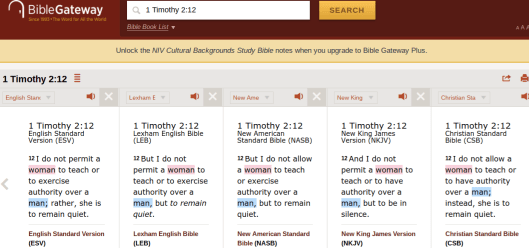
A popular Christian apologist I follow says that the prohibition against women preaching, teaching Scripture to men, and holding authority over men in the church in 1 Timothy 2:12 is translated incorrectly.

I do not permit a woman to teach or to exercise authority over a man; rather, she is to remain quiet.

He says it should not be translated as “woman” and “man” “but as “wife” and “husband”, and that he believes Bible translators mainly translate it as man woman due to tradition (i.e. men have historically been the pastors and teachers in the church).

This is why linguists – professional experts in the biblical languages – are hired to translate Scripture, not apologists.

Bible translators (of reliable translations) are true to the text, not church tradition or personal convictions. Furthermore, when translators are working on the text, it is not a lone individual who writes down what he thinks the Greek words say and that’s the Bible you end up reading. There are teams of translators, linguists, editors, and even computer experts who work on the text. They check, and double check, each other’s work. So even if one translatorย was translating according to tradition or opinion, it would be caught by others and not allowed to slip through the cracks.

All of the most reliable English translations translate the words as “man” and “woman”, not “husband” and “wife”.

And just for kicks, I checked this verse in about a dozen of the less reliable translations, and every single one of them translates it “man” and “woman”. Even versions that got other parts of verse 12 incorrect still use “man” and “woman.” For goodness sake, evenย The Messageย andย The Passion “Translation” possibly the two worst English versions of the Bible (They’re not even translations.ย The Message is a paraphrase, written by someone who endorsed the heresy-laden bookย The Shack and has made statements affirming homosexuality. Andย Passion is the new New Apostolic Reformation version of the Bible, based, supposedly, on new revelation directly from God.) both say “man” and “woman”. And the NAR is totally OK with female preachers, so you know they’re not using “man” and “woman” due to tradition.

So we’ve got one apologist who’s of the opinion that it should be “husband” and “wife” against scads of translators who are experts in their fieldsย andย whack job NAR “translators” who approve of female pastors, who all use “man” and “woman”. You would thinkย someone out of all of those people would have translated it “husband” and “wife” if that was the correct translation. It’s telling that even “translators” who push the egalitarian agenda won’t go so far as to change it to “husband” and “wife”.ย I think the apologist is somewhat out of his depth here.

A few more quotes from said apologist:

Verse 11 and following is directed at women in the context of their relationship with a man to whom they are supposed to be entirely submissive. That is a marriage relationship…1 Timothy 2 talks about the relationship between husband and wife; itโ€™s chapter 3 that talks about church leadership.”

No, verse 11 is not directed at women. Neither are any of the other verses in chapter two or the rest of the book. First Timothy is a pastoral epistle. It was directed at Timothy by the Holy Spirit via Paul as sort of a “policy and procedure manual” for the church. This passage is not talking to women about their marriages, it is talking to pastors and elders about how to run the church. Verses 11-12 are talking about the role and behavior of women (all women, not just wives) in the church setting. They are not to instruct men in the Scriptures or exercise authority over men. Thatย  definitely “talks about church leadership” by excluding women from leadership roles that place them in authority over, or instructing, men.

And keep in mind that when 1 Timothy was written, there were no chapter and verse markings. The text was one continuous flow. If you begin reading in 2:11 and go through 3:13 (try reading it here, adjusting the settings to remover chapter and verse markings), I believe there’s a strong case to be made that 2:11-15 is actually theย introduction to the qualifications for pastors, elders, and deacons. The passage (2:11-3:13) starts by stating who is disqualified from those positions and whyย (2:11-15) and then moves on to who is qualified and how (3:1-13).

Furthermore, if you’ll take a look at verses 8-10ย of chapter two, which immediately precede the verses in question (11-12) and provide context, you’ll see more instructions to both men and women. Are only husbands to pray? Are only wives to dress modestly and respectably and adorn themselves with good works? What about single men and women, divorced men and women, widows and widowers?

No other place in Scripture teaches that all women should be under the authority of all men in the church. If this passage is to be interpreted the traditional way, this makes a new and unusual pattern of submission.

And this passage (1 Timothy 2:12) doesn’t teach that either. The statement that women are not to have authority over men doesn’t flip around to mean that all men are in authority over all women. That’s fallacious logic, silly reasoning, and patently unbiblical. The text says what it says and that’s it. You can’t turn it inside out and make an inference from an incorrect converse. That’s being a poor workman and mishandling Scripture.

It’s abundantly clear that “man” and “woman” are the correct translation in 1 Timothy 2:12. If anyone is being more loyal to an agenda than to the text here, it’s the apologist, not the translators.

Rock Your Role: Jill in the Pulpit (1 Timothyย 2:11-12)

I Know Greek, So That Verse Is Wrong!


What do you recommend as daily devotionals for children, ages 2 and 10? I am looking to start daily Bible time with the kids before we start school.

I don’t recommend “canned” Bible studies and devotionals, but rather teaching straight from Scripture itself. I’ve explained this more, including a few suggestions for teaching your children, in my articleย The Mailbag: Can you recommend a good Bible study for women/teens/kids?

If you’re looking at a 5-10 minute time frame, you might want to work your way through Proverbs one verse at a time, or possibly some of the shorter Psalms. I usually set aside a 30 minute block of time and read through a book with my boys one chapter a day, asking questions and explaining things along the way. If you’d like, feel free to use any of my studies at the “Bible Studies” tab at the top of this page, selecting and simplifying the questions you feel are most appropriate for your children.


How can I subscribe to your blog via e-mail?

If you’re on a computer, there’s a little box in the left sidebar where you can enter your e-mail address:

Inline image

I don’t know if your phone is the same as mine or not, but here’s what the e-mail sign-up on my phone looks like:

Inline image


I was wondering if you had a list of recommended books for women. I’m trying to offer an alternative to anย NAR book that has nice ideas and some good thoughts but also strays into Spiritual Formation and, of course, really off-base hermeneutics.ย 

I don’t really know of any off-hand along those lines that I would recommend. The problem with “Christian” books for women by women is that most of them contain false doctrine. A couple of suggestions:

1. The Bible. If you’re looking for a book with nice ideas and good thoughts, Psalms might be a good place to start. Getting grounded in God’s Word and digging deep into Scripture itself is the best way to guard your ladies against the false doctrine you’re describing.

2. There’s no reason women can’t read books authored by men. If you already have a particular doctrinally sound book in mind that was authored by a man, go right ahead and use that one. I would recommend any of the male authors under my “Recommended Bible Teachers” tab (as well as any of the female authors listed there). You might also find the kind of book you’re looking for at GTY or Ligonier.


If you have a question about: a Bible passage, an aspect of theology, a current issue in Christianity, or how to biblically handle a family, life, or church situation, comment below (Iโ€™ll hold all questions in queue {unpublished} for a future edition ofย The Mailbag) or send me anย e-mail or private message. If your question is chosen for publication, your anonymity will be protected.

Mailbag

The Mailbag’s Top 5


While I’m out of town this week, let’s recapย The Mailbag’sย greatest hits. Here are the five most popular Mailbag articles:


Should Churches Use Praise Teams?

Itโ€™s a decision each individual pastor has to prayerfully make as he seeks to do what is
best, wisest, and most godly for his particular church.


What is Calvinism? Semi-Reformed?

Itโ€™s OK to hold those things in tension while weโ€™re here on earth. We believe what Scripture says God does, but, where the Bible is silent as to how He does it, His reasons for doing it, etc.,
well, we trust God and believe Scripture there, too.


Should Christians Do Yoga?

The reason the question โ€œShould Christians do yoga?โ€ is even being asked is because thereโ€™s doubt in the minds of the Christians asking the question that yoga is kosher with God.
Thatโ€™s a healthy doubt because yoga is a Hindu worship practice.


False Doctrine in Contemporary Christian Music

Are there any CCM groups, artists, or songs I should avoid?
Can you recommend any specific doctrinally sound artists or groups?


What is the New Apostolic Reformation?

Since thereโ€™s no official NAR creed or statement of faith, beliefs and practices can vary from church to church, but, loosely speaking, the NAR takes the Word of Faith (prosperity gospel) heresy andย kicks it up a notch with outlandish โ€œsupernaturalโ€ manifestations, blasphemously attributed to the Holy Spirit.


If you have a question about: a Bible passage, an aspect of theology, a current issue in Christianity, or how to biblically handle a family, life, or church situation, comment below (Iโ€™ll hold all questions in queue {unpublished} for a future edition ofย The Mailbag) or send me anย e-mail or private message. If your question is chosen for publication, your anonymity will be protected.

Church, Encouragement, Ministry, Top 10

Top 10 Ways to Appreciate Your Pastors During Pastor Appreciation Month

I’m so glad somebody thought up the idea of Pastor Appreciation Month and made it a thing. If you’ve never been a pastor (or been married to one), it’s difficult to adequately convey just how simultaneously challenging, joyful, devastating, frustrating, and fulfilling it can be. If you have a good pastor, who rightly divides God’s Word and is a man of godly character, you are very blessed. And that goes for your minister of music, associate pastor, youth pastor, etc., too. Be sure you show all of them (there’s nothing worse than being left out while everybody else is being appreciated) your appreciation for their hard work, and your encouragement, support, and love not just during Pastor Appreciation Month, but all year through. Here are ten ways you can do just that.

1. Pray for your pastors.
Time and again, when pastors are surveyed about what their church members can do to bless them the most, the number one answer is, “Pray for me.” Your pastors need you to pray for them personally, in their work, for their marriages and families, and for the health of your church. Pastor Appreciation Month is a perfect time to make a commitment to pray for your pastors on a regular basis. (And don’t forget to periodically tell them you’re praying for them!) Need some suggestions on how to pray? Check out my article Top 10 Ways to Pray for Your Pastor.

2. Words of encouragement
Pastors get a lot of complaints, criticism, and words of discouragement. Brighten your pastor’s day by telling him something specific you learned during the sermon. Tell your minister of music you really enjoyed the choir anthem this morning. Repeat to your youth pastor something positive your child has said about him or the youth group. Drop your pastor a note, e-mail, or social media message of support. Make a point of looking for ways – all year long – that you can offer “a word fitly spoken.”

3. Babysit
If your pastor and his wife have young children, offer to babysit so they can have a date night or go Christmas shopping for the kids. 

4. Gift cards
Perhaps along with the offer to babysit, you could give your pastor and his wife a gift card to a local restaurant. Gift cards to his favorite specialty store (outdoorsman stores, music stores, etc.), a Christian retailer, or one of his favorite online stores (or a more general site like Amazon if you’re not sure of his preferences) make great tokens of appreciation, too.

5. Honorary offerings
Is there a certain missionary or mission project that’s near and dear to your pastor’s heart? A crisis pregnancy center? A church plant he’d like to support? What about donating Bibles in his honor to an evangelistic organization? Put out the word to the congregation, take up a special offering (or simply give as an individual), and make a donation in your pastor’s name.

6. Make sure his needs are met.
Your pastors shouldn’t be living like televangelists, but they shouldn’t be struggling to survive, either. Surprisingly, many people have unbiblical opinions about pastors’ salaries, from the notion that anyone in any kind of ministry should be doing it for free, to the downright evil concept of keeping the pastor near the poverty level to make sure he stays humble (yes, really). The Bible says pastors have a right to make their living from preaching the gospel, and that a workman is worthy of his hire. Check with your church’s finance and/or personnel committee. Is your pastor making an appropriate salary? Are his housing and insurance needs being met? Is he receiving adequate vacation and sick days? If not, see what you can do to help rectify the situation.

7. Conferences
There are lots of fantabulous Christian conferences out there that your pastor would probably love to attend, but it’s not in the church budget and he can’t afford it, personally. Find out his favorite or choose a great one (make sure you vet the speakers first to make sure they’re doctrinally sound), take up a special offering, and send him there, all expenses paid (conference admission and fees, travel, meals, lodging, and some extra “walking around money” for purchasing books, gifts, souvenirs, etc.).

8. Volunteer
One of the things that can be stressful for pastors is empty positions that need godly people to fill them. Volunteer to teach that Sunday School class, play the piano at the nursing home, help chaperone the youth trip, work in the nursery, get trained and run the sound board. Find out where you’re needed at your church and jump in and serve.

9. Help out around the house.
Pastors have those “fix it” needs around the house just like everybody else does. Are you good at repairing cars, fixing roofs, mowing grass, maintaining air conditioning units, cooking meals, or another special skill? Save your pastor some time, money, and effort by putting your experience to work for him at his home. 

10. Set the example of a healthy church member.
What could be more encouraging to a pastor than biblically healthy church members? Study your Bible. Be faithful in your church attendance. Pray for your pastor and the church. Serve where you’re needed. Don’t complain or criticize your pastor and others over petty matters. Avoid controversies and personality conflicts, and be a peacemaker. Walk in humility and selflessness, and give glory to God. Show appreciation for your pastors by setting a godly example for other church members and encouraging them to do the same. 

๐Ÿ’ฅBonus!๐Ÿ’ฅ Get on social media, e-mail, or the phone and share this article around so your pastors don’t have to!

What are some other good ways we can show appreciation for,
and encourage, our pastors?