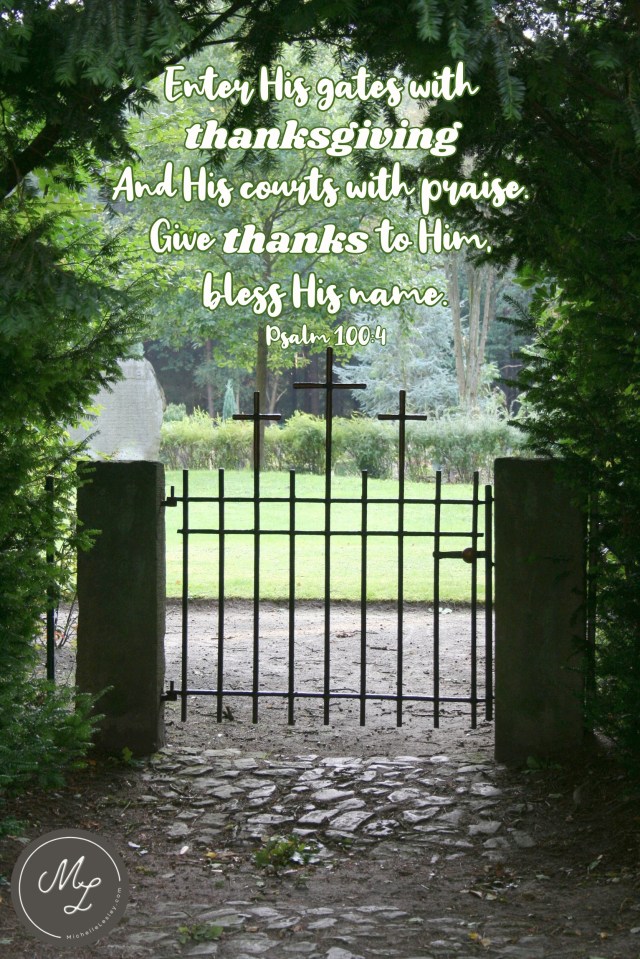
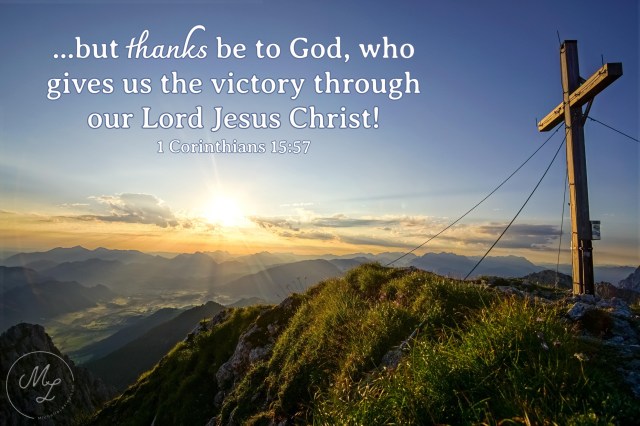
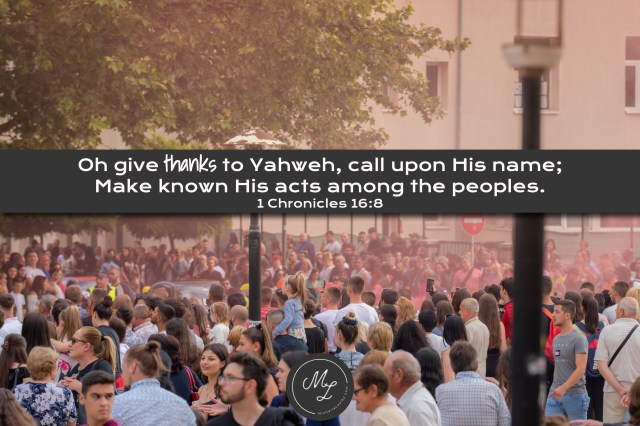
Next to Easter and Christmas, there’s no better holiday that Christians could celebrate than Thanksgiving. Scripture reminds us over and over that we have a precious Savior and innumerable blessings to thank God for. Here are ten of my favorite Bible verses about giving thanks. Feel free to share them around on social media or print them out to use in your Thanksgiving decor…
As place cards at the dinner table.
As tags on goody bags
Print out two copies of each, scramble them up face down, and let the kids play “Concentration” or “Memory” with them. (Each player takes turns flipping over two at a time until they find two that match.)
Have one person read part of his verse and see who can finish it. Or read the whole verse and see who can guess the reference.
Now therefore, kill every male among the little ones, and kill every woman who has known man by lying with him.
Numbers 31:17
That’s a pretty tough verse, isn’t it?
Married women. Widows. Little boys.
When I read that verse, I think of somebody like me. Or, somebody like my ten year old. It’s hard for me to put myself in a Midianite woman’s sandals and imagine the Israelites coming for my son. My son, who’s basically a good kid, and certainly hasn’t done anything worthy of an army coming after him to execute him.
Do you ever follow criminal trials in the news? With 24-hour news channels and courtroom TV channels, we’ve probably all watched for the verdicts of a few. Have you ever been surprised by a jury’s verdict or a judge’s sentence? Maybe you were certain the defendant was guilty, but the jury acquitted him. Or, you figured a life sentence was a sure thing but only a few years were handed down.
It’s easy to lambaste a judge or jury for making what we consider to be the wrong decision. But, think about it: that judge and jury sat through hours of testimony, legal arguments, instruction on the law, and presentation of evidence. They know much more about the case and all the players in it than we do. They know things we don’t know. And those things we’re ignorant about are likely the very things that led them to make a different decision than we, with our limited knowledge of the case, would have made.
What if your spouse, parent, or best friend had been a juror in one of those cases in which you were appalled at the verdict, and he had voted opposite the way you thought he should have? What if he told you, “Look, I’ve been told not to discuss the case, but, trust me, this was the right decision.”? Would you trust him?
It’s the same way with God.
We come to passages like this one, and our first reaction is righteous indignation. How could God make a decision like this? It seems so unjust. An arbitrary, capricious, and callous verdict. It’s easy to throw stones thousands of years later.
But, if God is God, He is, by definition, absolutely perfect in justice, perfect in love, perfect in mercy, perfect in patience, perfect in wisdom, and perfect in His knowledge of every detail of every situation on earth, ever, including people’s thoughts and intentions. He never makes a wrong decision. If He were lacking one iota in any of these areas, He would cease to be God, and there would be no reason to trust Him.
But He isn’t. So we can.
We generally trust human judges and juries to carry out justice in the cases they’re assigned, despite the fact that we know of cases of judges who have been bribed, juries that have been tampered with, defendants who have been framed, and jurors who vote guilty based on race, sex, status, or some other irrelevant condition.
But God doesn’t fall into any of those categories. He is the perfect Judge, able to mete out perfect justice, because He’s also the perfect eyewitness. He knew everything about the case of the Midianites because He saw each of them, and everything that was going on in the world around them, inside and out.
I can’t say that about my knowledge of this case. Can you?
God’s not discussing the case of the Midianites with us, but, “Trust Me,” He says, “This was the right decision.”
He’s got a pretty good track record of being right. I’m going to trust Him on this one since I don’t know all the details. How about you?
Far be it from you to do such a thing, to put the righteous to death with the wicked, so that the righteous fare as the wicked! Far be that from you! Shall not the Judge of all the earth do what is just?”
It was brash. Extremist. Rude. Rather one dimensional and completely devoid of nuance. And it made me mad, too, since I used to be a young woman with a husband and kids. (“Used to be,” as in, I still have the husband and kids and I’m still a woman, but “young” would be a stretch at this point.)
I was all set to write a blog post in response about the value of wifing, mothering, and working outside the home. You know, whatever God has called you to. So as prep for my article, I read the article again. And again.
And, like a toddler yanking at the hem of my skirt to get my attention, an epiphany pushed and shoved its way into my consciousness.
It wasn’t real.
Or maybe I should say: I suspect it wasn’t 100% sincere.
Have you ever visited a mega-blog like Buzzfeed or Mashable? They churn out tons of cheap content every day, which means lots of hits on their web sites and lots of posts that go viral, which means lots of money from advertisers. (Nothing wrong with that, but it’s usually not terribly deep stuff. Sometimes people want a little mind candy, and that’s OK.)
Guess what? Lots of people want a piece of that pie and it’s easier to copycat than to innovate, so there are lots of other upstarts out there trying to become the next mega-blog. Like Thought Catalog, which published the aforementioned article on young women with husbands and kids.
As they say, there’s no such thing as bad publicity, and in a PR move that would make even Miley Cyrus chartreuse with envy, Thought Catalog threw out a Molotov cocktail of an article, stood back, and watched the crowd gather. Nearly a quarter of a million shares on Facebook. Almost 2000 re-tweets. Over 11,000 comments. From a PR standpoint, there’s pretty much no choice but to admire them.
Is Amy Glass, the author of the article, a real person? Maybe she is, or maybe it’s a pseudonym for someone who works for Thought Catalog as a content writer. If she’s a real person, are these her genuine thoughts and feelings, or did she throw in a hearty dose of hyperbole to push her readers into clicking, tweeting, sharing, pingback-ing, and writing response articles?
I don’t know.
There’s a lot of deception going on out there these days (I’m not saying Thought Catalog is being deceptive. Honestly, I haven’t poked around over there enough to know.) and it’s not just “out there.” It’s inside the walls of the church, as well.
There are plenty of “Buzzfeed” pastors, leaders, and Christian authors who are throwing out cheap content and bombshells…
…2014 is going to be the year God turns everything around for you! …Just say what you want! If you can say it, you can have it! …God wants you to achieve all your dreams, so reach for the stars!
The glass breaks, the flames fly, and the crowd gathers. Their churches are overflowing with people. Their books become best sellers. They’re invited to speak at all the big conferences. And when the little guys start copying them and their methods, they know they’ve arrived.
But are they telling you the truth? And if you’re one of their devotees, how do you know whether or not they’re telling you the truth? Do you even want to know, or are you just happy with being entertained or being told what you want to hear?
There’s a way to find out. Get your Bible out and study it. Don’t just give it a surface reading– do the work and dig. Use the brain God gave you and pursue the knowledge of His word. Ask Him to open your eyes to understand the truth of Scripture. Love God with your mind, not just your emotions. Don’t be deceived.
Because they hated knowledge and did not choose the fear of the Lord, would have none of my counsel and despised all my reproof, therefore they shall eat the fruit of their way, and have their fill of their own devices. For the simple are killed by their turning away, and the complacency of fools destroys them; but whoever listens to me will dwell secure and will be at ease, without dread of disaster. Proverbs 1:29-33
“Can you recommend a book on how to submit to my husband?”
“What’s a good book on biblical womanhood?”
“I’m going through [difficult life circumstance]. Can you suggest a good book on how I can cope with that?”
I’ll bet if someone did a study to find out which demographic of people reads the most books, it would be Christians. Christians are readers – there’s no denying that – and that’s a good thing.
It always makes my heart smile when a reader asks if I can recommend a good (read: biblical, and by a doctrinally sound author) book on a particular area of sanctification or a life issue she’s struggling with. That tells me she wants to learn what the Bible says and obey it. And that is no small thing in evangelicalism today.
Hear me: Reading good, doctrinally sound books is a good thing.
But – just as with any other good thing – too much of a good thing isn’t the best thing. And letting a good thing veer out of its lane isn’t the best thing.
If you dedicate twelve hours every day to prayer, you’ll never get to the laundry, the bills, the cooking, and the cleaning. If the baby is running a fever and you exegete a chapter of the Bible instead of giving her some medicine or taking her to the doctor, you’re misapplying your Bible study time.
And, while it may not be quite as obvious, we can sometimes face the same challenge with good books.
In my experience there are two general dilemmas that motivate today’s Christian to seek out a good book.
The first is: “I don’t know what the Bible says about _____ topic. I need a book that will teach me so I can correctly understand what Scripture says about it.” For example, a few weeks ago in a Mailbag article, I answered a lady who wanted to know about the eternal destiny of unborn babies who die. Among other resources, I recommended John MacArthur’s book which explains the Scriptures and theology related to that topic.
The second dilemma is: “I know Scripture teaches that Christians are supposed to _____. How do I carry that out in my day to day life?” Or, “I have this difficult situation in my life. What specific things do I do to navigate or handle it in a godly way?” For example, “How do I submit to my husband?” or, the lady from the aforementioned Mailbag article might have asked, “What should walking through the grief of losing a child look like in my daily life?”
The first dilemma is easy and appropriate to plug a book into. The second? Not so much.
Why? Because in the second dilemma we’re asking good books to get out of their lane and perform a task they’re not suited to perform: sanctification. When you’re trying to drive a nail into a board, a hammer is the proper tool for the job, not a screwdriver. You can bang on the nail with the screwdriver, and you might even drive the nail into the wood a millimeter or two, but the bottom line is, you need a hammer. That doesn’t make hammers good and screwdrivers bad, it just means you use the appropriate tool for the job at hand.
And in cases of, “Where does the rubber of Scripture meet the road of my unique, individual life?” the right tool for the job at hand – the method God has prescribed in His Word – is not reaching for a book written by man, it’s God’s sanctifying work in your heart and life. And that’s a big pot of gumbo with a lot of different ingredients in it:
Studying your Bible
Prayer- for help, for wisdom, for guidance, for strength
Obedience to the Word
Faith, trust, and utter dependence on God
Getting good counsel from godly friends and loved ones, your pastor, or spiritually mature women in your church
And the final ingredient that goes into the pot? Action. Step out on faith in God and His Word to help you and guide you, and just do it. Try. Figure it out as you go.
If you want to learn how to ride a bicycle, you’re eventually going to have to stop reading books about bicycles and get on one and ride. Feel that balance and coordination of muscle movements in your own body. Learn by doing.
And, guess what? You’re going to fall down a few times. You’re going to try things that don’t work. You’re going to sin (and repent and be forgiven). And you’ll learn and grow from that. Falling is part of the learning and growing process of sanctification.
for the righteous falls seven times and rises again, Proverbs 24:16a
The steps of a man are established by the Lord, when he delights in his way; though he fall, he shall not be cast headlong, for the Lord upholds his hand. Psalm 37:23-24
I think we believe that success is in not falling. It’s not. It’s in getting back up and learning mastery of the skill.
The Bible never says we won’t fall. It says that when we do, God is holding our hand, and He’ll help us get back up.
But learning and growing and falling can be a messy, frustrating process that takes a long time. And what we want is a fast, streamlined formula that bypasses the mess and gives us guaranteed results. And, without even realizing it, we can fall into the mindset of thinking that the right book will be the magic bullet to solve our problem. We want a book to tell us what to do to keep from falling – and we think that’s mastery or success. But it isn’t. Mastery and success come from doing, from going through the process. We want a book to tell us how to get the right answer to our problem, but while the right answer is important, the growth, maturing, and mastery of going through the process is more important to our spiritual growth.
…work out your own salvation with fear and trembling, for it is God who works in you, both to will and to work for his good pleasure.
Philippians 2:12b-13
And it’s not just that walking through the process of working out your own salvation with the Lord and His Word rather than reaching for a book is the way God has prescribed, it’s that God’s way is far superior to reaching for a book, because God’s way is divinely powered by the Holy Spirit.
When you pick up a book written by a human being, it can give you practical tips and good advice and maybe even point you to some passages of Scripture you should study. But the Bible doesn’t just tell us what to do and give us some good ideas, it is actually, literally transformative as we are reading it.
For the word of God is living and active, sharper than any two-edged sword, piercing to the division of soul and of spirit, of joints and of marrow, and discerning the thoughts and intentions of the heart.
Hebrews 4:12
The Holy Spirit moves in and around and through His Word as you’re reading it to supernaturally work to conform your heart and mind to the image of Christ. That’s something you can’t get from any other book, no matter who wrote it or how doctrinally sound it is.
And one of the most amazing things about the Holy Spirit’s supernatural work through His Word is that it’s personal. Books, by definition, have to be “one size fits all” – generally applicable to a wide audience. They can’t tell you what submitting to your husband in your marriage in your life circumstances is going to look like at 10:17 a.m. next Tuesday. But Scripture can, as God uses it to sanctify you.
But there’s one other aspect of the knee jerk, “I need a book” mindset that we need to be really careful about.
If, every time there’s an issue in our lives, our reflex reaction is to get on social media and ask for book recommendations instead of turning to the Word, prayer, and godly counsel, is that not a subtle, functional denial of the sufficiency of Scripture?
All Scripture is breathed out by God and profitable for teaching, for reproof, for correction, and for training in righteousness, that the man of God may be complete, equipped for every good work. 2 Timothy 3:16-17
His divine power has granted to us all things that pertain to life and godliness, through the knowledge of him who called us… 2 Peter 1:3a
When the Bible says it will make us complete, equipped for every good work and all things that pertain to life and godliness, that’s exactly what it means: Every. All. We do not need other books in order to handle life’s situations in a godly way. And every Believer who came along before Christian books were a thing is proof of that. Good books aren’t a bad thing, and they can be helpful, but the Bible says it is sufficient – all we need – for anything that comes our way.
But when we reach for a book before we reach for the Bible, aren’t we saying with our actions, “The Bible’s not enough. I need more. I need something better.”?
I can’t answer that for you and you can’t answer that for me, but it’s a good thing to ask ourselves and answer honestly before God.
Good, solid, doctrinally sound books aren’t the bad guy. They can be wonderfully helpful and encouraging. But let’s make sure we’re submitting to God’s prescribed methods of sanctification, esteeming and depending on God’s supernatural work in our hearts through His Word, and not accidentally eroding the sufficiency of Scripture.
Let’s be people of the Book, before we’re people of the books.
But understand this, that in the last days there will come times of difficulty. For people will be lovers of self, lovers of money, proud, arrogant, abusive, disobedient to their parents, ungrateful, unholy, heartless, unappeasable, slanderous, without self-control, brutal, not loving good, treacherous, reckless, swollen with conceit, lovers of pleasure rather than lovers of God, having the appearance of godliness, but denying its power. Avoid such people. For among them are those who creep into households and capture weak women, burdened with sins and led astray by various passions, always learning and never able to arrive at a knowledge of the truth. 2 Timothy 3:1-7
If someone were to ask you, “What kind of person do you want to raise your daughter to be?” how would you answer? Caring? Independent? Loyal? Kind?
I’m betting none of us would answer “weak,” “burdened with sins,” “easily led astray by her passions,” or “unable to arrive at a knowledge of the truth.” Yet in these last days in which we find ourselves, that’s exactly what many good-hearted Christian mothers with nothing but the best of intentions are raising their daughters to be. It’s not that they want their daughters to grow up to be spiritually weak or led astray by sin or unbiblical teaching, it’s just that they lack the skills and tools necessary for properly training their daughters in the Scriptures and godliness.
Maybe you’re one of those moms. You want to train your daughter to be a wise, godly, discerning woman, but you’re not quite sure how. Hey, we all have those areas of our lives that we need a little help with. As an older mom myself, maybe I can lend a hand.
My daughter is almost twenty, and while she’s nowhere near perfect, by the grace of God, she is a godly young lady. Looking back, there are many things my husband and I did wrong as parents. But God, in His mercy, covered our failures and saw all of us through as He taught us through His word how to raise a biblically strong woman.
6 Ways to Raise a Biblically Strong Woman
1. Set an example.
Our daughters learn by watching us. Faithfully study your Bible, pray, attend church, obey God’s word, submit to your husband, repent and ask forgiveness when you sin, and serve others and your church together.
2. Learn, and teach your daughter, good hermeneutics.
Hermeneutics is just a fancy word for rightly handling God’s word. Use a reliable Bible translation. Understand Scripture in its immediate and overall context. What was the author’s intended meaning, his audience, genre, and culture? Point your daughter to Christ as you study God’s word together.
3. Find a doctrinally sound church, join it, and attend faithfully as a family.
Study God’s word and compare everything that’s preached and taught to Scripture (in context). Does your church’s teaching line up? Then be committed to attending every single week, not just when you feel like it or when there’s nothing better to do. Instill in your daughter a love for, and a commitment to, the church.
4. Fight the fluff.
Unfortunately, many of the most popular preachers, teachers, and Christian authors (including women’s Bible study authors) teach and write things that may sound good and make us feel good, but are in direct conflict with Scripture. These are the very people Paul was speaking of in 2 Timothy 3. Teach your daughter to follow only trustworthy teachers whose theology is in line with Scripture.
5. Bring prayer and Scripture into every situation.
She can’t find her favorite doll? Kids picking on her at school? She wants to wear clothes that barely cover her? Discuss what the Bible say about these things. Pray together about them. Lead your daughter into prayer and Scripture as part of daily life, and it will teach her that God is to have authority over every aspect of our lives and that we are to obey Him in all things.
6. Teach her how to share the gospel.
If you’re not sure how to properly present the gospel to someone, learn. You can’t lead your daughter to Christ if you can’t share the gospel with her. If your daughter is already saved, make sure she knows how to share the gospel correctly. The Great Commission was the last instruction Christ gave us before leaving earth, and we are all to be about the business of carrying it out until He returns.
The 2 Timothy passage at the beginning of this article is our commission to guard our households against ungodly ways and people – even those who may falsely call themselves Christians – who might creep in and steal our daughters’ hearts and minds away from Christ. He has charged us to train them in godliness, and we must faithfully answer His call to raise wise, discerning, and biblically strong women of God.
What advice would you offer moms who want to raise biblically strong women?