Basic Training, Prayer

Basic Training: 8 Things You Need to Know about Prayer

For more in the Basic Training series, click here.

When I was a little girl, I remember one of my Sunday School teachers saying, “Prayer is just talking to God.” With all the complex, confusing, convoluted, and even conflicting resources out there today on prayer, that sounds rather simplistic to our adult ears, but it’s still the best definition of prayer I’ve ever heard. Prayer is, indeed, simply talking to God.

And, along with studying God’s word and being a faithful member of a local church, it’s one of the three legs of the stool we call sanctification, or growth in Christ. Yet prayer is the leg that tends to be most neglected in our churches, our families, and our personal walk with the Lord.

Why is that? Why don’t we want to sit down and just talk – no frills, no weird machinations, just talk – to the most interesting, powerful, loving, and kind Being in the universe? If you received an invitation to sit down and chat with the President, your favorite celebrity, or a long lost loved one, you’d jump at the chance, right? I would, too. So what is it about our broken brains and hardened hearts that causes us to say, “Nah, not today,” to a simple monologue with our King? Those broken brains have learned some unbiblical things about prayer, and those hardened hearts have some ungodly attitudes toward prayer.

1. We don’t NEED God enough
Western Christians are pretty prosperous and self-sufficient people. We don’t have to cry out to God to provide food so we don’t starve. We have jobs and grocery stores. We don’t have to pray that we won’t be arrested for reading our Bibles or going to church, because that’s not happening where we live (yet). Except in the most dire of circumstances, we don’t have to plead with God to heal. We have doctors, hospitals, and medicine. Don’t get me wrong, those are all tremendous blessings, but one of the pitfalls of being blessed is that we start trusting in the blessing rather than trusting in the Blesser. And when that happens, we tend to pray less often and more superficially. Daily prayer is part of our battle to be dependent on God.

2. We’re idolaters
My husband’s uncle used to say, “You do what you want to do.” In other words, you spend your time and resources on the things you value most. I’m a Type A personality: workaholic, git ‘er done, ain’t got time to die. One of the reasons I neglect my own prayer time is that I don’t want to take time out of my busy schedule to stop and do nothing but pray. When I operate that way, I’m demonstrating that I don’t want to pray- that I love something else more than I love obeying God and spending time with Him. That’s idolatry.

3. We don’t trust God and His prescribed methods
When we’re in need, when we want to commune with God, when we want to grow in holiness, God’s way is for us to pray. Not climb the highest mountain or offer some amazing sacrifice or fulfill a bunch of items on a checklist- pray. But, to our fleshly hearts, this just doesn’t compute. It’s not enough. We’ve got to conjure up our own efforts and do something worthy of God acting on our behalf. Our hearts don’t trust God enough to simply take Him at His word, bring all of our requests to Him, and believe that He will take care of us. We don’t pray because we don’t trust God to follow through on His Word.

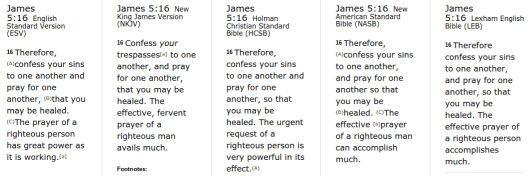
4. “Fervency” in prayer is qualitative, not quantitative
Sometimes we get it into our heads that being “fervent” in prayer means we have to constantly voice that prayer over and over in order to get God to give in and do what we want Him to do. But Godโ€™s provision isnโ€™t dependent on our prayers. He truly does know what we need before we ask. In other words, you could stop praying right this minute for that thing you desperately want, and never pray about it again, and God is not going to forget that thatโ€™s what you want, or move it to a lower priority level on His prayer-answering list, or punish you by denying your request simply because you stopped praying about it. There are things God blesses us with that weโ€™ve never spent a moment praying for. There are things we stop praying for that God finally gives us years later. And there are things we pray constantly for that God says โ€œnoโ€ about. God is going to do what is best for you and what brings Him the most glory, and that doesnโ€™t hinge on whether you pray about that specific thing every day or not. “Fervency” doesn’t mean repetition. It means an intense trust and dependence on God to do what is right in His eyes in response to your prayer. Sometimes it helps to examine a few good translations side by side:
5. Prayer isn’t a letter to Santa Claus
Back in the stone age of my childhood there used to be this thing called the Sears catalog. It was kind of like Amazon, but on paper. Every year, a few months before Christmas, they would publish their “Wish Book” edition that had all the toys in it. My sister and I would go through that catalog and circle all the things we wanted for Christmas and then hand it back to my parents, hoping that, this year, we’d get everything we asked for (and we asked for practically everything).

If this is how you approach prayer, you’re doing it wrong. God is not looking for you to provide Him with a list of stuff your greedy little heart desires so He can wrap it up in a bow and leave it under your tree. He’s not a wish-fulfillment center.

6. Weird stuff and unbiblical beliefs- knock it off
โ™ฆ Prayer is not a two-way conversation. We talk to God through prayer. He talks to us through His all-sufficient Word. Yes, while you’re praying, the Holy Spirit may remind you of Scripture that’s relevant to what you’re praying about, or bring to mind someone you should pray for, or you might think of a way you can help or bless someone, but prayer is not a dialogue. You don’t say your piece and then sit there and wait for God to say something back. That’s often called listening prayer or contemplative prayer, and it’s unbiblical. Likewise soaking prayer, sozo prayer, etc. In fact, if you see the word “prayer” preceded by an adjective not found in Scripture, it’s most likely not biblical.

โ™ฆ Prayer doesn’t require any special accessories. You don’t need to draw a circle to stand in, build a “war room,” blow a shofar, stroke a prayer cloth, or lay your hands on a prayer list, picture, object, etc. Scripture doesn’t tell us to do any of these things, and many of them are patently unbiblical.

โ™ฆ Prayer is not about you doing something, it’s about humbly beseeching God to do something. Nowhere in Scripture does God say that the purpose of prayer is for us to assert any power over anything through our words. He does not give us the authority to “bind” Satan, demons, or anything else, or “decree” or “declare” anything as though we could make something happen by doing so. These are false and unbiblical teachings of the heretical Word of Faith and New Apostolic Reformation movements.

7. Watch your language
โ™ฆ Having a “private prayer language” (speaking in “tongues”) as it is practiced today has zero basis in Scripture. None. When the disciples point blank asked Jesus to teach them to pray, there wasn’t a single “honda shonda” in His instructions, and nothing in Scripture says your prayers will be more meaningful to you or more likely to be heard by God if they’re in gibberish than if they’re in your native, real language.

โ™ฆ If you grew up fundie or old school, you might feel like you have to use “King James” lingo when you pray. You don’t. If you want to use “thee’s” and “thou’s” when you pray, you can, but you don’t have to. You can use the same vocabulary – respectful and pure speech, of course – you’d use when talking to a friend or loved one.

โ™ฆ If you’re tacking the phrase “in Jesus’ name” on to your decreeing and declaring and binding and rebuking as some sort of way to harness the power of God into making your words a reality, you’re taking God’s name in vain because you’re doing the same thing witches and pagans do when they use incantations and cast spells. “In Jesus’ name” isn’t the Christian version of “abracadabra.” To pray in Jesus’ name means to pray that what God wants – not what we want – will be done.

8. It isn’t about getting what we want. It’s about God getting what He wants.
We tend to think of prayer as a means to an end that centers around us. It’s a time to tell God what we want and need and for Him to fulfill those wants and needs, and that’s that. But is that how God thinks about prayer? God tells us to come to Him, to present our requests to Him, ask Him for daily bread, forgiveness, give thanks to Him, and a number of other things. But we also know that He is sovereign. He already knows what we need and what’s best for us, and He does what He pleases. So if God knows better than we do what we need, and if He’s going to do whatever He wants anyway, why bother praying, right?

We say things like that because we think the point of prayer is to get God to do what we want Him to do. But it’s not. The point of prayer is for God to get us to do what He wants us to do. He wants us to pray, not because He needs a “honey do” list, but because coming back to Him time and time again in prayer teaches us to depend on Him and trust Him. It strengthens our understanding of His power and sovereignty. It grows us in humility and submission. It conforms our will and our wants to His. It reminds us of our sin and the cross. It keeps us from taking God’s blessings for granted as we thank and praise Him. It helps us to want what God wants more than what we want.

Ultimately, prayer is not about what we want God to do for us. It’s about what He wants to do in us. So bow your head and close your eyes and make that daily time communing with the Lord your highest priority. God working through prayer to conform you to the image of Christ? That’s not something you want to say, “Nah, not today,” to.


Additional Resources

Prayer

After this Manner, Therefore Pray

Can We Talk?

Listening to God Without Getting All Weird About It by David Appelt

Praying Backwards by Bryan Chapell

Mailbag

The Mailbag: How do I move on after God says “no”?

I loved your article, When God Says “No”. I have a question though: At what point do you move on from the hope or desire? Iโ€™m a single mother and feel that I will always have a natural desire for a spouse and I will always desire that for my young children, but the Lord has not provided this for me. At what point do you stop asking for the thing, weep deeply over the life you hoped would be, and move forward?

A dear reader asked this in the comments section of my article When God Says No, and I wanted to share my answer to her here on The Mailbag, because I think it’s something a lot of us struggle with.

When God seems to be saying no to a desire, I think thereโ€™s a sense in which moving forward is something you do over and over again every day until or unless God takes that desire away. Taking life โ€œone day at a timeโ€ sounds clichรฉ, but if youโ€™ll look at the way Jesus teaches, thatโ€™s very much the mindset He wants us to have.

In the Lordโ€™s Prayer, Jesus instructs us to ask for daily bread. This is an echo of the manna God provided in the wilderness on a daily basis. Later in the Sermon on the Mount, Jesus teaches us not to be anxious for the things we donโ€™t have and not to worry about the future. โ€œTherefore do not be anxious about tomorrow, for tomorrow will be anxious for itself. Sufficient for the day is its own trouble.โ€ He says.

Those passages are hard for me because Iโ€™m a planner, and I donโ€™t like surprises. I like to have everything mapped out and know in advance whatโ€™s going to happen so I can feel secure. But I’ve found that when I’m secure and everything is going well and I don’t really have any problems or unfulfilled desires, I tend to pray less. Depend on God less. Need Him less. And God knows that, more than anything we might desire, what we really need is to need Him. So God does the “daily” thing. God likes for us to get up every day and depend on Him for that day.

So I think what you โ€“ what all of us โ€“ need to do is get up tomorrow morning, spend time with the Lord, and ask Him to help us honor and glorify Him through our words, actions, decisions, etc., that day. Then, we get up the next day and the next and the next, and do the same thing. We put our hope in the Lord Himself, not in what He might or might not do in our lives, and we simply seek to walk with Him and be obedient to Him day by day.

If it would be something that would help you – sort of a โ€œmemorial stoneโ€ type of thing – you can set aside some time, maybe even in a special place, to hash everything out with the Lord about your situation. Pour out your heart to Him in prayer, cry, repent of anything you might need to repent of, study some applicable Scripture, commit your heart to trust Him, and, as the old gospel song says, โ€œtake your burden to the Lord and leave it there.โ€ In the future, if you start feeling sad or frustrated with God about not having a husband, you can look back on that time as a reminder that you committed to trust God and leave this issue with Him.

Finally, (and I know this might sound silly, but I have to remind myself of this all the time) remember that Godโ€™s provision isnโ€™t dependent on our prayers. He truly does know what we need before we ask. In other words, you could stop praying for a husband right this minute and never pray about it again and God is not going to forget that thatโ€™s what you want, or move it to a lower priority level on His prayer-answering list, or punish you by denying you a husband simply because you stopped praying about it. There are things God blesses us with that weโ€™ve never spent a moment praying for. There are things we stop praying for that God finally gives us years later. And there are things we pray constantly for that God says โ€œnoโ€ about. God is going to do what is best for you and what brings Him the most glory, and that doesnโ€™t hinge on whether you pray about that specific thing every day or not. The purpose of prayer is not to get God to do what we want Him to do. The purpose of prayer is to get us on the same page Heโ€™s on- so that we want what He wants.

It can be really difficult and sad when God doesn’t grant our desires, especially when we know they don’t conflict with Scripture, but the blessing is that God can use these circumstances to increase our dependence on Him and conform our desires to His own.


If you have a question about: a Bible passage, an aspect of theology, a current issue in Christianity, or how to biblically handle a family, life, or church situation, comment below (Iโ€™ll hold all questions in queue {unpublished} for a future edition of The Mailbag) or send me an e-mail or private message. If your question is chosen for publication, your anonymity will be protected.

Prayer, Throwback Thursday

Throwback Thursday ~ Pray for Revival

Originally published September 18, 2009


Therefore repent and return, so that your sins may be wiped away, in order that times of refreshing may come from the presence of the Lord; Acts 3:19

Prostrate yourself before the Lord in humility and prayer:
But He gives a greater grace, therefore it says, “GOD IS OPPOSED TO THE PROUD, BUT GIVES GRACE TO THE HUMBLE.โ€ James 4:6

Repent of known sin.
Those whom I love, I reprove and discipline; therefore be zealous and repent. Rev. 3:19

Ask God to reveal any hidden areas of sin in your life.
Search me, O God, and know my heart: try me, and know my thoughts: And see if there be any wicked way in me, and lead me in the way everlasting. Ps. 139:23-24

Yearn for a deeper level of relationship with God.
O God, You are my God; I shall seek You earnestly; My soul thirsts for You, my flesh yearns for You, In a dry and weary land where there is no water. Ps. 63:1

Forsake complacency about your spiritual life.
You will seek Me and find Me when you search for Me with all your heart. Jer. 29:13

Obey everything God commands, even when it is hard, humbling, inconvenient, or costly.
Samuel said, “Has the LORD as much delight in burnt offerings and sacrifices as in obeying the voice of the LORD? Behold, to obey is better than sacrifice, and to heed than the fat of rams. I Sam. 15:22

Request that God will unleash His Holy Spirit, empowering your life, and sweeping through your church.
If you then, being evil, know how to give good gifts to your children, how much more will your heavenly Father give the Holy Spirit to those who ask Him? Luke 11:13

Return to your First Love.
Therefore say to them, ‘Thus says the LORD of hosts, “Return to Me,” declares the LORD of hosts, that I may return to you,” says the LORD of hosts. Zech. 1:3

Expect God to work mightily.
But as for me, I will watch expectantly for the LORD; I will wait for the God of my salvation; My God will hear me. Micah 7:7

View prayer as a high priority, just as Jesus did.
But Jesus Himself would often slip away to the wilderness and pray. Luke 5:16

Invite others to pray with you for revival.
They were continually devoting themselves to the apostles’ teaching and to fellowship, to the breaking of bread and to prayer. Acts 2:42

Voraciously desire that God be glorified.
Be exalted above the heavens, O God; Let Your glory be above all the earth. Ps. 57:5

Agree with God about His desires for your life and your church.
Then Moses came and recounted to the people all the words of the LORD and all the ordinances; and all the people answered with one voice and said, “All the words which the LORD has spoken we will do!” Ex. 24:3

Lift up the name of Jesus.
And I, if I am lifted up from the earth, will draw all men to Myself. John 12:32

Sanctification, Throwback Thursday

Throwback Thursday ~ Pursue the Imperishable

Originally Published June 30, 2010


3 Blessed be the God and Father of our Lord Jesus Christ, who according to His great mercy has caused us to be born again to a living hope through the resurrection of Jesus Christ from the dead,

4 to obtain an inheritance which is imperishable and undefiled and will not fade away, reserved in heaven for you,

5 who are protected by the power of God through faith for a salvation ready to be revealed in the last time.

6 In this you greatly rejoice, even though now for a little while, if necessary, you have been distressed by various trials,

7 so that the proof of your faith, being more precious than gold which is perishable, even though tested by fire, may be found to result in praise and glory and honor at the revelation of Jesus Christ;

8 and though you have not seen Him, you love Him, and though you do not see Him now, but believe in Him, you greatly rejoice with joy inexpressible and full of glory,

9 obtaining as the outcome of your faith the salvation of your souls.

13 Therefore, prepare your minds for action, keep sober in spirit, fix your hope completely on the grace to be brought to you at the revelation of Jesus Christ.

14 As obedient children, do not be conformed to the former lusts which were yours in your ignorance,

15 but like the Holy One who called you, be holy yourselves also in all your behavior;

16 because it is written, “YOU SHALL BE HOLY, FOR I AM HOLY.”

17 If you address as Father the One who impartially judges according to each one’s work, conduct yourselves in fear during the time of your stay on earth;

18 knowing that you were not redeemed with perishable things like silver or gold from your futile way of life inherited from your forefathers,

19 but with precious blood, as of a lamb unblemished and spotless, the blood of Christ.

20 For He was foreknown before the foundation of the world, but has appeared in these last times for the sake of you

21 who through Him are believers in God, who raised Him from the dead and gave Him glory, so that your faith and hope are in God.

22 Since you have in obedience to the truth purified your souls for a sincere love of the brethren, fervently love one another from the heart,

23 for you have been born again not of seed which is perishable but imperishable, that is, through the living and enduring word of God.
1 Peter 1:3-9, 13-23

Luke 11:12 says that if we ask God for an egg, He won’t give us a scorpion. But sometimes, when I ask God for an egg, He gives me a Denny’s Grand Slam instead.

Such was the case with my Bible study this morning. I asked God to speak to me through His word about something that’s a concern for me right now, thinking He would lead me to one of those comforting passages that says that He cares for me (1 Peter 5:7, Matthew 11:28). I only ordered an egg, but God knew I needed something more filling and nutritious. Something I could chew on for a while. Something that would stick to my ribs.

So He served me up a heaping helping of the first chapter of 1 Peter.

I’ve been asking God to teach me to need Him more. No, not just “need”. NEED!!! And guess what I’ve learned– God delights to answer prayers like that. Guess what else I’ve learned– He doesn’t usually do it by waving a magic wand over your head and instantly making you the way you want to be. He brings circumstances or people into your life that you have to walk through and work through. Along the way, He’s quietly transforming your character to make you more Christ-like. It’s like nuclear physics homework, only not as easy or fun.

(Personally, I would prefer a magic wand. It’s easier, faster, and requires nothing on my part. On the other hand, Cinderella got the magic wand treatment, and where did that get her? She didn’t learn to sew a designer gown, shop for comfortable shoes, or make her own travel arrangements. How could she fend for herself the next time there was a ball? But I digress…)

So, I find myself in this situation where God is teaching me to really NEED Him. I’ve done literally everything I can do on my end. The only thing left is for God to move. And, boy, do I need Him to move. Like, yesterday.

So, I’m praying and praying and praying about this situation and God helped me understand that I’m missing the point. The whole point of this little exercise is not about the end result (the resolution of the situation). That’s temporal. It’s not going to last. The point is what God is teaching me as He walks me through it. That’s imperishable. Eternal.

And so, I pursue the imperishable.

Because I was redeemed –bought back– not with perishable seed (23) or with perishable things like gold or silver (18), but with precious blood, as of a lamb unblemished and spotless, the blood of Christ (19), and until I reach my inheritance which is imperishable and undefiled, and will not fade away, reserved in heaven for me (4),

I will forsake lusting after the perishable (14) and pursue obedience and holiness (15-16), which are imperishable.

I will greatly rejoice whenever I am distressed by perishable trials (6), because the proof of my faith –which is imperishable– even proof by fire, is more precious, more valuable than all the perishable gold or material things in this world (7).

Pursue the imperishable things of God. They are more precious than food, shelter, safety, family, money, reputation, things. They are eternal.

Colossians Bible Study

Colossians: Lesson 7

Previous Lessons: 1, 2, 3, 4, 5, 6

Colossians 4:7-18

Tychicus will tell you all about my activities. He is a beloved brother and faithful minister and fellow servant in the Lord. 8ย I have sent him to you for this very purpose, that you may know how we are and that he may encourage your hearts, 9ย and with him Onesimus, our faithful and beloved brother, who is one of you. They will tell you of everything that has taken place here.

10ย Aristarchus my fellow prisoner greets you, and Mark the cousin of Barnabas (concerning whom you have received instructionsโ€”if he comes to you, welcome him), 11ย and Jesus who is called Justus. These are the only men of the circumcision among my fellow workers for the kingdom of God, and they have been a comfort to me. 12ย Epaphras, who is one of you, a servant of Christ Jesus, greets you, always struggling on your behalf in his prayers, that you may stand mature and fully assured in all the will of God. 13ย For I bear him witness that he has worked hard for you and for those in Laodicea and in Hierapolis. 14ย Luke the beloved physician greets you, as does Demas. 15ย Give my greetings to the brothers at Laodicea, and to Nympha and the church in her house. 16ย And when this letter has been read among you, have it also read in the church of the Laodiceans; and see that you also read the letter from Laodicea. 17ย And say to Archippus, โ€œSee that you fulfill the ministry that you have received in the Lord.โ€

18ย I, Paul, write this greeting with my own hand. Remember my chains. Grace be with you.


The Holy Bible, English Standard Version Copyright ยฉย 2001 by Crossway Bibles, a publishing ministry of Good News Publishers.


Questions to Consider:

1. What is the theme or purpose of this passage? With what sort of tone (rebuking, emphatic, compassionate, etc.) does Paul close out this epistle? Thinking back over the previous lessons, give a 3-5 sentence synopsis of Colossians in your own words.

2. List the people Paul mentions by name in this passage, noting the words of praise he has for each. Paul did not take those who served with him in ministry for granted. Are you thankful for those who serve in the various ministries of your church? What are some ways you can show appreciation to others who serve in ministry alongside you (and over you) at your church?

3. What else do we know about Tychicus, Onesimus, Aristarchus, Mark, Barnabas, Epaphras, Luke, Demas, and Archippus? How can cross-referencing give us a fuller picture and better understanding of a passage we’re studying?

4. Examine and describe the ministry roles each person in this passage fulfilled in the Body of Christ in light of 1 Corinthians 12:4-7. How does Colossians 4:7-18 demonstrate the need for various people to carry out various “services and activities”? How does this passage show value for a variety of servanthood roles and ministries, even those we might consider small or unimportant? Think about your church and Christianity at large. Do we place a greater value on those who serve in “spotlight” (“important”) roles compared to those who serve in obscure (“unimportant”) roles? How does 1 Corinthians 12:12-31 speak to this?

5. Note the words “encourage your hearts” (8), “they have been a comfort to me” (11), “struggling on your behalf in his prayers” (12), and “the church in her house” (15). How were encouragement, comfort, prayer, and hospitality crucial to the early church? Are they just as crucial to the church today? Is your church particularly strong or weak in any of these areas? How could your church improve in these areas?

Homework:

How can you serve your church in the areas of encouragement, comfort, prayer, and hospitality? Think of one specific thing you can do for your church or a particular person in your church in each of these four areas, and do them over the next week. For example:

Monday: Write an e-mail encouraging my pastor.
Tuesday: Visit one of my church’s members who is hospitalized or a shut-in.
Wednesday: Pray through my church’s prayer list.
Thursday: Invite the lady who visited my church on Sunday for coffee.