Discernment, Southern Baptist/SBC

Say “Nah” in Nashville to These Problematic Speakers at SBC21

If you are considering commenting or sending me an e-mail objecting to the fact that I warn against certain teachers, please click here and read this article first. Your objection is most likely answered here. I wonโ€™t be publishing comments or answering emails that are answered by this article.

Photo credit: sbcannualmeeting.net

The 2021 annual meeting of the Southern Baptist Convention is coming up June 15-16, and you’re probably already sick of hearing about all the problems in the SBC.

Believe me, I am too.

But problems can’t be solved until they’re exposed and recognized as problems. And since I don’t hold a position of leadership in the SBC that would allow me to do anything to actually solve any of the problems, exposing and awareness is my ministry jam. Maybe it’ll help those who do have the power to help solve the problems.

You may recall the 2020 SBC Pastors’ Conference scandal in which David Uth, pastor of First Baptist Church, Orlando, and president of the 2020 Pastors’ Conference (a conference for SBC pastors immediately prior to the annual meeting) had planned to platform a host of unbiblical characters, including a female “pastor,” male pastors with female “pastors” on their church staff, pastors with unbiblical theology and ecclesiology, etc., as featured speakers.

That problem has not gone away, it has just been repackaged and rebranded and seems to be flying under the radar this year with all the (very good and needed) focus on repudiating 2019’s Resolution 9 and Critical Race Theory in general, the SBC presidential campaign, women “pastors,” and other issues, which are totally worthy of the attention they’re receiving.

But the issue of SBC leaders, entities – funded by your offerings, by the way – and other organizations platforming false and unbiblical teachers is also worthy of attention. It has been going on for decades and is only worsening. And that’s exactly what’s happening at some of the ancillary conferences, luncheons, and other events taking place at this year’s Convention.

There are so many of these ancillary events taking place it would have been impossible to vet every one of them, and several of the organizations sponsoring these events have not posted any information about the event online. Additionally, some of the speakers who may, indeed, be very unbiblical, have almost no online presence, so it’s not feasible to try to vet them. So in order to highlight the pervasiveness of the problem, I’m hitting some of the most prolific problematic speakers at a few of the events I think will be of most interest to you.

If you’re unfamiliar with the way I vet teachers and speakers, I’ve explained the criteria I use, and why, in my article Is She a False Teacher? 7 Steps to Figuring it Out on Your Own, as well as in the introduction to my articles on false teachers (for example). In a nutshell, two of the top biblically disqualifying issues with contemporary teachers are: a) women preaching to men (or men/pastors allowing women to preach to men), and b) yoking with false teachers. Those are not the only two issues which biblically disqualify a teacher, but they are two of the fastest and easiest things to check when vetting several teachers in a limited amount of time, so much of what you see below will fall into those two categories.

Rather than adding a zillion links, if you’re unclear as to why someone with whom one of these teachers is yoking is a false or unbiblical teacher, please see my Popular False Teachers & Unbiblical Trends link in the blue menu bar at the top of this page.

Additionally, aside from the full length articles linked to some of the teachers’ names, the information on each teacher below is nowhere near exhaustive, but rather, a thumbnail sketch of some of the major issues with each.

Send Conference (NAMB / IMB)
June 13-14

Photo credit: sendconference.com

Send Conference, sponsored by the North American Mission Board (NAMB) and the International Mission Board (IMB), is basically taking the place of the SBC Pastors’ Conference this year, and is open to all. One of NAMB’s major areas of focus is church planting in North America, and they have lately come under fire when it was discovered that several of their church plants had women pastors and that they are requiring their church planters to teach an adulterated gospel. Remember, NAMB and IMB are supported by your church’s contributions (your offerings) to the Cooperative Program and by your Annie Armstrong Easter offerings and Lottie Moon Christmas offerings, respectively.

Some of the problematic speakers at Send Conference include:

Tony Evans

Donna Gaines – Wife of former SBC president Steve Gaines (who, while sitting president, spoke glowingly on Twitter about an evangelical celebrity headlining his church’s women’s conference and promptly blocked me when I gently informed him said celeb is a false teacher. This conference took place under Donna’s leadership in the women’s ministry.)

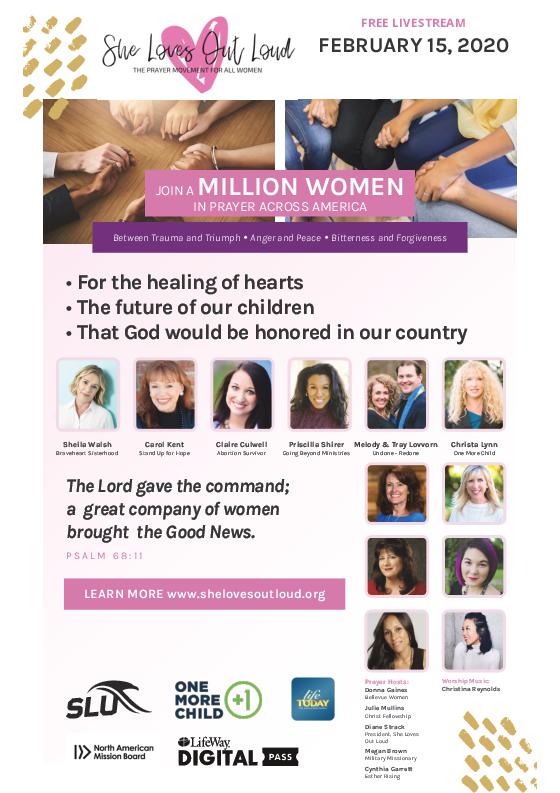
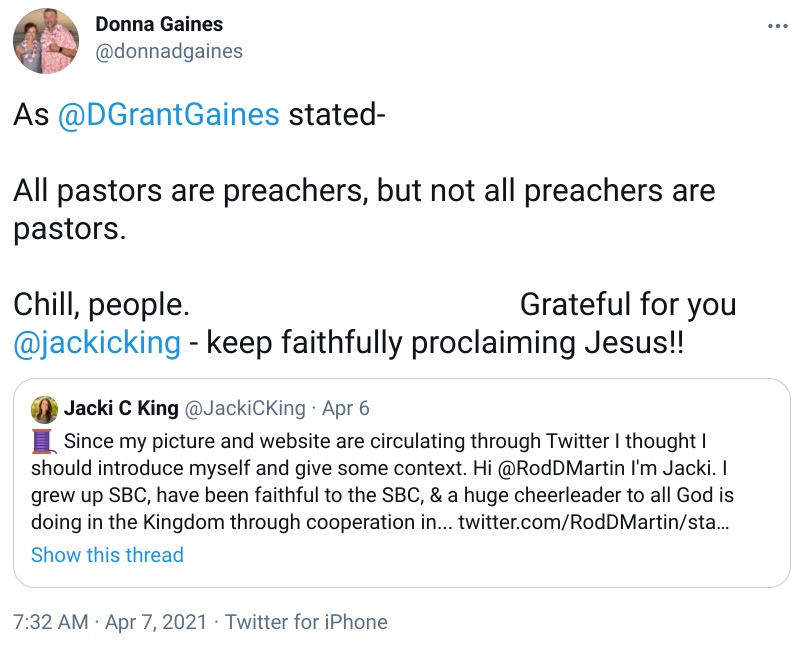
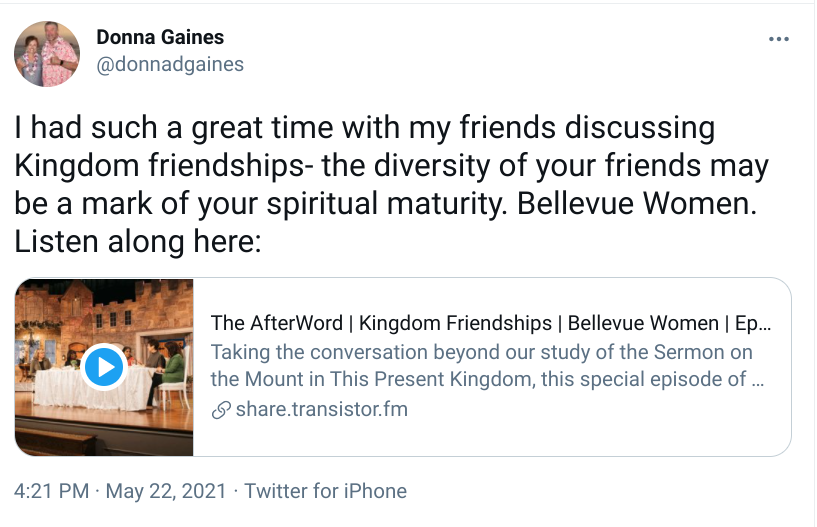
Donna is on the steering committee of the SBC Women’s Leadership Network (see below). Her church has at least two adult co-ed life groups co-taught by women, and several groups that use materials by false teachers (Chrystal Evans Hurst, Priscilla Shirer, Anne Graham Lotz, Rick Warren, etc.) She has preached to co-ed audiences. She’s friends with, and endorsed by, Beth Moore, who has spoken at her church. Donna is on the “team” of She Loves Out Loud (alongside some women “pastors”), which in 2020 staged a prayer event including false teachers Priscilla Shirer and Sheila Walsh, which Donna hosted at her church, and which men were allowed to attend. Here she speaks out in support of fellow SBCWLN leader, Jacki C. King (see below) preaching to a co-ed audience and tells those calling Jacki to account to “chill”. And here, she says, “the diversity of your friends may be a mark of your spiritual maturity.”
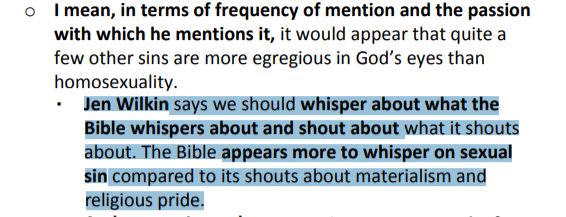
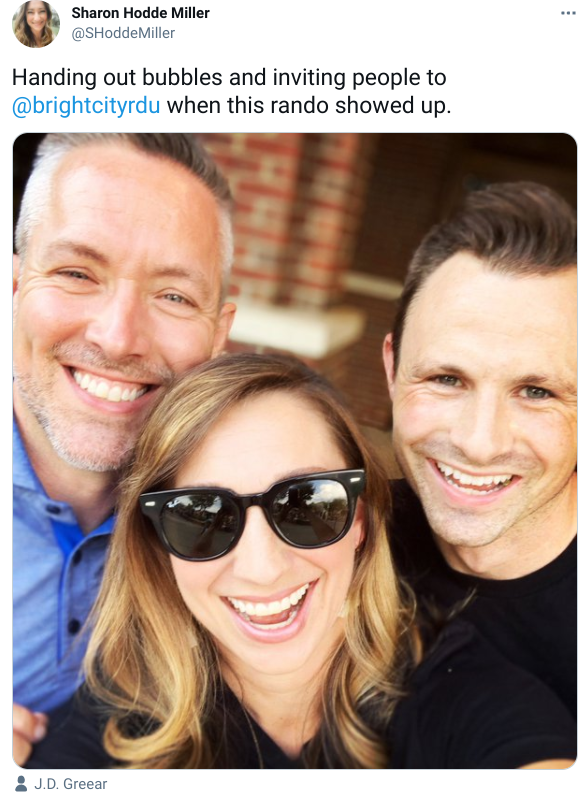
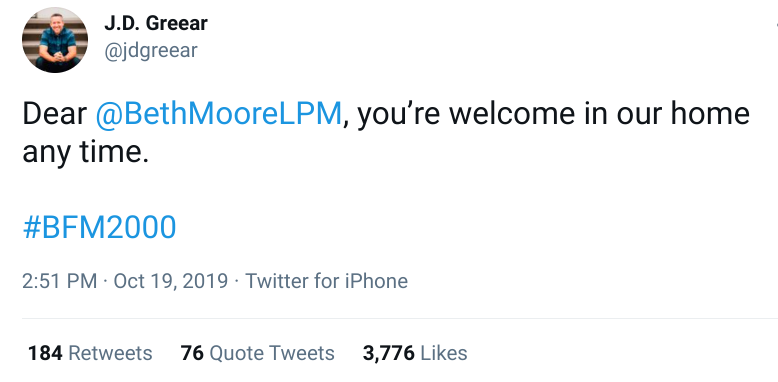
J.D. Greear– Current SBC president. J.D. Greear has stated (quoting Jen Wilkin) in a sermon that the Bible โ€œwhispers about sexual sin,โ€ publicly supports and defends false teachers like Beth Moore, and maintains a friendship with at least one female โ€œpastorโ€ โ€“ among many other things. And with his attention-grabbing stand on retiring the Broadus gavel and his unsubstantiated claim that “closet racists and neo confederates feel more at home in our [SBC] churches than do many of our people of color,” his continual references to “Great Commission Baptists” instead of “Southern Baptists,” yet standing with the seminary presidents in their statement repudiating Critical Race Theory, his stand on racial issues feels like a muddled attempt at straddling the fence.
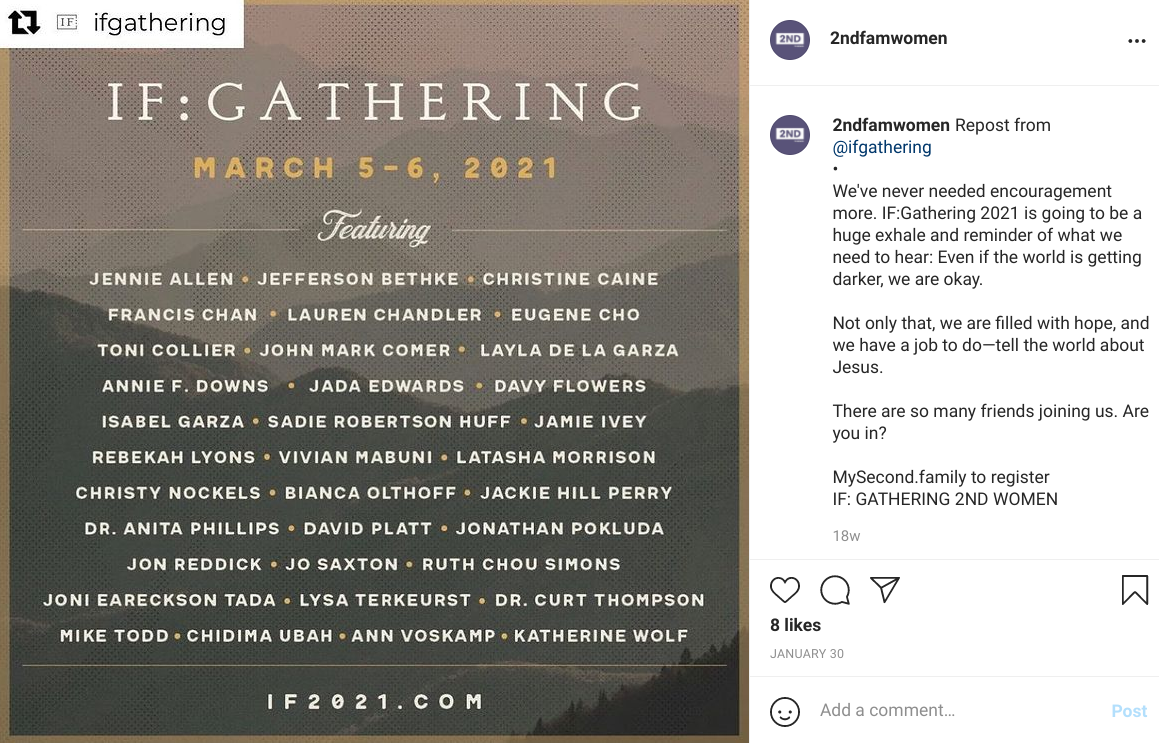
Jamie Ivey LifeWay Women frequently endorses Jamie, which, unfortunately, is a red flag due to their habitual endorsement of false and problematic teachers. And, indeed, Jamie is appearing at LifeWay Women Live 2021 with Lisa Harper, Jackie Hill Perry, Jen Wilkin, Kelly Minter, Jennifer Rothschild, Angie Smith, and Lauren Chandler. She also spoke at IF: Gathering 2021 with a plethora of false teachers. Just since the beginning of 2021, Jamie has hosted Tony Evans, Lisa Harper, racialist Jemar Tisby, Francis Chan, Lisa Bevere’s son, Lauren Chandler, and Amanda Bible Williams on her podcast. Jamie has appeared on TBN’s Better Together show (several times, actually) with Laurie Crouch (co-head of TBN), Christine Caine, diversity trainer Janice Gaines, and female “pastor” Jada Edwards.

Jamie is also quite the proponent of the Enneagram and diversity (appearing at TGC 2018 with Jackie Hill Perry), and has been a featured speaker at co-ed conferences such as ETCH 2020, and the Enneagram Conference.

Jamie is also speaking at the Women & Work Forum (below) and the SEBTS Women’s Breakfast.

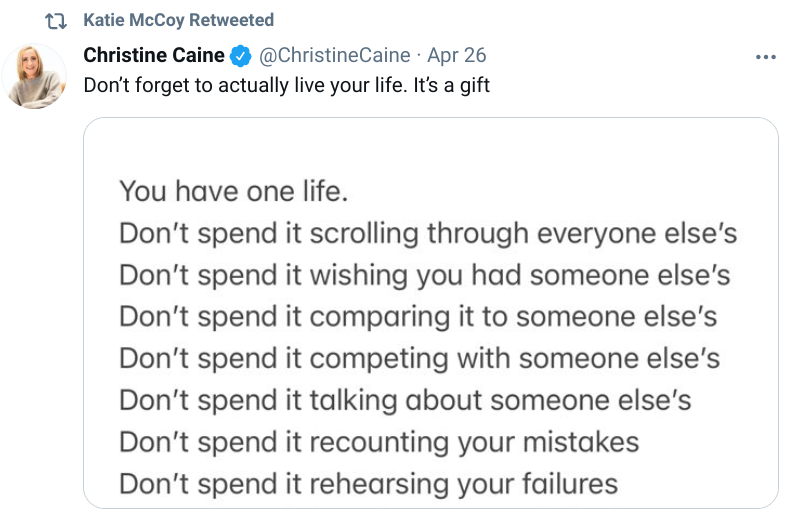
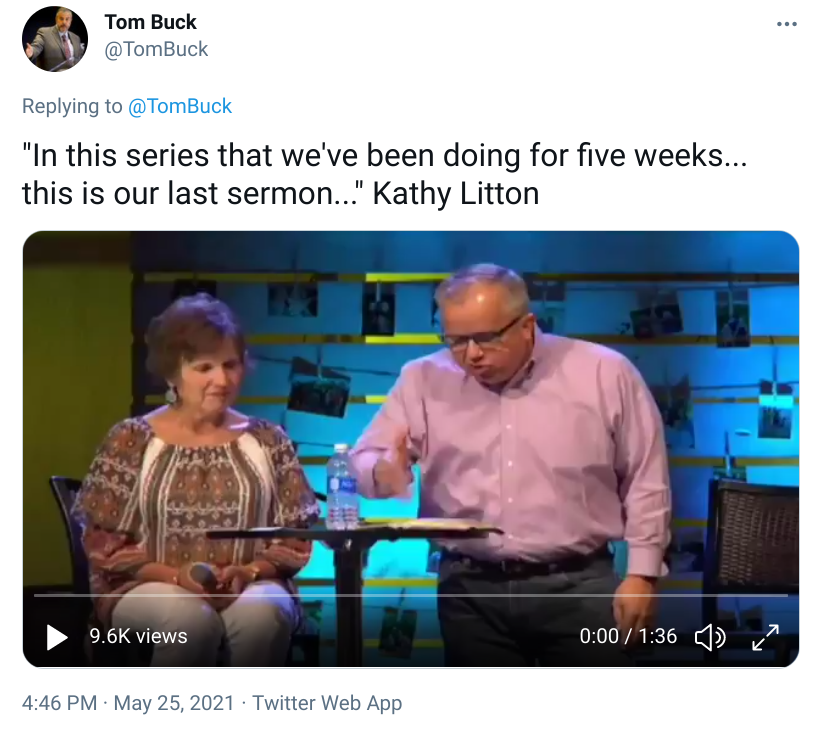
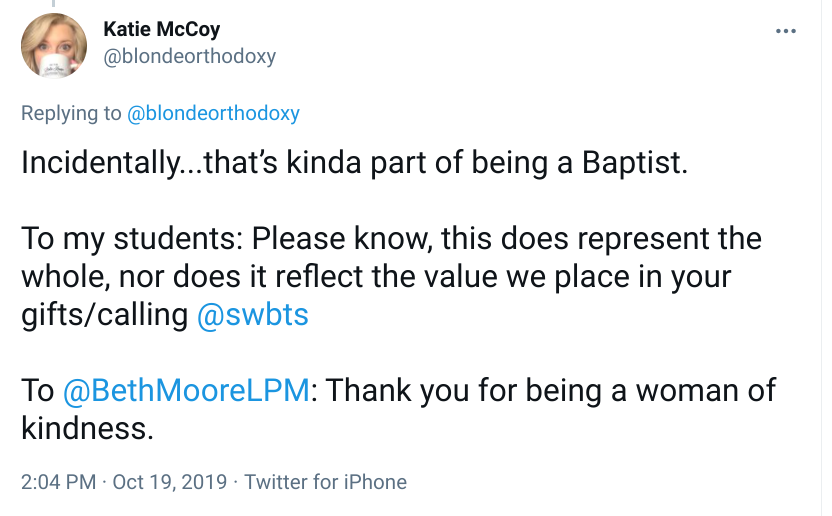
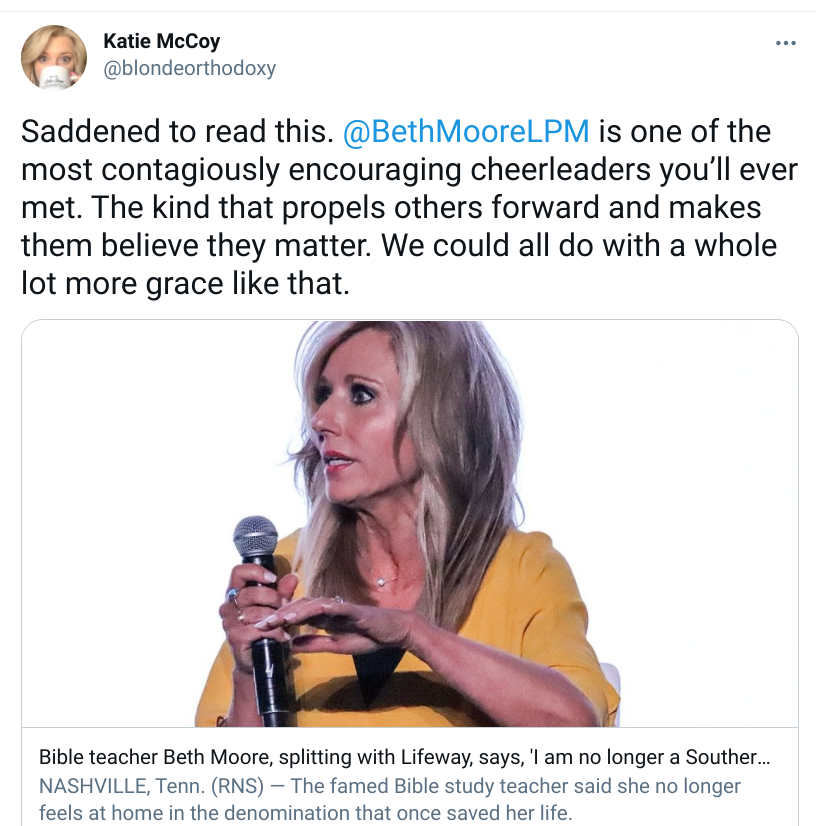
Katie McCoy– Assistant Professor of Theology in Womenโ€™s Studies at Southwestern Theological Baptist Seminary (SWBTS). Katie is friends with Jacki C. King and serves with her on the steering committee of SBCWLN (see below). She’s a supporter of Beth Moore (also here), and has favorably retweeted Christine Caine (also here) Jen Wilkin, Priscilla Shirer, and Jackie Hill Perry, all of whom preach to men and most of whom are false teachers. And here’s Katie sharing the stage with Kathy Litton (see below).

Katie’s church (where she is minister to women) allows women to co-teach adult co-ed Bible study classes. (The women’s ministry Facebook page of Katie’s church also promotes several events with problematic/false teachers, here, here, here, and further back, but it is unclear whether or not Katie was the women’s ministry leader at that time. It is my hope that she was not and that, under her leadership events like this have ceased.)
Sheila Walsh

SBC Women’s Leadership Network Event
June 14
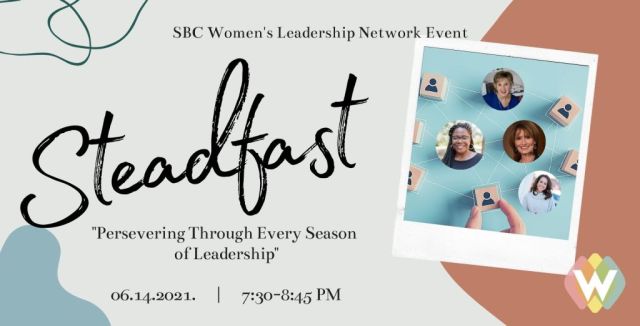
Photo credit: sbcwomen.net/events

I found and joined the SBC Women’s Leadership Network Facebook group before I realized there was a “network” behind it. I left said Facebook group when it became obvious that various admins of the group (some of whom are members of the network’s steering committee) were at least somewhat favorably disposed to women holding pastoral positions and that my questions about this and citing Scripture regarding the biblical role of women in the church were not welcome (despite the network’s claim to be “convictionally complementarian“).

The SBCWLN event is to be a panel discussion with Kathy Litton, Missie Branch (not included below as there is very little online information on her), Susie Hawkins, and moderated by Jacki C. King. All of these are members of the SBCWLN steering committee:

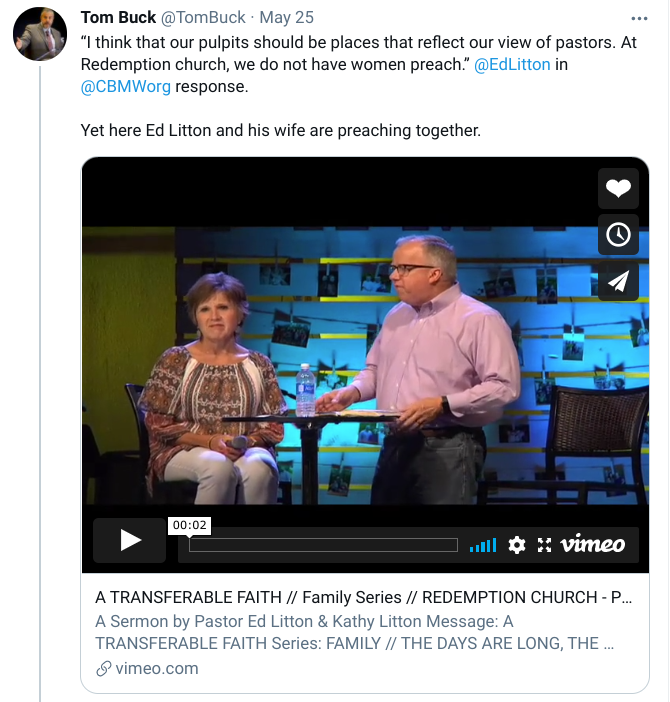
Kathy Litton– Kathy is the wife of current SBC presidential candidate, Ed Litton. This man who wants to be at the helm of your entire denomination, violates Scripture by allowing Kathy to “co-preach” the Sunday sermon at their Southern Baptist church here, and here, and several more sermons can be found at their church’s website. (UPDATE – July 2021: Not surprisingly, once Ed Litton was publicly taken to task for allowing his wife to preach, he deleted the sermon videos.) And here’s Kathy preaching to a co-ed audience at the 2017 MBC Great Commission Conference. Frighteningly, Kathy also serves as Director of Planting Spouse Development, with the Send Network (see above – interesting that it’s planter “spouse” instead of planters’ “wives” as it should be), the church planting arm of the North American Mission Board, which means she heavily influences other pastors’ wives.

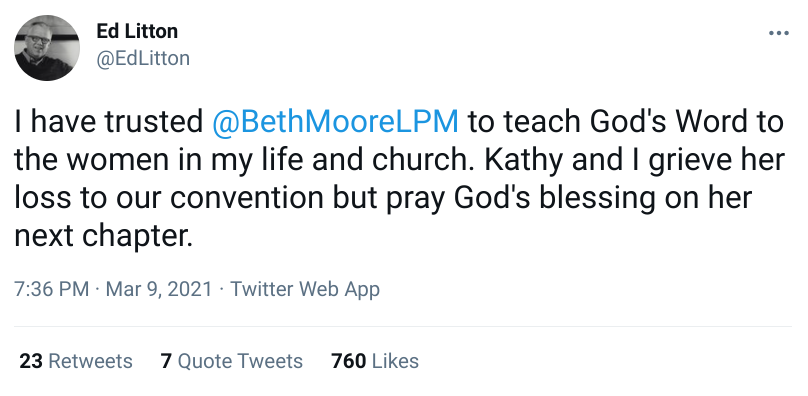
Kathy and Beth Moore admire each other. Kathy and Ed “grieved” the SBC’s “loss” of Beth Moore, whose materials were apparently used in their church. Kathy participated in the 2018 SBC Pastors’ Wives conference headlined by Beth Moore and Lisa Harper, where Kathy conducted an interview with Beth’s daughter Melissa. Kathy follows Jackie Hill Perry. and Priscilla Shirer. Kathy wrote an article for Lois Evans’ (Tony Evans‘ late wife) blog, and has shared the stage with Lysa TerKeurst.
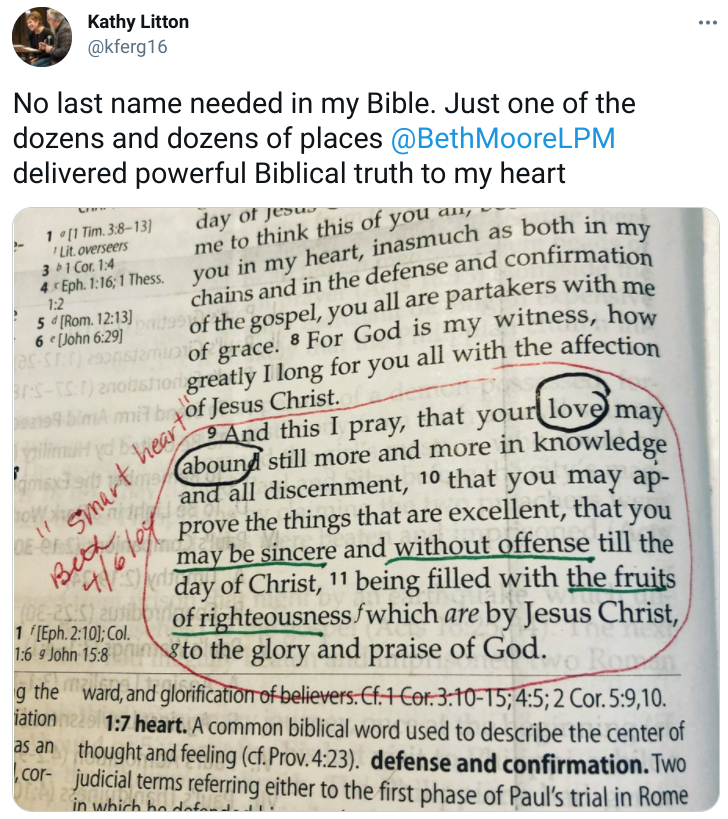
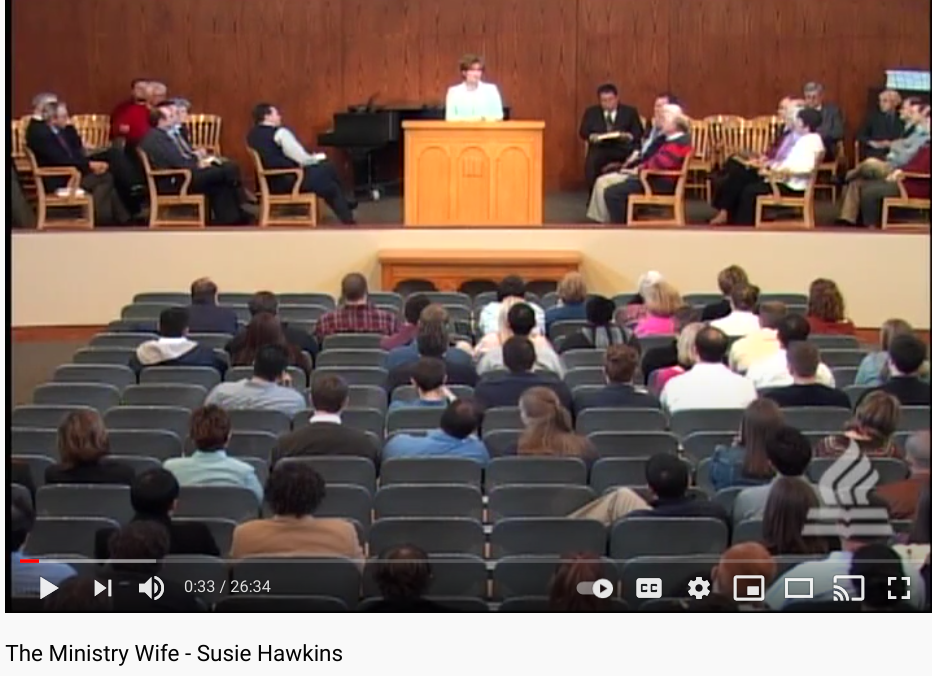
Susie Hawkins– Susie is the wife of O.S. Hawkins, president of the SBC’s Guidestone Financial Resources, and former board member of SBC compassion ministry, Baptist Global Response. Susie is a fan of Priscilla Shirer, and Beth Moore is a fan of Susie’s book. Susie participated in a conference with Jennifer Rothschild. Susie calls (false teacher) Ed and (female “pastor”) Lisa Young “dear friends“.

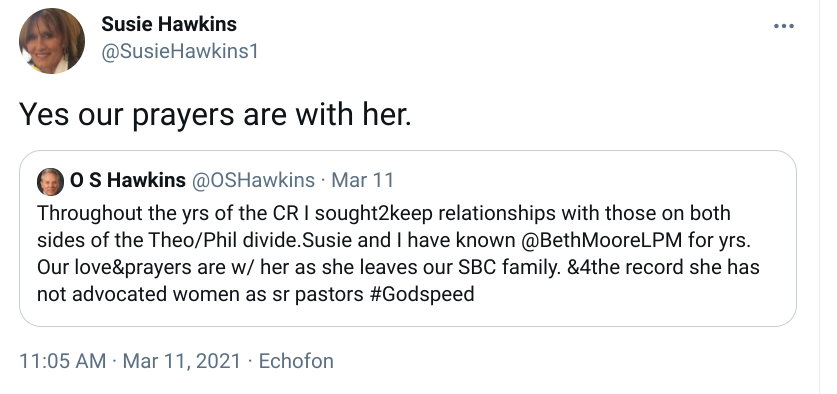
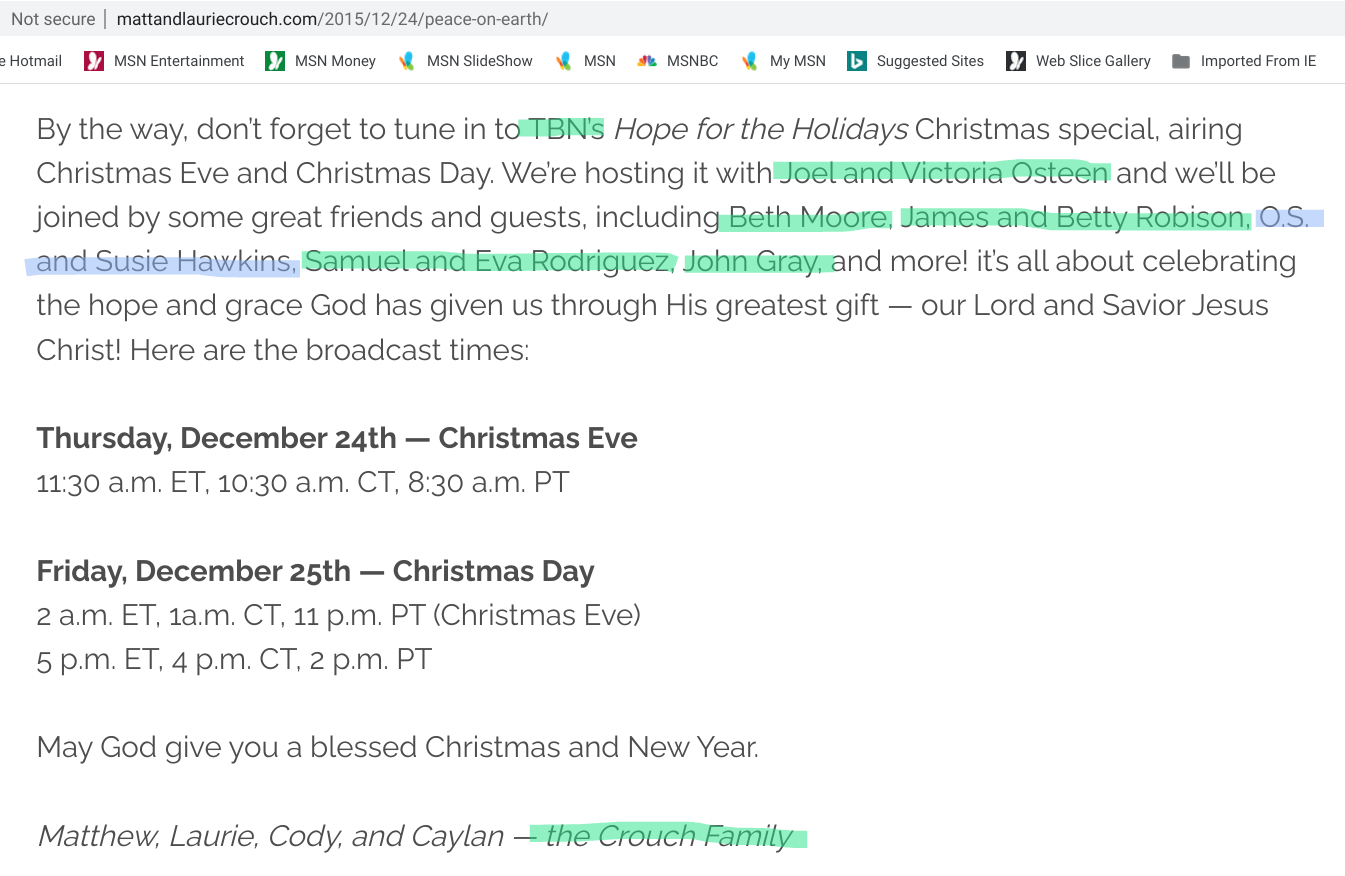
Susie retweeted her husband’s loving well-wishes to Beth Moore when she left the SBC (“And for the record she has not advocated women as senior pastors,” he defended Beth, which is hardly the point with her.) Her husband partnered with TBN to provide his book as a gift to their donors and partners (her retweets signal approval). Susie and her husband also appeared on TBN’s 2015 “Hope for the Holidays” show with heads of TBN Matt and Laurie Crouch, Joel and Victoria Osteen, Beth Moore, James and Betty Robison, New Apostolic Reformation leader Samuel and Eva Rodriguez, and John Gray (former Osteen associate “pastor” and recently revealed serial adulterer).

Susie also occasionally writes for her husband’s blog, in this article, Woman Devotional Writers of the Church touting the works of Catholic mystics. She has instructed a co-ed group in the Scriptures on at least one occasion.
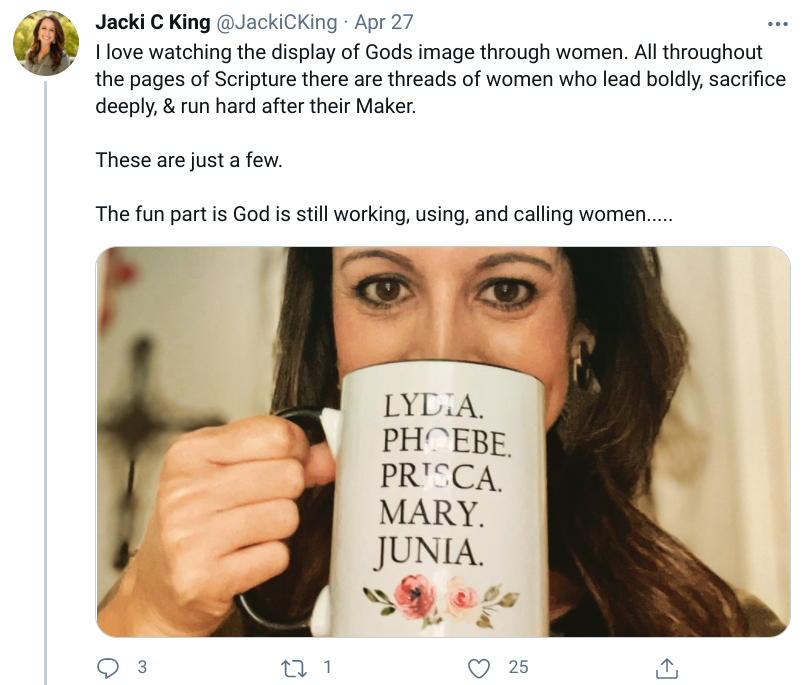
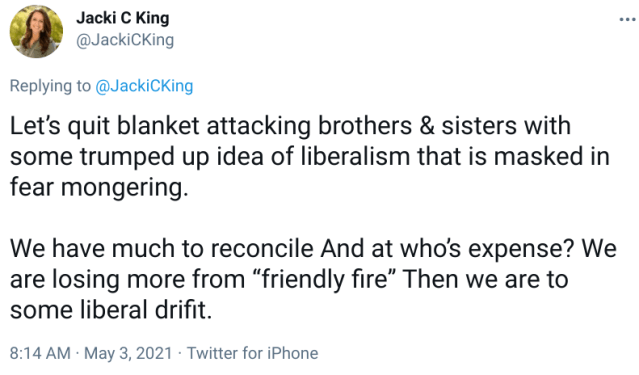
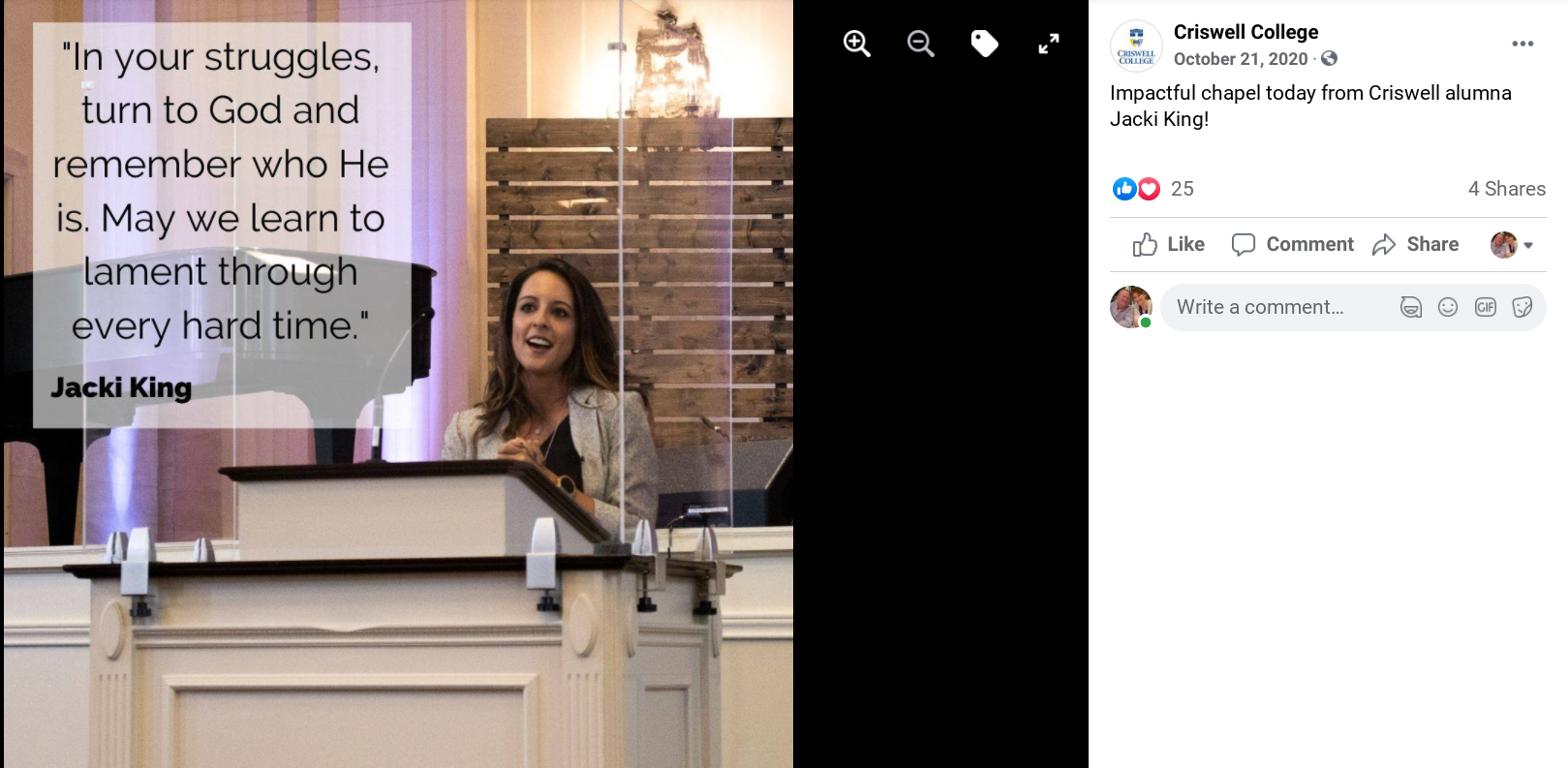
Jacki C. King- Jacki is a pastor’s wife, podcaster, and speaker. Though she normally teaches women, Jacki recently came under fire for preaching the (co-ed) chapel service at Criswell College. She is on board with the “women need a seat at the table in church leadershipmovement typical of so called “narrow (anything but senior pastor) complementarianism”. And then there’s this tweet (hint: egalitarians, not “convictional complementarians” are the ones always focusing on the women of Romans 16, especially Junia).

Under Jacki’s leadership as women’s minister at her church, the women’s ministry has been a host site for IF: Gathering, attended a Jennifer Rothschild/Angie Smith conference, attended an event headlined by (Lysa TerKeurst’s) Proverbs 31 Ministries speaker Whitney Capps, and participated in a Lysa TerKeurst book study.

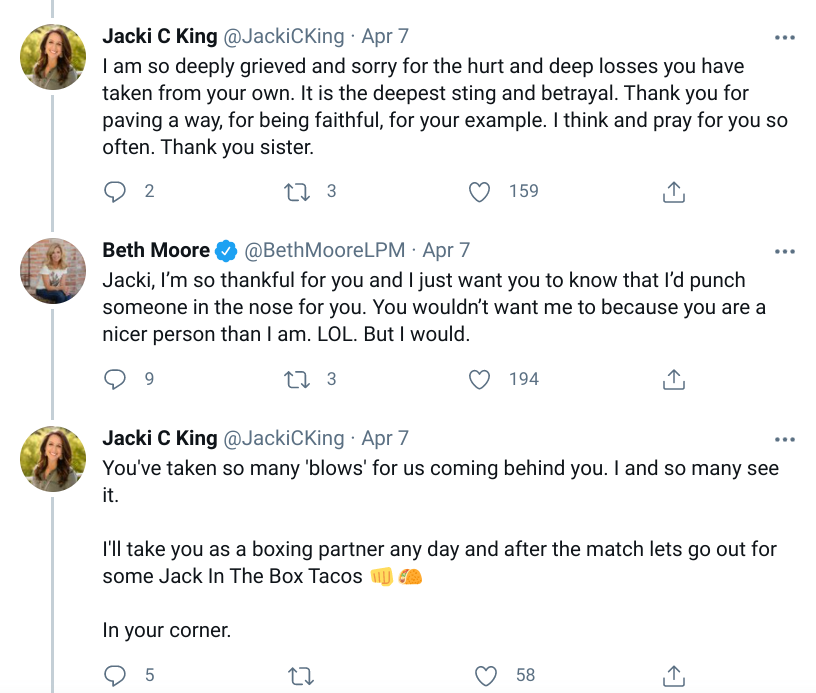
Jacki has declared herself to be “in [Beth Moore’s] corner” and warned pastors not to brush off women’s feelings about Beth’s departure from the SBC. It seems as though she believes Russell Moore’s recent slanderous and false allegations against Mike Stone and other conservative SBC leaders and has publicly declared that she will vote for Ed Litton (see “Kathy Litton” above) for SBC president. And indeed, if you run in the same circles I do on Twitter (doctrinally sound, actually complementarian, discerning, etc.) although she’s usually careful not to name names or be too specific in her tweets, her carping disdain for, and “correction” of biblically conservative Southern Baptists and other Christians is palpable.

My friend, Robin, attended a conference at which Jacki was the speaker. Check out some of the content of Jacki’s teaching (including the Enneagram, psychiatry, quoting false teachers, and out of context Scripture) here.

(Also, “everybody in leadership needs to get a therapist“?)
Women & Work Forum
June 15
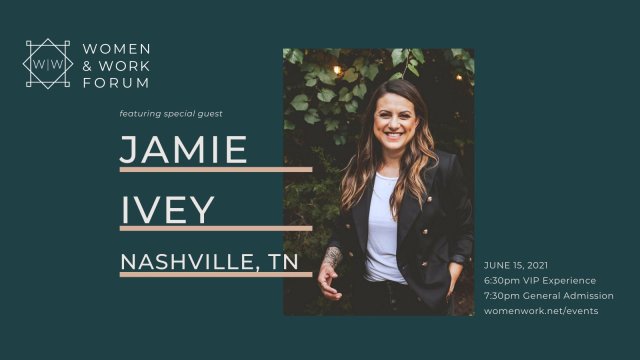
Photo credit: Women & Work Twitter page (@womenwork_net)

Although much of the material at the Women & Work website looks reasonably biblical on the surface, the organization tips its hand with the last line of their statement of faith: “As it relates to the church, men and women are both expected to lead; however, the office of pastor is reserved for biblically qualified men.” (emphasis mine) If you’re as immersed in the pop-women’s ministry milieu as I am, you know what this means: so-called “narrow complementarianism.” In other words, women can fill any capacity or function in the church except the office of head pastor.

The Women & Work Forum event is to be an interview with Jamie Ivey conducted by Missie Branch (not included due to lack of online information) and Courtney L. Moore.

Jamie Ivey– See “Send Conference” above

Courtney L. Moore– Courtney is a pastor’s wife and the founder and president of Women & Work. As such, she is responsible for Jamie Ivey’s appearance at this year’s event and Jen Wilkin’s appearance at W&W’s 2019 event.

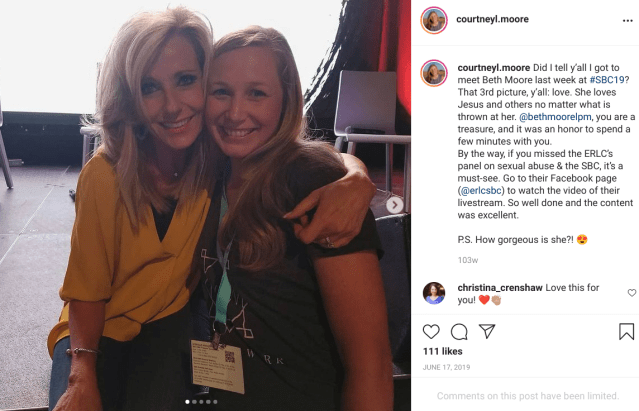
Courtney has taught at LifeWay Women’s YouLead conferences, so she has yoked with an organization that habitually promotes false teachers in general, and I have personal knowledge of a YouLead speaker Courtney has appeared with who is not doctrinally sound. Courtney is a fan of Jennie Allen, Beth Moore (“[Beth] loves Jesus and others no matter what is thrown at her. [Beth Moore], you are a treasure, and it was an honor to spend a few minutes with you.”), Christine Caine, and Proverbs 31 (where she apparently heard God speak to her {extra-biblical revelation} at a P31 event). Courtney was also involved in MOPS, speaking twice at MOPS events.
LifeWay Ministers’ Wives Luncheon
June 15

Photo credit: lifeway.com/en/events/

I’ve mentioned the issues with LifeWay selling materials by false teachers numerous times over the years, particularly in their women’s division. The LifeWay Ministers’ Wives Luncheon at this year’s Convention is placarded as, “An inspirational time for all ministry wives attending the Southern Baptist Convention to meet, fellowship, and worship together,” and features speaker…

Jen Wilkin

These are just a few of the problematic and unbiblical speakers who will be appearing at SBC21 events, but they highlight the pervasive problem in the SBC of lack of discernment and sound doctrine, yoking with false teachers, and women preaching to men.

Just say “Nah,” in Nashville.


Might I recommend the Founders Conference instead of the above events? Doctrinally sound speakers. Biblical teaching.

Mailbag

The Mailbag: Potpourri (Was John a prophet? … Christianese … Kendrick brothers movies … Confronting immodest nursing…)

Welcome to another โ€œpotpourriโ€ edition of The Mailbag, where I give short(er) answers to several questions rather than a long answer to one question.

I like to take the opportunity in these potpourri editions to let new readers know about my comments/e-mail/messages policy. Iโ€™m not able to respond individually to most e-mails and messages, so here are some helpful hints for getting your questions answered more quickly. Remember, the search bar (at the very bottom of each page) can be a helpful tool!

Or maybe I answered your question already? Check out my article The Mailbag: Top 10 FAQs to see if your question has been answered and to get some helpful resources.


In response to the question about Simeon [in this article], would you consider John (the John that wrote Revelation) to be a prophet? I know he was an apostle but I was just wondering if he would also be considered a prophet due to all the Lord showed him regarding Revelation.

Great question! I love it when women are thinking deeply about the things of God. Since you’re asking my opinion, I didn’t delve into any scholarly works on the subject, I’m just going to give you my take on it based on what I know of Scripture.

As you probably know, in the Old Testament, there were two different types of people who prophesied:

  • Men who held the office of prophet – what we might think of as a “professional prophet,” so to speak – like Isaiah, Jeremiah, Elijah, Elisha, and so on.
  • People to whom God gave a “one and done” (or maybe twice or thrice) word of prophecy for a particular reason or moment in time, like Eldad, Medad, and the 70 elders, Saul, Eliezer, and others.

Jesus was, and is, the final, permanent occupant of the offices of prophet, priest, and king. This is why we don’t see the office of prophet or priest in the New Testament church or anyone installed as “king” over New Testament Christians.

Until the canon of Scripture was complete, however, and foretelling prophecy become obsolete, we do see occasional references to the second type of prophecy in the New Testament church. It seems to me that second category is the category John’s prophecy in Revelation would fall into. He held the office of Apostle, but not the office of prophet (since that position was filled), and God gave Him a “one and done” prophecy to communicate to us.


I’m learning so much from your articles, and I think my husband would benefit from and enjoy hearing what I’m learning. Can I share your posts with him? I donโ€™t want YOU to be teaching my husband and break that command.

It’s always important to be obedient to God’s commands, but it’s equally important that we understand exactly what the command does and doesn’t prohibit so we can obey it properly.

For example, the sixth Commandments says, “You shall not murder,” but this Commandment doesn’t preclude self defense, capital punishment, fighting in a war, or vehemently annihilating an uppity rat or snake with a shovel (I hate rats and snakes. :0)

In the same way, the New Testament’s prohibition on women instructing men in the Scriptures doesn’t mean no male can ever learn anything – even biblical things – from a woman. For example, we see Lois and Eunice instructing Timothy in the Scriptures when he was a boy, and Priscilla, along with her husband Aquila, privately correcting and instructing Apollos.

The biblical prohibition against women teaching men in 1 Timothy 2:11-3:7 has a very specific context. Women are prohibited from preaching to or instructing men (not boys, girls, or other women), in the Scriptures (not in other subjects), or holding authority over men, in the context of the gathering of the body of Believers (the church). Women are also prohibited from holding the office of pastor or elder.

Long story short, yes, you can feel free to show your husband my articles and discuss them with him. Showing your husband one of my articles and having a private discussion with him about what you’ve learned from it doesn’t meet the criteria of the biblical prohibition against women instructing men. A blog is not the gathering of the church body, and as you can tell from the title of it, “Discipleship for Christian Women” I’m teaching you as a woman, not him as a man. The principles in these Scriptures are the applicable ones for sharing with your husband in this way, not 1 Timothy 2:12.

Additional Resources:

Rock Your Role: Jill in the Pulpit (1 Timothy 2:11-12)

Rock Your Role FAQs

Rock Your Role article series


What do you think about Teacher X? She preaches to men…he partners with a bunch of false teachers…his church seems to hold New Apostolic Reformation beliefs…she teaches evolution…

While I’m always honored when y’all ask for my thoughts on a particular teacher, if you already know a teacher is sinning by preaching to (or allowing a woman to preach to) men, yoking with false teachers, teaching false doctrine, or unrepentantly doing something else unbiblical, you don’t need my – or anyone else’s – input or approval to stop following that teacher, refuse to use that teacher’s materials, etc. You’ve done what you’re supposed to do – you’ve compared that teacher’s behavior and teaching to Scripture and found it to be contradictory. You’ve been a good Berean. Go ahead and stay away from that teacher.

You might also find my article Is She a False Teacher? 7 Steps to Figuring it Out on Your Own to be helpful.


This week two separate women from different churches and ministry settings have used the words โ€œToo Christianeseโ€ to describe words in a song or tract that were being considered for ministry with children. I wonder where this term has come from and why this has become a catchphrase. To me it felt critical and condescending at the same time as well as limiting to the church ministry to have to feel around for words so they are not labeled in this way. I should note we live in New Zealand so Iโ€™m not sure if this line of thinking is solely a problem for here or if it is an issue elsewhere.

I think that the foundational issue here is not the word “Christianese” itself, but the underlying paradigm that’s at play.

Sometimes, as might be the case in your situation, when people say, “This has too much Christianese in it,” they’re saying, “People don’t understand biblical terms like ‘sin,’ so we should ditch those terms in favor of other words most people understand, like ‘mistakes’.”

In other words: dumb the Bible down for people. That’s not a biblical paradigm. (And yes, that’s just as much a thing in the U.S. as it apparently is in New Zealand.) The biblical approach is to use biblical terms and teach people what they mean, especially when you’re dealing with children.

On the other hand there’s a lot of churchy “inside language” we use, often without even realizing it, that can make new Christians and people who don’t have a church background feel left out because they don’t know what we’re talking about. For example: “Unspoken prayer request,” “the right hand of fellowship,” “extend grace,” “backslider,” “altar call,” “rededication.” With these sorts of non-theological terms, it might be appropriate to find a clearer way to say things, or it might be appropriate to just explain what they mean.

As to where the term “Christianese” came from and why it has become a catchphrase, I plead ignorance. :0)


We used to regularly follow and enjoy the Sherwood people/movies (i.e. the Kendrick brothers and their crowd)…Weโ€™ve pretty much moved away from them due to some theology & discernment concerns (working with/fellowships with Beth Moore, Priscilla Shirer, as well some muted undertones of the prosperity gospel) and was hoping to hear your opinion on where youโ€™d classify them.

I guess I’d stick those movies in the same category as “Christian fiction” books, meaning that I don’t hold works of fiction to the same high standard as, say, Bible study or theology books, but that doesn’t mean anything goes, either. (I’ve explained more about that here.)

Here’s where I’d land on those movies, or any other work of Christian fiction:

  • Don’t get your theology from works of fiction. This includes any “Bible” studies, devotionals, journals, curricula, programs, or any other materials based on a novel or movie. Get your theology from the Bible, from good teaching and preaching at your church, and from theological books from trustworthy authors/teachers.
  • Think about the financial angle. Will your conscience allow you to financially support the people who made the movie, the actors in the movie, and any false teachers or false doctrine in, or associated with, the movie?
  • Evaluate your spiritual maturity and level of discernment. If you’re spiritually mature and skilled in discernment, you may be able to step around a few doctrinal “cow pies” in a novel or movie that’s otherwise generally in compliance with Scripture. If you’re a new Christian or have not honed your discernment skills, you might want to forego certain novels and movies, or at least watch or discuss them with a spiritually mature, discerning friend.

Thank you thank you for the article on being discreet when breastfeeding. There was a lady at the ballpark yesterday, walking around, and sitting down with it popped out in front of everyone!!!!! I just about lost it and donโ€™t want to. But I need to know how to approach her nicely. I hope and pray I can.

Hang on just a sec, there. I think you might be misunderstanding something. That article was addressed to Christian women about policing their own personal behavior. It was not written to anyone about addressing other people’s behavior.

If you have a personal discipling relationship with a Christian young woman for whom this is an issue, and she’s open to it, you may want to share that article with her and disciple her in the area of modesty.

But don’t go up to random strangers and address this issue. It doesn’t matter how nicely you approach her, it’s not going to go well. And, assuming she’s lost, she’s not going to care about biblical reasons for modesty. Please trust me, and the massive number of emails and comments I got from professing Christian women who were offended by that article, on this. Avert your eyes, mind your business, and look for an opportunity to share the gospel with her instead.


If you have a question about: a Bible passage, an aspect of theology, a current issue in Christianity, or how to biblically handle a family, life, or church situation, comment below (Iโ€™ll hold all questions in queue {unpublished} for a future edition of The Mailbag) or send me an e-mail or private message. If your question is chosen for publication, your anonymity will be protected.

Sermon on the Mount Bible Study

The Sermon on the Mount ~ Lesson 12

Previous Lessons: 1, 2, 3, 4, 5, 6, 7, 8, 9, 10, 11,

Matthew 7:15-23

Questions to Consider

1. Briefly review the “middle parts” (ex: merciful, poor in spirit) of the Beatitudes, the “salt and light” passage, and the “heart of the law” passage in Matthew 5:1-12, 13-16, 14-20. Now read 7:15-23 in light of those passages.

2. In the Beatitudes, Jesus lists the traits that define Christian character. In much of the rest of the Sermon on the Mount He fleshes out what many of these character traits look like when walked out in “real life”. Which of the traits (the “middle parts” – there could be several) listed in the Beatitudes is Jesus expanding on in today’s passage?

How do false teachers and false converts bland the saltiness of the church? (5:13-16) How do doctrinally sound teachers and genuinely regenerated Believers make the church saltier and brighter? Is it even possible for an individual false teacher or false convert to be true salt and light?

3. Review from our previous lessons (links above) the idea that the Sermon on the Mount is to the New Testament / new covenant what the Ten Commandments were to the Old Testament / old covenant.

Though they are not specifically mentioned in the Ten Commandments (false teachers/prophets are addressed elsewhere in the law), which of the Ten Commandments could be connected to false teachers and false converts?

Despite having dropped the “You have heard it said…but I say to you…” framing of His teaching in chapter 6, how is Jesus still shifting the people’s focus from outward obedience to the letter of the law to zeroing in on the attitude of their hearts and the spirit of the law? How must being a genuinely regenerated Believer and/or being a doctrinally sound teacher be at the heart of our obedience to God’s laws?

4. Think back to Jesus’ emphasis on hypocrisy in 7:1-5, and in the first part of chapter 6 (lesson 9, link above). How is being a false convert or a false teacher the ultimate hypocrisy? How does this demonstrate why hypocrisy is such a big deal to Jesus? Which attributes of God does hypocrisy contrast with?

5. Review 7:1-5, recalling that some people believe this passage to mean no one is to judge anyone, ever. How would you explain 1-5 to someone in light of 15-20, and 15-20 in light of 1-5?

6. Recall that when Scripture was originally written, there were no chapter and verse markings. The whole text was one continuous flow. How does 7:13-14 flow into or introduce 15-23?

7. In 15-20, who or what are represented by the imagery of…

  • sheep
  • wolves
  • fruits
  • grapes
  • thorn bushes
  • figs
  • thistles
  • healthy trees
  • good fruit
  • diseased trees
  • bad fruit
  • fire

Explain the contrast between…

  • sheep and wolves
  • grapes and thorn bushes
  • figs and thistles
  • healthy trees with good fruit and diseased trees with bad fruit

8. Who or what is the fruit of a false teacherโ€™s ministry? (16-20) Many of the Pharisees considered Jesus to be a false prophet. Think about Jesus’ ministry in light of what he is saying in this passage. What has been the fruit of Jesusโ€™ ministry, from the beginning of His earthly ministry until now? What should be the fruit of a doctrinally sound teacherโ€™s ministry?

Notice how Jesus says in 16 and 20 โ€œyou will recognize them by their fruits” and how that statement bookends this passage of instruction. Then, as now, teachers use repetition for emphasis- to stress the importance of what are they teaching. Why is it so important to Jesus that we recognize false teachers?

Also notice that he doesnโ€™t say โ€œsometimes you will recognize them,” or โ€œyou might be able to recognize them”. He says unequivocally, not once but twice, โ€œyou will recognize themโ€. How is this not only a statement of the clear recognizability of false teachers, but also an implicit command? (i.e. not just โ€œyou will be able to recognize them,โ€œ but โ€œyou are to proactively look for, mark, and avoid themโ€œ.)

9. According to verse 19, what is the eternal destiny of a false teacher who does not repent? What does this tell us about the spiritual condition of unrepentant false teachers – are they saved, or lost?

Many evangelicals are reluctant to say that a false teacher who claims to be a Christian is lost. Explain how 15-20 gives us not only the right, but the responsibility, to treat a false teacher as an unbeliever and why this does not conflict with 7:1-5. Why is it important, for the sake of the false teacher’s own spiritual condition (19, 21-23) to regard him or her as an unbeliever?

10. What is the difference between “saying ‘Lord, Lord‘” and doing Godโ€™s will? (21)

How does 21-23 refute the common misconceptions that..

  • if someone says sheโ€™s a Christian, and even outwardly acts like a Christian, she is a Christian?
  • being a โ€œgood personโ€ will get you to heaven?

What does Jesus call these people at the end of verse 23? Compare the phrase “workers of lawlessness” with the “many mighty works” in verse 22 and the Scriptures linked above (in the first sentence of question 10). Explore the concept of a slave of the devil working for her master, versus a slave of Christ working for her Master.

Reflect on the word โ€œmanyโ€ in verse 22 along with your previous thoughts about false teachers and false converts. Had you previously thought false teachers and false converts were rare?

What does it mean for Christ to “know” us? (23)


Homework

  • Are you hesitant to think of a false teacher as unsaved when she claims to be a Christian? Do we have to know whether or not a certain teacher is definitely a Christian before we can deal with her biblically (such as warning others against her)? Examine what the Scriptures say in my article Can a False Teacher Be a Christian?
  • A false convert is someone who either a) (rarely) knows she’s not saved but is trying to fool others, or b) (much more commonly) thinks she’s saved, but – you can tell by her “bad fruit” and/or the things she says she believes – isn’t. These people are just as lost as any other lost person. How do you witness to someone who thinks she’s already saved?
    • Be in constant prayer for her.
    • Make sure she has heard a clear presentation of the biblical gospel.
    • Discuss the biblical gospel with her if, and whenever, she’s willing.
    • If she isn’t willing, and she continues to bear bad fruit while claiming to be saved, continue to pray for her, and set a godly example.

Often, doing these things leaves us feeling like we’re not doing enough. We so desperately want that person to be saved that it can be tempting to try to nag or argue her into “making a decision” for Christ. That’s not how evangelism and salvation work. Our job is to pray, present the gospel, and trust God with the results. God’s job is to use that gospel we’ve presented in His timing and for His purposes.

Do you know someone who’s a false convert? Apply the above to that person (especially praying for her) this week.


Suggested Memory Verse

Mailbag

The Mailbag: Your Article Was Unloving!

This article crosses a line…it’s bashing…mean-hearted…We shouldn’t be looking to twist a knife or bask in โ€œI warned youโ€ glory…so settled in our sense of rightness that we canโ€™t grieve for those who are struggling.

…reading that [we should pray for Beth Moore’s salvation] after all the condescension comes off as more of a southern โ€œbless her heartโ€.

…this article comes across as sanctimonious with zero grace. It complete [sic] discounts the power of God to transform the most wayward heart….ostracizing and belittling those leaders who fall…I felt a lot of smugness in the article…lack of grace and love…[coming] from a place of superiority…[being] gleeful when sin comes to light…take on the role of judge and executioner…

Michelle: So it’s OK for you to bash me, but it’s not OK for me to “bash” Beth?

I’m not bashing you.

Whenever I post an article about Beth Moore or another false teacher, I invariably get comments like this on social media, the gist of which is that I’m being unloving for saying that she is a false teacher, for rebuking her sin, for recommending that Christian women not receive teaching from her, for my “tone” of using stark language, and so on. (I always find it ironic that the commenter is usually bashing me even as she’s accusing me of “bashing” the false teacher.)

Such was the case last Friday when I posted my article Bye-Bye Beth: What Beth Mooreโ€™s Split with the SBC Means. I’ve posted excerpts above from several comments about the article made by one woman – not to single her out, but because her accusations and phraseology typify so well the pushback I often receive from those of the “You’re being unloving” persuasion. There were a few other women who responded in the same vein on the same Facebook post(s), so this lady – who, I must say, was much more polite and articulate in expressing her thoughts than most usually are – was not alone in her viewpoint.

I have not excerpted this lady’s comments in order to take them out of context or misrepresent her, but because her comments were far too many and too lengthy to post in full. Assuming they have not been deleted, If you would like to read her comments (and those of the other dissenting women) in full to make sure I’m presenting an accurate picture of the thrust of their sentiments, I would encourage you to do so here, here, and here. (Please do not address these women any further. They have spoken their minds in full, and they have been addressed sufficiently. There is no need to pile on.)

So to those who would accuse me of being unloving or hateful, who shame me that “Jesus would never talk to people that way,” who think my wording is too harsh, unkind, not gentle enough, etc., here’s my answer…

Whose definition of “loving” are we using here?

Whose definition of “loving” are we using here?

You’re defining “love” as my saying something in a way that you’re comfortable with and doesn’t offend your sensibilities.

That’s not how the Bible defines it. And that’s why Jesus was able to speak to the Pharisees…

…woe to you, scribes and Pharisees, hypocrites! For you shut the kingdom of heaven in people’s faces…you make him twice as much a child of hell as yourselves. Woe to you, blind guides!…You blind fools!…You blind men!…full of greed and self-indulgence…you are like whitewashed tombs, which outwardly appear beautiful, but within are full of dead people’s bones and all uncleanness…you are full of hypocrisy and lawlessness…you are sons of those who murdered the prophets. Fill up, then, the measure of your fathers. You serpents, you brood of vipers, how are you to escape being sentenced to hell?..on you may come all the righteous blood shed on earth, from the blood of righteous Abel to the blood of Zechariah the son of Barachiah, whom you murdered between the sanctuary and the altar.

Matthew 23

…and God was able to speak about His idolatrous people…

And the Babylonians came to her into the bed of love, and they defiled her with their whoring lust. And after she was defiled by them, she turned from them in disgust. When she carried on her whoring so openly and flaunted her nakedness, I turned in disgust from her, as I had turned in disgust from her sister. Yet she increased her whoring, remembering the days of her youth, when she played the whore in the land of Egypt and lusted after her lovers there, whose members were like those of donkeys, and whose issue was like that of horses. Thus you longed for the lewdness of your youth, when the Egyptians handled your bosom and pressed your young breasts.โ€

Ezekiel 23:17-21

…so much more harshly and starkly than I’ve spoken about Beth in this article, and yet He is still the perfect embodiment of love, and the perfect example of love to us.

Using your definition of love, if you’re going to be fair and consistent, if you accuse me of speaking in an unloving way in this article, you have to accuse God of speaking in an unloving way in Ezekiel 23 and Jesus of speaking in an unloving way in Matthew 23.

But the Bible defines love like this:

God is love. In this the love of God was made manifest among us, that God sent his only Son into the world, so that we might live through him. In this is love, not that we have loved God but that he loved us and sent his Son to be the propitiation for our sins. Beloved, if God so loved us, we also ought to love one another. 1 John 4:8b-11

For God so loved the world, that he gave his only Son, that whoever believes in him should not perish but have eternal life. John 3:16

but God shows his love for us in that while we were still sinners, Christ died for us. Romans 5:8

Because God is love, God alone has the right to define love. And God defines love as the redemption, restoration, and reconciliation of man to Himself. Love isn’t someone making you feel good about yourself or the world or your circumstances. Love isn’t being outwardly “nice”: always being the epitome of sweetness, never confronting anyone, affirming everything, never hurting anyone’s feelings, never saying or doing anything that makes anyone uncomfortable.

Because God is love, God alone has the right to define love. And God defines love as the redemption, restoration, and reconciliation of man to Himself.

While the world looks at a person’s outward, observable behavior and pronounces her loving or unloving depending on how pleasing that behavior is to others, God looks at a person’s heart and pronounces her loving or unloving to the extent that her motives match His.

…the Lord sees not as man sees: man looks on the outward appearance, but the Lord looks on the heart.

1 Samuel 16:7b

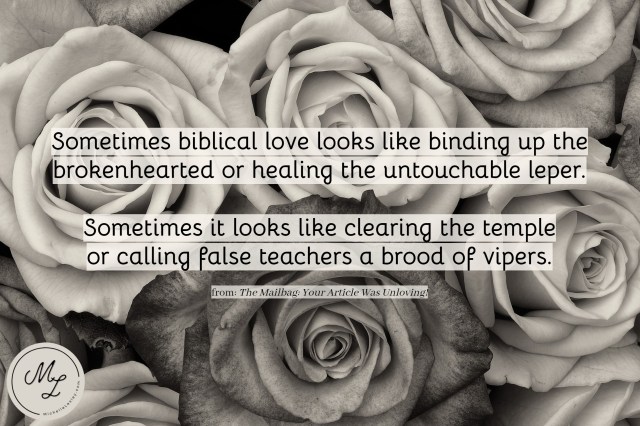
God defines love as cooperating with Him in rescuing the perishing, building up the church, and showcasing His glory. Sometimes that’s going to look like binding up the brokenhearted or healing the untouchable leper, and sometimes that’s going to look clearing the temple or calling false teachers a brood of vipers. While the world would call the former “loving” and the latter “hateful” based on what those behaviors look like, God calls both loving if they spring from a heart motivated to rescue, redeem, restore, and reconcile.

Sometimes biblical love looks like binding up the brokenhearted or healing the untouchable leper, and sometimes it looks like clearing the temple or calling false teachers a brood of vipers.

So, when you say I’m being “unloving” to use stringent language about false teachers (like God, Jesus, the prophets, and the apostles did), and I say you’re wrong, it’s because we’re using two different definitions of love. You’re using a worldly definition of love based on how pleasing my outward behavior was to you. I’m using God’s definition of love that’s based on the motivation of my heart. You cannot tell me I’m not demonstrating biblical love in a situation like this because you don’t know the motivation of my heart. I do. The article in question (like so many others about which I’m accused of being unloving) was motivated by love – God’s definition of love – for

  • Beth – that God would graciously remove the scales from her eyes and save her
  • Beth’s fans – that God would open their eyes to deception they’re believing and lead them to repentance and sound doctrine
  • Discerning Christians – that they might be encouraged not to let their guard down but to keep contending for the faith once for all delivered to saints
  • The church – that it would cleanse out the leaven of false teaching so that Christ might present her to Himself in splendor, without spot or wrinkle or any such thing, that she might be holy and without blemish.
  • and the Southern Baptist Convention – that it might forsake the idols of money, power, and celebrity, and return to its first love, Christ.

But it was also motivated by another component of love which the worldly definition of love, being worldly, is completely oblivious to. You see, the world’s definition of love only concerns itself with the “horizontal” love between one human being and another. But God’s definition of love finds its origin in Himself. He is the foundation and the culmination of love. He is both the starting gun and the finish line in the race of love. Where there is no vertical love of God, there is no horizontal love between people. There may be friendship, attraction, affection, attachment, and emotion, but there is no true love.

God’s definition of love finds its origin in *Himself*. Where there is no vertical love of God, there is no horizontal love between people. So any biblical -rather than worldly- definition of love must start and finish with love for God.

And so any biblical – rather than worldly – definition of love must start and finish with love for God. Only a heart that loves Him because He first loved me can extend that same redemptive, restorative love to others.

And though I have never, and will never, this side of Glory, love Him as completely and perfectly as I should – as I want to – those articles that offend your sensibilities, that you feel justified in berating me about because they don’t meet your standards, those articles are rooted in and motivated by love for the Christ whom I serve. I would not continue to do what I do and take the abuse I take for it if I did not love Him.

I’ve heard this whole “tone police” perspective a million times. I’ve prayed about it. I’ve considered it. I’ve weighed the motivations of my heart. And in cases in which I know before the Lord that my motives have truly been unloving, I’ve repented. But the astronomically overwhelming majority of accusations I receive are not from people concerned with the biblical definition of love, but from people using a worldly definition of love whose personal sensibilities have been offended. People who wish to correct me from the authority and standard of their feelings, not from the authority and standard of God’s Word.

And as I’ve prayed, and studied, and weighed, and considered all of these things, the conclusion the Lord has graciously led me to is that there’s no way I will ever please every single one of the thousands of people who hear me. Just like Jesus’ words didn’t please all the people who heard Him, or John the Baptist’s words, or Peter’s, or Paul’s, or Noah’s, or Ezekiel’s, or Jeremiah’s, orโ€ฆ (you know, I’m starting to think I’m in good company!)

So rather than trying to please man, I’m going to strive to please God. If my conscience is clear before Him, that’s all that matters.

The fear of man lays a snare, but whoever trusts in the Lord is safe. Proverbs 29:25

For am I now seeking the approval of man, or of God? Or am I trying to please man? If I were still trying to please man, I would not be a servant of Christ. Galatians 1:10


Additional Resources:

Discernment: Whatโ€™s Love Got to Do with It?

Sacrificing Truth on the Altar of Tone

Pull over โ€“ itโ€™s the Tone Police at A Word Fitly Spoken


If you have a question about: a Bible passage, an aspect of theology, a current issue in Christianity, or how to biblically handle a family, life, or church situation, comment below (Iโ€™ll hold all questions in queue {unpublished} for a future edition of The Mailbag) or send me an e-mail or private message. If your question is chosen for publication, your anonymity will be protected.

Mailbag

The Mailbag: Potpourri (Unfollowing iffy teachers, Teacher training, Church search & 9Marks, Charitable giving, SBC21, AWFS transcripts)

Welcome to another โ€œpotpourriโ€ edition of The Mailbag, where I give short(er) answers to several questions rather than a long answer to one question.

I like to take the opportunity in these potpourri editions to let new readers know about my comments/e-mail/messages policy. Iโ€™m not able to respond individually to most e-mails and messages, so here are some helpful hints for getting your questions answered more quickly. Remember, the search bar (at the very bottom of each page) can be a helpful tool!

Or maybe I answered your question already? Check out my article The Mailbag: Top 10 FAQs to see if your question has been answered and to get some helpful resources.


Iโ€™m currently listening to a [Bible study] podcast. I have enjoyed it so far because after I read, Iโ€™m able to hear a different perspective, maybe the speaker goes over something I didnโ€™t catch, or maybe the speaker says something that isnโ€™t how I interpreted the text. I always go back to the Scripture and compare when her opinion and mine differ to see what the scripture says. Thereโ€™s now been two issues that I just believe she is plan wrong about. At what point would you cut ties? My husband has told he wants me to really ponder if the teacher is trustworthy if she adds to Scripture or changes God’s intent. Iโ€™m all for testing everything I read/listen to against Scripture, but at what point would you consider not following a teacher due to misleading or just plain wrong information?

At the point at which my (doctrinally sound) husband expressed concern, if I hadn’t already unfollowed her on my own.

Ladies- if you have a godly, doctrinally sound husband who knows his Bible, be thankful (as I’m sure the reader who sent in this question is). What a wonderful gift God has given you! He’s able to give you a biblical perspective on things you might not have thought about before, he can give you godly counsel on those things, and he cares about your spiritual life and growth in holiness.

If you have a husband like that and he’s saying, “I don’t think you should listen to that podcast, read that author, etc.,” I would urge you to give serious thought to what he’s saying. I would also recommend heeding his leadership and unfollowing that person, even if you don’t totally agree with him. It’s very likely that one day, you’ll look back at that author or podcaster and see your husband’s concerns more clearly, and be glad you took his advice. And even if you don’t, or even if he turns out to be wrong, you’re still demonstrating respect for, and submission to his spiritual leadership – and that’s worth way more to your marriage and to being a godly wife than any podcast, book, YouTube channel or anything else.

If you’re in a position in which you’re having to decide for yourself whether or not to continue following a certain “iffy” teacher, here’s what I’d recommend:

  • Make sure the “red flags” you’re seeing are actually biblical issues (as this reader’s red flags were), not personal preferences. You may not like that a pastor likes hymns instead of more contemporary (doctrinally sound) worship music or that a (doctrinally sound) female teacher has really short hair, but that’s personal taste, not being unbiblical.
  • Be sure you understand and can rightly handle Scripture well enough to make sure it’s the teacher who’s the one in error, not you.
  • Make certain that what you’re hearing as a red flag wasn’t just a “one and done” instance of the teacher accidentally misspeaking, flubbing her words, or not being as clear as she could have been.
  • If you’re seeing red flags and you’re a new Christian or you know yourself well enough to know you could be easily swayed by this teacher into believing something wrong, stop following her.
  • Consider that for every red flag you’re seeing, there could be another red flag that your’e not recognizing or that this teacher hasn’t revealed yet.
  • If you’re a mature Christian who’s following this teacher for biblical instruction and you’re increasingly seeing red flags, that’s God’s way of telling you -through what you know from His Word- that you don’t need to be receiving teaching from this person.
  • If you don’t want to follow or are uncomfortable following a certain teacher, that doesn’t require you to make any sort of public declaration that others shouldn’t follow her or that she is a false teacher. You can simply make the quiet, personal decision to stop following her.
  • Remember, there’s no law that says you have to follow any particular teacher, or any teachers at all for that matter. Christians have been doing just fine for 2000 years simply being taught by their own pastor, elders, and teachers at church.

While reading your article, McBible Study and the Famine of Godโ€™s Word, I finally realized my struggle with leading the womenโ€™s study is because I havenโ€™t been trained to teach. Unfortunately, there arenโ€™t any strong teachers in my church – a big problem. Do you have any suggestions or recommendations for learning how to learn? Online, books, etc.?

The first thing I would recommend is that you explain your dilemma to your pastor and ask him to train you (and others in your church – One on one meetings between a pastor and a woman are not a good idea. Plus, it sounds like a lot of people in your church need to be trained.) to teach.

If your pastor is not a “strong teacher” or is incapable of training others to teach, you probably need to start looking for a new church. One of the biblical qualifications for pastors is that they be “able to teach” (1 Timothy 3:2) and be “able to give instruction in sound doctrine” (Titus 1:9). Paul exhorted Pastor Timothy: “what you have heard from me in the presence of many witnesses entrust to faithful men, who will be able to teach others also.” Pastors ought to be able to teach others to teach.

As your pastor is training you, you may wish to work through some of my Bible studies, or use them as studies for your women’s class. My studies are designed to teach women how to study or teach straight from the text of Scripture in a “learn by doing” sort of way. Once you get a feel for the kinds of things you should be seeing in the text and questions you should be asking of the text, you can take off those “training wheels” and fly solo.


Are you suggesting that the churches listed at the search engines at your Searching for a new church? resource are the only churches that are teaching biblically?

Not at all. That resource is not, nor is it meant to be, a comprehensive list of every doctrinally sound church on planet Earth. That would be impossible. I’m sure there are thousands of other perfectly doctrinally sound churches out there (and if you are personally connected to any others, please let me know.) That resource is merely a suggestion of some of the doctrinally sound churches in various areas of the world that Christians can check out if they’re looking for one to join.

I would like clarification on 9Marks website.

It’s a little hard to “clarify” when I’m not sure what the question is. :0) I can only infer that, like others, you’ve noticed Mark Dever and a few other pastors/teachers in that circle who, over the past few years, seem to have occasionally dipped a toe into the social justice waters.

I added the 9Marks “church search” to my list of church search engines several years ago before that became an issue. I believe that the majority of churches that are listed at the 9Marks site probably also applied to be listed before this became an issue or are not aware that it is currently an issue.

So far, as far as I know, Mark Dever and 9Marks haven’t turned rabidly woke, given a full-throated endorsement of Critical Race Theory, spoken out in favor of clear progressivism or liberalism, etc. I’ll continue to keep an eye on them, and if and when that happens, I’ll remove the 9Marks church search. But right now, they’re still at the stage of being decent brothers in Christ who every once in a while make an iffy statement or two. The churches on the 9Marks list aren’t required to agree or align with everything Mark Dever and 9Marks say, and, at the moment, I believe that the majority of the churches on that list are doctrinally sound.

If you have misgivings about 9Marks, by all means, skip that church search engine and use the others I have listed. And, as the disclaimer on that page says: “Please use this list only as a suggestion of churches to check out using biblical wisdom and discernment.” You are responsible for personally vetting any church you choose to visit or join.


Do you know of, and/or recommend, any particular causes or charities that areโ€ฆ well, Godly (moral and ethical)? There are so many charities that don’t use their donated funds for their advertised causes (you know, instead the donations go to support the CEO’s million dollar mansion and such). I want to give, I just don’t know to whom or what.

The first place you should be giving is to the offerings of your local church – to support your pastor and staff, pay the bills, contribute to the upkeep of the church, support missionaries, etc. This is part of being a faithful church member.

If you still have money left over after that, ask your pastor about the missionaries and other Christian organizations (ex: a local crisis pregnancy center, orphanages, church plants, etc.) your church supports financially, and give more money directly to these organizations. You should follow your pastor’s leadership and work hand in hand with your church in supporting these entities.

And if you still have money left over after that, would you adopt me? :0) Just kidding. If you follow any doctrinally sound podcasts, pastors, teachers, or authors, find out which parachurch organizations they support. For example, two of the ministries I follow are Grace to You and Wretched. I would love to be able to support The Master’s Academy International, which trains indigenous pastors all over the world to minister in their context. One of Wretched’s sponsors I would contribute to is Pre-Born, a pro-life ministry that emphasizes sharing the gospel.

(And just FYI: I do not recommend Samaritan’s Purse / Operation Christmas Child.)

May God bless your generosity.


Will there be a 2021 version of the Arrive Prepared resource for this yearโ€™s SBC Annual Meeting?

I thought about that a couple of weeks ago, but to be perfectly transparent I am so disillusioned with and depressed by the state of the Southern Baptist Convention at the national level right now that I just don’t have the heart for it.

Last year, I was in more of a “Let’s charge into hell with a water pistol and DO this thing!” frame of mind. This year, that has been replaced by a heaviness of spirit. Though there are many individual (and autonomous – for those not in the know, all SBC churches are autonomous) doctrinally sound SBC churches out there, including my own (and I’m so thankful for all of them), I just don’t have any reason to believe that anything is going to change at the national level. I think it’s just going to continue to get worse – more false teachers, more false doctrine, more egalitarianism, more Critical Race Theory, more liberalism, more biblical ignorance, more tolerance for sin, more 11th Commandment, more erosion of the authority and sufficiency of Scripture, and continued disdain for those of us in the Calvinist ghetto of the SBC.

I have never in my life more fervently hoped to be proved wrong, and I completely support my doctrinally sound brothers and sisters who are still standing in the flames brandishing their water pistols. But I’m shell shocked. That’s honestly just where I am right now.

In my estimation, about 85% of the information in the “Arrive Prepared” article is still accurate and relevant for this year’s annual meeting. Since the 2020 annual meeting was canceled due to COVID, my thinking is most of the same issues will be addressed this year, particularly abuse and Critical Race Theory / Resolution 9 (if you haven’t yet checked out the CRT video series I posted a few weeks ago, that would be a great resource).

I imagine issues surrounding COVID and the vaccine, the Equality Act, and persecution of the Western church will also be brought up. I hope the issues with NAMB (the North American Mission Board), including their church plants that have employed female “pastors” and co-“pastors,” will be biblically addressed, but my guess would be that that issue will be tabled or sent to committee or buried under procedural regulations and nothing will really be done about it clearly and publicly.

If you want to keep up on the issues, I would suggest following the people and organizations listed at the end of that article.

Sorry to sound like a Debbie Downer. I promise I’ll continue to think and pray about it, and if the Lord changes my mind, I’ll write a piece on it.


Could you please provide transcripts for each episode of A Word Fitly Spoken?

No, but we can come really close in two ways:

  1. Amy has started uploading our episodes (audio only) to our YouTube channel. There’s a “CC” button at the bottom of each YouTube video that allows you to turn on captions. (She has posted several of our past episodes as well.)
  2. All of our episodes are scripted, and we stick pretty closely to the script. Going forward, I’ll be posting the link to the Google Doc of our script for each episode in the show notes of that episode. Just click on “(Tran)Script” in the show notes. Many of our earlier episodes have been scripted from one of Amy’s or my blog articles, and if you’ll look in the show notes for that episode, you’ll find the link for that article.

If you have a question about: a Bible passage, an aspect of theology, a current issue in Christianity, or how to biblically handle a family, life, or church situation, comment below (Iโ€™ll hold all questions in queue {unpublished} for a future edition of The Mailbag) or send me an e-mail or private message. If your question is chosen for publication, your anonymity will be protected.