Christian women, Church, Holidays (Other), Reformation Day

8 Theses for Women of the Modern Day Reformation

Reformation Day is Friday, October 31.

Originally published October 20, 2017

October 31, 2017, marked the 500th anniversary of the beginning of the Protestant Reformation, and because I’m all theme-y and whatnot, I’m in the midst of a fantastic book called Reformation Women by Rebecca VanDoodewaard who I dearly wish were on social media so I could shamelessly fangirl her and make a general nuisance of myself by asking too many questions.

Get this book. Now. You’re welcome.

Normally, when we read about the Reformation, we’re reading about great preachers and leaders like Luther, Calvin, Zwingli, and Hus, but preaching was not the only work of the Reformation. And that’s one of the things that captivated me about Rebecca’s book. All of the women included therein were strikingly courageous, tireless laborers, who contributed greatly  to the success of the Reformation, and they did it all while coloring inside the lines of biblical womanhood – doing vital work godly women are uniquely equipped by Christ to do. They opened their homes as a refuge to scores of Protestants (often including those aforementioned notable preachers and other integral leaders) fleeing for their lives from Catholic marauders. They set up prison ministries and fed and clothed the poor. They nursed their communities through the Plague. Those who were queens and princesses used their power to protect Reformers and change persecutory laws. Those who were married to pastors and leaders helped in their ministries and edited their books and papers. And they wrote. Poetry. Position papers. Booklets. Letters. What a happy discovery (for me, anyway) to find sisters of the quill from so long ago.

All of these women were strikingly courageous, tireless laborers, who contributed greatly  to the success of the Reformation, and they did it all while coloring inside the lines of biblical womanhood.

But these great ladies were not our only foremothers in the faith. For as long as God’s people have been God’s people, God’s people have rebelled and needed to be reformed. In fact, that’s the entire, overarching theme of the Old Testament- the need for Israel to reform from its idolatry. And all along the way we see faithful women like Deborah, Jael, Esther, Jehosheba, Jedidah, Huldah, Samson’s mother, and others willing to buck the trend of sin and rebellion and point the way back to God and holy living by their deeds and the example of their lives.

The New Testament gives us extraordinary examples such as the women who ministered to Jesus during His earthly ministry, stood by Him at the cross, and were the first ones at His tomb. Priscilla, Lydia, Dorcas, Eunice, Lois, Phoebe and other believing women soon followed, all lending their aid in their own unique ways to reforming dead, legalistic Judaism into biblical Christianity.

All of these great women of God, serving Him through thousands of years as only godly women can, laying the foundation with their blood, sweat, and tears, for the church we know today.

But have we “arrived”? Is the need for women to work for reform in the church a fast fading dot in the rear-view mirror of modern day evangelicalism? Judging from the articles I read and the e-mails I receive about the problems in the church, the answer to that question would be a big, fat “no.”

Perhaps armies of the Catholic “church” no longer hunt down fleeing Protestants. And, maybe Nero isn’t using Christians as torches for his garden parties any more (although there are certainly areas of the world where our brothers and sisters in Christ face similar threats every day). But the stealth, guerrilla warfare Satan has been waging against the Western church in recent decades might be even more damaging. Certainly, it’s more diffuse and wider spread. Instead of raping the bride of Christ, Satan has chosen instead to seduce her. Why forge an enemy when you can woo a lover?

Instead of raping the bride of Christ, Satan has chosen instead to seduce her. Why forge an enemy when you can woo a lover?

False teachers. Word of Faith heresy. The New Apostolic Reformation. Abuse in the church. Biblical illiteracy. “Lone Ranger” Christians. Idolatry. Irreverence in the sanctuary.

It is easy to see why the heart of the Protestant Reformation was Semper Reformanda– “always reforming.” The work of fighting for sound doctrine, biblical worship, and pure hearts and hands never, never, never ends.

So what does it look like to be a woman of the modern day Reformation? What can we church ladies do to help turn the tide of apostasy in Christendom? Permit me to nail eight theses to the door of your church.

What does it look like to be a woman of the modern day Reformation? What can we church ladies do to help turn the tide of apostasy in Christendom? Permit me to nail eight theses to the door of your church…

1.
Realize You Can’t Change the World

None of the women named earlier in this article changed the world or the entire church. Not a single one of them. In fact some of them brought about great changes in their locales that were overturned in the years after their deaths.

The problems facing the church today are overwhelming. You’re one person. You can’t fix everything (and God doesn’t expect you to). Maybe you can’t even fix everything in your own church. But what you can do is determine to be faithful to Christ and His Word in your sphere of influence. Bloom where you’re planted. “Brighten the corner where you are“, as the old gospel song says. You can’t do everything, but what’s something you can do?

2.
Color Inside the Lines

One of the major problems plaguing the church today is Christian women who rebel against God’s Word by stepping outside the boundaries God has drawn for women in the family and the church. Don’t shoot yourself in the foot by following suit in your zeal to reform. There’s plenty of work to be done by godly women – work that we’re better equipped for than men – without violating Scripture.

3.
Mind Your Demeanor

No, we shouldn’t be wishy washy milksops or mealy-mouthed shrinking violets. But we also shouldn’t be loud-mouthed harpies, brashly marching into hell with a water pistol (just trust my own failures on this one). We need to be velvet-covered bricks: soft on the outside, firm on the inside. We should attain to all the Christlike virtues of demeanor: patience, kindness, compassion, mercy, and grace mingled with an unyielding stand on Scripture and an uncompromising commitment to Christ. For some of us, the former comes easier. For some of us, the latter. But we must seek that godly balance as we go about the work of the Kingdom.

4.
Serve the Local Church

If you have rejected the mere idea of local church membership and think you’re going to bring about change from the outside as an unchurched (or functionally unchurched) writer, speaker, or Christian celebrity, you’re part of the problem, not part of the solution. The church is God’s plan for Christianity, not evangelical gurus. Do whatever you have to do to find a doctrinally sound one, join it, and get to work serving.

The church is God’s plan for Christianity, not evangelical gurus.

5.
Pray

When it comes to the church, fixing what’s broken doesn’t rest on your shoulders. Spiritual problems require spiritual solutions, and only God can bring those about. You can defend Scripture til you’re blue in the face or explain all day long why someone is a false teacher, but only God can lift the veil and enlighten the eyes of the heart. Be faithful in your efforts, but be more faithful in prayer. Like the persistent widow, grab hold of the Lord on behalf of the church and don’t let go.

6.
Teach Other Women

In my experience, the number one way false doctrine enters the church is through women’s ministry and women’s “Bible” study. You want to work for reform in the church? Work on reforming your church’s women’s ministry. Explain to your sisters why that divangelista is a false teacher. Request Bible study classes that study the actual Bible. Volunteer to organize the next women’s conference or retreat and schedule doctrinally sound speakers. Teach a women’s or girls’ Sunday School class. Transform the church by transforming the hearts and minds of women.

Transform the church by transforming the hearts and minds of women.

7.
Help

The book of Exodus tells the story of Israel’s battle with Amalek. When Moses held up his arms, Israel prevailed. When he let down his arms, Amalek prevailed. Eventually, Aaron and Hur came alongside Moses and held up his arms for him so that Israel could win the battle. Who was more important to Israel’s victory in this story- Moses or Aaron and Hur? If you answered “both,” you’re correct. Israel couldn’t have won without Moses holding up his hands, but Moses couldn’t have held up his hands without Aaron and Hur. Most of the women of the Old Testament, New Testament, and Protestant Reformation who effected godly change among God’s people were not Moseses. They were Aarons and Hurs. What can you do to hold up the arms of your pastor, your elders, your husband, your church?

8.
Stand

Make sure you know your Bible backwards, forwards, and upside down in context. Know right from wrong, the biblical from the unbiblical. Learn what God’s word says, and stand. Don’t back down. Do it with a godly demeanor, but do it. Refusing to budge from the truth of Scripture might cost you your “church”. It might cost you your family and friends. It might cost you your job, your reputation, and your finances (as we’ve seen in recent years with Christians in the business world who have refused to cave to the homosexual agenda). But as our brothers and sisters who went to the fiery stake, the dank prison cell, and the gallows would tell you, fidelity to God’s Word is worth it. Loyalty to Christ is worth anything it might cost you. Stand.

As our brothers and sisters who went to the fiery stake, the dank prison cell, and the gallows would tell you, fidelity to God’s Word is worth it. Loyalty to Christ is worth anything it might cost you. Stand.

Whether your women’s ministry is using a book by a false teacher, there’s a faction of backbiters in the church that needs to be quelled, or your pastor is overwhelmed and needs some help, there’s something in your church that you can pray about, help with, or work on to help it move toward spiritual health. The church needs discerning, biblically knowledgeable, mature Christian women to step up and fight ungodliness whenever and wherever we’re able. Will you be a courageous laborer in the modern day Reformation?

The church needs discerning, biblically knowledgeable, mature Christian women to step up and fight ungodliness whenever and wherever we’re able. Will you be a courageous laborer in the modern day Reformation?

Entertainment, Movies, Sanctification

Don’t Get Your Theology from the Movies

Originally published March 24, 2017

I recently received the kindest e-mail from a sweet lady at a movie subscription service – sort of a “family-friendly” version of Netflix – asking me to write an article pointing my readers to the movie subscription service (hereafter: “MSS”) as a resource for whatever issue I was addressing in the article:

I am hoping to hear your advice on some ways to relay valuable lessons to others in a post on your page. Maybe you have used a book or a movie to help someone better understand how to deal with bullying. Or maybe you have used parables from the Bible to demonstrate how to deal with a tough situation. We would love our movies to be a resource for your readers to utilize as a tool, since we have many relevant Christian movies and shows.”

This is a brilliant and creative marketing/publicity strategy, and I really admire whoever it was at the MSS who came up with and implemented this idea. It’s grassroots, it reaches their target audience, they get to harness the creativity and energy of the bloggers they contact, and it’s free. Very smart.

Nice people, smart marketing, a variety of attractive products, the desire to help others, a company built on wholesome morality- what’s not to endorse, right? And if they were selling hand cream or light bulbs or waffle irons, I’d agree.

The thing is, when you sell something, that product is supposed to correctly fill a need your potential customers have. You sell hand cream to people with dry hands, light bulbs to people wondering why they’re sitting around in the dark, and waffle irons to people who want to enjoy breakfast in their jammies rather than driving across town to IHOP.

But this MSS is not selling you the right tool for your problem. Though I’m sure they have the noblest of intentions, they’re attempting to sell you a waffle iron to rake your yard with: movies as theology.

Though I’m sure they have the noblest of intentions, they’re attempting to sell you a waffle iron to rake your yard with: movies as theology.

I like movies. I watch them all the time with my family (at home- have you seen the price of a movie ticket lately?!?!). But movies are for leisure time fun and entertainment, not for proper instruction on how to live a godly life or the way to solve personal problems, and certainly not for what to believe about God, as we’ve recently seen with The Shack debacle. When Christians have issues, questions, and problems, we don’t go to the movies, we go to the Bible.

When Christians have issues, questions, and problems, we don’t go to the movies, we go to the Bible.

God’s word is the primary source document for Christians. It is the authority that governs our thoughts, words, and deeds. It is the sufficient answer to any question we might have about life and godliness. Above any other advice, instruction, help, or input, we need the Bible, and we can rest assured that its counsel is always right and trustworthy since its words come straight from the lips of God.

But just for the sake of argument, let’s try it the MSS’s way. Let’s say you do have the problem of being bullied. And let’s say this MSS has a good movie about a character in similar life circumstances to yours who overcomes being bullied. So you watch it, hoping to get some advice on how to handle your own problem. You’re a Christian, so, by definition, you want to address the situation without sinning, in a way that pleases God, and, hopefully, in a way that is conducive to sharing the gospel with the bully.

How do you know whether or not the character in the movie overcame her bullying problem in a godly way? That’s right- you have to open your Bible, study it, and compare what she did in the movie with rightly handled, in context Scripture. So why not just go straight to the Source and spend the hour and a half you invested in the movie studying Scripture instead?

Another issue with watching movies to learn how to solve your problems or teach you how to live rightly is that doing so subtly trains you in poor hermeneutics. It trains you to follow the example of a character who is just as broken, sinful, and unwise as you are instead of looking directly to the perfect, holy, infallible instruction of God Himself. Which is often the way people incorrectly read the Bible.

As I’ve previously mentioned, there are two main types of Scripture: descriptive and prescriptive. Like a movie, descriptive passages describe something that happened: Noah built an ark. Esther became queen. Paul got shipwrecked. These passages simply tell us what happened to somebody. Prescriptive passages are commands or statements to obey. Don’t lie. Share the gospel. Forgive others.

If we wanted to know how to have a godly marriage, for example, we would look at passages like Ephesians 5:22-33, 1 Corinthians 7, and Exodus 20:14,17. These are all passages that clearly tell us what to do and what not to do in order to have a godly marriage.

What we would not do is look at David’s and Solomon’s lives and conclude that polygamy is God’s design for marriage. We would not read about Hosea and assume that God wants Christian men to marry prostitutes. We would not read the story of the woman at the well and think that being married five times and then shacking up with number six is OK with Jesus. All of which is the same reason we should not be watching movies – even “Christian” movies – as a resource for godly living.

“But,” the kind MSS lady would probably reassure me, “our MSS also has non-fiction videos of pastors and Bible teachers that could be helpful.” And indeed they do. There are a handful of documentaries on missionaries, some of the Reformers, current moral and societal issues, and Bible teaching that look like they could be solid. The problem is, they’re mixed in with the likes of Joyce Meyer, John Hagee, Henri Nouwen, Greg Laurie, a plethora of Catholic leaders, and even those who don’t claim to be Christians like Betty White, Frank Sinatra, and Liberace. The few videos with good teaching are combined with many that teach worldly ideas, signs and wonders, mysticism, Bible “codes” and “secrets,” false prophecy, faulty eschatology, and other false doctrine.

It’s a great example of why God tells Christians we’re not to receive false teachers nor to partner with them, as, sadly, this MSS has chosen to do. Mixing biblical truth with false teaching confuses people. A little leaven leavens the whole lump.

When a little bit of truth is mixed in with the false, how are we to know which is which? We have to do exactly what the Bereans did with Paul- examine the teachings against Scripture, accept what matches up and reject what doesn’t. Again, why spend the time and confusion searching for, hoping you’ve found, and watching a video you’re not sure will teach you biblical truth when you could simply pick up your Bible, study it, and confidently believe what God says about the issue instead?

There are some good, clean movies on this MSS that would make for an enjoyable evening of family fun, and there’s certainly nothing wrong with that. But for instruction in holy living and resolving the dilemmas of life in a godly way, we need to use the right tool for the job: the Bible.

Rake your yard with a rake, not a waffle iron.

Rake your yard with a rake, not a waffle iron.

Podcast Appearances

Guest Appearance – The Plumb Line Radio Show

Not long ago, I had the pleasure of appearing as a guest on The Plumb Line Radio Show with Jay Rudolph for a wonderful discussion about how to vet the teachers we listen to. What makes someone a false teacher? What are some ways to be more discerning about the teachers we listen to? And how about some practical tips to quickly weed out about 95% of the teachers you shouldn’t be following?

Listen in to these two brief interviews!

The Plumb Line, episode 717- How to Recognize False Teachers 1- Michelle Lesley

The Plumb Line, episode 718- How to Recognize False Teachers 2- Michelle Lesley

If you’re in the vicinity of Des Moines, Omaha/Lincoln, Phoenix, Pittsburgh, San Diego, New York City, Jacksonville, Chicago, or Kansas City, you can listen to The Plumb Line on your local Christian radio station. Click here to find out which radio stations carry The Plumb Line and when. If you don’t live near one of those markets, you can always follow and listen on Spotify.


Additional Resources:

Is She a False Teacher? 7 Steps to Figuring it Out on Your Own

Popular False Teachers & Unbiblical Trends

Joyce Meyer

Are Female Bloggers Violating Scripture by “Teaching” Men?

Leaving Lysa: Why You Shouldn’t Be Following Lysa TerKeurst or Proverbs 31 Ministries


Got a podcast of your own or have a podcasting friend who needs a guest? Need a speaker for a women’s conference or church event? Click the “Speaking Engagements” tab in the blue menu bar at the top of this page, drop me an e-mail, and let’s chat!

Discernment

Discernment: What’s Love Got to Do with It?

Originally published January 22, 2016

…so that we may no longer be children, tossed to and fro by the waves and carried about by every wind of doctrine, by human cunning, by craftiness in deceitful schemes. Rather, speaking the truth in love, we are to grow up in every way into him who is the head, into Christ…

Ephesians 4:14-15

Christians who know what discernment is have a variety of perspectives about how it should be practiced. Should we teach about false doctrine at all or just make sure our church is teaching sound doctrine? Should we name the names of false teachers or speak about them anonymously? Should we warn people away from false teachers or just pray for them privately? What’s the biblical precedent for using a stringent tone when speaking of those who teach false doctrine?

Recently, I’ve been thinking a lot about the phrase “speaking the truth in love” from Ephesians 4:15 as it pertains to speaking and writing about false doctrine and false teachers.

Many Christian women have the mistaken idea that “speaking the truth in love” equals being “nice.” We’re always smilingly sweet and never say anything that might hurt someone’s feelings or could rock the boat at church.

Many Christian women have the mistaken idea that “speaking the truth in love” equals being “nice.”

Are we to be kind? Yes. Are we to do our best not to hurt others? Of course. Should we be making waves over every little thing that rubs us the wrong way? Absolutely not. We are to deny ourselves, setting aside our personal preferences and, in many cases, even our own rights, to the point of laying down our lives for others.

We need to understand the distinction between personal preferences and biblical doctrine. We die *to* personal preferences. We die *for* the purity of biblical doctrine.

But we need to understand the distinction between personal preferences and biblical doctrine. And that’s where I think a lot of people get confused. We die to personal preferences. We die for the purity of biblical doctrine. The enemy is stealthily infiltrating and conquering church after church with false doctrine. We are at war. And that’s going to mean ruffling feathers, rocking the boat, and hurting feelings sometimes. Because the full armor of God doesn’t come with a white flag or a pen for signing peace treaties.

The full armor of God doesn’t come with a white flag or a pen for signing peace treaties.

But how do we war for the truth “in love”?

Well, think about the concept and practice of “love.” Love always has an object. We don’t just say, “I love.” We say, “I love my children,” or “I love peanut butter and chocolate ice cream.” Speaking the truth “in love” is not as much about our demeanor or tone of voice as it is about the object of our love. It’s our love for others that compels us to speak biblical truth. And it’s that same love for others that should drive the manner in which we speak the truth.

So when it comes to speaking the truth about false doctrine, how should we be motivated by love? And love for whom?

We love Christ– As Christians, our love for Christ should motivate everything we do. If we’re speaking truth from fleshly motives such as pride, the desire to make a name for ourselves, or the competitive drive to win an argument, everything we say can be 100% factually right and we can still be spiritually in the wrong because the motive of our heart is wrong. God isn’t a debate judge awarding us points for compelling arguments. God weighs the heart.

We love God’s Word– To love Christ is to love the Bible because Scripture is literally God Himself speaking to us. Besides the cleansing of the temple, the passage in which we see Jesus’ righteous anger displayed most clearly is Matthew 23. Here, Jesus delivers a scorching rebuke to the scribes and Pharisees for twisting God’s Word and, in doing so, leading people away from the truth of Scripture. It is only natural for those of us who have the mind of Christ and are indwelt by the Holy Spirit to have that same love for God’s word and feel righteous anger over the maligning of it.

We love the church– To love Christ is also to love His bride, the church. Christ gave his life to cleanse the church “so that he might present the church to himself in splendor, without spot or wrinkle or any such thing, that she might be holy and without blemish.” Seeing Christ’s bride blemished and corrupted by false doctrine should grieve us deeply and motivate us to call the church to be cleansed “by the washing of water with the Word.”

We love the captives– Paul speaks of false teachers “who creep into households and capture weak women.” Often, the women who follow false teachers simply don’t know any better. Though Scripture is clear that they’re complicit in their own captivity, they are casualties and prisoners of war held hostage by the enemy. We are to love them enough to show them the truth of God’s word so that “they may come to their senses and escape from the snare of the devil, after being captured by him to do his will.”

We love the enemyEvery Christian was at one time an enemy of the cross. Every last one of us. Until someone loved us enough to intervene with the truth of the gospel. False teachers – those who, despite biblical correction, unrepentantly teach doctrine which is plainly refuted by Scripture – have made themselves enemies of the cross, even if they call themselves “Christian,” even if they wear the title of “pastor,” even if they’re holding a Bible in their hands and refer to it occasionally as they “teach” us.

In the same way that a loving sister would not turn a blind eye and hope for the best if her sibling began using drugs and became increasingly addicted, it is not loving to stand idly by and allow false teachers to continue to sink deeper and deeper into Satan’s clutches by doing his bidding without making every effort to stop them in order to rescue them.

*It is not loving* to stand idly by and allow false teachers to continue to sink deeper and deeper into Satan’s clutches by doing his bidding without making every effort to stop them in order to rescue them.

Sometimes – just as with the drug abuser – this can be accomplished early on with a private word of correction. And sometimes – as with the addict – more extreme measures of “tough love” and intervention must be employed. But we always love them enough to desire that they come to repentance and embrace the truth.


Our love for these also drives the manner in which we speak truth to them. A good soldier would never deal with a civilian casualty in the same way he would fight off an enemy bent on waging war. Likewise, part of discernment is knowing who the enemy is (and is not) and dealing with people in a biblically appropriate way. This requires humility, wisdom, thorough proficiency with our tools and weapons, unceasing prayer, and complete dependence on and self-crucifying love for our King. We trust in Him and His Word to guide us in the wise and loving way to humbly speak His truth.

Discernment. Speaking truth. What’s love got to do with it?

Everything.

Discernment. Speaking truth. What’s love got to do with it? Everything.

Mailbag

The Mailbag: Potpourri (Discernment resources… Recommended podcasts… Approaching church leadership about false teachers… Magi: Astrologers?… Heaven after suicide?… Permission to email?)

Welcome to another “potpourri” edition of The Mailbag, where I give short(er) answers to several questions rather than a long answer to one question.

I like to take the opportunity in these potpourri editions to let new readers know about my comments/e-mail/messages policy. I’m not able to respond individually to most e-mails and messages, so here are some helpful hints for getting your questions answered more quickly. Remember, the search bar (at the very bottom of each page) can be a helpful tool!

Or maybe I answered your question already? Check out my article The Mailbag: Top 10 FAQs to see if your question has been answered and to get some helpful resources.


Hey just curious why when I click on Sean Feucht it just sends me to a Justin Peters video on him from 2 months ago? Is that a glitch?

I think you’re referring to my link to Sean Feucht at my Popular False Teachers & Unbiblical Trends tab (in the blue menu bar at the top of the blog), right?

It’s not a glitch. The link is taking you right where I meant for it to take you. I’m not sure if you’re asking because you expected all of the links to go an article I had written or if there was another reason, but not all of the links on that page go to an article I wrote.

The main reason for this is that I usually don’t have on hand the 10-20ish hours it takes to write a thorough discernment article on everybody. But I know y’all need information on these teachers now, so if I come across a good resource from someone else, I’ll go ahead and link it up for you. Also, most of those outside resources I’ve linked are so thorough and well done that I don’t feel the need to re-invent the wheel. I’m very thankful for the handful of brothers and sisters out there who are doing a great job of exposing false teachers and false doctrine. It lightens the load for all of us who do discernment work.

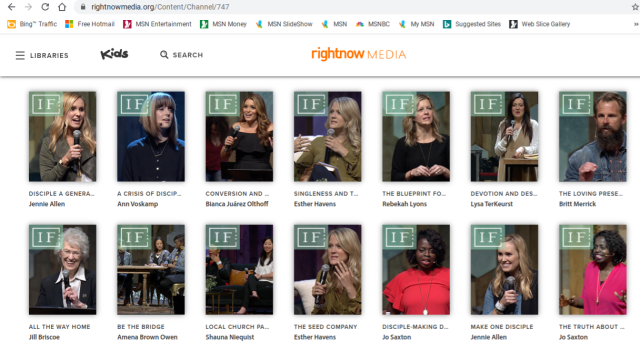
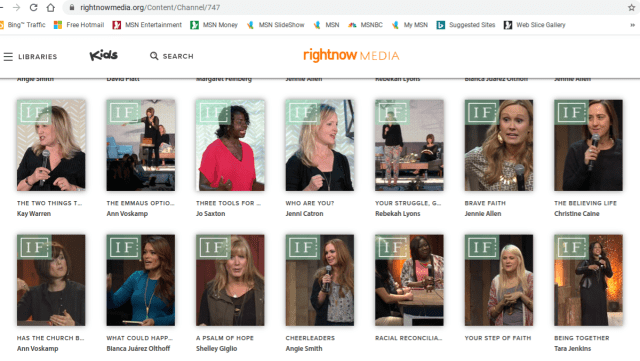
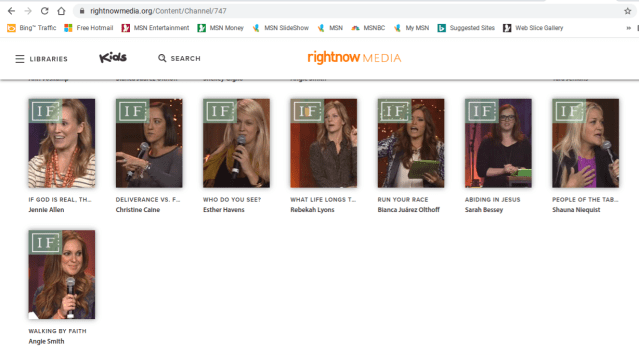
In addition to Sean Feucht, over the last few months I’ve also added resources for baptismal regeneration, Shawn Bolz, Core Group/Jenny Weaver, Eastern Orthodox, Kathryn Krick, Greg Laurie, Rebecca McLaughlin, Kristi McLelland, the New Apostolic Reformation, Right Now Media, Heidi St. John, and Wesleyanism. Check it out if you haven’t stopped by recently!


Other than yours, are there any podcasts you can recommend for women? Age wise 40-50’s. Thank you!

Thank you so much for listening to A Word Fitly Spoken! Yes, I would recommend, regardless of age, the podcast of anyone listed at the Recommended Bible Teachers, Authors, etc. tab in the blue menu bar at the top of this page. (Don’t limit yourself to female podcasters, teachers, etc. There are a lot more doctrinally sound men out there than women.)

A few more that aren’t listed there (only because I haven’t had time to update that page in a while) that I listen to are:

The G3 Podcast
Transformed with Dr. Greg Gifford
Your Calvinist with Keith Foskey (If you’re not a Calvinist or don’t like Calvinism, don’t let the title scare you. It’s usually not about Calvinism. Give it a good faith try.)
Conversations that Matter
The Lovesick Scribe

The Studio Revue with Sam Reid (This one isn’t Christian content, it’s just wholesome fun. I got hooked on it earlier this year.)


I’m wondering what/how would be the best way to approach my pastor about Jennie Allen and other doctrinally weak/unsound women whose studies are currently being taught at the church I’m a member of. At the risk of appearing obtuse or haughty, I’m hesitant to share these insights with the women (who I esteem more spiritually mature than I) who are overseeing the women’s Bible studies, especially as they continue to choose these authors who clearly are unsound or weak in theology and doctrine. 

I’m so sorry this is happening at your church. I hope it will help you to know that you’re not alone. I’ve been in the same situation myself, and I’ve heard from hundreds of other women over the years who have also been in this situation. Sadly, my article The Mailbag: How should I approach my church leaders about a false teacher they’re introducing? is the one I most often have to share with readers.

And listen, if these women are following false teachers, they are not the spiritually mature ones, no matter how they seem or how they present themselves. If you’re discerning enough to understand from Scripture that they’re following false teachers, and you love them and your church enough to try to help, you are the spiritually mature one in this situation. That’s not haughty, that’s simple, objective, biblical fact.

I have taken a moment to pray for you, and I wish you well.


I’ve heard that Christians shouldn’t read horoscopes or get involved with astrology, but weren’t the wise men who came to see Jesus astrologers? Maybe there’s something to astrology.

Well, if we were to say that, then we could also say maybe there’s something to stealing, too. Because, after all, that’s what got the thief on the cross to Jesus, and Jesus said that he would be with Him in Paradise that day. And maybe there’s something to persecuting and murdering Christians, too, because that’s how Paul came to encounter Jesus. But we don’t say those things because that’s not the way we rightly handle and apply Scripture.

There are two broad categories of Scripture: descriptive passages and prescriptive passages. Descriptive passages are descriptions of something that happened, like the story of the wise men visiting Jesus, or Noah and the ark, or David and Goliath. Prescriptive passages could also be called commands or direct instructions, “thou shalts” and “thou shalt nots.”

When we have a question about whether or not it’s OK with God for us to do something, say, consulting horoscopes and astrologers, we look first at the relevant prescriptive passages, like this one:

When you come into the land that the Lord your God is giving you, you shall not learn to follow the abominable practices of those nations. There shall not be found among you anyone who burns his son or his daughter as an offering, anyone who practices divination or tells fortunes or interprets omens, or a sorcerer or a charmer or a medium or a necromancer or one who inquires of the dead, for whoever does these things is an abomination to the Lord. And because of these abominations the Lord your God is driving them out before you. You shall be blameless before the Lord your God, for these nations, which you are about to dispossess, listen to fortune-tellers and to diviners. But as for you, the Lord your God has not allowed you to do this.

Deuteronomy 18:9-14

While this passage was obviously written as a command to Old Testament Israel, we can still draw out some applicable principles for today by asking ourselves why “the Lord your God has not allowed you to do this.” God calls these practices an “abomination” several times and links them to paganism. Verse 14 is reminiscent of 2 Corinthians 6:14-18 and 1 John 2:15-17, which tell us not to love or partner with the dark things of the world and to separate ourselves from such things.

This is a clear, prescriptive passage that answers our questions about following horoscopes and astrology, so this is where we get our instruction, not from a descriptive passage about someone who was an astrologer.

Additionally, there’s good reason to believe that the wise men who went to see Jesus were not astrologers in the same horoscope/tarot card/palm reading/fortune teller sense in which we use the word “astrology” today. The Greek word translated as “wise men” is magos (magi). Its primary meaning is “Oriental scientist,” a term which was also applied to teachers, priests, and physicians, among others. It would seem that the wise men were much more akin to astronomers than astrologers, and were learned in the Old Testament messianic prophecies as well.

Additional Resources:

Should a Christian Consult Horoscopes? at Got Questions

Astrology and the Visit of the Wise Men at Truth Magazine

Were the Wise Men Astrologists? at The Baptist Bulletin


Will a Believer who commits suicide still go to Heaven?

Yes. The key word here is “Believer.” People who are genuinely born again Christians spend eternity in Heaven when they die. It is not a particular sin that sends people to Hell, but rather that they die in a state of lostness and unbelief. If you think about it, because sin is so sneaky and pervasive most Christians will have some unconfessed sin in our lives at the moment of our death, whether that sin is suicide, unforgiveness, lust, a lie, or whatever. At the moment of salvation, Christ’s death, burial, and resurrection pays for ALL of a Believer’s sins, from cradle to grave. While we should always strive to repent of any known sin in our lives, we must also trust in God’s grace, mercy, and forgiveness towards His children.

Additional Resources:

If a Christian commits suicide, is he/she still saved? at Got Questions

Sunday School Lesson ~ 6-1-14 (Scroll down to “Follow up: Can a Christian be forgiven…”)

The Mailbag: Can unforgiveness cause you to you lose your salvation?


Is it OK if I email you/private message you on social media about…

Yes. You do not need to ask my permission before emailing or DM-ing me. Just go ahead and send me the email/DM. The only thing is, you need to understand that I will probably not answer your email or DM personally (unless it’s related to a speaking engagement). I answer readers’ questions via The Mailbag. I’ve explained why at the Contact and Social Media tab (All together, class: “…in the blue menu bar at the top of this page.”).


If you have a question about: a Bible passage, an aspect of theology, a current issue in Christianity, or how to biblically handle a family, life, or church situation, comment below (I’ll hold all questions in queue {unpublished} for a future edition of The Mailbag) or send me an e-mail or private message. If your question is chosen for publication, your anonymity will be protected.