Mailbag

The Mailbag: Potpourri (Confessing past sin… Too much Calvinism?… “Fake it til you make it”)

Welcome to another โ€œpotpourriโ€ edition of The Mailbag, where I give short(er) answers to several questions rather than a long answer to one question.

I like to take the opportunity in these potpourri editions to let new readers know about my comments/e-mail/messages policy. Iโ€™m not able to respond individually to most e-mails and messages, so here are some helpful hints for getting your questions answered more quickly. Remember, the search bar (at the very bottom of each page) can be a helpful tool!

Or maybe I answered your question already? Check out my article The Mailbag: Top 10 FAQs to see if your question has been answered and to get some helpful resources.


I confessed and repented of a certain sin after I got saved, but my husband doesn’t know about it. Do I need to confess that sin to my husband in order to receive God’s blessings or be considered a Proverbs 31 wife? And should he also confess his past sins to me? By the way, my husband is a pastor.

What a beautiful heart you have – wanting to be clean before the Lord and wanting to please Him!

There might be a few very specific scenarios in which it would not be wise to bring up a past sin to your husband, but, generally speaking, in a Christian marriage yes, you should be able to talk to your husband about your past sins (and he should also be able to discuss his past sins with you). But not to get God’s blessings or to be a Proverbs 31 wife.

Marriage is about trust. In the same way that Christian husbands and wives should trust each other enough to feel comfortable being physically naked around one another, we should also trust each other enough to feel comfortable “baring it all” when it comes to our past sins.

It sounds like this is a sin you simply haven’t told him about, but it should go without saying that you should not be lying to him about it or trying to cover it up. Those are direct sins against him, and if you’re doing that, you definitely need to confess and repent to him.

All of that being said, there can be more helpful / wise ways and times to talk to your husband about your past sin and less helpful / wise ways and times to talk to him about it, and you may want to get some help figuring that out from someone who can be more objective about it than you can.

Normally, I would suggest setting up an appointment with your pastor to get some pastoral counsel about it, but since your husband is your pastor, I would suggest locating an ACBC certified Biblical Counselor (not the same thing as a “Christian counselor/therapist”) who is not a member of your church (you don’t want your husband to be embarrassed or make it difficult for the counselor to sit under her pastor’s leadership) and set up an appointment.

Some denominations offer counseling services to pastors and their families, so you may want to contact your denominational leadership to find out about that. (I’m not sure what to tell you about other denominations, but if you’re Southern Baptist, contact your local SBC association or state convention.)


Hello! I found your website while trying to see if a Christian singer was a false teacher. I started reading over your beliefs to make sure that you werenโ€™t a false teacher (I donโ€™t mean that in a rude way, itโ€™s just that I have to be really careful especially since I am only a teenager). I agree with everything except Calvinism. I was just wondering if our beliefs would still align enough to where your positions on whether or not people are false teachers would align with my beliefs. I can always ask my parents afterwards, but I just wanted to know basically if you talk about or reference Calvinist beliefs a lot. Thank you!

Wow. Just, WOW. Honey, your parents must be so proud of you. I know I would be if you were my daughter. I am thrilled – hear me: THRILLED – that you checked me out to make sure I’m not a false teacher before reading my stuff. Do you know how many adults don’t do that before following people? Most of them. I wish I had been as discerning as you are when I was your age.

Calvinism is not a factor when I sit down to evaluate whether or not someone is a false teacher, so that isn’t something you would need to worry about. In fact, there are some people on both my Popular False Teachers page and on my Recommended Bible Teachers page about whom I have no idea whether or not they’re Calvinists. There are even Calvinists I recommend against (such as Matt Chandler), or decline to proactively recommend (such as John Piper). I will say this, though – and, understand, this is a very general statement – having studied dozens of teachers, I find that those who adhere to Calvinism / Reformed theology are less likely, on the whole, to be false teachers than non-Calvinists.

I guess it depends on what you mean by talking about or referencing Calvinism “a lot”. From my perspective, I hardly ever mention it directly, but I’m sure it does come across indirectly in some of the terminology I use and the way I handle Scripture.

This is kind of humorous, but, probably about once a month or so, I get a message or an email from somebody saying, “Why don’t you talk about the false teaching of Calvinism?” or “I see you recommend John MacArthur. Don’t you know he’s one of those [gasp!] Calvinists?”. So I guess I’m not exactly beating people over the head with it if they didn’t know and I have to tell them straight out, “Yeah, I’m a Calvinist, too.”

I don’t know, I’m probably not the most objective person to answer this question. Let’s turn it over to my regular readers and you can see what they have to say in the comments section.

Readers – do you think I talk about
Calvinism “a lot” on the blog?

Answer in the comments, and help out this charming and discerning young lady.


Could you tell me where Scripture teaches โ€œfake it till you make itโ€ ?

โ€œfake it โ€™til you make itโ€. A phrase easier said than done. But where stands it written? I would say this is not true. Michelle I trust your wisdom and knowledge, but this phraseโ€ฆnot so much. I asked sarcastically where I could find it in Scripture knowing itโ€™s not written. I was hoping to have a response to my previous email, but no reply as yet. Godโ€™s word is based on truth not feelings. Trusting feelings when it comes to โ€œfake it โ€™til you make itโ€ I find is not sound wisdom. Allowing the Holy Spirit to change me is trusting in Him not myselfโ€ฆwhether itโ€™s fear or feelings.

These two comments (from the same commenter) were left on my article Fear Not: 9 Biblical Ways to Trade Worry for Trust regarding the phrase “fake it til you make it” in this paragraph:

Those worries may start creeping in, but you donโ€™t have to set the table and turn down the bed for them. Push them right out of your mind, slam the door behind them, and say (out loud is helpful), โ€œNo. Iโ€™m not going to worry. Iโ€™m going to trust the Lord.โ€ Youโ€™ll still feel worried at first, but โ€œfake it โ€™til you make it.โ€ Your feelings will eventually follow.

I’d like to address two issues regarding these comments, first the commenter’s attitude, then the content.

Attitude: First, I did not receive an email from you about this, so I can only assume “email” in your second comment actually refers to your first comment. However, if you had sent me an email, you would have to have obtained my email address here, where I clearly state (in bold type, no less):

I regret I am unable to answer most e-mails
unrelated to speaking engagements…”

So if you had emailed me, you shouldn’t have expected a reply at all, much less on your timetable.

Since you commented, you should have read – in large font directly above the comment box:

“Before commenting please see the ‘Welcome’ tab in the blue menu bar at the top of this page. Comments are handled manually, so there will be a delay before approved comments are posted.”

So, a) you should have expected some sort of delay, and b) if you had clicked on the Welcome tab as instructed, you would have seen this:
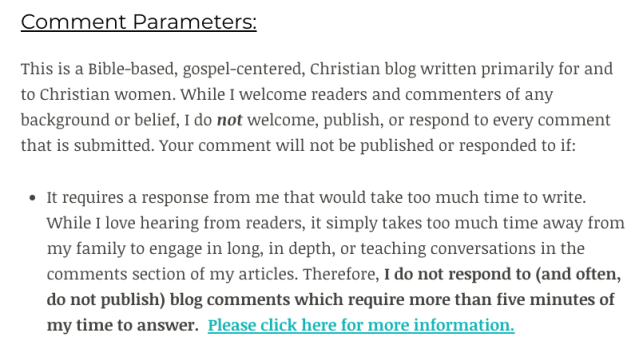
The “Please click here…” hyperlink goes to an article further explaining my email and comments policy and why emails and many comments usually go unanswered. I have bent over backwards to make it clear to my readers that I can’t answer most correspondence and why, even though I really wish I could.

Furthermore, you sent your first comment three weeks ago and your second comment a week later. To give you a little perspective, the first question I answered in this article was sent in almost a year ago. The second one, a month ago. Some people don’t get their questions answered for months. Others never get their questions answered, because I simply don’t have enough hours in the day to get to everyone’s questions. I hate that, but that’s just the way it has to be.

Not realizing your initial question was sarcastic, I had saved it in order to answer it in a Mailbag article, but I’ll be honest, when I got your second comment, my gut level reaction was to just delete both of them. Being impatient, demanding, and snarky when you’re asking someone else to do something for you (i.e. answer your question) is neither becoming of a Christian nor very effective.

But since I had already decided to address the content of your question, I decided to go ahead and do that and also add the part about your attitude as a teaching moment for you and anyone else to whom it might apply.

Content: I thought most people in my audience would be familiar with the phrase “fake it til you make it” (and, indeed, in the four times this article has run on my blog, you’re the only one who has commented objecting to it), but I can see where it might not be the clearest wording in the world, especially for people who aren’t familiar with the common usage of the phrase.

No one who has read the entire article could surmise that I was saying that “Godโ€™s word is based on feelings,” or that I was saying people should “[Trust] feelings when it comes to ‘fake it โ€™til you make it’โ€. (I’m not really even sure what that means since the theme of that paragraph, that section, and the entire article is that we should not trust or be controlled by our feelings.)

“Youโ€™ll still feel worried at first, but ‘fake it โ€™til you make it.’ Your feelings will eventually follow,” simply means that we should obey Scripture (in this case the Scriptures that tell us to trust God) regardless of how we feel about it and trust God to eventually line our feelings up with His Word. I thought that was clear from the context, but if it was not, I sincerely apologize. I have added a footnote to the article with this explanation in case it’s unclear to any other readers.

UPDATE (9/8/21)

I received what I thought was a very gracious response from this reader. With her permission, I share it here:

Dear Michelle,

โ€œfake it โ€˜til you make itโ€โ€ฆhereโ€ฆ

I ask your forgiveness. I had no intention of appearing impatient, nor demanding, nor snarky. Thank you for your very frank response and clarifying your answer to my question.

I am grateful for the knowledge and wisdom God has given you. My question was sincere as were my comments. And again Iโ€™m sorry if you took them as you did, as I had no intention to raise your ire in responding. I did indeed read the โ€œwelcomeโ€, and again didnโ€™t expect a response from your busy schedule and many emails you receive.

My heart was to speak as one sister to another. I have been told this phrase before. Words have consequences, and quite honestly for me, as I filter words and phrases through Godโ€™s Word, I am reminded to speak truth in love, not snarky, or demanding. We can all learn to be effective in our walk with the Lord by not jumping to conclusions that are incorrect, being teachable and gracious.

Blessings on you and your ministry.


If you have a question about: a Bible passage, an aspect of theology, a current issue in Christianity, or how to biblically handle a family, life, or church situation, comment below (Iโ€™ll hold all questions in queue {unpublished} for a future edition of The Mailbag) or send me an e-mail or private message. If your question is chosen for publication, your anonymity will be protected.

Podcast Appearances

Interview with Doreen Virtue on Beth Moore

It was such a pleasure to once again appear on my friend Doreen Virtue’s videocast. We had a warm time of fellowship around the Word discussing Beth Moore, false doctrine, the sufficiency of Scripture, the role of women in the church, and more.

I encourage you to check out Doreen’s website, and follow her on social media. Doreen is most active on Instagram, but you can also catch her on Facebook. Be sure to subscribe to Doreen’s YouTube channel so you won’t miss any of her videos. I also highly recommend Doreen’s book, Deceived No More.

Articles / resources mentioned or touched on in the videocast:

Basic Training: The Bible Is Sufficient

Living Proof You Should Follow Beth (No) Moore

Rock Your Role: Jill in the Pulpit

The Mailbag: Counter Arguments to Egalitarianism

Rock Your Role: Oh No She Di-int! Priscilla Didnโ€™t Preach, Deborah Didnโ€™t Dominate, and Esther Wasnโ€™t an Egalitarian

Rock Your Role FAQs

A Word Fitly Spoken Podcast

The Mailbag (This isn’t a newsletter, but a weekly {Mondays} blog article.)

Popular False Teachers & Unbiblical Trends

Recommended Bible Teachers

Bible Studies

Speaking Engagements


Got a podcast of your own or have a podcasting friend who needs a guest? Need a speaker for a womenโ€™s conference or church event? Click the Speaking Engagements tab in the blue menu bar at the top of this page, drop me an e-mail, and letโ€™s chat!

Speaking Engagements

Report Back: Staying on the Path Conference

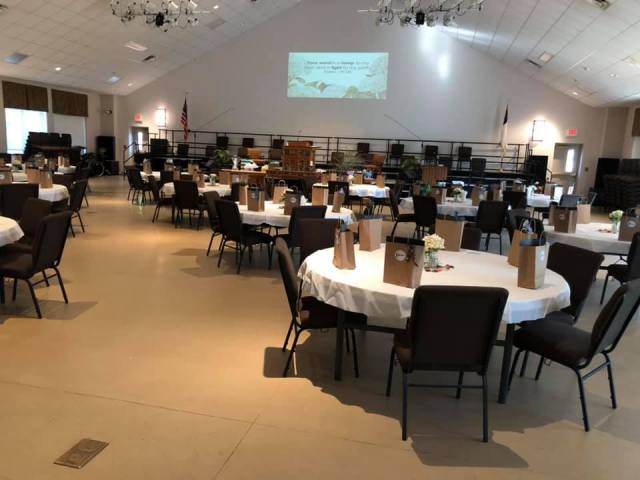
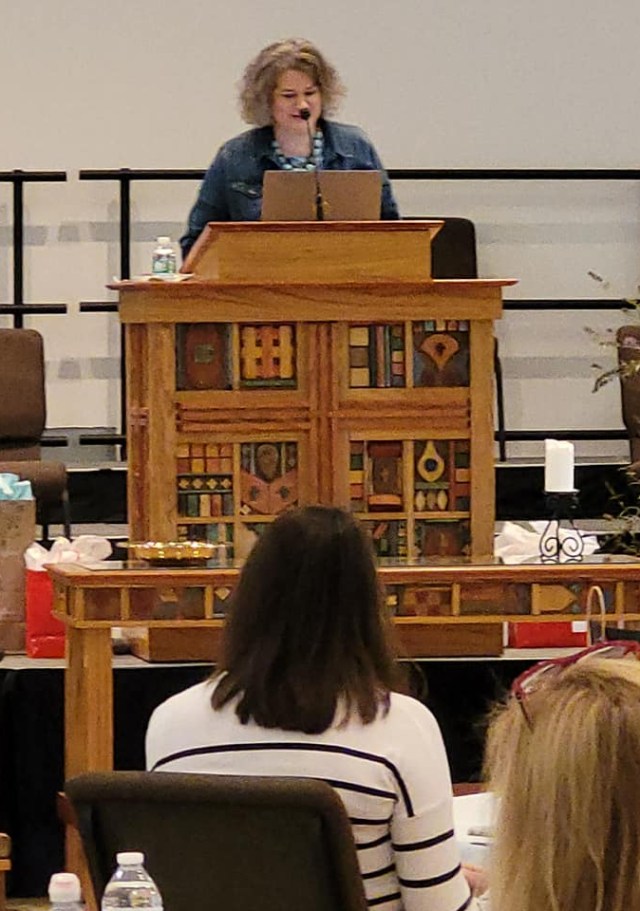
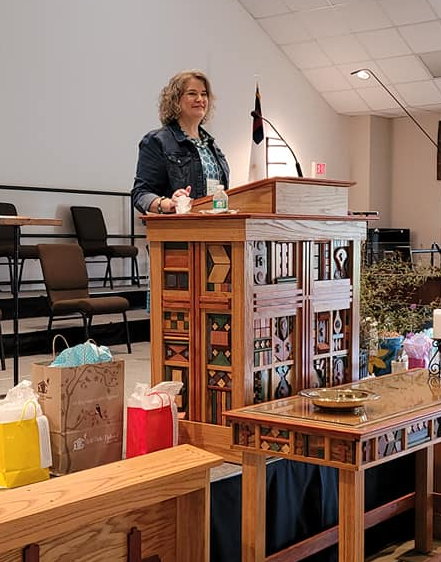
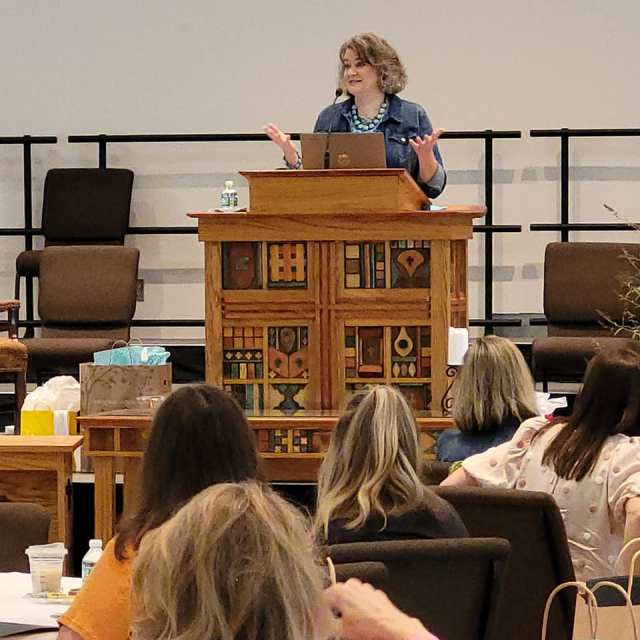
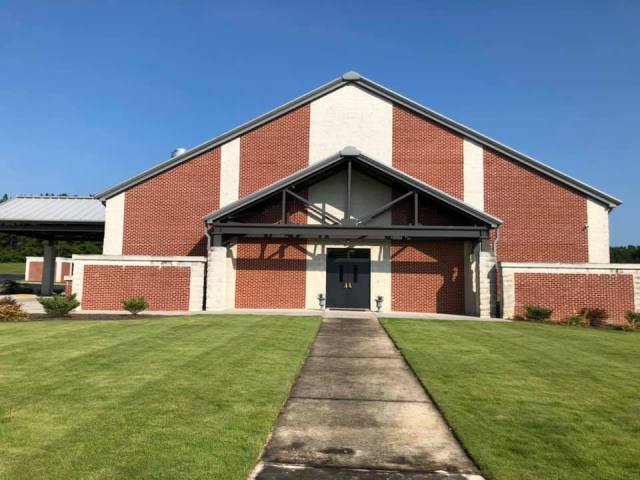
I had such a wonderful time of fellowship and teaching recently with the ladies of Providence Baptist Church in Opelika, Alabama, and their guests from the surrounding area, at the Staying on the Path in a World of Compromise women’s conference.

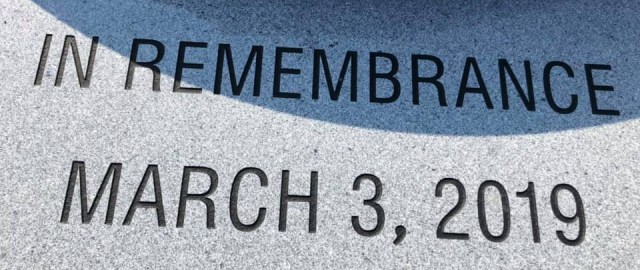
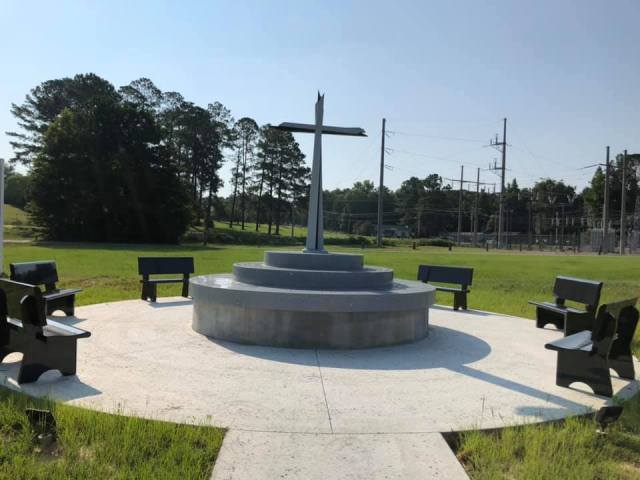
PBC was the staging area for disaster relief operations following the devastating tornado in the area in March of 2019. A beautiful memorial to the victims has been erected on the church grounds.

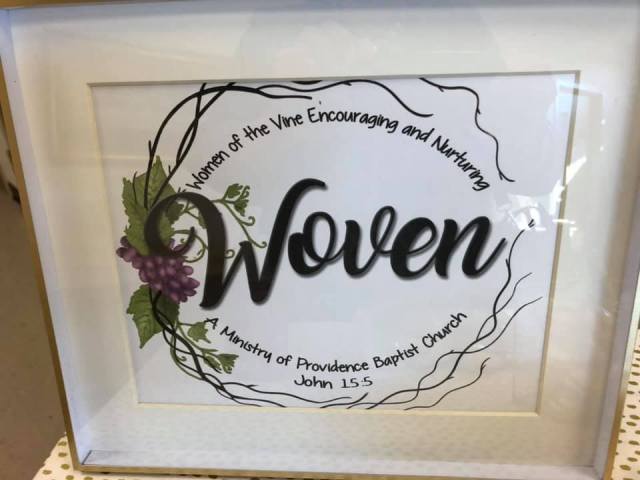
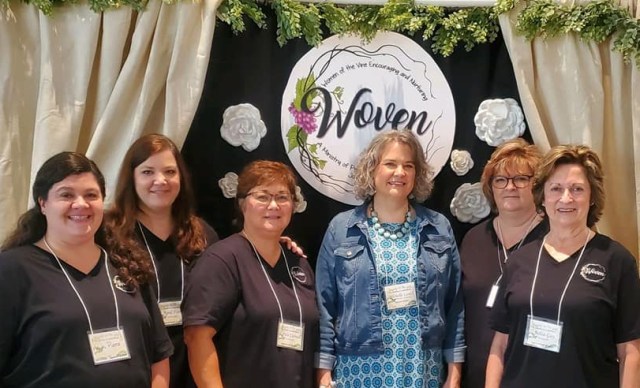
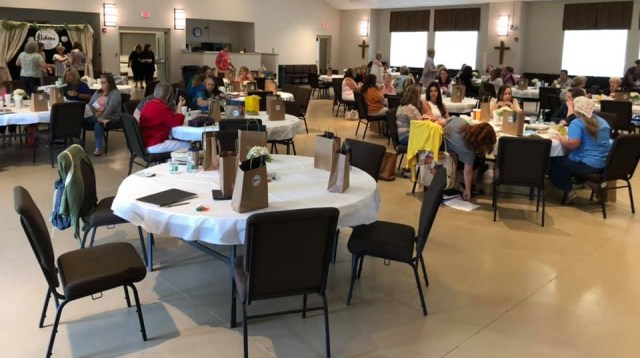
Providence’s WOVEN (Women Of the Vine Encouraging and Nurturing) women’s ministry put on a fantastic conference.

Everything was so nice and no detail was left unattended…

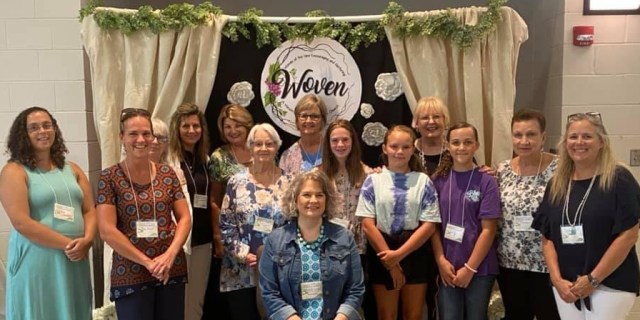
Here are some of the charming ladies who attended the conference…

I had the pleasure of teaching three sessions, God’s Word, Our Foundation – on the necessity, authority, and sufficiency of Scripture, Discernment 101 – an introduction to discerning false doctrine and false teachers, and a great Q&A session where these ladies asked some really smart questions! (Sorry, no audio of the conference sessions at this time.)

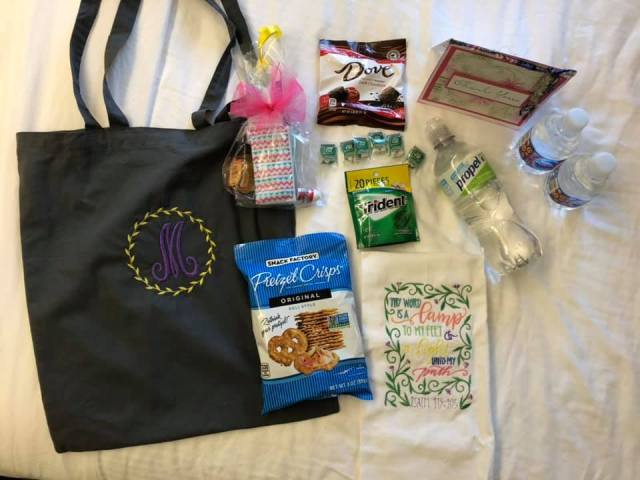
Hostess bags are never necessary for a speaker, but I’m always so humbled and grateful to receive a special treat like this, especially after a long, tiring day of traveling. Although the contents are appreciated, the gesture of hospitality and caring is so precious and meaningful to me. I’m not especially gifted in that area, and I so admire sisters in Christ who are.

April, WOVEN’s director, machine embroidered the bag (notice the monogram
on the bag is LSU purple and gold!) and the hand towel herself. So pretty!

Many, many thanks to the conference organizers, especially April and Lynda, for taking such good care of me and making me feel so at home. It was a pleasure fellowshipping with them and with the ladies who attended the conference.


If your church or organization is ever in need of a speaker for a womenโ€™s event, Iโ€™d love to come share with your ladies as well. Click here for more information.


Photo Credits

Photos by others credited in captions

Remaining photos by Michelle Lesley

Discernment

Celebrate Recovery

If you are considering commenting or sending me an e-mail objecting to the fact that I warn against certain teachers or ministries, please click here and read this article first. Your objection is most likely answered here. I won’t be publishing comments or answering emails that are answered by this article.


This article is kept continuously updated as needed.


I get lots of questions about particular authors, pastors, Bible teachers, ministries, and evangelical fads and trends, and whether or not I recommend them. Some of the best known can be found in the blue menu bar at the top of this page at my Popular False Teachers tab. The ministry below is one Iโ€™ve been asked about recently, so Iโ€™ve done a quick check (this is brief research, not exhaustive) on it.

Below are the biblical criteria I use when deciding whether or not to recommend a teacher, ministry, etc.

Generally speaking, in order for me to recommend a teacher, speaker, author, or ministry, he/she/it has to meet three criteria:

a) A female teacher cannot currently and unrepentantly preach to or teach men in violation of 1 Timothy 2:12. A male teacher or pastor cannot allow women to carry out this violation of Scripture in his ministry. The pastor or teacher cannot currently and unrepentantly be living in any other sin (for example, cohabiting with her boyfriend or living as a homosexual). A ministry or trend cannot allow or encourage any of these things.

b) The pastor, teacher, ministry, or trend cannot currently and unrepentantly be partnering with, yoked to, or frequently appearing with false teachers. This is a violation of Scripture.

c) The pastor, teacher, or ministry cannot currently and unrepentantly be teaching false doctrine.

I recommend against any teacher, ministry, or evangelical trend that violates one or more of these biblical tenets.

If you’d like to check out some pastors and teachers I heartily recommend, click the Recommended Bible Teachers tab in the blue menu bar at the top of this page.


Celebrate Recovery
Not Recommended

Celebrate Recovery (CR) was created by John Baker, a member of false teacher Rick Warren’s Saddleback “Church”. It was “born out of the heart of Saddleback Church” with Rick’s approval and under his oversight, and, as you might expect, is fraught with unbiblical issues at nearly every turn. In the U.S. and abroad, over 35,000 churches and many secular organizations and businesses now offer Celebrate Recovery programs, and over 5 million people have completed CRs “Step Study” program.

CR is open to professing Christians as well as the lost (in the CR program at Saddleback, non-Christians make up over 70% of CR participants – see below), and is modeled after secular 12 step programs (ex: Alcoholics Anonymous). Adapting worldly means and methods for use in the church (though characteristic of Saddleback) is not biblical. The biblical means for helping a lost person deal with addiction is to call him to repent and believe the gospel, and, if he gets saved, disciple him in obedience to God’s Word. The biblical means for helping a saved person who is committing the sin of drunkenness is to follow the steps of church discipline (beginning with a one on one call to repentance and restoration) commanded in Matthew 18, and if he repents, disciple him in obedience to God’s Word.

That CR adapts worldly means and methods is abundantly evident below in the video introduction to CR (found on the CR website’s What is Celebrate Recovery? page):

  • Notice Johnny Baker (son of founder John Baker) and his wife Jeni start with the typical AA introduction: Johnny: “Hi, I’m Johnny and (rather than “and I’m an alcoholic”) I struggle with…” Jeni: “Hi Johnny!”.
  • Rather than finding their identity in Christ who has graciously saved them out of their sin, they identity themselves by their pet sins and/or problems. This teaches people to see themselves (and presents them to others) as helpless and non-responsible victims rather than victors through Christ.
  • The terms they use to identify themselves are secular and psychologized (“addiction” “co-dependency” “adult child of family dysfunction”) rather than biblical (the sin of drunkenness, fear/idolatry of man, and sinful family relationships, bitterness, unforgiveness, or whatever “adult child of family dysfunction” actually means. Jeni defines this term at the 5:30 mark as growing up in a “dysfunctional family that caused hurt in your life…which I think we pretty much all have.” That definition doesn’t do much to clear things up).
  • In the caption “PastorS of Celebrate Recovery” there are two biblical issues: First, Celebrate Recovery is not a church, it’s a parachurch ministry (if it’s functioning as a church, that brings us to three biblical issues with this caption). Biblically, only churches have pastors. If what is meant by “pastors” is that they are “directors” of CR divisions (as the CR website’s Our Team page says) then that is what the caption should say rather than adulterating a biblical term which has a specific meaning.

    Second, Scripture expressly forbids women from serving as pastors.

    And all of that is in the first nine seconds of this 21 minute video.

Another issue made plain in the video is that Celebrate Recovery teaches a false gospel:

At 3:24ff, speaking to lost people, Johnny gives an incomplete (and partially false) presentation of the gospel as a means of differentiating secular recovery programs from CR. Notice the number of times he says “We believe…” instead of “the Bible says…” or simply stating the terms of the gospel as irrefutable fact. This leaves room for lost people to infer, “These are their beliefs, but they don’t have to be mine.”

The facts Johnny states about Jesus’ life and that He sent the Holy Spirit are technically correct, but what’s missing? Repentance and faith. No mention is made of personal repentance of sin or placing one’s faith in Christ – as the Bible defines it – anywhere in this video. In this particular segment, Johnny skips directly from “Jesus died as a sacrifice for our sin, rose again, and lives now,” to “He sent the Holy Spirit to live inside of us.” That is a false gospel. The indwelling Holy Spirit is a sign, seal, and guarantee of our salvation, and salvation does not take place without the repentance of sin and placing one’s faith in Christ.

Johnny goes on to say that “that [the indwelling Holy Spirit] is what gives us the power to find healing from our hurts, hang-ups, and habits”. But the lost people he’s talking to do not have the indwelling Holy Spirit to help them because they’re still lost, because CR’s “gospel” doesn’t call them to repent and believe.

Further evidence of CR’s false gospel can be found near the end of the video. At 20:11ff, Johnny quotes Romans 3:23, and then proceeds to define sin as “mistakes”. That’s unbiblical. A “mistake” is accidentally calling your son by your daughter’s name, or taking the wrong exit off the interstate, or forgetting to carry the one. Mistakes are, by definition, unintentional and usually morally neutral. Sin is always immoral and frequently intentional. We are born with a sinful nature, but we also choose to sin.

Johnny further describes sin as “hurting other people” and “other people hurting us,” and that’s partially true, but that’s where he stops. Again, this is unbiblical. Sin is primarily rebellion against God. God taught us this way back in Psalm 51 where David, repenting of his sin with Bathsheba said, “Against You [God], You only, have I sinned and done what is evil in Your sight.” God is the first, last, and ultimate object of our sin.

You’ll probably also notice that even though Johnny uses the word “sin” a few times, he never speaks in biblical terms about everyone’s need to repent of their sin. Rather the terminology he uses is “hurts, hang-ups, and habits” (instead of “sin”) and “healing from your hurts” (instead of “repentance”). This likely stems from the idea in secular recovery groups like AA that alcoholism is a “disease” you need to “heal” and “recover” from like the flu or the chicken pox.

This medical model of sin is completely unbiblical because it removes personal culpability and responsibility for sin, i.e. you can’t help “catching” alcoholism (the sin of drunkenness) any more than you can help catching the flu. Nowhere does Scripture suggest that we need to “heal” and “recover” from sin. Jesus commands us to repent.

Sin is breaking God’s law and rebelling against the holy God of the universe. That’s not the same thing as a “mistake” or “hurting/being hurt by others” or “hurts, hang-ups, and habits”. And we don’t need to “heal” from our sin, we need to repent of it, forsake it, and mortify it.

Finally, Johnny (probably not even realizing he’s doing so) substitutes CR for the biblical gospel. Follow what he’s saying:

All have sinned >> sin = mistakes/hurting others/others hurting us >> we’ve all made mistakes/hurt others/others have hurt us >> “that means all of us qualify for Celebrate Recovery”

Whereas the Bible says:

All have sinned >> sin = rebellion against God >>
we all qualify for the gospel

Celebrate Recovery is not the gospel, nor a substitute for the gospel, for drunkards or drug addicts or anyone else. The gospel is the gospel. And the gospel is what we all need.

Another dangerous and unbiblical component of this concept of “sin is hurting others” is that the CR “gospel” conflates sinning against others with being sinned against under the banner of “hurts”. There is an enormous difference between a man getting drunk and beating his wife half to death and a wife who has been beaten half to death by her drunkard husband.

The Bible puts those two people in two different categories and addresses them discretely and justly. The man has sinned. The wife has been sinned against. The man needs to be brought to justice and repent. The wife needs to be cared for, helped to heal, and ultimately, to forgive.

CR throws both the husband and the wife into the same category because it doesn’t have a biblical definition of sin. The husband needs to “heal” and “recover” from his “addiction” and whatever “hurts” led him to “hurt someone else”. The wife needs to “heal” from being hurt by someone else. Treating the one who sinned and the one sinned against as though they’re the same by placing them in the same “recovery” program is damaging to both because it teaches the sinner he’s not responsible for his actions and has no need to repent, and it teaches the one sinned against that she’s no different from the one who sinned against her.

Now let’s take a look at some of the unbiblical 8 Principles and 12 Steps of the Celebrate Recovery program:

It’s a little confusing as to why CR has both 12 Steps and 8 Principles of recovery, but if I’m understanding it correctly, CR’s 12 Steps are designed to be sort of a bridge to assimilate people already familiar with the 12 steps of secular recovery groups (such as AA) into CR. CR’s 12 Steps are almost identical to the secular 12 steps. (The most noticeable difference is that the phrase “God, as we understand Him” has been changed to simply, “God”.)

The 8 Principles are CR’s own so-called “Christ centered” version of the secular 12 steps, supposedly based on the Beatitudes, and following the acrostic “R-E-C-O-V-E-R-Y”. But the ideas in the 8 Principles are very similar to the ideas in the secular 12 steps. So similar, in fact that each Principle is followed by a notation as to which of the 12 steps it corresponds to. For example, Principle 5 (“V” in the acrostic) corresponds to steps 6 and 7 of the secular 12 steps. And, although it should go without saying, the Beatitudes aren’t about hurts, addictions, or recovery.

So, on the macro-level, CR has taken a worldly philosophy and attempted to “Christianize” it slightly in order to appeal to the lost, which, again is typical of the way Saddleback – the original seeker driven “church” – tends to operate, and which, as I mentioned earlier, is unbiblical.

But what about the micro-level of the individual Principles?

Principle R1, the first half of V, and E2 aren’t bad. It would be better if CR actually cited and explained the Scriptures that teach these concepts and used biblical terminology, but overall these small snippets of the 8 principles are mostly aligned with Scripture. 2.5 principles. Out of 8.

Principle E1 is problematic:

Earnestly believe that God exists, that I matter to Him and that He has the power to help me recover.

Believing that God exists, that you matter to Him, and that He’s powerful is not the same thing as being born again by repentance and faith in Christ. Not by a long shot. The Egyptians at the Red Sea believed in God’s existence and power. The prophets of Baal all believed in God’s existence and power (right before Elijah slaughtered them all). And they definitely mattered to God, just not in a good way.

The issue here is that the unbeliever is not indwelt and empowered by the Holy Spirit to resist and flee from sin. It’s not that God isn’t powerful, it’s that as an unbeliever you don’t have access to, or a right to that power.

Principle C is another big nope:

Consciously choose to commit all my life and will
to Christโ€™s care and control.

Biblically, there’s no such animal. As an unbeliever, you cannot just make a fleshly decision of the will to commit all of your life and will to Christ’s care and control. It cannot be done without repentance, faith, and regeneration in response to the biblical gospel.

Principle O:

Openly examine and confess my faults to myself,
to God, and to someone I trust.

Sins. “Sins” is the word you’re looking for, not faults. Faults are not equivalent to sins. “Confess your sins to one another,” is what the Bible says. And while confession is a good thing, it’s not the same thing as repentance. A murderer can confess his crime, but feel completely justified in having done it, and be perfectly willing to do it again if given the chance. Repentance is grieving from the heart that you have sinned against a holy God, wishing you had never done it, and striving never to do it again. Also, look who comes first here in this line of confession – not God, but self.

The second half of principle V

Voluntarily submit to any and all changes God wants to make in my life and humbly ask Him to remove my character defects.

As I said above, the first half isn’t bad. The second half isn’t going to work for lost people because it doesn’t biblically identify their problem, which is sin, not “character defects”. And God is not going to remove their sin without repentance and faith in Christ. And if they’re trying to circumvent repentance, faith, and the biblical gospel in order to steal what they want from God, they’re not asking “humbly,” they’re asking pridefully.

Principle R2 is great if you’re saved, since all Christians are supposed to be doing these things anyway…

Reserve a daily time with God for self-examination, Bible reading, and prayer in order to know God and His will for my life and to gain the power to follow His will.

But not so great if you’re in the majority of CR participants who are lost. “The natural person does not accept the things of the Spirit of God, for they are folly to him, and he is not able to understand them because they are spiritually discerned,” 1 Corinthians 2:14 (emphasis, mine) tells us. And a lost person cannot “gain the power to follow His will” without the indwelling Holy Spirit.

Principle Y takes us back into false gospel territory:

Yield myself to God to be used to bring this Good News to others,
both by my example and my words.

Hold the phone, Henrietta. “This Good News” – capital G, capital N? What “Good News”? The “Good News” of Celebrate Recovery? That is out and out heresy. (And God doesn’t “use” people to bring heresy to others except as a judgment against them.) The only capital G, capital N “Good News” is the Good News of the biblical gospel, which CR has repeatedly failed to present and instead has substituted its own false gospel which is devoid of sin, faith, and repentance.

A final point to consider, and not a minor one, is the fact that Celebrate Recovery is embraced by the world. Contrary to what the powers that be at CR think, that is not a good thing. From the History of Celebrate Recovery page on the CR website:

“Celebrate Recovery is the number one outreach ministry at Saddleback Church, with over 70 percent of its members now coming from outside the church….Celebrate Recovery is not just growing in churches, but in recovery houses, rescue missions, universities, and prisons around the world. New Mexico was the first state to adopt Celebrate Recovery into its state prison system and now has Celebrate Recovery pods in all its state prisons. In August 2004, Celebrate Recovery was announced as Californiaโ€™s state-approved substance abuse program for prisons...We are part of a movement that God is blessing.”

God does not “bless” heresy and worldliness. And if we’re walking in obedience to Scripture and preaching and teaching the true biblical gospel the world will hate us, not love us. I’ll just let Scripture speak to those points:

If the world hates you, know that it has hated me [Jesus] before it hated you. If you were of the world, the world would love you as its own; but because you are not of the world, but I chose you out of the world, therefore the world hates you. John 15:18-19

Do not be surprised, brothers, that the world hates you. 1 John 3:13

They are from the world; therefore they speak from the world, and the world listens to them. 1 John 4:5

You adulterous people! Do you not know that friendship with the world is enmity with God? Therefore whoever wishes to be a friend of the world makes himself an enemy of God. James 4:4

I am astonished that you are so quickly deserting him who called you in the grace of Christ and are turning to a different gospelโ€” not that there is another one, but there are some who trouble you and want to distort the gospel of Christ. But even if we or an angel from heaven should preach to you a gospel contrary to the one we preached to you, let him be accursed. As we have said before, so now I say again: If anyone is preaching to you a gospel contrary to the one you received, let him be accursed. For am I now seeking the approval of man, or of God? Or am I trying to please man? If I were still trying to please man, I would not be a servant of Christ. Galatians 1:6-10

These findings barely scratch the surface of Celebrate Recovery’s means, methods, and philosophy, but I think Christians who value sound doctrine will agree that this information is more than sufficient to warn people away from this unbiblical “ministry”.

If you aren’t a Christian and you need help with any sort of addiction or other problem, let me give you step 1 of Jesus’ program for addressing that: Repent and believe the gospel. Once you’re saved (or if you’re already saved as you’re reading this), find a doctrinally sound church, make an appointment with your pastor, and ask him to point you to someone who can disciple you in obedience to God’s Word. (If you absolutely can’t find a doctrinally sound church in your area, you could seek out an ACBC certified biblical counselor.)

The question is not, “Does Celebrate Recovery ‘work’?”. That’s pragmatism. The question is, “Is Celebrate Recovery biblical?”. And the answer to that question is a resounding no. Celebrate Recovery’s very foundations are unbiblical, and Jesus stressed just how crucial biblical foundations are:

Everyone then who hears these words of mine and does them will be like a wise man who built his house on the rock. And the rain fell, and the floods came, and the winds blew and beat on that house, but it did not fall, because it had been founded on the rock. And everyone who hears these words of mine and does not do them will be like a foolish man who built his house on the sand. And the rain fell, and the floods came, and the winds blew and beat against that house, and it fell, and great was the fall of it.

Matthew 7:24-27

Additional Resources

An Analysis of Celebrate Recovery Addictions Program at the Association of Certified Biblical Counselors (ACBC)

I am not thoroughly familiar with the websites below. I do not endorse anything on these sites that deviates from Scripture or conflicts with my beliefs as outlined in the โ€œWelcomeโ€ or โ€œStatement of Faithโ€ tabs in the blue menu bar at the top of this page.

A Way Which Seemeth Right at The Berean Call (This link is not a blanket endorsement of this blog or author, only this particular article.)

Celebrate Recovery (several articles, plus many more resources on secular/Christian recovery) at The Way R122 Ministries

Christian women, Discernment

Throwback Thursday ~ Women In Combat

Originally published March 18, 2016

Over the last few months, thereโ€™s been a lot of talk about the possibility of future U.S. military drafts including young women in addition to young men. Iโ€™ve admired godly male friends who have spoken out vehemently against this and expressed concern about the government trying to press their daughters or wives into service. Some even vowed to lay their lives down protecting their women from having to face the horrors and dangers of war.

But I wonder if these men โ€“ husbands, fathers, pastors, elders – know that many of their wives, daughters, and sisters in Christ are already in the trenches fighting off the enemy with every ounce of our strength and every weapon at our disposal.

Itโ€™s not a war for territory or political control or freedom from dictatorial tyranny.

Itโ€™s a battle for the purity of the Bride. And the souls of our sisters.

Daily. Weekly. At church. On line. In our families. We strap on our Swords, march out to the front and engage in hand to hand combat with the Enemy.

His troops: false teachers.

His weapon of mass destruction: false doctrine.

Sometimes we stand as a shield between grenade-lobbing grunts and weak sisters who donโ€™t know how to fight, or even that theyโ€™re in a war. Who want nothing more than to knock us down into the mud as they desert our King and join our foes.

Sometimes we infiltrate the enemy camp to bring back intelligence on his troops to our commanders and generals, only to be ignored, reprimanded, or dishonorably discharged from the unit.

Sometimes we stand as guards at the walls of our churches, watching the adversary advance, sounding the alarm, and standing in stunned disbelief as our commanding officers smilingly welcome the enemy troops through the gate.

Why? Why, in a field of pink, are there so few Green Berets? Why is it that so many women are out on the front lines battling this insidious rival while most of our brothers in arms seem to be AWOL?

men1

As Steve Lawson famously said a few years ago, “Give us some men who know the truth!”

And to that I respond with a hearty amen. But with much love and respect to Brother Steve, I would add:

Give us some men who will DEFEND the truth.

And the weak women the enemy seeks to capture.

And the strong women who should be protected, working safely away from the line of fire to support the troops and nurse the casualties back to health.

Give us men who willโ€ฆ

โ€ฆthoroughly vet any curricula, books, or materials used by their churchโ€™s Bible study classes.

โ€ฆtrain all of their churchโ€™s teachers to properly handle and exegete the word of God.

โ€ฆtake a close look at the authors of the books and blogs their wives or church members are reading and the speakers at the conferences and retreats theyโ€™re attending.

โ€ฆexamine the doctrine of the singers their daughters or youth listen to and the leaders of the youth camps they attend.

โ€ฆspeak out with godly boldness (not jerkiness- godly boldness) against false doctrine and false teachers on social media, in Sunday School, in the sanctuary, in their homes, and in every arena in which they have influence.

โ€ฆjoin the few brave brothers who are already standing in the gap to present a united front to ward off the enemy.

Godly men on active duty in their churches, homes, and in the public square are out there. Iโ€™m privileged to know several. But they need a bigger band of brothers to join them in fighting the good fight.

We need men who will gird up, gear up, and stand up. Because some women in combat are wounded, battle fatigued, and in need of some R&R. And we canโ€™t keep fighting this battle without a few more good men.

1 cor 16 13