Complementarianism

Putting on the “You Can!” of Complementarianism

It never really hit me until I started teaching the book of 1 Timothy how many instructions in the pastoral epistles pertain to women, and how weighty those instructions are. The pastoral epistles are the โ€œpolicy and procedure manualsโ€ for the church, and, far from relegating the ministry of women to nothing more than crafts and tea parties while the men do all the โ€œimportantโ€ stuff, you come away with the impression that a healthy, well-balanced church actually depends on godly women working hard to carry out the ministries that God has uniquely created and gifted us to fulfill, alongside men fulfilling their own ministries.

These epistles donโ€™t view โ€œwomanโ€™s workโ€ around the house of God as trivial or menial, but as a high and holy calling. Vital. Necessary. Honorable.

But is that the lofty perspective of the biblical role of women that the local complementarian church is conveying to its female and male members? Are we, especially those of us in womenโ€™s ministry, proactively teaching that the calling of motherhood or the task of discipling other women or serving those in need is qualitatively just as imperative and noble as the calling of pastor or elder?

Intentionally or not, the egalitarian movement has maneuvered biblical complementarians into constantly playing defense. Their offensive squad keeps moving the ball forward by offering women a no holds barred buffet of powerful and prestigious ministry positions. Our defensive line correctly and biblically pushes back with, โ€œNo, the Bible says women are not to โ€˜teach or to exercise authority over a manโ€™  in the church setting.โ€ But often, only two or three members of our offensive squad are dressed out to play, and they never get off the bench and into the game. And as any football fan knows, you have to have a good defense and a good offense if youโ€™re playing to win.

Egalitarians offer women โ€œyou can,โ€ but all too often all we complementarians have offered godly women yearning to serve is, โ€œyou canโ€™t.โ€ Where is the big, beautiful, biblical showcase of complementarian โ€œyou canโ€?

Not long ago, I was teaching a group of ladies the biblical process of putting off the old self and putting on the new self in Ephesians 4:20-32. We explored how interesting it was that every โ€œdonโ€™tโ€ in the passage was coupled with a โ€œdo.โ€ We donโ€™t just put off lying, we put on proactive truth-telling instead, and so on. Nature abhors a vacuum in the physical realm, and it would seem this is true in the spiritual realm as well. When we subtract the ungodly, we must replace it with the godly. If we donโ€™t, something will rush in to fill the void thatโ€™s been created, and that “something” isnโ€™t usually biblical or fruitful. 

So how can we shift the perspective in our churches from โ€œyou canโ€™tโ€ to โ€œyou can,โ€ and create an atmosphere, not merely of โ€œput off,โ€ but also โ€œput onโ€? How can we get our offensive team suited up, on the field, and moving the ball toward the goalpost while at the same time retaining a strong defense?

We can, so to speak, make complementarianism great again.ย 

As I studied 1 Timothy 5, I was struck by Paulโ€™s description of women who are โ€œtruly widows.โ€ These are women who have spent their lives being busy and intentional about the work of the Lord in their homes and in the church. They adorned themselves with the good works proper for women who profess godliness, and they were honored and revered for it by the church. I didnโ€™t come away from this passage with the feeling that these women were frustrated, oppressed, or seen as โ€œlesserโ€ by the church because they werenโ€™t allowed to teach or exercise authority over men. I came away from this passage thinking, โ€œThose women were awesome. Thatโ€™s the kind of woman I want to be.โ€

What would the climate in our churches look like if womenโ€™s ministries and the church at large recaptured that same reverential posture and purposefulness toward biblical womanhood? If, instead of teaching the biblical role of women strictly as, โ€œYou canโ€™t eat the fruit from this apple tree,โ€ we followed that admonition with a grand tour of the Garden, focusing on the delicious fruit of the pear tree, the cherry tree that needs a good pruning, the fig tree just waiting for the right woman to come along, harvest its fruit, and make some preserves, the banana tree that needs an expert in fertilizers, and the orange tree dying for someone to water it?

In my experience, what happens in churches of that climate is that – just like the godly widows of 1 Timothy 5 – women are so busy and fulfilled tending the other trees of the Garden, that they have neither the time nor the desire to go apple picking. 

May our churches strengthen themselves and grow to more robust spiritual health by proactively encouraging Christian women to joyfully throw ourselves into the godly โ€œgood works which God prepared beforehand, that we should walk in themโ€ – the biblical โ€œyou canโ€ of complementarianism.


Additional Resources

Rock Your Role: Jill in the Pulpit

Let Me Count the Ways: 75 Ways Women Can Biblically Minister to Others

Unforbidden Fruits: 3 Ways Women MUST Lead and Teach the Church

Servanthood

The Servanthood Survey

Mailbag

The Mailbag: Potpourri (Benny repents?, Brother Lawrence, Why the Calvinist label?…)

Welcome to another โ€œpotpourriโ€ edition ofย The Mailbag, where I give short(er) answers to several questions rather than a long answer to one question. I also like to take the opportunity in these potpourri editions to let new readers know about my comments/e-mail/messages policy. Iโ€™m not able to respond individually to most e-mails and messages, so here are someย helpful hintsย for getting your questions answered more quickly.ย Remember, the search bar can be a helpful tool!

In these potpourri editions of The Mailbag, I’d also like to address the three questions I’m most commonly asked:

“Do you know anything about [Christian pastor/teacher/author] or his/her materials? Is he/she doctrinally sound?”

Try these links:ย 
Popular False Teachersย /
ย Recommended Bible Teachersย /ย search bar
Is She a False Teacher? 7 Steps to Figuring It Out on Your Own
(Do keep bringing me names, though. If I get enough questions about a particular teacher, I’ll probably write an article on her.)

“Can you recommend a good women’s Bible study?”

No. Here’s why:
The Mailbag: Can you recommend a good Bible study for women/teens/kids?
The Mailbag: โ€œWe need to stop relying on canned studies,โ€ doesnโ€™t mean, โ€œWe need to rely on doctrinally sound canned studies.โ€.

“You shouldn’t be warning against [popular false teacher] for [X,Y,Z] reason!”

Answering the Opposition- Responses to the Most Frequently Raised Discernment Objections


I saw this video making the rounds on social media. It appears as though Benny Hinn is repenting of teaching the prosperity gospel. Is this true, or too good to be true?

Briefly, it is not true, and his behavior and teaching bears this out. He has made similar claims in the past and continues to teach the same old lies from the same old pit of Hell. The YouTube video making the rounds is 4ยฝ minutes long. What it doesn’t show is that for an hour and a half prior to this 4ยฝ minute snippet Benny conducted one of his regular “healing” services.ย Furthermore, prosperity teaching is not the only heretical aspect of Benny’s theology, so even if he had repented of teaching the prosperity gospel, he would remain a heretic to avoid.

Repentance doesn’t just mean a blase admission that something is wrong. Repentance is a total change of lifestyle. If Benny were to repent, what we would see would be genuine, long lasting grief over his sin. He would step down from, and dismantle his “ministry,” cancel all of his tours, crusades, and speaking engagements, take all of his books out of print, shut down all of his online platforms and do everything in his power to scrub the internet of his false teaching (at the moment, he has said he’s planning to keep his “most popular” teachings available online for those who want them), return the money he has scammed from people, and park himself in a solid church so he can learn the gospel, be saved, and be discipled in sound doctrine.

If you’d like to believe Benny has repented, OK. Check back up on him in about six months and see if he has done any of the things above to “bear fruit in keeping with repentance.”

For the longer version of the answer to this question, see the resources below.

Benny Hinn and the Fruit of True Repentanceย at A Word Fitly Spoken

(Be sure to get and read both of Costi’s books if you haven’t already.)

WWUTT 1030 Q&A Benny Hinn, Couples Studies, Christian Fiction? at WWUTT

No, Benny Hinn Has Not Repented by Gabe Hughes

Benny Hinn’s nephew ‘encouraged’ by uncle’s rejection of prosperity gospel, calls for ‘genuine repentance’ at The Christian Post

Benny Hinn and the Fruit of True Repentanceย at Voice of Reason Radio

Benny Hinn Renounces His Selling of Godโ€™s Blessings. Critics Want More. at Christianity Today


[In your “Welcome” tab,] you describe yourself asโ€ฆโ€ฆ.A genuinely regenerated Protestant, Southern Baptist, Calvinist/Reformed Baptistโ€ฆI am just getting in on the Reformed Baptist conversation. As a Southern Baptist, why do I need to add all the other titles. Why or what did you reform? I am confused. Why canโ€™t you just be Southern Baptist?

You donโ€™t need to use a bunch of labels if you donโ€™t want to, I just want to be specific and clear to my readers what my theology is in case theyโ€™d like to know, and so they will know what to expect when they read my articles.

Reformed Baptist theology is different from Arminian (or what Southern Baptists like to call โ€œTraditionalistโ€ theology). If you are Southern Baptist and unfamiliar with Calvinism, you are most likely in a Traditionalist church (you may want to ask your pastor). I think youโ€™ll find the answers to many of your questions inย this articleย (be sure to read the additional resources at the end, too.) Iโ€™d also encourage you to read theย 1689 London Baptist Confession of Faith.

(Just a reminder to my regular readers, I don’t engage in or allow Calvinism/Arminianism debates and arguments in the comments sections of my articles or on social media. Please review my comment parameters at the “Welcome” tab at the top of this page before commenting.)


I am, for now, the choir director at my church. I lead the choir and my husband leads the congregational hymn singing. In one question I read [on your blog], I should not be doing that- the answer to the question of whether woman should serve as worship leaders or music ministers was a simple โ€œnoโ€. It would help a great deal to have an extended answer, and then Iโ€™ll know whether to tender my resignation and find another way to serve. I can happily go back to just singing in the choir. Thank you for your insight.

It’s so encouraging when I hear from women who want to do the biblical thing! Iโ€™m not sure which of my articles you were reading where I simply said โ€œnoโ€ to the question of whether or not women should serve as worship leaders, but I have addressed that question in greater length in this articleย (see #4).

Of course, this article doesnโ€™t address a womanย onlyย directing the choir, but rather, serving as the minister of music. I can see some situations in which it might be biblically OK for a woman to only direct the choir.

For example, if itโ€™s an emergency situation like the minister of music getting sick at the last moment on Sunday morning and he has been the one to lead the choir through rehearsals, explain the text of the music to them, etc., and the only person capable of stepping in and directing the choir that morning (just the choir, not the congregation) is a woman, I donโ€™t think that would be a problem. Another example: At my church, the choir occasionally does anthems that center around a tenor solo, which our minister of music (who directs the choir) will sometimes sing. He will step up to the pulpit to sing the solo, and a lady in the choir will direct the choir part of the anthem. I donโ€™t think thatโ€™s problematic, either.

Of course, you will need to pray about it and talk it over with your husband and pastor, but, for what itโ€™s worth, my thought on your situation is that if your husband isย Scripturally qualified (as well as musically qualified) to step into the pastoral role of minister of music (because men should not hold positions of leadership theyโ€™re not biblically qualified for either), and he is overseeing the choir โ€“ selecting the music, leading rehearsals, etc. (all the pastoral type things mentioned in the article), then it would not be a problem for you to simply direct them on Sunday morning. Especially if, as it sounds like might be the case, the two of you are temporarily filling in until a permanent minister of music can be found and hired. But, really, the best case scenario would be for your husband (and/or another biblically qualified man to) lead the congregation and the choir. And it would probably be a load off your shoulders!


I have a question that I haven’t been able to find a clear answer to including in your blog. Can women teach men in Bible study say on a Thursday night?

The 1 Tim 2:12-13 Scripture points to Adam being created first then Eve therefore, therefore I would deduct that women should not teach or exercise authority over a man whether it be in church, Sunday School or in a Thursday night Bible study. Am I wrong?

DING! DING! DING! You are absolutely RIGHT!ย Tell her what she’s won, Johnny! :0)

Yes, you’re correct. You’ll notice in 1 Timothy 2:11-15 that there’s no exception for any day of the week. The prohibition against women teaching men is for any day ending in a Y.

And, you didn’t say where this Thursday night Bible study is meeting, but those types of gatherings of the Body often meet in homes, and there’s no exception for meeting in a home (or anywhere else) versus meeting inside the four walls of a church building, either. When 1 Timothy was written, there were no church buildings. The church was largely meeting in people’s homes. I say “the church was meeting,” because the church is the gathering of Believers, not the building in which they meet. So it’s not OK for women to teach Scripture or preach to a co-ed gathered body of Believers, whether that’s in a church building during worship service or a smaller class or group, or at a Christian conference, retreat, parachurch event, or at a Bible study at someone’s home on a Thursday night.

You’re also correct that I’ve never addressed this specific question directly, but I have touched on it here, here (2nd question), and here (#7 – I just hopped over to this article and added home, workplace, and coffee shop Bible studies to question 7). So let me grab the salient points from those articles and put them together in a more helpful way:

“Teaching” includes any situation in the gathering of the body of Christ in which women would be giving instruction to men in the Scriptures and/or on spiritual matters (which, in a biblical church gathering, would necessarily include Scripture), whether in an official position of teacher (pastor, teaching elder, Sunday School/Bible study teacher, or other leadership position) or any other situation requiring exhorting, teaching, or explaining of the Scriptures.

We need to remember what the definition of โ€œchurchโ€ is. The church is not a building, it is a body of born again believers gathered for the purpose of worship, prayer, the ordinances, and/or the study of Godโ€™s word. Those things can take place in a church building, a home (as with the first century churches in Acts), in a campus or office building, outdoors, in a conference center, in a sports arena, or anywhere else. So, when a body of believers comes together for these purposes, regardless of the building in which they meet, or whether you call it โ€œchurchโ€ or not, they are the church, and the biblical parameters about women teaching and holding authority over men applies.

I donโ€™t mean this to sound facetious or anything, but sin is sin no matter what time of day or day of the week it takes place on.


Today, I came across a book I had purchased in the past – Practicingย the Presence of God from Brother Lawrence. Taking a quick look at the book, Iโ€™m inclined to throw it away. It reminds me of Buddhist thinking or New Age garbage. As a monk, Brother Lawrence’s Catholic theology conflicts with biblical Christianity.

Before I became a Christian, I was into New Age thinking and practices. Just reading bits and pieces of this book makes me think New Age thinking instead of what I know from the Bible. Iโ€™m going to throw it awayโ€ฆI donโ€™t see any redeeming Christian theology in it thus far. I donโ€™t want to expose anyone else to wrong theology. Just wondered if you have any thoughts on this book?

Unlike the vast majority of books I’m asked about, I have actually read this one. However, it has probably been ten years ago or more since I read it. All I remember is that it was fairly short (which is probably why I read it), and that one of his main points was keeping our thoughts focused on God at all times. And I meanย all times. Every waking moment of the day, we are to be consciously, actively thinking about God or we’re not pleasing Him. I remember trying to put that into practice. Even while doing something as mindless as washing the dishes, it was impossible and exhausting. (It did, however demonstrate to me how much of the time our brains are on auto-pilot.)

You’re correct in your assessment of the theology of the book. Brother Lawrence was a Roman Catholic mystic. Roman Catholic doctrine – as it is laid out in their own documents – is patently unbiblical, as is mysticism. Christians should not receive any sort of spiritual teaching from someone with that theological pedigree.

Thank you for throwing the book out instead of passing bad theology on to others.


If you have a question about: a Bible passage, an aspect of theology, a current issue in Christianity, or how to biblically handle a family, life, or church situation, comment below (Iโ€™ll hold all questions in queue {unpublished} for a future edition of The Mailbag) or send me anย e-mail or private message. If your question is chosen for publication, your anonymity will be protected.

Podcast Appearances

After Thought Podcast Guest Appearance Part 2: The Open Letter to Beth Moore


I had a super time chatting with Lauren Hereford on the After Thought podcast. Listen in to part 2 of this episode as Lauren and I discuss the Open Letter to Beth Moore, the Southern Baptist Convention, and more! And here’s part 1 in case you didn’t catch it last week.


You can also subscribe to After Thought onย iTunes and Google Play. Be sure to check out Lauren’s blog,ย Biblical Beginnings, too, and follow alongย on Facebook and Twitter!

If you’d like to sign the Open Letter to Beth Moore you’re more than welcome to do so (click the link, scroll all the way to the bottom, and leave a comment in the comment box). Also mentioned in the podcast:

An Open Letter to Beth Moore – Timeline of Events

Living Proof You Should Follow Beth (No) Moore


Got a podcast of your own or have a podcasting friend who needs a guest? Need a speaker for a womenโ€™s conference or church event? Click the โ€œSpeaking Engagementsโ€ tab at the top of this page, drop me an e-mail, and letโ€™s chat!

Podcast Appearances

After Thought Podcast Guest Appearance Part 1: The Open Letter to Beth Moore


I had a super time chatting with Lauren Hereford on the After Thought podcast. Listen in to part 1 of this episode as Lauren and I discuss my testimony, the Open Letter to Beth Moore and more!


Listen to part 2 here.

You can also subscribe to After Thought onย iTunes and Google Play. Be sure to check out Lauren’s blog,ย Biblical Beginnings, too, and follow alongย on Facebook and Twitter!

If you’d like to sign the Open Letter to Beth Moore you’re more than welcome to do so (click the link, scroll all the way to the bottom, and leave a comment in the comment box). Also mentioned in the podcast:

An Open Letter to Beth Moore – Timeline of Events

Living Proof You Should Follow Beth (No) Moore

Women and False Teachers: Why Men Donโ€™t Get It, and Why Itโ€™s Imperative That They Do


Got a podcast of your own or have a podcasting friend who needs a guest? Need a speaker for a womenโ€™s conference or church event? Click the โ€œSpeaking Engagementsโ€ tab at the top of this page, drop me an e-mail, and letโ€™s chat!

Random Ramblings Ruminations Resources

Random Ramblings, Ruminations, and Resources

What a summer! From a lovely trip to visit with my family to the Open Letter to Beth Moore (by the way, ladies, you can still sign it if you haven’t already) to podcast interviews to a hurricane (everything’s fine, thanks – praise God!) to both of my young adult children’s cars dying in the same week and my husband and me playing chauffeur for them (please pray that God will provide the vehicles they need), my summer has been a non-stop whirlwind. I can’t believe next week will already be August!

Let’s jump into someย Random Ramblings, Ruminations, and Resources, shall we?

Light (Blog) Housekeeping

If you’re relatively new to the blog, you might not be aware of all the features and resources available to you here. Check out Blog Orientation for New Readers and Old Friends.

But even if you’ve been around a while, I’ve updated a few things you might not have noticed:

I’ve changed theย Popular False Teachersย tab (at the top of this page) to Popular False Teachers & Unbiblical Trends. That’s because I’ve added resources on theย Enneagram and I’m planning to add info on more unbiblical trends in the future. I’ve also added information on MOPS to this tab in case I forgot to mention it.

I thinkย The Servanthood Survey (published last week) is going to be a helpful resource for churches (and individuals), so I created a new tab to have that always at the ready.

If you’ve used my discernment article on Beth Moore lately, you may have noticed that it has a new look. I’ve changed the title and the introduction, fixed broken links and added a few new ones, and added some updated material, but it’s still the same article with the same link: Living Proof You Should Follow Beth (No) Moore.

Recently, I was put in “Facebook timeout” (I couldn’t post to my Facebook page from certain devices) for sharing what the powers that be deemed to be “hate speech” – a meme that quoted 1 Timothy 2:12. If you’re on Facebook, you’re probably hearing more and more about things like this happening to Christians for posting biblical views (no matter how kindly worded).

As many are predicting, there will probably come a time when Christians who share biblical posts will be banned from Facebook. In case something like this happens to me, I’ve opened up a MeWe page. MeWe is a social media platform that’s extremely similar to Facebook, except they pride themselves on their customer service, their privacy policy, and their “no political agenda” policy (meaning they don’t censor every little thing like Facebook does). If you’re familiar with Facebook, you’ll find MeWe’s interface nearly identical, plus it has a few neat features Facebook doesn’t have.
If you’d like to connect on MeWe, set up an account, then, just search Michelle Lesley, or go directly to my page and click the “add contact” button. If you’d rather do it later, I’ve added a link to my MeWe page to theย Contact and Social Mediaย tab at the top of this page.

And finally, would you like to write up a testimony (anything from a paragraph to a full length article) for Testimony Tuesday or an article or book review for a guest post? If your theology pretty much matches up with mine (see theย Statement of Faith andย Welcomeย tabs at the top of this page), look over the articles at these two links to get a feel for what I’m looking for and drop me an e-mail so we can chat about it.

Book Report

I’ve mentioned before that I don’t write solicited book reviews, but there are extremely rare circumstances in which I will break that rule. There are also occasions when I will pick up a book of my own volition and commend it to you if I end up liking it. Today, you’re getting one of each.

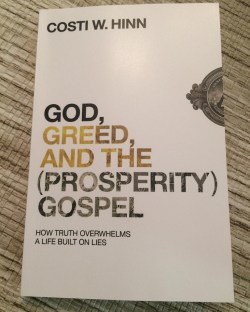
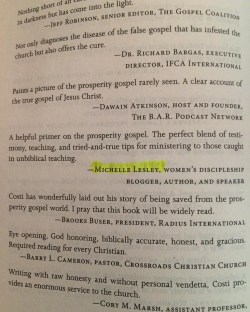
A few months ago,ย Costi Hinn reached out and asked if I’d read and write an endorsement for his new book, God, Greed, and the (Prosperity) Gospel. While his first book, Defining Deception, was an instructional introduction to the history and doctrine of the New Apostolic Reformation, I had been keeping up with Costi, and I knew that this second book was going to approach NAR/prosperity gospel false doctrine from the perspective of his personal testimony of growing up in (and being saved out of) Benny Hinn’s “ministry”. I had already heard Costi’s testimony several times and I knew my readers would find it encouraging and edifying. God, Greed, and the (Prosperity) Gospelย did not disappoint, and it is my joy to commend it to you:

A helpful primer on the prosperity gospel. The perfect blend of testimony, teaching, and tried-and-true tips for ministering to those caught in unbiblical teaching.


My two favorite genres of fiction are biblical historical fiction, and legal/political thrillers. Chris Skatesย writes both, so I’m looking forward to reading more of his books.

In order for me to enjoy a work of biblical historical fiction (a fictionalized account of a true Bible story), it has to be true to everything Scripture actually says happened (events, dialogue, chronology, etc.), and whatever the author “fills in the blanks” of the biblical account with has to be biblically and culturally plausible, and must not directly contradict clear Scripture.

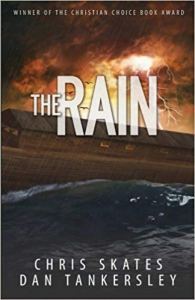
Chris accomplished this beautifully in his first book,ย The Rain, his rendition of Noah and the ark. Chris paints a grim picture of a debauched society that refuses to repent. Noah’s wife and daughters-in-law receive names, and we get to imagine what they and Ham, Shem, and Japheth might have been like. It was interesting to ponder along with the story just how long, tedious, and treacherous the journey on the ark was. And let’s not forget the lack of light and air conditioning and…well…the lovely smells of all those animals!

The Rain is a fun, leisure time read. I think you’ll like it if you enjoy biblical historical fiction.

Stop Jumping the Gunย 

Y’all know I’m all about discernment, right? I mean, I think my track record speaks for itself. But there’s an area of discernment we all need to get serious about right quick.

It’s that “right quick” part. We need to stop being reactionary and haphazardly tossing the “false teacher” label (or other spiritual aspersions) around any time somebody says something that causes us to raise an eyebrow, especiallyย when that person has an impeccable record of sound doctrine, faithful preaching, and contending for the faith once for all delivered to the saints.

Since Tuesday’s release of the Founders Ministries cinedoc trailerย By What Standard? God’s World…God’s Rules, I have been appalled at the rush to judgment regarding Tom Ascol and Albert Mohler. Neither of these brothers has committed any clear-cut sin, but I want to put the details of the accusations aside and focus on the general principle of jump-the-gun aspersion-casting against these two men and others like them.

Each of these gentlemen, as well as Founders Ministries itself, has a decades-long track record of being doctrinally sound and fighting the good fight for biblical truth – longer than some of you younger sisters have been alive. They, and other pastors, teachers, and folks in long-time doctrinally sound ministry, have earned the right to have brothers and sisters in Christ – especially mature and discerning brothers and sisters in Christ – give them the benefit of the doubt when no clear-cut sin has been committed.

Obviously, when we’re talking about high profile pastors and teachers we don’t know personally, this isn’t a local church issue, but I think we would do well to remember the principles behind 1 Timothy 5:17,19-20.

Let the elders who rule well be considered worthy of double honor, especially those who labor in preaching and teaching…Do not admit a charge against an elder except on the evidence of two or three witnesses. As for those who persist in sin, rebuke them in the presence of all, so that the rest may stand in fear.

We rebuke those who persist in sin in the presence of all. We do not make off the cuff accusations, based on a single “iffy” incident or presumptions, against doctrinally sound elders who have proven themselves faithful through the years. And we also need to remember that in situations like these we don’t know the whole behind-the-scenes story. I think we could extend some grace, give them the honor and respect Scripture says they’re due, and reserve judgment until sin is committed or the incident is resolved.

Scripture calls us to be better than this to our elders. Let’s live up to that.

Is it really God’s judgment?

My daughter texted me this shortly after the recent earthquake in California. And when your heart of hearts asks you to write an article, you write an article! (Only I didn’t think it needed to be as long as a full article, so you’re getting it here instead, Sweetie.โค)

For those of us who don’t live in California, some of the news stories we hear about the sinful things going on there leave us slack-jawed. And for Christians, our frame of reference for gobsmacking sin is the Old Testament. God dealt with sin in some pretty intense ways in the OT, not the least of which, in one case, was causing the ground to split apart and swallow sinners alive. So I guess there is precedent for God using an earthquake to deal with sin. Is itย possibleย the earthquake in California was God’s judgment upon their sin? Yes, it’s within the realm of possibility.

However, that kind of judgment is not normative, especially after the cross, and there are a lot of holes in that theory. If you’re tempted to use the line of reasoning that a natural disaster is, definitively, God’s judgment on California (or any other place) for their sin, could I just encourage you to think through the following points?

โ€ขIn the past few months New York and Illinois have both passed hideous, from-the-bowels-of-hell laws protecting the sins of abortion and infanticide. Where are their earthquakes?

โ€ขLouisiana just passed one of the most abortion-restrictive laws in the nation. And then we had a hurricane. Was that storm a judgment on Louisiana?

โ€ขIf “it is time for judgment to begin at the household of God…” (1 Peter 4:17), why wasn’t Redding, California – where Bethel “Church” is located – at the epicenter of the earthquake?

โ€ขIs it God’s judgment on sin if a tornado hits a doctrinally sound church in the Midwest?

โ€ขNorth Korea has been at the top of the list for years as the world’s worst persecutor of Christians. Why don’t we ever hear about natural disasters there?

โ€ขThere are scads of doctrinally sound churches (including John MacArthur’s church) and Christians in California. Wouldn’t God protect California on their account or at least get them out of California before He exercises judgment there? There’s biblical precedent for that, too.

I don’t think we can biblically say that a natural disaster isย definitely God’s judgment on California’s, or any other state’s or nation’s sin. God will judge the world in righteousness when Christ returns. Until that time, what we canย biblically say about natural disasters is that they are the result of the Fall. And that sometimes they’re the best thing in that could ever happen to someone. Because sometimes during a natural disaster, people hear the gospel or cry out to God and get saved.