Guest Posts

Guest Post: 8 Ways to Pray for Your Pastor’s Wife

If your theology pretty much matches up with mine (as outlined in the “Welcome” and “Statement of Faith” tabs) and you’d like to contribute a guest post, drop me an e-mail at MichelleLesley1@yahoo.com, and let’s chat about it.


8 Ways to Pray for Your Pastor’s Wife
by Jennifer Buck

As a pastor’s wife, I have seen many lists of ways to “pray for your pastor.” I admit, I usually scroll through and delete them as I find most to be…well…generic.

Michelle, however, actually hit the pulse of what a pastor really needs in our prayers. I found myself reading and inwardly shouting, “YES! This is exactly what pastors need.”.

Then my mind began forming a list of what their wives need in our prayers—more than just physical strength and a good group of friends. Although those things are important, I believe these other areas, as they are cultivated in her life would result in physical endurance and draw women wanting friendships with her.

I don’t think a pastor’s wife should live or look differently than any other believer in Christ. However, I do think she’s in this sometimes awkward but wonderful position of having a pulse on the heart of the church her husband serves and is so heavily invested in.

She’s an insider, but not really; it’s complicated. She may know a lot of what’s happening, but may have no leadership position. Even if she does, she’s limited to the scope of the area of which she heads.

She is not a female version of her husband. She is usually looked to as an over all leader by the people, but has no authority to act independently as a decision maker. Therefore, it does take an extra measure of grace to be acutely aware of the inner workings of the church but often only able to watch, offer ideas or opinions when asked, or mostly, wait as the leaders/committees make the decisions that will shape the church.

With those things in mind, if I were asked what to pray for me or any pastor’s wife, this would be my list:

1

Pray she has a deep love for the people in her church. There is a special love that can be developed for the Lord’s church. She doesn’t have to intimately know each person to hold a deep and genuine concern for their well-being and spiritual development.

2

That she loves the Lord God with all her heart and soul and mind. Being in the ministry does not guarantee that a once teachable heart cannot grow cold. Her personal walk must not be neglected in the doing of ministry. She needs to operate with a steady and sound mind.

3

That she delights in caring for her family/home. Her husband’s role will by necessity make his presence in the home sometimes erratic as he cares for the church. She needs to be the steady presence in the home. Her attitude will help form the opinion of her children about the church and the demands on their father. She will also need to be able to alert her husband when the needs of the home are greater for a period of time. Sometimes in ministry, the church will need his attention more than home and at other times the family will need his attention more. A wise wife will help him see the greater needs and willingly allow him to be where he is needed the most.

4

Pray she is able to submit to the reality that her daily living will serve as a model for others. She will naturally be looked to as an example, and she needs to be willing to live a life that reflects well the work of Christ in her.

5

That she does not have a grudge-holding heart. Ministry can be hard. Sometimes hurtful things are said and done and a pastor’s wife will not endure well if she carries the offenses of her husband. She must be able to take her hurt to the Lord and be willing to remind her husband, when he forgets, to lay his grievances before the cross also.

6

She needs to be able to allow her husband time to grieve in situations she cannot help him through. Sometimes he carries a grief no one but the Lord can lighten. He must simply walk through it.

7

That she be less concerned about what others think of her and more concerned about pleasing the Lord. That will provide much protection for her heart.

8

That she learns contentment and finds comfort in the knowledge that her personal and family needs will be provided by the Lord – in his time. Pray she functions knowing, “When I need it, it will be provided, if I don’t have it, I don’t need it yet.”


This is by no means an exhaustive list, these are just some of the things I have had to walk through and learned how to process in my years as a pastor’s wife. I’ve seen many other wives do these things well and watched them flourish in home and church. Others have not fared so well and I have watched with sadness as their marriage and ministry either crumbled or lost all effectiveness.

There is no doubt that ministry has its hard moments, however, it is also an amazing journey to be a part of laboring alongside your husband and witnessing the transforming work of the Gospel. Praying for your pastor and his wife can be a way for the church family to participate in the continuation and transforming work of the Gospel in the hearts of those who lead them.


Jennifer and her husband, Tom have been married for 32 years and have 3 children. For the last 13 years they have been serving in Lindale TX, where Tom is Senior Pastor of First Baptist Church. Jennifer is one of the teachers in the church’s Women’s Bible Study Fellowship and leads a small group discipleship called Gracestoration. Jennifer loves to teach and encourage women in the truths of Scripture.

Relationships

Throwback Thursday ~ How Can We Be Friends? 4 Biblical and Practical Considerations for Co-Ed Christian Friendships

Originally published July 13, 2018

Any time an issue regarding the roles and relationships between Christian men and women comes up, there’s bound to be an airing of opinions. Strong opinions. And the social media opinions du jour are about friendships between Christian men and women. What’s appropriate? What’s not? Can Christian men and women have genuinely platonic friendships? Twitter is currently all a-chirp over Aimee Byrd’s new book Why Can’t We Be Friends? which addresses…

…the way to stand against culture is not by allowing it to drive us apart—it is by seeking the brother-and-sister closeness we are privileged to have as Christians. Here is a plan for true, godly friendship between the sexes that embraces the family we truly are in Christ and serves as the exact witness the watching world needs.
P&R Publishing, About: Why Can’t We Be Friends by Aimee Byrd

I guess it’s just the way my brain is wired, but when I first heard about Aimee’s book, my initial reaction was along the lines of, “Oh. OK. Sounds interesting…Why do we need a book about this?”. It was the same kind of reaction I’d have if somebody came out with a book about humans needing to breathe air or fire being hot. Yeah. That’s a given. Brothers and sisters in Christ have been friends for upwards of 2000 years now. I don’t understand what else there is to say about that.

But the more I thought about it – the way people have lost their ever lovin’ minds about how to properly relate to, even talk to, one another – the more I thought maybe this book was a good idea. In a world where a man can’t even stand next to Beth Moore and be taller than her without being accused of misogyny, perhaps a remedial course on the most basic of human relationships is in order.

I haven’t read Aimee’s book, so this isn’t a critique or review of it (you can read a detailed review by Amy Mantravadi here), but I did listen to her interview about Why Can’t We Be Friends on Theology Gals, and I didn’t hear anything problematic in Aimee’s description of her perspective on the subject. From what I’ve heard and read, I probably wouldn’t agree with Aimee about every single thing in the book, but I have no reason to believe she is advancing any unbiblical ideas, and that Why Can’t We Be Friends will likely prove a helpful biblical resource for many. My advice: If you want to know what Aimee thinks and whether or not it’s biblical, read the book and compare it to rightly handled Scripture.

But as I continued to think about and read discussions about the issue – especially in light of words like “misogyny”, “sexism”, and “abuse” being bandied about in evangelicalism like so many badminton birdies – I started seeing some aspects of this topic I wanted to address. Why can’t Christian men and women be friends? How can we be friends? Are there any potential problems we need to anticipate? Here are four practical and biblical things to take into consideration as we contemplate friendships between the sexes.

1.
Defining Our Terms

One of the first whiffs of controversy I caught about Aimee’s book was a Christian gentleman’s emphatic no to the question of whether or not men and women could be friends. His reasoning? Co-ed friendships would inevitably lead to adultery. As the conversation progressed, comments were made by more than one man suggesting that the only female friend a man should have is his wife. Why? Because these gentlemen were defining friendship as a deeply emotionally intimate relationship- the kind of spiritually bonded relationship you should only have with your spouse.

Well, OK, if that’s the way you define friendship, you’re right. You shouldn’t have that kind of relationship with anyone of the opposite sex. Or the same sex either. That “oneness” kind of friendship is restricted to one person on the planet- your spouse. Defining friendship this way essentially restricts you to no friends until you get married, and one friend thereafter.

The thing is, that’s not how 99.999% of people define the word “friendship.” That’s how people define the word “spouse.” That’s why we have two different words – friend and spouse – because they denote two different types of relationships. Your spouse should certainly be your friend, but your friend doesn’t have to be your spouse.

The concept of friendship is much more fluid, and generally, more broadly defined than unhelpfully equating “friend” with “spouse”. There is a spectrum of intimacy with others that ranges from “I just met this person” on one end to “I’ve been blissfully married to this person for 80 years” on the other end, and all kinds of levels of affinity in between.

There’s the “hello at the mailbox, can I borrow your rake” neighbor whose last name you might not even know, casual acquaintances like store clerks and stylists whom you see occasionally and make perfunctory small talk with, regular acquaintances like co-workers and people you’re friendly with at church but don’t socialize with outside that venue, couples you and your spouse are friends with and spend time with, “shared interest” friends (Civil War buff buddies, gardening buddies, etc.), social media friends, good friends who share a very emotionally close, personal relationship, and then there’s your spouse.

All of those people can be classified, at one level or another, as “friends”. Maybe the question shouldn’t be “Can Christian men and women be friends?” but “Which levels of friendship are biblically appropriate for Christian men and women to engage in?”

2.
Talk About It

If you’re married, especially if there have ever been issues of infidelity or insecurity for either of you, it’s wise to talk out what you’re both comfortable with when it comes to friendships outside the marriage.

It should be a no-brainer that neither of you should have any friendships that even come close to the emotional intimacy, affection, energy, and time you expend with each other. That’s not usually much of a problem for men, but, ladies, what about that close relationship you have with your mother, your sister, or your dearest girl friend? When you get phenomenal news – or devastating news – who is the first person you want to run to and share it with? If it’s anybody other than your husband, that’s a signal that you’re probably too close to that friend and not close enough to your husband.

But beyond being first in each others’ lives, what would be helpful and godly in your marriage regarding opposite sex (or even same sex) friendships? How much time is too much time to spend with a friend? What about going places together, talking on the phone, exchanging e-mails or private messages on social media? Which of the aforementioned “levels” of friendship should be restricted to members of the same sex? Discuss what each of you are OK with and not OK with, and why, avoiding the appearance of evil, and be sure to discuss practical safeguards you can each take against temptation.

If you’re single, these things are just as important to consider. Pray about them, discern how God would have you prioritize your friendships, and the time and emotional intimacy He would have you invest in them. And in the same way you reserve sexual intimacy for marriage, determine to reserve your deepest emotional intimacy for marriage, should that be God’s plan for you, as well.

3.
Different Ways to Be Friends

I think one thing that people who give a staunch and unwavering “no” to friendships between men and women might not be taking into consideration is that a proper, biblical, platonic friendship between a man and a woman isn’t going to look like a proper, biblical, platonic friendship between two women or two men.

My good friend, Darlene, and I text back and forth all the time, private message each other on Facebook, go out to lunch, and spend hours talking one on one. We even went to a conference earlier this year, driving several hundred miles back and forth and rooming together once we got there.

I am also friends with Darlene’s husband. Do I spend as much time with him? Do I spend time with him the same way I spend time with Darlene? Of course not. I talk to him at church, at fellowships, when the four of us spend time together as couples, sometimes (publicly) on social media, and the once in a blue moon informational-type e-mail. The dynamic is totally different. First of all, I’m on a lower level of “friendship intimacy” with him than I am with Darlene. Second of all, it would appear – and would be – inappropriate for me to spend time with him in the same ways I do with Darlene. And, finally, I wouldn’t want to make Darlene or my own husband uncomfortable.

I’m friends with both Darlene and her husband, but I’m friends with each of them on different levels of intimacy and I’m friends with each of them in different ways. To maintain biblical decorum, and to guard our hearts against temptation, friendships between men and women are necessarily going to look different from same gender friendships in the ways we spend time together and how much time we spend together.

4.
Can You Handle It?

An interesting dynamic about this back and forth over whether or not men and women can be friends is that, at least in the conversations I observed, men were more likely to say no, and women were more likely to be the ones promoting the idea of friendship between the sexes and not seeing a problem with it.

Ladies, we don’t get to make the across-the-board pronouncement that co-ed friendships between Christians are fine just because it wouldn’t be problematic for us. Furthermore it should give us pause that good, godly men are saying, “No. There are concerning issues here.” We need to sit down and actually listen to what they’re saying as a group and as individuals.

God created men and women differently. We are wired for relationships differently. That doesn’t mean women are wired right and men are wired wrong and they just need to get over it. It means we approach relationships differently. God created those different approaches and they are both good.

And when our brothers in Christ are saying, “We can’t handle this kind of relationship with you the way you want us to,” we need to respect and value that input into the conversation as much as we respect and value the input from our side of the aisle.

When it comes to individual friendships between a particular man and woman, that same respect and value for what another person can or can’t handle also has to hold sway. Every person is different. There are men you could put into a room full of naked women and they’d be obliviously critiquing the way the painter spackled the walls. There are other men for whom lust is such a temptation that they would have difficulty carrying on a five-minute conversation with a moderately attractive woman. Women are the same way. We all have varying levels of temptation to physical or emotional lust.

Through study of the Word, prayer, and, if you’re married, a healthy relationship with your husband, know your own limitations. Walk circumspectly, wisely, and obediently to Christ. Respect your male friends and acquaintances, and give them the space they need. They are probably trying to walk obediently, too.

Can men and women be friends? Of course. It’s how to be friends with one another that we need to pursue with wisdom, love, respect, holiness, purity of heart, and biblical propriety.

Podcast Appearances

After Thought Podcast Guest Appearance Part 1: The Open Letter to Beth Moore


I had a super time chatting with Lauren Hereford on the After Thought podcast. Listen in to part 1 of this episode as Lauren and I discuss my testimony, the Open Letter to Beth Moore and more!


Listen to part 2 here.

You can also subscribe to After Thought on iTunes and Google Play. Be sure to check out Lauren’s blog, Biblical Beginnings, too, and follow along on Facebook and Twitter!

If you’d like to sign the Open Letter to Beth Moore you’re more than welcome to do so (click the link, scroll all the way to the bottom, and leave a comment in the comment box). Also mentioned in the podcast:

An Open Letter to Beth Moore – Timeline of Events

Living Proof You Should Follow Beth (No) Moore

Women and False Teachers: Why Men Don’t Get It, and Why It’s Imperative That They Do


Got a podcast of your own or have a podcasting friend who needs a guest? Need a speaker for a women’s conference or church event? Click the “Speaking Engagements” tab at the top of this page, drop me an e-mail, and let’s chat!

Mailbag

The Mailbag: How to Leave a Church


What is the biblical way to leave a church?

This is a great question that I’ve received from several readers. There are a lot of different circumstances that might cause someone to leave her church, and there are right ways and wrong ways to leave. I’ve been so grateful to hear from women who want to handle things biblically.

First, a couple of words of counsel that generally apply to nearly all situations when you’re considering leaving a church:

•In most circumstances, even bad ones, I would counsel against “ghosting” your church – simply disappearing with no explanation or goodbyes to anyone. When you’re preparing to leave, as appropriate to your particular situation, tell your pastor how much he has meant to you. Say a special goodbye to dear friends. Speak words of encouragement to your leaders and teachers. Search your heart for anyone you may have sinned against, repent, and apologize. Leave graciously.

•If you’re married, you and your husband will need to talk and pray together about whether or not to leave and how to do so. Be sure to remember that your husband is responsible for making the final decision and you are responsible for submitting to him.

Let’s talk about some of the more specific reasons you might have to leave a church, and what it would look like to leave well in each situation.

Death

If you’re a faithful member in good standing and you die unexpectedly, you’re off the hook. It’s OK to “ghost” your church. :0)

If you’re a faithful member in good standing and have a terminal illness, use some of your remaining time (if you’re able) to make a gracious exit. Take some time for special goodbyes. Discuss your funeral service and details with your pastor if applicable. Consider leaving a gift to your church in your will.

Moving or Temporarily Relocating

If you’re moving too far away to continue attending your church, let your pastor and those you’re close to at church know.

Do you know your new address and/or e-mail address? Provide it to the church office if you’d like them to keep sending you the church newsletter and any other mailings, and let them know if it’s OK to give that information out to other church members who would like to stay in touch. Make sure you have correct phone numbers and e-mail addresses for church friends you want to stay in contact with. If you’re not yet connected to a church in your new hometown, ask your pastor if he can suggest a good church in the area.

For those who are temporarily relocating (for example, college students or military families) and want to keep your membership in your home church, yet be active members of a church in your new location, find out if your new church has any sort of dual membership option (sometimes called “watchcare”). This allows you to maintain your membership in your home church while giving you membership benefits (voting, teaching, communion, or whatever your new church’s policies are) in your new church.

Switching from a good church to a church that’s a better fit for your family

Maybe the church you’ve been attending is a good one, but you’ve recently become more Reformed in your soteriology and you’d like to join another church in town that you more closely align with, theologically. Perhaps there’s a nearby church that has started offering programs and accommodations your disabled child could benefit from that your current church isn’t equipped to offer. Maybe, though doctrinally sound, your current church has switched to a genre of music that, even after giving it a good faith effort, still grates on you to the point of distracting you from worship, but another local church has music you’re more in harmony with.

None of these are reasons you absolutely have to leave a church. In fact, if your church is teaching sound doctrine, and the reason you’re considering leaving is a matter of preference or convenience, I would encourage you to try to work things out and stay at your current church if at all possible. It might be that God would have you start programs and accommodations for the disabled at your current church, or that He will begin to use the new music style in your life in some way. At the very least, when it comes to non-doctrinal issues like these, give it plenty of time, prayer, and serious thought before you leave.

Talk to your pastor (or appropriate elder) when you start thinking about leaving. This should not be an “If you don’t change X,Y, and Z, we’re outta here!” type of conversation. Be kind. Express your concerns or needs lovingly and biblically. Find out if there’s any information you need to know that would affect your thoughts about leaving. For example, maybe the pastor has also started becoming more Reformed and needs you to stay and support him as he begins transitioning the church in that direction. Maybe a lot of other church members have expressed discomfort with the new direction the worship music has taken and the leadership is considering changes that would make it easier for you to stay. You never know until you discuss it with your pastor.

If you come to the decision that you really need to move to another church, talk with your pastor again and let him know your decision. Take care of all of your church responsibilities before leaving: if you’re teaching a class with a definite end date, finish it. If you’re teaching a permanent class, let whoever is in charge of securing teachers know when you’ll be leaving so a new teacher can be found. Wrap up any projects or turn them over to the appropriate person. Resign any positions you hold. Don’t leave your brothers and sisters in the lurch.

When you say your goodbyes, it’s not necessary to disclose to everyone every detail of your reasons for leaving, but, if possible, try to stop any gossip before it starts by making sure people understand you’re not leaving because of someone else’s sin, unresolved conflict, false teaching, etc.

Leaving due to sin or false doctrine

The chairman of deacons is having an affair and nothing has been done about it. Your pastor just finished Bill Johnson’s book and is starting to teach New Apostolic Reformation false doctrine. Women have been preaching from time to time on Sunday mornings.

The most crucial time not to simply disappear from your church is when there’s sin or false doctrine in the camp. Jesus and the Apostles did not handle sin and false doctrine by avoiding it or ignoring it. They loved the people committing the sin and teaching the false doctrine enough to confront them – sometimes harshly, if needed – so that they might repent and be reconciled to Christ. We don’t run. We reconcile.

Just as God placed Esther in exactly the right position at the right time to help rescue His people, it could be that God has placed you in your church and given you a biblical understanding of the situation for such a time as this.

In cases of both sin and false doctrine, you should usually* follow the steps for church discipline outlined in Matthew 18:15-20:

1. If your brother sins against you, go and tell him his fault, between you and him alone. If he listens to you, you have gained your brother. (15)

2. But if he does not listen, take one or two others along with you, that every charge may be established by the evidence of two or three witnesses. (16)

3. If he refuses to listen to them, tell it to the church. (17a)

4. And if he refuses to listen even to the church, let him be to you as a Gentile and a tax collector. (17b)

(*If you have knowledge that someone is imminently about to commit sin, especially if that sin will victimize someone else, and time is of the essence, gather the appropriate leaders and/or church members and intervene immediately. If a crime has been committed, alert law enforcement.)

In my article, The Mailbag: How should I approach my church leaders about a false teacher they’re introducing?, I’ve outlined some steps to take when approaching your pastor or lay leaders about using materials authored by false teachers. Most of this information can be adapted for dealing with issues of sin and church discipline as well.

If the sin or false teaching issue is resolved biblically, praise God, forgive, do whatever you’re able to do to be at peace with all involved, and stay at your church if at all possible.

If you have done everything you’re able to do to help bring about a biblical resolution to the situation and the sin or false doctrine is being allowed to continue, it’s probably time to leave and find a spiritually healthy church. Talk to your pastor or elders, and let them know you’ve decided to leave and why.

Attempt to leave as graciously as possible, taking care of your teaching/serving responsibilities, saying goodbye, making arrangements to stay in touch with friends, etc.

You will need to prayerfully consider the biblically appropriate way to explain to fellow church members and leadership why you’re leaving. Don’t slander people, make an unnecessary scene, or disclose inflammatory details indiscriminately on your way out, including on social media. However, it may be a situation in which those left behind need to know what’s going on so they can make an informed decision about how to address the situation or whether to stay or leave themselves. It may be appropriate to write out a calm, objective, scripturally annotated letter explaining your reasons for leaving, and mail or hand deliver copies of it to the appropriate people. You might need to talk to the denominational leadership board or organization that oversees your church. There are so many different possible scenarios it would be impossible for me to make a blanket statement as to what would or would not be biblically wise and appropriate in every single situation.


No matter your reasons for leaving your current church, your search for a new church to join with needs to begin as soon as you’ve made the decision to leave. If you need some help, ask your pastor or trusted Christian friends for suggestions of good churches, or explore the Searching for a new church? tab at the top of this page. Whatever you do, don’t succumb to the sin of staying out of church, because for the Christian, Church is Not Optional. And that’s Non-Negotiable.


If you have a question about: a Bible passage, an aspect of theology, a current issue in Christianity, or how to biblically handle a family, life, or church situation, comment below (I’ll hold all questions in queue {unpublished} for a future edition of The Mailbag) or send me an e-mail or private message. If your question is chosen for publication, your anonymity will be protected.

Random Ramblings Ruminations Resources

Random Ramblings, Ruminations, and Resources

What a summer! From a lovely trip to visit with my family to the Open Letter to Beth Moore (by the way, ladies, you can still sign it if you haven’t already) to podcast interviews to a hurricane (everything’s fine, thanks – praise God!) to both of my young adult children’s cars dying in the same week and my husband and me playing chauffeur for them (please pray that God will provide the vehicles they need), my summer has been a non-stop whirlwind. I can’t believe next week will already be August!

Let’s jump into some Random Ramblings, Ruminations, and Resources, shall we?

Light (Blog) Housekeeping

If you’re relatively new to the blog, you might not be aware of all the features and resources available to you here. Check out Blog Orientation for New Readers and Old Friends.

But even if you’ve been around a while, I’ve updated a few things you might not have noticed:

I’ve changed the Popular False Teachers tab (at the top of this page) to Popular False Teachers & Unbiblical Trends. That’s because I’ve added resources on the Enneagram and I’m planning to add info on more unbiblical trends in the future. I’ve also added information on MOPS to this tab in case I forgot to mention it.

I think The Servanthood Survey (published last week) is going to be a helpful resource for churches (and individuals), so I created a new tab to have that always at the ready.

If you’ve used my discernment article on Beth Moore lately, you may have noticed that it has a new look. I’ve changed the title and the introduction, fixed broken links and added a few new ones, and added some updated material, but it’s still the same article with the same link: Living Proof You Should Follow Beth (No) Moore.

Recently, I was put in “Facebook timeout” (I couldn’t post to my Facebook page from certain devices) for sharing what the powers that be deemed to be “hate speech” – a meme that quoted 1 Timothy 2:12. If you’re on Facebook, you’re probably hearing more and more about things like this happening to Christians for posting biblical views (no matter how kindly worded).

As many are predicting, there will probably come a time when Christians who share biblical posts will be banned from Facebook. In case something like this happens to me, I’ve opened up a MeWe page. MeWe is a social media platform that’s extremely similar to Facebook, except they pride themselves on their customer service, their privacy policy, and their “no political agenda” policy (meaning they don’t censor every little thing like Facebook does). If you’re familiar with Facebook, you’ll find MeWe’s interface nearly identical, plus it has a few neat features Facebook doesn’t have.

If you’d like to connect on MeWe, set up an account, then, just search Michelle Lesley, or go directly to my page and click the “add contact” button. If you’d rather do it later, I’ve added a link to my MeWe page to the Contact and Social Media tab at the top of this page.

And finally, would you like to write up a testimony (anything from a paragraph to a full length article) for Testimony Tuesday or an article or book review for a guest post? If your theology pretty much matches up with mine (see the Statement of Faith and Welcome tabs at the top of this page), look over the articles at these two links to get a feel for what I’m looking for and drop me an e-mail so we can chat about it.

Book Report

I’ve mentioned before that I don’t write solicited book reviews, but there are extremely rare circumstances in which I will break that rule. There are also occasions when I will pick up a book of my own volition and commend it to you if I end up liking it. Today, you’re getting one of each.
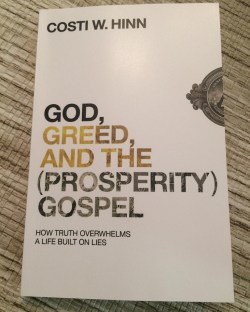
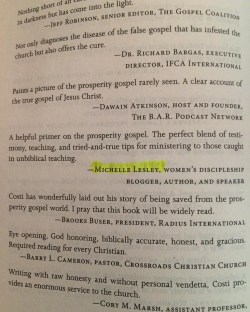
A few months ago, Costi Hinn reached out and asked if I’d read and write an endorsement for his new book, God, Greed, and the (Prosperity) Gospel. While his first book, Defining Deception, was an instructional introduction to the history and doctrine of the New Apostolic Reformation, I had been keeping up with Costi, and I knew that this second book was going to approach NAR/prosperity gospel false doctrine from the perspective of his personal testimony of growing up in (and being saved out of) Benny Hinn’s “ministry”. I had already heard Costi’s testimony several times and I knew my readers would find it encouraging and edifying. God, Greed, and the (Prosperity) Gospel did not disappoint, and it is my joy to commend it to you:

A helpful primer on the prosperity gospel. The perfect blend of testimony, teaching, and tried-and-true tips for ministering to those caught in unbiblical teaching.

 

My two favorite genres of fiction are biblical historical fiction, and legal/political thrillers. Chris Skates writes both, so I’m looking forward to reading more of his books.

In order for me to enjoy a work of biblical historical fiction (a fictionalized account of a true Bible story), it has to be true to everything Scripture actually says happened (events, dialogue, chronology, etc.), and whatever the author “fills in the blanks” of the biblical account with has to be biblically and culturally plausible, and must not directly contradict clear Scripture.

Chris accomplished this beautifully in his first book, The Rain, his rendition of Noah and the ark. Chris paints a grim picture of a debauched society that refuses to repent. Noah’s wife and daughters-in-law receive names, and we get to imagine what they and Ham, Shem, and Japheth might have been like. It was interesting to ponder along with the story just how long, tedious, and treacherous the journey on the ark was. And let’s not forget the lack of light and air conditioning and…well…the lovely smells of all those animals!

The Rain is a fun, leisure time read. I think you’ll like it if you enjoy biblical historical fiction.

Stop Jumping the Gun 

Y’all know I’m all about discernment, right? I mean, I think my track record speaks for itself. But there’s an area of discernment we all need to get serious about right quick.

It’s that “right quick” part. We need to stop being reactionary and haphazardly tossing the “false teacher” label (or other spiritual aspersions) around any time somebody says something that causes us to raise an eyebrow, especially when that person has an impeccable record of sound doctrine, faithful preaching, and contending for the faith once for all delivered to the saints.

Since Tuesday’s release of the Founders Ministries cinedoc trailer By What Standard? God’s World…God’s Rules, I have been appalled at the rush to judgment regarding Tom Ascol and Albert Mohler. Neither of these brothers has committed any clear-cut sin, but I want to put the details of the accusations aside and focus on the general principle of jump-the-gun aspersion-casting against these two men and others like them.

Each of these gentlemen, as well as Founders Ministries itself, has a decades-long track record of being doctrinally sound and fighting the good fight for biblical truth – longer than some of you younger sisters have been alive. They, and other pastors, teachers, and folks in long-time doctrinally sound ministry, have earned the right to have brothers and sisters in Christ – especially mature and discerning brothers and sisters in Christ – give them the benefit of the doubt when no clear-cut sin has been committed.

Obviously, when we’re talking about high profile pastors and teachers we don’t know personally, this isn’t a local church issue, but I think we would do well to remember the principles behind 1 Timothy 5:17,19-20.

Let the elders who rule well be considered worthy of double honor, especially those who labor in preaching and teaching…Do not admit a charge against an elder except on the evidence of two or three witnesses. As for those who persist in sin, rebuke them in the presence of all, so that the rest may stand in fear.

We rebuke those who persist in sin in the presence of all. We do not make off the cuff accusations, based on a single “iffy” incident or presumptions, against doctrinally sound elders who have proven themselves faithful through the years. And we also need to remember that in situations like these we don’t know the whole behind-the-scenes story. I think we could extend some grace, give them the honor and respect Scripture says they’re due, and reserve judgment until sin is committed or the incident is resolved.

Scripture calls us to be better than this to our elders. Let’s live up to that.

Is it really God’s judgment?

My daughter texted me this shortly after the recent earthquake in California. And when your heart of hearts asks you to write an article, you write an article! (Only I didn’t think it needed to be as long as a full article, so you’re getting it here instead, Sweetie.)

For those of us who don’t live in California, some of the news stories we hear about the sinful things going on there leave us slack-jawed. And for Christians, our frame of reference for gobsmacking sin is the Old Testament. God dealt with sin in some pretty intense ways in the OT, not the least of which, in one case, was causing the ground to split apart and swallow sinners alive. So I guess there is precedent for God using an earthquake to deal with sin. Is it possible the earthquake in California was God’s judgment upon their sin? Yes, it’s within the realm of possibility.

However, that kind of judgment is not normative, especially after the cross, and there are a lot of holes in that theory. If you’re tempted to use the line of reasoning that a natural disaster is, definitively, God’s judgment on California (or any other place) for their sin, could I just encourage you to think through the following points?

•In the past few months New York and Illinois have both passed hideous, from-the-bowels-of-hell laws protecting the sins of abortion and infanticide. Where are their earthquakes?

•Louisiana just passed one of the most abortion-restrictive laws in the nation. And then we had a hurricane. Was that storm a judgment on Louisiana?

•If “it is time for judgment to begin at the household of God…” (1 Peter 4:17), why wasn’t Redding, California – where Bethel “Church” is located – at the epicenter of the earthquake?

•Is it God’s judgment on sin if a tornado hits a doctrinally sound church in the Midwest?

•North Korea has been at the top of the list for years as the world’s worst persecutor of Christians. Why don’t we ever hear about natural disasters there?

•There are scads of doctrinally sound churches (including John MacArthur’s church) and Christians in California. Wouldn’t God protect California on their account or at least get them out of California before He exercises judgment there? There’s biblical precedent for that, too.

I don’t think we can biblically say that a natural disaster is definitely God’s judgment on California’s, or any other state’s or nation’s sin. God will judge the world in righteousness when Christ returns. Until that time, what we can biblically say about natural disasters is that they are the result of the Fall. And that sometimes they’re the best thing in that could ever happen to someone. Because sometimes during a natural disaster, people hear the gospel or cry out to God and get saved.