Mailbag

The Mailbag: Communion Questions

Is it biblical for women to administer communion to other women in a local church or a parachurch ladies gathering? It it biblical for a couple to administer communion at a social gathering in their home?

Communion.. the Lord’s Supper… the Lord’s Table… the breaking of bread and drinking of wine (or grape juice) as a memorial to our Lord’s suffering and death is an extremely solemn and serious ordinance of the church.

I mean, in the Corinthian church, people were getting sick and dying because they weren’t handling the Lord’s Supper in a godly way.

Whoever, therefore, eats the bread or drinks the cup of the Lord in an unworthy manner will be guilty concerning the body and blood of the Lord. Let a person examine himself, then, and so eat of the bread and drink of the cup. For anyone who eats and drinks without discerning the body eats and drinks judgment on himself. That is why many of you are weak and ill, and some have died.
1 Corinthians 11:27-30

Take a moment and meditate on what that means. How seriously does God take the Lord’s Supper?

The Lord’s Supper is an ordinance of the gathered church, just like baptism is. You wouldn’t (I hope) baptize people at your Tupperware party or even your weekly women’s Bible study, and you shouldn’t be observing the Lord’s Supper in those sorts of venues either.

Look at the language in 1 Corinthians 11:17-34 and how it differentiates between eating outside the church gathering (at home) and partaking of the Lord’s Supper inside the worship gathering of the church. The language assumes that the Lord’s Supper takes place in the church gathering: “When you come together…” (17, 20), “When you come together as a church…” (18), “Do you not have houses to eat and drink in? Or do you despise the church of God…” (22), “when you come together to eat” (33), “if anyone is hungry, let him eat at homeโ€”so that when you come together…” (34).

When you unbiblically remove the Lord’s Supper from the worship gathering of the church body, you immediately cheapen it. It becomes lesser. Just some little thing we do so we can feel like we’re being holy, or because we crave ritual. It’s reduced to the level of hors d’oeuvres or a party game. The purpose of the Lord’s Supper is for the gathered church to proclaim the Lord’s death until he comes (26).

And because it is an ordinance of the church, those who shepherd the church – pastors and elders – are responsible for administering it in a biblical way. That responsibility has not been given to any Tom, Dick, and Harry (or Dawn, Pat, and Mary, if you will) who decides he or she wants to offer it at a private shindig. It is a pastoral responsibility, which includes fencing the table.

So the answer to all of your questions is no. The Lord’s Supper should not be observed at parachurch meetings or social gatherings at all. (Or weddings. You didn’t ask about that, but I’m going to throw that in there, too, for the same reasons.) And the only reason I can think of that a church would have women administering the Lord’s Supper during a worship service instead of the pastor, elders, and/or deacons is either to appear egalitarian or because they are egalitarian, so that’s a “no” too.


What about situations like COVID, when the church can’t gather? Is “online communion” (taking the Lord’s Supper at home with whatever elements I have on hand while watching the pastor “administer” it online) OK?

No. First of all, as we learned from COVID, while there may be very temporary emergencies, the church can gather if it is being obedient to the Lord. Sometimes obedience is costly, but it can be done. Just ask our Savior, whose obedience cost Him torture and death.

Second, there’s no requirement for how often the church must observe the Lord’s Supper. Jesus said “as often as you do this,” not “every week” or “twice a month”. Once the temporary emergency is over the church can come back together and observe the Lord’s Supper as a body, in person, as indicated by Scripture.


“What about homebound, hospitalized, or dying people who are Providentially hindered from gathering with the church? Can a pastor administer the Lord’s Supper to those people outside the church gathering?”

I would leave that to a pastor’s discretion, but, if I were a pastor, I would be very reluctant to do so. Personally, I would urge those people, as well as anyone else who wants to observe the Lord’s Supper outside of the gathering of the church body to consider why they want to do that. I mean, dig deep and do some serious introspection about your reasons and what you actually believe about the Lord’s Supper.

I suspect some Christians, without even realizing it, may hold some Roman Catholic-adjacent or superstitious beliefs about the Lord’s Supper.

It’s not the thing you do right before you die (or any time) to make you right with God, forgive your sins, or secure your place in Heaven. That’s what Christ’s death, burial, and resurrection were for. And if you’re placing your faith for any of those things in partaking of the Lord’s Supper instead of, or in addition to Christ’s finished work on the cross, that’s idolatry.

It’s not something you do to assuage misplaced guilt about not being physically able to attend church (or, for that matter, to assuage appropriate guilt about forsaking the assembly when you actually could be there). If you are legitimately Providentially hindered from faithful church attendance, God knows that. He’s the One who allowed or placed you in that situation in the first place. You don’t need to “make it up to Him” or try to get “back” into His good graces by performing for Him by partaking of the Lord’s Supper. Rest. Rest in His grace, mercy, and divine Providence. You can partake when you’re able to go back to church, or when the whole church is one day gathered for the marriage supper of the Lamb.

It’s not something you do to somehow conjure up or invoke God’s presence into your midst. That’s a variant of necromancy or witchcraft. God is omnipresent. There’s not a millimeter of the universe in which He is not present. He’s at your social gathering. He’s at your parachurch meeting. What you want to do at those events is to pray, not observe the Lord’s Supper. In prayer, you recognize God’s presence, submit yourselves and your gathering to Him, and ask Him to guide your meeting. And, no, observing the Lord’s Supper isn’t “leveling up” on “just prayer”. Prayer and the Lord’s Supper are two different worship practices with two different purposes.

And, finally, the Lord’s Supper isn’t something you do to secure God’s blessing on whatever activity or venue you’re observing it in. It’s not a talisman. It’s not like rubbing a rabbit’s foot for luck or a baseball player going through his superstitious pre-game rituals so he’ll play well and win the game. Participating in the Lord’s Supper with your church family is a blessing – it’s the blessing of unity in Christ and the fellowship of proclaiming His death together until He comes, but you don’t do it to get God’s blessing on your marriage, your dinner party, or your pro-life meeting.


What would you say to a church not using unleavened bread for communion? The last time we took communion the bread was Italian bread, obviously had yeast in it. I donโ€™t want to take the Lords supper with bread with yeast in it because yeast represents sin and Jesus has no sin in Him, and if we are to remember what He did, how can we use just regular bread. I did ask the pastor, he thought I had a good point, but I havenโ€™t heard from him yet.

It’s great that you asked your pastor about this. That’s exactly what I would have advised you to do. I would encourage you to submit to his leadership on this issue.

Leavened bread is not a reason to abstain from the Lord’s Supper any more than grape juice instead of wine (or vice versa) is a reason to abstain. My personal opinion (not biblical mandate) is that unleavened bread and wine should be used because they are more historically accurate and truer to the details of Scripture than leavened bread and/or grape juice. That being said, I’ve never been a member of a church that didn’t use grape juice, and I have participated in observances of the Lord’s Supper that used leavened bread, and it didn’t bother me in the least.

We need to remember that the reason unleavened bread was used was not because leaven represented sin, although we do see that symbolism later, but because the Lord’s Supper began as the Last Supper, which was an observance of Passover. Unleavened bread was used for Passover because it memorialized the Israelites’ flight from Egypt. They did not have time for the dough to rise before the exodus. That’s where the unleavened bread for Passover, the Last Supper, and the Lord’s Supper came from. It had nothing to do with Jesus’ sinlessness because Jesus had not yet come at the time of the exodus.

We can also remember that Jesus used leavened bread when He fed the 5000, and in that very context of leavened bread, He Himself said, “I am the bread of life.” If leaven always represents sin, why would Jesus, who was sinless God, have referred to Himself in the context of everyday leavened bread?

If leavened bread is the only reason you’re abstaining from the Lord’s Supper, I would encourage you to stop abstaining and partake joyfully with your church family, proclaiming the Lord’s death until He comes.


We recently moved and have been attending a Southern Baptist church. They have not had communion for over two months. Isn’t it the norm to have communion at least once a month? since we are new to this church we are still waiting and learning our place. We hesitate to make ourselves known as possibly unsubmissive or question why they do things the way they do. (From The Mailbag: Potpourri (…SBC Communion…))

These are such great questions because they help me, as a Southern Baptist, think about the way we do things and how those practices might be perceived by visitors or new members.

Every Southern Baptist church is autonomous, so each church has its own policy or practice about how often the Lord’s Supper is observed. There are some SBC churches who hold the Lord’s Supper every week and probably others who hold it only once or twice a year, although I don’t personally know of any who hold it that infrequently.

In my experience, most Southern Baptist churches observe the Lord’s Supper several times a year, usually on a schedule like the first Sunday of the month, once a quarter, or every “fifth Sunday” (in months that have five Sundays). In addition to these scheduled observances, many churches also observe the Lord’s Supper at their Christmas Eve, Good Friday, or Easter service.

I would encourage you and your husband to set up an appointment with the pastor and ask away! It is certainly not unsubmissive to sit in his office and politely say, “We’re new here and we were just wondering about…” Most pastors I know would love for potential members to do this.


We run into trouble when we start trying to “improve” on God’s Word and His ways. The Lord’s Supper is an ordinance of the church, to be observed in the gathering of the church body, and to be rightly administered by the pastor, elders, and/or deacons. Let’s leave it at that – nothing more, nothing less – right where Scripture leaves it.

Additional Resources:

The Last Supper ~ The Lord’s Supper


If you have a question about: a Bible passage, an aspect of theology, a current issue in Christianity, or how to biblically handle a family, life, or church situation, comment below (Iโ€™ll hold all questions in queue {unpublished} for a future edition of The Mailbag) or send me an e-mail or private message. If your question is chosen for publication, your anonymity will be protected.

Discernment

Throwback Thursday ~ Discernment Hysteria and the God Who Wins

Originally published April 8, 2016

There are a lot of different facets to Christianity. Thereโ€™s worship. Fellowship with other Christians. Studying Godโ€™s Word alone, with our families, and with the local church. Evangelism. Serving at church. Teaching. Discipling other believers. Prayer. All of these things, and others, are vital to a healthy, growing relationship with Christ.

But things can get out of whack if we focus too much on any one of these areas to the neglect of others. Spend too much time in prayer, and you could overlook serving others. Focus on evangelism too much, and your Bible study time might suffer. It can be tricky, but itโ€™s important that we keep a good balance in our walk with the Lord.

If youโ€™re like me you probably have one or two areas that youโ€™re tempted to go overboard in. My temptation is studying, particularly in the area of discernment- false doctrine and false teachers. Itโ€™s a fascinating topic, and people educated in the field of discernment and doctrine are desperately needed in the church today.

But if you spend a lot of time studying discernment โ€“and many do- it can get pretty discouraging pretty quickly. You begin to realize just how pervasive false doctrine is and how many false teachers there are. Itโ€™s in your church, at your childโ€™s Christian school, on your Christian radio and TV stations, in your Christian bookstore. Itโ€™s everywhere. And itโ€™s not just the home grown heretics who spring from the soil of already apostate โ€œchurches.โ€ Weโ€™ve also got men and women who were once trustworthy teachers and preachers of Godโ€™s Word turning traitor and joining the forces of evil at an alarming rate. They just keep coming and coming, always more and more. Itโ€™s starting to feel like Invasion of โ€œThe Bodyโ€ Snatchers.

False teachers just keep coming and coming. Itโ€™s starting to feel like Invasion of โ€œThe Bodyโ€ Snatchers.

I hear often from women approaching panic and frenzy over the state of the church. And I get that, because I regularly feel the same way. But for all of us, there are some great reasons to take a step back when we get overwhelmed. To breathe, to relax, and to rejoice in some good news in the midst of the heresy hurricane.

There are some great reasons to take a step back when we get overwhelmed. To breathe, to relax, and to rejoice in some good news in the midst of the heresy hurricane.

God is both sovereign and just.

And praise His name for that. Nothing, and I mean nothing, escapes His notice. He sees everything- every thought, every action. There is going to come a day of reckoning for the enemies of God. They will get exactly what they deserve, and God will be good for punishing them. When itโ€™s all said and done, nobodyโ€™s getting away with anything, and nothing is going to slip through the cracks.

And no creature is hidden from his sight, but all are naked and exposed to the eyes of him to whom we must give account.
Hebrews 4:13

It is Godโ€™s job to preserve the church, not ours.

Thousands of years. Extreme idolatry and blasphemy. War. Exile. And yet God preserved a remnant of His people throughout the Old Testament. He preserved the church through its infancy of persecution and heresy. And He will continue to preserve His church today. Should we fight false doctrine the best we can? Yes. Will some local churches fold and apostasize? Yes. But, saving the church is way too big a job for us. Ultimately, the burden of preserving the Bride is on the Bridegroom.

Christ loved the church and gave himself up for her, that he might sanctify her, having cleansed her by the washing of water with the word, so that he might present the church to himself in splendor, without spot or wrinkle or any such thing, that she might be holy and without blemish.
Ephesians 5:25b-27

Godโ€™s Word isnโ€™t changing.

It doesnโ€™t matter how loudly people scream that this sin or that sin is OK. It doesnโ€™t matter how many people teach the most unbiblical false doctrine or how widespread its acceptance is. Godโ€™s Word is Godโ€™s Word. And Godโ€™s Word changes for no man. The Bible – not anyoneโ€™s opinion or the general consensus of sinful humans – is the standard God has issued and the rod of judgment He will wield. Godโ€™s Word isnโ€™t going anywhere.

for
โ€œAll flesh is like grass
    and all its glory like the flower of grass.
The grass withers,
    and the flower falls,
but the word of the Lord remains forever.โ€
1 Peter 1:24-25

It doesnโ€™t matter how many people teach the most unbiblical false doctrine or how widespread its acceptance is. Godโ€™s Word is Godโ€™s Word. And Godโ€™s Word changes for no man.

The gospel still has the power to save.

God is mightier to save than any false teacher is to deceive. Get out there and keep faithfully scattering that gospel seed and proclaiming Godโ€™s truth. A lot of people will reject it – just like they did when Jesus preached it โ€“ but some will listen and be saved. Theyโ€™re worth it.

Behold, the Lord’s hand is not shortened, that it cannot save, or his ear dull, that it cannot hear;
Isaiah 59:1

God is mightier to save than any false teacher is to deceive.

Heaven awaits.

Look around. This is all just temporary. In Heaven, there is no false doctrine. There are no false teachers. There will be no more contending for the faith. We will all finally be able to worship Christ in the splendor of His holiness with out any hint of error impeding us or infiltrating the Body.

Then I saw a new heaven and a new earth, for the first heaven and the first earth had passed away, and the sea was no more. And I saw the holy city, new Jerusalem, coming down out of heaven from God, prepared as a bride adorned for her husband. And I heard a loud voice from the throne saying, โ€œBehold, the dwelling place of God is with man. He will dwell with them, and they will be his people, and God himself will be with them as their God.
Revelation 21:1-3

Be encouraged my sisters, and donโ€™t grow weary in well doing. Because God is mighty. He is still on His throne. He is still saving souls.

And hear me, and cling to this as you walk through this evil world: God wins.

Let that sink in and drive you to rejoice and worship. The devil may do his worst in the world, but God wins.

he wins

Cling to this as you walk through this evil world: God wins. Let that sink in and drive you to rejoice and worship. The devil may do his worst in the world, but GOD WINS.

Discernment

Fighting Off the Wolves

Originally published March 20, 2018

12974352_1075682862478482_4420640709694072913_n
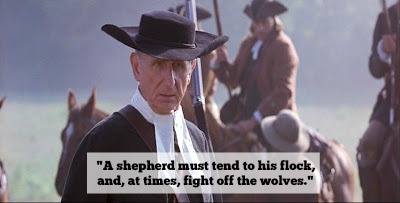
Photo and quote courtesy ofย The Patriot.ย ยฉ2000, Columbia Pictures, Inc.

I love pastors. I really do. As a minister of music’s wife, church member, and through involvement in other ministries, I’ve known a lot of them. They have a tough job that most of us wouldn’t take on in a million years. I pray for and encourage my own pastor and my pastor buddies regularly, and try to remind y’all to do the same from time to time. All this to say, I’m not a preacher-basher. Far from it.

But sometimes there’s a bit of a veering in a dangerous direction, like a vehicle heading towards the center line, among (some, not all) pastors who are momentarily distracted and might need a friendly “Hey, did you see that truck we’re about to crash into?” from their terrified, front seat passenger.

Color me terrified.

There are pastors out there who treat false teachers with kid gloves. They refuse to label anyone as a false teacher, or only vaguely allude to certain false teachers without naming names. I’d like to encourage those pastors to pull the steering wheel to the right and call a spade a spade. Yes, they need to use the label of false teacher soberly, sadly, and only after making sure, with hard evidence, that it is warranted, but enough with grown men of God tiptoeing around under the guise of “we don’t know what’s in that person’s heart” or “I’m afraid to be painted with the ‘mean old discernment blogger’ brush.”

Enough with grown men of God tiptoeing around under the guise of “we don’t know what’s in that person’s heart” or “I’m afraid to be painted with the ‘mean old discernment blogger’ brush.”

The Bible doesn’t say anywhere that a pastor shouldn’t call someone a false teacher and warn the flock about him just because the pastor doesn’t know for sure what’s in the person’s heart or because he’s afraid of what others might think. We are all to look at their words and their behavior and judge (that’s right, I said “judge“) whether or not they are teaching what accords with sound doctrine. And if they’re not, they need to be denounced. Not in a wild-eyed, foaming at the mouth, wingnut way, but certainly loudly and decisively as a mature man of God.

We never see Paul or Jesus or Peter or Jude or any other godly man in the Bible being over-cautious about firmly calling out those who had proved themselves to be false teachers.

We never see Paul or Jesus or Peter or Jude or any other godly man in the Bible being over-cautious about firmly calling out those who had proved themselves to be false teachers.

“Beware of the leaven of the Pharisees and Sadducees.” – Jesus, Matthew 16:11

“Woe to you, Scribes and Pharisees, hypocrites…blind guides…fools…serpents…brood of vipers.” – Jesus, Matthew 23

“For such men are false apostles, deceitful workmen, disguising themselves as apostles of Christ. And no wonder, for even Satan disguises himself as an angel of light. So it is no surprise if his servants, also, disguise themselves as servants of righteousness. Their end will correspond to their deeds.” – Paul, 2 Corinthians 11:13-15

“For certain people have crept in unnoticed who long ago were designated for this condemnation, ungodly people, who pervert the grace of our God into sensuality and deny our only Master and Lord, Jesus Christ.” – Jude, Jude 4

“They count it pleasure to revel in the daytime. They are blots and blemishes, reveling in their deceptions, while they feast with you. They have eyes full of adultery, insatiable for sin. They entice unsteady souls. They have hearts trained in greed. Accursed children! Forsaking the right way, they have gone astray.” – Peter, 2 Peter 2:13b-15a

“But even if we or an angel from heaven should preach to you a gospel contrary to the one we preached to you, let him be accursed. As we have said before, so now I say again: If anyone is preaching to you a gospel contrary to the one you received, let him be accursed.”
Paul, Galatians 1:8-9

Would pastors today be wise to use this same kind of verbiage? Maybe. Maybe not. These godly men spoke and wrote in a way that was appropriate for their time, culture, and context. Our time, culture, and context are different and may call for a different approach. But the point is, none of them were afraid to speak the truth boldly about false teachers in order to protect the sheep God had entrusted to them. And we sheep today desperately need courageous shepherds who will do the same.

Pastors, if you speak out against false teachers, there are people who will get mad at you. It’s unavoidable. But there are others who know the truth and will be cheering you on and supporting you. And there are still others you will turn back from false doctrine who will learn the truth of God’s word and love you for warning them. And their souls are worth any risk or trial.

Be encouraged, dear pastors. Be strong in the Lord. Be faithful to Him. You can do this!

Be encouraged, dear pastors. Be strong in the Lord. Be faithful to Him. You can do this!

Remember the words of your brother and fellow laborer Paul, who, after condemning false teachers in Galatians 1:6-9, may have anticipated the same backlash you might receive:

For am I now seeking the approval of man, or of God? Or am I trying to please man? If I were still trying to please man, I would not be a servant of Christ.
Galatians 1:10


Mailbag

The Mailbag: Potpourri (Prophetic “word” at church… Study apps… Pastoral counsel… Can treason be forgiven?… Fiction vs. lies)

Welcome to another โ€œpotpourriโ€ edition of The Mailbag, where I give short(er) answers to several questions rather than a long answer to one question.

I like to take the opportunity in these potpourri editions to let new readers know about my comments/e-mail/messages policy. Iโ€™m not able to respond individually to most e-mails and messages, so here are some helpful hints for getting your questions answered more quickly. Remember, the search bar (at the very bottom of each page) can be a helpful tool!

Or maybe I answered your question already? Check out my article The Mailbag: Top 10 FAQs to see if your question has been answered and to get some helpful resources.


I am writing to you today because the church we attend has started to allow a woman to speak a “word” over the congregation*.

After the third time, I approached the woman and asked if she thought she was a prophet. She did not deny it, but said that the Lord speaks to her directly through different ways. We went to our pastor who did not see a problem with what she was saying, but only that it was causing chaos during the service.

Last Sunday, our pastor allowed her to speak through the microphone stating that we need to let the Holy Spirit move in our midst.

My husband and I are very concerned and alarmed about this practice and we are unsure if we should leave the church over this and if we should approach our pastor with our concerns again. We have been attending this church for years and have never seen this happen until recently.

Honey, I know this is difficult and there are probably a lot of people you’re close to there, but this church has wandered off the reservation into New Apostolic Reformation land, and, yes, it’s time for you – and every other doctrinally sound Christian in it – to leave and find a real church. (Just to be clear, I would say the same thing if it were a man speaking these “words” over the congregation.)

Go to the Searching for a new church? tab in the blue menu bar at the top of this page, and begin studying the materials under “What to look for in a church” as you’re utilizing the church search engines.

You’ll also want to examine the materials under “Leaving Your Current Church,” including The Mailbag: How to Leave a Church. Be sure you don’t leave without going to your pastor and explaining to him that you’re leaving because he’s allowing false doctrine into the church. (You can consider this “approaching our pastor with our concerns again”. If you want to approach him one additional time – like you did before – prior to this explanation of why you’re leaving, you can, but it’s unlikely to do any good.)

*If you’re unfamiliar with what this reader means by “speaking a ‘word'” over the congregation, it looks something like this (start around the 14:27 mark), only, typically, it’s not quite this nutty and with a little thicker biblical veneer. The “church” in the link is not the reader’s church, it’s just the first example that popped into my head today.


As I read my Bible sometimes I would like to know what a certain word means in the original text. Can you recommend a resource that would be helpful for that? Thank you so much for all you do to keep us grounded in His Truth!

You’re welcome! It is my pleasure to serve you in Christ, and it is always encouraging to hear from women who are good students of Scripture.

I use both Blue Letter Bible’s and Bible Hub’s interlinear features, and find both to be helpful. You can read more about them in my article My Favorite Bible & Study Apps (they both have a web version as well as an app).


What does one do if they have a serious spiritual question and well known and trusted Biblical pastors give the exact opposite answers from one another? I cannot find the specific answer in Scripture and I desperately need to know what to do. I have read where one advises one course of action and the other advises the opposite. I am praying and continuing to search. But I need help. Any advice you have would be very welcome.

It’s hard to know exactly how to answer this question since I don’t know the details (and I’m not asking for them – this seems private), but, generally speaking, my advice is always to go to your own pastor first for counsel, assuming you’re in a doctrinally sound church. If it’s the type of issue best addressed by another woman rather than your pastor, reach out to a godly, doctrinally sound, “Titus 2” sort of woman in your church so that she can disciple you through this.

If, for some reason, you absolutely can’t go to your pastor or a godly older woman in your church, as a last resort, you can locate a biblical counselor (not the same thing as a “Christian counselor/therapist/etc.” – see the Biblical Counseling Resources tab in the blue menu bar at the top of this page) and set up an appointment.

If the reason you can’t go to your pastor or a godly older woman in your church is that you’re not currently in church, you need to remedy that immediately, and this situation is one of the main reasons why. (Go to the Searching for a new church? tab in the blue menu bar at the top of this page and start using the church search engines.)

When we go through crises and trials in life, God’s plan for us is to turn to our pastors and our church family, not to seek the generalized, one size fits all advice of celebrity pastors – even if they’re doctrinally sound.

Your own pastor and your brothers and sisters at your local church know you. They’re there for you, boots on the ground, to disciple you and help you walk through this situation over the long haul. A stranger on the internet or between the covers of a book can’t do that for you.

I urge you, turn to your church family.


Can God save someone convicted of treason by the government? Can they be forgiven and go to heaven?

Of course. God can and will save anyone who turns to Him in repentance over her sin and places her faith in the death burial and resurrection of Christ as payment and forgiveness for her sin. God doesn’t have a list of certain sins that He refuses to forgive*. I would encourage you to prayerfully study and consider the Scriptures and materials at the What must I do to be saved? tab in the blue menu bar at the top of this page.

*Readers, I know many of your minds immediately went here. Hope this resource is helpful.


Why should a woman or male read Fiction? Shouldn’t we read only and study only truth not fantasy? Jesus said “I am the truth”, Satan in the garden used fiction to challenge God’s authority and present a false truth to Eve, who was then deceived by her own desires gave Adam the forbidden fruit.

I think the struggle you’re having here is that you’re conflating fiction books, novels, and stories with lies and deception. They’re two different things, and they need to be kept in separate categories.

There’s nothing wrong with Goldilocks and the Three Bears or the John Grisham novel that’s sitting on my night stand. These are fiction – a creation of the author’s imagination. The authors aren’t trying to convince anyone that these stories are true. In fact, many novels carry a disclaimer stating that it is a work of fiction and that any resemblance the story or characters bear to real people or situations is purely coincidental. And no person of normal intelligence and wherewithal picks up a story or novel thinking it’s truth.

What Satan used in the Garden with Eve was not fiction. It was lies and deception. She thought he was telling her the truth. He was trying to make her believe he was telling the truth. See the difference? (Also, there’s no such thing as a “false truth”. A statement is either true or false. The words you’re looking for are “lies” and “deception”.)

And the Jesus who said, “I am the truth” in John 14:6? He told fictional stories throughout His ministry in order to teach and illustrate truth. We call them parables. And we know Jesus never lied or deceived anyone. That’s the best way we can tell the difference between lies and fiction. Lying is a sin. Fiction is not.

Now go and feel free to read that novel on your night stand.


If you have a question about: a Bible passage, an aspect of theology, a current issue in Christianity, or how to biblically handle a family, life, or church situation, comment below (Iโ€™ll hold all questions in queue {unpublished} for a future edition of The Mailbag) or send me an e-mail or private message. If your question is chosen for publication, your anonymity will be protected.
Discernment, False Doctrine, False Teachers

Throwback Thursday ~ Clinging to the Golden Calf: 7 Godly Responses When Someone Says You’re Following a False Teacher

Originally published January 16, 2015

Ever heard of Jeroboam? If you’ve read your Old Testament, the name probably rings a bell, but, let’s face it, it’s hard to keep all those Jeroboams, Rehoboams, Ahinoams, and Abinoams straight, right? Well, let’s read a little bit about Jeroboam:

And Jeroboam said in his heart, โ€œNow the kingdom will turn back to the house of David. 27 If this people go up to offer sacrifices in the temple of the Lord at Jerusalem, then the heart of this people will turn again to their lord, to Rehoboam king of Judah, and they will kill me and return to Rehoboam king of Judah.โ€ 28 So the king took counsel and made two calves of gold. And he said to the people, โ€œYou have gone up to Jerusalem long enough. Behold your gods, O Israel, who brought you up out of the land of Egypt.โ€ 29 And he set one in Bethel, and the other he put in Dan. 30 Then this thing became a sin, for the people went as far as Dan to be before one. 31 He also made temples on high places and appointed priests from among all the people, who were not of the Levites. 32 And Jeroboam appointed a feast on the fifteenth day of the eighth month like the feast that was in Judah, and he offered sacrifices on the altar.

1 Kings 12:26-32a

The Kingdom of Israel had just split into the southern kingdom of Judah and the Northern kingdom of Israel. Jerusalem, where the temple is located, is in Judah. Jeroboam (king of Israel) figures that if his people continue traveling to Jerusalem for feasts and sacrifices, they will eventually turn their loyalty back to the the kingly lineage of David (aka: Judah, 26-27) and heโ€™ll lose both his kingdom and his head. So, in order to keep the people inside the borders of Israel and control them, he makes a couple of golden calves (which somebody should have remembered turned out badly the last time that was tried {Exodus 32}) for them to worship at either of two convenient locations, Bethel, in the southern part of Israel, and Dan in the northern part. Jeroboam, leading the way, had the Israelites simply transfer their feasts and sacrifices that they would have offered to God to these golden calves. It’s a fascinating story that you can read more about here if you’re interested.

So why am I going on and on about Jeroboam?

Because Jeroboam’s story is so similar to something that is happening in the visible church today. He was a well known personality who led God’s people to worship an idol which he told them was God. And God’s people went along with it, transferring their worship from the one true God to the golden calf called “God.”

There are a ton of Jeroboams out there today. Some of you reading this might be following one of them and worshiping the idol their false theology tells you is the God of the Bible. And in the same way that a man of God came along and rebuked Jeroboam for his blasphemy, a man or woman of God might come along and call out the Christian celebrity you’re following, or take you aside -out of love and concern- and let you know that person is a false teacher.

I hope you won’t respond like Jeroboam did. He was so angry, he tried to kill the prophet. But sadly, I have seen this type of response (at least verbally) many times, especially from women, when faced with the fact that their favorite Bible teacher or author is preaching a false gospel.

So, what’s a godly way to respond when someone tells you you’re following a false teacher?

1. Consider the source and listen.

If you know the person who’s telling you this, think about her godliness and character. Is she generally a godly person? Does she know her Bible well? Does she show love and concern for others? Is she trustworthy? A godly person of good character has no reason to toss out wild and unfounded accusations, especially if you’re her friend and it might offend you. In fact, she’s probably scared to tell you.

But even if it’s a stranger on a blog saying Celebrity Bible Woman is a false teacher, hear her out and make sure you understand what the issues are. Remember, what she’s saying might be true, but you’ll never know if you immediately write her off.

2. Listen for content, not tone.

There are some discerning people out there who will bring you flowers and candy and hold your hand as they gently tell you the person you’re following is a false teacher, and then there are discerning people whose tone or manner might rub you the wrong way as they’re delivering the news. Don’t let the way something is said turn you off to the content of what is being said. Don’t sacrifice truth on the altar of tone.

3. Keep your emotions in check.

It’s tempting to let our feelings take charge when we’re receiving bad news, but you aren’t going to be able to evaluate the content of what the person is saying if you’re consumed by rage or hurt. It might help to remind yourself of your relationship to the teacher/author in question. Do you even know her personally? It’s not like someone is leveling accusations against your child, spouse, or best friend. Put your emotions aside and let reason and clear thinking rule the day.

4. Don’t blindly believe the messenger.

You don’t have to -nor should you- believe everything you hear just because it quotes a Bible verse or wraps itself in the label “Christian”. That applies to both the person who tells you you’re following a false teacher and the alleged false teacher herself. Listen carefully to what the person has to say, make sure you understand it, then get out your Bible and get to work. Are the issues the person has raised biblical? What does God’s word have to say about these issues? Is the person you’re following violating Scripture? If so, choose to stop following the false teacher because the Bible -not a person- tells you to do so. People are fallible. God’s word is not.

5. Don’t shoot the messenger.

It’s been my experience that women who are loyal devotees of false teachers can be some of the most vicious people in the world if you dare to question their idol. I have had women verbally rip me to shreds, threaten me, call me names, accuse me of “judging,” and tell me I’m what’s wrong with Christianity for politely pointing out from Scripture that someone is teaching false doctrine. Ladies, we give Christian women as a whole a bad name when we act like that. More importantly, that kind of behavior is a reproach to Christ, and never appropriate for someone who calls herself a Christian.

6. Defend from Scripture, not opinion,
emotion, or personal preferences.

It is downright embarrassing when a person is shown that Celebrity Bible Woman is violating a certain Scripture, and her only argument is, “But I just LOVE her! She’s such a great teacher and helps me understand the Bible so well!” If it were really true that Celebrity Bible Woman is such a great Bible teacher, her followers ought to be able to  prove -from Scripture- that what Celebrity Bible Woman is doing or teaching isn’t unbiblical. The bottom line is that Scripture is our ultimate authority, not our opinions, not our personal preferences, not how much we love a certain teacher. For a Christian, if something comes up against the Bible, the Bible wins. Period. So, if you’re going to defend Celebrity Bible Woman, defend her from Scripture. And if you can’t, why are you still following her?

7. Love Christ more than you
love your favorite teacher.

If someone shows you from Scripture that your favorite teacher, author, or pastor is teaching false doctrine and you ignore that warning because you are so enamored with that teacher, then what you’re saying is that you love that teacher more than you love Christ and His word. Jesus said:

Whoever loves father or mother more than me is not worthy of me, and whoever loves son or daughter more than me is not worthy of me.

Matthew 10:37

Your parents. Your children. They’re the people you love most in the world. If Jesus says you can’t love them more than you love Him, do you think it’s going to be OK with Him if you love your favorite Bible teacher more than you love Him? It’s not. Love Christ above all else, and cut that false teacher out of your life.

It can be difficult to hear that you’re following a false teacher. You like her. She makes you feel good. You think you’re doing great in your walk with the Lord. It’s hard to give all that up. But we must be careful that we never put our feelings for a person above Christ and His word. If someone tells you you’re following a false teacher, don’t brush her off or attack her. She’s most likely coming to you out of love and concern for you and for the body of Christ. Check out what she’s saying against the Bible. And if she turns out to be right, stop following that false teacher and thank her. Because a person who rescues you from an enemy of Christ is truly your friend.