Mailbag

The Mailbag: Potpourri (Orange Curriculum, Jesus went to hell?, 1 Tim. 2:12 only for Ephesus?…)

Welcome to another “potpourri” edition of The Mailbag, where I give short(er) answers to several questions rather than a long answer to one question. I also like to take the opportunity in these potpourrri editions to let new readers know about my comments/e-mail/messages policy. I’m not able to respond individually to most e-mails and messages, so here are some helpful hints for getting your questions answered more quickly. Remember, the search bar can be a helpful tool!


In the Apostles Creed, there is a section that states Christ descended into hell and was resurrected. Isn’t that what Joyce Meyer teaches? What about the part about the “holy catholic church: the communion of the saints”? Is that talking about Catholicism and the mass?

These are very common questions (I threw in the second part about Catholicism and the mass, since that’s also commonly asked.), and it’s good to ask, because if you’re confused, other people probably are, too.

The Apostles’ Creed says:

I believe in God, the Father Almighty,
the Creator of heaven and earth,
and in Jesus Christ, His only Son, our Lord:
Who was conceived of the Holy Spirit,
born of the Virgin Mary,
suffered under Pontius Pilate,
was crucified, died, and was buried.
He descended into hell.
The third day He arose again from the dead.
He ascended into heaven
and sits at the right hand of God the Father Almighty,
whence He shall come to judge the living and the dead.
I believe in the Holy Spirit, the holy catholic church,
the communion of saints,
the forgiveness of sins,
the resurrection of the body,
and life everlasting.
Amen.

It’s a beautiful, basic reiteration of the gospel which many churches and ministries use as part of their official statement of faith. Some churches even recite the Apostles’ Creed during their worship services.

The earliest written record of the creed is from AD 390, in Greek, so you can imagine that some of the terminology used had different connotations back then than those terms have in 21st century America.

Providentially, my friend, Pastor Gabe Hughes, was also recently asked this same question and addressed it both on his podcast and in a WWUTT video, so I’m going to let him do the “heavy lifting” of Scripture and history in the resources below and just give you the short and sweet version:

📜 You’re quite right in saying that Joyce Meyer teaches that Jesus went to hell between His death on the cross and His resurrection. The Bible doesn’t say this anywhere, and this is a heretical teaching. Just one of the multiple reasons no Christian should follow Joyce Meyer.

📜 The word “hell” in the Apostles’ creed is based on a mistranslation or confusing translation. The literal meaning of the phrase is that he descended into the grave or was buried.

📜 You might have noticed that the word “catholic” in the creed starts with a lowercase “c” rather than a capital “C”. The noun “catholic” with a lowercase “c” simply means the universal church – all genuinely regenerated Believers across the globe, past, present, and future. Roman Catholicism is (or at least by rules of grammar is supposed to be) denoted by a capital “C”.

📜 “Communion” in the creed does not refer to the Roman Catholic mass or even to the Protestant Lord’s Supper. A clearer word to us today would be “fellowship” or “unity”. The sense is that Believers commune with on another. 

Some churches have modernized and clarified the creed by replacing these phrases with “He descended into the grave” or “He descended to the dead” and “the holy Christian church.”

Additional Resources:

WWUTT Podcast #645– Gabe expands on the above video at the 30:15 mark

The Apostles’ Creed: Its History and Origins at Faithlife Blog


I was wondering if you could post your articles in a larger font. I have an old computer that messes up when I try to make the font bigger. My old eyes are a real struggle.

At first, I thought I was the only one having this problem, but I’ve gotten this question a couple of times, so I know it’s not just my own aging eyes :0)

I’m going to play around with the font a little bit and see if I can find one that’s bigger. Just a few things to understand as I’m working on it: WordPress gives me a limited number of fonts to choose from, and the sizes of those fonts are pre-set. In other words, I can’t set it to 12 point or 18 point, I can only choose from tiny, small, normal, large, and huge. (Right now it’s set on “normal” if you can believe that. “Tiny” is virtually invisible.)

Additionally, when I change the font size, it doesn’t just change the size of the font in the body of my articles, it also changes the size of things like the tags (to the immediate upper left of every article), the sidebar (far left of the page), and the tab titles (top of the page), which, as you can see, are already much larger than the font in the article body. When the font of those texts gets larger, it throws the layout of the whole page out of whack. You might not notice it on a desktop computer with a large monitor, but it can be problematic for people who are viewing the blog on a phone or tablet.

Like I said, I’ll play around with it and see what I can do, but if I’m not able to enlarge the font, there are two workarounds that may help:

1. The reader said she’s unable to change her screen magnification, but it works for me and might work for others. Here’s what it looks like on my computer. Maybe yours is similar:
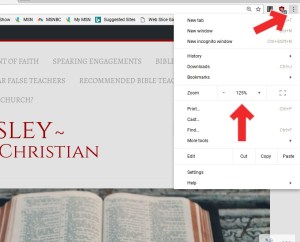
2. If worse comes to worst, you can highlight and copy the body of the article, paste it into your word processing program, and enlarge the font accordingly.


I have been leading a women’s small group at our church for a couple of years now. My husband and I have decided to leave the church because, even after confronting leadership about the direction the church is being led doctrinally, they continue to espouse unsound doctrine. What do you think is a wise way to tell the ladies I will no longer be teaching? Do I tell them we are leaving? If so, do I tell them why? What do you think you would do?

It’s hard to say exactly what I would do because every situation and every church is different. But I can tell you that the first thing I would do is talk it through with my husband and ask his advice. There have been many times when he has had very good ideas about how to address (or not address) certain issues, and he will sometimes bring out an aspect of the situation that I hadn’t thought of before. I would encourage you to do that first, and also to make sure you’re submitting to your husband in whatever ways might be applicable in this situation.

My inclination is to advise you to take the “the less said, the better” route with regard to the whole class. (There may be other venues, such as you and your husband meeting with the elder board, in which you’ll need to clearly spell out all the problems, but let’s just focus on the class right now.)

I would probably wait until the end of the very last class and say something generic, like, “I’ve really enjoyed leading this class, but I wanted to let you know I won’t be teaching any more. I encourage you to continue studying God’s Word and growing in Christ. Class dismissed.” Then, go home fairly quickly.

The next level is going to be women coming up to you individually and asking why you won’t be teaching any more. Unless she’s a very close friend, I’d still keep it pretty generic: “We love our brothers and sisters at this church, but we’re finding we disagree with some of the doctrine that’s being taught here, and we’ll be going to a new church.”

For very close friends, you might wish to disclose more about the doctrinal problems, but do so wisely, making sure your focus is on doctrine, not on personal conflicts with the pastor or others. You don’t want people jumping to the wrong conclusion about why you’re leaving.

I really would not talk to people about leaving other than discreetly informing those who need to know. If you give details or talk about it a lot there could be an ugly blow up, and most people will make wrong assumptions about why you’re leaving.


Do you have any information on the Orange Curriculum for children’s Sunday School?

The main thing I know about the Orange Curriculum (or Orange Strategy) is that it is put out by Andy Stanley’s “church”. That’s enough for me to warn people to stay far, far away from it. Andy Stanley is a Scripture-twisting false teacher. You don’t want your children being taught by him or his disciples.

My friend Amy Spreeman over at Berean Research was asked the same question by a reader. I refer you to her article, Parents: If your church is “Turning Orange…” for more details.


How would you respond to someone’s who says that [1 Timothy 2:12] was meant only for that time and culture?

It’s one of the most common arguments made by people who are looking for an acceptable way to rebel against God’s clear command, “I do not permit a woman to teach or to exercise authority over a man; rather, she is to remain quiet.” I have never had a woman who was humbly seeking to deny herself and obey Scripture make this argument, only those who stubbornly want to have their own way despite what the Bible says, yet simultaneously want to cloak themselves in the appearance of obeying Scripture.

God gave us His exact reasons for this command in verses 13 and 14 (almost as if He somehow knew this argument was coming!), and those reasons weren’t restricted to the women in the first century Ephesian church. The first reason was the Creative order – Adam was formed first, then Eve. The second reason is that Eve was deceived. Both of those reasons are universal (applying to all women and churches everywhere regardless of era or culture). It makes no sense that these two reasons related to Eve would apply only to first century Ephesus any more than it would make sense for them to apply only to tenth century Damascus or seventeenth century Paris.

Next, examine the context of 1 Timothy 2. There are all sorts of instructions to the church in that chapter. Was the instruction to pray for governmental leaders (1-2) limited to the first century Ephesian church? Were only the men of the first century Ephesian church to pray without quarreling (8)? Was modesty (9-10) only required of women in the first century Ephesian church? Then why pick out this one instruction in verse 12 and claim it was limited to that time and culture?

Finally, look at the overall general pattern of male headship and leadership in Scripture. First human created? A man. The Patriarchs? As the word implies – all men. Priests, Levites, Scribes? Men. Heads of the twelve tribes of Israel? Men. Major and minor prophets? Men. All kings of Israel and Judah? Men. Noahic, Abrahamic, Mosaic, and Davidic Covenants? All established between God and men. Authors of Scripture? Men. The forerunner of Christ? John the Baptist – a man. Messiah? A man. All of the apostles? Men. All of the pastors, elders, and deacons of churches in the New Testament? Men. Founder and head of the church? Christ – a man. Leader and head of the family? Men. Now which fits better with this pattern, women preaching to, teaching, and exercising authority over men in the church, or women not preaching to, teaching, and exercising authority over men in the church?

But the truth is, you can have all the biblical evidence in the world, and it’s not going to convince someone who’s in rebellion against Scripture because self is reigning on the throne of her heart. She’s not concerned with actually obeying God’s Word, she just wants to be able to claim that Scripture supports what she wants to do, either to look good to others or to attempt to drown out the Holy Spirit’s conviction of her sin.

Additional Resources:

Jill in the Pulpit 

Ten Things You Should Know About 1 Timothy 2:11-15 and the Relationship Between Men and Women in the Local Church at The Council on Biblical Manhood and Womanhood (CBMW) This is a refutation of the most common egalitarian arguments against the plain meaning of 1 Timothy 2:11-15.


If you have a question about: a Bible passage, an aspect of theology, a current issue in Christianity, or how to biblically handle a family, life, or church situation, comment below (I’ll hold all questions in queue {unpublished} for a future edition of The Mailbag) or send me an e-mail or private message. If your question is chosen for publication, your anonymity will be protected.

Speaking Engagements

Report Back: Memphis

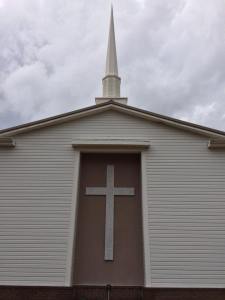
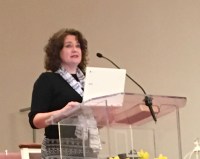
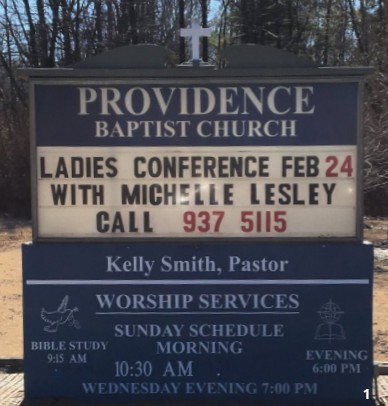
A couple of weekends ago I had the blessing of speaking at Providence Baptist Church’s spring women’s conference. It was such an encouraging experience I wanted to share a little about it with you.

Pastor Kelly & Gayle Smith, Scott & Michelle Lesley


What a joy it was to finally meet my Twitter friend Gayle, who heads up the women’s ministry at Providence, and her husband, Pastor Kelly. PBC generously and graciously hosted not only me, but also my husband and two of our sons, for the weekend. After we arrived in Memphis Friday afternoon and got settled in to our lovely hotel rooms – hospitably stocked by Gayle with every snack two teenage boys (and their parents!) could dream of, as well as some charming locally made gifts – Gayle and Kelly took us out for – what else? – barbecue!

Corky’s BBQ not only had this amazing sweet and spicy barbecue sauce, they had a phenomenal Memphis specialty, the Sweet Tea Fried Chicken Sandwich. They marinate the chicken filet in sweet tea overnight before frying it. There are not words, y’all. You’ll just have to find a Corky’s and order this delicacy for yourself.

On Saturday, the gents set off to see the sights of Memphis, including the iconic Memphis Pyramid, which now houses a spacious Bass Pro Shop (yeah, you might have to be Southern to grasp the attraction)…

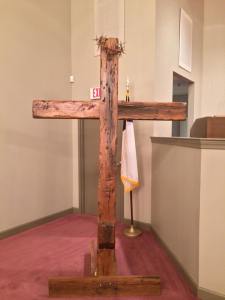
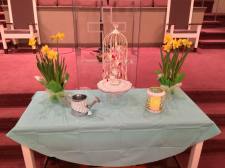
…while I was treated to the sights of a beautifully bedecked PBC, all set to welcome the ladies coming to the conference.


(Trust me, if you want to be sure
the women of your church see something,
put a flier in the ladies room!) 

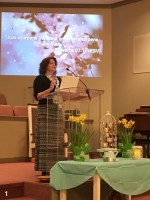
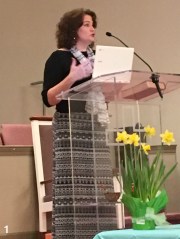
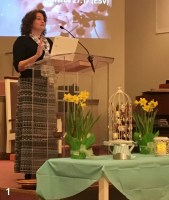
One of the primary issues Christian women need instruction on today is the centrality of the Bible in our lives and our churches, so that was the core message of the two sessions I taught. In the morning session, The Necessity of the Bible, we focused on the fact that Scripture is the very words from the lips of God Himself, our desperate need for the Bible, and practical ways to import more of God’s Word into our daily lives.

After a delicious luncheon and warm fellowship, we gathered again for Recapturing Sola Scriptura: The Sufficiency and Authority of Scripture. In this session, we zeroed in on the folly of extrabiblical revelation, the supremacy of God’s Word, and the need for our lives and our churches to be ruled by rightly handled Scripture.

You can read some of what I spoke about in my Basic Training series articles:

The Bible is Necessary
The Bible is Sufficient
The Bible is Our Authority

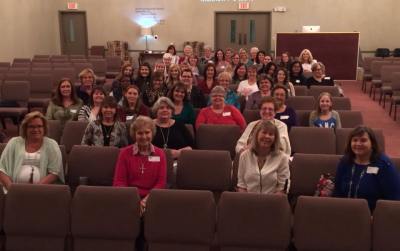
I couldn’t have asked for a kinder reception
or a sweeter group of ladies!

There was just enough time for a brief rest, and then it was off to another Memphis favorite, Gus’ World Famous Fried Chicken, for supper. These folks know how to do chicken spicy, just like I like it!

Sunday morning was a warm time of worship and fellowship with the saints at PBC under the excellent preaching of Pastor Kelly. What a kind and welcoming church body this is! If you’re looking for a friendly, doctrinally sound church in the Memphis area, I couldn’t recommend one more highly than Providence Baptist of Bartlett.

If your church is ever in need of a speaker for a women’s event, I’d love to come share with your ladies as well. Click here for more information.


Photo Credits:

1- Photos courtesy of Gayle Smith, Providence Baptist Church
2- Photo courtesy of Corky’s Memphis (Facebook)
(All other photos by Michelle Lesley)

Women of Genesis Bible Study

The Women of Genesis: Lesson 13- Sarah

Previous Lessons: 1, 2, 3, 4, 5, 6, 7, 89, 10, 11, 12

📖📖📖📖📖

Read Genesis 17:1-18:15

📖📖📖📖📖


Questions to Consider

1. Briefly review lessons 11 and 12 (links above).

2. Read Genesis 16:16 and 17:1. How many years passed between the birth of Ishmael and the appearance of the Lord in 17:1?

3. Compare 17:1-8 with Genesis 15:1-6. Write out the stipulations of the Abrahamic Covenant. Think further ahead into Old Testament history (Exodus-ish). What is God laying the foundation for here with Abraham? How does Abraham serving as the “cornerstone” as it were, of the nation of Israel point ahead to Christ as the cornerstone of Christianity?

4. What was the sign that a person was under the Abrahamic Covenant? (17:9-14) What were the “policies and procedures” regarding circumcision in this passage? Are Christian men today required by Scripture to be circumcised? What is the New Testament sign that a person is in Christ and under the new covenant of grace?

5. Why do you think both the covenant and the sign of the covenant were male-centric? Why didn’t God make the covenant with Abraham and Sarah? Why circumcision, which was specifically male-only, instead of something like ear-piercing which could have also been performed on females?

6. Why did God change Abram’s name to Abraham (17:5), and Sarai’s name to Sarah (17:15)?  What did their former and new names mean? Why didn’t God change Hagar’s name?

7. Compare and contrast Abraham’s reaction to the news of Sarah’s impending pregnancy (17:15-18) to Sarah’s reaction to this news (18:10-12). How were their reactions similar? How were they different? How did God respond to Abraham’s reaction? (17:19-21) To Sarah’s? (18:13-15) From God’s individualized responses to each of them, what can you infer about the differences between Abraham’s and Sarah’s thoughts and concerns about the upcoming pregnancy? Why do you think God picked the name Isaac for their son? (see footnote on 17:9, Genesis 21:5-7)

8. Examine more closely Sarah’s response to the news of her impending pregnancy in 18:11-15. Recall or review (lesson 11) Sarah’s failure to trust God. How does her initial reaction here again demonstrate that she did not believe God’s word, or trust God’s character to keep His promise?

9. Verse 18:12 begins with the word “So”, indicating that the reason Sarah reacted the way she did was because of the information in verse 11. What circumstances (11) were Sarah’s reaction (12) based on? Did she have more faith in the her circumstances and her own personal experience, or in God and His Word? In that moment, was her faith rightly or wrongly placed? Examine Hebrews 11:11. Even though Sarah initially failed to trust God and wrongly placed greater faith in her circumstances and experiences, did her heart, her faith, and her trust remain that way?

10. Carefully examine 18:1-10. What can we learn about the customs of Middle Eastern hospitality at that time? What were some of Sarah’s duties and appropriate behaviors in welcoming guests according to her culture?

11. Review the verses in this passage that specifically talk about Sarah. What else can we learn about her character or her faith that set a good, or bad, example for us as Christian women today?


Homework

“Is anything too hard for the Lord?” Even though Sarah’s initial reaction to God and His Word was one of unbelief and distrust, God brought her along and grew her into someone who was commended for her faith in Hebrews 11 (often called the “roll call of the faithful” or “the Hall of Faith”).  Think back over your walk with the Lord. Can you think of a Scripture you once rejected in disbelief or rebellion that you now embrace and obey? A life situation in which God grew your faith in Him? What circumstances, Scriptures, or people did God use to bring you along from unbelief to belief, disobedience to obedience, distrust to trust? Spend some time in prayer thanking God for growing you through that situation.


Suggested Memory Verse

Is anything too hard for the Lord? At the appointed time I will return to you, about this time next year, and Sarah shall have a son.
Genesis 18:14

Discernment, False Doctrine

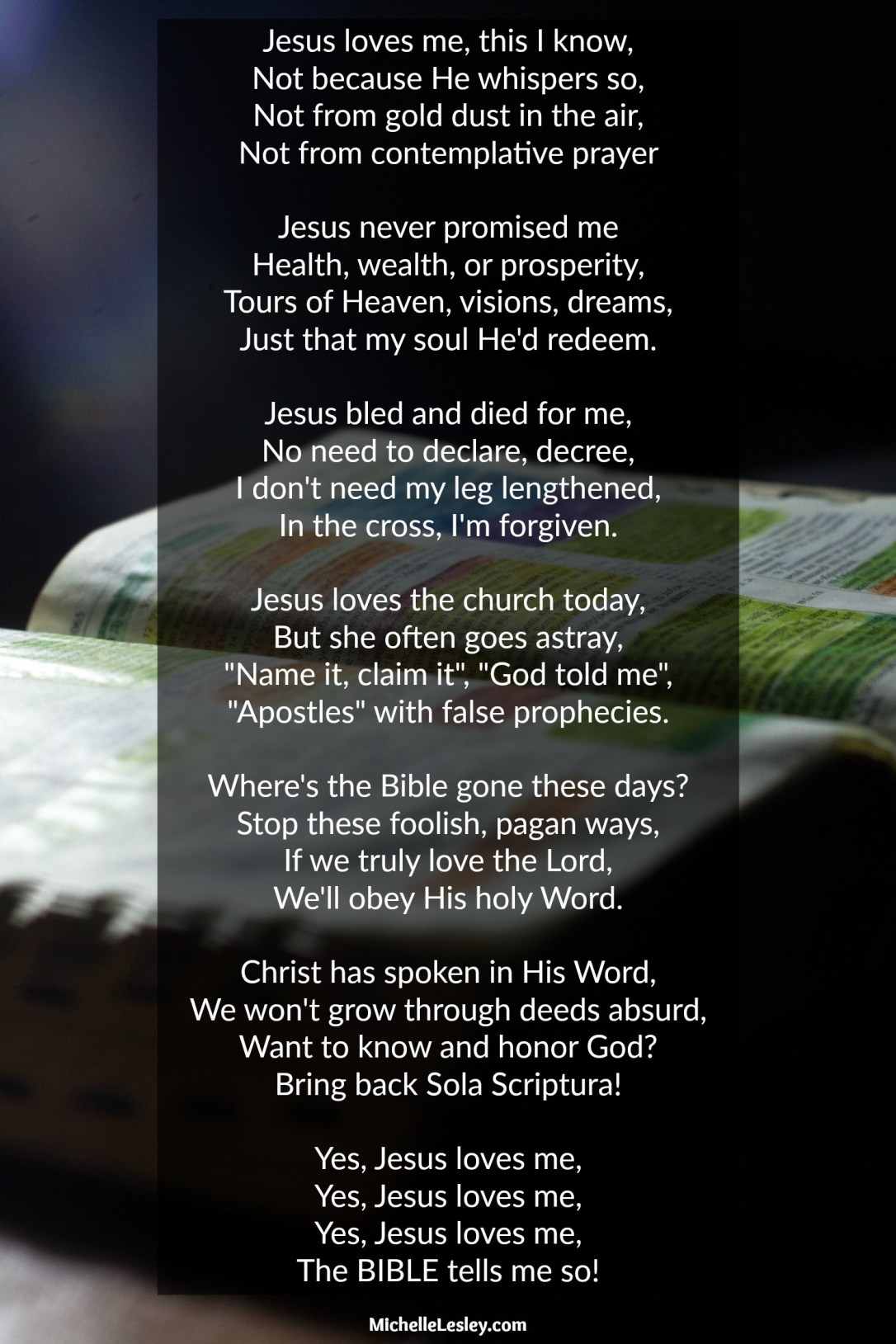
Jesus Loves Me: The “Contending for the Faith” Version

Every now and then I do a little creative writing. I posted this to Facebook on Sunday, and people seemed to like it, so I thought I’d share it here for those who aren’t on social media.

Mailbag

The Mailbag: Expository or Topical Preaching: Which is better?


I would like to read your thoughts on expositional vs. topical preaching. I know we can benefit from both but is one superior to the other and why?

Great question! You’re right, both forms of preaching can be beneficial as long as the pastor properly exegetes (rather than eisegetes) Scripture.

For readers who might not be familiar with the terms, expository preaching is basically when a pastor preaches through books of the Bible from beginning to end carefully explaining what each passage means. He might go through only a few verses each week, or maybe a chapter each week, so the time it takes to work through a book will vary from pastor to pastor.

The term topical preaching can have a couple of different meanings depending on who you’re talking to and what she understands the term to mean. Some people understand “topical preaching” to mean a sermon series, usually in a seeker driven church, that centers around something in pop culture. (For example, popular movies or the Olympics.) Normally, these sermons are very shallow, biblically – sometimes nothing more than a pep talk or self-help tips. This type of preaching is unbiblical, and if it makes up the bulk of the preaching at your church, I’d recommend finding a new church.

There is, however, a biblical form of topical preaching that can be very helpful. If a doctrinally sound pastor sees an issue in the church that needs to be addressed, there is nothing wrong with his taking a break from preaching through a certain book (or when he’s between books) to teach on this issue from the pulpit.

For example, pastors in Parkland, Florida, might wish to take a few weeks right now to preach sermons on “Why does God allow tragedies to happen?”, “How can I biblically comfort the families of the victims?”, “Are the victims of the shooting in Heaven?”, and so on. One great topical sermon concept I’ve seen is for the pastor to give the congregation the opportunity to submit biblical questions and then preach sermons answering those questions. Other times a pastor might address a biblical topic for several weeks, such as peace, the gospel, the Fruit of the Spirit, or parenting. As long as these topics are driven by “let’s look at what the Bible says about X” and the pastor handles Scripture correctly and in context, topical preaching is both biblical and beneficial.

My personal opinion (this is not law and there may be plenty of perfectly doctrinally sound pastors who disagree) is that the majority of a pastor’s preaching should be expository with occasional breaks for (biblical) topical preaching as needed. Why?

✢ Expository preaching usually covers a wider spread of Scripture and a wider variety of topics. Topical preaching is, by definition, very narrowly focused on fewer passages and fewer topics.

✢ Expository preaching models for the congregation the proper way they should study the Bible at home. Most of the time, in your daily Bible study, you should be working your way through books of the Bible systematically. (That said, topical preaching done properly is also helpful for demonstrating to the congregation how to correctly find and apply Scripture to various topics and situations which arise in their lives. We need to know how to do both, but the former is primary.)

✢ Expository preaching helps a pastor better preach the whole counsel of God. He doesn’t have to worry that he’s neglecting to teach on a certain issue and wrack his brain trying to think of what that issue might be. With expository teaching, Scripture takes care of that for him.

✢ I have to think that expository preaching is easier than being forced to come up with a new topic or series every week or few weeks. I’m not a pastor, but the Bible studies I post each Wednesday are nearly always expository. The articles I post each Friday are nearly always topical. Hardly a week goes by that I don’t fret over coming up with a topic for the Friday article and struggle against writer’s block. But I know exactly what each week’s Bible study is going to cover: whatever the next passage of Scripture is in the book we’re studying. Exposition eliminates “forced creativity stress” for me, and I’m thinking maybe it’s similar for pastors.

✢ Expository preaching pushes pastors to tackle hard and unfamiliar passages as they come up in the text, making them more biblically knowledgeable and well-rounded, and allowing them the blessing of depending on God in prayer to open their eyes to understand His Word.

✢ Expository preaching should keep the Old Testament and certain books of the Bible from being neglected as much as they usually are. There are only 66 books in the Bible to preach through. Eventually you’re going to have to get to the minor prophets, Leviticus, Jude, Philemon, Song of Solomon, and the really long books of the Old Testament. Ostensibly. I’m sure there are expository pastors out there who have preached through the more neglected books, but I’ve never sat under a pastor who preached through Nahum or Zephaniah or Ezekiel. Just sayin’.

✢ Expository preaching gives the congregation a better grip on the overall story arc of the Bible and the culture of the period being studied. If your pastor preaches a topical sermon on leadership from Nehemiah one Sunday, you’re not going to understand the post-exilic period of Israel’s history or the culture of that time nearly as well as if he preached through the entire book over several weeks or months. That knowledge and insight is something you can stick in your pocket and hang on to for studying other post-exilic Scripture at home or in Sunday School, or listening to other sermons dealing with that period of Israel’s history.

✢ Expository preaching better lends itself to encouraging the congregation to prepare for Sunday worship during the week. If you know what passage your pastor is going to be preaching on this Sunday, you can study, and even memorize verses, ahead of time to prepare your heart to hear your pastor preach it.

I just have a couple of caveats (still just my personal opinions) about expository preaching:

I don’t think it’s wise for a pastor to be so rigidly stuck on expository preaching that he ignores the leading of the Holy Spirit to preach the occasional biblical topical sermon when it would be a benefit and a blessing to his congregation simply because he sees himself as an expository preacher. Preaching a topical sermon or series from time to time doesn’t mean you have to turn in your expository preaching card.

Also, while verse by verse preaching is an excellent way to teach the text thoroughly, I once heard someone talking about her (very good, doctrinally sound) pastor who had been preaching through a particular book of the Bible for seven years and still had several chapters to go. I don’t think it’s a good idea to take that long on a single book. At that point, several of the aforementioned benefits of expository preaching are gone: the pastor has ceased to preach the whole counsel of God, he’s neglecting bibilical topics not found in that book, he’s neglecting other books of the Bible, he’s not helping his congregation learn the whole storyline of Scripture and the customs of various historic periods and cultures, and he’s not covering as wide a spread of Scripture as he could if he’d limit himself to a year or two, max, to finish one book and move on to the next.

Expository and topical preaching are both helpful in their own ways, but the most important thing is that the pastor is “rightly handling the word of truth.”


Additional Resources

Why topical preaching can never build a healthy church by Mark Dever

The Sheer Weightlessness of So Many Sermons—Why Expository Preaching Matters by Albert Mohler

What is topical preaching? Does it have a place in the church? by John MacArthur

Can Topical Preaching Be Expository? by Timothy Warren


If you have a question about: a Bible passage, an aspect of theology, a current issue in Christianity, or how to biblically handle a family, life, or church situation, comment below (I’ll hold all questions in queue {unpublished} for a future edition of The Mailbag) or send me an e-mail or private message. If your question is chosen for publication, your anonymity will be protected.