Christian women, Complementarianism, Ministry, Sin

Women Preaching: It’s Not a Secondary Doctrinal Issue

When it comes to Christianity, are the specifics of what people believe important?

I think most of us would answer a resounding “yes” to that question. Of course, the various concepts we believe are important. You can’t just believe anything you like and still be a Christian. There are certain things you must believe in order to become a Christian at all, and there are certain things you will come to believe because you are a genuinely regenerated Christian. But what are those things, and how do we know which is which?

You can’t just believe anything you like and still be a Christian.

Maybe you’ve heard the terms “essential doctrines” or “primary, secondary, and tertiary theological issues” or “first, second, and third tier levels of doctrine”? For years, theologians have been attempting to organize beliefs of the Christian faith – all drawn from the Bible, naturally – into nice neat categories in order to make things a little simpler. As someone who thrives on organization and categories, I’m grateful for their efforts. But if you begin to study this categorization of beliefs, you’ll find that we haven’t reached an across the board consensus yet.

Generally speaking, “essential”, “primary”, or “first tier” doctrines are those which you, biblically, have to believe in order to become a Christian and/or be considered a Christian. For example:

โœข Sin is a thing, and I am a sinner.

โœข God exists and is the supreme authority of the universe.

โœข Jesus was God in human flesh.

โœข Jesus rose bodily from the grave.

See how this works? If you don’t believe you’re a sinner, you’re not saved. If you don’t believe in the bodily resurrection of Christ, you’re not saved. Here’s how our friend, Pastor Gabriel Hughes, briefly outlines essential doctrines:

(Gabe later tweaked the acrostic a little and added an “S”, which I think is helpful.)

The vast majority of brand new Christians have only the most basic understanding of most of these tenets at the moment of salvation. But it’s not an issue of fully understanding – or else we’d all have to be theologians in order to get saved – it’s an issue of believing. Someone who is genuinely regenerated may not completely understand how the Trinity works (honestly, no one does), but when she’s introduced to the biblical idea of the Trinity, she believes it, learns more about it, and does not reject it.

There is typically agreement among most reputable theologians regarding what constitutes first tier doctrine. Scripture is clear about these things, and several of these issues were settled long ago by the church fathers in assorted church councils (Nicea, Chalcedon, etc.)

Secondary issues are routinely defined as non-salvific but still extremely biblically important, if not quite as biblically clear-cut as primary issues. Doctrines surrounding baptism (credo versus paedo, affusion versus immersion), for example, are usually cited as a secondary issue. A disagreement on a secondary issue doesn’t mean one person is saved and another isn’t, but it normally prevents close partnership in ministry activities involving these issues. For example, my Presbyterian friends and I can join together in pro-life ministry, but we would most likely not plant a church together.

Tertiary issues are non-salvific, less immediately urgent, biblical issues in which the Bible is even less clear-cut and open to wider (yet still biblical) interpretation. These are issues over which Christians can disagree and still maintain close doctrinal fellowship, even in the same church, if they’re in agreement on first and second tier doctrine. Eschatology – the order and timing of events at Jesus’ second coming – is a doctrine that’s often considered third tier. Someone can hold a different eschatological view than mine, yet, for the most part, it shouldn’t affect our ability to worship together, work together, or participate in the ordinances together in the same church.

Some theologians add a fourth category – issues of adiaphora, conscience, or Christian liberty. Usually these are issues of much less importance that the Bible either doesn’t specifically address, or doesn’t give commands about one way or the other. Individual Christians may use biblical principles to inform their consciences and decide for themselves. These would be things like whether or not to take your child trick-or-treating or deciding whether to dress formally or casually for church.

While theologians are largely in agreement about primary doctrines, there is wider spread disagreement on which doctrines are secondary and tertiary (many consider eschatology to be a second tier doctrine, for example) and whether or not there is a need for a category of adiaphora, since such issues are normally not considered to be “doctrinal” issues. In fact, there’s enough space for disagreement that pastors and theologians often wisely refrain from making concrete lists of secondary and tertiary doctrines.

But when we’re talking about the different levels of doctrine, what you won’t find is questions like these: Is murder a first, second, or third tier doctrine? What about gossip? Rape? Adultery? Lying? Gluttony? Pride?

And it’s not because these issues aren’t important or because the Bible doesn’t address them. It’s because they’re in a different category from the other issues: the category of sin. They aren’t doctrines upon which salvation hinges, they aren’t open to interpretation, and the Bible is clear that we are absolutely not to do these things.

The category of doctrine deals with beliefs. The category of sin deals with behavior.

In 2005, Dr. Albert Mohler wrote an excellent article about the different levels of doctrine entitled A Call for Theological Triage and Christian Maturity. He carefully explains the importance of each level of doctrine and what it covers in a plea to keep each level’s urgency in its proper place of significance during discussion, debate, and decision-making.

It was a helpful article to which I always refer people who have questions about tiers of doctrine, and I agree with Dr. Mohler’s thoughts in the article wholeheartedly1 …except on one point:

“In recent years, the issue of women serving as pastors has emerged as another second-order issue.”

Women serving as pastors, women preaching, women teaching men Scripture, and women exercising authority over men in the gathering of the Body is not a secondary issue. Nor is it a primary or tertiary issue. It does not belong in the category of “doctrine” in the same way baptism and eschatology do. It belongs in the category of sin in the same way murder, gossip, and adultery do. Let’s take a look at the reasons for this.

Women serving as pastors, preaching, teaching men Scripture, and exercising authority over men in the gathering of the Body is *not* a secondary issue. Nor is it a primary or tertiary issue. It is a sin.

I do not permit a woman to teach or to exercise authority over a man; rather, she is to remain quiet. 1 Timothy 2:12

(The preponderance of Scripture supports and affirms this concept, so to keep things simple, we’ll use this verse as an exemplar.)

โœข The prohibition in 1 Timothy 2:12 is a clear command against a certain behavior. And when we behave in a way God has prohibited, that is called “sin”. All of the tenets in the three levels of doctrine are affirmative statements regarding beliefs (you must believe in the resurrection of Christ, we believe in baptism by immersion, etc.). None of them are commands, in the negative, against sinful behavior (Thou shalt not murder, I do not permit a woman to teach… etc.)

โœข Secondary and tertiary doctrines can be open – to varying degrees – to biblical interpretation. Every stripe of non-heretical eschatological thought can provide you with chapter and verse passages that can, depending on the angle from which you approach the subject, be biblically plausible and scripturally supported. There is no biblical support for anything God prohibits. No one can cite a properly handled, in context Bible verse in which God says, “It’s OK to commit adultery,” or “Women are allowed to preach.” There can be multiple views on a secondary or tertiary issue that can all be considered biblical, but there can only be one view of sin that is biblical.

โœข Differing beliefs on true secondary and tertiary issues are not sin. My Presbyterian friends have a different view of baptism than I do. That doesn’t mean either of us is sinning. I may think their interpretations of the verses they believe support paedo baptism are incorrect, but they are not breaking any of God’s commands. Differing behavior (again, we see the distinction between doctrinal belief and sinful behavior) on issues of sin is sin. If someone behaves differently from God’s command about lying, she is sinning. If a woman behaves differently from God’s command in 1 Timothy 2:12, she is sinning.

โœข Differing beliefs on secondary and tertiary issues are not born of disobedience and rebellion toward God. Usually, it’s quite the opposite. When someone has studied a theological issue enough to hold a particular position on it, it’s usually because she is striving to please God and to be biblical in her beliefs. Differing behavior on issues of sin is born out of disobedience and rebellion toward God. Someone who steals has already decided in her heart that her desires are better than God’s command. A woman who knowingly holds improper authority over men in her church is doing so because she has already decided to defy God’s clear command against such.

โœข Because different beliefs on secondary and tertiary issues are not born of rebellion and are not sin, they do not require church discipline. Sin does require church discipline. If someone in your church is openly dishonoring her parents, she is sinning and should be subject to church discipline. If a woman is pursuing a career as a pastor, she is sinning and should be subject to church discipline. 

Since the publication of Dr. Mohler’s article (and perhaps as a result of others teaching the same thing) the idea of the violation of 1 Timothy 2:12 being a “secondary doctrine” has spread in a most unhelpful way, leading many Christians to treat the issue in a c’est la vie, “We can just agree to disagree on this,” manner.

No, we cannot.

The idea of the violation of 1 Timothy 2:12 being a “secondary doctrine” has spread in a most unhelpful way, leading many Christians to think “We can just agree to disagree on this.”. No, we cannot.

We would not say, “We can agree to disagree,” on lying or adultery or homosexuality or abortion, and we cannot say it about women preaching, teaching men, or holding unbiblical authority, either. We disciple and teach a sister in Christ who is unaware of what the Bible says on these matters, and if she is committing any of these sins, we begin the process of church discipline. But it would not be loving toward her, or honoring God, to allow her to continue in biblical ignorance or in willful sin.

Furthermore, the violation of 1 Timothy 2:12 brings with it dangers to the church that true secondary and tertiary issues, and even many sins, do not…

The violation of 1 Timothy 2:12 brings with it dangers to the church that true secondary and tertiary issues, and even many sins, do notโ€ฆ

She may not say it with her lips, but when a woman preaches to men in defiance of Scripture, sheโ€™s teaching false doctrine through her behavior. What is the false doctrine sheโ€™s teaching? โ€œI donโ€™t have to obey Godโ€™s Word, and neither do you. If thereโ€™s a part of the Bible you donโ€™t like, youโ€™re free to disregard it.โ€ If your pastor stood up in the pulpit on Sunday morning and said that in words, youโ€™d run him out of town on a rail, and rightly so. Neither should a woman be able to teach that same false doctrine via her actions.

Additionally, I have mentioned several times when dealing with this issue that women preaching to men is highly correlated with women teaching other forms of false doctrine. I have researched scores of women teachers. Every single one of them who unrepentantly teaches men also teaches false doctrine in some other aspect of her theology (usually progressivism, Word of Faith, or New Apostolic Reformation). In other words, if a woman teaches men, you can just about take it to the bank that she also teaches additional false doctrine. False doctrine and heresy are infecting the church – via female preachers – at an alarming rate.

We dare not simply “agree to disagree” on this.

The violation of God’s command that women are not to instruct men in the Scriptures nor hold improper authority over men is a sin like any other. It is not a doctrinal issue in the same sense that other second and third tier doctrines are. If left undisciplined, however, it can lead to first tier doctrinal issues infiltrating a church and eventually destroying it. It is detrimental to the church to label and treat any sin as a secondary doctrinal issue.

Additional Resources

Is Women Preaching a Secondary Issue? on A Word Fitly Spoken

What Are Essentials and Non-Essentials? on A Word Fitly Spoken

Christian Liberty on A Word Fitly Spoken

The importance of Primary and Secondary Doctrines on the Truth Be Known Podcast


1In the years since 2018, when this article was originally written, Dr. Mohler has said, done, and supported various biblically questionable things, leading some to question whether or not he has “gone woke”. While I don’t support his stance on those questionable things, I also don’t believe he has reached the point at which I need to warn against him (although I don’t proactively recommend him, either). To my knowledge, at this time, he is still generally doctrinally sound.

Apologetics

Throwback Thursday ~ There’s No Such Thing as an Atheist ~ The Final Chapter

Originally published March 20, 2009

There’s No Such Thing as an Atheistย  Part 1ย  Part 2

So, if our minds know God exists, and our hearts know God exists, where does that leave the so-called atheist or agnostic?

Well, like I said before, there’s no such thing as an atheist, only a rebellious human being.

If a person knows God exists, as we all do, and yet refuses to acknowledge Him or submit to His authority, he is by definition, rebelling against God. The Bible describes it this way:

For the wrath of God is revealed from heaven against all ungodliness and unrighteousness of men who suppress the truth in unrighteousness…….For even though they knew God, they did not honor Him as God or give thanks, but they became futile in their speculations, and their foolish heart was darkened…….For they exchanged the truth of God for a lie, and worshiped and served the creature rather than the Creator, who is blessed forever. Amen. Romans 1:18, 21, 25

This refusal to acknowledge the truth about God will not last forever, though. As my husband puts it, everyone is either a member of the “Believers club” or the “future believers club”.

so that at the name of Jesus every knee will bow, of those who are in heaven and on earth and under the earth, and that every tongue will confess that Jesus Christ is Lord, to the glory of God the Father. Philippians 2:10-11

The fool has said in his heart, “There is no God ” Psalm 14:1a

Considering that we know God exists and that we will all have to acknowledge that one day anyway, atheism and agnosticism are foolish belief systems.

Women of Genesis Bible Study

The Women of Genesis: Lesson 32

Previous Lessons: 1, 2, 3, 4, 5, 6, 7, 8,ย 9, 10, 11, 12, 13, 14, 15, 16, 17, 18, 19, 20, 21, 22, 23, 24, 25, 26, 27, 28, 29, 30, 31

๐Ÿ“–๐Ÿ“–๐Ÿ“–๐Ÿ“–๐Ÿ“–

Read Genesis 42-43

๐Ÿ“–๐Ÿ“–๐Ÿ“–๐Ÿ“–๐Ÿ“–


Questions to Consider

1. Imagine you are writing the setting for the first act of a play that begins with the action in chapter 42. Reviewing previous lessons (links above) if necessary, how would you briefly set the scene?

2. By which name does this passage call Jacob in 42:1? In 42:5? Why do you think it switches back and forth?

3. Examine the extent of the famine (42:5) on an Old Testament map. How widespread was it?

4. Why did Joseph act the way he did toward his brothers? (42:6-38) Why did he speak roughly to them, accuse them of being spies, jail them for three days, insist on keeping Simeon to ensure their return, ask them to bring Benjamin back, and return their money into their sacks? Was it revenge for how they had treated him? Was he trying to find out if their character had changed since that time? Did he really think they might be spying out Egypt? Could it have had something to do with guiding them toward repentance for what they had done to him? (Hint: Notice that the further Joseph carries the rough treatment, the more information he draws out of his brothers about themselves and the rest of his family, and the more he obligates them to come back to Egypt.)

5. Examine 43:2. Speculate on how much grain the 10 brothers could have carried back from Egypt and how long it might have lasted. Where was Simeon this whole time? (42:19,24) Which of the other brothers had spent a long time in an Egyptian jail? Why didn’t Joseph keep Reuben, the firstborn? (Remember, in this culture the firstborn would have been seen as the most important, or valuable, son, making him a better bargaining chip.)

6. How is the gospel reflected in Israel – the father – sending (43:13) his “only son” (42:38) to (what Israel thought would be) his death (42:36,43:14) in order to redeem (42:34,43:5,14) his captiveย (42:24) child who could do nothing to free himself?

7. How do you suppose Joseph’s steward knew about the one true God? (43:23)


Homework

Think about Joseph’s position and power compared to the lack of position and power of Simeon and the other brothers. What ultimately won Simeon’s redemption – his own abilities, the money his brothers brought, the present they brought, or bringing Benjamin? Even after all of those efforts to earn Simeon’s freedom, didn’t Joseph still have the power to kill or imprison any or all of his brothers if he wanted to? Was Simeon’s redemption earned by any human effort or was it by Joseph showing mercy and extending grace? How is this a picture of our salvation being completely dependent on the mercy and grace of God? Write down three Bible verses that explain how salvation is by God’s grace and mercy, not by our human effort of good works to earn salvation.


Suggested Memory Verse

Mayย God Almightyย grant you mercy before the man, and may he send back your other brother and Benjamin. And as for me,ย if I am bereaved of my children, I am bereaved.
Genesis 43:14

Guest Posts, Ministry, Prayer

Guest Post: 7 Ways You Might Not Know You Need to Pray for Your Pastor ~ Part 2

If your theology pretty much matches up with mine (as outlined in the โ€œWelcomeโ€ and โ€œStatement of Faithโ€ tabs) and youโ€™d like to contribute a guest post, drop me an e-mail at MichelleLesley1@yahoo.com,
and letโ€™s chat about it.

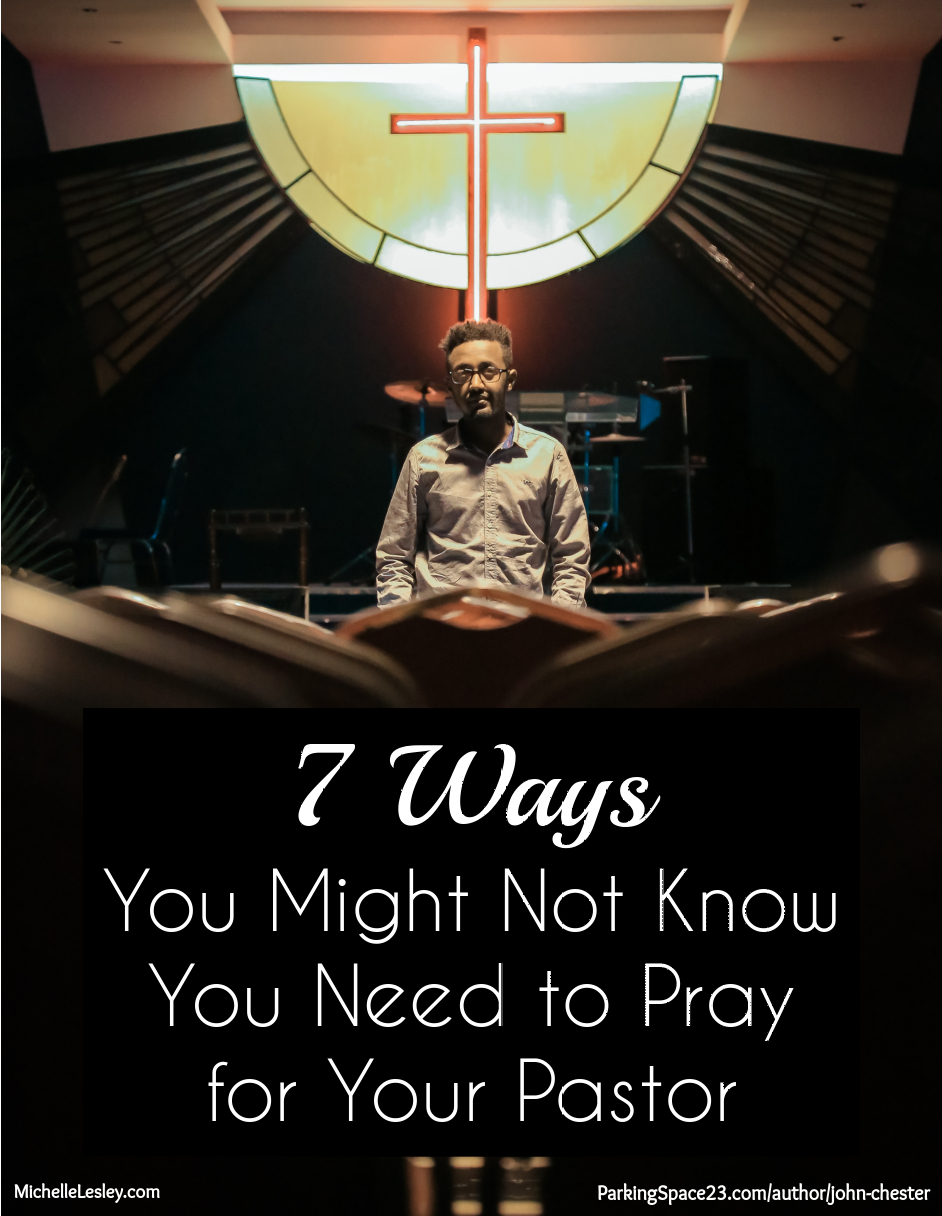
7 Ways You Might Not Know
You Need to Pray for Your Pastor
Part 2

by Pastor John Chester

This is Part 2 of the article. You can read Part 1 here.

He is affected by counseling

It is a great privilege and joy to counsel Godโ€™s people. It is an absolute joy to point them to the cross and the sure hope we have in Christ. It is a wonderful privilege to see people change in response to Godโ€™s word and the work of the Holy Spirit in their lives. I love counseling and Iโ€™m sure your pastor does too. I donโ€™t want anyone to reach the wrong conclusion that your pastor would be served by your not coming to him or that you can serve him by keeping your trouble to yourself. We need to and should rejoice in bearing one anotherโ€™s burdens (Galatians 6:2). Yet the fact is it can take a toll. A true shepherd loves the sheep, and he hates to see them hurting. Your pastor knows the pain in your church family in ways you do not. He knows who has trouble in their marriage, who is struggling with a rebellious teen, who is living with acute chronic physical pain, who has a besetting sin, who is on the verge of hopelessness and so much more. And his heart breaks over all of that. I donโ€™t know a single pastor who hasnโ€™t wept after a counseling session, and I donโ€™t know a single pastor who hasnโ€™t had some version of the conversation with their wife where their wife notices right away they are obviously down and sorrowful and asks why and they respond, โ€œItโ€™s a counseling thing, I shouldnโ€™t talk about it.โ€.

And it can be even harder when he has to rapidly shift gears from weeping with those who weep to rejoicing with those who rejoice (Romans 12:15). Counseling is my absolute favorite thing to do in ministry, it brings me great joy, but one hour of counseling wears me out as much as ten hours of studying or four hours of administrative work.

How you can pray for your pastor: Pray for the empowering of the Holy Spirit during counseling sessions, pray that counseling would make him long more intensely for heaven, and pray that he would be able to sleep at night.

He lives on wartime footing

Once, when I was fly fishing at a small hike-in lake in the reassuringly-named Bear Tooth Mountains in Montana, I was having such good luck I fished the entire evening rise. As I packed up my gear in the gloaming for the 3ยฝ mile hike down single track to the trail head and my car, I realized that I smiled like fish, and my wader, wading boots, net, and the rest of the gear I was about to strap to my back smelled like fish too. ย So, to any bears that happened to live in the Bear Tooth Mountains, it would smell like a giant trout was walking through the woods.

As I hustled down the two foot hide trail that wound through dense woods, I was hyper-vigilant knowing that an attack could come from the right, left, front, or back, and that if it came it would be sudden and savage. Not only was I an the lookout for the attack to come, I was expecting it. So, as I made my way down the trail yelling, โ€œHey Bear!โ€ I was thinking about how to respond to the various ways the attack could come.

Thankfully the attack never did come, but the memory of that dark jog through the woods is etched upon my mind. Iโ€™ll never forget that feeling. And it is the closest thing to the feeling of being faithfully vigilant in ministry I can think of. Paul told the Ephesian elders that ravenous wolves would rise up from among them and that they needed to be alert and to follow his example of persistent vigilance and purposeful teaching (Acts 20:29-31). Vicious, violent attacks against the church can come from anywhere and at anytime.

Lest you think I am exaggerating, let me tell you that every man I know in the ministry who has served for ten years or more has faced at least one serious existential attack against the church he serves. And truthfully it averages about once every 2.5 years. Let me tell you about the two serious existential threats we have fought off in our five years here at Piedmont Bible Church.

One that I saw coming was that we had a number of families (a large enough number to alter the complexion of our small church) who came with the intention to take directional control of the church and steer it toward the Family Integrated Church movement. I saw this coming because I am friends with a pastor in a neighboring town whose church had been attacked by this group of marauders. I was able to recognize them and drive them off before they could cause any mischief.

One attack took me entirely by surprise. A man who had been vetted for years, who had been examined by the church and appointed to the office of elder, within sixty days of becoming an elder demanded that the church functionally abandon sola scriptura in favor of making the traditions of men binding for the church. He sought to elevate the traditions of the church he grew up in – regarding music, dress, and the exercise of Christian freedom in a myriad of areas – to be on par with the authority of Scripture. He went so far as to say that there were no categories of preference or wisdom in the Christian life or the life of the church and that if you were truly sanctified, the Bible gave you a definitive (yes or no) answer to every question. Although he would angrily say his position was scriptural, he saw things as diverse as VBS, singing Amazing Grace accompanied by any instrument other than the piano, and people wearing the wrong colored shirt when teaching or leading in any capacity in a corporate setting as fitting into the phrase โ€œand things like theseโ€ in Galatians 5:19-21.

And here is the remarkable thing, when I confided in a mentor that in the midst of this crisis I was so stressed and worn out that I hadnโ€™t slept in weeks and that I had been vomiting blood, he didnโ€™t say that was the worst thing he had ever heard (as I expected), he said, โ€œWelcome to ministry. You need to learn to take care of yourself.โ€ Itโ€™s not that he was unsympathetic or compassionate – without his advice, comfort, compassion, and actual practical help I donโ€™t know if I would have made it through – it was that out of love he wanted me to know that this is what it is like. Ministry is a battle. It is no accident that Paul uses so much military language and imagery when he wrote to Timothy and Titus.

The kicker is that while this conflict was raging I worked hard to protect the church from it and from the knowledge of it. Although the battle raged for eight months, until the final week of the conflict (by which time other pastors and counselors were deeply involved), no one in the church outside of leadership knew that this battle for the life of the church was going on. A good shepherd doesnโ€™t alarm the sheep, he protects them. If you have been at your church for five years and you have never heard of anything like this happening, it is more likely that you have a very good shepherd than a church that has never come under attack.

Additionally, pastors (and their wives) are often subjected to personal attacks. Iโ€™ve been told angrily that I am a liar who is disqualified from ministry because I turned over a cushion without telling anyone. Iโ€™ve been told I dress too nice/not nice enough for a pastor. And Iโ€™ve been led away from the church in handcuffs for removing political signs placed on church property without permission.

Every day when pastors go to work they are in a fight. Itโ€™s not hyperbole and there is no other way to put it. That in no way eliminates or even dampens the joy of pastoral ministry, but it is true. And living that way can take a toll. One of the risks is exhaustion, fatigue, and burnout. Find someone who boxed growing up and also played a sport in college and then ask them, “What took more out of you, three minutes of fighting or sixty minutes of lacrosse/football/hockey/basketball or whatever sport you played?”. They will all say the three minutes of fighting. Fighting and being ready to fight just takes a lot out of you.

And it can make you cynical. There is a fine line between learning to have a thick skin and building up callouses. After my battle with the false elder, my wife said to me, โ€œWell, you learned a lot.โ€ย  I replied, โ€œI learned that Iโ€™ll never again trust a man who didnโ€™t play Little League.โ€ I was only half kidding (probably down to 12% by now).

[Special note: It is always enormously sad when a pastor fails morally. ย I am convinced that many more are casualties of war, than double agents who were exposed. A pastor who falls into sexual sin is permanently disqualified (Proverbs 6:32-33), but he should be treated according to Galatians 6:1.]

How to pray for your pastor: Pray that the Lord would protect him as he protects you. Pray that he would not become jaded and would love as described in 1 Corinthians 13:4-7. Pray that no matter what is going on that his time of study would be a refuge and a refreshment to him.

He gets discouraged

If there is one thing I can say with 100% certainty of all pastors it is that they are all human. And because they are human sometimes they get discouraged. Some are more prone to discouragement than others, and it is not a weakness or a flaw. God uses all kinds of men. Spurgeon famously called his depressive, discouraged mood “the black dog” and said sometime he was on the verge of tears for no apparent reason.

While some pastors are more prone to melancholy moods that others, every pastor I know has experienced this acutely, sharply and often enough to talk about it. In fact, there is a kind of gallows humor among pastors about how bad Mondays are and how you should never resign on a Monday. ย 

Most faithful pastors I know are estranged from at least some of their extended family because of ministry and fidelity to Scripture. My wife once overheard my older brother (who I looked up to and adored growing up) say he wouldnโ€™t come to a family gathering if I was there because he couldnโ€™t take my โ€œJesus ‘stuff’โ€ (he didnโ€™t say “stuff”). I know a man whose parents wonโ€™t speak to him because he left a lucrative, high prestige career to become a pastor. I know another who is told to just stay in the basement after dinner on holidays by his wifeโ€™s family.

Every faithful pastor has known the pain and disappointment of having someone he has poured into, discipled, and taught walk away from the faith (or at least the church), not to mention the pain that comes when people you love, have invested in, and count on as key contributors to the ministry of the church simply move away. The day after he was confirmed into the office of elder, our first elder as a new church plant was downsized and had to move away. I wouldnโ€™t be human if I didnโ€™t find that discouraging.

Every faithful pastor has been deeply wounded by someone he thought of as a friend and ally. In fact, this is so common that a proverbial saying among seminary professors that all seminary students roll their eyes at is, โ€œThe man who brought you in will be the man who tries to take you out.โ€ While that may not always be true, it is true often enough that no pastor five years in would roll his eyes.

Add to all of that how in pastoral ministry you can do everything โ€œrightโ€ and not be โ€œsuccessful.โ€ No other vocation that I have experienced is like that in any way. There is a popular preacher and conference speaker who often says to pastors (and those training for the ministry) that if you take care of the depth of your ministry, God will take care of he breadth. But what no one says is that sometimes the breadth is 40 people. The median size of an evangelical church in the U.S. is 184 but more than half have less than 75 regular attenders. The very best pastor I know has been faithfully preaching, teaching, and discipling for over thirty years at a Reformed Baptist church that has never cracked the 100 member mark. He has missed probably 500 weeks’ pay over that time as he always allowed his salary to be cut out of the budget when there wasnโ€™t enough financial support to do the work of the ministry.

Oh, and everything that is common to believers and can drive them to discouragement, pastors also experience. They get sick and injured, they get flat tires, they experience the loss of loved ones, they have unexpected financial expenses, their dogs die. And they sin too. Even Paul was overcome at this, saying that he didnโ€™t do the good he wanted to, that he did the wrong he despised, and called himself wretched (Romans 7:15-24).

You hear a lot about pastoral burnout, depression and how few ordained men actually retire from or die in pastoral ministry, but I donโ€™t think it is really a matter of burnout or depression. More often than not I think it is profound, prolonged and unaddressed discouragement. Even in churches that are great at the “one anothers”, the pastor(s) are often viewed as “other”, not “another”. No one thinks to encourage them (other than in preaching), and their burdens are not borne (Galatians 6:2).

How to pray for your pastor: Pray that he would see enough of the Lord working that he would be encouraged that the Lord is at work through his ministry. Pray that the Lordโ€™s grace would always be sufficient for him. Pray that the Lord would guard his heart from discouragement and pastoral jealousy. Pray that the Lord would strengthen him when he is weak and lift him up when he is down.

When Michelle asked me to write this post some months ago she said I could write it and she could publish it anonymously. I appreciated that. But the more I thought about it, the less attractive that option was. Here is why: I want everyone to know this isnโ€™t a list of gripes written by someone who regrets being in ministry. I love pastoral ministry I love preaching, I love teaching, I love counseling, I love praying for the people of the church, and all of these things are absolutely true. Pastors are immensely blessed and privileged to do what we do, but we all (even your favorite radio preacher and your pastor) have feet of clay. And we are part of the body of Christ, just like you. But pastors have a unique role in the body, and by pulling back the curtain I hope I made it a little easier to understand and pray for your pastor.

And if you think of it say a prayer for me too. I need it.


John Chester is the pastorย of Piedmont Bible Church, a Grace Advance church plant in Haymarket, Virginia. Prior to ministry John worked as a lacrosse coach, a pizza maker, a writer, a marketing executive, and just about everything in between. He hails from The City of Champions: Pittsburgh, Pennsylvania, and is blessed to be married to his wife Cassandra. Read Johnโ€™s blog articles atย ParkingSpace23, and read more of John’s excellent posts for Michelle Lesley here.


Pastors and pastor’s wives-
What would you add to this list of things that church members
may not know to pray for their pastors about?

Church, Marriage, Ministry

The Mailbag: My husband is a pastor. How do we know when it’s time to leave a church?


My wonderful conservative, seminary-trained pastor husband is in such a battle against evil forces in our church.ย 

There are a few women members who are angry he doesnโ€™t endorse their favorite false teacher, women preachers, or women teaching men. Another woman, who was actively involved in two previous church splits is stirring up division.

Praise God our church has attracted strong Christian men who have come alongside my husband, standing firm, supporting Biblical Truth. When does one know when itโ€™s Godโ€™s testing or when He’s nudging to move us along?ย I donโ€™t enjoy seeing my husband hurt. Do you have any advice?

I can definitely empathize with your situation. As I’ve mentioned in the past, my husband is a minister of music, and God has seen fit to send us to several…shall we say… “challenging” churches in the past. Most have been smaller churches in which the only staff members were my husband and the pastor, so my husband had more of a leading elder-type role than a minister of music in a larger church with several on-staff pastors might have.

We have also faced this dilemma of “We don’t want to give up just because it’s difficult, but maybe these difficulties are God’s way of telling us it’s time to shake the dust off our feet and move on to somewhere where we can be more biblically productive.” It can be a confusing situation to be in because you want to be pleasing to the Lord and serve His people, but the Bible speaks to both hanging in there through adversityย and leaving people who refuse to be led as appropriate in various situations.

Like so many scenarios in life, there’s no “one size fits all” answer because every situation is different. But maybe we can look at a few basic principles that can help ministry wives (and even those whose husbands aren’t in the ministry) when church difficulties strike and you’re wondering whether or not to leave.

Take Off the Rose-Colored Glasses

If you’re new to being a ministry wife, you may have romanticized ideas of what it will be like. It’s no accident that God calls pastors “shepherds.” Shepherding is not like those pastoral landscape paintings you’ve seen where the shepherd is sitting under a stately, spreading tree on lush carpet of verdant grass by a babbling brook, happily petting a docile lamb. There are moments like that, but generally, shepherding is hard, hot, sweaty, often thankless, often underpaid, tirelessย labor. Sheep can be stubborn animals who have no idea where to go, what to do, or what’s best for them, and leading them is, at times, no picnic.

I don’t say this to discourage you, only to make sure that you’re going in to this thing with your eyes wide open. No pastor steps into the pulpit at a perfect, problem-free church. Every church has its issues. You need to be prepared for that, and you need to be prepared to roll up your sleeves andย work, not run, the first time a problem comes up.ย The church isn’t there to serve you. You are there to serve the church.

Pray, Pray, Pray, and Don’t Jump Ship at the First Sign of Trouble

All of us should be praying for our churches daily, but we need to double down when problems arise. Pray for all those involved in the problem, including your husband.

We also need to initially approach problems with the desire to work through them and bring them to a point of biblical resolution. As a ministry wife, if you approach every problem that arises in the church with an attitude of despair, giving up, and wanting to leave the church, it’s going to discourage your husband. Now, not only does he have the problem itself to deal with, he has the added pressure of making his wife happy. Try to be part of the solution rather than an added problem.

Remember – and Be Thankful for – Your Position

When you’re a ministry wife, especially in a small church, it can feel like you and your husband areย bothย in his ministry position. You’re probably helping him with various job-related tasks, you know all the problems and issues that are going on in the church, you talk together about possible solutions, you know about the big meeting that’s coming up, etc. It even comes out in the way we talk sometimes: “Whenย we pastored ABC Church…” or “Whenย we were on staff at XYZ Church…” (I finally realized I needed to be more careful about using that kind of wording so that people would not think I was a co-pastor!)

But, even though it can feel like you’re shouldering almost as big a load as your husband, you’re not. You’re not the pastor. You’re also not the husband. Be thankful for that because it’s one of the blessings of being a woman. You’re theย helper. You do everything you can to help, support, and encourage your husband, but the burden and responsibility of makingย the decision whether to leave or stay is on his shoulders, not yours. Be grateful, and use that relief you feel to help you understand what enormous pressure your husband is under. He has to make the right and godly decision for the church, for his family, and for his career. That’s a heavy weight.

Not My Will, but Thy Will

Examine your own heart before attempting to help your husband. Do youย reallyย want what God wants in this situation, or do you want whatย you want? Will you be able to joyfully, peacefully, and contentedly stay at a church you want to leave or leave a church you want to stay at? Ask God to so delight your heart in Him that your desires will match His and that He will help you to pray rightly and act wisely and obediently.

Pray for Your Husband

Ask God to give him the biblicalย wisdomย to make the right decision about staying or leaving. Pray that God will give him peace, strength, and comfort. Ask that He will bring the right Scriptures to your husband’s mind at just the right time. Ask God to make His will clear to your husband.

In one church my husband and I were on staff at :0) the situation was very 50/50 as to whether we should stay or go. We studied the Scriptures and found support for staying as well as for leaving. We really didn’t know what to do.

After much discussion and prayer, we decided we would stick with this church until God moved us. I began praying that if God wanted us to leave that He would make it impossible for us to stay. And a few months later, that’s exactly what happened. God orchestrated circumstances in such a way that it was impossible for us to stay at that church. It brought both of us a great deal of peace to know that we were not giving up just because it was difficult, but that God was answering prayer and moving us Himself.

Study Your Bible

In the situation I just described, my husband and I didn’t find overwhelming Scriptural evidence that made his decision a clear-cut one. That’s not always the case. Sometimes you will find clear biblical support for staying or for leaving.

Ask your husband if it would be helpful to him for you to search the Scriptures for passages that apply to the situation at your church. Be careful toย rightly handleย God’s Word in context, and discuss the passagesย objectively with your husband. Make sure you’re not twisting Scripture in an effort to sway your husband to do whatย youย want him to do.

Be Your Husband’s Biggest Supporter and Encourager

Pray fervently for your husband, and let him know you’re praying for him. Affirm him by reminding him that you trust him, that he’s doing a good job, that you’re proud of him. When he’s under a lot of stress at church, do what you can to offer practical help, perhaps by running errands for him or taking over some of his household chores. Make sure he’s getting the amount of joyful physical intimacy he needs from you. Do what you can to make sure he’s eating right and getting the amount of rest he needs. Most of all, let him know you’re behind him and that you’ll support his decision about staying or leaving.

When we were trying to decide whether to stay at or leave the aforementioned church, one thing that helped take some of the pressure off my husband was that I told him, “If you decide we’re leaving, I’m ready to walk out that door. But if you decide we’re staying, I’m ready to stay and keep working.” Knowing he had my support either way helped him to be able to focus on whatย God wanted him to do rather than what I wanted him to do.


The decision to stay at or leave a difficult church is often tedious and stressful for pastors. It’s hard for us, as their wives, to watch them suffer at the hands of trouble-making people. Our position as helpmates is to do everything we can onย ourย part to make things easier on them.


If you have a question about: a Bible passage, an aspect of theology, a current issue in Christianity, or how to biblically handle a family, life, or church situation, comment below (Iโ€™ll hold all questions in queue {unpublished} for a future edition ofย The Mailbag) or send me anย e-mail or private message. If your question is chosen for publication, your anonymity will be protected.