Mailbag

The Mailbag: Ministering to the Bereaved

How can I properly console a friend who has experienced the loss of a loved one? My friend’s baby recently passed away. I really want to know how to console her. What are some helpful things I can say to her and do for her (and hurtful things I can avoid saying to her) during this time?

I’m so glad you want to reach out to your friend with the love of Christ and minister to her during this difficult time. The Bible is very clear that because God is a God of love and comfort, we are to offer love and comfort to those who are grieving:

…weep with those who weep. Romans 12:15b

Blessed be the God and Father of our Lord Jesus Christ, the Father of mercies and God of all comfort, who comforts us in all our affliction, so that we may be able to comfort those who are in any affliction, with the comfort with which we ourselves are comforted by God.
2 Corinthians 1:3-4

Comforting and grieving with those who grieve is a ministry for which God has (generally) gifted, shaped, and equipped women in a way that’s unique and discrete from the ways He has (generally) gifted, shaped, and equipped men. Certainly pastors (and others) can, do, and should minister much needed compassion toward those under their care, and most Christians can attest to how helpful good pastoral care has been during a time of grief. But there’s something special in the way a godly woman can minister to the heart of a hurting woman and her family that should be nurtured and encouraged in the body of Christ.

Your question is a very wise one. As Believers, we have the desire to minister to those who are hurting, but we’ve all heard stories about well-meaning people who have said some really insensitive things that have caused further pain to the bereaved.

So what I’d like to do today is to offer a few thoughts on ministering to those who have lost someone dear and then open things up to all of my readers – especially those who have lost a child or another very close loved one – to offer some input.

Pray– Pray fervently for your heartbroken friend, asking God to comfort and heal her heart, provide for any material needs, and any other specifics you know of. Also, ask God to give you wisdom to know the right things to say (and not say) and do.

Remember: Your words can’t fix things.– It’s hard to watch someone suffer. As godly, tender-hearted , nurturing women, there’s often nothing we want more than to take all that pain away and make the sufferer happy again. Sometimes we ladies have it in the back of our minds that if we can just find the exact right combination of words to say in the exact right comforting tone, we can take away the pain of the person we’re comforting. We can’t. It’s something I have to remind myself of again and again. But it’s especially important to remember this when we’re comforting someone, because the more we talk, searching for those “magic words,” the greater risk we run of sticking our foot in our mouths and saying something hurtful instead of helpful. Additionally, when a grieving person’s emotions are raw, it can be extremely grating to listen to someone talk on and on and on. We would do well to take a lesson from Job’s friends…

[Job’s three friends] made an appointment together to come to show [Job] sympathy and comfort him…And they raised their voices and wept, and they tore their robes and sprinkled dust on their heads toward heaven. And they sat with him on the ground seven days and seven nights, and no one spoke a word to him, for they saw that his suffering was very great. Job 2:11b,12b,13

…Remember, it was only after these guys opened their mouths that the trouble began, because…

Make sure whatever you choose to say is doctrinally sound.– This is where Job’s friends got into trouble. They tried to “minister” to Job with unbiblical theology.

Heaven did not “gain another angel” with the death of your friend’s loved one. People, even Christians, do not turn into angels when they die. The deceased has not “gone to a better place” or “gone to be with Jesus,” nor will he “rest in peace,” nor is it true that “at least he’s not suffering any more,” if he was unsaved. Don’t say something like this unless you’re relatively certain the person was saved as evidenced by the fruit of his life. If you’re thinking about saying something theological-ish to your friend and you’re not sure whether or not it’s biblically accurate, either take the time to find out first, or err on the side of caution and don’t say it.

Say: “I’m praying for you.”– I’ve heard many grieving families say this is one of the most comforting things they can hear, especially if they know you to be someone who is faithful in prayer. Do not say you will be praying for your friend if you don’t really mean it. If you’re afraid you’ll forget to pray for her, set a reminder on your phone, stick a note on your bathroom mirror, tie a string around your finger – whatever you have to do to remember. From time to time, remember to let your friend know you’re still praying for her.

Say: “Can I pray with/for you?”– There might be a moment at the wake or during a visit when it’s appropriate to offer to pray with your friend, or pray for her out loud, just between the two of you. Ask God for wisdom to know if it’s the right time, if this would be encouraging to your friend (ex: if your friend is unsaved and/or enraged at God over her loved one’s death, this might not be helpful at the moment), and what would be the appropriate words to pray. Ask God to comfort your friend, provide for her needs, help her to know that He is there for her, and to strengthen her trust in Him.

Say: “I love you,”– Just a simple “I love you,” lets your friend know you care and are grieving with her. If appropriate, you might wish to also share a special memory of the deceased or recount how much he meant to you.

Share a Scripture: Was there a particular verse or passage focusing on God’s goodness or comfort that brought you peace and strength when a loved one died? Make sure you’re rightly handling it (i.e. it applies to someone who has lost a loved one, doesn’t appear to promise your friend something that was only promised to Israel, a particular Bible character, etc.), and recite it or jot it down (maybe in a nice sympathy card) for your friend.

Follow up- There are some people in this world who are what I call “calendar gifted.” They remember every birthday, every anniversary, every significant date, and they send a card or note, or commemorate the day in a way that makes the recipient feel like the most special person in the world. I do not have that gift. I am in awe of people who do have that gift. If that’s one of your giftings, put it to work in ministry by reaching out to your friend on her loved one’s birthday, the anniversary of his death, their wedding anniversary, etc. What a blessing you will be to your friend.

Hugs and tears– Sometimes the best thing you can say is nothing at all, just “weep with those who weep”.

Don’t say something you wouldn’t want to hear if you had just lost a loved one.Matthew 7:12 reminds us to treat others the way we would want to be treated. This is a very helpful filter when it comes to what to say or not to say to your grieving friend. Think about your own children. If one of them died, would you want to hear, “Well, at least you have your other children,” or “You’re still young- you can have more children.”? Probably not. (Also, in a way, this falls under the “don’t say unbiblical things” category. While these statements may be factually true, Christians recognize that every individual is uniquely created in the image of God. Other children can never replace the one who was lost.)

Don’t try to give a theological treatise on why the person died.– “God wanted your loved one to be with Him,” “He had finished the work God gave him to do,” “God decided it was his time to go,” “God wanted to spare him further suffering,” etc.

The bereaved person almost certainly doesn’t want to hear it, you don’t have the chapter and verse goods to back up any kind of statement like this, and it smacks of trying to “let God off the hook” for allowing the person to die. Your friend is probably already wondering why God ended the person’s life at this time. You don’t have the answer, and it’s prideful to think that you do. Nobody needs you to wax theologically eloquent on why the person died. So don’t.

Just do it./DON’T just do it.– “Don’t tell the person, ‘If there’s any way I can help, let me know.’ Grieving people are overwhelmed. They can’t think of what they need at the moment, and later, they may feel uncomfortable asking for your help. Just find something helpful to do and do it.” I’ve read this advice about how to help the bereaved more than once. Don’t ask, just go over and clean her house, or go buy her groceries, or take her a meal, or whatever.

If you’re extraordinarily close to the bereaved person and know all of the ins and outs of her household, this might be helpful. But if you’re simply a friend from church, a next door neighbor, etc., I would not recommend “just doing something” without checking with your friend first to find out if what you think would be helpful would actually be helpful. You don’t want to just show up with a meal on the night three other ladies have just shown up with a meal and a fourth has already taken your friend out to dinner. You don’t want to just show up with perishable groceries when other people have already packed her fridge. You don’t want to just show up to clean her house when somebody already cleaned it yesterday. Instead, think of two or three things to suggest to your friend and ask if that would help her. “Could I bring dinner for your family one night this week?” “I know you have a house full of people and you probably haven’t had time to do laundry. How about I take it to my house and take care of that for you?” “Could I drop your kids off at school tomorrow morning?” “Is there something else I could do that would be more helpful than what I just suggested?”

Offer to be an intermediary.– I don’t think I’ve ever seen anything quite as helpful as someone who steps up to “handle” things between the family of the deceased and others who want to help. An intermediary can be the “bad guy” who explains to surprise visitors that the bereaved person is resting and isn’t up to a visit right now. She can organize a meal or grocery schedule, fill people in on funeral arrangements, field “What can I do to help?” questions, and assign tasks the bereaved person needs done. If you’re someone who’s good at understanding and carrying out someone else’s wishes or instructions, offer to step into this gap for your friend. (And be sure to reassure her that your feelings won’t be hurt if she doesn’t want/need this or if she’d rather someone else do it.)

OK readers, it’s your turn. What are some things you’ve found helpful or encouraging (or unhelpful/hurtful) that people have said or done when you have lost a loved one, especially if you’ve lost a child?


Additional Resources:

On Funerals, Grieving, and Suffering (links to resources on suffering and ministering to the bereaved)


If you have a question about: a Bible passage, an aspect of theology, a current issue in Christianity, or how to biblically handle a family, life, or church situation, comment below (Iโ€™ll hold all questions in queue {unpublished} for a future edition of The Mailbag) or send me an e-mail or private message. If your question is chosen for publication, your anonymity will be protected.


A Word Fitly Spoken Podcast

A Word Fitly Spoken – Episode 2


Episode 2 of theย A Word Fitly Spokenย podcast –ย Is This Church for You? –ย is up! Have you given it a listen yet?

You can listen or download at the A Word Fitly Spoken website, or catch the episode on Podbean, Google Play, TuneIn, or Stitcher. (We know many of you are waiting on iTunes. We are too! It should be up and running soon.) And don’t forget toย follow us on social media!

How about them apples? :0)

Discernment

Raechel Myers and She Reads Truth

If you are considering commenting or sending me an e-mail objecting to the fact that I warn against certain teachers, please click here and read this article first. Your objection is most likely answered here. I won’t be publishing comments or answering emails that are answered by this article.


This article is kept continuously updated as needed.

I get lots of questions about particular authors, pastors, and Bible teachers, and whether or not I recommend them. Some of the best known can be found above at my Popular False Teachers tab. The teacher below is someone I’ve been asked about recently, so I’ve done a quick check (this is brief research, not exhaustive) on her.

Generally speaking, in order for me to recommend a teacher, speaker, or author, he or she has to meet three criteria:

a)ย A female teacher cannot currently and unrepentantly preach to or teach men in violation of 1 Timothy 2:12. A male teacher or pastor cannot allow women to carry out this violation of Scripture in his ministry. The pastor or teacher cannot currently and unrepentantly be living in any other sin (for example, cohabiting with her boyfriend or living as a homosexual).

b) The pastor or teacher cannot currently and unrepentantly be partnering with or frequently appearing with false teachers.ย This is a violation of Scripture.

c) The pastor or teacher cannot currently and unrepentantly be teaching false doctrine.

I am not very familiar with most of the teachers I’m asked about (there are so many out there!) and have not had the opportunity to examine their writings or hear them speak, so most of the “quick checking” I do involves items a and b (although in order to partner with false teachers (b) it is reasonable to assume their doctrine is acceptable to the false teacher and that they are not teaching anything that would conflict with the false teacher’s doctrine).ย Partnering with false teachers and women preaching to men are each sufficient biblical reasons not to follow a pastor, teacher, or author, or use his/her materials.

Just to be clear, “not recommended” is a spectrum. On one end of this spectrum are people like Nancy Leigh DeMoss Wolgemuth and Kay Arthur. These are people I would not label as false teachers because their doctrine is generally sound, but because of some red flags I’m seeing with them, you won’t find me proactively endorsing them or suggesting them as a good resource, either. There are better people you could be listening to. On the other end of the spectrum are people like Joyce Meyer and Rachel Held Evans- complete heretics whose teachings, if believed, might lead you to an eternity in Hell. Most of the teachers I review fall somewhere in the middle of this spectrum (leaning toward the latter).

If you’d like to check out some pastors and teachers I heartily recommend, click theย Recommended Bible Teachers tab at the top of this page.


Raechel Myers
Not Recommended

Raechel Myers is co-founder and CEO ofย She Reads Truth (SRT), “a worldwide community of women who read Godโ€™s Word together every day. Founded in 2012, She Reads Truth invites women of all ages to engage Scripture through curated daily reading plans, as well as online conversation led by a vibrant community of contributing writers.” Raechel’s co-founder of SRT is CCO (Chief Content Officer), Amanda Bible Williams. Raechel and Amanda have co-authored two books and collaborated on theย She Reads Truthย Bible and theย He Reads Truth Bible.

I first learned of Raechel and SRT a few years ago through my friend Elizabeth Prata’s excellent blog. Check out part 1 andย part 2 of her article She Reads Truth, IF: Gathering, and Women Bible Teachers. Elizabeth adds:

โ€œI had direct interaction with Raechel Myers regarding the concerns Iโ€™d written about. She falls far below the โ€˜unrepentant โ€ฆ false doctrineโ€™ benchmark. As an elder woman attempting to teach her, the younger, sound doctrine and to be self-controlled (Titus 2:2, 4-5) she not only was unrepentant but she was very angry and decidedly UNcontrolled. She would not listen one bit and so, she did not hear. The entire scene made me very sad for all the IF:Gathering women, because they are intelligent and have energy, verve, and dedication. If theyโ€™d put all that in the right direction they all could have been role model women and wives for the glory of Jesus.โ€

Though SRT’s “What We Believe” section boldly proclaims, “we believe Godโ€™s Word is Truth,” Raechel has disregarded the Bible’s truths about false doctrine and the biblical role of women in the church by inviting female “pastors” and false teachers such asย Sharon Hodde Miller (more on Sharon here)ย Erin Rose, and Lisa Harperย (more on Lisa here) to be SRT contributing writers.

Raechel has recommended that her followers attendย  Rebekah Lyons’ Q Womenconference, and in 2017, Raechel was selected to take part in Rebekah’s Freedom Challenge along with false teachersย Ann Voskamp andย Lysa Terkeurst.

Raechel has promoted IF:Gathering on her blog and has been featured on IF’s YouTube channel. Raechel’s and Amanda’s book, She Reads Truth, is sold on IF’s website.

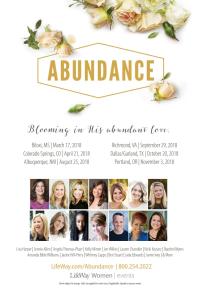
Raechel has appeared at several of LifeWay Women’s Abundance Conferences alongside the likes of Christine Caine, Jennie Allen, ย Lisa Harper, Lysa Terkeurst and Curtis Jones (Beth Moore’s son-in-law/pastor who allows her to preach on Sunday mornings) and others.

In 2018, Raechel was a featured speaker at the Inspired for Life Conference alongside female preaching advocate and shepreaches.com founder , “Rev.” Neichelle Guidry and Sojourners social justice activist, Lisa Sharon Harper. (Previous conferences at this host church had featured Rachel Held Evans, female “preacher” and self-proclaimed feminist, Sarah Bessey, and Glennon Doyle, the evangelical mommy blogger most famous for divorcing her husband and marrying her lesbian lover).

For someone with such a well known ministry, Raechel has a very small online footprint, so it was difficult to find pertinent information on her for this article. She rarely posts on social media or her blog, there is no calendar of speaking events on her website, and there is little information on her at the SRT website. This could be a positive sign. Perhaps we’re not seeing online evidence of her, for example, preaching to men, because she’s not. On the other hand, perhaps she is associating with or following far more false teachers than we know of but she isn’t posting about it on social media, so there’s no evidence of it. It’s simply impossible to tell.

With so little information available on Raechel, and with very little knowledge of her own theology and handling of God’s Word, I want to give her the benefit of the doubt and withhold the label of “false teacher” until such time as more evidence is available that would support that label. That being said, I believe there is enough evidence that Raechel is sorely lacking in discernment that it would not be wise to follow her, use her materials (and certainly not SRT’s materials, considering their contributors), or attend her speaking engagements.

Furthermore, consider her ties to female “pastors” and false teachers. As I said in the introduction to this article, it is reasonable to assume Raechel’s doctrine is acceptable to these female “pastors” and false teachers and that she is not teaching anything that would conflict with their doctrine. If she were, they would not associate with her. If she were, she would not associate with them.

Uncategorized

The Word on Wednesdays

Hi ladies! I hope you enjoyed our most recent Bible study,ย 1&2 Timothy: The Structure and Spirit of the Church, which we wrapped up recently.

Iโ€™ve been taking a break on Wednesdays, getting ready for our new study. I hope youโ€™ll enjoy it and that it will edify you as you seek to grow in Christ and His Word. (The picture above does not mean we will be studying James. :0) I really had planned to start our new study last week, but I’ve had a family situation come up unexpectedly that I need to devote some time and attention to, and that has to come first. My new plan is to start our new study next week- August 28.

So, if you havenโ€™t quite finished with the 1&2 Timothy study, you can use this time to finish up, and Iโ€™ll also be posting some articles from the archives that I think youโ€™ll find helpful as we make our way toward our next study. Here is this weekโ€™s article:

sunday school

Sunday School: Chronological Study Lessons

During 2014, I led my ladiesโ€™ Sunday School class in a chronological read-through of the entire Bible. Each week I taught a lesson from that weekโ€™s reading and posted it here on the blog.

If youโ€™re using the chronological one year Bible reading plan this year, hereโ€™s the lesson that roughly corresponds with this weekโ€™s reading. (And even if youโ€™re not, I hope youโ€™ll enjoy this lesson anyway.)

Through the Bible in 2014 ~ Week 34 ~ Aug. 17-23
Jeremiah 35-50, Psalm 74, 79, 2 Kings 24-25, 2 Chronicles 36, Habakkuk
Idolatry: No Turning Back

idolatry

Background:
Israel is gone, carried off into captivity by Assyria. Judah has managed to hang on a little longer, due in part to Hezekiahโ€™s and Josiahโ€™s godliness, but, now, Nebuchadnezzar has besieged and overthrown the last of Judahโ€™s fortified cities, slaughtered the king and the nobles, and carried nearly all the citizens off to a 70 year exile in Babylon. Nebuchadnezzar left a small remnant of the poorest of the poor to continue living in Judah to work the land, and set up Gedaliah as governor over them. Gedaliah was subsequently assassinated by the Ammonites, and the remnant decided -against Godโ€™s clear instruction through Jeremiah- to go to Egypt, and to force Jeremiah to go with them. This is where we now find them in chapter 44…Continue reading.

Share Your Testimony

Testimony Tuesday: Alma’s Story

Alma’s Story

Hereโ€™s a wonderful story of Godโ€™s faithfulness in steering the ladies ministry at my church out of doctrinally weak teachers. I joined my daughterโ€™s Southern Baptist Church about ten months ago to be able to worship with her and my three grandchildren. I met with the pastor a few times and we had wonderful conversations about Reformed theology and the churchโ€™s long history. Since I had developed somewhat of a rapport with him I felt comfortable going to him when I found out the ladies ministry leader had chosen, yet again, a not so doctrinally sound study.

Last fall we did Lisa Harperโ€™s Job study which I faithfully attended and early on realized she was not what I needed or wanted in a Bible study. Lisa likes to share a personal story of her life in each of her weekly videos and it soon became burdensome and kind of annoying (I donโ€™t have much patience when it comes to studying the Word). Before Lisa Harper was Lysa TerKeurst, Beth Moore, and Priscilla Shirer, so the church has had a history of fluffy studies.

In late December of last year the announcement was made that we would be doing Priscilla Shirerโ€™s new study One in a Million. I was disappointed to say the least as Iโ€™m not a fan of Shirer.

I prayed a lot about how to approach my pastor about this because the woman in charge of selecting our studies is a friend and fellow Sunday School attendee. Since Iโ€™m so new to the church I decided to find out who was in charge of overseeing the ladies’ ministry. I assumed it was a deacon but soon found out that wasnโ€™t the case. The head of the deacons told me it was our Discipleship Minister. So I contacted him and he confirmed that he oversees the men’s and ladies’ ministry and when I asked if he oversees the Bible study selection he said thatโ€™s left up to the ladies’ ministry leader.

So I decided it was time to talk to my pastor. I did my due diligence and researched the problems and concerns with Shirer and sent him links to Michelle’s critique and also pastors who have written about her to warn the women in their churches.

One of the comments my pastor made in his defense was he assumed if a teacher is promoted by LifeWay, they must be good. I was surprised he didnโ€™t know about LifeWay and all the heretical authors and books they have on their shelves.

I also shared with him the problems and concerns with other studies the church has done in the past. He listened, reviewed the links I sent him and decided he needed to call a meeting with the Discipleship Minister and ladies’ ministry leader to discuss this matter. That meeting hasnโ€™t happened yet (he promised it would be soon) but Iโ€™m praying for all to come to the right decision going forward. And, the ladies’ ministry leader recently announced that we will be using a Jen Wilkin book for our next study. I give all glory to God for giving my pastor eyes to see and ears to hear.


Ladies, God is still at work in the hearts and lives of His people, including yours! Would you like to share a testimony of how God saved you, how He has blessed you, convicted you, taught you something from His Word, brought you out from under false doctrine, placed you in a good church or done something otherwise awesome in your life? Private/direct message me on social media, e-mail me (MichelleLesley1@yahoo.com), or comment below. Your testimony can be as brief as a few sentences or as long as 1500 words. Letโ€™s encourage one another with Godโ€™s work in our lives!