Welcome to another “potpourri” edition of The Mailbag, where I give short(er) answers to several questions rather than a long answer to one question. I also like to take the opportunity in these potpourri editions to let new readers know about my comments/e-mail/messages policy. I’m not able to respond individually to most e-mails and messages, so here are some helpful hints for getting your questions answered more quickly. Remember, the search bar can be a helpful tool!

In these potpourri editions of The Mailbag, I’d also like to address the three questions I’m most commonly asked:
“Do you know anything about [Christian pastor/teacher/author] or his/her materials? Is he/she doctrinally sound?”
Try these links:
Popular False Teachers / Recommended Bible Teachers / search bar
Is She a False Teacher? 7 Steps to Figuring It Out on Your Own
(Do keep bringing me names, though. If I get enough questions about a particular teacher, I’ll probably write an article on her.)
“Can you recommend a good women’s Bible study?”
No. Here’s why:
The Mailbag: Can you recommend a good Bible study for women/teens/kids?
The Mailbag: “We need to stop relying on canned studies,” doesn’t mean, “We need to rely on doctrinally sound canned studies.”.
“You shouldn’t be warning against [popular false teacher] for [X,Y,Z] reason!”
Answering the Opposition- Responses to the Most Frequently Raised Discernment Objections
I was saved in 2011 and am seeking direction on how to live my new life in Christ. Prior to my conversion, I was a romance writer (think: Harlequin). The writing bug still haunts me. I love writing and I’m attempting to write a Christian romance novel. I don’t feel like writing Christian non-fiction would be a fit for me. I have a strong creative desire for writing and graphic design. Is there a place for my fiction work for women? I’m praying about it. Any thoughts you have would be welcomed and helpful in how I pray about it.
Aw, a kindred spirit! Maybe that’s why this question warmed my heart so much, or maybe it’s because it’s profoundly touching and encouraging to hear from any Christian woman who is genuinely seeking how she can best glorify God with the gifts He has given her.
As I was contemplating your question, my husband’s favorite verse kept coming to mind:
So, whether you eat or drink, or whatever you do, do all to the glory of God.
1 Corinthians 10:31
The verse itself is appropriate to the situation, but so is its immediate context. Whatever we do – whether it’s something as significant as our vocation or as mundane as eating supper – we should do it in a way that glorifies God, represents Him well to others, and leads people toward Christ.
How many Christian romance novels have you ever read that do those things well? Not many, I’m guessing.
One of the ways the Holy Spirit leads us is by the way He has wired us. God has fearfully and wonderfully created each one of us with unique talents and abilities. We are bent toward some things and away from others. It brings honor to God when we submit to the way He created us and use the gifts He has given us to serve others and to serve and glorify Him. Perhaps your bent toward writing fiction is God’s way of leading you to write fiction that glorifies Him and points people to Christ, and to do it well. That’s something you could pray about.
As you plan out your next storyline, ask yourself some questions like:
✏ Is there a way I can pull back the curtain on God’s glory here?
✏ How can I point the reader to Christ in this scene?
✏ Is there a (rightly handled, in context) passage of Scripture I can add here?
✏ How can this character set a biblical example (of what to do, or not to do) for the reader?
✏ How would I summarize how this finished product brings glory to God and points the reader to Christ?
I would encourage you to continue praying and asking God for wisdom and guidance. Take advantage of every opportunity (writing-related or not) He sends your way, and steward it for His glory. You might also find my article The Mailbag: Christian Fiction Recommendations to be of interest.
And don’t forget: Look back over the parables in the gospels. Jesus authored a lot of God-glorifying “Christian fiction”! :0)
For mothers who homeschool their sons, what are some ways to get more masculine influence during daily school lessons (when fathers are usually at work)?
Honestly, and speaking as a mom who has home schooled three sons, I wouldn’t worry about it unless your husband is absent from the home (military, work travel, etc.) for extended periods of time or doesn’t come home at night until the kids are already in bed.
I mean, think about it, the typical family structure since the dawn of Creation has been for Mom to stay at home and raise and nurture the kids (girls and boys) and for Dad to go out and tend the crops or make the widgets or close the business deals, and there’s nothing in the Bible that indicates that your boys will be lacking male influence because of this. The manliest men in Scripture were raised this way. Jesus was raised this way.
If your sons are spending time with Dad when he comes home in the evening and on weekends, if he’s reading them stories and throwing the ball around with them and taking them to monster truck rallies and having them help rake the leaves and wash the car and things like that, they’re going to be just fine.
I would encourage you to instead steward your energies toward walking out in front of your sons what it looks like to be a godly woman, because that’s part of God’s ingenious plan of giving boys such a close relationship with their mothers during their formative years. Every day, you are training them up to be godly men and husbands by showing them the kind of woman they should be looking for in a wife, and how their future wives and children should be treated.
Don’t worry, and entrust your boys to the Lord. He will take care of all of you.
You might find my article The Mailbag: How Can Christian Moms Raise Godly Men? to be helpful.
(And not to leave out moms of girls, here’s Avoiding the Creepers: Six Ways to Raise a Biblically Strong Woman)
My new daughter-in-law is learning English, but her first language is Spanish. I’d like to give her some good, doctrinally sound books and resources in Spanish. Where can I find these?
I would check Grace to You, Ligonier, and HeartCry Missionary Society (Paul Washer). I know they all have books and resources (sermons, articles, etc.) in Spanish, and if you can’t find exactly what you’re looking for on the site, you can contact them directly, and they can point you in the right direction.
And keep an eye on the comments section of this article. I’m sure my readers can suggest some great resources in Spanish, too.
Thanks for being such an awesome mother-in-law!
I am Lutheran. My church is very Scripture-based. I have been asked to run for church council for education. Do you think it is against Scripture?
Hello, you lovely Lutheran lady! I’m afraid I am too ignorant of what a Lutheran church council for education does to say whether or not it’s against Scripture.
I’m intrigued by the idea of “running” for a position of service in the church. I’m not sure actual campaigning for the position is in keeping with doing things decently and in order, but I guess that would depend on how it is done. And perhaps what you mean by “running” is that you’ve been nominated and you have to be approved by a vote of the church, but there’s no actual campaigning involved? I can’t see any biblical problem with that.
But I’m guessing the main thrust of your question is whether or not a woman should be serving in this position. As I said, I don’t know how this council functions, so I can’t give you a thumbs up or down. The best I can do is to tell you that as long as the position doesn’t require you to teach Scripture to men, exercise authority over men, or do anything else that’s unbiblical, and as long as your husband (if you’re married) is OK with you filling the position, it should be fine.
Let me offer you a couple of other resources that might be helpful:
1. Check out my articles Jill in the Pulpit and Rock Your Role FAQs. They may help give you a better idea of whether or not you should take the position.
2. My go-to guy for all things Lutheran is Chris Rosebrough. He is a doctrinally sound Lutheran pastor and host of the Fighting for the Faith podcast. I would recommend you contact him. He does a bit of traveling, so if he’s not able to get back to you right away, I would suggest you join the Facebook group that supports Fighting for the Faith and ask your question in that group. There are oodles of good solid Lutheran members who could probably help.
I’m praying for you…Here’s an encouraging word of Scripture…Here’s how God has used your writing to work in my life…
I have the best readers in the world – the best. I can’t imagine that any other writer has readers who are sweeter and more encouraging than y’all are. Hardly a day goes by that one of you doesn’t love me well by dropping me a few words that are so much kinder than I deserve.
I just want you to know that, while you may not think that’s much of a ministry, it is. It keeps me going and keeps me sane on the days when all the crazies are attacking and I feel like quitting. Your kindness matters. And I know it matters to all the other people in your life that you’re being kind to, too – your family members, your friends, your co-workers, even strangers on the street. Don’t grow weary in the well-doing of ministering encouragement to others. It matters.
I just wanted to take this opportunity to say thank you to everyone who has offered me gracious words over the years. You are very much appreciated and loved.
If you have a question about: a Bible passage, an aspect of theology, a current issue in Christianity, or how to biblically handle a family, life, or church situation, comment below (I’ll hold all questions in queue {unpublished} for a future edition of The Mailbag) or send me an e-mail or private message. If your question is chosen for publication, your anonymity will be protected.


 Read Matthew 26:36-46

 “Is it possible for us to undermine the gospel we preach through our ministry associations?” That’s the question Sean DeMars answers beautifully in his article
 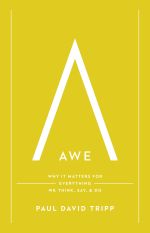 Who’s up for a freebie? “Uncovering the lies we believe about all the earthly things that promise us peace, life, and contentment, Paul Tripp redirects our gaze to God’s awe-inducing glory—showing how such a vision has the potential to impact our every thought, word, and deed.” Thanks to our friends at Crossway for this free download of
  “Letters to the editor often reprove magazines for publishing material they deem inappropriate. What if Paul’s letter to the church in Galatia was (sic) published in Christianity Today magazine next month? The responses might be something like this…” This one’s just for fun but painfully true to life.
  “The charred lump of scroll sat in an archaeologist’s office, impossible to read without destroying it – until now.” It sounds like the introduction to a biblical historical novel that I would shamelessly lap up with a spoon, but this is real life, high tech Indiana Jones stuff, y’all.