My husband’s family is unsaved and over the years they have encouraged my children to ignore our teachings, rules and God’s word to the point of encouraging and helping them to sneak around. Our oldest son moved out (because he didn’t like our rules) and in with his grandma (who is not saved and we repeatedly asked her not to allow him to live with her) she encourages and allows drinking, pre-marital sex.
I also have two young children. I am struggling with having a relationship with people who have and do tell my children that the Bible is not true, they don’t have to follow the rules at our home and they may live with them so they can live their lives as they please. I don’t know scripturally how respond to this ongoing situation.
I’m so glad you want to handle this situation scripturally. As Christians, we should always go to Scripture first to learn what to do in any circumstance.
We need to start by remembering our heirarchy of responsibility. As Christians, our first responsibility is to love and obey Christ. As Christian wives and moms, our next responsibility is to submit to our husbands’ leadership. Finally, we are responsible for raising our children in a godly way. But we also want to love and honor our extended family, and that can be really difficult when they aren’t saved and have a pagan worldview.
It’s such a comfort to me to know that Jesus knew and addressed the fact that He would be a dividing line between people, sometimes even within families:
“Do not think that I have come to bring peace to the earth. I have not come to bring peace, but a sword.For I have come to set a man against his father, and a daughter against her mother, and a daughter-in-law against her mother-in-law.And a person’s enemies will be those of his own household.Whoever loves father or mother more than me is not worthy of me, and whoever loves son or daughter more than me is not worthy of me.” Matthew 10:34-37 (see also Luke 12:51-53)
But Jesus reminds us that, despite those painful divisions and our love for our family members, our loyalty to Him and His word must come first. It’s important to note that the God who said these words in Matthew and Luke is the same God who said in Exodus 20:12 (the Ten Commandments):
Honor your father and your mother, that your days may be long in the land that the Lord your God is giving you.
I think that might be your dilemma. How do we honor Christ in our home and still honor our parents who stand in opposition to Christ?
Let’s look at a few more passages, again, remembering that our first obligation is to obey God’s word. God has made it incumbent upon parents, particularly fathers, to raise our children to know His word and to walk in His ways:
You shall therefore lay up these words of mine in your heart and in your soul…You shall teach them to your children, talking of them when you are sitting in your house, and when you are walking by the way, and when you lie down, and when you rise.
Deuteronomy 11:18a,19
Train up a child in the way he should go; even when he is old he will not depart from it.
Proverbs 22:6
Your children also have a responsibility to honor and obey their parents:
Children, obey your parents in the Lord, for this is right. Ephesians 6:1
But while you’re raising your children in the ways of the Lord and training them to obey you, you need to make sure you’re not doing things that would make that difficult for them, because doing so will “provoke your children to anger” or “exasperate” them:
Fathers, do not provoke your children to anger, but bring them up in the discipline and instruction of the Lord. Ephesians 6:4
Imagine how difficult it must be for a child – who already wants only to gratify his fleshly desires – to obey mom and dad’s instruction in godliness when mom and dad keep having him spend time with grandparents whom they love and who allow them to gratify those desires of the flesh. It would be difficult for an adult to be obedient in that situation of being pulled both ways, let alone a child.
In order to discover what God would have you do about your relationship with your in-laws, you and your husband will need to discuss what God’s word says about honoring his parents and raising your children in a godly way. Ultimately, as the spiritual leader of your home, the final decision about the relationship your family will have with his parents rests on his shoulders, and you will need to honor and respect his decision. As you prayerfully study God’s word and discuss things, you might find the following questions helpful:
Are our younger children being exasperated or frustrated in their attempts to obey Ephesians 6:1 when we have them spend time with grandparents who are encouraging them to disobey God’s word? Is continually exposing our children to their grandparents’ ungodliness putting a “stumbling block” in front of a weaker person?
Since we know God’s word does not contradict itself, how can we honor our parents (Exodus 20:12) even though they are enemies of Christ (Matthew 10:34-37)? Is there a way we can modify the way we spend time with them and/or the amount of time we spend with them so that we still have a relationship with them, yet minimize or remove the ungodly influence they have on our children? Does honoring our parents require us or our children to spend a particular amount of time with them? Is the situation so extreme that our loyalty to Christ demands that we sever the relationship altogether?
First Corinthians 15:33 says: Do not be deceived: “Bad company ruins good morals.” Does it make a difference, biblically, if the “bad company” is relatives? Would we let our children spend time with people like this if they were not related to us?
Am I, individually, and are we, as a family, regularly praying about this situation and praying for my in-laws’ salvation? Are we sharing the gospel with them? Are we trusting God to answer our prayers and work through this situation?
If you have a question about: a well known Christian author/leader, a Bible passage, an aspect of theology, a current issue in Christianity, or how to biblically handle a family, life, or church situation, comment below (I’ll hold all questions in queue {unpublished} for a future edition of The Mailbag) or send me an e-mail or private message. If your question is chosen for publication, your anonymity will be protected
Discernment- it’s a dirty job, but somebody’s gotta do it. While I’m a women’s discipleship blogger rather than a discernment blogger, discernment is part of discipleship. And it’s sorely lacking among Christian women today, which is why it’s regularly featured in my writing.
I’ve been very encouraged by the hundreds of e-mails, messages, and comments I’ve received from women who have turned away from false teachers or helped their loved ones and churches to forsake false doctrine because of something I have written. (I claim absolutely no credit for that. God and His Word get all the glory. He is the one who changes hearts, not me.) It’s such a blessing to hear from so many women who are actively pursuing Christ and the truth of His Word.
Unfortunately, there are also occasional comments and messages from women who are disciples of the false teachers I warn against, who take me to task for doing so. The same unscriptural accusations are raised again and again against me and against others who take a biblical stand against false teachers and false doctrine.
Here, in no particular order, are the most frequently raised objections to my discernment work and my answers to them. Many readers have told me that these same objections have been raised to them when they warn others of false teachers. Please feel free to use this article as a resource if these objections are raised with you.
Amy Spreeman and I recorded a series of A Word Fitly Spoken podcast episodes dealing with each of the items in this article. I’ve included a link to the appropriate episode in each section in case you’d like to listen.
1. Did you contact Ms. Twisted Sister in obedience to Matthew 18:15-20 before publishing this article about her?
No, I have not confronted Ms. Twisted Sister about her false teaching. Here’s why:
a. The Matthew 18 passage does not apply to public false teaching. It is about sin in the local congregation where you actually know the offender personally and have access to him/her. It has to do with correcting sin in the local church and removing the offender from the local church if she refuses to repent. Jesus, Paul, and others refuted public false teaching publicly without following the (again, inapplicable) steps in Matthew 18 many times. D.A. Carson and Randy Alcorn have each written excellent articles further explaining the inapplicability of this passage to public false teaching. The real question is, why hasn’t the teacher’s own pastor placed her under church discipline for teaching men and/or teaching false doctrine?
b. I have no doubt that others have confronted her about these things. Plus, she has a Bible and supposedly knows it well enough to teach it. If so, then she is well aware of what the Bible says about these issues. If not, she does not know the Bible well enough to be teaching (James 3:1).
c. I have attempted plenty of times to contact people like Ms. Twisted Sister. One of two things happens: either I’m ignored altogether, or one of her underlings gets back in touch with me to defend her. It’s a complete waste of time.
d. What if I had contacted Ms. Twisted Sister and she flatly refused to repent of the false doctrine she’s teaching? Would you then be in full support of my article which warns against her? No? Then whether or not I attempted to contact her is not the issue you have with this article, so why bring it up?
2. You say that Ms. Twisted Sister is in disobedience to Scripture because she preaches to men. You’re just as guilty because you have a blog and social media pages that men can read.
All this accusation does is to demonstrate the accuser’s lack of understanding of Scripture and how to correctly study it in context, which are fruits of sitting under the “instruction” of false teachers who don’t train people in proper hermeneutics.
Having a blog in the public square for women that men “trespass” on is not the same thing as intentionally and unrepentantly preaching to men in the church setting as I’ve explained in further detail in this article.
Furthermore, when “trespassing” takes place, who is at fault- the person trespassed upon or the trespasser himself? If a man is improperly receiving biblical instruction from a blog for women the man is the one at fault, not the woman blogger who has no intention of instructing him.
3. But look how many people Ms. Twisted Sister is helping! I’ve grown so much in my relationship with the Lord because of her!
No you haven’t. It is impossible to grow to biblical, Christian maturity by following someone who teaches false doctrine, just like it’s impossible to grow physically healthy by eating a diet of poison. The only kind of growing you can do by following a false teacher is growing away from the Lord, despite what you may think or feel. Second Timothy 3:7 clearly says that those who follow false teachers are “never able to arrive at a knowledge of the truth.” If it’s impossible for a teacher to lead you to know the truth of Scripture, how in the world is she helping you or anybody else?
False teachers are not “helping” anyone but themselves. Just like the false teachers Paul spoke out against, they are “teaching for shameful gain what they ought not to teach.”
The size or apparent success of a false teacher’s ministry also does not prove that she is helping people or teaching God’s Word correctly. Jesus always taught biblical truth, and yet we read in John 6 that after one of His teaching sessions, “many of his disciples turned back and no longer walked with him”. The size of a ministry is not an indicator of whether or not it is biblical.
Finally, the “help” a ministry provides is not an indication that the false teacher is doing what is right in God’s eyes. Did you know that several medical procedures that have helped many people were discovered in World War II concentration camps during torturous experiments on inmates? Does the fact that those medical procedures have helped so many people justify the torture the Nazis inflicted on their victims? The ends do not justify the means, especially in Christianity.
4. You’re creating division and disunity by speaking out against Ms. Twisted Sister.
No, again, this demonstrates a lack of knowledge about what the Bible actually teaches. Scripture is abundantly clear that it is the false teachers, not those speaking out against them, who are creating division and disunity. See Jude 18-19 and Romans 16:17-18.
The solution to this division and disunity is for false teachers to repent of their false doctrine, learn how to rightly handle and teach God’s word, and begin to teach sound doctrine, not for discerning Christians to keep quiet.
5. You’re slandering Ms. Twisted Sister by warning against her.
The dictionary definition of slander is: “to make a false spoken statement that causes people to have a bad opinion of someone.” (So, technically the correct word would be libel when we’re talking about writing, because slander has to do with verbal speech.)
The key word in the definition of slander is “false.” When I demonstrate that someone is a false teacher, I do so by providing ample truthful video, audio, or text evidence of what the person says or does and compare it with what the Bible says. This is not slander. This is similar to what a lawyer does in court when examining someone accused of a crime. The lawyer provides evidence of the accused’s words and behavior and compares it to the law so a judge or jury can decide whether or not the accused is guilty of breaking the law. The fact that you don’t like the verdict doesn’t mean the lawyer is slandering the accused by exposing her own words and behavior.
6. You’re being unkind, unloving, ungodly, divisive, hateful, self-righteous, mean, critical, etc. for calling out false teachers.
Every single book of the New Testament except Philemon warns against false teachers or false doctrine. Jesus called out false teachers. So did Peter, Paul, John, Jude, and other New Testament figures. And they usually did so much more harshly than I do. Are you ready to say that Jesus Himself and the apostles writing under the inspiration of God the Holy Spirit were being unloving, ungodly, hateful, etc., for speaking against false teachers? That’s a very serious allegation to make against the Jesus you claim to follow.
Discernment work, done properly (and I’m not denying that sometimes it’s done improperly) is done out of love– love for the victims of false teachers. It’s the same love that sees an oblivious child in the street with a truck bearing down on him and snatches the child out of harm’s way. It is not loving to let people continue to believe false doctrine that may lead them to an eternity in hell without at least trying to rescue them.
7. Ms. Twisted Sister may not always be right but that doesn’t mean she’s a false teacher. We all get things wrong.
Following that logic, I would be accusing every pastor in the history of the New Testament church of being a false teacher, including Paul and the apostles, because they have all made mistakes in their preaching at some point. And I’m certainly not doing that.
In the same way that a driver, despite taking every precaution, could one day accidentally hit and kill a pedestrian is different from a person who decides to go out and become a serial killer, there is a big difference between a pastor who generally preaches sound doctrine, makes an innocent mistake, repents of it, corrects it, and goes on to continue to preach sound doctrine, and a person who unrepentantly, and despite continued rebuke, wallows in false doctrine and rebelliously keeps teaching it. Let’s not pretend that the two are the same. These are not innocent mistakes these false teachers are making and repenting of. This is the continuous, rebellious, proclamation of false doctrine.
8. Maybe Ms. Twisted sister says some things that are wrong, bibically, but she says some good things, too. I just “chew up the meat and spit out the bones”.
Please show me the Scripture, chapter and verse, in context that says that this is the way we are to deal with false teachers. Hint- it doesn’t. It says exactly the opposite. It says we are to have nothing to do with false teachers, and that if we embrace them, we are taking part in their wicked works. See Romans 16:17-18, 2 John 9-11, 2 Corinthians 6:14-18, Ephesians 5:11,and Titus 1:9-16.
9. You’re judging Ms. Twisted Sister! The Bible says not to judge.
No, the Bible says not to judge improperly or unbiblically. The same Jesus who said not to judge improperly in Mathew 7 also said we are to “judge with right judgment” in John 7.
Matthew 18:15-20 and 1 Corinthians 5:11-13 are clear that it is the duty of Christians to make scriptural judgments about sin in the church and excommunicate so called Christians who unrepentantly persist in sin.
The Bible does not say not to judge at all, it says to do it biblically.
10. You shouldn’t be writing against Ms. Twisted Sister, you should just be praying for her.
First of all, I do pray regularly for false teachers. But to say we should only pray for them and not warn others of them is to say that Jesus and all the other New Testament figures who warned against false teachers and false doctrine – under the inspiration of the Holy Spirit – were wrong to do so and should simply have prayed for them. Are you willing to level that kind of accusation against Jesus and the Holy Spirit?
It’s disappointing for people who idolize a certain teacher – someone they’re so sure is helping them grow closer to the Lord – to hear hard truths about this person they’ve come to love and admire. I get that. I’ve stood in their shoes. It’s like ripping off a Band-Aid or being doused with a bucket of cold water. But, as I said, it is not loving to see people believing false doctrine without at least making an attempt to rescue them, even if it hurts at first. Let us pull them back from the brink in love and patience. Second Timothy 2:24-26 says it best:
And the Lord’s servant must not be quarrelsome but kind to everyone, able to teach, patiently enduring evil, correcting his opponents with gentleness. God may perhaps grant them repentance leading to a knowledge of the truth, and they may come to their senses and escape from the snare of the devil, after being captured by him to do his will.
Bible study. As Christians we want to do it, we know we’re supposed to do it, but have you ever stopped to think that there are right ways and wrong ways to do it? Let’s take a look at a few do’s and don’ts of “rightly dividing God’s word” in Bible study.
Do use a good translation, not a paraphrase. You want to get as close to the original wording as possible. There are a number of easy to read, accurate translations out there. The English Standard Version (ESV) and New American Standard Bible (NASB) are two of the best. Try some translations on for size at BibleGateway.com.
Do read the entire Bible from cover to cover at least every few years. It will give you a better understanding of the “big picture” of the Bible and how all the little pieces inside it fit together. (I highly recommend a chronological reading plan since the books of the Bible aren’t always arranged chronologically.)
Don’t neglect the textual context. Every Bible verse has what I call a “micro-context” (how it fits in with the verses immediately before and after it) a larger context (how it fits in with the chapter and book it’s in) and a “macro-context” (how it fits in with the big picture of the Bible). When we fail to take verses in context, we are mishandling and misappropriating God’s precious and holy word.
Do consider the cultural context. Who wrote the passage, and what do we know about him and his perspective? To whom was the passage written- Jews or Gentiles? Those under the Law or those under grace? Men or women? Pastors or lay people? How did the culture at the time view the topic the passage is about, God, Judaism, the church, etc.? At what period in history, in which country, and in what language was the passage written? A good study Bible or study Bible app can be a tremendous help here.
Don’t confuse descriptive texts (passages that describe something that happened to somebody) with prescriptive texts (a command we’re to obey). Just because you read that Noah built an ark or that Judas went out and hanged himself, doesn’t mean that God is telling you to do the same (thank goodness!). Those are descriptive passages. God is simply telling the story of what happened to someone else because it somehow fits into His bigger story of redemption.
Do consider the type of literature and literary devices you’re reading. Is this book of the Bible history? Poetry? Law? Prophecy? Epistle? Is the particular passage a song, metaphor, hyperbole, comparison, allegory, parable? The Bible uses various vehicles to drive truth home, and they must all be understood in different ways.
Don’t feel like you HAVE to use a Bible study or devotional book or workbook. It really is OK to just pick up the actual Bible and study it. God made His word understandable, made you smart enough to understand it, and gave you the indwelling Holy Spirit to illumine your understanding.
Do, if you decide to use one, choose a Bible study book or workbook that treats Scripture as the “swimming pool” you dive into and swim around in, not the “diving board” the author springs off of into a pool filled only with her own personal stories, anecdotes, and opinions.
Do read the Bible in orderly chunks, not in single verses. Think about the way you would read a magazine. Do you pick it up each day and read a random sentence or paragraph? Do you read the third page of an article before you read the first page of it? You’ll best understand a book of the Bible if you start at the beginning and read the chapters in order to the end.
Don’t give in to the temptation to read yourself into Scripture. The Bible isn’t our story. Approach every passage remembering that the Bible is God’s story of redemption through Christ from His perspective, and we study it to learn about and draw closer to Him.
Don’t underestimate how helpful your Bible’s cross-references to related verses can be. Reading several different passages on a particular topic you’re studying can give you a broader understanding of what the Bible has to say about it.
Do let clear passages interpret unclear passages. This is another reason cross-references are so handy. If you come across a passage you just don’t get, try reading related passages that are clearer, and understand the unclear passage in light of the clearer ones.
Lengthy tomes have been written on the topic of biblical hermeneutics and Bible study methods, so I’m sure I could go on at length, but it’s your turn:
Have you ever found it difficult or daunting to study the Bible?
What are some of the benefits of rightly handling God’s word?
How has a right understanding of Scripture helped you to grow
in your walk with the Lord?
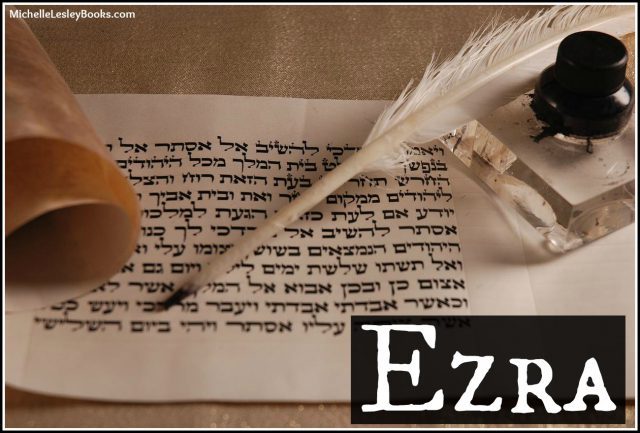
Now these were the people of the province who came up out of the captivity of those exiles whom Nebuchadnezzar the king of Babylon had carried captive to Babylonia. They returned to Jerusalem and Judah, each to his own town.2 They came with Zerubbabel, Jeshua, Nehemiah, Seraiah, Reelaiah, Mordecai, Bilshan, Mispar, Bigvai, Rehum, and Baanah.
The number of the men of the people of Israel:3 the sons of Parosh, 2,172.4 The sons of Shephatiah, 372.5 The sons of Arah, 775.6 The sons of Pahath-moab, namely the sons of Jeshua and Joab, 2,812.7 The sons of Elam, 1,254.8 The sons of Zattu, 945.9 The sons of Zaccai, 760.10 The sons of Bani, 642.11 The sons of Bebai, 623.12 The sons of Azgad, 1,222.13 The sons of Adonikam, 666.14 The sons of Bigvai, 2,056.15 The sons of Adin, 454.16 The sons of Ater, namely of Hezekiah, 98.17 The sons of Bezai, 323.18 The sons of Jorah, 112.19 The sons of Hashum, 223.20 The sons of Gibbar, 95.21 The sons of Bethlehem, 123.22 The men of Netophah, 56.23 The men of Anathoth, 128.24 The sons of Azmaveth, 42.25 The sons of Kiriath-arim, Chephirah, and Beeroth, 743.26 The sons of Ramah and Geba, 621.27 The men of Michmas, 122.28 The men of Bethel and Ai, 223.29 The sons of Nebo, 52.30 The sons of Magbish, 156.31 The sons of the other Elam, 1,254.32 The sons of Harim, 320.33 The sons of Lod, Hadid, and Ono, 725.34 The sons of Jericho, 345.35 The sons of Senaah, 3,630.
36 The priests: the sons of Jedaiah, of the house of Jeshua, 973.37 The sons of Immer, 1,052.38 Thesons of Pashhur, 1,247.39 The sons of Harim, 1,017.
40 The Levites: the sons of Jeshua and Kadmiel, of the sons of Hodaviah, 74.41 The singers: the sons of Asaph, 128.42 The sons of the gatekeepers: the sons of Shallum, the sons of Ater, the sons of Talmon, the sons of Akkub, the sons of Hatita, and the sons of Shobai, in all 139.
43 The temple servants: the sons of Ziha, the sons of Hasupha, the sons of Tabbaoth,44 the sons of Keros, the sons of Siaha, the sons of Padon,45 the sons of Lebanah, the sons of Hagabah, the sons of Akkub,46 the sons of Hagab, the sons of Shamlai, the sons of Hanan,47 the sons of Giddel, the sons of Gahar, the sons of Reaiah,48 the sons of Rezin, the sons of Nekoda, the sons of Gazzam,49 the sons of Uzza, the sons of Paseah, the sons of Besai,50 the sons of Asnah, the sons of Meunim, the sons of Nephisim,51 the sons of Bakbuk, the sons of Hakupha, the sons of Harhur,52 the sons of Bazluth, the sons of Mehida, the sons of Harsha,53 the sons of Barkos, the sons of Sisera, the sons of Temah,54 the sons of Neziah, and the sons of Hatipha.
55 The sons of Solomon’s servants: the sons of Sotai, the sons of Hassophereth, the sons of Peruda,56 the sons of Jaalah, the sons of Darkon, the sons of Giddel,57 the sons of Shephatiah, the sons of Hattil, the sons of Pochereth-hazzebaim, and the sons of Ami.
58 All the temple servants and the sons of Solomon’s servants were 392.
59 The following were those who came up from Tel-melah, Tel-harsha, Cherub, Addan, and Immer,though they could not prove their fathers’ houses or their descent, whether they belonged to Israel:60 the sons of Delaiah, the sons of Tobiah, and the sons of Nekoda, 652.61 Also, of the sons of the priests: the sons of Habaiah, the sons of Hakkoz, and the sons of Barzillai (who had taken a wife from the daughters of Barzillai the Gileadite, and was called by their name).62 These sought their registration among those enrolled in the genealogies, but they were not found there, and so they were excluded from the priesthood as unclean.63 The governor told them that they were not to partake of the most holy food, until there should be a priest to consult Urim and Thummim.
64 The whole assembly together was 42,360,65 besides their male and female servants, of whom there were 7,337, and they had 200 male and female singers.66 Their horses were 736, their mules were 245,67 their camels were 435, and their donkeys were 6,720.
68 Some of the heads of families, when they came to the house of the Lord that is in Jerusalem, made freewill offerings for the house of God, to erect it on its site.69 According to their ability they gave tothe treasury of the work 61,000 darics of gold, 5,000 minas of silver, and 100 priests’ garments.
70 Now the priests, the Levites, some of the people, the singers, the gatekeepers, and the temple servants lived in their towns, and all the rest of Israel in their towns.
1. Review again the historical background for the book of Ezra from lesson 1 (link above). How many stages of exile had there been from Judah to Babylon? How many stages of return of the exiles from Babylonia? Was this (v.1-2) the first, second, or third of the return trips? Who led this return trip? Where did the exiles settle upon their return? (1)
2. Second Timothy 3:16-17 tells us:
All Scripture is breathed out by God and profitable for teaching, for reproof, for correction, and for training in righteousness,that the man of God may be complete, equipped for every good work.
Does “all Scripture” include Ezra 2:2-67? How is the census information given in verses 2-67 “profitable” to Christians? Do you think the information in these verses is for teaching, reproof, correction, or training in righteousness? How do these verses “complete” and “equip” Christians for good works?
3. Notice that the group of exiles precisely numbered in verses 2-67 is organized and subdivided into several categories. What are those categories? (2b, 36a, 40a, 43a, 55a, 59). Read verses 68-69, and glance ahead at Ezra 3. What is the main event of those passages? Does this shed some light on why the categories in verses 2-67 focus largely on temple officials and leadership?
4. What was the special situation of the people mentioned in verses 59-63? (53) What two actions were taken regarding this situation in verses 62 and 63? Why would they have been excluded from the priesthood or partaking of the most holy food? What were the Urim and Thummim, and why would the priest have needed to consult them? What does this passage demonstrate about the separation between God’s people and the world? How does the New Testament reinforce this idea for Christians? Why did/does God not want His people to yoke themselves to unbelievers?
5. What does the precision and organization of the census information in verses 2-67 tell you about Ezra’s administrative skills? How can people with administrative gifts use those gifts to serve the body of Christ today? How does the information in these verses reflect on the nature and character of God? His omniscience? His love and care for His people? His attention to detail? The accuracy of His word?
What is the unpardonable sin -the blasphemy of the Holy Spirit – and can a Christian, or anyone else, commit it today?
Jesus mentions the unforgiveable sin, blasphemy of the Holy Spirit, in Matthew 12:31-32:
“Therefore I tell you, every sin and blasphemy will be forgiven people, but the blasphemy against the Spirit will not be forgiven. And whoever speaks a word against the Son of Man will be forgiven, but whoever speaks against the Holy Spirit will not be forgiven, either in this age or in the age to come.”
Earlier in chapter 12, the crowd had expressed amazement at Jesus’ healing of a demon oppressed, blind and mute man, by exclaiming, “Can this be the Son of David [the Messiah]?” (23) The Pharisees, wishing to discredit Jesus, responded, “It is only by Beelzebul, the prince of demons, that this man casts out demons,” (24) attributing the work of the Holy Spirit, through Jesus, to Satan.
It is is in this context that Jesus speaks in verses 31-32 about blasphemy of the Holy Spirit (attributing the work of the Holy Spirit to Satan).
It is generally agreed upon by reputable theologians that Christians today who have been genuinely born again cannot, nor would they desire to if they could, give Satan the credit and glory for works done by God the Holy Spirit. The first resource I have listed below makes a compelling argument that no one can commit this sin today since its context was limited to the miracles done by Jesus while He was on earth.
If you have a question about: a well known Christian author/leader, a Bible passage, an aspect of theology, a current issue in Christianity, or how to biblically handle a family, life, or church situation, comment below (I’ll hold all questions in queue {unpublished} for a future edition of The Mailbag) or send me an e-mail or private message. If your question is chosen for publication, your anonymity will be protected.



 Previous Lessons: