Mailbag

The Mailbag: Is lust a sin for women, too?

Originally published September 17, 2018

In the past, I’ve had lots of trouble wondering about my desire and tendency to look at, and get excited by, physically attractive men, especially men who reveal a lot of themselves in underwear modeling and soft-core porn. I think this is a sin, but I’m not sure.

I’ve gotten mixed reactions when I’ve mentioned this to people. There are some who say that, yes, this is the sin of lust. Yet there are others who have told me that women cannot possibly struggle with lust, only men do. I once dealt with one particular man who was very dogmatic that God created men and women to be tempted differently, and that lust is not a temptation women deal with, so he dismissed my struggles with this subject.

When I tried to search Scripture, using Matthew 5:28, it would also seem that this is a male-only sin. So is it OK for me to keep looking at male models, including underwear modeling and soft-core porn?

This is an awesome question for three reasons. First, you’re concerned about whether or not you’re sinning with the aim of mortifying this behavior if it is a sin. Second, you’re not relying on your own feelings, opinions, or experiences to determine whether or not this is a sin, you’re turning to Scripture to find out. Those are both very encouraging things. They demonstrate that the Holy Spirit is working in your heart to sanctify you and make you more like Christ. Third, it gives us an opportunity to take a look at the Scriptures in more depth and give an example of handling God’s Word correctly and in context for everyone reading this article. So, thank you for asking!

The short answer to your question is, yes, lust is sinful for the women who experience it just as much as it is for the men who experience it. But I don’t want you to just take my word for it, so let’s look at why.

The Scripture you’ve cited, Matthew 5:28, is definitely one of the passages that addresses this issue. It says:

But I say to you that everyone who looks at a woman with lustful intent has already committed adultery with her in his heart.

I suspect this verse might be the reason the man you spoke with said that lust is a male-only sin, because this particular verse speaks to men lusting after women. However, to make a blanket statement that because God created men and women differently, lust is never a temptation for women is foolhardy and shows a lack of biblical knowledge and understanding as well as a denial of reality.

Let’s address reality first. It is true that God created men in such a way that they are more likely to be sexually stimulated by what they see than women are. However, that does not mean that no woman anywhere has ever experienced lust. God also created men in such a way that men are usually taller and stronger than women and women are usually more emotionally expressive than men. But we can look around us and see that some women are taller or stronger than some men, and some men are more emotionally expressive than some women.

Furthermore, while you really can’t do anything about how tall you are (and, to some extent, how strong you are), lust is something that can be introduced to women and encouraged in women by culture. A hundred years ago, it would have been unthinkable to see advertisements featuring nearly naked men, or strip clubs with male dancers, or pornography aimed at women, so readily available and with so little shame attached. And at that time there were probably far fewer women who struggled with the sin of lust.

These days, it’s right there on your phone or computer or TV or at the bachelorette party for your friend. Lust, lewd behavior, and lurid talk by women are actually encouraged by the feminist movement. (If men are going to objectify women with lust and porn, we’re going to objectify them right back. Really? This is equality? The right to sink to the same depth of degradation as the scuzziest of men? No thanks.) Watch any sitcom or drama on TV. You’ll see it soon enough. And, of course, there’s money to be made by making women into consumers of porn and other sexual material, so the businesses that peddle these things encourage women to lust as well. All of which means that today, just a hundred years later, far more women are struggling with the sin of lust.

So we can see that the reality is that lust is a temptation experienced by some women, even though men are more prone to it.

But is lust a sin for women if Matthew 5:28 is speaking in terms of men lusting? Yes. There are a couple of different reasons for this, one cultural, and one biblical.

Let’s go cultural first to understand more clearly why this particular verse is addressed to men rather than men and women. We start off with the knowledge that men are much more likely to experience lust than women. Then we take the culture of the time into account.

Jesus spoke these words in a patriarchal society. In His culture, there were no women in positions of authority and power. Men ran the political system, the religious system, and men were the heads of their households. (By the way, despite what our culture today would say, this wasn’t a bad thing in and of itself. In fact, most of this was perfectly biblical.) Normally, women were not educated, and they depended on men – first their fathers, then their husbands, and finally, their grown sons – to take care of them their entire lives.

So when Jesus was teaching to the crowds as with the Sermon on the Mount (which Matthew 5 is part of) the cultural understanding was that He was primarily teaching the men, and any women and children they brought with them were basically along for the ride. Indeed, many would have thought the women incapable of understanding teaching (since they were intellectually inferior to men) or unworthy of receiving teaching (because God had created them as “lesser” than men).

The Jewish understanding that Jesus was primarily teaching the men would have been similar. Rabbis didn’t teach women, they taught men. Any intentional biblical instruction women received would have been from their fathers or husbands at home. We can see further evidence of this cultural and Jewish understanding in several different Scriptures. A few examples:

At the feeding of the five thousand, the feeding of the four thousand, and some other New Testament “crowd scenes”, the crowd is numbered by the number of men present.

Both the woman at the well herself and the disciples “marveled” that Jesus was speaking with a woman.

Due to Martha’s cultural and Jewish understanding of women’s roles, Jesus had to explain to her that it was OK – even good – for Mary to sit at His feet and learn.

At Pentecost, Luke refers to the “multitude” as “devout men“, and Peter addresses this crowd as “men of Judea“, “men of Israel“, and “brothers“.

So, in Jesus’ secular and Jewish cultural context, He was understandably speaking to the men present. (And what was He telling these men who lived in a world that taught them that women were inferior to men, and that men could regard and treat women any way they wanted to? Jesus elevates the status of women by telling the men they’ve got to respect women even in their hearts. They’ve got to respect their wives by not committing adultery with other women in their hearts, and they’ve got to respect those other women by not using them as objects of sexual gratification in their hearts.) It would have been an unnecessary distraction from His message to address the women directly, and it would certainly have been viewed as inappropriate, maybe even perverted, for Jesus to have suggested that women lusted after men.

So Jesus’ culture, and the fact that lust is largely a sin committed by men, required Him to address this remark to men. But those two things do not have any bearing on the intrinsic sinfulness of lust itself, and they do not mean that this instruction applies only to men. In the section of Matthew 5 preceding the section on lust, Jesus deals with the sin of being angry with your “brother”. Does this mean anger is only sinful if you’re angry with a man instead of a woman? The section of Matthew 5 immediately following the section on lust says men may not divorce their wives except for unfaithfulness. Does this mean women are free to divorce their husbands for any reason? Of course not.

But it’s important to remember that Matthew 5:28 is not the only passage of Scripture that deals with lust. Let’s look at some others.

These passages describe lust as female attribute:

a wild donkey used to the wilderness, in her heat sniffing the wind! Who can restrain her lust?
Jeremiah 2:24a

Oholah played the whore while she was mine, and she lusted after her lovers…everyone after whom she lusted…the Assyrians, after whom she lusted…Her sister Oholibah saw this, and she became more corrupt than her sister in her lust and in her whoring, which was worse than that of her sister. She lusted after the Assyrians…all of them desirable young men.
Ezekiel 23:5a,7b,11,12a,c,

Ezekiel even describes Oholibah viewing pictures of men lustfully. Doesn’t it sound like a woman viewing pornography?:

But she carried her whoring further. She saw men portrayed on the wall, the images of the Chaldeans portrayed in vermilion, wearing belts on their waists, with flowing turbans on their heads, all of them having the appearance of officers, a likeness of Babylonians whose native land was Chaldea. When she saw them, she lusted after them and sent messengers to them in Chaldea.
Ezekiel 23:14-16

In the Jeremiah passage, the lusting woman represents Israel. In Ezekiel, Oholah represents Samaria, and Oholibah represents Jerusalem. So these are not individual women lusting, rather, God is using the illustration of a woman lusting after her “lovers” to describe the unspeakable abomination of Israel’s idolatry. He was using the severest language He could to disgust His people over their sin and move them to repent and turn back to Him. God could have chosen any sin – male lust, robbery, murder, etc. – to represent how horrific their idolatry was to Him, but what did He choose? Female lust. Let that sink in.

Romans 1:18-32 clearly refers to the sins of both men and women, with verse 24 stating:

Therefore God gave them up in the lusts of their hearts to impurity, to the dishonoring of their bodies among themselves,

These passages speak of lust in neutral, rather than male or female, terms:

and especially those who indulge in the lust of defiling passion
2 Peter 2:10a

For all that is in the world, the lust of the flesh and the lust of the eyes and the boastful pride of life, is not from the Father, but is from the world.
1 John 2:16

Lust is a form of coveting – the greedy yearning to have something that God has not given to you or has given to someone else, and that is certainly not limited to men. Also notice in these passages that you can covet a person, and that coveting is often linked to sensuality or sexual immorality.

You shall not covet your neighbor’s house; you shall not covet your neighbor’s wife, or his male servant, or his female servant, or his ox, or his donkey, or anything that is your neighbor’s.
Exodus 20:17

coveting, wickedness, deceit, sensuality, envy, slander, pride, foolishness. All these evil things come from within, and they defile a person.
Mark 7:22-23

But sexual immorality and all impurity or covetousness must not even be named among you, as is proper among saints…For you may be sure of this, that everyone who is sexually immoral or impure, or who is covetous (that is, an idolater), has no inheritance in the kingdom of Christ and God.
Ephesians 5:3,5

Put to death therefore what is earthly in you: sexual immorality, impurity, passion, evil desire, and covetousness, which is idolatry.
Colossians 3:5

Finally, lusting after another person – adulterous coveting – is not loving your neighbor:

For the commandments, โ€œYou shall not commit adultery, You shall not murder, You shall not steal, You shall not covet,โ€ and any other commandment, are summed up in this word: โ€œYou shall love your neighbor as yourself.โ€
Romans 13:9

When you look at another person with lust, you are loving yourself. You are thinking selfishly about how that person could gratify your base desires, make you feel good, serve you. That is the antithesis of everything Jesus taught and stood for. Our Master, the One we follow and strive to be like, said:

For even the Son of Man came not to be served but to serve, and to give his life as a ransom for many.
Mark 10:45

Jesus came to die on a cruel rugged cross to pay for the sins of the flesh. He would never have thought of using another person to gratify His own selfish desires. How could we?

Is lust a sin for women too? Absolutely. Stop it. Repent. Receive the merciful grace and forgiveness Christ offers.

Additional Resources:

Just Stop It: Instructions on how to repent at The Cripplegate

Hey, Porn Addict: Stop It by Gabriel Hughes

How do you stop looking at porn? at When We Understand the Text

God Over Porn

Every Womanโ€™s Silent Struggle: Fighting Lust with Sisters in Christ by Marian Jacobs


If you have a question about: a Bible passage, an aspect of theology, a current issue in Christianity, or how to biblically handle a family, life, or church situation, comment below (Iโ€™ll hold all questions in queue {unpublished} for a future edition of The Mailbag) or send me an e-mail or private message. If your question is chosen for publication, your anonymity will be protected.


Church, Sin

Dis. Grace.: Responding Biblically to Church Scandal

Originally published June 30, 2015


In light of the recent news about Steve Lawson, I thought it might be helpful to re-run this article. I will be removing Dr. Lawson from my list of recommended Bible teachers forthwith.

No, this is not a rumor. No, nothing has been hacked. Yes, this has been confirmed by (and was announced by) his own church. Sadly, it is true.:


It happened again last week. Another scandal. Another high profile pastor stepping down from the ministry in disgrace. Another family broken. Another church stunned and bereft.

And itโ€™s not just the money grubbing televangelists anymore, either. This was one of the theological good guys. Sadly, pastors and Christian leaders โ€“ both those in the public eye and those right around the corner โ€“ seem to be dropping like flies these days. Adultery. Financial sin. Pornography. Abuse. Fraud. The list of sinful behavior goes on and on, leaving a wake of destruction in its path and giving Christ and His bride a black eye in the process.

So, what is the biblical response to scandals like these for Joe and Jane Christian? We view the situation through the lenses of Romans 8:28:

And we know that for those who love God all things work together for good, for those who are called according to his purpose.

How can God use this scandal, awful as it is, for my good and the good of my brothers and sisters in Christ? Itโ€™s an opportunity to learn, teach, and minister in so many ways:

Fully grasp the destructive power of sinโ€ฆ

Imagine the agony the pastorโ€™s sin is creating in so many lives. What must his wife be going through? His children? His church? What about his own relationship with God? What about the lost people he was trying to win to Christ? What about the fact that his career may be over and he may lose his house?

Itโ€™s been said that sin destroys completely and completely destroys. Itโ€™s a good time to reflect on the fact that sin is not something to be trifled with. Count the cost. Would it be worth it to you to commit the same sin in your own life?

Realize your need for Christโ€ฆ

โ€œThere, but for the grace of God, go I.โ€ โ€œTherefore let anyone who thinks that he stands take heed lest he fall.โ€ (1 Corinthians 10:12) โ€œPride goes before destruction, and a haughty spirit before a fall.โ€ (Proverbs 16:18)

Donโ€™t fall into the trap of thinking youโ€™re better or holier than the person who sinned, therefore, you would never do what he did. Instead, let his sin push you towards the cross, realizing that youโ€™re just as weak and susceptible to temptation as he is. Let it amp up your prayer life and drive you to cling to Christ and His word lest you fall into sin.

Dive into Godโ€™s wordโ€ฆ

What does the Bible say about the sin in question? Learn what Godโ€™s word says. Apply it to your life, your work, or your marriage. Teach it to your children. Share it with those in your circle of influence. Build up your brothers and sisters in Christ so they might stand firm against temptation.

Implement safeguardsโ€ฆ

People donโ€™t just wake up one day and decide to commit adultery or embezzlement or whatever. Every sin starts with a wayward thought, which, when left unchecked (or entertained), snowballs into action. What could the scandalized pastor have done, practically, to prevent his sin? What are some concrete, proactive steps you can take to guard against sin in your life? Maybe your husband should hold the credit cards or you should cut ties with that certain male friend. Donโ€™t wait for sin to find you. Build some walls before it arrives.

Use the scandal as a springboard for prayerโ€ฆ

Pray for those involved in the scandal. Ask God to protect you, your husband, and your loved ones from that particular sin. Realize that your own pastor and church staff are tempted to sin every day, pray for them regularly, and let them know youโ€™re praying for them.

Practice the Golden Ruleโ€ฆ

What if you were the one who sinned? How would you want people to talk about and treat you and your family? Call a sin a sin, but letโ€™s remember, when it comes to scandals, to watch our words and actions, and treat others the way we would want to be treated.

Use the scandal as an opportunity to share the gospelโ€ฆ

Inevitably, some lost people will see pastoral sin as one more candle in their โ€œChristians are just a bunch of hypocritesโ€ cake. Donโ€™t be embarrassed if an unbeliever approaches you with this line of fire (and whatever you do, don’t try to make light of or justify the pastorโ€™s sin). Own it. Admit it. โ€œYouโ€™re right. This guy sinned. He needs to repent and be forgiven by Christ. He needs to make things right with the people around him. Just like me. Just like you. By the way, Christ was crucified for sinners like him and me and you. Have you ever repented of your own sin and trusted in Christโ€™s death, burial, and resurrection as the payment for your sin? Mind if I tell you how?โ€

Repent and Forgiveโ€ฆ

Itโ€™s hurtful when someone you trust and look up to lets you down. But because weโ€™re sinful humans living in a broken world, itโ€™s going to happen. The pastor who sinned needs to repent. When he does, the people around him need to forgive, even though there will probably still be disciplinary consequences to his actions. Is there sin in your life that you need to repent of and face the consequences for? Is there someone who has sinned against you that you need to forgive? God extends the grace of forgiveness to repentant sinners and the grace to forgive to their victims. Repent. Forgive.


Scandals among Christian leaders are heartbreaking, disappointing, embarrassing. But the God who sent His only Son to the cross to turn sinners into saints has a wonderful way of taking offenses and turning them into opportunities for His kingdom.

Scandals among Christian leaders are heartbreaking. But the God who sent His only Son to the cross to turn sinners into saints has a wonderful way of taking offenses and turning them into opportunities for His kingdom.

Podcast Appearances

Podcast Guest Appearance – Contending for the Word

I once again had the pleasure of chatting with my friend Dave Jenkins on his podcast Contending for the Word, in an episode titled Exposing John and Lisa Bevere in Deliverance Ministry, Repentance, and Sanctification.

Listen in as Dave and I discuss the Beveres’ false doctrine and the way they twist Scripture on these issues, what the Bible really teaches, and more! Even if you don’t follow the Beveres, many other false teachers share the same beliefs, so you’ll want to give this a listen to educate yourself on the falsehoods flying around out there and equip yourself to help your friends and loved ones who believe them.

Be sure to check out Dave’s website, Servants of Grace, where you’ll find an abundance of great teaching, podcasts, and materials, as well as his social media links- and give Dave a follow!


Articles / resources mentioned or touched on in the episode:

John & Lisa Bevere

Popular False Teachers & Unbiblical Trends

Searching for a new church?

Speaking Engagements

A Word Fitly Spoken


Got a podcast of your own or have a podcasting friend who needs a guest? Need a speaker for a womenโ€™s conference or church event? Click the โ€œSpeaking Engagementsโ€ tab in the blue menu bar at the top of this page, drop me an e-mail, and letโ€™s chat!

Faith, Sin

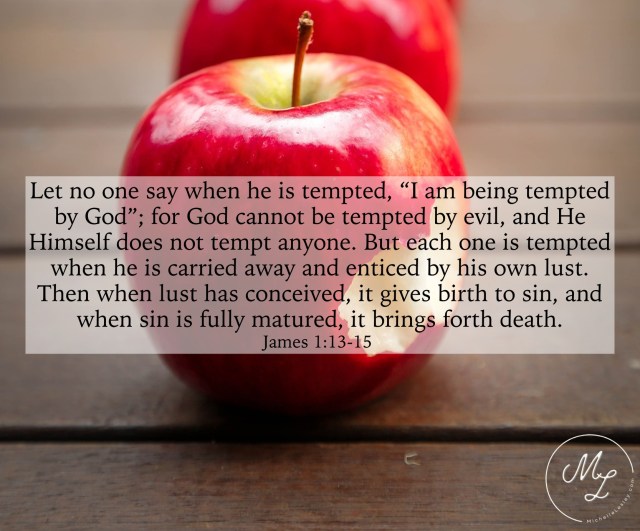
Throwback Thursday ~ The “Forbidden Fruit” Fallacy

Originally published February 20, 2015

You’ve heard the old adage: “forbidden fruit is sweeter.” When people use this phrase, what they mean is that if you tell someone he can’t have or do something, he’s going to want to have or do it all the more just because it’s forbidden.

I heard this little clichรฉ several times last week on blogs, on Facebook, in discussion groups, etc., in reference to the deluge (yes, I contributed to it) of Christian blog and press articles decrying the movie Fifty Shades of Grey, and discouraging Christians from attending. Apparently – and I can see where they’re coming from, a little, I guess – some folks felt that the strong, repetitive, and biblical stand against Fifty Shades turned it into a piece of forbidden fruit that a) actually informed Christians (who would have been otherwise oblivious) that this movie even existed (Really? People are tech savvy enough to be on Facebook, Twitter, and blogs, but they were completely unaware of this movie? Ok, I suppose it’s possible.) and b) made Christians want to go see the movie because of its verboten status. The implication was that, if Christians went to see this movie, it was the fault – at least in part – of Christian writers who had warned against it.

Seems reasonable, right?

Until, that is, you start looking at this line of thinking a little more closely through the lens of Scripture.

Pop quiz: What does the phrase “forbidden fruit” allude to?
a) prunes
b) Snow White’s poisoned apple
c) the fruit of the tree of the knowledge of good and evil in Eden

Please tell me you answered “c,” because, if you didn’t, I might have to sit down and cry. When God put Adam in the Garden way back in Genesis 2, He said, “You may surely eat of every tree of the garden, but of the tree of the knowledge of good and evil you shall not eat, for in the day that you eat of it you shall surely die.” (2:16-17) Fruit. Forbidden. Boom.

Notice that God is the One who forbade Adam from eating this fruit. God’s way, throughout the entirety of Scripture, is to warn the people He loves of the dangers and consequences of sin, not to remain silent and keep His fingers crossed that they don’t stumble into a pit. God didn’t stick the tree in the middle of the Garden and say to Himself, “Gee I hope Adam doesn’t notice this tree and eat from it, but I’m not going to mention it to him because I’m scared that I’ll make him aware that it exists, and that he’ll want to eat from it just because I said he can’t.” Uh uh. God pointed it out and said, “No.”

God’s way, throughout the entirety of Scripture, is to warn the people He loves of the dangers and consequences of sin, not to remain silent and keep His fingers crossed that they don’t stumble into a pit.

And let’s take a gander at something else in this story. What caused Adam and Eve to eat from the tree? Was it God telling Adam not to eat from it? No. If that was all it took, why don’t we find Adam eating the fruit immediately after God told him not to? Why didn’t Eve immediately eat from the tree upon learning from Adam of God’s prohibition against it?

Because the warning is not what led them to sin.

We don’t see Eve lay a finger on that fruit until Satan enters the picture. He tempted her, and she gave in to sin.

It wasn’t God’s fault for putting the tree there. It wasn’t God’s fault for warning them. It was Adam’s fault and Eve’s fault for being disobedient.

And giving in to sin is still our fault today. If you went to see Fifty Shades of Grey, it’s not God’s fault for allowing the movie to exist. It’s not some Christian blogger’s fault for making you aware of the movie or warning you not to see it. It’s your fault. You were tempted. You gave in to sin. (The good news is that if you will repent, God will graciously forgive you.)

As Christians we are to be imitators of God. “Whoever says he abides in him ought to walk in the same way in which he walked.” (1 John 2:6) That means that when we see sin that could easily ensnare our brothers and sisters, we don’t turn our heads. We don’t mind our own business. We don’t keep our mouths shut to be polite. We do the same thing God did time after time in the Bible. We run into the fray to rescue those we love.

When we see sin that could easily ensnare our brothers and sisters, we don’t turn our heads. We don’t mind our own business. We don’t keep our mouths shut to be polite. We run into the fray to rescue those we love.

And we are not to blame if there are those who choose to charge headlong into sin rather than heed the alarm we sound.

Faith, Prayer

Throwback Thursday ~ Hamartiology Hits the Homefront

Originally published March 1, 2013

I admit it. I struggle against sin. A lot of sin. Often.

Sometimes itโ€™s a small, easily won skirmish. Sometimes itโ€™s a hard fought, bloody battle. Yesterday, God helped me take a hill.

For a couple of weeks, Iโ€™d been feeding on this sort of casserole of worry, doubt, fear, unbelief, distrust, and frustration with the Lord. I needed Him to act, and He wasnโ€™t acting. Every time I tried to pray about the issues that were tempting me into this mรฉlange of anxiety, I ended up feeling even more anxious.

So I quit praying about it. Smart and spiritually mature, huh?

โ€œLord, You know what all these issues are. Please, just handle it.โ€

From time to time, it can be helpful to pray like that. But not when youโ€™re using it as a semi-spiritual cover for avoidance, which is what I was doing.

Yesterday, I finally heard the bugle sound the call to arms. I felt God pushing me toward the battle line. The urgency to pray through this mess was absolutely compelling.

So I laid it all out before God. Every last bit of it.

And as I did, conviction of sin rolled in.

Sometimes we think of conviction as a negative thing. It makes us feel bad. Guilty. Humiliated.

But conviction of sin by the Holy Spirit is really a good thing for the Christian. It gives us pinpoint accuracy and clarity on exactly how weโ€™re offending God. It gets everything out in the open and brings things to a head so that we can repent, be made right with Him, and start fresh. None of us are so weak that we canโ€™t deal with a little guilt if it pushes us up and over the wall of repentance to reconciliation. Buck up, soldier.

As I continued to pray, God began bringing all manner of applicable Scripture to my mind (this is how God speaks to usโ€”through His written word). I remembered how God dealt with the ungrateful, complaining Israelites in the wilderness. I also remembered what David said in Psalm 103:2-3

Bless the Lord, O my soul,
and forget not all his benefits,
who forgives all your iniquity,
who heals all your diseases,

I realized my sin was a double edged sword of commission and omission. It wasnโ€™t just what I was doingโ€”doubting and worryingโ€”it was also what I wasnโ€™t doingโ€”being thankful and remembering how God had been faithful to me in the past.

convection_weather2

It reminded me of the way wind is formed. Warm air rises into the atmosphere, and cold air rushes in to fill the void left by the warm air. Voids donโ€™t last long in our spiritual lives. Something is always rushing in to fill them.

At the end of a long day of fighting, my doubt, fear, unbelief, worry, distrust, and frustration lay on the battlefield as bloody casualties, replaced by fresh, mighty warriors of faith, gratitude, love, and remembrance.

Sin. Itโ€™s the only battle you can win by surrendering.

Bless the Lord, O my soul,
and all that is within me,
bless his holy name!
2 Bless the Lord, O my soul,
and forget not all his benefits,
3 who forgives all your iniquity,
who heals all your diseases,
4 who redeems your life from the pit,
who crowns you with steadfast love and mercy,
5 who satisfies you with good
so that your youth is renewed like the eagle’s.

6 The Lord works righteousness
and justice for all who are oppressed.
7 He made known his ways to Moses,
his acts to the people of Israel.
8 The Lord is merciful and gracious,
slow to anger and abounding in steadfast love.
9 He will not always chide,
nor will he keep his anger forever.
10 He does not deal with us according to our sins,
nor repay us according to our iniquities.
11 For as high as the heavens are above the earth,
so great is his steadfast love toward those who fear him;
12 as far as the east is from the west,
so far does he remove our transgressions from us.
13 As a father shows compassion to his children,
so the Lord shows compassion to those who fear him.
14 For he knows our frame;
he remembers that we are dust.

15 As for man, his days are like grass;
he flourishes like a flower of the field;
16 for the wind passes over it, and it is gone,
and its place knows it no more.
17 But the steadfast love of the Lord is from
everlasting to everlasting on those who fear him,
and his righteousness to children’s children,
18 to those who keep his covenant
and remember to do his commandments.
19 The Lord has established his throne in the heavens,
and his kingdom rules over all.

20 Bless the Lord, O you his angels,
you mighty ones who do his word,
obeying the voice of his word!
21 Bless the Lord, all his hosts,
his ministers, who do his will!
22 Bless the Lord, all his works,
in all places of his dominion.
Bless the Lord, O my soul!

Psalm 103

Sin. Itโ€™s the only battle you can win by surrendering.