Abortion, Gospel

Planned Parenthood: There, But for the Grace of God…

 You walk into your doctor’s office for your annual check up—flu shot, cancer, cholesterol and blood sugar screening, blood pressure check—you know, routine maintenance on the ol’ bod. You’ve chosen this doctor because you don’t have health insurance and he’s kind enough to lower his prices and work with you on a payment plan. His office is clean and bright, beautifully decorated, and the staff is always friendly. You even get a lollipop at the end of each visit.

But this year, as you’re walking down the hall to exam room four, you happen to notice that in exam room three, there’s a playpen in the corner with an adorable baby girl in it, cooing away and playing with a toy.

“Odd,” you think, since this is not a pediatrician’s office. You continue to your own room, don that scratchy paper gown, and wait for the doctor. By the time he comes in and begins the exam, you can no longer contain your curiosity. Whose baby is it? Why is there even a baby in the office?

“Oh, yes,” the doctor says matter of factly, “that baby was abandoned by her parents. Nobody wants her, so when I get finished with your check up, I’m going to torture her to death and then sell her organs to medical researchers.”

Your jaw hits the floor. Your stomach turns. You can’t believe the monstrous words you’ve just heard.

“How could you do such a horrible thing?” you scream over your revulsion. The doctor looks surprised that you should ask.

“It’s really no big deal,” he says. “We only do a few of those a week. The vast majority of my practice is providing health care and counseling for patients like you.”

Let me ask you something—would you use that doctor and think that the care he provides you mitigates his atrocious behavior? I hope not. Yet I have heard people defend Planned Parenthood (an organization which has been torturing babies to death for decades, and, we recently learned, profits from the sale of their organs) because Planned Parenthood ostensibly performs a minimum number of abortions and mainly provides health services, such as the ones mentioned above, to women who need them. Somehow, in these people’s minds, the health care Planned Parenthood provides makes up for the heinous murders they commit day after day.

Does it really all balance out? Of course not.

In fact, let’s say, Planned Parenthood had only ever tortured fifty babies to death (instead of the millions they’ve actually killed). And let’s say they provided free health care to everyone on the planet, cured cancer, and brought about world peace. Those are some wonderful things, but does it erase the fact that they brutally ended fifty innocent lives? Do all those good deeds make up for even one murder?

No. They don’t. Good deeds can never make up for heinous crimes. Planned Parenthood’s hands are drenched in blood that all the free health care in the world can’t wash away.

They’re hopelessly guilty. Just like we are.

Apart from Christ, we are Planned Parenthood. We come before God with blood on our hands. Not the blood of millions of babies, but the blood of one child. God’s child. Jesus. We are responsible for His death. It was our sin that caused Him to be tortured to death. Our sin that brutally murdered Him.

“Oh, but it’s no big deal. I’m mainly a good person. The vast majority of my life is spent doing good things and helping people. That totally makes up for those few sins I’ve committed. My good deeds outweigh the bad.”

No. They don’t. Good deeds can never make up for heinous crimes.

But, grace… But, mercy… But the goodness and loving kindness of God our Savior intervenes and wipes away the guilt. Washes our hands of Christ’s blood. Cleanses us from all unrighteousness, if we only turn to Him in the repentance and faith that He is gracious enough to give us.

Good deeds can never make up for heinous crimes, but the grace of God can.

But when the goodness and loving kindness of God our Savior appeared, he saved us, not because of works done by us in righteousness, but according to his own mercy, by the washing of regeneration and renewal of the Holy Spirit, whom he poured out on us richly through Jesus Christ our Savior, so that being justified by his grace we might become heirs according to the hope of eternal life. Titus 3:4-7

1 John Bible Study

Am I Really Saved?: A First John Check Up ~ Lesson 3: Love and Hate

1 John Study

Am I Really Saved? A First John Check Up
Lesson 3: Love and Hate
Please Read: 1 John 2:1-17

Previous Lessons: 1, 2

(Helpful Hint: Using the cross-references {footnotes to related verses} provided in your Bible or in the Bible Gateway links I’ve provided will be very helpful as you study.)

Examine yourselves, to see whether you are in the faith. Test yourselves. Or do you not realize this about yourselves, that Jesus Christ is in you?—unless indeed you fail to meet the test!
2 Corinthians 13:5

1 John 1:8-2:2

The closing verses of chapter 1, as we saw in last week’s lesson, deal with whether or not a person walks in unrepentant sin. Lost people deny that they are sinners and continue, unrepentantly, in their sin. (1:8, 10) Saved people confess their sin and are forgiven through Christ. (1:9)

John continues his line of thought in the opening verses of chapter 2 (Remember, when he wrote this, there were no chapters and verses. It was just a letter like you might write today.). He’s not writing just to point out sin and how lost and saved people deal with sin differently. He’s writing so that people will not sin. (2:1)

But when Christians (“my little children” refers to John’s “children” in the faith), do sin, John reminds us, Christ has already paid the penalty for our sin. Verses 1-2 of chapter 2 encourage us to remember this, repent, and be forgiven.

And that’s not all. Look at those great little words at the end of verse 2: “but also for the sins of the whole world.” That means that if you examined yourself according to 1 John 1 and found that you are indeed a liar who walks in the darkness while claiming to belong to Christ (1:6), or someone who denies that she’s a sinner, or claims she’s not sinning when she does things the Bible clearly labels as sin (1:8, 10), and you’re grieved over that and want to repent, there is hope.

The perfectly sinless son of God, Jesus Christ, stepped between you and God (“advocate,” 2:1) and propitiated God’s wrath against you for your sin so that you could be reconciled to God. He offers this precious gift of salvation to anyone who will turn from her sin and place her faith in Christ. (2:2)

  • What did you discover last week when you examined yourself according to 1 John 1? Do you walk in the darkness or in the light? Do you agree with the Bible’s definition of sin and confess your sins, or argue against the Bible and continue in sin?
  • Has there ever been a time in your life when you came before God, confessed and admitted that He is right about your sin and you are wrong, asked His forgiveness, and placed your faith in Christ’s death, burial, and resurrection as payment for your sin? If not, I urge you to do so now.
  • If you are saved, this passage is also an encouragement to remember, when you sin – and you will – that Christ has already paid the penalty for your sin. Remember the hope you have in Christ. Repent and be forgiven.

1 John 2:3-6

Am I Really Saved? Checkpoint 3: Do I keep God’s commands?

And by this we know that we have come to know him, if we keep his commandments. 4 Whoever says “I know him” but does not keep his commandments is a liar, and the truth is not in him, 5 but whoever keeps his word, in him truly the love of God is perfected. By this we may know that we are in him: 6 whoever says he abides in him ought to walk in the same way in which he walked.

With this passage, we have to make sure we don’t get the cart before the horse. John is not, I repeat, not saying that you become a Christian by being a good person and obeying all of God’s rules. The Bible is exceedingly clear that salvation does not come from our good works but by grace alone, through faith alone, in Christ alone.

John is saying that people who have genuinely been born again keep God’s word out of a heart of love for Him. Apple trees just naturally grow apples because they’re apple trees. You could buy a bag of apples at the store and tie them to an oak tree, but that would not make it an apple tree. It would just be an oak tree with fake fruit hanging from it. See?

  • Examine your heart- do you desire to keep God’s commandments? Why? What is your motive for obedience to God’s word? Are you an apple tree growing apples or an oak tree trying to pass yourself off, with fake fruit, as an apple tree?
  • Verse 4 is very similar to 1:6. Do you claim to be a Christian while actively disobeying Scripture, justifying your sin, or giving no consideration to keeping God’s commands? What do 1:6 and 2:4 call people who do this? Is this the description of a saved person or an unsaved person?
  • What does it mean to “walk in the same way in which [Jesus] walked”? Are there any areas of your life that don’t match up with the way Jesus lived?

1 John 2:7-14:

Am I Really Saved? Checkpoint 4: Do I hate others? (9-11)

9 Whoever says he is in the light and hates his brother is still in darkness. 10 Whoever loves his brother abides in the light, and in him there is no cause for stumbling. 11 But whoever hates his brother is in the darkness and walks in the darkness, and does not know where he is going, because the darkness has blinded his eyes.

  • This passage talks about living a lifestyle of hate. Do you have an ongoing pattern of hate in your life? Do you hate a certain person? People who behave a certain way? A a certain racial group or class of people?
  • Compare this passage to 1:5-7. Which two words does John again use to draw a sharp contrast between sin and holiness? What does 2:9 say about people who claim to be Christians, yet whose lives are characterized by hate? What does 2:10 say about the one who loves his brother? Which characterizes the life of the Christian, love or hate?
  • Which three groups of people does John address in verses 12-14? What are the reasons he gives for writing to them?

1 John 2:15-17:

Am I Really Saved? Checkpoint 5: Do I love worldliness?

15 Do not love the world or the things in the world. If anyone loves the world, the love of the Father is not in him. 16 For all that is in the world—the desires of the flesh and the desires of the eyes and pride of life—is not from the Father but is from the world. 17 And the world is passing away along with its desires, but whoever does the will of God abides forever.

  • What does verse 15 mean when it says not to love “the things in the world”? How does verse 16 define this phrase? Can you give some real life examples of “the desires of the flesh”? “The desires of the eyes”? “The pride of life”? Why does verse 16 say these things are “not from the Father”?
  • What does verse 15 say about people who love the things of the world? If “the love of the Father is not in” a person, is that person a Christian? Instead of loving the world, what characterizes a Christian, according to verse 17? Which is temporary, the world, or the one who does the will of God? Which is eternal? (17)

This week, we are examining our salvation with three questions:

1. Do I keep God’s commands?

2. Do I hate others?

3. Do I love worldliness?

Christians, out of love for God, desire to obey Him, love others, and reject worldliness. Lost people may behave outwardly in a way that looks like obedience to God’s commands, but, because they have not been born again, there is no love for Him leading to true obedience and love for others. The lost person’s true love is the things of this temporal world.

Where do you stand in light of 1 John 2:1-17? Do you love the right things, such as God’s word, others, and the things of God? Do you hate the right things, like sin and worldliness? Prayerfully examine your heart, comparing your motives and actions to these Scriptures. Surrender your life to Christ if you find that you are not truly saved. If you are saved, repent of any sin God reveals to you and ask Him to help you “walk in the same way in which [Jesus] walked.”

Additional Resources:

1 John 2– Matthew Henry’s Commentary

Propitiation: How the Cross Affected God by Steve Lawson

True or False? A Study in 1 John– at Naomi’s Table (lessons 7-9)

1 John Bible Study

Am I Really Saved?: A First John Check Up ~ Lesson 2: Dealing with Sin

1 John Study

Am I Really Saved? A First John Check Up
Lesson 2: Dealing With Sin
Please Read: 1 John 1

Previous Lessons: 1

(Helpful Hint: Using the cross-references {footnotes to related verses} provided in your Bible or in the Bible Gateway links I’ve provided will be very helpful as you study.)

Examine yourselves, to see whether you are in the faith. Test yourselves. Or do you not realize this about yourselves, that Jesus Christ is in you?—unless indeed you fail to meet the test!
2 Corinthians 13:5

1 John 1:1-4

As we saw in our introductory lesson last week, in the opening verses of chapter 1, John places a great deal of emphasis on the fact that he was an eyewitness to the ministry and teaching of Christ.

  • What are some key words and phrases in verses 1-4 that show John was tangibly present with Jesus during His ministry?
  • Why would this eyewitness testimony have been important in terms of John’s credibility? As you read the rest of 1 John, do you believe John has the right and the credentials to make the claims he makes (in addition to being inspired by the Holy Spirit)?

1 John 1:5-10

If you’ve never studied 1 John before, one thing you might find interesting is that John, generally speaking, is a pretty black and white kind of guy. He sometimes uses words that draw a sharp contrast between one end of a spectrum and the other as he does here in the last half of the chapter.

  • What are the two contrasting words John repeatedly uses in the first half of this section?
  • What/Whom does “light” represent? “Darkness”?
  • What is the key word for the second half of this section?

Am I Really Saved? Checkpoint 1: Do I walk in the light or the darkness? (6-7)

6 If we say we have fellowship with him while we walk in darkness, we lie and do not practice the truth. 7 But if we walk in the light, as he is in the light, we have fellowship with one another, and the blood of Jesus his Son cleanses us from all sin.

  • What does it mean to “have fellowship” with God? What are some words we use, labels we claim, behaviors we display, or activities we participate in that “say we have fellowship with him”?
  • What does it mean to “walk in darkness”? Do you think you might be walking in darkness while claiming to be a Christian?
  • What label does John use for people who live a lifestyle of walking in darkness while they simultaneously claim to be Christians? Are they really born again?
  • What does it mean to “walk in the light as He is in the light”? Does this mean we will never sin? How does the end of verse 7 answer this question?
  • Verse 7 tells us two results of walking in the light as He is in the light. What are those results? How does it impact the church when its members walk in the light? When they walk in darkness?

Am I Really Saved? Checkpoint 2: Do I confess or deny my sin?

8 If we say we have no sin, we deceive ourselves, and the truth is not in us. 9 If we confess our sins, he is faithful and just to forgive us our sins and to cleanse us from all unrighteousness. 10 If we say we have not sinned, we make him a liar, and his word is not in us.

Most of us wouldn’t boldly stand up and say we’ve never sinned, but what about justifying our sin or denying that something is a sin when the Bible clearly says it is? Have you ever heard (or said) things like:

“I’m gay because God made me this way.”

“It’s just a little white lie.”

“It’s OK if we live together because we love each other and we’re married in God’s eyes.”

“God called me (a woman) to be a preacher.”

“I’ll respect my husband when he starts acting respectable.”

“She started it.”

  • Aren’t statements and actions like these saying “we have no sin”?
  • Verse 8 gives us two results of saying we have no sin. What are those two results? Verse 10 gives us two more results of saying we have not sinned. What are those two results?
  • What does it mean to “make him a liar”? (10) What do our actions say to others about God? What is another way to say “the truth is not in us” (8) and “his word is not in us” (10)? What implications do those phrases have for our lives?
  • Verse 9 gives us two results of confessing out sins. What are thse two results? How, and to whom should we confess our sins?

This week, we are examining our salvation with regard to the way we deal with sin in our lives. A person who is genuinely born again will still sin, but she will agree with the Bible about what constitutes sin. She will be grieved over her sin, confess it to God (and others when appropriate), ask forgiveness and cleansing, and will want to avoid that sin. Her greatest desire will be to walk in holiness and to be conformed to the image of Christ out of her love for Him.

An unsaved person cares nothing about holiness beyond her appearance to others. She might do and say “churchy” things, but her heart isn’t truly in it, because, not having been born again, she has no love for Christ. She will unrepentantly persist in her sin, even arguing that the Bible is wrong, outdated, or doesn’t apply to her when confronted with her sin.

Do you walk in repentance or persist in sin? Do you desire real, inward holiness or just the outward appearance of being a good person? Prayerfully examine your heart, asking God to make clear to you the way you regard your sin, and repenting of any sin He reveals. Thank Him for the foriveness He promises through the blood of Christ.

Additional Resources:

1 John 1– Matthew Henry’s Commentary

The Certainty of Sin, Part 1– John MacArthur

True or False? A Study in 1 John– at Naomi’s Table (lessons 5-6)

Abortion, Forgiveness, Throwback Thursday

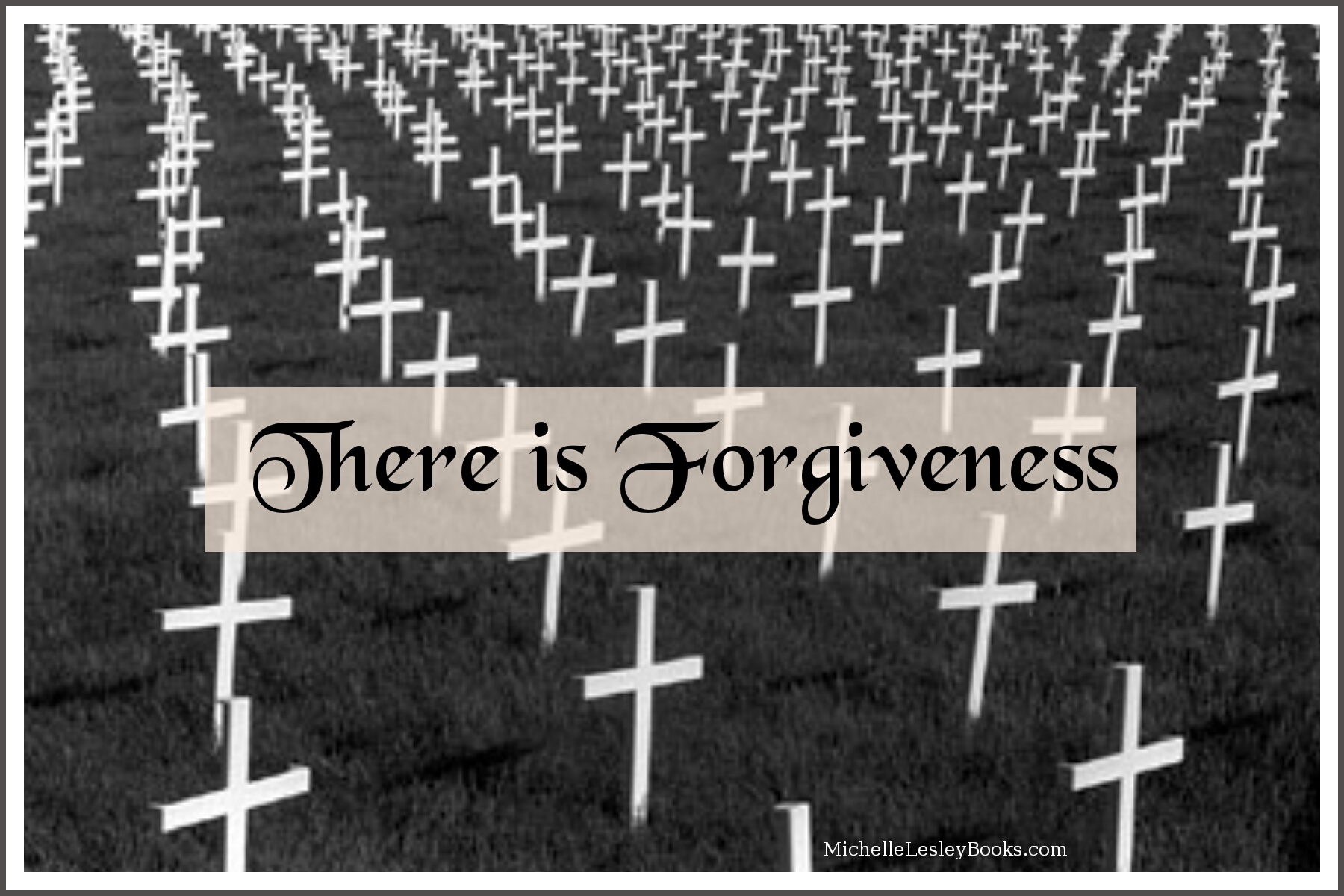
Throwback Thursday ~ There Is Forgiveness

Originally published January 22, 201314348483283701

Today is the 40th anniversary of Roe v. Wade, the Supreme Court decision which legalized abortion.

As we look back somberly on the 50 million babies who have died, we mourn for them. We are angered at those in power who have deceived women and men into thinking an abortion carries no more weight than having a tooth extracted or a wart removed. We rail at our leaders to put an end to the legality of this daily mass slaughter. We vote our consciences. We stand our ground.

And we forget.

We forget that after every abortion that takes place, there is a woman

or a man

or both

who need forgiveness.

The Bible says:

…the Lord hates…hands that shed innocent blood,
Proverbs 6:16-17

and

You shall not murder.
Exodus 20:13

Abortion is a grievous sin against God. It is a dreadful thing for a woman to grasp that she has tortured her child to death. Or for a man, who was created to protect the weak, to realize that he has murdered his helpless son or daughter.

But they must sit with that for a moment of time until it fully soaks in.

Because unless we see the horror of our sin for what it truly is, we will never be able to see the beauty of the cross in its fullness.

And, oh, how beautiful it is. For your sin and for mine.

There is forgiveness for abortion.

Lay the body of your child and your broken and contrite heart at the feet of the bloodied and battered Redeemer.

He was wounded for our transgressions,
He was bruised for our iniquities;
The chastisement for our peace was upon Him,
And by His stripes
we
are
healed.

Sin

9 Things that Are Still Sins Whether We Agree or Not

9 still sins


I do it all the time, Mother, and I’ve decided something-
it’s not a sin.

I heard this line several years ago on a popular sitcom, spoken by an adult daughter to her Christian mother about a behavior the Bible unambiguously calls a sin. I mean, it’s right smack dab in the middle of the Big 10; “thou shalt not” and everything.

It’s one thing to say, “I know it’s a sin, but I don’t care. I’m going to do it anyway,” but how depraved is the world when they think they – in God’s place – are the ones who get to define what sin is? And what’s even worse is that the church has begun to adopt this audacious depravity as well, whether approving of sin by fiat or by simply ignoring God’s word and letting sin slide without rebuke.

When it comes to what’s a sin and what’s not, God made up His mind a long time ago. And He’s not changing it, regardless of what you or I or Joe Politician or Jane Celebrity might think. Maybe we all need a remedial course in hamartiology, so let’s start with the basics. These things are all still sins whether the world and the church agree with God or not:

1. Homosexuality

Let’s just get it out of the way right up front. I don’t care how many celebrity “pastors” and “Christian” authors twist God’s word to say otherwise, or how many people declare themselves to be (unrepentant, practicing) “gay Christians,” or how many homosexuals declare that God made them that way, God’s word is clear: homosexual lust and behavior are sins.

2. Abortion

Abortion is the taking of an innocent human life. We don’t murder people because they’re small or sick or inconvenient or will hinder our sucess. God didn’t say, “You shall not murder, except when…” He said, “You shall not murder.” Period.

3. Extra-Marital (Heterosexual) Sex

Adultery, fornication, whatever form it might take, if you’re not legally married to the person you’re engaging in sexual activity – up to and including actual intercourse – with, you’re sinning.

4. Cohabitation

See #3. And don’t try to whitewash it by saying you’re living together but not sleeping together. A) The Bible says we’re to flee temptation, not move in with it, and B) we’re supposed to avoid every form of evil, even the appearance of it. If you call yourself a Christian and you’re shacking up, you’re living in sin (that’s why they call it “living in sin”). Repent and move out or marry up.

5. Divorce

Yep, still a sin, except in two cases: unfaithfulness or an unsaved spouse leaving a saved spouse. In those two cases the spouse who was wronged is not sinning and is free to marry again.

6. Swearing

The air is saturated with it. Foul language coming from our TVs, music, movies, social media, and the people we’re around all day. But expletives have no place in the vocabulary of a Christian. Is your potty mouth on Saturday the same one you praise God with on Sunday?

7. Taking God’s Name in Vain

It’s gotten to the point where we think so little of casually punctuating our sentences with, “Oh my G-d,”  or using the name of Jesus as an exclamation that pastors are even doing so from the pulpit these days. God’s name is high and holy and should be spoken only reverently and worshipfully. How can we look people in the eye and call them to repentance and faith in a Person whose name we use as a cuss word?

8. Gluttony

We have almost completely amputated gluttony from the spiritual realm by cordoning it off as merely a physical or medical issue. We’ve renamed it “overeating,” but that doesn’t change the fact that it’s a sin. God created good food for us to enjoy, but just as with all the other good gifts He gives us, He expects us to exercise Spirit-enabled self control when we receive it.

9. Female Usurpation

God makes it abundantly clear in His word that women are not to instruct men in the Scriptures or hold authority over them in the church. Women sin when they pastor churches, preach sermons in church, teach men in Sunday School classes, and hold other positions of authority over men in the church. Men, however, bear the primarily responsibility for this when they sin by failing to rebuke usurping women, or when women feel they have no other choice but to take on male responsibilities in the church because men are shirking their own duties before God.


We don’t get to decide what sin is. That’s God’s job. And all of us – whether we’ve committed one of these nine sins or not – are guilty of sinning against Him. That’s the bad news.

But, in Christianity, we never give the bad news without following it up with the good news. And, oh what wonderfully good news it is: forgiveness. Jesus paid for our sin at Calvary so that if we will only turn from it and trust Him, He will forgive us for all nine of these sins and countless others.

If we confess our sins, he is faithful and just to forgive us our sins and to cleanse us from all unrighteousness.
1 John 1:9