Holidays (Other), Reformation Day

A RefHERmation Day Study

Originally published October 31, 2018

Reformation Day is Friday, October 31.

This article is excerpted from my Bible study
Imperishable Beauty: A Study of Biblical Womanhood.

What better way to celebrate Reformation Day and biblical womanhood than to combine the two? Today, we’re going to take a look at some women in Reformation history and in biblical history who exemplified biblical womanhood by influencing others toward godliness.

Choose any of the women below and read their stories (click on their names). Then consider the following questions:

1. In what ways did this woman exemplify biblical womanhood in her culture, context, circumstances, family situation, or church?

2. Which godly character traits or Fruit of the Spirit were especially obvious in her life, words, and actions?

3. Which Scripture passages come to mind as you read this woman’s story? In what ways did she live these Scriptures out (or fail to live them out)?

4. Are there any instances of sin in this woman’s story? If so, how can you learn from what she did wrong and avoid this sin in your own life?

5. How does this woman set a godly example that you can apply to your own life?

6. In what ways did this woman point someone to Jesus, serve the Kingdom, or help God’s people?

Women of the Bible

Esther

Ruth

Abigail

Deborah and Jael

Miriam

Mary

Priscilla

Lydia

Dorcas

Women of the Reformation

Catherine dโ€™Bourbon

Jeanne Dโ€™Albret

Marguerite de Navarre

Katharina Schutz Zell

Anna Adlischweiler

Anna Reinhard

Katharina von Bora Luther

Holidays (Other), Parenting

Beautiful Motherhood: A Mother’s Day Bible Study

As we look ahead to Mother’s Day,
let’s check out what the Bible has to say about mothering.
This is lesson 12 of my topical Bible study:

Imperishable Beauty- A Study of Biblical Womanhood.

Read These Selected Scriptures

Questions to Consider

1. What are some attributes or character traits of a godly mother from Proverbs 31 that we can emulate? In todayโ€™s lesson, rather than attributes to emulate, weโ€™ll be focusing on Godโ€™s instructions to obey for mothers. We’ll examine how we’re to regard motherhood and our children, how we’re to train our children in godliness, how we’re to discipline our children out of ungodliness, and the example we’re to set for our children. Some of these instructions can also apply to childless women in their relationships with their spiritual children (i.e. younger women or children they disciple) and others. As you read over todayโ€™s passages, explain how childless women might apply some of these Scriptures.

2. Examine the first three passages (Psalm 127-Titus 2) together. What do these passages say about how we are to regard motherhood and our children? What should the attitude of our hearts be? In what sense are children a reward? How do we know that Psalm 127:3 does not mean that if you act in a way that pleases the Lord He will reward your good behavior with children? What does this verse mean? Is loving your children (Titus 2:4) simply a feeling of affection toward them? If so, why would young women need to be trained to love their children? When you finish today’s lesson, come back to Titus 2:4 and give a fully-orbed biblical definition of what it means to love your children.

3. Examine the next five passages (Proverbs 22-Ephesians 6) together. Why does God want us to train our children in godliness? Explain the phrase “in the way he should go” (Proverbs 22:6). How does the gospel figure in to training your child? Look carefully at the three Old Testament passages. At what age should we begin training our children in godliness and the Scriptures and how long should this training continue? Is Proverbs 22:6 an iron-clad guarantee or promise from God that if we raise our children in a godly home they will definitely get saved and turn out to be godly adults? Why not? (Scroll down to the Deuteronomy 21 passage if you need help.)

To whom are the Colossians and Ephesians verses addressed? Does this mean they don’t apply to mothers or that it’s OK for mothers to provoke their children, but not fathers? If they apply to both parents, why are they addressed to fathers? How are we not to deal with our children according to these verses? What does it mean to provoke your children? Why are we not to provoke them (Colossians), and how are we to deal with them instead (Ephesians)? Compare Ephesians 6:4b to the Old Testament verses in this section. How are they similar?

3. Examine the next three passages (Proverbs 29-Deuteronomy 21) together. What is the purpose of godly discipline? What are the biblical definitions of the words “discipline” and “reproof”? Are discipline, reproof, and training the same as punishment? Why or why not? What are some of the consequences of disciplining your child? The consequences of refusing to discipline your child? According to Proverbs 13:24, what motivates someone to discipline her child? What motivates someone to refuse to discipline her child? Are “love” and “hate” simply emotional feelings in this verse or an attitude, posture, or orientation of mindset toward the child? Look closely at Deuteronomy 21:20. Is this passage most likely talking about a very young child or an older child/teenager? According to the Deuteronomy 21 passage, does godly discipline always result in an obedient son or daughter, or can there be exceptions to the rule?

Why is it important to both train your child in godly ways and discipline him out of ungodly ways? Explain how this fits into the “put off the ungodly, put on the godlymodel of biblical sanctification.

4. Examine the last five passages (Deuteronomy 21-Matthew 10) together. What do these passages teach us about the godly example we need to set for our children?

Sometimes we see implicit instructions to parents in passages that explicitly teach children how to treat and regard their parents. For example, if there were a verse that said, “Children, love your parents,” we could learn from that verse that we need to act in a way (lovable) that makes it easier for our children to obey that Scripture. Considering this concept, look at the Exodus 20 and Proverbs 1 passages. If your children are to honor you, in what manner should you behave? What should your teaching be like if your children are not to forsake it and to consider it a “graceful garland” and a “pendant”?

What is the context of Ezekiel 16? To whom is the parent/child metaphor in this  passage addressed? Explain the phrase “like mother, like daughter”. Why is it important to set a good example for our children with our own behavior, and why was this a good metaphor for God to use in addressing Israel’s unfaithfulness to Him?

Examine the Deuteronomy 21 and Matthew 10 passages together. What is to be a mother’s highest priority – her relationship with her child, even the life of her child, or her love for, obedience to, and loyalty to Christ? Do you love Christ more than your child? If you had to choose between your child and Christ, who would you choose? What message does it send to our children when we show and tell them that we love Christ more than we love them? How can you demonstrate to your child that your highest love and loyalty is reserved for Christ?


Homework

Examine each of the instructions in Deuteronomy 6:6-9. Make a list of practical ways your family could put each of these instructions into practice and discuss it with your husband. Together, pick one of these practices and implement it with your children this week.


Suggested Memory Verse

Scripture Memory

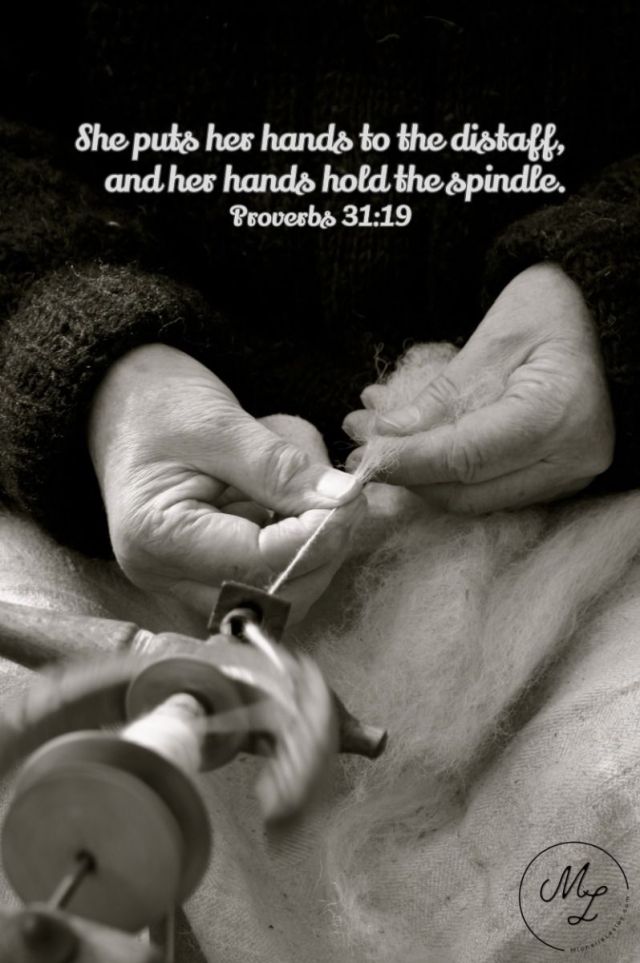
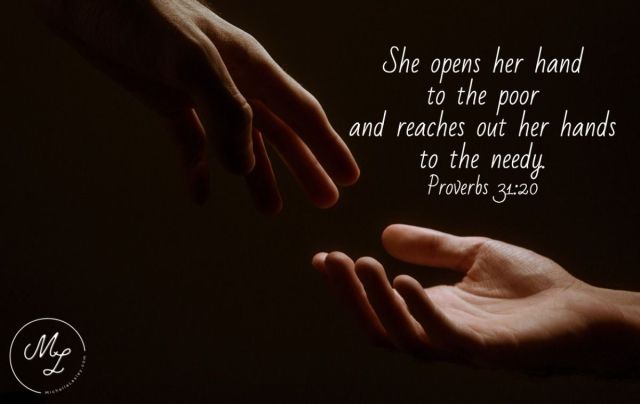
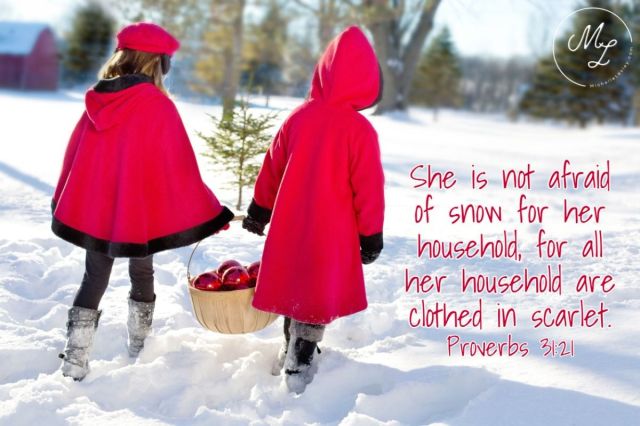
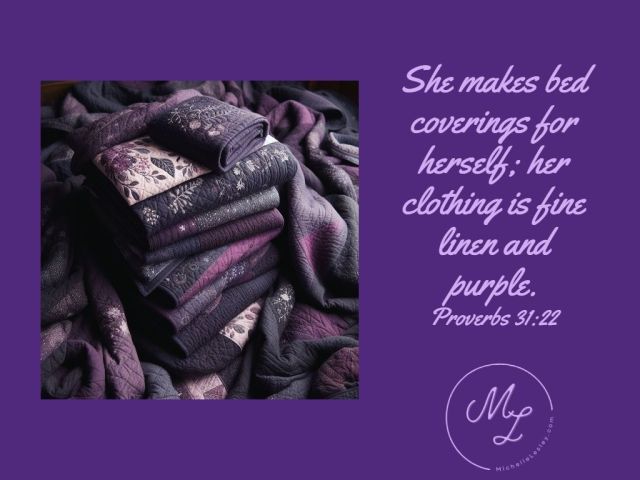
Proverbs 31 Memory Memes

Do you make it a practice to memorize Scripture? I hope you do. It’s important to put Scripture into your heart and mind so the Holy Spirit can use it to help you avoid temptation, convict you of sin, comfort you, give you biblical truth to meditate on, remind you of ways to minister to others, and so much more.

Not long ago, I memorized Proverbs 31:10-31 – the “excellent wife” passage – so I can meditate on it and ponder what it means to be a godly wife as I move through my day.

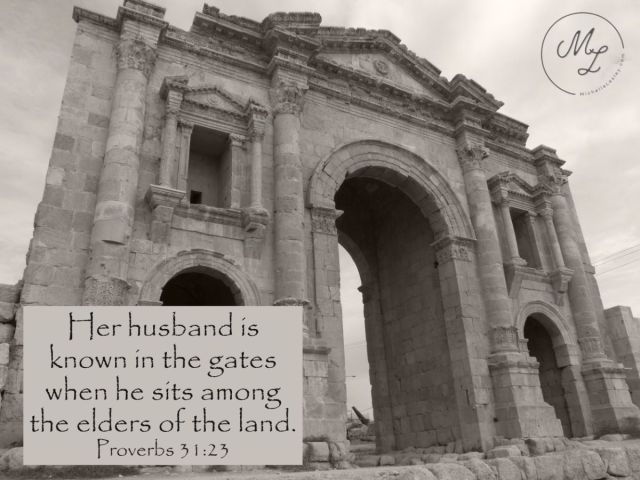
Whatever your age or marital status, it’s a great passage for women to memorize, because it’s all about godly character. You may not have a husband to be “known in the gates as he sits among the elders of the land” (23), but as a single woman, are you a good reflection on your church and pastor? As a teen, does your behavior show others that your mom and dad have parented you well? Perhaps you don’t have children to “rise up and call you blessed” (28) or a “household” (15, 21, 27) to care for, but what about the younger women you disciple? Your nieces and nephews, or children in your neighborhood?

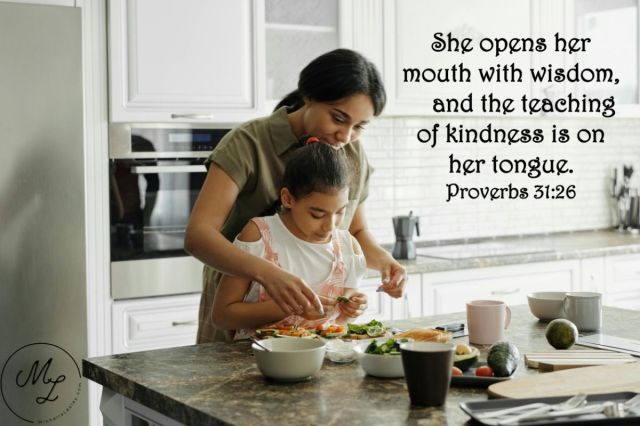
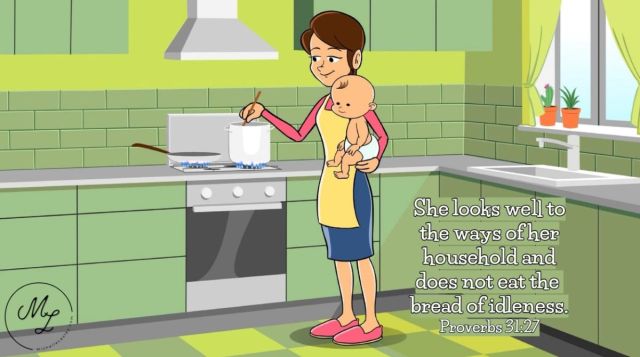
As I was memorizing this passage, I created a meme for each verse. I’d like to encourage you to memorize these 22 verses, and I hope these “memory memes” will help. Grab them and use them as your wallpaper or screen saver on your phone or computer. Make them your cover photo or your pinned post on social media. Upload them to a digital picture frame. Print them out and tape them to your bathroom mirror.

Who’s up for the challenge?


Top 10

Top 10 Articles of 2019

I always enjoy the annual “year in review” articles and TV shows that run in abundance in late December, so I thought I’d contribute my own. Several Mailbag articles were among this year’s most popular, so I decided to make two separate lists, the Top 10 Mailbag Articles of 2019, and the top 10 non-Mailbag articles of 2019. Here are my ten most popular non-Mailbag blog articles from 2019:

Answering the Opposition:
Responses to the Most Frequently Raised Discernment Objections

There are also occasional comments and messages from women who are disciples of the false teachers I warn against, who take me to task for doing so. The same unscriptural accusations are raised again and again against me and against others who take a biblical stand against false teachers and false doctrine. Here, in no particular order, are the most frequently raised objections to my discernment work and my answers to them…


ย 10 Biblically Sound Blogs and Podcasts by Christian Women

False teachers. You canโ€™t throw a rock out the windowย these days without hitting one. But are there any โ€œgood guysโ€ out there who are getting it right? Discipleship, Bible study,and theological issues bloggers who rightly divide Godโ€™s word? You bet…


Christine Caine: Have No Regard for the Offerings of Caine

Unfortunately, Christineโ€™s teachings and some of her actions do not meet even these basic biblical standards, and it is my sad duty to recommend that you not sit under her teaching for the following reasons…


ย A Few Good Men: 10 Doctrinally Sound Male Teachers

Let me introduce you to a few of my favorite male authors of Bible studies
and other great Christian books and resources…


An Open Letter to Beth Moore โ€“ Timeline of Events

Since the discussion of the events and commentary surrounding the open letter have mostly taken place on Twitter, and many who have an interest in these events and comments are not Twitter users, this article is intended to be a timeline outlining the sequence of events, beginning with the publication of the open letter.


Living Proof You Should Follow Beth (No) Moore

For these reasons it is my sad duty to recommend that you not follow Beth Moore or receive any teaching from her or anyone connected to Living Proof Ministries.


Guest Post: Why I Left Elevation Church

I was part of Elevation Church for about six years. At the time, I thought it was the greatest church on Earth..


Going Beyond Scripture:
Why It’s Time to Say Good-Bye to Priscilla Shirer and Going Beyond Ministries

Should she repent in these areas in which she has broken Scripture and align herself with biblical principles, she would have no bigger fan than I, and I would rejoice to be able to point Christian women to her as a doctrinally sound resource. Until that time, however, it saddens me to have to recommend that Christian women not follow Priscilla Shirer or any materials or activities from Going Beyond Ministries for the following reasons…


ย An Open Letter to Beth Moore

We as female Bible teachers ourselves write this letter to you in hopes of receiving clarification of your views on an important issue: homosexuality.


Leaving Lysa:
Why You Shouldn’t Be Following Lysa TerKeurst or Proverbs 31 Ministries

For these reasons, plus her habitual mishandling of Scripture, unfortunately, I must recommend that women not follow, support, or receive teaching from Lysa TerKeurst or Proverbs 31 Ministries(including any writers or speakers affiliated with Proverbs 31 Ministries)…


What was YOUR favorite article of 2019?

Biblical Womanhood Bible Study

Imperishable Beauty: Lesson 17- The Most Beautiful Girl in the Worldโ€ฆerโ€ฆBible- Finale

Previous Lessons: 1, 2, 3, 4, 5, 6, 7, 8, 9, 10, 11, 12, 13, 14, 15, 16

Read These Selected Scriptures

It’s been a beautiful 17 weeks studying biblical womanhood with you! Today, we’re bringing things to a close as we reflect on all we’ve learned. Links to all previous lessons are located above.

Questions to Consider

1. We started this study by looking at the Proverbs 31 woman (lessons 2-3), often considered the icon of biblical womanhood. In subsequent lessons, we tried to answer the question, “If the Proverbs 31 woman really is the ideal to attain to, how do we get there from here?”. And we’re finishing up today by looking back again at the Proverbs 31 woman. Is she really the quintessential picture of biblical womanhood? How do all the other Scriptures we’ve studied flesh out the ideal described in Proverbs 31?

2. What does verse 10 mean? Consider verse 10 in light of lessons 4-6. How does the fact that you were uniquely created by God (4), that your identity is found in Christ (5), and that you are a vital member of the Body of Christ (6), provide a foundation to build on for becoming the rare, excellent, godly woman?

3. Examine verses 11-12 in light of lesson 11. What are some of the ways you can be obedient to Scripture that will enable you to do your husband good and not harm, benefit him, and enable his heart to trust in you?

4. Consider verse 17 in light of lessons 7-9. How do knowing and loving God’s Word (7), obeying God’s Word (8), and sharing the gospel (9), dress you with strength and make your arms strong?

5. What is the general motif of verses 17, 22, 25? Compare these verses to the concept of “adorning” we studied in lesson 15. With what “clothing” should a godly woman “dress” or adorn herself?

6. Examine verse 26 in light of lessons 13-16. How can we open our mouths with wisdom and teach kindly through our position in the church (14), our portrayal of biblical womanhood in the church (15), and our proclamation of God’s Word (16) in the church? What are the unique opportunities single women (13) have to teach and model wisdom and kindness in the church?

7. Examine verses 27-28 in light of lessons 10-13. How can we diligently look well to the ways of our households and families as daughters (10), wives (11), mothers (12), and single women (13)?

8. In what specific areas has God grown you in biblical womanhood during the course of this study? What would you say was your most important takeaway from this study?


Homework

Go back over the questions in the “Expectations and Presuppositions” section of lesson 1. Have any of your answers changed? How or why? Did you get out of this study what you were hoping to get out of this study (#6)? Explain.


Suggested Memory Verse

Give her of the fruit of her hands, and let her works praise her in the gates.

Proverbs 31:31