Bible, Old Testament

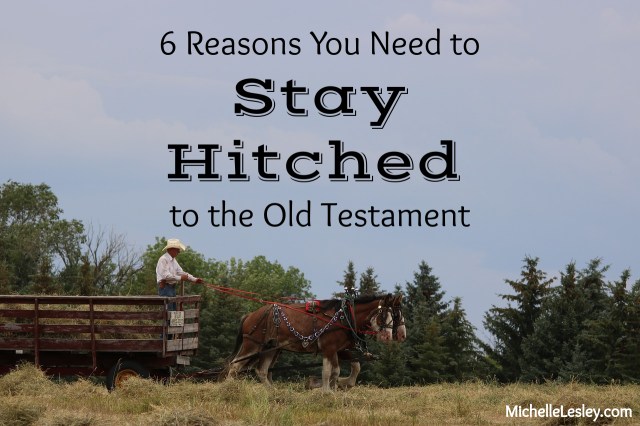
Throwback Thursday ~ 6 Reasons You Need to Stay Hitched to the Old Testament

Originally published May 18, 2018
Oops, he did it again. Only it wasn’t an “oops”, it was quite intentional.

In a recent sermon, Andy Stanley declared that the modern church needs to “unhitch” the gospel from the Old Testament. He attempted to draw a parallel between James’ pronouncement in Acts 15 that Gentiles did not have to convert to Judaism prior to becoming Christians with the difficulty some non-Christians today have with some of the gory, hard to understand, or otherwise distasteful (to them) passages of the Old Testament (for example: God’s various commands to Israel to utterly destroy all people in certain nations). The apostles cut out the requirement for circumcision to make things easier for Gentiles who wanted to come to Christ, he reasons, so the 21st century church should basically divorce itself from the Old Testament to make it easier for lost people who have a problem with certain Old Testament passages to come to Christ.

There’s only about a million problems with this line of thinking, and, honestly, the more I investigate what Stanley said and his subsequent explanations of why he said it and what he meant, the angrier it makes me. That a man with a master’s degree from a decent seminary, who’s a pastor of several churches, a best-selling “Christian” author, and a leadership and church growth guru to thousands of pastors across the globe should say, or even believe, such things is reprehensible. If he were generally doctrinally sound and this was the first “iffy” thing he had ever said, I’d be inclined to extend grace and give him the benefit of the doubt. But this is somebody with every theological advantage who should know better, yet still has been on a trajectory of attempting to deconstruct the New Testament church for quite some time now. (For more on Andy Stanley’s aberrant theology, click the “Popular False Teachers” tab at the top of this page.)

So, for the sake of my own blood pressure, I’m just going to throw out a few of the most embarrassingly obvious errors here, and let better people than I handle the blow-by-blow.

1. Andy Stanley is not an apostle personally commissioned by Christ to set up the New Testament church. James and those other guys mentioned in Acts? They were. Andy doesn’t have the authority to change New Testament ecclesiology, which is permanently and inextricably hitched to the Old Testament.

2. Acts is generally a descriptive book, not a prescriptive one. While there are certain principles we can learn from Acts and follow, it’s a history of the establishment of the first century church, not a step by step list of instructions to implement in today’s church. If there were a church today that was insisting Gentiles become Jews before they could become Christians, Acts 15 would be applicable. But I don’t know of any churches like that, do you?

3. The two church scenarios Andy is trying to make analogous aren’t. No church I know of requires unbelievers to understand, agree with, or even have read whatever Old Testament passages Andy thinks are problematic prior to becoming a Christian.

Furthermore, how many lost people are actually out there saying, “I recognize I’m a sinner in need of a Savior. I want to repent of my sin and place my faith in Christ for salvation, but I just can’t, because of 1 Samuel 15:2-3.”? People who bring up Old Testament passages like that when confronted with the gospel are presenting excuses for rejecting the gospel, not looking for ways to embrace it.

4. Shoving difficult passages of Scripture into the broom closet is not how God has instructed the church to handle His holy Word. We’re to be “a worker who has no need to be ashamed, rightly handling the word of truth.” (2 Timothy 2:15b) We don’t get rid of challenging passages, we dive into them, study them, and explain them to others.

The Old Testament is absolutely essential to New Testament Christianity, and a rich blessing to the church, individual Christians, and lost people, besides. Here are six reasons you and your church should stay hitched to the Old Testament.

1.
God says so

All Scripture is breathed out by God and profitable for teaching, for reproof, for correction, and for training in righteousness, that the man of God may be complete, equipped for every good work. 2 Timothy 3:16-17

That should be the end of any discussion of ditching any part of Scripture for any reason. God could not have been clearer. “All Scripture” means all Scripture, from Genesis 1:1 to Revelation 22:21. And every single verse of Scripture is profitable. Even the genealogies. Even the inventories. Even the Levitical law. There is stuff in every single verse of the Bible that is useful and beneficial to us. God says so (and He says so in the New Testament, by the way).

2.
You need the Old Testament
to understand the New Testament

Can you come to a saving knowledge of Christ by reading only the New Testament? Yes. But it’s kind of like saying, “I know American history,” when you’ve only studied the years 1900 to the present. The New Testament was birthed out of the Old Testament. The gospel is the culmination of Old Testament doctrine. Jesus Himself is the ultimate fulfillment of every Old Testament prophecy and covenant.

And then there are all the New Testament details that need explaining. Who are these Jews and how did they come to be God’s people? Why do they have such a problem with Gentiles? What are these laws the Pharisees keep talking about? If Jesus is the “second Adam”, who was the first Adam? What on earth is circumcision anyway? And…Hebrews? What’s that all about?

3.
The Old Testament teaches how we CAN’T be saved

Therefore the Law has become our tutor to lead us to Christ, so that we may be justified by faith. Galatians 3:24 (NASB)

and how from childhood you have been acquainted with the sacred writings, which are able to make you wise for salvation
through faith in Christ Jesus. 2 Timothy 3:15

How was the Old Testament Law our tutor to lead us to Christ? How was it able to make Timothy wise for salvation through faith in Christ Jesus? It shows us the futility of thinking we can keep the law to earn righteousness. It shows us that right standing with God always comes by repentance and faith, not works. How many times have you shared the gospel with someone only to hear her say some variation of, “I’m OK with God and I’m going to Heaven because I’m a good person.”? Really? Take a stroll through the Old Testament, and watch how “good” God’s chosen people were. He spelled everything out for them, sent them prophets to tell them exactly what He wanted them to do, performed amazing miracles right before their eyes, and they still couldn’t be “good people.” And you, a pagan, think you can do better?

Remember the old saying, “You can lead a horse to water, but you can’t make him drink.”? Some smarty pants came up with the rejoinder, “Yes, but you can feed him salt.” The Old Testament is our salt. Its lessons in the futility of trying to be good makes us thirsty for the Living Water we find in the New Testament.

4.
The Old Testament vividly shows us
God’s wrath against our sin

I’m not saying the Old Testament only shows us God’s wrath against sin, because it also shows us His compassion, mercy, and love. I’m also not saying the New Testament doesn’t show us God’s wrath. It does, but in a different way than the Old Testament does. In the New Testament, the main ways we see God’s wrath against sin is when it’s poured out on Christ at the cross, and the wrath of God that’s yet to come as it’s described in Revelation.

When it comes to God’s wrath against me, personally, for my individual sin, those demonstrations of God’s wrath can feel a little detached sometimes. But in the Old Testament, I see, in vivid detail, the horrific plagues God rained down on Pharaoh for his sin. I see the ground open up and swallow Korah for his rebellion. I see God immolating Nadab and Abihu for offering illegal worship. I see the once mighty and majestic Nebuchadnezzar forced out into the wilderness to live like an animal because he took God’s glory for himself. And when I know that God doesn’t change – that His wrath towards my sin as a lost person burns just as hot as it did toward those Old Testament rebels – well, it can hit a lot closer to home and convince me of my need to run to the cross and throw myself on the mercy of Christ.

5.
The Old Testament teaches by example

The largest portion of the Old Testament is history and biography. Most of the New Testament is didactic. The New Testament gives us the subject matter we need to learn. The Old Testament puts flesh and blood on it and shows us what it’s like for real, flawed people just like you and me to walk it out. In the New Testament, we learn “by grace are you saved through faith.” In the Old Testament, we see just how God accomplished that in the life of Noah, who found grace in the eyes of the Lord. In the New Testament we learn what it means to repent. In the Old Testament, we walk with David through the loss of his child and his grief over his sin with Bathsheba. In the New Testament, we learn that the godly will face persecution. In the Old Testament, we stand next to Shadrach, Meshach, and Abednego refusing to bow to an idol, even if it means being burned alive. The New Testament gives the facts of the matter. The Old Testament says, “For example…”.

6.
The Old Testament is a warning to the church

People are people. God’s people of the Old Testament are not significantly different from God’s people today. We’re all made in the image of God. We’re all tempted by similar things.

If you begin studying the Old Testament, you can’t help but notice some of the same themes running through the story of God’s people back then that run through our story today. Idolatry. Ecumenism. Doing what’s right in our own eyes. Going through the motions of religious activity without true repentance and faith. Depending on our own power and resources rather than depending on God. False prophets. Persecution and derision of those who stand firmly on God’s Word by those who claim to be His people. Fickle hearts and tickled ears. Oh sure, we might be a little more sophisticated and subtle about it, but, as Solomon put it:

What has been is what will be, and what has been done is what will be done, and there is nothing new under the sun. Ecclesiastes 1:9

And because the Old Testament shows us more direct interpersonal interaction between God and His people, we get to see exactly how God feels about all of those things. We hear what He has to say about it. We see how He responds to it. And, if we’re wise, we take heed to those warnings, humble ourselves, and grow in our fear of the Lord and our desire to please Him with holy living and clean worship.


I could give far more than a mere six reasons why the Old Testament is so vital, a precious blessing, and such a spiritual treasure trove. It tells us where we, and the world around us, came from. It shows us the beauty and precision of worship. It extols the charm of Creation. It displays God’s power, grace, trustworthiness, mercy, justice, His plan for mankind, and all of His other attributes. And so much more.

Are there some passages in the Old Testament that are hard to understand or accept at first blush? Sure. But they’re not keeping anybody from coming to Christ. People reject Christianity, not because of difficult Old (or New) Testament Scriptures, but because they love their sin more than Jesus. And that’s no reason to unhitch anything or anyone from the beauty, the joy, and the benefits of the Old Testament.

How has the Old Testament been profitable in your walk with the Lord?

Uncategorized

The Word on Wednesdays


For the next several weeks, I’ll be making preparations to speak at a conference, so our next regular weekly Bible study won’t start until after I return home and get my household back in order (I’m thinking probably mid-April-ish, but don’t quote me on that.). :0) I have a study in mind, but will keep thinking and praying about it for a few more weeks.

So anyway, for the next several Wednesdays, you’ve got some options:

📖 You can finish up Imperishable Beauty or any of my other studies you’re currently working on.

📖 You can choose a book(s) of the Bible to work through on your own.

📖 You can choose one of my studies to work through at the Bible Studies tab at the top of this page. (I would choose one of the shorter ones, like Colossians or Ruth rather than one of the longer ones if you’re only trying to fill the space between now and the beginning of our next study.)

📖 You can follow along with the sampling of “re-run” lessons I’ll be posting here on the blog each week.

Here’s today’s “re-run”:

Wednesday’s Word

Wednesday is Bible study day here on the blog. In my Wednesday’s Word study, you’ll find miscellaneous, one lesson Bible studies from each book of the Bible. One chapter of Scripture followed by study questions. This sampler series demonstrates that there’s nothing to be afraid of when approaching those “lesser known” books and that every book of the Bible is valuable and worth studying.

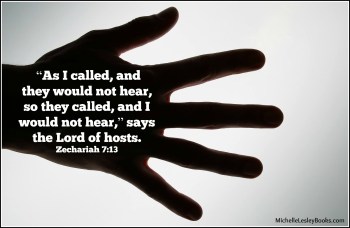
Wednesday’s Word ~ Zechariah 7

zech 7 13

In the fourth year of King Darius, the word of the Lord came to Zechariah on the fourth day of the ninth month, which is Chislev. Now the people of Bethel had sent Sharezer and Regem-melech and their men to entreat the favor of the Lord,saying to the priests of the house of the Lord of hosts and the prophets, “Should I weep and abstain in the fifth month, as I have done for so many years?” Keep reading…

Women of Genesis Bible Study

The Women of Genesis: Lesson 36- Wrap Up

Previous Lessons: 1, 2, 3, 4, 5, 6, 7, 8, 9, 10, 11, 12, 13, 14, 15, 16, 17, 18, 19, 20, 21, 22, 23, 24, 25, 26, 27, 28, 29, 30, 31, 32, 33, 34, 35

📖📖📖📖📖

Read Genesis 1-50

📖📖📖📖📖


I hope you have enjoyed our long walk through the book of Genesis – almost as long as Abraham’s and Jacob’s wanderings! – and our study of the women who people this great story of Israel’s history from Creation to Egypt.

Today, we’re going to be wrapping up by looking at some of the broader themes and topics in Genesis. You may want to look back over your notes, or previous lessons, all of which are linked above.

Our next study will be a topical study of the Scriptures dealing with biblical womanhood. We’ll be having another fun title pic contest prior to the start of the study. I’ll have the exact title of the study and all the other details here for you next Wednesday (September 5), so get those creative juices flowing and pass the word to any artsy friends who might be interested!

Questions to Consider

1. What is the overall theme or purpose of the book of Genesis? Which attribute(s) of God does Genesis point to?

2. Make a list of each of the women we studied in this book. In what way did each of them contribute to moving the theme or purpose of Genesis forward?

3. What are some godly attributes of the women we studied that you aspire to in your walk with the Lord?

4. What are some ungodly attributes of the women we studied that God showed you were present in your own life? What are some ways you can mortify those sins and avoid those ungodly attitudes and actions in the future?

5. Which “Woman of Genesis” did you learn the most from, and why?

6. List three attributes of God that you learned about in this study.

7. What are the three major covenants in Genesis? Explain how each of them affected the person (and his family) it was given to and how each covenant points ahead to Christ.

8. All of the action in Genesis took place before God gave the Law (in Exodus, Leviticus, etc.). What are some specific incidents in Genesis that demonstrate that God’s moral law is transcendent (i.e. that the rules of morality – intrinsically good and bad behavior/attitudes – are universal. They applied before God gave Israel the Law and still apply now that Christ has fulfilled the Law – to everyone, everywhere.)?

9. What are the major historical events of Genesis?

10. What did you learn from this study about ancient Middle Eastern cultural practices, especially those that impacted the life of women?

11. In what ways is the book of Genesis an introduction and background to the book of Exodus?


Thanks again for studying The Women of Genesis. I hope it was as much of a blessing to you as it was to me! For more studies and resources on how to study the Bible for yourself, please click the “Bible Studies” tab at the top of this page.

Women of Genesis Bible Study

The Women of Genesis: Lesson 35

Previous Lessons: 1, 2, 3, 4, 5, 6, 7, 89, 10, 11, 12, 13, 14, 15, 16, 17, 18, 19, 20, 21, 22, 23, 24, 25, 26, 27, 28, 29, 30, 31, 32, 33, 34

📖📖📖📖📖

Read Genesis 47:27-50:26

📖📖📖📖📖


Questions to Consider

1. Briefly summarize, in your own words, Joseph’s story and how Jacob and his family came to live in Egypt, reviewing previous lessons (links above) if necessary.

2. Compare 47:27 with Jeremiah 29:4-7 and these New Testament passages. Think about the concept of God’s people living among pagans, displaced from their Promised Land, and waiting for the day when they can enter and possess it. Describe how this concept fleshes itself out in each of these passages. What is the Christian’s “Promised Land“? How does God want His people to live during the time of their exile? In the Genesis and Jeremiah passages, are there any general principles for godly living that you can apply to your life in “exile” on this earth today?

3. Examine 47:29-31 and 49:29-32. Where did Jacob (Israel) want to be buried? Why was it so important to him not to be buried in Egypt but to be buried in Canaan? Consider family/tribal bonds, the Abrahamic Covenant, and God’s promise to Jacob in 46:4 as you answer.

4. Explain 48:5-6 as it pertains to the establishment of twelve tribes of Israel (49:28, 49:1-27). What group do Israel’s twelve sons point ahead to in the New Testament?

5. Compare Jacob’s blessing of Ephraim and Manasseh (48:8-20) to Isaac’s blessing of Jacob and Esau. What are the similarities? The differences?

6. Consider Jacob’s blessing of Ephraim, Manasseh, and each of his sons. (48:15-49:28) What was the significance of the patriarchal blessing of the sons? Was it prophecy? Good wishes for a bountiful posterity? Instructions for the future? Information on the inheritance? Examine the cross references for each of the people Jacob blessed. How did his predictions for the future come true for each?

7. Which of the twelve tribes of Israel was Jesus descended from? Examine 49:9-12 as well as the cross-references. What do these verses call to mind about Jesus?

8. Revisit your answers to question #2. What was the result of Jacob’s and Joseph’s godly living while in “exile”? What sort of impact did these men have on the Egyptians? (50:2-3,6-7,9-11)

9. Examine 50:15-21. How is this a picture of the permanence of God’s forgiveness and of salvation? What was Joseph’s reaction (50:17) when he realized his brothers didn’t trust his forgiveness?

10. Compare Joseph’s request about his remains (50:24-25) to Jacob’s (47:29-31, 49:29-32). What were the similarities? The differences? How did Joseph’s request demonstrate his faith that God would keep His promises of the Abrahamic Covenant and serve as an introduction to Exodus? Where did both Jacob’s and Joseph’s remains eventually end up?


Homework

Compare 50:20 to Romans 8:26-30 and James 1:2-4. How does God’s ability to “make a silk purse out of a sow’s ear” demonstrate His sovereignty? What are some of the ways God can bless and grow us during times of difficulty? How can these passages inform our prayer lives when God allows or causes difficult circumstances in our lives? Write out a prayer that lines up with these passages that you can pray the next time you face a trial or tribulation.


Suggested Memory Verse

As for you, you meant evil against me, but God meant it for good, to bring it about that many people should be kept alive, as they are today.
Genesis 50:20

Women of Genesis Bible Study

The Women of Genesis: Lesson 34

Previous Lessons: 1, 2, 3, 4, 5, 6, 7, 8, 9, 10, 11, 12, 13, 14, 15, 16, 17, 18, 19, 20, 21, 22, 23, 24, 25, 26, 27, 28, 29, 30, 31, 32, 33

📖📖📖📖📖

Read Genesis 46:1-47:26

📖📖📖📖📖


Questions to Consider

1. Briefly review previous lessons (links above) to refresh your memory on the background of today’s passage. What events led up to the action in chapters 46-47?

2. Review previous lessons regarding the role the Abrahamic Covenant has played in the lives of Abraham, Isaac, and Jacob, especially with regard to physically living in Canaan and “possessing the land”. Trace Israel’s journey from Hebron to Egypt on a Bible map. Why would he have stopped and sought the Lord at Beersheba, specifically, and why would God have assured him it was OK to leave Beersheba and enter Egypt? (46:1-4)

3. Compare 46:3 to Genesis 12:2. How is this a promise to Israel of fulfillment of the Abrahamic Covenant? How can this passage be a reminder to us that God does not forget His promises and that He has a right to carry out those promises in any way and any timing He chooses, even if it doesn’t make sense to us? What does this teach us about God’s sovereignty, His authority, and His infinite wisdom, compared to our humility and limited knowledge?

4. Why would it have been important to the nation of Israel’s history and record-keeping to list the names, numbers, and relationships (46:8-27) of the people who left Canaan to settle in Egypt?

5. Consider 47:5-6 and recall 45:16-20. Why was Pharaoh, a pagan, so favorably disposed toward Joseph, and consequently, Joseph’s family? What character traits had Joseph displayed while serving Pharaoh that had such an impact on him? Think about the way you serve your employer, your family, and your church. How does the Fruit of the Spirit you display impact your relationships with those you serve?

6. Compare 47:11-2 with these passages. How does Joseph’s provision for his family who has come to him paint a picture of God taking care of the needs of those who come to Him?

7. Consider 47:13-26 with regard to Egypt’s rise to power in the ancient world. What did Pharaoh take from the people first? (47:14-15) Next? (47:16-17) Next? (47:18-21) How did this shift the balance of power between the people and the Egyptian government? Was it God’s will for Egypt to become a powerful and prominent nation? Who sent the famine that set these wheels in motion and who could have stopped it? Thinking ahead to the Exodus, what was the significance of having an “almighty” Pharaoh and empire as the backdrop for Almighty God’s signs, wonders and deliverance?

8. Think about 47:23,35 in light of these passages. How does Joseph purchasing the people to save their lives point to Christ’s redemption of sinful man? Was there any way for the people to save themselves? How did Joseph show mercy and compassion to them? What was the people’s response to becoming servants? Were they resentful? Grateful? What does this teach us about why we should serve Christ, and the attitude with which we should serve Christ?


Homework

Again compare 46:3 to Genesis 12:2, and consider 46:1-4, this time putting yourself in Israel’s shoes. God has promised Canaan to Abraham’s descendants. Israel already lives there with a decent number of descendants. (46:8-27) From Israel’s human vantage point, does it make sense for him to pack everybody up and leave the Promised Land (46:5-7) rather than staying, increasing in number, and taking over Canaan? But can Israel see the big picture, centuries into the future, the way God does?

Think about a time God worked in your life in a way that, humanly speaking, didn’t make sense. Compare your finite knowledge of the situation with God’s infinite knowledge of it and His “big picture” plans. Considering this, write down three reasons it is important to trust God and three reasons it is important to obey God, especially when things don’t make sense.


Suggested Memory Verse

And they said, “You have saved our lives; may it please my lord, we will be servants to Pharaoh.”
Genesis 47:25