Share Your Testimony

Testimony Tuesday: Dorothy’s Story

Dorothy’s Story

I was saved at an early age and always had a heart for the things of God, reading His Word, memorizing it, and prayer. As an adult I was very active in my Baptist church, in childrenโ€™s ministry or leading Bible studies for women, which I realize now were not actually Bible studies, but rather studying a book about someoneโ€™s interpretation of Scripture. I was very intrigued by Henry Blackabyโ€™s book Experiencing God, and began to wonder how I might recognize God at work in my own life, how I might hear his voice. I read books on prayer and fasting by Bill Bright, learning of the โ€œcoming revivalโ€.

It wasnโ€™t until I began to read God Chasers by Tommy Tenney, though, that I thought perhaps I was missing something, since I had never felt the โ€œmanifestโ€ presence of God. A friend loaned me Surprised by the Power of the Holy Spirit by Jack Deere, A Final Quest by Rick Joyner, and I was off into the world of the NAR (The New Apostolic Reformation), inhaling every book I could on intercessory prayer, especially enjoying Prayer Shield, written by C. Peter Wagner himself, the father of the NAR. I read about past revivals, about The Toronto Blessing. I had no understanding of the history or doctrines behind the movement, but was drawn in by the incredible experiences with God those in the movement seemed to have. Prophetic words, words of knowledge, Holy Spirit manifestations โ€“ they all seemed so much more exciting than what I had experienced in my Christian life. Much to my shame, I even went to see Todd Bentley when he was in town. I became convinced revival was on its way.

I thought perhaps I was missing something..

I was especially fascinated by listening prayer. Although I continued to read my Bible and memorize scripture, my focus became my time of contemplative prayer, listening to what I felt God was saying to me personally. This quote from my prayer journal shows the idol that listening prayer had become in my life. โ€œI could die for you right now God, die for more of you.โ€

I began to assist a Baptist deliverance minister in town as well, in what was called “discernment,” listening to what God told me about the spirits that were impacting a person. I would also listen for a personal prophetic word for each person in ministry.

As my family was now in a Pentecostal church, it was very accepted to be hearing from God personally; I was just “prophetic”. Although I had previously written devotionals for the Proverbs 31 Homemaker, I now felt called to begin typing up my prayer journal notes into devotionals, much in the style of Sarah Young, who wrote her devotionals because she wanted more of God than the Bible. I had 400 in all, hoping to get them published and support different missions organizations.

The Pentecostal church we were attending became progressively more NAR, even having a church plant patterned after Bethel. It wasnโ€™t uncommon to have a pastor from Bethel speak at our churchโ€™s conferences. I had never agreed with the doctrine that it was Godโ€™s will to heal everyone, which Bethel emphasized, but I had no idea that they actually were preaching a false gospel.

I had no idea they were preaching a false gospel.

Last fall I happened upon a YouTube video on Bethel’s theology by Mike Winger, which God used to begin to remove the scales of deception from my eyes. However, it was reading Angels of Light; False Prophets and Deceiving Spirits at Work Today in the Church & World by Eddie Hyatt, specifically his chapter on contemplative prayer, which made me realize I had been wading in dangerous waters. As I watched the Strange Fire Conference on the internet, I was terribly convicted by the true Holy Spirit. This propelled me into an incredibly intense, painful season of soul-searching – questioning what I believed against biblical doctrine – and a time of repentance. As I listened to YouTube videos of Doreen Virtue and Melissa Dougherty, two wonderful women God has brought out of the New Age, I realized that my โ€œListening Prayerโ€ had more in common with hearing from Spirit Guides, that my getting โ€œprophetic wordsโ€ for people had more in common with cold readings, than with either prayer or the gifts of the Holy Spirit.

I was convicted by the true Holy Spirit…

Psalm 116 has become very precious to me, especially verse 6: โ€œThe Lord protects the unwary; when I was brought low, he saved me.โ€ Although it truly sickens me that I could have been so deceived, I am very aware of how Godโ€™s hand was protecting me and my whole family through the whole process, and know that God is able to use my experience to bring about good.

Classes on listening prayer are becoming rampant in the church today, even in mainstream churches. The following is taken from a non-charismatic church offering such a class. โ€œLearning to hear Godโ€™s voice and learning to use the gift of prophecy will be taught in alignment with biblical principlesโ€ฆโ€ โ€œloving and safe community to learn how to hear Godโ€™s voice for oneself and for othersโ€ฆ.designed to provide opportunities to encounter Father God, Jesus and Holy Spirit through a variety of worship experiences and listening exercises.โ€

If you are practicing listening prayer, or contemplative prayer, I beg you to look into its history, and examine scripture – see that Christ never told us to pray in such a way, either by example or as a teaching. You may think that you are practicing listening prayer, but still holding Godโ€™s Word as His revelation to you higher. From experience, I believe it is impossible to practice listening prayer and not have it erode your view of the sufficiency of Scripture as well as erode and distort your view of Jesus, God the Father, and the Holy Spirit. In the past I believed that what I was hearing from God was completely in line with Scripture. However, not only was it incredibly narcissistic, it began to reflect more and more the NAR teaching I was receiving.

In my spiritual journey, I believed that I was experiencing โ€œrevivalโ€ when I became involved in contemplative prayer, and extra biblical practices. But in Godโ€™s word, biblical revival was accompanied by a renewed love for God through the Scripture. I can honestly say that coming out of the NAR, with all of its deception, as painful as it has been, has brought with it true revival. I have never had such a profound sense of being โ€œsavedโ€, along with a growing hunger for Scripture and true knowledge of God. I realize that I was in NAR lite for several years, even in my Baptist church.

I have never had such a profound sense of being โ€œsavedโ€…

If you diligently seek scripture, you will not lose anything that is true; you will only lose the false. Please, donโ€™t allow fear or pride to keep you from researching thoroughly. I only wish there had been someone to warn me earlier. Although in many NAR books you will be warned away from biblical discernment by being taught that thinking critically is a โ€œcritical spiritโ€ or that if you compare a teaching to Scripture you are โ€œreligious or have a religious spiritโ€ please follow scripture.

โ€œDear friends, do not believe every spirit, but test the spirits to see whether they are from God, because many false prophets have gone out into the world.โ€ 1 John 4:1ย 

You may also have been warned away from โ€œheresy huntersโ€. As you do research, you may find some websites that go overboard, but there are also many wonderful discernment ministries. A few recommendations: Justin Peterโ€™s Clouds Without Water Seminar, (YouTube version) John MacArthurโ€™s Strange Fire Conference, and book by the same name, Todd Frielโ€™s Drunk in the Spirit DVD, Costi Hinnโ€™s book Defining Deception, and the movies: American Gospel: Christ Alone and American Gospel: Christ Crucified. For teaching on contemplative prayer, check out Another Jesus Calling. For a great website on a biblical response to the modern prophets and apostles movement see Holly Pivecโ€™s website, Spirit of Error.

Just a gentle word of caution. Do balance your research with time spent in Godโ€™s Word. It is easy to become almost obsessive in your quest for truth, in wanting to root out any lies of deception you believe, to be hyper-sensitive about being deceived again. Coming out of deception is a very painful experience. Have patience for yourself, and grace. God is a tremendous rescuer and he will lead you to freedom in His truth, as laid out in Scripture, as you seek Him.


Ladies, God is still at work in the hearts and lives of His people, including yours! Would you like to share a testimony of how God saved you, how He has blessed you, convicted you, taught you something from His Word, brought you out from under false doctrine, placed you in a good church or done something otherwise awesome in your life? Private/direct message me on social media, e-mail me (MichelleLesley1@yahoo.com), or comment below. Your testimony can be as brief as a few sentences or as long as 1500 words. Letโ€™s encourage one another with Godโ€™s work in our lives!

Mailbag

The Mailbag: Should I Say, or Should I Go?


My family recently left a church that was embracing more and more New Apostolic Reformation false doctrine. However, we have many friends and family still attending. I’ve tried to lovingly point out that the church is teaching false doctrine, but I have been completely shut down. I don’t want to leave my loved ones where they are, but I feel they don’t want to see or hear the truth. They tell me they’ve searched the Scriptures and feel they are right. They also talk a lot about the feelings and experiences they have had and that, in their eyes, proves it’s God moving. My question is, how much should I engage with them? Should I just walk away and pray or keep talking with them about it?

It’s so heart-wrenching to love someone who blindly rejects the truth. We kind of “get it” on a spiritual level when that person is an atheist or just your run of the mill lost person, but if the person is a self-professed Christian – who is supposed to believe, love, and submit to God’s Word – it can seem especially baffling and difficult.

So how do we handle situations like this? Let’s back all the way up to the very foundation of the issue for those who haven’t yet faced this situation.

We have to start by making sure we have the correct understanding of what’s going on here. Every human being, whether he knows it or not, lives in two worlds: the physical world of everyday “real life” (tangible things, people, and decisions we consciously see,) and the spiritual world (where God moves and works and where demons try to thwart Him by stirring up chaos in the world) that we can’t see and that most people aren’t even aware of.

So the first thing we have to recognize in a situation like this, is that this is primarily a spiritual battle, rather than a tangible one. The fact that, in the physical realm, you clearly recognized the false doctrine in this church and acted upon that knowledge by leaving is the fruit of what God did in your heart in the spiritual realm. The things your loved ones have said to you and their decision to stay in an apostate church in the physical realm is the fruit of the fact that they are deceived, hard of heart, and probably unsaved, in the spiritual realm.

Now the Spirit expressly says that in later times some will depart from the faith by devoting themselves to deceitful spirits and teachings of demons, through the insincerity of liars whose consciences are seared,
1 Timothy 4:1-2

A spiritual realm problem requires a spiritual realm solution, and only God – not us – can effect true change in the spiritual realm.ย Heย must change the hearts of your loved ones. And until or unless He does, you can talk to them until you’re blue in the face and they will continue to dig their heels in.

No one can come to me unless the Father who sent me draws him.
John 6:44a
The natural person does not accept the things of the Spirit of God, for they are folly to him, and he is not able to understand them because they are spiritually discerned.
1 Corinthians 2:14

So the number one thing you should be doing in this situation is toย pray. Ask God to intervene and do the work in their hearts that only He can do. Ask Him to open their eyes. Ask Him to woo them toward studying His Word. Ask Him to save them if they aren’t saved.

And while you’re down there on your knees, pray for yourself and ask God to help you study hard to understand His Word about this situation, and to give you the wisdom to know when to speak up and when to keep silent. Because, while God is the One doing the work, He works through His Word, using instruments like you and me to accomplish His work, much like a doctor uses instruments to perform surgery.

For everything there is a season, and a time for every matter under heaven…a time to keep silence, and a time to speak;
Ecclesiastes 3:1,7a

Once you’ve asked God to guide you and give you wisdom, believe His Word and trust Him to do so. If you’re with one of these loved ones, and the time seems right to say an appropriate, biblical word, take a second to get your demeanor and tone in order, and then say it.

But, as you’ve said, you’ve already tried to talk biblical sense into your loved ones and they have rejected it. Now what? Should you just walk away and pray, or keep talking with them about it? Yes. There’s actually room for both in situations like this. Let’s take a look at a few biblical passages:

And behold, a man came up to [Jesus], saying, โ€œTeacher, what good deed must I do to have eternal life?โ€ And he said to him, โ€œWhy do you ask me about what is good? There is only one who is good. If you would enter life, keep the commandments.โ€ He said to him, โ€œWhich ones?โ€ And Jesus said, โ€œYou shall not murder, You shall not commit adultery, You shall not steal, You shall not bear false witness,ย  Honor your father and mother, and, You shall love your neighbor as yourself.โ€ The young man said to him, โ€œAll these I have kept. What do I still lack?โ€ Jesus said to him, โ€œIf you would be perfect, go, sell what you possess and give to the poor, and you will have treasure in heaven; and come, follow me.โ€ When the young man heard this he went away sorrowful, for he had great possessions. And Jesus said to his disciples…
Matthew 19:16-23a
Likewise, wives, be subject to your own husbands, so that even if some do not obey the word, they may be won without a word by the conduct of their wives, when they see your respectful and pure conduct.
1 Peter 3:1-2
If any woman has a husband who is an unbeliever, and he consents to live with her, she should not divorce him. For the unbelieving husband is made holy because of his wife, and the unbelieving wife is made holy because of her husband. Otherwise your children would be unclean, but as it is, they are holy. But if the unbelieving partner separates, let it be so. In such cases the brother or sister is not enslaved. God has called you to peace.
1 Corinthians 7:13-15

What do these passages have in common? They all help us to understand that:

  • not everybody we share the gospel with or impart biblical truth to is going to accept it.
  • we are under no obligation to chase people down or badger and nag them to death with biblical truth once we’ve shared it (and this may even do more harm to our cause than good).
  • it’s OK to share the truth and then back off for a while while, praying fervently, loving well, and setting a godly example.
  • it’s OK to let people to walk away from the truth once you’ve shared it.

It is perfectly OK to say to people who are hostile to the truth, “I love you and I’d like to share more of what the Bible says about this with you. If you’d ever like to talk more about it, just let me know. Now how about a piece of pie?”

And Jesus even goes further than that:

Do not give dogs what is holy, and do not throw your pearls before pigs, lest they trample them underfoot and turn to attack you.
Matthew 7:6

In Jesus’ day, dogs were not the cute little domesticated pooches we smooch on today. They were wild beasts more akin to a pack of coyotes or wolves. Pigs were the epitome of unclean animals and can be pretty violent when provoked. Jesus used these animals’ violence and uncleanness to represent lost people (regardless of whether or not they call themselves Christians) who respond in blasphemy, unbelief, and anger to the Pearl of Great Price. He’s saying that if you know a person has a history of acting this way and is likely to act this way again (e.g. Paul, prior to conversion), or if you’ve laid out biblical truth to someone and she responds with blasphemy, anger, and unbelief (e.g. your loved ones) it’s OK to climb out of the pig pen or the dog pound (or don’t get in there in the first place), take your pearls, and go home. God is demonstrating to you through this person’s behavior that He has not, at this particular time, softened this particular person’s heart to hear and receive what you’re saying. If He does soften that person’s heart in the future (as evidenced by her distinctly undoglike and unpiglike behavior) you can share the truth with her then.

Every person is different. Every situation is different. There’s no one-size-fits-all answer to the question of when to engage and when to keep silent. And that’s actually a good thing. That keeps us in prayer, completely dependent on the Lord and His Word for guidance.


If you have a question about: a Bible passage, an aspect of theology, a current issue in Christianity, or how to biblically handle a family, life, or church situation, comment below (Iโ€™ll hold all questions in queue {unpublished} for a future edition ofย The Mailbag) or send me anย e-mail or private message. If your question is chosen for publication, your anonymity will be protected.

Discernment, Sermons

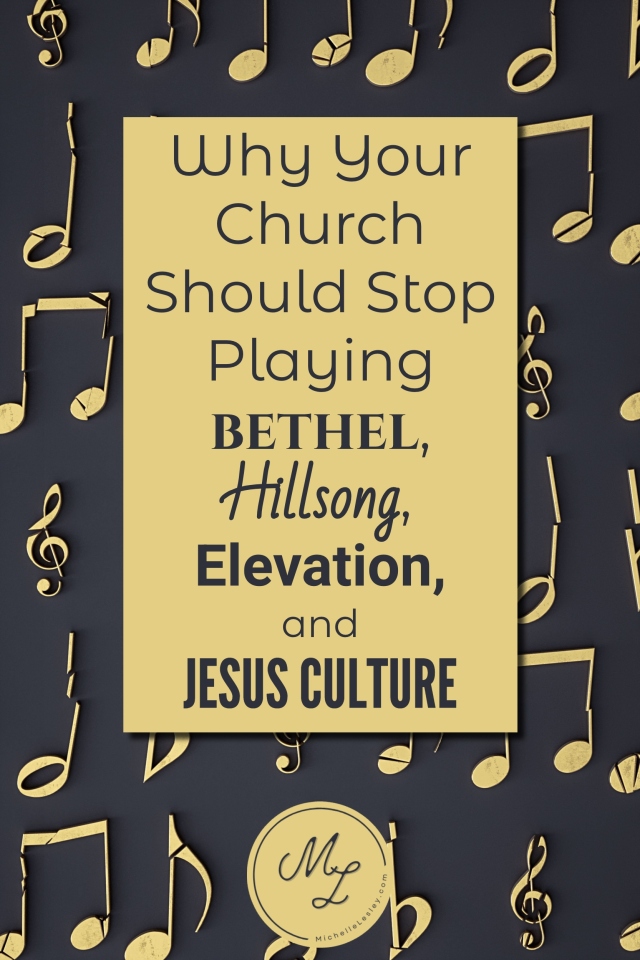
Why Your Church Should Stop Playing Bethel, Hillsong, Elevation, and Jesus Culture

If you prefer listening to reading, check out our A Word Fitly Spoken podcast episode, Discord: Why Your Church Should Reject Bethel Hillsong and Elevation Music, based on this article.


While this article deals primarily with Bethel, Hillsong, Elevation, and Jesus Culture, they are by no means the only heretical music sources to be avoided. Phil Wickham, for example, is just as prolific as these groups and his music is used by just as many churches. With his strong ties to Bethel, he should be included under the umbrella of Bethel as you consider the remainder of this article. There are numerous other unbiblical musicians who should be avoided for these same (and other) reasons. You can find a sampling of them in my article The Mailbag: False Doctrine in Contemporary Christian Music.


Justin Peters and Todd Friel discuss the theological problems with Bethel, Jesus Culture, Hillsong, and Elevation music and why your church shouldn’t use their music in this video interview: Why Your Church Shouldn’t Play Bethel and Hillsong Music.

Is it wrong to sing songs from Bethel if they are theologically correct? In this episode of Redeeming Truth, Pastors Costi Hinn, Dale Thackrah, and Kyle Swanson provide insight into the dangers of supporting ministries like Bethel [and Hillsong, Jesus Culture and Elevation Music], that have a false understanding of who Christ is.

If you are looking for theologically accurate worship music to listen to or sing in your church, they have put together a Spotify worship playlist that you can listen to. Costi has also written an excellent companion article on his blog: Should Your Church Sing Jesus Culture & Bethel Music?

Excerpted from my article The Mailbag: False Doctrine in Contemporary Christian Music

“Itโ€™s imperative for churches to be discerning about the CCM they use in worship. If Jane Churchmember hears a CCM song in church and likes it, sheโ€™s likely to Google the song (probably right there in church- Iโ€™ve done it!), find out who sings it, and begin following that artist. Worship pastors who use CCM have a responsibility to vet the artists who perform the songs they select for the worship service to make sure theyโ€™re not sending Jane into the arms of a heretic. Additionally, music costs money, and you donโ€™t want your churchโ€™s offerings supporting false doctrine.

Now, every time I address the subject of being discerning about worship music and that churches should not use worship music from heretical sources (such as Bethel, Hillsong, and Elevation) someone whoโ€™s defending using music from these heretical sources [will say]:

Well, [insert name of hymn writer here] wrote lots of perfectly biblical hymns, but he had some theological problems too, and youโ€™re not recommending we get rid of all of his hymns.

Well, first of all, maybe we should more closely examine the theology of some of our most prolific hymnists and stop using their music because of what they believed. Quick โ€“ off the top of your head, name the three we should start withโ€ฆ

โ€ฆAnd thatโ€™s what separates the errant hymnist from Bethel, et al. Most Christians, even those who prefer hymns over CCM, could probably not name three people who wrote hymns, let alone tell you anything about their theology. But if you ask the average Christian to name three top Christian artists, she could rattle them off in a second.

Most hymn writers have been dead for up to hundreds of years. They donโ€™t have Facebook pages you can follow, nobodyโ€™s playing their stuff on KLOVE, theyโ€™re not on tour to promote their latest album, they donโ€™t have thousands of followers worldwide, and their music is in the public domain, so your church isnโ€™t financially supporting them or their work. If you wanted to follow their errant theology, youโ€™d have to hit the books to research and study it. Contemporary musiciansโ€™ theology is only a click away on YouTube, social media, live streamed concerts and conferences, and on their web sites. Nobody is following dead hymnistsโ€™ false doctrine, but hordes are following contemporary musiciansโ€™ heresy.”


Excerpted from my articles on Bethel, Hillsong, and Elevation:

If you came here looking for a critique of individual [Bethel, Hillsong, or Elevation] songs, thatโ€™s not really what this is about. Everything connected to [these “pastors”] โ€“ [the “churches,” the music companies] (as entities and all individual songs), all [“church” and music] personnel, materials, programs, and events โ€“ are all fruit of the poisonous tree [of the false teacher who heads everything up]. No, you cannot biblically pick and choose songs from [any of these organizations] that donโ€™t seem to overtly violate Scripture. The Bible never tells us to โ€œchew up the meat and spit out the bones.โ€ It says:

I appeal to you, brothers, to watch out for those who cause divisions and create obstacles contrary to the doctrine that you have been taught; avoid them. For such persons do not serve our Lord Christ, but their own appetites, and by smooth talk and flattery they deceive the hearts of the naive. Romans 16:17-18

โ€œWatch outโ€ for false teachers. โ€œAvoid them.โ€ That includes everything about them: all their materials, books, events, music, social media, etc. Would the God who breathed out these words of Scripture be pleased if we ourselves, or our churches, use materials by people who โ€œdo not serve our Lord Christโ€?

Excerpted from my article The Mailbag: Potpourri (…Solid churches with heretical music…)

“We have been searching for a doctrinally sound church in the area we moved to, and unfortunately it has not been easy! The few that we have found still use Hillsong, Bethel or Elevation music. I usually cross a church off the list quickly if they sing from those artists. But like I said, now I am finding even doctrinally sound churches are throwing some of those songs in. Do you have any insight to this dilemma?”

for pastors and ministers of music: This is yet one more reason it is detrimental to your church to use music from Bethel, Jesus Culture, Hillsong, Elevation, any musician connected these groups (such as Phil Wickham, who’s very prolific and has strong ties to Bethel), or any other musician who isnโ€™t doctrinally sound (after you have thoroughly vetted him/her/them.) regardless of how biblical the lyrics of any particular song of theirs that youโ€™re using might be. You could potentially be turning away solid, mature, discerning Believers who might otherwise be interested in joining your church. The woman who sent in this question is not the first to ask me something like this โ€“ not by a long shot. This issue is increasingly of concern to Christians looking for a solid church. (For that reason, I do not list churches – even Reformed or seemingly otherwise doctrinally sound churches – on my Reader Recommended Churches list who use music from heretical sources like these.)

When a visitor walks into your sanctuary for the first time, your worship service is the โ€œfaceโ€ of your church to her. What kind of a first impression are you making? When you use music by doctrinally unsound musicians, it does not say, โ€œWeโ€™re really a doctrinally sound church โ€“ honest! We only use songs from these groups whose lyrics are biblical.โ€. It says, โ€œThis church has leaders who arenโ€™t discerning,โ€ or โ€œIf this church uses music by these heretical groups, what other doctrinal problems does it have?โ€. Why put that stumbling block out there when there is plenty of music available with biblical lyrics written/performed by doctrinally sound musicians?

And there’s another stumbling block that using this type of music puts in front of weaker brothers and sisters that you may not have realized. I have heard from a number of Christians whom God graciously saved and rescued out of the pit of “churches” similar to Bethel, Hillsong, and Elevation. They tell me that when they walk into what they think is a doctrinally sound church and hear music from these and other heretical sources, it triggers a form of spiritual PTSD. It’s traumatizing to them. They immediately become fearful that your church is mere steps from turning into one of these types of “churches.” Will they grow out of that reflexive reaction? Yes, some day, as God continues to sanctify them. In the meantime, do you want the music at your church to cause them unnecessary anxiety? I hope not.

Even for Christians who have not come out of “churches” like these but are knowledgeable about their heretical theology, using these songs in your worship service is putting a stumbling block in front of them, too. Take me, for example. I’ve studied these groups. I’ve seen their heresy and the damage they do to both the Kingdom and to the individuals who follow them. And because of that, I’ve zealously spoken out against them. If I visit your church and an Elevation song suddenly flashes up on the screen, my ability to worship is completely derailed in grief that your church would use a song from that source – especially if you know about their theology and are well acquainted with music from doctrinally sound sources that you could have used instead. I cannot sin against my conscience by singing those songs. Consider me a “weaker brother” if you like, but do you care more about me as your sister in Christ, or your “right” to use music from these sources? What about Paul’s posture in 1 Corinthians 8:9-13?

But take care that this right of yours does not somehow become a stumbling block to the weak. For if anyone sees you who have knowledge eating in an idol’s temple, will he not be encouraged, if his conscience is weak, to eat food offered to idols? And so by your knowledge this weak person is destroyed, the brother for whom Christ died. Thus, sinning against your brothers and wounding their conscience when it is weak, you sin against Christ. Therefore, if food makes my brother stumble, I will never eat meat, lest I make my brother stumble.

If this was true in Paul’s personal life, shouldn’t it surely be true of our worship services? If you wouldn’t put a Christmas tree or portrayals of Jesus in your sanctuary because it might offend a brother in Christ, why would you use worship music that causes offense to your brothers and sisters?

Finally, what is the proactively good reason for intentionally choosing music from a heretical source? In other words, when you’re selecting music for the worship service, why would you choose, say, a Hillsong song about God’s glory, or Psalm 23, or the crucifixion, when you could just as easily choose a song from a doctrinally sound source about any of those things – a source that isn’t a stumbling block to anyone, won’t give anyone the wrong impression about your church, won’t lead anyone to follow a heretical “church,” and won’t use your church’s offerings to support a heretical “church”? What makes the Hillsong song you’re choosing better than the song from the doctrinally sound source? It doesn’t seem to me that there’s a good enough reason to use songs from these sources that outweighs all the good, biblical reasons not to use them.

There is simply no good reason for a doctrinally sound church to use music from heretical sources like these.

There is simply no good reason for a doctrinally sound church to use music from heretical sources like Bethel, Jesus Culture, Hillsong, and Elevation.


Additional Resources

Stop Singing Hillsong, Bethel, Jesus Culture, and Elevation by Scott Aniol

The Mailbag: โ€œI Speak Jesus,โ€ Charity Gayle, and How to Vet Christian Music

Why I Donโ€™t Sing the Songs of Hillsong and Jesus Culture by Dan Cogan

Why Fundamental Baptist Churches Must Avoid Bethel Music by Spencer Smith

Bethel Church (Redding, CA)/Bethel Music/Jesus Culture

Hillsong/Brian & Bobbie Houston

Elevation/Elevation Music

The Mailbag: What Is the New Apostolic Reformation?

The Mailbag: Should Christians Listen to Reckless Love?

God’s Not Like, “Whatever, Dude,” About How He’s Approached in Worship

The Mailbag: False Doctrine in Contemporary Christian Music

Hillsong’s Theology of Music and Worship

Let’s Talk About the Worship Music at the [Charlie Kirk] Memorial Service… with Dawn Hill

Mailbag, New Apostolic Reformation

The Mailbag: My friend just graduated from “prophecy school”


What would you say to a woman who just graduated from a โ€œschool of prophecyโ€œ? How do you handle this subject in a graceful way to help her see the truth?

Wow, that’s a tough one! These prophecy, healing, and other apostolic gifts “schools” similar to Bethel’s notorious School of Supernatural Ministry, are popping up everywhere and leading people astray into damnable New Apostolic Reformation heresy.

We love our friends and don’t want to see them deceived by false doctrine, but it can be a difficult topic to address. Why? Because when you get down to the nitty gritty of loving false doctrine and false teachers, the foundational issue is idolatry. And when people love their idols enough to follow them for years, and invest a lot of time, energy, and money in their idols’ schools, conferences, or materials, it’s very likely their reaction to being told they’re following an idol is not going to be…shall we say…pleasant and polite.

Fear of a negative reaction, however, is not something that should keep us from loving our friends enough to speak biblical truth to them. Remember what the Bible says:

Faithful are the wounds of a friend; profuse are the kisses of an enemy. Proverbs 27:6

In other words, if you’re a faithful, godly friend, you’ll risk hurting your friend’s feelings with kindly spoken Scriptural truth. If you lie to her or affirm her in falsehood in order to preserve her feelings, you’re her enemy, not her friend.

Ironically, in this situation, if you’re a true friend to this woman, you will likely lose your friendship with her. If she’s excitedly telling you about the prophecy school she just graduated from, she doesn’t want a true, godly friend who’s looking out for her best spiritual interests and will tell her that she just wasted precious time and money on something that’s dangerously unbiblical. She wants the kisses of the enemy to affirm her in her beliefs.

But, again, that’s OK. It really is OK if your “friend” chooses false doctrine over you (In which case, she isn’t being a good friend to you, is she?). It might be painful, but with the help and comfort of the Holy Spirit, you will not only survive, God will bless you.

โ€œDo not think that I have come to bring peace to the earth. I have not come to bring peace, but a sword. For I have come to set a man against his father, and a daughter against her mother, and a daughter-in-law against her mother-in-law. And a person’s enemies will be those of his own household. Whoever loves father or mother more than me is not worthy of me, and whoever loves son or daughter more than me is not worthy of me. And whoever does not take his cross and follow me is not worthy of me. Whoever finds his life will lose it, and whoever loses his life for my sake will find it. Matthew 10:34-39

Jesus said, โ€œTruly, I say to you, there is no one who has left house or brothers or sisters or mother or father or children or lands, for my sake and for the gospel, who will not receive a hundredfold now in this time, houses and brothers and sisters and mothers and children and lands, with persecutions, and in the age to come eternal life. Mark 10:29-30

So, here are my suggestions for responding to your friend in a godly way.

โœข Pray for yourself. Pray that God will help you speak boldly, yet kindly, to your friend. That He will give you the right words to say. That He will prepare your heart for the possibility of losing this friend by trying to help her.

โœขย Pray for your friend. Pray for her salvation. People who are this far gone into heresy are not saved. (See John 10.) Pray that the Holy Spirit will open her eyes to the deception she’s under and the biblical truth you’re speaking to her.

โœข Remember that you don’t have to say everything in one conversation. In fact, depending on the situation, it’s probably better that you don’t. Most women don’t respond well emotionally to drinking from a fire hose of informational rebuke, and she will probably not hear about 90% of what you say. Shorter conversations over a protracted period of time (as you’re continually praying for her) are much more likely to be effective.

โœขย Asking questions is helpful. Instead of sitting down with an, “OK, girlfriend, here’s how it is,” approach, try asking your friend questions about the prophecy school and her beliefs. This will help in two ways. First, it helps you get up to speed on exactly what she was taught at this prophecy school and where she is, spiritually, so you’ll be able to give an informed response. Second, asking questions gives the conversation an “I care about you,” tone, which most women will respond to better than an “I’m here to set you straight because you’re wrong,” tone. If you demonstrate by your questions that you care about her and want to learn what she believes, she will be much more likely to reciprocate and listen when you share what you believe.

โœขย Share the gospel.ย A really good verse to keep in mind during this whole process is 1 Corinthians 2:14:

The natural person does not accept the things of the Spirit of God, for they are folly to him, and he is not able to understand them because they are spiritually discerned.

Here’s what this means in your situation: You can perfectly present – the right tone, an uber-caring demeanor, all the right verses, the exact right words – every biblical argument against the things your friend was taught at prophecy school and she’s still not going to “get it” if she’s not saved. It will be “folly” to her and she will not be “able to understand them,” because she does not have the Holy Spirit indwelling her. Saved people embrace and submit to Scripture even when it’s hard because the Holy Spirit enables them to. Lost people kick against Scripture’s requirements because they’re devoid of the Holy Spirit.

Your friend needs the gospelย first. You may want to show her my article Basic Training: The Gospel or some of the Scriptures in it, and ask some questions like,ย  “What do you think this article is trying to say?” or “What did the prophecy school teach you about this passage?” or “You said the prophecy school taught you _____. How does that match up with this verse?”. Another great question for assessing someone’s understanding of the gospel is, “If I had five minutes to live and I asked you how I could go to Heaven when I died, how would you answer me?”.

Once she’s saved, the Holy Spirit will do the heavy lifting of correcting her theology. He is the one who will have to open her heart and mind to the truth of Scripture.

โœขย Give her a graduation gift:ย A MacArthur Study Bible (I’d recommend the ESV translation.). Tuck in a bookmark with the gospel printed on it.

โœข Share biblical resources. If your friend is open to it, give her gospel-centered, Scripture-rich books to read, sermons to listen to, podcast recommendations, etc. Invite her to services and events at your doctrinally sound church. (Do this occasionally. Don’t bombard her constantly.)

โœขย Share Lindsay’s testimony. Last year, Lindsay Davis, while a student at Bethel’s School of Supernatural Ministry, got saved after viewing the film American Gospelย (a wonderful biblical resource to share with your friend), and was subsequently expelled for sharing the gospel with her fellow students and questioning the unbiblical teaching at the school. Lindsay has given her testimony in dozens of video, audio, and print interviews. Just Google “Lindsay Davis testimony” or “Lindsay Davis Bethel” and choose the one you think your friend would respond to best.


I hope things go well when you talk with your friend. I’m taking a moment to pray for both of you now, and I ask that everyone reading this would do the same.

Additional Resources:

Basic Training: The Bible Is Our Authority

Basic Training: The Bible Is Sufficient

Weak Women and the Idolatry of Personal Experience

Godโ€™s Not Like โ€œWhatever, Dude,โ€ About The Way Heโ€™s Approached in Worship

Clinging to the Golden Calf: 7 Godly Responses When Someone Says Youโ€™re Following a False Teacher

Words with Friends: How to contend with loved ones at A Word Fitly Spoken

Words With Friends at Berean Examiner


If you have a question about: a Bible passage, an aspect of theology, a current issue in Christianity, or how to biblically handle a family, life, or church situation, comment below (Iโ€™ll hold all questions in queue {unpublished} for a future edition ofย The Mailbag) or send me anย e-mail or private message. If your question is chosen for publication, your anonymity will be protected.

Mailbag, Top 10

Top 10 Mailbag Articles of 2019

I always enjoy the annual “year in review” articles and TV shows that run in abundance in late December, so I thought I’d contribute my own. Several Mailbag articles were among this year’s most popular, so I decided to make two separate lists. Check out myย top 10 non-Mailbag articles of 2019 tomorrow. Here are my ten most popular Mailbag blog articles from 2019:

Vaxxers, Anti-Vaxxers, and the Health of the Body

To vaccinate, or not to vaccinate? Itโ€™s a tough issue to discuss these days.ย 


Do You Recommend Angie Smith (โ€œSeamlessโ€)?

Wife of Todd Smith of the Christian music group, Selah, Angie started out as a blogger, then blossomed into a Christian author and speaker. Her best known book to date is a womenโ€™s study: Seamless: Understanding the Bible as One Complete Story


Potpourri (Todd Friel on Rick Warren, Enneagram, Should I stay or should I go?โ€ฆ)

Todd says Rick isn’t a heretic?…Sharply, yet gently, rebuking false teachers…What is an Enneagram?…Books vs. interactions…Should I leave my women’s Bible study group?


BSF (Bible Study Fellowship)

While I totally support the idea of delving deeply into the Scriptures with other women, there are a few of aspects of BSF that concern me…ย 


Should My Church Participate in Operation Christmas Childโ€™s Shoebox Ministry?

Should my church participate in Operation Christmas Child? What are some other good international ministries my church could participate in instead?


Do you recommend these teachers/authors? Volume 1

Jennifer Kennedy Dean, Lisa Harper, Karen Kingsbury, Rebekah Lyons, Raechel Myers, Shauna Niequist, Jennifer Rothschild, Susie Shellenberger, Sheila Walsh, Amanda Bible Williams

(After today, I’ll be retiring this article. Thanks to Project Breakdown, I have completed updated, individual articles on each of these teachers which you may access at the Popular False Teachers and Unbiblical Trends tab at the top of this page, or by entering the teacher’s name in the search bar.)


Should Christians listen to โ€œReckless Loveโ€?

Remember, everything we do should be governed byย Scripture, not our opinions and preferences, or whether we happen to like a particular song or not…


Questions about the Open Letter to Beth Moore

Since the publication of the Open Letter to Beth Moore, several questions have arisen that Iโ€™d like to address…


Do you recommend these teachers/authors? Volume 3

Jill Briscoe, Lauren Chandler, Tony Evans, Rachel Hollis, Chrystal Evans Hurst, Brenda Leavenworth, Leslie Ludy, Bianca Olthoff, Wellspring Group, Jen Wilkin


Do you recommend these teachers/authors? Volume 2

Jennie Allen, Lisa Bevere, Rachel Held Evans, Heather Lindsey, Ann Graham Lotz, Kelly Minter, Nancy Leigh (DeMoss) Wolgemuth

(Project Breakdown begins on this list next!)


If you have a question about: a Bible passage, an aspect of theology, a current issue in Christianity, or how to biblically handle a family, life, or church situation, comment below (Iโ€™ll hold all questions in queue {unpublished} for a future edition ofย The Mailbag) or send me anย e-mail or private message. If your question is chosen for publication, your anonymity will be protected.