Wednesday's Word

Wednesday’s Word ~ 2 John

2 john 10 11

2 John

The elder to the elect lady and her children, whom I love in truth, and not only I, but also all who know the truth, because of the truth that abides in us and will be with us forever:

Grace, mercy, and peace will be with us, from God the Father and from Jesus Christ the Father’s Son, in truth and love.

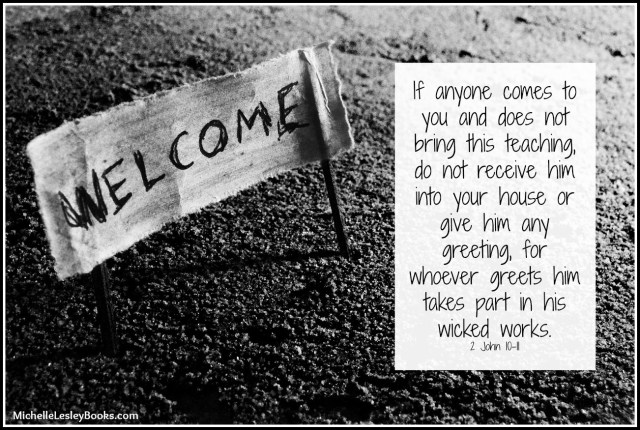
I rejoiced greatly to find some of your children walking in the truth, just as we were commanded by the Father. And now I ask you, dear lady—not as though I were writing you a new commandment, but the one we have had from the beginning—that we love one another. And this is love, that we walk according to his commandments; this is the commandment, just as you have heard from the beginning, so that you should walk in it. For many deceivers have gone out into the world, those who do not confess the coming of Jesus Christ in the flesh. Such a one is the deceiver and the antichrist. Watch yourselves, so that you may not lose what we have worked for, but may win a full reward. Everyone who goes on ahead and does not abide in the teaching of Christ, does not have God. Whoever abides in the teaching has both the Father and the Son. 10 If anyone comes to you and does not bring this teaching, do not receive him into your house or give him any greeting, 11 for whoever greets him takes part in his wicked works.

12 Though I have much to write to you, I would rather not use paper and ink. Instead I hope to come to you and talk face to face, so that our joy may be complete.

13 The children of your elect sister greet you.


The Holy Bible, English Standard Version Copyright © 2001 by Crossway Bibles, a publishing ministry of Good News Publishers.


Questions to Consider:

1. Which genre of biblical literature (epistle, prophecy, history, etc.) is the book of 2 John? Who wrote this book, and to whom was it written? What are two major topics this book deals with in verses 5-6 and in verses 7-11?

2. How many times does the word “truth” appear in this passage? In light of the topic of verses 7-11, why does John place so much emphasis on truth in verses 1-4? Which word, used twice in verse 7, stands in direct contrast to the word “truth” and serves as a pivot point into the topic of verses 7-11?

3. What is the “commandment” in verses 5-6? How does verse 6 say that we demonstrate our love for God? What can we learn about obedience to God from these verses? Can you think of any ways you have shown your love for God today by obeying Him?

4. Which false teaching was John speaking against in verse 7? What does verse 9 say about people who “go on ahead” of what the Bible says Christianity is and believe (or teach) false doctrine? Are they saved? Compare verse 9 to Galatians 1:6-9.

5. What does verse 10 say we should not do when we come across a false teacher? Why? (11) Think about how verses 10-11 might apply today with regard to attending conferences headlined by, or using materials written by, false teachers, following false teachers on social media, re-posting or retweeting false teachers, etc. How is this giving a “greeting” to false teachers and taking part in their wicked works?

Often, when someone is told she’s following a false teacher, she will say, “But she says some good things, too! I just chew up the meat and spit out the bones.” Is this line of thinking supported by verses 10-11 and passages such as Romans 16:17?
Wednesday's Word

Wednesday’s Word ~ Obadiah

obadiah 4

Obadiah

The vision of Obadiah.

Thus says the Lord God concerning Edom:
We have heard a report from the Lord,
    and a messenger has been sent among the nations:
“Rise up! Let us rise against her for battle!”
Behold, I will make you small among the nations;
    you shall be utterly despised.
The pride of your heart has deceived you,
    you who live in the clefts of the rock,
    in your lofty dwelling,
who say in your heart,
    “Who will bring me down to the ground?”
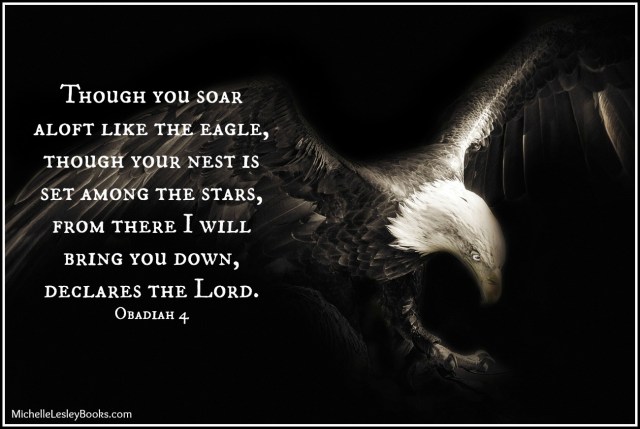
Though you soar aloft like the eagle,
    though your nest is set among the stars,
    from there I will bring you down,
declares the Lord.

If thieves came to you,
    if plunderers came by night—
    how you have been destroyed!—
    would they not steal only enough for themselves?
If grape gatherers came to you,
    would they not leave gleanings?
How Esau has been pillaged,
    his treasures sought out!
All your allies have driven you to your border;
    those at peace with you have deceived you;
they have prevailed against you;
    those who eat your bread have set a trap beneath you—
    you have no understanding.

Will I not on that day, declares the Lord,
    destroy the wise men out of Edom,
    and understanding out of Mount Esau?
And your mighty men shall be dismayed, O Teman,
    so that every man from Mount Esau will be cut off by slaughter.

10 Because of the violence done to your brother Jacob,
    shame shall cover you,
    and you shall be cut off forever.
11 On the day that you stood aloof,
    on the day that strangers carried off his wealth
and foreigners entered his gates
    and cast lots for Jerusalem,
    you were like one of them.
12 But do not gloat over the day of your brother
    in the day of his misfortune;
do not rejoice over the people of Judah
    in the day of their ruin;
do not boast
    in the day of distress.
13 Do not enter the gate of my people
    in the day of their calamity;
do not gloat over his disaster
    in the day of his calamity;
do not loot his wealth
    in the day of his calamity.
14 Do not stand at the crossroads
    to cut off his fugitives;
do not hand over his survivors
    in the day of distress.

15 For the day of the Lord is near upon all the nations.
As you have done, it shall be done to you;
    your deeds shall return on your own head.
16 For as you have drunk on my holy mountain,
    so all the nations shall drink continually;
they shall drink and swallow,
    and shall be as though they had never been.
17 But in Mount Zion there shall be those who escape,
    and it shall be holy,
and the house of Jacob shall possess their own possessions.
18 The house of Jacob shall be a fire,
    and the house of Joseph a flame,
    and the house of Esau stubble;
they shall burn them and consume them,
    and there shall be no survivor for the house of Esau,
for the Lord has spoken.

19 Those of the Negeb shall possess Mount Esau,
    and those of the Shephelah shall possess the land of the Philistines;
they shall possess the land of Ephraim and the land of Samaria,
    and Benjamin shall possess Gilead.
20 The exiles of this host of the people of Israel
    shall possess the land of the Canaanites as far as Zarephath,
and the exiles of Jerusalem who are in Sepharad
    shall possess the cities of the Negeb.
21 Saviors shall go up to Mount Zion
    to rule Mount Esau,
    and the kingdom shall be the Lord‘s.


The Holy Bible, English Standard Version Copyright © 2001 by Crossway Bibles, a publishing ministry of Good News Publishers.


Questions to Consider:

1. What is the theme or purpose of the book of Obadiah? What is the historical backdrop of this book? Why is it important to understand Scripture in light of its historical and cultural setting?

2. Which nation is God speaking directly to in this book? (Who is “you” in verses 1-4?) But which nation would have been the one to receive this book of prophecy? (20) Where do the terms “Jacob” (10, 18) and “Edom/Esau” (1, 6, 18) come from originally, and why are these men’s names used to refer to two nations in this passage? “Jacob” refers to which nation? “Edom/Esau” refers to which nation?

3. Why is God bringing judgment upon Edom? (15, 10) What can we learn from this passage about God’s judgment upon the enemies of His people both in this immediate situation with Israel, and in the future final day of judgment? How does the message of Obadiah work hand in hand with the message of these passages?

4. The theme of most of the Old Testament prophetic books is a warning to God’s people, Israel, to repent of their sin before God judges them. In Obadiah, we see God’s promise of judgment for the sin of a pagan nation. What does this teach us about God’s view of sin and repentance? How do Obadiah, God’s judgment on Israel, and Romans 2:1-11 show that God is “no respecter of persons” when it comes to judging sin?

5. How does knowing that God is a righteous and just judge impact your prayer life, your worship, your sense of urgency in sharing the gospel, and your desire to take vengeance on others?

Wednesday's Word

Wednesday’s Word ~ Amos 7

amos 7 15

Amos 7

This is what the Lord God showed me: behold, he was forming locusts when the latter growth was just beginning to sprout, and behold, it was the latter growth after the king’s mowings. When they had finished eating the grass of the land, I said,

“O Lord God, please forgive!
    How can Jacob stand?
    He is so small!”
The Lord relented concerning this:
    “It shall not be,” said the Lord.

This is what the Lord God showed me: behold, the Lord God was calling for a judgment by fire, and it devoured the great deep and was eating up the land. Then I said,

“O Lord God, please cease!
    How can Jacob stand?
    He is so small!”
The Lord relented concerning this:
    “This also shall not be,” said the Lord God.

This is what he showed me: behold, the Lord was standing beside a wall built with a plumb line, with a plumb line in his hand. And the Lord said to me, “Amos, what do you see?” And I said, “A plumb line.” Then the Lord said,

“Behold, I am setting a plumb line
    in the midst of my people Israel;
    I will never again pass by them;
the high places of Isaac shall be made desolate,
    and the sanctuaries of Israel shall be laid waste,
    and I will rise against the house of Jeroboam with the sword.”

10 Then Amaziah the priest of Bethel sent to Jeroboam king of Israel, saying, “Amos has conspired against you in the midst of the house of Israel. The land is not able to bear all his words. 11 For thus Amos has said,

“‘Jeroboam shall die by the sword,
    and Israel must go into exile
    away from his land.’”

12 And Amaziah said to Amos, “O seer, go, flee away to the land of Judah, and eat bread there, and prophesy there, 13 but never again prophesy at Bethel, for it is the king’s sanctuary, and it is a temple of the kingdom.”

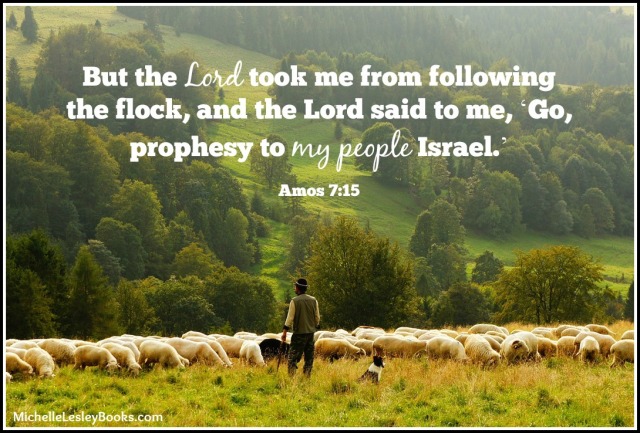
14 Then Amos answered and said to Amaziah, “I was no prophet, nor a prophet’s son, but I was a herdsman and a dresser of sycamore figs. 15 But the Lord took me from following the flock, and the Lord said to me, ‘Go, prophesy to my people Israel.’ 16 Now therefore hear the word of the Lord.

“You say, ‘Do not prophesy against Israel,
    and do not preach against the house of Isaac.’

17 Therefore thus says the Lord:

“‘Your wife shall be a prostitute in the city,
    and your sons and your daughters shall fall by the sword,
    and your land shall be divided up with a measuring line;
you yourself shall die in an unclean land,
    and Israel shall surely go into exile away from its land.’”


The Holy Bible, English Standard Version Copyright © 2001 by Crossway Bibles, a publishing ministry of Good News Publishers.


Questions to Consider:

1. Which genre of biblical literature (epistle, gospel, history, prophecy, etc.) is the book of Amos? To whom was the book written? (16) What was the purpose or theme of the book of Amos? Why is this book relevant to us as Christians today?

2. In verses 1-2 and 4, what actions did God show Amos He would potentially take against Israel (“Jacob”)? What was the reason for these actions? Which attribute(s) of God’s nature do these verses showcase?

3. Why did God relent from these actions? (2-3, 5-6) Which attribute(s) of God’s nature is showcased in these verses? What do these verses teach us about prayer and God’s response to it? Does God always prevent trials in answer to prayer? What was the plumb line God measured Israel against? (7-8) What was His judgment? (8-9)

4. Who were Amaziah and Jeroboam? (10) Why would Amaziah, a priest, oppose Amos, a prophet of God? (10, 12-13, 16) Shouldn’t they have been on the same side? How do verses 10-17 compare with Isaiah 30:8-14? Why did Israel – even the priests and other religious leaders – refuse to listen to the prophets and repent?

5. The main message Amos and other Old Testament prophets preached was for God’s people to repent of their sin and turn back to Him before God judged them. Today, there are many so-called prophets in the visible church. How would you characterize their main message? Can you think of any who preach repentance and the gospel? Did Amos meet God’s requirements for a true prophet? Do today’s “prophets”?

Wednesday's Word

Wednesday’s Word ~ Joel 1

joel 1 14

Joel 1

The word of the Lord that came to Joel, the son of Pethuel:

Hear this, you elders;
    give ear, all inhabitants of the land!
Has such a thing happened in your days,
    or in the days of your fathers?
Tell your children of it,
    and let your children tell their children,
    and their children to another generation.

What the cutting locust left,
    the swarming locust has eaten.
What the swarming locust left,
    the hopping locust has eaten,
and what the hopping locust left,
    the destroying locust has eaten.

Awake, you drunkards, and weep,
    and wail, all you drinkers of wine,
because of the sweet wine,
    for it is cut off from your mouth.
For a nation has come up against my land,
    powerful and beyond number;
its teeth are lions’ teeth,
    and it has the fangs of a lioness.
It has laid waste my vine
    and splintered my fig tree;
it has stripped off their bark and thrown it down;
    their branches are made white.

Lament like a virgin wearing sackcloth
    for the bridegroom of her youth.
The grain offering and the drink offering are cut off
    from the house of the Lord.
The priests mourn,
    the ministers of the Lord.
10 The fields are destroyed,
    the ground mourns,
because the grain is destroyed,
    the wine dries up,
    the oil languishes.

11 Be ashamed, O tillers of the soil;
    wail, O vinedressers,
for the wheat and the barley,
    because the harvest of the field has perished.
12 The vine dries up;
    the fig tree languishes.
Pomegranate, palm, and apple,
    all the trees of the field are dried up,
and gladness dries up
    from the children of man.

13 Put on sackcloth and lament, O priests;
    wail, O ministers of the altar.
Go in, pass the night in sackcloth,
    O ministers of my God!
Because grain offering and drink offering
    are withheld from the house of your God.

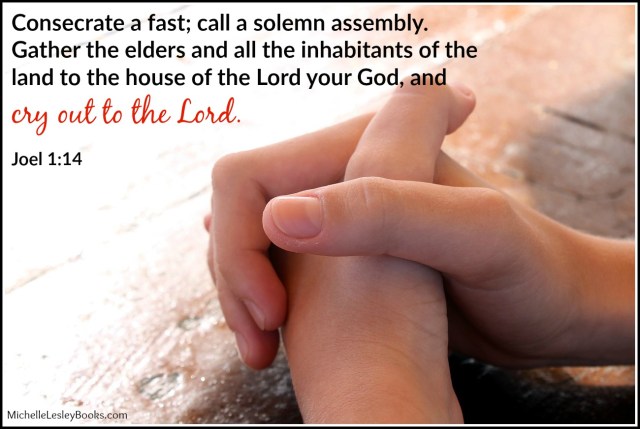
14 Consecrate a fast;
    call a solemn assembly.
Gather the elders
    and all the inhabitants of the land
to the house of the Lord your God,
    and cry out to the Lord.

15 Alas for the day!
For the day of the Lord is near,
    and as destruction from the Almighty it comes.
16 Is not the food cut off
    before our eyes,
joy and gladness
    from the house of our God?

17 The seed shrivels under the clods;
    the storehouses are desolate;
the granaries are torn down
    because the grain has dried up.
18 How the beasts groan!
    The herds of cattle are perplexed
because there is no pasture for them;
    even the flocks of sheep suffer.

19 To you, O Lord, I call.
For fire has devoured
    the pastures of the wilderness,
and flame has burned
    all the trees of the field.
20 Even the beasts of the field pant for you
    because the water brooks are dried up,
and fire has devoured
    the pastures of the wilderness.


The Holy Bible, English Standard Version Copyright © 2001 by Crossway Bibles, a publishing ministry of Good News Publishers.


Questions to Consider:

1. What is the purpose or theme of the book of Joel? Which genre of biblical literature (epistle, historical narrative, wisdom, etc.) is it? To whom was the book written? What do verses 2-3 indicate about the gravity of the situation the rest of the chapter describes?

2. What was the natural disaster that fell on the land? (4) Which crops were affected? (10-12) How were the land and livestock affected by the natural disaster in verse 4? (18-20) What does Joel 2:12-14 suggest might be the reason Israel is experiencing this hardship?

3. What were two major aspects of Israel’s life the famine was detrimental to? (16) How were “joy and gladness [cut off] from the house of our God”? (9) How might a natural disaster, war, or other major catastrophe affect your church? In what ways would worship be affected?

4. How was Israel to respond to the famine? (13-14, 19) Who was to lead the way in lamenting and crying out to God? What should our response be when trouble or disaster strikes? What are some ways pastors can lead the way when a catastrophic event impacts the church?

5. What does this chapter teach us about God’s sovereignty? His judgment? How does this chapter hint at the intensity and the dreadfulness of God’s final judgment on the earth?

Christian women, Ministry

Mary and Martha and Jesus and Women’s Ministry

You remember the story. Jesus comes to Mary and Martha’s house. Martha’s Pinteresting up the place while Mary sits at Jesus’ feet to listen to Him teach. Martha gripes to Jesus that Mary should help her and Jesus says no because it’s better for her to listen to Him than fold napkins into the shape of swans or whatever. Moral of the story- Martha needs to relax and not let other things distract her from Jesus.

That’s a good, true, and important takeaway from this passage, and one that we would all do well to heed.

But did you ever stop to think that Mary and Martha aren’t the main characters in this story? Jesus is. Jesus is the main character in every Bible story, so our primary focus should always be on Him: what He said and did and was like.

Did you ever stop to think that Mary and Martha aren’t the main characters in this story? Jesus is.

What was Jesus teaching that day at Mary and Martha’s house? The passage doesn’t tell us the topic He was speaking about, but we are privy to a very important lesson He imparted through the scenario with Mary and Martha. A lesson about the way God loves and values women.

Remember how women were generally regarded at that time? They didn’t have much more value than livestock, furniture, or a man’s other possessions. They were considered intellectually inferior, they weren’t formally educated, and their legal and social standing were often tenuous at best. They could not go beyond the Court of the Women at the temple for worship. There was even a traditional prayer Jewish men recited in which they thanked God for not making them a woman, a Gentile, or a slave. Women were low man on the totem pole, so to speak.

And that’s where we find Martha. She wasn’t doing anything wrong that day. In fact, in her culture, she was doing everything right. If anything, Mary would have been the one viewed as being in the wrong because the teaching was for the men, and it was the women’s job to bustle around taking care of all the hospitality duties. Martha knew this. Mary knew this. Jesus knew this. Everyone else present knew this. Martha must have wondered why someone hadn’t yet shooed Mary out of the living room and into the kitchen. So her statement to Jesus in verse 40, “Lord, do you not care that my sister has left me to serve alone? Tell her then to help me,” was probably not just, “I need another pair of hands,” but also a bit of, “Mary is forgetting her place. This isn’t what proper women do.”

Oh yes, it is.

Whatever else He might have been lecturing about that day, that was one of the lessons Jesus taught Mary, Martha, the rest of their guests, and Christendom at large.

Women aren’t second class citizens in the Kingdom of God. We are precious and valuable to Him. He has important, worthwhile work for us to do – His way – in the body of Christ. And He wants us trained in His Word in order to carry out that work.

How did Jesus teach that lesson?

First, He allowed Mary to stay and receive His teaching (39). (We see this echoed in God’s instruction to the church in 1 Timothy 2:11: “LET a woman learn…”) It hadn’t slipped Jesus’ mind that she was sitting there. He could have told her to leave, but He had no intention of doing so. Jesus wanted Mary there. He wanted to teach her and to have her learn God’s word from Him.

Next, when someone tried to take Mary away from hearing and being trained in God’s word, Jesus – God Himself – answered with a resounding NO. This “will not be taken away from her,” Jesus said. Mary, and Martha too (41), could arrange centerpieces or turn a cookie into a work of art any time or never. But this, the teaching of God’s Word, was urgent. Vital. Jesus didn’t want either of them to miss it by focusing on the trivial things they thought they should be pursuing.

And He doesn’t want us to miss it either, ladies.

Jesus pulled women out of the craft room and into the study. Is the women’s ministry at your church trying to pull them back?

Jesus pulled women out of the craft room and into the study. Is the women’s ministry at your church trying to pull them back?

Is the women’s events page on your church’s web site filled exclusively with painting parties, fashion shows, ladies’ teas, and scrapbook sessions?

Does your women’s ministry do canned “Bible” studies authored by women who offer nothing but personal stories, experiences, and false doctrine?

Are the Marys in your church who want to sit at the feet of Jesus and hear His word rightly handled and taught being scolded by the Marthas for not staying in their place and embracing the banality the women’s ministry is doling out?

Are the Marys in your church who want to sit at the feet of Jesus and hear His word rightly handled and taught being scolded by the Marthas for not staying in their place and embracing the banality the women’s ministry is doling out?

Is this it? Is this all women are good for in the church- fluff and false doctrine?

Jesus didn’t think so.

Let’s have our women’s ministries train women in the full scope of biblical womanhood. Let’s be serious students of God’s Word by picking it up and studying it like mature women. Let’s get equipped to teach and disciple other women who are babes in Christ. Let’s share the gospel with the lost. Let’s learn how to train our own children in the Scriptures and be the ones to raise the bar for what the kids at our church are being taught. Let’s roll up our sleeves and get our hands dirty ministering to those who are ill, in prison, lonely, poor, elderly, considering abortion, experiencing crisis; who have wayward children, problems in their marriages, a parent with Alzheimer’s, or have lost a loved one.

Is this it? Is this all women are good for in the church- fluff and false doctrine?

Women are worth more and capable of more than the bill of goods they’re being sold by “Christian” retailers suggests. More than cutesy crafts and fairy tales masquerading as biblical teaching. Let’s put the “ministry” – ministry of the Word and ministry to others – back in “women’s ministry.”

Women are worth more and capable of more than the bill of goods they’re being sold by “Christian” retailers suggests.