
The Ten (10 Commandments Bible Study)

The Ten: Lesson 4

Previous Lessons: 1, 2, 3

Exodus 20:4-6

“You shall not make for yourself a carved image, or any likeness of anything that is in heaven above, or that is in the earth beneath, or that is in the water under the earth. You shall not bow down to them or serve them, for I the Lord your God am a jealous God, visiting the iniquity of the fathers on the children to the third and the fourth generation of those who hate me, but showing steadfast love to thousands of those who love me and keep my commandments.

Exodus 32:1-10

When the people saw that Moses delayed to come down from the mountain, the people gathered themselves together to Aaron and said to him, “Up, make us gods who shall go before us. As for this Moses, the man who brought us up out of the land of Egypt, we do not know what has become of him.” So Aaron said to them, “Take off the rings of gold that are in the ears of your wives, your sons, and your daughters, and bring them to me.” So all the people took off the rings of gold that were in their ears and brought them to Aaron. And he received the gold from their hand and fashioned it with a graving tool and made a golden calf. And they said, “These are your gods, O Israel, who brought you up out of the land of Egypt!” When Aaron saw this, he built an altar before it. And Aaron made a proclamation and said, “Tomorrow shall be a feast to the Lord.” And they rose up early the next day and offered burnt offerings and brought peace offerings. And the people sat down to eat and drink and rose up to play.

And the Lord said to Moses, “Go down, for your people, whom you brought up out of the land of Egypt, have corrupted themselves. They have turned aside quickly out of the way that I commanded them. They have made for themselves a golden calf and have worshiped it and sacrificed to it and said, ‘These are your gods, O Israel, who brought you up out of the land of Egypt!’” And the Lord said to Moses, “I have seen this people, and behold, it is a stiff-necked people. 10 Now therefore let me alone, that my wrath may burn hot against them and I may consume them, in order that I may make a great nation of you.”

1 John 5:20-21

And we know that the Son of God has come and has given us understanding, so that we may know him who is true; and we are in him who is true, in his Son Jesus Christ. He is the true God and eternal life.21 Little children, keep yourselves from idols.

1 Corinthians 5:9-13

I wrote to you in my letter not to associate with sexually immoral people— 10 not at all meaning the sexually immoral of this world, or the greedy and swindlers, or idolaters, since then you would need to go out of the world. 11 But now I am writing to you not to associate with anyone who bears the name of brother if he is guilty of sexual immorality or greed, or is an idolater, reviler, drunkard, or swindler—not even to eat with such a one. 12 For what have I to do with judging outsiders? Is it not those inside the church whom you are to judge? 13 God judges those outside. “Purge the evil person from among you.”


The Holy Bible, English Standard Version. ESV® Permanent Text Edition® (2016). Copyright © 2001 by Crossway Bibles, a publishing ministry of Good News Publishers.


Questions to Consider:

1. One of the themes of Exodus we’ve discovered in this study is that God is setting His people apart from the surrounding pagan nations and establishing Israel as a nation. How does the second Commandment (Exodus 20:4-6) relate to that theme? Think about what and how pagan nations worshiped. How does the second Commandment set God’s people uniquely apart from pagans and set the worship of God apart from the worship of false gods? How does worshiping God without any sort of visual aid or representation point us to God’s vastness, uniqueness, “other-ness,” and power in comparison with idols?

2. What does it mean that God is a jealous God in the context of the second Commandment (idol worship)? (Exodus 20:5a) Think about God’s nature and character as well as His patience, kindness, and benevolence toward His people both in the Old Testament and today. Doesn’t God have a right to be jealous for His people? What are the consequences of breaking or keeping the second Commandment? (Exodus 20:5b-6)

3. Some Christians believe that the second Commandment prohibits making any representation of God, Jesus, or the Holy Spirit regardless of whether or not that representation is worshiped. They believe, for example, that nativity scenes and plays in which the baby Jesus is depicted, pictures of Jesus in children’s Bibles, pictures of Jesus used for teaching the Bible to non-readers or lost people on the mission field, are a violation of the second Commandment even though these representations of Jesus are not being worshiped. Do you think the context of Exodus 20:4-6 supports this belief? Why or why not? Can you think of any other Scriptures that support or refute this belief?

4. Examine the Exodus 32 passage. How did the people break the second Commandment? Why did the people want Aaron to make an idol for them? (1) When we find ourselves in idolatry – worshiping, loving, or being devoted to something or someone above God – what is the motive of our hearts? Where did the people get the gold jewelry (2-4) that Aaron used to make the calf? What was God’s initial response to this incident? (10) Can you see how it stirs God to anger when we take things that He has created and blessed us with and worship those things rather than the One who gave them to us?

5. In the Exodus 32 passage, what act of God did the people attribute to the golden calf? (4,8) How does it break the second Commandment to call something “God” that is not the God revealed in Scripture? To attribute an action or characteristic of God to something that is not God? How does the 1 John passage and the idea of the “true God” and “him who is true” contrast with the Israelites’ worship of the golden calf as God?

6. Today, in Western culture, we don’t usually carve idols out of wood or stone and bow down to them. But what about creating idols with our hearts and minds instead of our hands? Have you ever “created God in your own image” – a God who fits your opinions, preferences, feelings, or unbiblical beliefs – and worshiped or trusted that god instead of the true God, Jesus, and Holy Spirit of Scripture? How is that similar to the Israelites’ fashioning a golden calf and essentially calling it God? What does the 1 Corinthians passage say about Christians who practice this or any other form of idolatry and how the church is to deal with them?


Homework:

Listen closely this week to the sermon at church, your Sunday School or Bible study class lesson, any Christian books, magazines, blogs, or social media posts you read, and any Christian music you listen to. Is the God depicted in these venues consistent with the way God reveals Himself in Scripture? Do you find any of these sermons, articles, songs, etc., to be breaking the second Commandment by presenting a false view of God, Jesus, or the Holy Spirit?
The Ten (10 Commandments Bible Study)

The Ten: Lesson 3

Previous Lessons: 1, 2

Exodus 20:1-3

And God spoke all these words, saying,

“I am the Lord your God, who brought you out of the land of Egypt, out of the house of slavery.

“You shall have no other gods before me.

Matthew 4:9-10

And he said to him, “All these I will give you, if you will fall down and worship me.” 10 Then Jesus said to him, “Be gone, Satan! For it is written,

“‘You shall worship the Lord your God
    and him only shall you serve.’”

Ezekiel 14:1-11

Then certain of the elders of Israel came to me and sat before me. And the word of the Lord came to me: “Son of man, these men have taken their idols into their hearts, and set the stumbling block of their iniquity before their faces. Should I indeed let myself be consulted by them? Therefore speak to them and say to them, Thus says the Lord God: Any one of the house of Israel who takes his idols into his heart and sets the stumbling block of his iniquity before his face, and yet comes to the prophet, I the Lord will answer him as he comes with the multitude of his idols, that I may lay hold of the hearts of the house of Israel, who are all estranged from me through their idols.

“Therefore say to the house of Israel, Thus says the Lord God: Repent and turn away from your idols, and turn away your faces from all your abominations. For any one of the house of Israel, or of the strangers who sojourn in Israel, who separates himself from me, taking his idols into his heart and putting the stumbling block of his iniquity before his face, and yet comes to a prophet to consult me through him, I the Lord will answer him myself. And I will set my face against that man; I will make him a sign and a byword and cut him off from the midst of my people, and you shall know that I am the Lord. And if the prophet is deceived and speaks a word, I, the Lord, have deceived that prophet, and I will stretch out my hand against him and will destroy him from the midst of my people Israel. 10 And they shall bear their punishment—the punishment of the prophet and the punishment of the inquirer shall be alike— 11 that the house of Israel may no more go astray from me, nor defile themselves anymore with all their transgressions, but that they may be my people and I may be their God, declares the Lord God.”

Matthew 19:16-30

And behold, a man came up to him, saying, “Teacher, what good deed must I do to have eternal life?”17 And he said to him, “Why do you ask me about what is good? There is only one who is good. If you would enter life, keep the commandments.” 18 He said to him, “Which ones?” And Jesus said, “You shall not murder, You shall not commit adultery, You shall not steal, You shall not bear false witness, 19 Honor your father and mother, and, You shall love your neighbor as yourself.” 20 The young man said to him, “All these I have kept. What do I still lack?” 21 Jesus said to him, “If you would be perfect, go, sell what you possess and give to the poor, and you will have treasure in heaven; and come, follow me.” 22 When the young man heard this he went away sorrowful, for he had great possessions.

23 And Jesus said to his disciples, “Truly, I say to you, only with difficulty will a rich person enter the kingdom of heaven. 24 Again I tell you, it is easier for a camel to go through the eye of a needle than for a rich person to enter the kingdom of God.” 25 When the disciples heard this, they were greatly astonished, saying, “Who then can be saved?” 26 But Jesus looked at them and said, “With man this is impossible, but with God all things are possible.” 27 Then Peter said in reply, “See, we have left everything and followed you. What then will we have?” 28 Jesus said to them, “Truly, I say to you, in the new world, when the Son of Man will sit on his glorious throne, you who have followed me will also sit on twelve thrones, judging the twelve tribes of Israel. 29 And everyone who has left houses or brothers or sisters or father or mother or children or lands, for my name’s sake, will receive a hundredfold and will inherit eternal life. 30 But many who are first will be last, and the last first.


The Holy Bible, English Standard Version. ESV® Permanent Text Edition® (2016). Copyright © 2001 by Crossway Bibles, a publishing ministry of Good News Publishers.


Questions to Consider:

1. Take a moment to briefly review the previous lessons (links above). What are some of the major themes we have seen in God’s dealings with Israel so far in the book of Exodus? How does Exodus 20:1-2 serve as an introduction and foundation to the 10 Commandments, showcasing God’s goodness and His right to rule Israel?

2. What does the first Commandment, Exodus 20:3, mean? Is God saying it’s OK for His people to worship other gods as long as He has first place? Compare Exodus 20:3 with Matthew 4:9-10. What did Jesus understand the first Commandment to mean? Where does the temptation to worship other gods come from? Who is ultimately being worshiped when someone worships a false god?

3. Why do you think God made this the first Commandment? How is the first Commandment foundational to every other command or teaching in Scripture? Can you keep the first Commandment while breaking another biblical command? Why or why not?

4. How was Israel breaking the first Commandment in the Ezekiel 14 passage? How did God respond to their attempt to approach Him as their God while still embracing their foreign gods? (8-10) How did this impact their relationship with God? (5,7,11) What did God say the people should do? (6) What would be the result of Israel’s repentance from idolatry? (5,11)

5. In the Matthew 19 passage, which Commandments did Jesus tell the rich young ruler he should keep? (18-19) Which Commandments did Jesus not mention? Were the Commandments Jesus mentioned from the first or second table of the Law? How did the rich young ruler demonstrate that he was unwilling to keep the first Commandment? (20-22) What was his god? How did Peter’s response (27) to Christ differ from the rich young ruler’s response? How did the disciples keep the first Commandment by giving up everything to follow Christ?

6. In what ways do we break the first Commandment today? What are some other “gods” we love and dedicate ourselves to before, or in addition to, Christ? Review the questions in #4. How do these principles apply to Christians today? Think over all that Christ has done for you. How is it an act of worship and thanks to Him to keep the first Commandment?


Homework:

Give this song a listen. Could you sing these lyrics truthfully? In what ways does it exemplify the first Commandment? Are you breaking the first Commandment in any areas of your heart and life? Repent and receive Christ’s forgiveness.

Ezra Bible Study

Ezra: Lesson 11

ezra-study-e1465330077513

Previous Lessons: 1, 2, 3, 4, 5, 6, 7, 8, 9, 10

Ezra 10

While Ezra prayed and made confession, weeping and casting himself down before the house of God, a very great assembly of men, women, and children, gathered to him out of Israel, for the people wept bitterly. And Shecaniah the son of Jehiel, of the sons of Elam, addressed Ezra: “We have broken faith with our God and have married foreign women from the peoples of the land, but even now there is hope for Israel in spite of this. Therefore let us make a covenant with our God to put away all these wives and their children, according to the counsel of my lord and of those who tremble at the commandment of our God, and let it be done according to the Law. Arise, for it is your task, and we are with you; be strong and do it.” Then Ezra arose and made the leading priests and Levites and all Israel take an oath that they would do as had been said. So they took the oath.

Then Ezra withdrew from before the house of God and went to the chamber of Jehohanan the son of Eliashib, where he spent the night, neither eating bread nor drinking water, for he was mourning over the faithlessness of the exiles. And a proclamation was made throughout Judah and Jerusalem to all the returned exiles that they should assemble at Jerusalem, and that if anyone did not come within three days, by order of the officials and the elders all his property should be forfeited, and he himself banned from the congregation of the exiles.

Then all the men of Judah and Benjamin assembled at Jerusalem within the three days. It was the ninth month, on the twentieth day of the month. And all the people sat in the open square before the house of God, trembling because of this matter and because of the heavy rain. 10 And Ezra the priest stood up and said to them, “You have broken faith and married foreign women, and so increased the guilt of Israel. 11 Now then make confession to the Lord, the God of your fathers and do his will.Separate yourselves from the peoples of the land and from the foreign wives.” 12 Then all the assembly answered with a loud voice, “It is so; we must do as you have said. 13 But the people are many, and it is a time of heavy rain; we cannot stand in the open. Nor is this a task for one day or for two, for we have greatly transgressed in this matter. 14 Let our officials stand for the whole assembly. Let all in our cities who have taken foreign wives come at appointed times, and with them the elders and judges of every city, until the fierce wrath of our God over this matter is turned away from us.” 15 Only Jonathan the son of Asahel and Jahzeiah the son of Tikvah opposed this, and Meshullam and Shabbethai the Levite supported them.

16 Then the returned exiles did so. Ezra the priest selected men, heads of fathers’ houses, according to their fathers’ houses, each of them designated by name. On the first day of the tenth month they sat down to examine the matter; 17 and by the first day of the first month they had come to the end of all the men who had married foreign women.

18 Now there were found some of the sons of the priests who had married foreign women: Maaseiah, Eliezer, Jarib, and Gedaliah, some of the sons of Jeshua the son of Jozadak and his brothers. 19 They pledged themselves to put away their wives, and their guilt offering was a ram of the flock for their guilt. 20 Of the sons of Immer: Hanani and Zebadiah. 21 Of the sons of Harim: Maaseiah, Elijah, Shemaiah, Jehiel, and Uzziah. 22 Of the sons of Pashhur: Elioenai, Maaseiah, Ishmael, Nethanel, Jozabad, and Elasah.

23 Of the Levites: Jozabad, Shimei, Kelaiah (that is, Kelita), Pethahiah, Judah, and Eliezer. 24 Of the singers: Eliashib. Of the gatekeepers: Shallum, Telem, and Uri.

25 And of Israel: of the sons of Parosh: Ramiah, Izziah, Malchijah, Mijamin, Eleazar, Hashabiah, and Benaiah. 26 Of the sons of Elam: Mattaniah, Zechariah, Jehiel, Abdi, Jeremoth, and Elijah. 27 Of the sons of Zattu: Elioenai, Eliashib, Mattaniah, Jeremoth, Zabad, and Aziza. 28 Of the sons of Bebai were Jehohanan, Hananiah, Zabbai, and Athlai. 29 Of the sons of Bani were Meshullam, Malluch, Adaiah, Jashub, Sheal, and Jeremoth. 30 Of the sons of Pahath-moab: Adna, Chelal, Benaiah, Maaseiah, Mattaniah, Bezalel, Binnui, and Manasseh. 31 Of the sons of Harim: Eliezer, Isshijah, Malchijah, Shemaiah, Shimeon, 32 Benjamin, Malluch, and Shemariah. 33 Of the sons of Hashum: Mattenai, Mattattah, Zabad, Eliphelet, Jeremai, Manasseh, and Shimei. 34 Of the sons of Bani: Maadai, Amram, Uel, 35 Benaiah, Bedeiah, Cheluhi, 36 Vaniah, Meremoth, Eliashib, 37 Mattaniah, Mattenai, Jaasu. 38 Of the sons of Binnui: Shimei, 39 Shelemiah, Nathan, Adaiah, 40 Machnadebai, Shashai, Sharai, 41 Azarel, Shelemiah, Shemariah, 42 Shallum, Amariah, and Joseph. 43 Of the sons of Nebo: Jeiel, Mattithiah, Zabad, Zebina, Jaddai, Joel, and Benaiah. 44 All these had married foreign women, and some of the women had even borne children.


The Holy Bible, English Standard Version Copyright © 2001 by Crossway Bibles, a publishing ministry of Good News Publishers.


Questions to Consider:

1. In chapter 9, Ezra prayed a beautiful prayer of repentance for Israel’s corporate sin, which you may wish to briefly review, as it led to the events in chapter 10. What specific sin do chapters 9 and 10 deal with? Why had God commanded His people not to commit this sin?

2. What does verse 1 say Ezra was doing? The people of Israel? Explain the impact and example Ezra’s genuine (6-7) repentance and contrition had on the people. Why is it important for our pastors, elders, and teachers to model contrition, repentance, and other godly traits and habits for us today? Do you set a godly example for others to imitate?

3. Why did Shecaniah say “even now there is hope for Israel in spite of [our sin]”? (2) What was Israel’s hope? Compare Israel’s hope for God’s mercy and forgiveness of sin in response to true repentance with 1 John 1:9. Why does God’s forgiveness bring hope? How does God’s response to repentance in both the Old and New Testament demonstrate His immutability?

4. What did the proclamation say would happen to anyone who failed to appear for the assembly? (7-8) How did the people respond? (9) How do the concepts of “covenant” (3), “oath” (5), and the details of, and Israel’s response to the proclamation indicate the gravity with which they regarded their sin? Why are gravity and grief proper responses to our sin?

5. In this chapter, God’s people divorced their unbelieving, pagan spouses. Is this chapter a command for Christians today to divorce their unbelieving spouses? How can we be sure it is not? How do these two passages on divorce (Ezra 10 and 1 Corinthians 7:12-16) demonstrate the importance of understanding the difference between descriptive and prescriptive passages? (For more on divorce in Ezra 10, click here and scroll about 2/3 of the way down to the paragraph that begins “And one issue comes to the floor…”) How does this chapter show us what it means to take the actions necessary to turn from our sin and walk in repentance?

6  Do verses 12-14 indicate that Israel was trying to put off repenting or that they wanted to go about repenting in a thorough and orderly way? How many months did the repentance and divorce process take? (16b-17a) Which classes of people went first in the repentance and divorce process? (18, 23) Followed by which class? (25) How does this order again stress that the leaders of God’s people must set a godly example?


Ezra Bible Study

Ezra: Lesson 10

ezra-study-e1465330077513

Previous Lessons: 1, 2, 3, 4, 5, 6, 7, 8, 9

Ezra 9

After these things had been done, the officials approached me and said, “The people of Israel and the priests and the Levites have not separated themselves from the peoples of the lands with their abominations, from the Canaanites, the Hittites, the Perizzites, the Jebusites, the Ammonites, the Moabites, the Egyptians, and the Amorites. For they have taken some of their daughters to be wives for themselves and for their sons, so that the holy race has mixed itself with the peoples of the lands. And in this faithlessness the hand of the officials and chief men has been foremost.” As soon as I heard this, I tore my garment and my cloak and pulled hair from my head and beard and sat appalled.Then all who trembled at the words of the God of Israel, because of the faithlessness of the returned exiles, gathered around me while I sat appalled until the evening sacrifice. And at the evening sacrifice I rose from my fasting, with my garment and my cloak torn, and fell upon my knees and spread out my hands to the Lord my God, saying:

“O my God, I am ashamed and blush to lift my face to you, my God, for our iniquities have risen higher than our heads, and our guilt has mounted up to the heavens. From the days of our fathers to this day we have been in great guilt. And for our iniquities we, our kings, and our priests have been given into the hand of the kings of the lands, to the sword, to captivity, to plundering, and to utter shame, as it is today. But now for a brief moment favor has been shown by the Lord our God, to leave us a remnant and to give us a secure hold within his holy place, that our God may brighten our eyes and grant us a little reviving in our slavery. For we are slaves. Yet our God has not forsaken us in our slavery, but has extended to us his steadfast love before the kings of Persia, to grant us some reviving to set up the house of our God, to repair its ruins, and to give us protection in Judea and Jerusalem.

10 “And now, O our God, what shall we say after this? For we have forsaken your commandments,11 which you commanded by your servants the prophets, saying, ‘The land that you are entering, to take possession of it, is a land impure with the impurity of the peoples of the lands, with their abominations that have filled it from end to end with their uncleanness. 12 Therefore do not give your daughters to their sons, neither take their daughters for your sons, and never seek their peace or prosperity, that you may be strong and eat the good of the land and leave it for an inheritance to your children forever.’ 13 And after all that has come upon us for our evil deeds and for our great guilt, seeing that you, our God, have punished us less than our iniquities deserved and have given us such a remnant as this, 14 shall we break your commandments again and intermarry with the peoples who practice these abominations? Would you not be angry with us until you consumed us, so that there should be no remnant, nor any to escape? 15 O Lord, the God of Israel, you are just, for we are left a remnant that has escaped, as it is today. Behold, we are before you in our guilt, for none can stand before you because of this.”


The Holy Bible, English Standard Version Copyright © 2001 by Crossway Bibles, a publishing ministry of Good News Publishers.


Questions to Consider:

1. Ezra and the second wave of exiles had made it back to Jerusalem safely, but everything was not hunky dory. In your own words, summarize the dilemma this chapter deals with.

2. Which specific sin does this chapter address? (1-2) Which classes of Israelites had intermarried with foreigners? (1) Which class was leading the way in the sin of intermarriage? (2b) How does it affect God’s people when their leaders set a bad example by sinning? Why is it important today that pastors and elders are required to be “above reproach“?

3. What was the first thing Ezra did when he was informed of the intermarriages? (3-4) What did the people who feared God and had not sinned by intermarrying do? (4) Why do you think they did this? What was the second thing Ezra did? (5) Compare and contrast Ezra’s leadership and example with the leadership and example of the “officials and chief men” (2).

4. Why did Ezra react with such grief and repentance over the intermarriages? (7, 10-12a, 14) What are the “abominations” referred to in verses 11 and 14? Read 2 Corinthians 7:10. Does Ezra’s grief seem godly (grief over offending God) or worldly (solely afraid of sin’s consequences)? Did Ezra confess and seek forgiveness for his own sin or the people’s sin?

5. In what (spiritual) posture does Ezra approach God in prayer? (6a) Ezra’s prayer can be broken down into several smaller sections:

6-7 Admission of Israel’s G____t

8-9- Acknowledgement of God’s G___ness

10-12- Confession of Israel’s specific S_n

13-14- Recognition that Israel deserves P_____ment

15- Petition for God’s M___y

How can Ezra’s prayer serve as a model to us when we repent of our sin and ask God’s forgiveness?

6. To whom does the phrase “holy race” (2) refer? Does the word “race” in this phrase mean skin color? Some people try to use verses like this to support the fale teaching of Kinism. Considering the historical background and context of this chapter, can verse 2 be used to support banning interracial marriage and segregating worship in the church today? Why not? How does this demonstrate the importance of understanding and using Scripture in context?

Wednesday's Word

Wednesday’s Word ~ Hosea 1

hosea 1 10Hosea 1

The word of the Lord that came to Hosea, the son of Beeri, in the days of Uzziah, Jotham, Ahaz, and Hezekiah, kings of Judah, and in the days of Jeroboam the son of Joash, king of Israel.

When the Lord first spoke through Hosea, the Lord said to Hosea, “Go, take to yourself a wife of whoredom and have children of whoredom, for the land commits great whoredom by forsaking the Lord.” So he went and took Gomer, the daughter of Diblaim, and she conceived and bore him a son.

And the Lord said to him, “Call his name Jezreel, for in just a little while I will punish the house of Jehu for the blood of Jezreel, and I will put an end to the kingdom of the house of Israel. And on that day I will break the bow of Israel in the Valley of Jezreel.”

She conceived again and bore a daughter. And the Lord said to him, “Call her name No Mercy, for I will no more have mercy on the house of Israel, to forgive them at all. But I will have mercy on the house of Judah, and I will save them by the Lord their God. I will not save them by bow or by sword or by war or by horses or by horsemen.”

When she had weaned No Mercy, she conceived and bore a son. And the Lord said, “Call his name Not My People, for you are not my people, and I am not your God.”

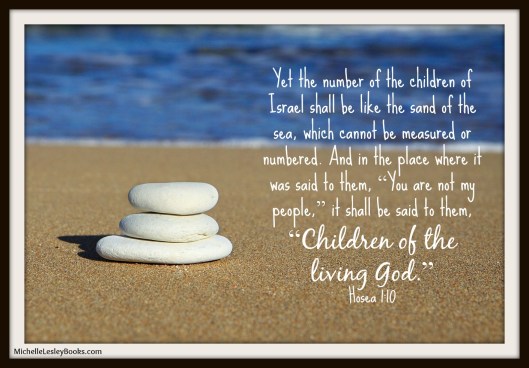
10  Yet the number of the children of Israel shall be like the sand of the sea, which cannot be measured or numbered. And in the place where it was said to them, “You are not my people,” it shall be said to them, “Children of the living God.” 11 And the children of Judah and the children of Israel shall be gathered together, and they shall appoint for themselves one head. And they shall go up from the land, for great shall be the day of Jezreel.


The Holy Bible, English Standard Version Copyright © 2001 by Crossway Bibles, a publishing ministry of Good News Publishers.


Questions to Consider:

1. Who wrote Hosea? What is the theme or purpose of the book? Which genre of biblical literature (wisdom, epistle, prophecy, history, etc.) is Hosea? What important background information about Hosea and this book can we glean from verse 1?

2. In verses 2-3 is God telling Hosea to commit a sin by marrying “a wife of whoredom”? (see interpretive challenges for help) Does this passage give Christians permission to sin in order to carry out God’s plans or proclaim His word?

3. How was Hosea’s marriage a picture of Israel’s sin? (2) Whom did Hosea represent in this picture? Whom did Gomer represent? What was the sin Israel had committed that God called “whoredom”? Do you see evidence of this sin in your life that you need to repent of? Do you see how God considers it “adultery” against Him?

4. Which attributes of God are portrayed in the names of the three children? (4-9) What was God saying to Israel through each of the names of the children? Do these attributes and messages conflict with other attributes we know to be true of God, such as mercy, forgiveness, compassion, and love?

5. Why does Paul quote from Hosea 2:23 and 1:10 in Romans 9:19-28? How does he tie the two passages together, and what is the point he’s trying to make?