Discernment, False Teachers

Is She a False Teacher? 7 Steps to Figuring it Out on Your Own

Originally published July 22, 2016

“What are your thoughts about  _____?
Is she doctrinally sound? Is she a false teacher?”

That’s probably the number one question I’m asked by readers. It gives me so much joy each time I receive that question because it’s encouraging to hear from Christian women who don’t want to be led astray and want to worship Christ in spirit and in truth.

I’m delighted to answer readers’ questions about various teachers (You can find information about many of today’s best known evangelical personalities and ministries under my “Popular False Teachers & Unbiblical Trends” tab at the top of this page.) but, unfortunately, my answers often take a while. I’ve never heard of many of the teachers I’m asked about, and, even with the ones I’m familiar with, in order to give a fair and biblically accurate answer, I have to research each of them. That frequently takes at least several days of work. The less famous the teacher is, the less information there is out there about her, and the longer it takes. And that weighs on me because I know a lot of you, when you write to me about a certain teacher, need answers now.

It also weighs on me because I don’t want you to just take my word for things. I am a fallible, sinful human being. I get things wrong. I miss things. I make mistakes. Also, I’m not going to be around forever (well, not on this planet anyway!)

For these reasons, and because the ability to vet the personalities and teachers you follow is an important spiritual skill every Christian should hone and teach others, I want you to be able to research these people for yourself. “Teach a (wo)man to fish…” and all that, you know. Here are the seven steps I take to discover whether or not a teacher is doctrinally sound.

1. Know your Bible

This. is. not. optional. Get a trustworthy translation (read: not The Message, The Passion “Translation,” a Joyce Meyer Study Bible, etc.) and study it forwards, backwards, and upside down if you have to. Find, join, and faithfully attend (also not optional) a doctrinally sound church that will immerse you in the depths of God’s Word through its preaching and teaching. Listen to good sermon podcasts or an audio Bible during the week. Memorize Scripture. Learn good hermeneutics. Every Christian should be doing these things by default anyway, and one by-product of knowing your Bible is that when you see or hear a statement by a teacher, you often won’t have to do a lick of research to determine whether or not you’re being taught biblical truth. The Scriptures will already be in your heart and mind for comparison.

2. Pray

One of the things I ask of God during my regular prayer time is that He would protect me from being deceived by false teachers, that He would continue to grow me in wisdom and discernment, and that He would develop the mind of Christ in me. It’s also a good idea to pray for wisdom and discernment, and for trustworthy information, before researching a teacher.

3. Know your criteria

One of the arguments I frequently hear when warning people away from a false teacher is “But every teacher makes mistakes!” (see #7 here) Of course every teacher makes mistakes in her teaching, and every teacher sins. A sin or a mistake doesn’t qualify someone as a false teacher. What you’re looking for is repentance and correction.

A trustworthy, biblical teacher teaches sound biblical doctrine and avoids known sin nearly without exception. When those exceptions occur and someone brings it to her attention, she listens, is teachable, repents, and corrects her error (Apollos is a great biblical example of this). False teachers, on the other hand, unrepentantly persist in sin or teaching false doctrine despite biblical correction. Often, they exhibit complete unteachability (as do their followers), deriding those biblically calling them to account as haters, divisive, slanderers, scoffers, jealous, etc.

When I research a teacher, I examine three fundamental areas of her life and teaching: a) Does she currently and unrepentantly preach to men? (Or, if the teacher is male: Does he allow women to preach to mixed audiences from his pulpit or in his stead? Is his wife co-pastor of the church? Are there any women on his church’s staff in pastoral positions?) b) Does she endorse and/or partner with known false teachers or ministries? c) Does the doctrine she teaches and practices line up with Scripture? These aren’t the only things that make someone a false teacher, but they’re three of the most prominent and important.

4. Criteria a: Women teaching men

This is a scriptural litmus test that can help give you a quick answer as to whether you should be following a certain teacher or not. The Bible tells us that women are not to preach to, teach the Bible to, or exercise authority over men in the gathered body of believers. Not in the four walls of a church, not on a simulcast, not at a Christian conference. Period. (Click here for more information.)

And it’s not a so-called secondary issue, either. It’s a sin. A preacher or teacher who unrepentantly disobeys this Scripture is no different from one who disobeys Scripture by viewing pornography, embezzling church funds, or teaching that homosexuality or abortion are OK. Scripture is Scripture. It’s all inspired by God the Holy Spirit. There aren’t any instructions to the church that it’s OK with God if you twist their context, brush them aside, or disobey them. If a female teacher currently and unrepentantly preaches to men or a male teacher allows women to do so in his church or ministry, that’s not a teacher you should be following.

Furthermore, a woman preaching to men is itself false doctrine. When a woman preaches to men, her behavior is teaching the false doctrine that itโ€™s perfectly fine to disobey Scripture if you want to. That if you donโ€™t like a certain command of Scripture, itโ€™s OK to just ignore it. If your pastor stepped into the pulpit Sunday morning and said in words that itโ€™s OK to disobey or ignore Scriptureโ€™s commands, your church would run him out of town on a rail, and rightly so. There’s no difference between your pastor saying it in words and a woman acting it out with her behavior.

Finally, women teaching men and women teaching other false doctrine are highly correlated. I have researched scores of women teachers. Every single one of them who unrepentantly teaches men also teaches false doctrine in some other aspect of her theology (usually progressivism, Word of Faith {prosperity gospel} or New Apostolic Reformation). In other words, if a woman teaches men, you can just about take it to the bank that she also teaches additional false doctrine.

How to find out if the teacher is disobeying Scripture in this area?

Check YouTube and Vimeo for videos of the female teacher speaking at various events. Are men clearly present in the audience?

Consider the events the female teacher speaks at. Does she speak exclusively at events for women, or does she also speak at co-ed events?

Examine the speaking engagement calendar on the female teacher’s web site. Is she scheduled to speak at Anytown Baptist Church at 11:00 a.m. on a Sunday? She’s probably giving the sermon that morning. (Some female teachers purposely leave these preaching engagements off their events calendars and social media to avoid biblical rebuke.)

For (male) preachers / pastors, check the sermon archives and the “meet our staff” sections of the church web site. Are women serving on staff as “pastors” or in positions of authority over men? Do the sermon archives feature female speakers who have preached to the whole congregation?

5. Criteria b: Partnering with false teachers

Scripture is abundantly clear that we are to have nothing to do with false teachers. Nothing. John tells us that even to greet them is to take part in their wicked works. To publicly praise, point people to, or partner with false teachers is even worse.

Finding out if the teacher you’re researching praises or partners with false teachers is another biblical litmus test that can help quickly determine whether you should be following her or not.

The easiest way to do this is with an internet search engine. Type the name of the teacher you’re researching into the search bar followed by the names of at least a few well known false teachers or ministries (for example: Jane Smith Joel Osteen). You may wish to try names like Joel Osteen, T.D. Jakes, Andy Stanley, Joyce Meyer, Beth Moore, Christine Caine, Hillsong, Bethel, IF: Gathering, Proverbs 31 Ministries, etc.

Examine the results. Are there a lot of connections between the teacher you’re researching and known false teachers? Does she frequently and favorably quote, comment on, or re-post false teachers on her social media pages? Does she make a habit of sharing the stage with or appearing alongside false teachers at conferences and other events? Do false teachers praise her, invite her to speak at their churches and conferences, or write endorsements of her materials?

Birds of a feather flock together. If you lie down with dogs, you get up with fleas. Bad company corrupts good morals. It’s all true. A teacher who frequently, favorably, and unrepentantly associates herself with false teachers should be avoided.

6. Criteria c: Biblical doctrine

If a teacher has failed criteria a and/or b, that’s sufficient. You should not be receiving teaching from that person. Those two criteria will quickly weed out about 90% of false teachers out there today. However, “passing” both criteria a & b, while a fair indicator that you’re probably dealing with a doctrinally sound teacher, is not sufficient. A teacher can operate biblically in those two areas and still teach or practice unbiblical doctrine. You must examine the doctrine and practices of the teacher you’re considering following to see if they’re biblical, and that can take some time and energy.

Does the teacher have a statement of faith or “what I believe” section of her web site? Examine it. Are all of the tenets biblical and backed up with chapter and verse Scripture? Are the tenets specific, detailed, and clear cut as opposed to general and nebulous? A solid statement of faith can be helpful, but keep in mind that a significant number of churches and ministries have perfectly biblical statements of faith “on paper” yet do not faithfully adhere to to those principles in teaching and practice. (Another red flag that can be helpful to look for on a teacher’s website: Does s/he go by the title “Apostle” or “Prophet/Prophetess”? If so, s/he’s a false teacher. There are no more apostles and prophets. Furthermore, people who go by those titles are New Apostolic Reformation heretics 99+% of the time. While the term “bishop” is sometimes used in doctrinally sound theological camps, most of the time this title is going to indicate Catholic or New Apostolic Reformation heresy.)

Ask doctrinally sound, trustworthy friends if they’re familiar with the teacher’s doctrine. There are also many theologically solid Facebook groups you can join and ask your fellow members their impressions of various teachers. There are a lot of Christians out there who have read a lot of books and listened to a lot of teaching. They can be very helpful resources.

What do reputable, doctrinally sound teachers and ministries have to say about the teacher, her teachings, or the Scripture or doctrine in question? I regularly use and highly recommend the following sites1:

(Some of these folks vet teachers in more than one category, so check them all if you need to. And note that many below have more than one link.)

(Mostly) Word of Faith (prosperity gospel) / New Apostolic
Reformation (NAR) Teachers & Ministries:

Berean Research (Amy Spreeman)

Dawn Hill (The Lovesick Scribe) (Website)

Steve Kozar (Website)

Justin Peters

Chris Rosebrough (Archives)

(Mostly) New Age / Mysticism Teachers & Ministries:

Christian Answers for the New Age (Website) (Marcia Montenegro)

Doreen Virtue

(Mostly) Progressive / Woke Teachers & Ministries:

Protestia

Woke Preacher Clips

(Mostly) Pop Evangelical Teachers & Ministries:

The End Time (Elizabeth Prata)

Think on These Things (Gary Gilley)

Doctrinal Questions and Issues:

Got Questions

Grace to You


Here’s what you should be looking for in preaching and teaching. Read the person’s materials or listen to her teaching. Take notes. When the teacher makes an assertion, ask yourself, “Where, in context, does the Bible say that?” When the teacher cites a passage of Scripture, look it up and see if she’s using it in context. Does the teacher primarily use one reliable translation of the Bible when teaching, or does she skip around through various translations and paraphrases while teaching to make sure the verses use certain words that fit with the theme or idea she’s teaching? Does she engage in gimmickry or does she simply teach the Word? Is the centerpiece of her teaching a correctly exegeted passage of Scripture, or does her teaching revolve around a story, movie, prop, idea, theme, topic, or illustration that comes from outside of Scripture? Does she frequently allegorize Scripture? Does she make every Scripture about you, your hopes and dreams, your experiences? Does she spend more time correctly handling and teaching Scripture or telling stories, jokes, and illustrations? These are all things to watch and listen for. If a teacher consistently mishandles, misunderstands, or misapplies Scripture, she’s not a teacher you should be following.

7. Check the date

When you’re researching a teacher, check the date on the evidence you’re examining. Is it old or fairly current? We all grow and mature over the years in our walk with the Lord. Are you seeing red flags in the teacher’s older materials? Try to find out if she has repented and corrected those unbiblical teachings or behaviors. If so, and she’s currently teaching and behaving in a way that lines up with Scripture, forgive her. It is not fair or biblical to hold past sin against someone when she has repented and Christ has forgiven her. She, and her recent materials, should only be avoided if she is currently and unrepentantly teaching and/or practicing false doctrine.


Before receiving teaching from anyone, it’s important that we examine that teacher’s doctrine and practices in light of Scripture. God commends the Bereans for receiving Paul’s word with eagerness, yet examining the Scriptures to see if what he was teaching them lined up with the Bible. May we be as vigilant and noble as they in our quest to know Christ and His word.

1These sites are run by fallen human beings. They sometimes sin or get things wrong. Do your best to double check their evidence and conclusions. If you have a question or concern, contact the ministry. I do not personally always agree with every single piece of information published by any of these ministries, but they are all generally doctrinally sound.


Bible, Bible Study, Church

Throwback Thursday ~ Context Message Me

Originally published December 3, 2013

Yesterday, I saw several friends and organizations re-posting this articleย (and others like it) on Facebook. The gist of the article is about teaching the Gettysburg Address to students in a “stand alone” sort of way without teaching that it has anything to do with the Civil War. ย 

As a teacher myself, this seems utterly ridiculous to me. How can students grasp the full meaning, depth, and impact of the Gettysburg Address without knowing the history and events that led up to it, who wrote and delivered it, the people to whom it was delivered, and why it was delivered?

Yes, a few things can be gleaned merely from the text itself, but is that all we want our students to learn about the Gettysburg Address? Are we satisfied for them to merely skim the surface of this document and leave with a superficial (and likely, incorrect) understanding of it, or do we want them to dig in and learn all they can about it?

And then it hit me: What many of us would not abide in the classroom, we embrace in the sanctuary.

What many of us would not abide in the classroom, we embrace in the sanctuary.

Week after week, many Christians sit under pastors and Bible teachers who fail to preach and teach God’s word in context. A verse from one book is thrown in here, a half verse from another passage, there, like so many sprinkles on top of an ice cream sundae.

No mention is made of the historical (pre-Exile or post-Exile?) or cultural (Was this written to Jews or Gentiles?) context of the passage.

Prescriptive (thou shalt/shalt not do X) passages are conflated with descriptive (here’s what happened to this particular guy) passages, leading to confusion over law, grace, and precisely what it is that God wants from us.

Promises that were never meant for 21st century Christians (because they were written only to a specific person/people at a specific time) are ripped away from their intended audience and plastered, bait and switch style, onto you and me. (I’ve always wondered why Jeremiah 29:11 is preached as applying to today’s Christians, but verses such as Jeremiah 29:17-19 are not.)

Pastors and teachers treat individual Bible verses and brief passages as “stand alone” items rather than showing how they fit into the immediate context of the surrounding passage and book, while simultaneously neglecting to show how those Bible tidbits fit into the broader, complete story of the gospel revealed across both Testaments.

Pastors and Bible teachers, myself included (and, believe me, I’ve failed many times in this area, too) are to care for those who sit under our teaching by doing our best to handle God’s word correctly (2 Timothy 2:15) and by preaching and teaching, as Paul put it, “the whole counsel of God” (Acts 20:26-27). May we as teachers not merely skim the surface of God’s word, but proclaim the Truth, the whole Truth, and nothing but the Truth. And may our hearers demand nothing less.

Bible Study, Mailbag

The Mailbag: What Is the Verse Mapping Method of Bible Study?

Originally published June 19, 2017

What is the “verse mapping” method of Bible study? Do you recommend it?ย A friend was asking about it and she is a big follower of Proverbs 31 Ministries, which was a red flag for me.

This is an excellent question, because there are lots of different Bible study methods out there, some good, some not. And you want to make sure you’re using a method that will help you correctly understand the text so you can grow in your faith.

I had never heard of verse mapping either, so I did what I usually do when I’ve never heard of something but want to know what it is- I Googled it. And several red flags popped up for me too.

The first hit I got was this article written by someone who thinks Beth Moore is an exemplary Bible teacher and that The Message is a reliable translation. She linked to an article on verse mapping at Proverbs 31, whose author says we need to “listen to God’s voice“. The Proverbs 31 article linked to another blogger – “the one who taught us how to verse map” – who recommended closing your eyes, letting your Bible fall open and pointing to a random verse as one way to choose a verse to map.

The rest of the first two pages of search results all seemed to be from Christian women’s blogs, none of whom I was familiar with. That’s not to say there’s necessarily anything wrong with those women or their blogs, I’m just saying I didn’t see any well known, doctrinally sound ministries recommending verse mapping in the most popular Google results.

I get the impression from these articles that verse mapping methodology can be a bit fluid. The first blogger used a journal and made copious notes (her method appeared to me to be more akin to inductive Bible study). The other two used an index card and wrote very few notes. So it would seem there’s no one set way to do verse mapping, but the general idea is to pick a Bible verse and dissect it (in various ways, depending on which method of verse mapping you’re using) as your daily Bible study format.

Separating the method itself away from the taint of false teachers, some of the recommended techniques in verse mapping are solid and could be very helpful, such as using commentaries, looking words up in the original Greek or Hebrew, writing down what is happening in the verse, and looking at the immediate context of the verse. These are all good principles of biblical hermeneutics, and if you use them as part of a systematic study of a book of the Bible or as part of a study on a biblical topic, your understanding of God’s word will be greatly aided.

The problem is, a) using it as your sole form of Bible study isn’t going to teach you all that studying longer passages of the Bible will, and b) those aforementioned good techniques are mixed in with some bad techniques, so you have to be discerning enough to tell which is which. And, chances are, if you’re discerning enough to do that, you’re probably a good student of the Bible who’sย alreadyย using the good techniques of verse mapping, so you don’t really need it.

The bad techniques?

1. Choosing random verses to dissect
There’s more to the context of a verse than just the couple of verses that immediately precede and follow it. There’s how the verse fits into its chapter, book, testament, and the overall narrative of Scripture. If you skip through Scripture picking out a verse here and a verse there to analyze you’re going to misunderstand those verses because you’re not going to know the larger context they fit into in their own immediate story and the story arc of redemption. Can you imagine studying any other piece of literature – a Shakespearean sonnet, the Declaration of Independence, a medical journal article – this way, picking out a random sentence or two here and there? Of course not. Then why would we study the Bible this way?

2. Personalizing the verse
One of the techniques verse mapping recommends is to cross out all general referents (you, they, we, etc.) and replace them with your own name. Do not do this.

First and foremost this exhibits utter disdain for the God of the universe who wrote the Bible. If He wanted your name to be in Scripture, it would already be there. You don’t get to change, even temporarily, what He wrote, and to think it’s OK to do so is arrogant and irreverent. These are the very words of God Himself- do you really dare to change them?

Second, it’s an extremely self-centered way to look at Scripture. The Bible isn’t about you and it wasn’t written to you. When those words were penned, there were real, live people – just as important as you – on the other end, and none of them were you because you hadn’t been born yet.

Third, doing this will almost certainly give you a wrong understanding of the verse. “You” doesn’t always mean you personally, Buttercup. Sometimes “you” means Israel. Sometimes “you” means the church. Sometimes “you” means Amos or Cain or Judas or Philemon. Sometimes “you” means God. Sometimes “you” even means Satan. And sticking your name in for one of these “you’s” is going to lead you away from a correct understanding of Scripture, not toward it.

3. Focus on anything that jumps out at you
Again, this is a very self-centered way to look at Scripture. Just because something jumps out at you doesn’t mean it’s the main point of the verse or that it has significant spiritual import. Certainly, if there’s a word in the verse that you don’t understand you should look it up. Or, if you find some concept in the verse interesting, go ahead and search out the cross-references for clarity. But don’t assume that word you’ve looked up or that concept you find interesting is the meaning of the verse just because it happened to catch your attention. When we study the Bible, we search for what God meant by that verse.

4. Find verses that minister to you
Now I ask you, if you follow that guideline, how often are you going to pick verses out of Leviticus that have nothing to do with your life today? When will you pick verses that step on your toes and convict you of sin? Will you ever examine hard verses that take a lot of historical and cultural understanding? At the risk of sounding like a broken record, this is a self-centered way to look at Scripture. Yes, the Bible can bring us comfort and reassurance, but the Bible isn’t a bottle of aspirin. You don’t just pop a couple of verses whenever you have a headache. The Bible isn’t there to minister to you. It’s there to equip you to minister to God, the church, your family, the lost. There’s a reason God wants pastors to preach the whole counsel of God – we need all of God’s word, even the parts that don’t “minister” to us.

In conclusion, I would not recommend verse mapping as a whole the way it is presented in the aforementioned articles, but some of the individual techniques I noted can be helpful as part of your regular, systematic study of Scripture.

If you need a little help learning how to study your Bible using good study habits, click the Bible Studies tab at the top of this page.


If you have a question about: a Bible passage, an aspect of theology, a current issue in Christianity, or how to biblically handle a family, life, or church situation, comment below (Iโ€™ll hold all questions in queue {unpublished} for a future edition of The Mailbag) or send me an e-mail or private message. If your question is chosen for publication, your anonymity will be protected.

Christian women

Throwback Thursday ~ Evangelical Misogyny and the Spiritual Oppression of Christian Women

Originally published September 16, 2016woman-1246571_20160915144847652

background-1434679_1280

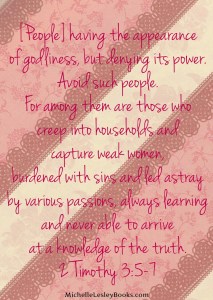
Weak women- always learning and never able to arrive at a knowledge of the truth. Captives to false teachers. Led astray by their feelings. There is hardly a better way to describe a significant portion – dare I say, the majority – of evangelical women today.

There’s plenty of blame to go around. Satan dresses himself up like a Christian and deceives as many as he can. Women (and men, too) give in to the temptation to seek out false teachers who will tell them what they want to hear. Pastors fail to fight off, and in many cases, welcome with open arms, the false doctrine and false teachers creeping into their churches.  And the false teachers themselves are out to make a fast buck on false doctrine.

And the result of it all is a generation of evangelical women held prisoner by Satan in the gilded cage of biblical illiteracy and feel-good “Christianity.” And most of them don’t even know they’re inmates.

It’s bad enough that evangelical women are largely feeding their souls on the anti-biblical poison churned out by the smorgasbord of divangelistas lining the shelves of most “Christian” bookstores- poison that, at worst, will leave them doomed to an eternity in hell, and, at best, will stunt their growth in Christ. But there’s another insidious aspect of this issue: theololgical misogyny against evangelical women.

The Bible knows nothing of women as second class citizens. Throughout recorded history, God, and his obedient children, have been the ones to regard women as precious and valuable people with a crucial role to play in the Kingdom, the family, and society. God elevates women while the world degrades us.

Perhaps one of the best examples of this is in an often overlooked phrase in 1 Timothy 2:11: “Let a woman learn.” The pastors and elders of the first century church – in the midst of a culture that devalued and disregarded women – were to proactively make sure women learned the gospel and sound doctrine. The Holy Spirit goes on in that passage to explain how first century, as well as twenty-first century, women should conduct themselves in a godly way while we’re learning, but there’s no watered down, Barbie doll, “pink is for girls” version of theology that women are to be taught while the real thing – serious Bible study and theology – is reserved for men.

Yet that’s exactly what modern day evangelicalism and Christian retailing are doing. They’re establishing a subtle theological segregation in the name of marketing and meeting felt needs. How? Here’s just one example:

screenshot_2016-09-14-11-39-55_kindlephoto-22263756

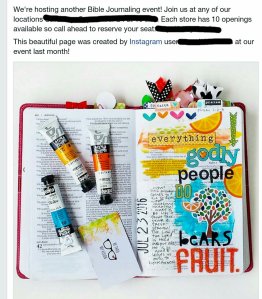
This post, from a major Christian retailer, appeared in my Facebook feed recently. They’re holding “Bible art journaling” workshops to teach women how to color in their Bibles- something we usually teach three year olds not to do.

When was the last time you heard of a Christian retailer or an average evangelical church holding a workshop – aimed at women – on biblical hermeneutics, Christology, pneumatology, church history, discernment, evangelism, or any other serious biblical topic?

Never mind how to properly handle and study God’s word, ladies, here’s a coloring book1! It’s insulting to the intelligence, capabilities, and quest for spiritual maturity of Christian women. And it’s sexist, too. Don’t believe me? Think about it:

How many Christian men do you see taking Bible art journaling classes or sharing about it on social media?

Have you ever seen a men’s ministry share a picture like this in order to reassure men of how special and wonderful they are?

woman-570883_1920_kindlephoto-22633156

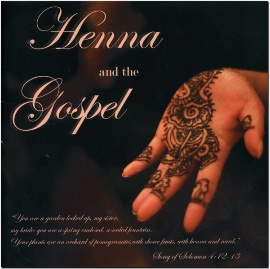
Over the summer, the hot fad aimed at women was using henna to tell Bible stories. How many men do you think participated in that?

sou-hennabklt-m

Contemporary Christian radio intentionally markets to a specific female demographic, resulting in a playlist that’s overwhelmingly comprised of ooey-gooey, salve my feelings, emasculated songs. That’s their perspective of us. That’s what they think we want and can handle.

And it doesn’t stop there. Walk into your local Christian retailer and compare the fluff and false doctrine in the women’s ghetto department to what’s offered in the general (or men’s) area of the store. Christian retailing has been so successful with their marketing plans that they have fairly brainwashed evangelical women into thinking that:

  • only what’s in the women’s section of the store is for them
  • serious theology isn’t for them (because it’s nowhere to be found in the women’s department)
  • women can’t just pick up the Bible and study it for themselves – they have to buy a “canned” study written by someone else
  • that “someone else” has to be a woman (nearly always a woman who teaches false doctrine)

Take all of that, throw it into your gumbo pot, stir it around a little, and what do you get?

Well…you get weak women who are captivated by false teachers and false doctrine, led astray from the truth of God’s word by their passions and emotions, flitting from study to study and event to event, always “learning” but ever biblically ignorant. And you get a church that not only views Christian women this way, but perpetuates this sexist spiritual oppression.

Christian women, you are better, more valuable, and more capable than that. God has more for you and expects more from you than sitting in a corner coloring in your Bible and playing with a theological Barbie Dream House. Like your first century sisters, He wants you to learn.

Strive for more than evangelicalism expects from you and thinks you’re capable of, ladies. Be a strong, healthy student of God’s Word. There are women out there who desperately need you: lost women who need to hear the gospel properly presented so they might know Christ, saved women who need someone to teach them the truth of God’s Word, women who need biblical hope, comfort, and answers about the trials they’re going through.

Buck the system. Challenge the assumptions. Cast off the shackles, and refuse to be that weak woman any more. Be the full grown, spiritually mature woman God has always wanted you to be.


1Some women are artistically talented and enjoy Bible art journaling as a hobby in their spare time. If that’s you, and you’re already a serious student of God’s word, knock yourself out. But if the majority of your Bible “study” time is spent painting or coloring in your Bible, then this might be a tight, uncomfortable shoe, but the shoe fits.

Favorite Finds

Favorite Finds ~ January 14, 2020

Here are a few of my favorite online findsโ€ฆ

“How can I know with certainty what the Bible is saying? How can I be certain what books really belong in the Bible? How can I be sure that my interpretation of any text is correct, and, still more, what its proper application is…?” Have you ever tried to explain a biblical principle to someone only to hear the retort, “But Thatโ€™s Just Your Interpretation!“?ย D.A. Carson has some helpful words for us in the latest issue of Themelios.

 

“Pastors, I have a plea for you. Please, love your women enough to warn them against false teachers. It isnโ€™t enough to simply teach the good stuff; if they donโ€™t know what is out there that is not good and why it isnโ€™t good? They will continue to fall for it.”ย Check outย Amy Spreeman’sย article,ย When Seemingly Solid Pastors Fail to Protect Women.


“Christianity is sexist!” “The Bible is patriarchal and just wants to keep women down!” We hear these tired arguments trotted out again and again, but are they really true? No, Eric Davis explains in his excellent article over at Cripplegate, 10 Reasons Why the Bible Regards Women Higher than All Other Systems, “The fact is…the Bible regards women higher than any other ideology, religion, philosophy, or system in history. Nothing teaches a higher view of women than biblical Christianity.”


Crossway has an interesting infographic for us on a study they conducted on prayer: “Over 14,000 people recently shared about various aspects of their prayer lives with us…we invite you to dig into the data, looking at established prayer habits, common pain points, and useful practices and tools for prayer.” Take a look at Infographic: How Is Your Prayer Life?.


Hermeneutics is the lens through which we view Scripture. Dr. Dane Ortlund helpfully explains some right and wrong lenses to use when studying Scripture in 6 Ways Not to Read the Bible (a brief excerpt from a longer seminar). Are you handling Scripture correctly?


The resources listed above are not to be understood as a blanket endorsement for the websites on which they appear, or of everything the author or subject of the resource says or does. I do not endorse any person, website, or resource that conflicts with Scripture or the theology outlined in the Statement of Faith and Welcome tabs at the top of this page.