Christian women, Church, Discernment, Guest Posts

Guest Post: Building a Biblically Healthy Women’s Ministry (by a pastor, for pastors)

If your theology pretty much matches up with mine (as outlined in the โ€œWelcomeโ€ and โ€œStatement of Faithโ€ tabs) and youโ€™d like to contribute a guest post, drop me an e-mail at MichelleLesley1@yahoo.com,
and letโ€™s chat about it.


Building a Biblically Healthy Women’s Ministry
(by a pastor, for pastors)

by Pastor John Chester

It is no secret that I am not a fan of discernment ministries, and that I think the concept of Biblical discernment is grossly misunderstood by many. But that in no way means that I donโ€™t think telling truth from error and sound theology from errant (or even heretical) theology is unimportant.

And nowhere is it more important than in womenโ€™s ministry. The reason I say that is simple, more than 50% of the people in our churches are either women or they are growing into women. According to The Pew Research Center 55% of those attending Evangelical churches are women.ย 

Yet womenโ€™s ministry is often not thought of much by us pastors, I think because we view โ€œwomenโ€™s ministryโ€ as a thing or program, rather than ministry to women who make up more than half of the congregation we are charged to shepherd. And so we spin it off to someone else or put it on our benign neglect list so that we can concentrate on โ€œmore importantโ€ things. But nothing is more important than the souls of the women of the church. And practically speaking, any error introduced in a womenโ€™s Bible study will work its way through whole families and infect the whole church.

With that in mind, let me offer some tips to guard against error in your churchโ€™s womenโ€™s ministry.

Preach The Bible

The pulpit sets the tone for the church and everything that the church does, or at least it should. The good news is that even the smallest church with the least talented preacher can have a strong pulpit, because the strength of the pulpit depends on what is preached, not the preacher. What the church needs is a healthy dose of Bible. And by a healthy dose, I mean all that should be preached is the Bible.

It is the Scripture that is inspiredย and the Word of God that is living and active,ย and it is the word of God that makes your pulpit strong, not your ability. No one needs your ten tips on having a more productive quiet time or your five steps toward a healthy marriage even if you sprinkle them with a few verses. The people the Lord hasย entrusted to you need to hear from Him, not you. Your job as a preacher is to decrease while the whole counsel of God is declared. By all means, illustrate, explain, introduce, conclude and apply the text, just stick to the text!

Why this is so important for womenโ€™s ministry and guarding the women of your church from error is that it will trickle down in to the church’s Bible studies. If on Sunday (and whenever else you preach) the women of the church get a strong dose of Godโ€™s truth, they are going to be better able to spot error and less susceptible to it. And when they see that you have a high view of Scripture, they will develop a high view of Scripture too. When they see you are a Berean who evaluates everything in light of what Scripture says, they will be more likely too as well.

And as a corollary, when youโ€™re preaching the Bible, use it as an opportunity to teach the church, women included, how to think about and interpret the Bible. Iโ€™m not saying that the pulpit is a place for a discourse on the grammatico-historic hermeneutic, but it is a place to (often) say things like โ€œthis would have meant to the original readersโ€ or โ€œcontext determines meaningโ€ or โ€œWhenever you see a ‘therefore,’ ask yourself, ‘What is the ‘therefore’ there for?’.โ€ These may be throwaway phrases to you, but they teach the congregation, including the women, how to approach Scripture.

Pay Attention

This seems very basic but it needs to be said, you need to know what is going on, what is being taught and what materials are being used. And you need to read any material being used in any class or study. Read, not skim, not look up on the internet, not ask your seminary alumni group on Facebook, but actually read. Need I remind you that you will give an account for how you cared for the souls the Lord entrusts to you? When you stand before God to give an account, โ€œWell, I Googled it,โ€ is not going to be good enough.

You need to pay attention to what is popular in the world of womenโ€™s ministry too. The women in your church buy and read more books than the men. Pay attention to what is out there, and donโ€™t be afraid to address any errors that are gaining traction inย โ€œchurchianityโ€.

Be The Bad Guy

What I mean by that is be willing to be the one to take the heat. Be willing to veto a book, a curriculum, or even a topic that the womenโ€™s Bible study wants to use, and be willing to have the leader lay the blame for the veto on you. I would much rather have someone say to me, โ€œWe wanted to use ________ book. Why did you say to use ________ instead?โ€ than have a bad book used, or quash the joy of the womenโ€™s Bible study leader if she became an object of scorn. And quite frankly (and this actually happened to me) I would rather have the womenโ€™s Bible study leader mad at me, than to have the women be taught something that is wrong.

Invest In Your Leaders

I am genuinely baffled by the lack of investment in womenโ€™s leaders. We pastors will often go out of our way to invest both time and treasure in a young man we think might one day have a significant ministry in our church (or dare we hope and pray) or even go into pastoral ministry themselves.. But we often fail to invest our time and treasure in women who have a significant ministry in our churches right now. Might I suggest that the bare minimum you should do for every Bible study leader (man or woman) is to provide basic instruction in hermeneutics. A great resource is Grasping Godโ€™s Word by Scott Duvall and Daniel Hays, and there is an excellent companion workbook that makes teaching basic hermeneutics a snap.ย I promise you that if you teach the teachers of the women in your church how to approach Scripture, it will rub off.

Invest time and invest treasure too. Provide at your (or the churchโ€™s) expense good reliable resources for deeper study to leaders of your churchโ€™s womenโ€™s Bible study. If the women are going through a book of the Bible (with an approved curriculum as the guide) provide reliable (and accessible) commentaries on that book. If the womenโ€™s Bible study is topical or using a topical book as a guide, provide some other good books for deeper study and reading.ย 

Be Approachable

The women of your church need to feel comfortable sending you an email, shooting you a text or even Facebook messaging you with a question. They should even feel OK picking up the phone and calling you if need be. I get the wisdom in erecting hedges and being careful how you interact with women. But you canโ€™t shepherd effectively if you treat over half of your congregation as walking third rails. Rest assured the women of the church will pick up on your reluctance to interact with them and they will be reluctant to approach you with any questions, doctrinal or otherwise.

If you are married, this is one area where your wife can really help you. Her saying โ€œyou should ask my husbandโ€ will go a long way. And as a corollary one of the worst things that can come out of your mouth when a woman from your church asks you a theological question is โ€œyou should ask my wife.โ€

If you are like me you will have to work at this. The one thing I can say that always gets a laugh from my wife is, โ€œIโ€™m a people person.โ€ Itโ€™s not that I donโ€™t love people, itโ€™s that I tend toward shyness, and Iโ€™m not super outgoing. So I work at being an accessible resource for the women of the church, and you can too. And who knows, you may one day be rewarded with a call where a newer believer asks โ€œIs it true that the Israelites ate the scapegoat?โ€. (That is a real question I got from a real woman in the church and why it is so important that women feel like they can pick up the phone and call you.)

Write

Your pulpit ministry and other teaching at the church is not enough. You need need to be regularly writing. As Al Mohler observed, โ€œLeadership is about communication, and much of that communication is necessarily writtenโ€ฆleaders must learn to write and to set time aside for writing.โ€

But you say you donโ€™t have time. Mohler, one of the busiest men on the planet offers this helpful bit of advice, โ€œYou do what you have to do.โ€ I contribute to a group blog with other pastors and a couple of former seminary professors. We all write with an audience in mind – our own church. Why? For two reasons, it builds a resource library that they can access, and it allows us to address issues that we may not get to address in a systematic fashion from the pulpit. Iโ€™ve covered topics like the various approaches to apologetics, what goes into a worldview, basic pneumatology, basic anthropology, how to bring Scripture to bear on anxiety, the sanctifying power of suffering, and much more. And yes I have written some things that would fall into the broad category of discernment, like why our church isnโ€™t charismatic, the danger of letting a prolife social gospel supplant the biblical gospel and the respect for life that flows from it, why assisted suicide is unbiblical and even why events like Together 2016 (which for the record took place in our proverbial back yard) should be avoided. I write because I want to educate the church, especially the women of the church, who as a rule read more, about these issues.

Be willing to Sacrifice

Whatever cherished activity or ministry is keeping you from being all in on your churchโ€™s ministry to the women of the church, give it up! Let me give you an example. I love our menโ€™s Bible study, so much so that I had the next three topics for the study preplanned. But currently there is no overlap in our church between the women qualified to lead a womenโ€™s Bible study and the women with the desire and time to do so. So the Wednesday night Menโ€™s Bible study I have taught since the church opened has been tabled and replaced with a coed midweek Bible study. Sure, I had planned on going through the topics covered in Men Counseling Men edited by John Street, but instead I am teaching an Old Testament survey course geared to Christians of both genders. Truth be told Iโ€™d rather be with the guys, but that is not the best thing for the church, and as pastors we should lead in counting others (including the women of the church) as more significant than ourselves.

I could go on and on, but Iโ€™ll close with this; it breaks my heart that Michelle asked me to write this guest post. When she asked me to write this post she said that multiple women had contacted her and asked if there was anything about how important it is to help church ladies tell truth from error that they could print out and give to their pastors. For shame! No one should be more concerned with the spiritual well being and growth of the women in the church than their pastors. That in some places and in some cases that is not true is a blight on our brotherhood. This is a profound failure to fulfill the charge of 1 Peter 5:1-4, and there is no excuse for it. As the Apostle said:

So I exhort the elders among you, as a fellow elder and a witness of the sufferings of Christ, as well as a partaker in the glory that is going to be revealed: shepherd the flock of God that is among you, exercising oversight, not under compulsion, but willingly, as God would have you; not for shameful gain, but eagerly; not domineering over those in your charge, but being examples to the flock. And when the chief Shepherd appears, you will receive the unfading crown of glory.


John Chester is the pastorย of Piedmont Bible Church, a Grace Advance church plant in Haymarket, Virginia. Prior to ministry John worked as a lacrosse coach, a pizza maker, a writer, a marketing executive, and just about everything in between. He hails from The City of Champions: Pittsburgh, Pennsylvania, and is blessed to be married to his wife Cassandra. Read John’s blog articles at ParkingSpace23.


Note from Michelle: I first had the pleasure of “meeting” John when I read and responded to this excellent article of his on ParkingSpace23. While he and I have a couple of differences on discernment ministry, I think the world of him as a brother in Christ, pastor, and fellow blogger. I literally teared up when I first read this guest post, because I wish every church could have a pastor like John.



ALTHOUGH I DO MY BEST TO THOROUGHLY VET THE THEOLOGY OF THE BLOGGERS WHO SUBMIT GUEST POSTS, IT IS ALWAYS POSSIBLE FOR THINGS TO SLIP THROUGH THE CRACKS. PLEASE MAKE SURE ANY BLOGGER YOU FOLLOW, INCLUDING ME, RIGHTLY AND FAITHFULLY HANDLES GODโ€™S WORD AND HOLDS TO SOUND BIBLICAL DOCTRINE.
Mailbag

The Mailbag: Did Jesus Really Teach Karen Ehman’s 3 Step Life Plan?

ย Have you read Karen Ehman’s new book? She takes Matthew 22:36-40 and says this:

Jesus asserts that the entire teaching of God-all the law and the prophets – hinge upon these commands which can be summed up in this 3 step life plan:
1. Love God
2. Love others
3. Love yourself

Is this a biblical way of looking at this passage?

It’s great that you’re being a good Berean and examining this teaching (as we should with all teaching) “to see if these things [are] so.”

I’ve never heard of Karen Ehman before and haven’t read any of her books. The quote above is a very brief excerpt and – in the same way we don’t rip Bible verses out of context and try to interpret them – I’m hesitant to try to extract deep meaning from it without a broader grasp of what she’s trying to teach (i.e. more context), so I’ll be limiting myself to the quote you’ve sent and not trying to speculate on her theology in general.

However, there are a few problems with the quote itself that could be as minor as sloppy wording that needs cleaning up or as major as false doctrine. Without more context I just can’t tell.

1. To say that “the entire teaching of God” equals “all the law and the prophets” isn’t too problematic if you’re a first century Jew, but it’s going to be confusing to the 21st century reader. At the moment in history when Jesus spoke this passage, all the law and the prophets was the entire written teaching of God. But remember, Jesus, at this point in Matthew, is nearing the end of His earthly ministry. He has been teaching for about three years, so that’s three years’ worth of God’s teaching that hasn’t been written down yet- the gospels.

And what was Jesus teaching during those three years- keep the commandments? No. He was introducing the new covenant: โ€œThe time is fulfilled, and the kingdom of God is at hand; repent and believe in the gospel.โ€ (Mark 1:15) If you’re going to use a phrase like “the entire teaching of God” for New Testament Christians, you really need to be talking about Christ and the gospel, which will include all of the New Testament as well as the Old. Jesus did not teach a three step life plan of commandment-keeping, He taught that all of the Old Testament points to, and is fulfilled in, Christ and the gospel.

2. As I mentioned, context is indispensible when it comes to understanding Scripture. I don’t know if this quote was lifted out of a chapter in which Karen is exegeting the entirety of Matthew 22 (in which case the quote wouldn’t be completely inaccurate) or if she is making her own point about Christians following this “three step life plan” and flying in verses 36-40 to try to support it. If it’s the latter, she has taken these verses out of context and incorrectly interpreted and applied them.

If you back up and read 21:45-22:46, looking particularly at 21:45, 22:15, 18, 23, 34-35, 41, 46, it’s easy to see that most of the things Jesus is saying here are in direct response to (or at least within earshot of) the scribes, Pharisees, and Sadducees, who are asking Him questions- not because they’re genuinely trying to learn and looking for a life plan to follow, but because they’re trying to trap Him and find some grounds for discrediting or arresting Him. If Karen had at least included verses 34-35 in her quote (and she may have addressed these verses outside of this quote, I just don’t know), this would have been much clearer.

Jesus is not saying – either to the Pharisees He was talking to then or to us now – “Here are the three guidelines by which I want you to live your life.” They’re asking Him a question on a point of Old Testament law and He’s answering them according to Old Testament law. They weren’t sincerely asking Jesus how He wanted them to live, and He knew that. And that’s probably the reason He answered briefly and didn’t continue teaching them. He knew they weren’t interested in believing in and following Him- they were out to get Him. Why give what is holy to dogs or cast His pearls before swine, right?

3. We need to understand that the commands Jesus refers to in this passage are just that: commands. Old Testament law. Christians are neither saved nor do we grow in Christ (sanctification) by striving to keep Old Testament law. Galatians 3 is very clear about this:

O foolish Galatians! Who has bewitched you? It was before your eyes that Jesus Christ was publicly portrayed as crucified. 2 Let me ask you only this: Did you receive the Spirit by works of the law or by hearing with faith? 3 Are you so foolish? Having begun by the Spirit, are you now being perfected by the flesh?

As Christians our singular focus is to love Christ. That’s the engine that pulls the train. Obedience to commands, growth in holiness, evangelism, fruit, faith, knowledge of God’s word, all of those things are the train cars that follow, and are propelled by, the engine. When we make obeying commands (especially Old Testament commands) our primary focus, we’ve got things backwards. The caboose is trying to pull the engine. Christians are led by the gospel, not Old Testament commands.

4. The most glaring problem with this quote, and one that no additional context can justify, is number 3: “Love yourself.” You will search long and hard, and you will not find a single verse of Scripture that tells us to love ourselves. This passage of Matthew doesn’t teach that, nor does any other book of the Bible.

Want to know why?

Because man’s entire problem – the essence of what separates us from God – is that we already love ourselves too much. And the solution to that problem is to stop loving ourselves, die to self, kick self off the throne, and love Jesus supremely instead.

But understand this, that in the last days there will come times of difficulty. 2 For people will be lovers of self, lovers of money, proud, arrogant, abusive, disobedient to their parents, ungrateful, unholy, 3 heartless, unappeasable, slanderous, without self-control, brutal, not loving good, 4 treacherous, reckless, swollen with conceit, lovers of pleasure rather than lovers of God, 5 having the appearance of godliness, but denying its power. Avoid such people. 6 For among them are those who creep into households and capture weak women, burdened with sins and led astray by various passions, 7 always learning and never able to arrive at a knowledge of the truth. 8 Just as Jannes and Jambres opposed Moses, so these men also oppose the truth, men corrupted in mind and disqualified regarding the faith.
2 Timothy 3:1-8

Lots of people look at “love your neighbor as yourself” and think it means, “You can’t love your neighbor unless you first know how to love yourself.” Uh uh. That’s not what that verse means, and it’s a very self-centered, rather than Christ-centered, way to read it. Jesus – who knows the hearts of men, who said that those hearts are wicked and deceitful – would never tell us we need to love ourselves more. His point was that we are by nature already so self-centered, self-focused, and selfish that we need to put self aside and love and prioritize others that much instead.

Do nothing from selfish ambition or conceit, but in humility count others more significant than yourselves. Let each of you look not only to his own interests, but also to the interests of others.
Philippians 2:3-4

And he said to all, โ€œIf anyone would come after me, let him deny himself and take up his cross daily and follow me.
Luke 9:23

“Love yourself” is the antithesis of the gospel.


As I said, this is a very brief quote, and I haven’t read the book, so I’m hoping what Karen is saying here is just an innocent vocabulary fumble or that, perhaps, I’ve misunderstood her point due to lack of context.

However, once I finished writing my answer, I did a quick Google search in hopes of finding out more about Karen and gaining some insight as to where she’s coming from. Unfortunately, I found out that Karen works for Proverbs 31 Ministries as a speaker, “the Speaker Track Director of the Proverbs 31 She Speaks Conference and a teaching staff member of their writers’ training site COMPEL.”

As you may already know, Proverbs 31 is the ministry of Lysa TerKeurst who is a false teacherยน. Because Scripture tells us that we’re not to partner with false teachers, because partnering with a false teacher demonstrates a lack of discernment and either disobedience to, or a failure to understand, Scripture, and because of what, at best, seems to be a misunderstanding of Scripture in the quote cited here, I would recommend that you not follow or receive teaching from Karen Ehman.


ยนIf you are considering commenting or sending me an e-mail objecting to the fact that I warn against false teachers, please click here and read this article first. Your objection is most likely answered here. I wonโ€™t be publishing comments or answering emails that are answered by this article.


If you have a question about: a Bible passage, an aspect of theology, a current issue in Christianity, or how to biblically handle a family, life, or church situation, comment below (Iโ€™ll hold all questions in queue {unpublished} for a future edition of The Mailbag) or send me an e-mail or private message. If your question is chosen for publication, your anonymity will be protected.

Bible Study, Mailbag

The Mailbag: We Want Bible Study Answers


Why don’t you provide the answers to the questions you ask in your Bible studies?

If you’ve been around the blog for any length of time you’ve noticed (I hope) that Wednesday is Bible study day. We’ve been through several books, including Jonah, Colossians, Ezra, and our current study of Ruth. We’ve done two topical studies: one on the Ten Commandments (Exodus 20:1-17) and one on assurance (1 John). And there are 66+ (every book of the Bible and then some) one lesson stand-alone studies. If you’re looking for a Bible study for group or personal use, they’re allย here,ย and they’re all free (all I ask is that you don’t plagiarize).

The format I’ve developed for my studies is to present the biblical text, provide several study questions, and finish off with a homework assignment- action you can take to apply one of the truths of the passage to your own life.

But I intentionally refrain from providing a list of answers to the study questions. Why?

Because the purpose of my Bible studies is not for you to get the “right answers.” My goal is to demonstrate for you the kinds of questions you should be asking of any passage of Scripture you approach. The purpose is to teach you (or your small group)ย how to study the Bible on your own so you won’t need to depend on a “canned” study written by somebody else, even me.ย I’m trying to work myself out of a job. You know- teach a woman to fish rather than giving her a fish.

In my own private study time as well as in Sunday School classes and other small group Bible studies, I’ve found that diving into the text and studying it for myself – or with my group – is far more meaningful and memorable than looking at the passage through the eyes of a third party. Approaching Scripture without a “middle man” lends itself to an intimacy with God that just isn’t there otherwise. It’s the difference between a private, behind closed doors, conversation with your husband and a conversation with your husband while out on a double date with friends. You get that “double date conversation” every Sunday when your pastor preaches, but God is a personal God, and you need some time alone with Him during the week.

But I’m afraid that if I study on my own, I’ll get something wrong! What if I misunderstand Scripture and end up believing false doctrine?

Bible study is a skill. And just like every other new skill you learn, you’re probably going to make some mistakes when you’re first starting out. When you first learned to read, you pronounced some words incorrectly. When you were learning to ride a bike, you fell down a few times. But you didn’t let those mistakes stop you. You kept practicing until you learned the skill. Bible study is the same way. You probably will make some mistakes along the way. But God has provided a lot of “training wheels” to help you out:

His Goodness and Trustworthiness
God is a good God. Heย wants you to study His word, get to know Him, and grow in Christ. It would be evil and cruel of God to tell you this, and then lead you – His child, who wants to draw near to Him through the study of His word – into false doctrine. And God is not evil and cruel. He is good, He is a God of truth, and His word is truth. Trust Him as you open His word to study.

What father among you, if his son asks for a fish, will instead of a fish give him a serpent;ย or if he asks for an egg, will give him a scorpion?ย If you then, who are evil, know how to give good gifts to your children, how much more will the heavenly Father give the Holy Spirit to those who ask him!โ€
Luke 11:11-13

The sum of your word is truth, and every one of your righteous rules endures forever.
Psalm 119:160

Sanctify them in the truth; your word is truth.
John 17:17

The Holy Spirit
If you are a genuinely regenerated Believer, you are indwelt by the Holy Spirit, the author of Scripture. Because God does not contradict Himself and He does not lie, the Holy Spirit indwelling you will not lead you to believe what is contrary to the words of Scripture He inspired. Ask Him to give you wisdom and understanding as you study.

And I tell you, ask, and it will be given to you; seek, and you will find; knock, and it will be opened to you. For everyone who asks receives, and the one who seeks finds, and to the one who knocks it will be opened. What father among you, if his son asks for a fish, will instead of a fish give him a serpent; or if he asks for an egg, will give him a scorpion? If you then, who are evil, know how to give good gifts to your children, how much more will the heavenly Father give the Holy Spirit to those who ask him!โ€
Luke 11:9-13

When the Spirit of truth comes, he will guide you into all the truth, for he will not speak on his own authority, but whatever he hears he will speak, and he will declare to you the things that are to come. He will glorify me, for he will take what is mine and declare it to you.
John 16:13-14

Tools
God has blessed us with a number of helps for learning how to study His word, from instructions on handling the text to commentaries, Bible dictionaries, Bible atlases, and the like. Many are online and available for free. I’ve included some of those hereย (be sure to scroll down). And don’t forget your (doctrinally sound) pastor, elders, and Sunday School teachers as invaluable resources. I’ve never met one who wouldn’t be delighted to help someone understand a passage of Scripture.

Easter Eggs
If you’ve worked through any of my studies, you’ve probably noticed that, if you read carefully, Iย doย provide answers to some of the study questions.

Hyperlinks– If you see a hyperlink in a question, try answering the question on your own first. Then, click the link. It will take you either to related Scriptures that will help you answer the question or to an article or resource you can read for more information.

Follow Up Questions– Each study “question” is usually a series of questions. Try to answer them one at a time. But, if you’ll notice, I sometimes provide the answer to one question in a subsequent question. For example (from Ezra, Lesson 11):

What was Israelโ€™s hope? Compare Israelโ€™s hope for Godโ€™s mercy and forgiveness of sin in response to true repentance with 1 John 1:9.

God loves you and wants you to dive into the treasure chest of His word. Trust Him. Use the resources He has provided. And if you fall off your bike in the process, pick yourself up, dust yourself off, and keep practicing.


Additional Resources

Bible Study resource articles

Bible Studies by Michelle Lesley

10 Simple Steps to Plain Vanilla Bible Study

Youโ€™re Not as Dumb as You Think You Are: Five Reasons to Put Down that Devotional and Pick Up the Actual Bible

10 Bookmarkable Biblical Resources for Christian Women

Rightly Dividing: 12 Doโ€™s and Donโ€™ts for Effective Bible Study


If you have a question about: a Bible passage, an aspect of theology, a current issue in Christianity, or how to biblically handle a family, life, or church situation, comment below (Iโ€™ll hold all questions in queue {unpublished} for a future edition of The Mailbag) or send me an e-mail or private message. If your question is chosen for publication, your anonymity will be protected.

Entertainment, Movies, Sanctification

Don’t Get Your Theology from the Movies

I recently received the kindest e-mail from a sweet lady at a movie subscription service – sort of a “family-friendly” version of Netflix – asking me to write an article pointing my readers to the movie subscription service (hereafter: “MSS”) as a resource for whatever issue I was addressing in the article:

I am hoping to hear your advice on some ways to relay valuable lessons to others in a post on your page. Maybe you have used a book or a movie to help someone better understand how to deal with bullying. Or maybe you have used parables from the Bible to demonstrate how to deal with a tough situation. We would love our movies to be a resource for your readers to utilize as a tool, since we have many relevant Christian movies and shows.”

This is a brilliant and creative marketing/publicity strategy, and I really admire whoever it was at the MSS who came up with and implemented this idea. It’s grassroots, it reaches their target audience, they get to harness the creativity and energy of the bloggers they contact, and it’s free. Very smart.

Nice people, smart marketing, a variety of attractive products, the desire to help others, a company built on wholesome morality- what’s not to endorse, right? And if they were selling hand cream or light bulbs or waffle irons, I’d agree.

The thing is, when you sell something, that product is supposed to correctly fill a need your potential customers have. You sell hand cream to people with dry hands, light bulbs to people wondering why they’re sitting around in the dark, and waffle irons to people who want to enjoy breakfast in their jammies rather than driving across town to IHOP.

But this MSS is not selling you the right tool for your problem. Though I’m sure they have the noblest of intentions, they’re attempting to sell you a waffle iron to rake your yard with: movies as theology.

Though I’m sure they have the noblest of intentions, they’re attempting to sell you a waffle iron to rake your yard with: movies as theology.

I like movies. I watch them all the time with my family (at home- have you seen the price of a movie ticket lately?!?!). But movies are for leisure time fun and entertainment, not for proper instruction on how to live a godly life or the way to solve personal problems, and certainly not for what to believe about God, as we’ve recently seen with The Shack debacle. When Christians have issues, questions, and problems, we don’t go to the movies, we go to the Bible.

When Christians have issues, questions, and problems, we don’t go to the movies, we go to the Bible.

God’s word is the primary source document for Christians. It is the authority that governs our thoughts, words, and deeds. It is the sufficient answer to any question we might have about life and godliness. Above any other advice, instruction, help, or input, we need the Bible, and we can rest assured that its counsel is always right and trustworthy since its words come straight from the lips of God.

But just for the sake of argument, let’s try it the MSS’s way. Let’s say you do have the problem of being bullied. And let’s say this MSS has a good movie about a character in similar life circumstances to yours who overcomes being bullied. So you watch it, hoping to get some advice on how to handle your own problem. You’re a Christian, so, by definition, you want to address the situation without sinning, in a way that pleases God, and, hopefully, in a way that is conducive to sharing the gospel with the bully.

How do you know whether or not the character in the movie overcame her bullying problem in a godly way? That’s right- you have to open your Bible, study it, and compare what she did in the movie with rightly handled, in context Scripture. So why not just go straight to the Source and spend the hour and a half you invested in the movie studying Scripture instead?

Another issue with watching movies to learn how to solve your problems or teach you how to live rightly is that doing so subtly trains you in poor hermeneutics. It trains you to follow the example of a character who is just as broken, sinful, and unwise as you are instead of looking directly to the perfect, holy, infallible instruction of God Himself. Which is often the way people incorrectly read the Bible.

As I’ve previously mentioned, there are two main types of Scripture: descriptive and prescriptive. Like a movie, descriptive passages describe something that happened: Noah built an ark. Esther became queen. Paul got shipwrecked. These passages simply tell us what happened to somebody. Prescriptive passages are commands or statements to obey. Donโ€™t lie. Share the gospel. Forgive others.

If we wanted to know how to have a godly marriage, for example, we would look at passages like Ephesians 5:22-33, 1 Corinthians 7, and Exodus 20:14,17. These are all passages that clearly tell us what to do and what not to do in order to have a godly marriage.

What we would not do is look at Davidโ€™s and Solomonโ€™s lives and conclude that polygamy is Godโ€™s design for marriage. We would not read about Hosea and assume that God wants Christian men to marry prostitutes. We would not read the story of the woman at the well and think that being married five times and then shacking up with number six is OK with Jesus. All of which is the same reason we should not be watching movies – even “Christian” movies – as a resource for godly living.

“But,” the kind MSS lady would probably reassure me, “our MSS also has non-fiction videos of pastors and Bible teachers that could be helpful.” And indeed they do. There are a handful of documentaries on missionaries, some of the Reformers, current moral and societal issues, and Bible teaching that look like they could be solid. The problem is, they’re mixed in with the likes of Joyce Meyer, John Hagee, Henri Nouwen, Greg Laurie, a plethora of Catholic leaders, and even those who don’t claim to be Christians like Betty White, Frank Sinatra, and Liberace. The few videos with good teaching are combined with many that teach worldly ideas, signs and wonders, mysticism, Bible “codes” and “secrets,” false prophecy, faulty eschatology, and other false doctrine.

It’s a great example of why God tells Christians we’re not to receive false teachers nor to partner with them, as, sadly, this MSS has chosen to do. Mixing biblical truth with false teaching confuses people. A little leaven leavens the whole lump.

When a little bit of truth is mixed in with the false, how are we to know which is which? We have to do exactly what the Bereans did with Paul- examine the teachings against Scripture, accept what matches up and reject what doesn’t. Again, why spend the time and confusion searching for, hoping you’ve found, and watching a video you’re not sure will teach you biblical truth when you could simply pick up your Bible, study it, and confidently believe what God says about the issue instead?

There are some good, clean movies on this MSS that would make for an enjoyable evening of family fun, and there’s certainly nothing wrong with that. But for instruction in holy living and resolving the dilemmas of life in a godly way, we need to use the right tool for the job: the Bible.

Rake your yard with a rake, not a waffle iron.

Rake your yard with a rake, not a waffle iron.

Christian women

Evangelical Misogyny and the Spiritual Oppression of Christian Women

woman-1246571_20160915144847652


background-1434679_1280Weak women- always learning and never able to arrive at a knowledge of the truth. Captives to false teachers. Led astray by their feelings. There is hardly a better way to describe a significant portion – dare I say, the majority – of evangelical women today.

There’s plenty of blame to go around. Satan dresses himself up like a Christian and deceives as many as he can. Women (and men, too) give in to the temptation to seek out false teachers who will tell them what they want to hear. Pastors fail to fight off, and in many cases, welcome with open arms, the false doctrine and false teachers creeping into their churches. ย And the false teachers themselves are out to make a fast buck on false doctrine.

And the result of it all is a generation of evangelical women held prisoner by Satan in the gilded cage of biblical illiteracy and feel-good “Christianity.” And most of them don’t even know they’re inmates.

It’s bad enough that evangelical women are largely feeding their souls on the anti-biblical poison churned out by the smorgasbord of divangelistas lining the shelves of most “Christian” bookstores- poison that, at worst, will leave them doomed to an eternity in hell, and, at best, will stunt their growth in Christ. But there’s another insidious aspect of this issue: theololgical misogyny against evangelical women.

The Bible knows nothing of women as second class citizens. Throughout recorded history, God, and his obedient children, have been the ones to regard women as precious and valuable people with a crucial role to play in the Kingdom, the family, and society. God elevates women while the world degrades us.

Perhaps one of the best examples of this is in an often overlooked phrase in 1 Timothy 2:11: “Let a woman learn.” The pastors and elders of the first century church – in the midst of a culture that devalued and disregarded women – were to proactively make sure women learned the gospel and sound doctrine. The Holy Spirit goes on in that passage to explain how first century, as well as twenty-first century, women should conduct themselves in a godly way whileย we’re learning, but there’s no watered down, Barbie doll, “pink is for girls” version of theology that women are to be taught while the real thing – serious Bible study and theology – is reserved for men.

Yet that’s exactly what modern day evangelicalism and Christian retailing are doing. They’re establishing a subtle theological segregation in the name of marketing and meeting felt needs. How? Here’s just one example:

screenshot_2016-09-14-11-39-55_kindlephoto-22263756

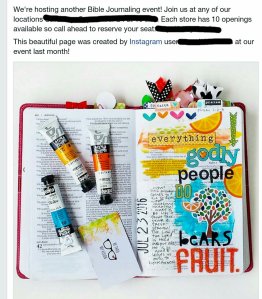
This post, from a major Christian retailer, appeared in my Facebook feed recently. They’re holding “Bible art journaling” workshops to teach women how to color in their Bibles- something we usually teach three year olds not to do.

When was the last time you heard of a Christian retailer or an average evangelical church holding a worshop – aimed at women – on biblical hermeneutics, Christology, pneumatology, church history, discernment, evangelism, or any other serious biblical topic?

Never mind how to properly handle and study God’s word, ladies, here’s a coloring book*! It’s insulting to the intelligence, capabilities, and quest for spiritual maturity of Christian women. And it’s sexist, too. Don’t believe me? Think about it:

How many Christian men do you see taking Bible art journaling classes or sharing about it on social media?

Have you ever seen a men’s ministry share a picture like this in order to reassure men of how special and wonderful they are?

woman-570883_1920_kindlephoto-22633156

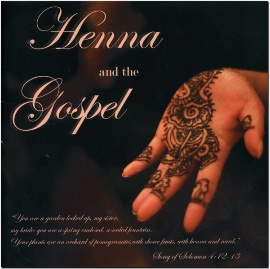
Over the summer, the hot fad aimed at women was using henna to tell Bible stories. How many men do you think participated in that?

sou-hennabklt-m

Contemporary Christian radio intentionally markets to a specific female demographic, resulting in a playlist that’s overwhelmingly comprised of ooey-gooey, salve my feelings, emasculated songs. That’s their perspective of us. That’s what they think we want and can handle.

And it doesn’t stop there. Walk into your local Christian retailer and compare the fluff and false doctrine in the women’s ghettoย department to what’s offered in the general (or men’s) area of the store. Christian retailing has been so successful with their marketing plans that they have fairly brainwashed evangelical women into thinking that:

  • only what’s in the women’s section of the store is for them
  • serious theology isn’t for them (because it’s nowhere to be found in the women’s department)
  • women can’t just pick up the Bible and study it for themselves – they haveย to buy a “canned” study written by someone else
  • that “someone else” has to be a woman (nearly always a woman who teaches false doctrine)

Take all of that, throw it into your gumbo pot, stir it around a little, and what do you get?

Well…you get weak women who are captivated by false teachers and false doctrine, led astray from the truth of God’s word by their passions and emotions, flitting from study to study and event to event, always “learning” but ever biblically ignorant. And you get a church that not only views Christian women this way, but perpetuates this sexist spiritual oppression.

Christian women, you are better, more valuable, and more capable than that. God has more for you and expects more from you than sitting in a corner coloring in your Bible and playing with a theological Barbie Dream House. Like your first century sisters, He wants you to learn.

Strive for more than evangelicalism expects from you and thinks you’re capable of, ladies. Be a strong, healthy student of God’s word. There are women out there who desperately need you: lost women who need to hear the gospel properly presented so they might know Christ, saved women who need someone to teach them the truth of God’s word, women who need biblical hope, comfort, and answers about the trials they’re going through.

Buck the system. Challenge the assumptions. Cast off the shackles, and refuse to be that weak woman any more. Be the full grown, spiritually mature woman God has always wanted you to be.


*Some women are artistically talented and enjoy Bible art journaling as a hobby in their spare time. If that’s you, and you’re already a serious student of God’s word, knock yourself out. But if the majority of your Bible “study” time is spent painting or coloring in your Bible, then this might be a tight, uncomfortable shoe, but the shoe fits.