Mailbag

The Mailbag: Potpourri (Small groups, Furtick, Slander…)


Today’s edition of The Mailbag is a tad different in format. Usually, I answer one reader’s question in a long form article. Today, I’m addressing various questions from several readers in a “short answer” format.

Please note: Due to the recent change in my comments/e-mail/messages policy, I’m not responding individually to most e-mails and messages. Several of these questions could have been answered instantaneously if the search bar had been utilized.


I wanted to ask if you could suggest a study for mums with young children, all of whom need lots of support and encouragement, as well as one who is struggling with her faith at the moment.

While there may be a good, doctrinally sound study out there for moms of small children, I’m not personally familiar with any. Still, I would recommend simply choosing a book of the Bible and studying it from beginning to end. The best and most biblical support and encouragement comes right from Scripture. See my article: You’re Not as Dumb as You Think You Are: Five Reasons to Put Down that Devotional and Pick Up the Actual Bible.

For someone struggling with her faith, the book of 1 John is excellent. If you don’t feel equipped to teach a book of the Bible, get some training so you can. Untrained, undiscerning teachers are a major way false doctrine creeps into the church. See: McBible Study and the Famine of God’s Word.


What are your thoughts on: Rebecca Manly Pippert, Revelation Wellness, Liz Curtis Higgs, Heaven by Randy Alcorn, Dr. Caroline Leaf, Stephen Ministry, Jan Markell’s Olive Tree Ministries, Johanna Michaelsen, and Angie Smith?

Rebecca Manly Pippert, Revelation Wellness, and Stephen Ministry: I’m afraid I’ve never heard of them.

Dr. Caroline Leaf, Jan Markell, Johanna Michaelsen, and Angie Smith: I’ve heard the names in passing, but I don’t really know anything about any of them.

Liz Curtis Higgs: I’ve never read any of her stuff or heard her speak, but I know that, until it disbanded this year, she was a featured speaker for Women of Faith, alongside false teachers such as Sheila Walsh, Jen Hatmaker, Sarah Jakes Roberts (daughter of T.D. Jakes), and musician Nichole Nordeman (pro-homosexuality). Partnering with false teachers, even if your own doctrine is sound (and I don’t know whether or not Higgs’ is), is prohibited by Scripture, so for that reason alone, I would not recommend her.

Heaven by Randy Alcorn: I read most of this book, but it was probably ten years ago or more. I don’t remember any specifics from the book, nor was there any egregious false doctrine that sticks out in my memory. All I remember is that I quit reading it because it was way too long and because a lot of it was – while based on Scripture – speculation and extrapolation as to what Heaven would be like. Randy Alcorn is not someone I currently keep up with very closely. Although I have recommended him as a fiction author: The Mailbag: Christian Fiction Recommendations, I don’t often read his blog or other non-fiction work. From the little non-fiction of his that I have read, my impression of him is that he is generally doctrinally sound, but may not thoroughly vet the people he quotes and appears with.

For more information on checking out various teachers and ministries, see my article: Is She a False Teacher? 7 Steps to Figuring it Out on Your Own


How can I find a solid church and what are your feelings regarding small groups?

For recommendations on finding a solid church, see The Mailbag: How Can I Find a Good Church?

I’m strongly in favor of small group Bible studies and Sunday School classes as a supplement to sound preaching from the pulpit, if the small group teacher is able to teach (availability and willingness do not equal ability to teach) and has been trained in good hermeneutics, and if he or she is teaching the Bible. For more, read my article McBible Study and the Famine of God’s Word.


Do you have an opinion of Steven Furtick?

I have many opinions of Steven Furtick (“pastor” of Elevation “Church” in Charlotte, NC), none of them good. He mercilessly twists God’s word, he yokes with false teachers (including T.D. Jakes, Joel Osteen, Joyce Meyer, Christine Caine and others), and he allows women to preach from his pulpit (Including Lysa TerKeurst. Furtick is her pastor, which is one of the reasons I warn against her.) Additionally, Furtick has been immersed in Word of Faith false doctrine for years, and is now venturing into New Apostolic Reformation false doctrine. For more information, see Fighting for the Faith, Berean Research, Berean Examiner, and Apprising. I’ve also seen a number of YouTube videos from various sources explaining the doctrinal problems and scandals with Furtick (use the YouTube search bar).


The Bible says that women should learn in submission and not instruct men, however, The Great Commission is written to believers (which includes women). Therefore, if that is my aim to fulfill the Great Commission, in turn fulfilling God’s will, how am I sinning?

You’re not. Preaching to men, instructing men in the Scriptures, and holding authority over men in the church is not the same thing as evangelism and I have never claimed that it is.

I think a better grasp of the role of women in the church would be helpful for you. I’d recommend reading Rock Your Role: Jill in the Pulpit as well as the remaining articles in my Rock Your Role series. For more on women evangelizing men, read #11 in my article Rock Your Role FAQs.


I am wondering if you have ever done a post or topic on homeschooling? I have been praying for your conference.

I do home school, but I’m afraid I haven’t written anything on it. My friend Rachel over at Danielthree18 sometimes writes about home schooling, as does Gospel Centered Mom. These ladies could probably better point you in the right direction for doctrinally sound home schooling blogs than I can. It’s just not something I read much about or have an interest in writing about.

Thank you so much for your prayers. I am leaving Thursday to speak at a Christian women’s retreat in Cape Cod, Massachusetts, addressing the topic of suffering.

Readers, if your church would be interested in having me come speak at a women’s event, please click on the “Contact…” tab at the top of this page.


What is the criteria for a woman in regards to not teaching a man?…I particularly like The Voice translation for this in 1 Timothy 2:12…I think the ‘women teaching’ Scripture was more of a custom back in the day as is this Scripture about men and long hair.

I would recommend reading all of the articles in my Rock Your Role series, starting with Jill in the Pulpit. My article  A Head of the Times- Head Coverings for Christian Women? will help answer your questions regarding men and long hair (since the two issues are in the same passage), particularly some of the articles in the “Additional Resources” section (I would start with the WWUTT video near the end of that section). Also, we always need to keep in mind that God is the author of these Scriptures, not Paul. These are not Paul’s ideas and preferences, they’re God’s.

I would strongly recommend you find a reliable translation of the Bible rather than using The Voice paraphrase, which had several false teachers and female “pastors” as contributors. More info. at The Mailbag: Which Bible Do You Recommend?


Lysa TerKeurst (or Beth Moore, Priscilla Shirer, or anybody else I’ve warned against, I get this one a lot) should sue you for slander for the judgmental things you’ve said about her!

So you’ve obviously read my article about Lysa TerKeurst. Did you happen to see and read the big, bold notice at the top of that article (and every other discernment article I’ve written) which says:

If you are considering commenting or sending me an e-mail objecting to the fact that I warn against false teachers, please click here and read this article first. Your objection is most likely answered here. I won’t be publishing comments or answering emails that are answered by this article.

Your objection is answered in detail in #5 of this article. However, I’d like to add a few things:

1. There’s not a single teacher I’ve ever mentioned on this site that could sue me for slander. Not one. Why? Because slander is about false and defamatory speech. What you’re talking about is libel, which deals with false and defamatory writing. Get a dictionary and use your words.

2. In order to sue someone for libel, my understanding (maybe a reader who’s an actual lawyer could help out here) is that you have to prove that a) your reputation has been damaged (Anybody see people “Leaving Lysa” in droves? I don’t. Her “ministry” is, unfortunately, continuing to grow as far as I can tell.) b) that the allegations are untrue (The allegations I’ve made aren’t untrue. I’ve taken Lysa’s own words and actions – from videos of her speaking, and from texts of her writing – and compared them with Scripture. If she’s able to demonstrate – from Scripture – that what I’ve said is untrue, she won’t have to sue me for anything because I’ll gladly repent and print a retraction. But, judging from the way she generally handles Scripture, she’s not going to be able to do that.) and c) that the writer acted with malice. (I’ve made very clear that my desire is for Lysa – and the others – to repent and teach sound doctrine so I can point women to them as solid resources. How could being for Lysa in this way, and wanting to help her ministry, be construed as malicious?)

3. If Lysa (or any of the others) did try to sue me for libel, she would only be further proving my point about her disobedience to Scripture, because Scripture instructs Christians not to sue each other. That’s not going to do a lot for her credibility in court.

Thanks for playing.


Why haven’t you answered my e-mail/social media message or posted my blog comment?

See: New E-Mail, Messages, and Blog Comments Policy

From the “Welcome” tab: As of March 2017, I will not be responding to (and often, not publishing) blog comments which require more than five minutes of my time to answer. While I love hearing from readers, it is simply taking too much time away from my family to engage in long, in depth, or teaching conversations in the comments section of my articles.


If you have a question about: a Bible passage, an aspect of theology, a current issue in Christianity, or how to biblically handle a family, life, or church situation, comment below (I’ll hold all questions in queue {unpublished} for a future edition of The Mailbag) or send me an e-mail or private message. If your question is chosen for publication, your anonymity will be protected.

Entertainment, Movies, Sanctification

Don’t Get Your Theology from the Movies

I recently received the kindest e-mail from a sweet lady at a movie subscription service – sort of a “family-friendly” version of Netflix – asking me to write an article pointing my readers to the movie subscription service (hereafter: “MSS”) as a resource for whatever issue I was addressing in the article:

“I am hoping to hear your advice on some ways to relay valuable lessons to others in a post on your page. Maybe you have used a book or a movie to help someone better understand how to deal with bullying. Or maybe you have used parables from the Bible to demonstrate how to deal with a tough situation. We would love our movies to be a resource for your readers to utilize as a tool, since we have many relevant Christian movies and shows.”

This is a brilliant and creative marketing/publicity strategy, and I really admire whoever it was at the MSS who came up with and implemented this idea. It’s grassroots, it reaches their target audience, they get to harness the creativity and energy of the bloggers they contact, and it’s free. Very smart.

Nice people, smart marketing, a variety of attractive products, the desire to help others, a company built on wholesome morality- what’s not to endorse, right? And if they were selling hand cream or light bulbs or waffle irons, I’d agree.

The thing is, when you sell something, that product is supposed to correctly fill a need your potential customers have. You sell hand cream to people with dry hands, light bulbs to people wondering why they’re sitting around in the dark, and waffle irons to people who want to enjoy breakfast in their jammies rather than driving across town to IHOP.

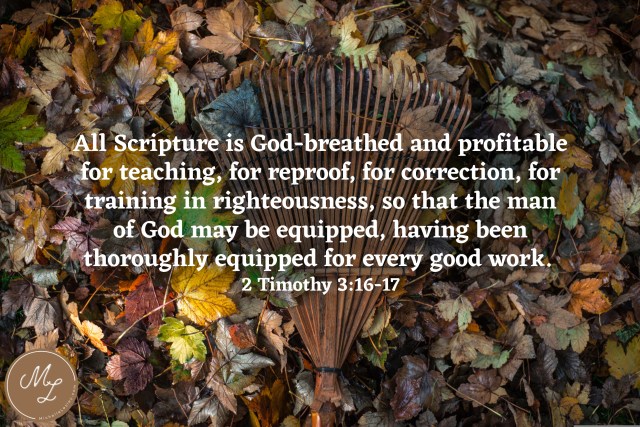
But this MSS is not selling you the right tool for your problem. Though I’m sure they have the noblest of intentions, they’re attempting to sell you a waffle iron to rake your yard with: movies as theology.

Though I’m sure they have the noblest of intentions, they’re attempting to sell you a waffle iron to rake your yard with: movies as theology.

I like movies. I watch them all the time with my family (at home- have you seen the price of a movie ticket lately?!?!). But movies are for leisure time fun and entertainment, not for proper instruction on how to live a godly life or the way to solve personal problems, and certainly not for what to believe about God, as we’ve recently seen with The Shack debacle. When Christians have issues, questions, and problems, we don’t go to the movies, we go to the Bible.

When Christians have issues, questions, and problems, we don’t go to the movies, we go to the Bible.

God’s word is the primary source document for Christians. It is the authority that governs our thoughts, words, and deeds. It is the sufficient answer to any question we might have about life and godliness. Above any other advice, instruction, help, or input, we need the Bible, and we can rest assured that its counsel is always right and trustworthy since its words come straight from the lips of God.

But just for the sake of argument, let’s try it the MSS’s way. Let’s say you do have the problem of being bullied. And let’s say this MSS has a good movie about a character in similar life circumstances to yours who overcomes being bullied. So you watch it, hoping to get some advice on how to handle your own problem. You’re a Christian, so, by definition, you want to address the situation without sinning, in a way that pleases God, and, hopefully, in a way that is conducive to sharing the gospel with the bully.

How do you know whether or not the character in the movie overcame her bullying problem in a godly way? That’s right- you have to open your Bible, study it, and compare what she did in the movie with rightly handled, in context Scripture. So why not just go straight to the Source and spend the hour and a half you invested in the movie studying Scripture instead?

Another issue with watching movies to learn how to solve your problems or teach you how to live rightly is that doing so subtly trains you in poor hermeneutics. It trains you to follow the example of a character who is just as broken, sinful, and unwise as you are instead of looking directly to the perfect, holy, infallible instruction of God Himself. Which is often the way people incorrectly read the Bible.

As I’ve previously mentioned, there are two main types of Scripture: descriptive and prescriptive. Like a movie, descriptive passages describe something that happened: Noah built an ark. Esther became queen. Paul got shipwrecked. These passages simply tell us what happened to somebody. Prescriptive passages are commands or statements to obey. Don’t lie. Share the gospel. Forgive others.

If we wanted to know how to have a godly marriage, for example, we would look at passages like Ephesians 5:22-33, 1 Corinthians 7, and Exodus 20:14,17. These are all passages that clearly tell us what to do and what not to do in order to have a godly marriage.

What we would not do is look at David’s and Solomon’s lives and conclude that polygamy is God’s design for marriage. We would not read about Hosea and assume that God wants Christian men to marry prostitutes. We would not read the story of the woman at the well and think that being married five times and then shacking up with number six is OK with Jesus. All of which is the same reason we should not be watching movies – even “Christian” movies – as a resource for godly living.

“But,” the kind MSS lady would probably reassure me, “our MSS also has non-fiction videos of pastors and Bible teachers that could be helpful.” And indeed they do. There are a handful of documentaries on missionaries, some of the Reformers, current moral and societal issues, and Bible teaching that look like they could be solid. The problem is, they’re mixed in with the likes of Joyce Meyer, John Hagee, Henri Nouwen, Greg Laurie, a plethora of Catholic leaders, and even those who don’t claim to be Christians like Betty White, Frank Sinatra, and Liberace. The few videos with good teaching are combined with many that teach worldly ideas, signs and wonders, mysticism, Bible “codes” and “secrets,” false prophecy, faulty eschatology, and other false doctrine.

It’s a great example of why God tells Christians we’re not to receive false teachers nor to partner with them, as, sadly, this MSS has chosen to do. Mixing biblical truth with false teaching confuses people. A little leaven leavens the whole lump.

When a little bit of truth is mixed in with the false, how are we to know which is which? We have to do exactly what the Bereans did with Paul- examine the teachings against Scripture, accept what matches up and reject what doesn’t. Again, why spend the time and confusion searching for, hoping you’ve found, and watching a video you’re not sure will teach you biblical truth when you could simply pick up your Bible, study it, and confidently believe what God says about the issue instead?

There are some good, clean movies on this MSS that would make for an enjoyable evening of family fun, and there’s certainly nothing wrong with that. But for instruction in holy living and resolving the dilemmas of life in a godly way, we need to use the right tool for the job: the Bible.

Rake your yard with a rake, not a waffle iron.

Rake your yard with a rake, not a waffle iron.

Discernment, False Doctrine, False Teachers, New Apostolic Reformation, Podcast Appearances

Echo Zoe Radio Guest Appearance: The New Apostolic Reformation

logo


Last week, I once again had the pleasure of sitting down and chatting with my friend Andy Olson as his guest on the Echo Zoe Radio podcast.

Click here to listen in

as we talk about the New Apostolic Reformation– their beliefs, and how NAR false doctrine can creep into your church. And don’t forget to subscribe to the podcast and follow Echo Zoe on Facebook and Twitter!


Got a podcast of your own or have a podcasting friend who needs a guest? Click the “Speaking Engagements” tab at the top of this page, drop me an e-mail, and let’s chat!

Discernment

Discernment Resources Potpourri

discernment

There are scads of fantastic discernment resources out there. Here are a few good ones that have come across my desk in the past few weeks…


deadlydoctrine-01Tim Challies is running a really good series right now called Deadly Doctrines. “In a new series of articles, we will consider false doctrine, sound doctrine, and how to train ourselves to distinguish between them. We will see how God calls us to respond to false and sound doctrine, as well as false and sound teachers.”


download-1Here’s Sinclair Ferguson over at Ligonier with What is Discernment? “We are on our guard against being led astray by false teachers. But there is more to discernment than this. True discernment means not only distinguishing the right from the wrong; it means distinguishing the primary from the secondary, the essential from the indifferent, and the permanent from the transient. And, yes, it means distinguishing between the good and the better, and even between the better and the best.”

And, of course, Pastor Gabriel Hughes of When We Understand the Truth is always there with his awesome WWUTT teaching videos. Here’s What is Discernment?


And here is Essential Doctrines?:


Below is a screen shot from the the Essential Doctrines video that might be helpful to print out and keep in your Bible or use when you teach a Bible study. Each letter in the word “DOCTRINES” stands for a primary area of biblical doctrine. Any teaching that conflicts with what the Bible says on any of these points is heresy:

c2eurnduoaa18km(Note: “Eschatology” here does not mean a specific flavor of end times theology such as pre-trib, post-millennial, etc. It refers to the foundational, general doctrine that Christ will come again in final judgment and to claim His bride, the church.)


Hope y’all find these as helpful as I did!

Mailbag

The Mailbag: Contending for the Faith on Social Media

mailbag


I was wondering what your opinion is about using Facebook to correct false doctrine. Mostly what I do is post Scriptures, but every once in a while I may comment on something that is blatantly contrary to the Bible and I try to point to the appropriate Scriptures to show the truth. This mostly happens when a popular preacher or teacher that does not hold to sound doctrine posts something, or when a friend posts something that is clearly unbiblical.

This is such a great question that so many of us (including me!) struggle with. We love our friends and don’t want to see them believing something unbiblical (and spreading it around on social media) and it’s hard to just scroll past the blasphemy false teachers so often post without taking a stand for God’s word.

I readily admit I don’t have a perfect answer for this question. On the one hand, you want to protect your friends from error. On the other hand, there aren’t enough hours in the day to correct every single false teaching out there. And, if you try, people stop listening and you become ignorable background noise. Here are some of the principles I personally try to operate from on my personal (personal friends and family) social media pages. (I try to be consistent, but it doesn’t always work out that way):

  • Do keep in mind that – if it’s a matter of someone simply following a false teacher/ministry, not re-posting – people don’t always follow these accounts because they agree with them. Sometimes it’s to keep an eye on what the false teacher is teaching, to find out more about her doctrine because her materials are being introduced at church, etc. I follow two or three accounts on Twitter for reasons like that.
  • By and large, I don’t follow false teachers/ministries on social media. It just raises my blood pressure too much. So, for the most part, I don’t comment directly on false teachers’ posts because I don’t see them in my feed. If you do decide to comment, be sure you provide ample, in context Scripture passages to support what you’re saying, and comment in a patient, kind tone, not with histrionics, keeping in mind that most of the people who follow that false teacher are baby Christians, Christians who simply aren’t aware they’re being fed false doctrine, or false converts. Be aware that you’re almost certainly not going to change anyone’s mind, that people will verbally eviscerate you, and that the admin of the page will probably block and/or report you.
  • My main way of sharing biblical truth and discernment is to post about it on my own timeline. That way, the information is out there, yet direct confrontation is avoided.
  • When it comes to posting things on your own news feed, make sure you’re posting about good resources and teachers as well as warning about the bad. It’s not enough to get people away from bad teaching. They need somewhere to go for good teaching.
  • I have something of a “Golden Rule” policy about commenting on other people’s posts. I’ve had people comment on my discernment-type posts rebuking me and arguing with me for posting such things, as though they have some sort of right to dictate what I can and can’t post on my own page. That’s not right. People have the right to post what they want to post on their own page, and, while I’m not always perfect at it, I try to remember to respect that fact with others as I would want them to respect it with me. If what the person has posted concerns me for her soul, I will send her a private message. I operate on the assumption that people who claim to be Christians would want to know they’re posting something that’s in conflict with God’s word.
  • If someone’s post or comment makes me biblically angry, I try to remember to wait 24 hours before responding. I’ve found that helps me to calm down and respond more patiently and kindly. I’ve also found that sometimes my anger clouds my understanding of what the person actually meant. I have greater clarity the next day and can respond (or even refrain from responding) more appropriately.
  • There are two passages of Scripture I try to keep in mind when responding to people on social media about false teaching. The first is 2 Timothy 2:24-26. It reminds me of where that person might be coming from and how I am to comport myself:

And the Lord’s servant must not be quarrelsome but kind to everyone, able to teach, patiently enduring evil, correcting his opponents with gentleness. God may perhaps grant them repentance leading to a knowledge of the truth, and they may come to their senses and escape from the snare of the devil, after being captured by him to do his will.

The second is Matthew 7:6:

Do not give dogs what is holy, and do not throw your pearls before pigs, lest they trample them underfoot and turn to attack you.

The Bible is the final word of the holy God of the universe. What He says, goes, whether people believe it or not. It is stake in the ground, unalterable truth that needs no defense from us to pigs and dogs (not that everyone who posts false doctrine is a pig or dog- sometimes they’re just unaware). Sometimes the best response you can give on social media is to patiently lay down simple biblical truth in one comment and walk away, refusing to engage in debate, and trusting God to work on people’s hearts through His word.

  • Above all, pray. Pray for the false teacher/ministry you’re concerned about. Pray for the friend or loved one who’s re-posting false doctrine, that God will open her eyes to the truth. Pray about whether you should approach someone on social media, in which venue (comment, private message, etc.), and for wisdom to use the right words, tone, and Scriptures.

If you have a question about: a well known Christian author/leader, a Bible passage, an aspect of theology, a current issue in Christianity, or how to biblically handle a family, life, or church situation, comment below (I’ll hold all questions in queue {unpublished} for a future edition of The Mailbag) or send me an e-mail or private message. If your question is chosen for publication, your anonymity will be protected.