1. If you had to summarize the theme of this passage in one word, which word would you choose? Which other New Testament passages can you think of that deal with the issue of submission to authority? In lesson 3 (link above), we learned that another theme we often see in the New Testament is growing to maturity in Christ. How can learning to submit to the authorities in your life help you to grow in spiritual maturity? Describe how biblical submission to authority fits with the theme of 1-2 Peter: living holy lives under persecution and before an unholy world.
2. For this lesson, we’re going to break this passage down into three sections and answer some similar questions about each.
Three different groups of people are exhorted to submit to authority in this passage. Identify these three groups of people and the authorities they’re instructed to submit to:
2:13-17-
2:18-25-
3:1-6-
3. God doesn’t always explain why He gives certain instructions, but sometimes He graciously does to help us understand Him and to encourage us to “think His thoughts after Him.”
What are the specific reasons He gives to each group for submitting to their particular authority? Is there a common thread among these reasons? Zoom out and take a “big picture” look at the general principle of Christians submitting to earthly authorities. What is God’s overall reason for this principle? How does our submission to authority paint a picture for unbelievers that there is an Ultimate Authority – Jesus – and that one day every knee will bow to Him?
4. Describe the opposition each group faces from the authorities they’re to submit to. What is the general reason for this opposition? Is it easier for you to submit to a) Christian authority you’re doctrinally aligned with, b) a “Christian” authority who’s doctrinally unsound (or a false convert), or c) a non-Christian authority? Why?
5. Study 2:20b-25. Think back over Jesus’ earthly ministry. In what ways did He suffer unjustly? How does Jesus’ response to unjust suffering set an example to Peter’s first century persecuted and dispersed audience of Christians, and how does it set an example for us to follow today during suffering and persecution? How is bearing up under unjust treatment and responding to it in a godly way a testimony of Christ to the lost around us? How might it open a door to share the gospel with someone?
6. How does it comfort you to know that you, like Jesus, can “entrust yourself to the One who judges justly”(2:23)? Does any act of evil or persecution against God’s children ever escape His notice and go unpunished either in this life or the next?
7. In each of our three sections God addresses those who are to submit, but He only addresses the authority in one section. Which authority is that, in which verse? Why do you think He addresses this particular authority here and not the others? What are the characteristics God instructs this authority to exhibit to the person under him, and how should these characteristics apply generally to all Christians in a position of authority over others? How does a godly, loving demonstration of authority point to God’s loving and benevolent authority?
Homework
Are there any authorities in your life that you have difficulty submitting to? The government/laws (2:13-17), your boss (2:18-25), your husband (3:1-6)? Think about the instructions for submitting to authority in today’s passage, identify one practical way you could better submit to your authority, and put it into practice this week.
While this article deals primarily with Bethel, Hillsong, Elevation, and Jesus Culture, they are by no means the only heretical music sources to be avoided. Phil Wickham, for example, is just as prolific as these groups and his music is used by just as many churches. With his strong ties to Bethel, he should be included under the umbrella of Bethel as you consider the remainder of this article. There are numerous other unbiblical musicians who should be avoided for these same (and other) reasons. You can find a sampling of them in my article The Mailbag: False Doctrine in Contemporary Christian Music.
Is it wrong to sing songs from Bethel if they are theologically correct? In this episode of Redeeming Truth, Pastors Costi Hinn, Dale Thackrah, and Kyle Swanson provide insight into the dangers of supporting ministries like Bethel [and Hillsong, Jesus Culture and Elevation Music], that have a false understanding of who Christ is.
“It’s imperative for churches to be discerning about the CCM they use in worship. If Jane Churchmember hears a CCM song in church and likes it, she’s likely to Google the song (probably right there in church- I’ve done it!), find out who sings it, and begin following that artist. Worship pastors who use CCM have a responsibility to vet the artists who perform the songs they select for the worship service to make sure they’re not sending Jane into the arms of a heretic. Additionally, music costs money, and you don’t want your church’s offerings supporting false doctrine.
Now, every time I address the subject of being discerning about worship music and that churches should not use worship music from heretical sources (such as Bethel, Hillsong, and Elevation) someone who’s defending using music from these heretical sources [will say]:
Well, [insert name of hymn writer here] wrote lots of perfectly biblical hymns, but he had some theological problems too, and you’re not recommending we get rid of all of his hymns.
Well, first of all, maybe we should more closely examine the theology of some of our most prolific hymnists and stop using their music because of what they believed. Quick – off the top of your head, name the three we should start with…
…And that’s what separates the errant hymnist from Bethel, et al. Most Christians, even those who prefer hymns over CCM, could probably not name three people who wrote hymns, let alone tell you anything about their theology. But if you ask the average Christian to name three top Christian artists, she could rattle them off in a second.
Most hymn writers have been dead for up to hundreds of years. They don’t have Facebook pages you can follow, nobody’s playing their stuff on KLOVE, they’re not on tour to promote their latest album, they don’t have thousands of followers worldwide, and their music is in the public domain, so your church isn’t financially supporting them or their work. If you wanted to follow their errant theology, you’d have to hit the books to research and study it. Contemporary musicians’ theology is only a click away on YouTube, social media, live streamed concerts and conferences, and on their web sites. Nobody is following dead hymnists’ false doctrine, but hordes are following contemporary musicians’ heresy.”
If you came here looking for a critique of individual [Bethel, Hillsong, or Elevation] songs, that’s not really what this is about. Everything connected to [these “pastors”] – [the “churches,” the music companies] (as entities and all individual songs), all [“church” and music] personnel, materials, programs, and events – are all fruit of the poisonous tree [of the false teacher who heads everything up]. No, you cannot biblically pick and choose songs from [any of these organizations] that don’t seem to overtly violate Scripture. The Bible never tells us to “chew up the meat and spit out the bones.” It says:
I appeal to you, brothers, to watch out for those who cause divisions and create obstacles contrary to the doctrine that you have been taught; avoid them. For such persons do not serve our Lord Christ, but their own appetites, and by smooth talk and flattery they deceive the hearts of the naive. Romans 16:17-18
“Watch out” for false teachers. “Avoid them.” That includes everything about them: all their materials, books, events, music, social media, etc. Would the God who breathed out these words of Scripture be pleased if we ourselves, or our churches, use materials by people who “do not serve our Lord Christ”?
“We have been searching for a doctrinally sound church in the area we moved to, and unfortunately it has not been easy! The few that we have found still use Hillsong, Bethel or Elevation music. I usually cross a church off the list quickly if they sing from those artists. But like I said, now I am finding even doctrinally sound churches are throwing some of those songs in. Do you have any insight to this dilemma?”
…for pastors and ministers of music: This is yet one more reason it is detrimental to your church to use music from Bethel, Jesus Culture, Hillsong, Elevation, any musician connected these groups (such as Phil Wickham, who’s very prolific and has strong ties to Bethel), or any other musician who isn’t doctrinally sound (after you have thoroughly vetted him/her/them.) regardless of how biblical the lyrics of any particular song of theirs that you’re using might be. You could potentially be turning away solid, mature, discerning Believers who might otherwise be interested in joining your church. The woman who sent in this question is not the first to ask me something like this – not by a long shot. This issue is increasingly of concern to Christians looking for a solid church. (For that reason, I do not list churches – even Reformed or seemingly otherwise doctrinally sound churches – on my Reader Recommended Churches list who use music from heretical sources like these.)
When a visitor walks into your sanctuary for the first time, your worship service is the “face” of your church to her. What kind of a first impression are you making? When you use music by doctrinally unsound musicians, it does not say, “We’re really a doctrinally sound church – honest! We only use songs from these groups whose lyrics are biblical.”. It says, “This church has leaders who aren’t discerning,” or “If this church uses music by these heretical groups, what other doctrinal problems does it have?”. Why put that stumbling block out there when there is plenty of music available with biblical lyrics written/performed by doctrinally sound musicians?
And there’s another stumbling block that using this type of music puts in front of weaker brothers and sisters that you may not have realized. I have heard from a number of Christians whom God graciously saved and rescued out of the pit of “churches” similar to Bethel, Hillsong, and Elevation. They tell me that when they walk into what they think is a doctrinally sound church and hear music from these and other heretical sources, it triggers a form of spiritual PTSD. It’s traumatizing to them. They immediately become fearful that your church is mere steps from turning into one of these types of “churches.” Will they grow out of that reflexive reaction? Yes, some day, as God continues to sanctify them. In the meantime, do you want the music at your church to cause them unnecessary anxiety? I hope not.
Even for Christians who have not come out of “churches” like these but are knowledgeable about their heretical theology, using these songs in your worship service is putting a stumbling block in front of them, too. Take me, for example. I’ve studied these groups. I’ve seen their heresy and the damage they do to both the Kingdom and to the individuals who follow them. And because of that, I’ve zealously spoken out against them. If I visit your church and an Elevation song suddenly flashes up on the screen, my ability to worship is completely derailed in grief that your church would use a song from that source – especially if you know about their theology and are well acquainted with music from doctrinally sound sources that you could have used instead. I cannot sin against my conscience by singing those songs. Consider me a “weaker brother” if you like, but do you care more about me as your sister in Christ, or your “right” to use music from these sources? What about Paul’s posture in 1 Corinthians 8:9-13?
But take care that this right of yours does not somehow become a stumbling block to the weak. For if anyone sees you who have knowledge eating in an idol’s temple, will he not be encouraged, if his conscience is weak, to eat food offered to idols? And so by your knowledge this weak person is destroyed, the brother for whom Christ died. Thus, sinning against your brothers and wounding their conscience when it is weak, you sin against Christ. Therefore, if food makes my brother stumble, I will never eat meat, lest I make my brother stumble.
If this was true in Paul’s personal life, shouldn’t it surely be true of our worship services? If you wouldn’t put a Christmas tree or portrayals of Jesus in your sanctuary because it might offend a brother in Christ, why would you use worship music that causes offense to your brothers and sisters?
Finally, what is the proactively good reason for intentionally choosing music from a heretical source? In other words, when you’re selecting music for the worship service, why would you choose, say, a Hillsong song about God’s glory, or Psalm 23, or the crucifixion, when you could just as easily choose a song from a doctrinally sound source about any of those things – a source that isn’t a stumbling block to anyone, won’t give anyone the wrong impression about your church, won’t lead anyone to follow a heretical “church,” and won’t use your church’s offerings to support a heretical “church”? What makes the Hillsong song you’re choosing better than the song from the doctrinally sound source? It doesn’t seem to me that there’s a good enough reason to use songs from these sources that outweighs all the good, biblical reasons not to use them.
There is simply no good reason for a doctrinally sound church to use music from heretical sources like these.
There is simply no good reason for a doctrinally sound church to use music from heretical sources like Bethel, Jesus Culture, Hillsong, and Elevation.
Chatting with Dawain Atkinson, host of The B.A.R. (Biblical And Reformed) Podcastwas like talking to an old friend. What a sweet brother in Christ. The B.A.R. has a unique, interview-only format, so it’s the place to go to discover doctrinally sound pastors, teachers, authors, podcasters, ministries, and even musicians who are producing quality biblical content and resources. And check out The B.A.R. Network for great podcasts like Just Thinking, Truth+Fire, and more!
Listen in as Dawain and I chat about women’s discipleship, the importance of the local church, and my podcast with Amy Spreeman, A Word Fitly Spoken.
You can subscribe to The B.A.R Podcast on a variety of podcast platforms. And be sure to give The B.A.R a follow on Facebook and Twitter.
My resources mentioned or touched on in the interview (You can find most of these in the blue menu bar at the top of this page.):
Got a podcast of your own or have a podcasting friend who needs a guest? Need a speaker for a women’s conference or church event? Click the “Speaking Engagements” tab at the top of this page, drop me an e-mail, and let’s chat!
1. What word does verse 1 start with? Review lesson 2 (link above) #7. What does the pivot word “so” mean in this verse? You may find it helpful to summarize chapters 1-2 in a “hinge sentence” (chapter 1 on the left, chapter 2:1-12 on the right, and the “So” in 2:1 as the hinge).
2. Peter uses several metaphors in this chapter. Can you identify each of them and explain the point he’s trying to make with each?
3. Read verses 1-3. One of the themes of the New Testament epistles is growing from spiritual immaturity as a new Christian to spiritual maturity in Christ. Consider verses 1-3 in light of these passages. What do verses 1-3 explain to us about growing toward maturity in Christ? What do these verses tell us to do? What does Peter mean by “if indeed you have tasted…” (3)? (hint)
4. Examine verses 4-8, focusing on what these verses say about Jesus. Who is “him” in verse 4a, and how is He described in 4b? If you haven’t already done so in #2, explain the stone/rock metaphor in 4-8. Why would God choose to represent Christ as a “living stone” (4), a “cornerstone” (6,7), and “A stone of stumbling, and a rock of offense” (8)?
Now focus on what these verses say about Christians and our relationship to Christ. Why are we called living stones in v.4 as Jesus was in v.3? How does “being built up as a spiritual house” (5a) return to the theme of maturing in Christ? What is the purpose (“to be”) of this maturing? (5b)
Use your cross-references and think back to what you know about the Old Testament priesthood. Why does Peter say Believers are a “holy priesthood”? (5) What “spiritual sacrifices” do we offer, how do we offer them “through Jesus Christ,” and why are these sacrifices only acceptable to God when offered through Jesus Christ (e.g. Are things like prayer, praise, and worship acceptable to God if the person offering them isn’t a Believer? Why not?)? (5)
Explain the honor that comes with being a Believer. (7) Explain the unbeliever’s dishonor in rejecting, stumbling over, and taking offense at Christ. (7-8)
5. Study verses 9-10. Which characteristics, attitudes and actions of the Believer, and which attributes of God, would cause Peter to describe us as…
A chosen race-
A royal priesthood (And what’s the difference between a “royal” priesthood and a “holy” priesthood (5)?)-
A people for His own possession-
God’s people-
How do each of these descriptions indicate that Believers are consecrated (“set apart”)? What is the purpose (“that you may” – 9b) for which God sets us apart from the world?
6. Read verses 11-12. Why does Peter address his original audience as literal “sojourners and exiles”? In what way are all Christians spiritual sojourners and exiles?
In Scripture, the word “passion” does not always indicate sexual desire. It can simply mean strong feelings, emotions, or urges about anything, (the way someone today might say, “I am passionate about stamp collecting,” or “Hiking is my passion.”) as it does in verse 11. Bearing this in mind, how do passions of the flesh (about anything) wage war against our souls? How is abstaining from passions of the flesh a “spiritual sacrifice” (5), and why is it spiritually healthy to abstain from these passions? If we do not abstain from these passions of the flesh, but rather indulge them, what impact will that have on our ability to keep our conduct among the Gentiles (unbelievers) honorable? (12) What is the purpose (“so that” – 12) of holy living in an unbelieving world?
7. Explain how verse 1 and verse 12 are similar and serve as “bookends” for this passage (1-12).
8. Explain the connection God makes in this passage between holy living and evangelism.
Homework
Think about the various “spiritual sacrifices” you offer to God as a Christian. What is an additional sacrifice you could offer Him this week?
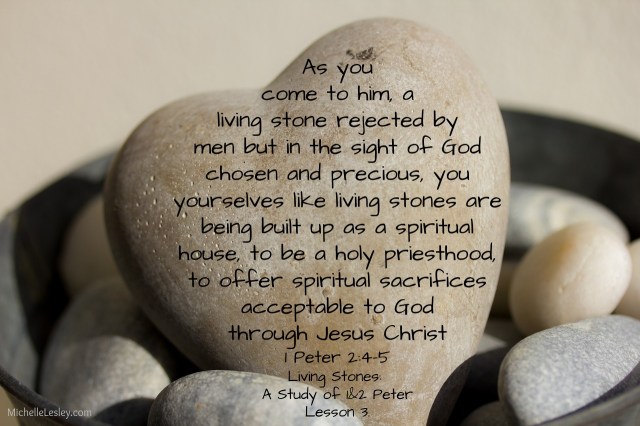
Suggested Memory Verse
(Every week of our study, you’ll see a suggested memory verse like the one above. You are welcome to grab the memory verse pic to use as your screensaver or wallpaper on your phone or computer, print it out and stick it somewhere you’ll see it frequently, or use it in any other way you wish to help you memorize the verse.)
Don’t plan your worship services to attract people — plan your worship services to attract God.
I hope this quote from a while back was just a poor choice of words on the part of a former president of the Southern Baptist Convention. If not, I find this statement concerning.
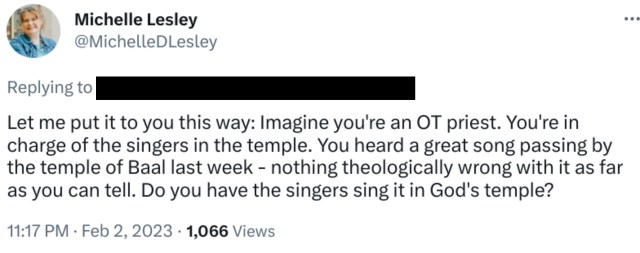
Can you think of a story in the Bible in which people planned a “worship service” in order to attract their god? I can, only it wasn’t Peter or Paul or Samuel or Moses. It was the 450 prophets of Baal in 1 Kings 18:20-40 who ranted and raved and jumped around and cut themselves in an attempt to “attract” their god and get him to show up and answer them.
Christians worship an omnipresent God. That means God is everywhere. We don’t need to do anything to “attract” Him, conjure Him up, or even “welcome” Him into our worship services. He is already there.
What we need to do is plan worship services that honor God. Worship services in which we humble ourselves before Him, confess our sins, cry out to Him in prayer and praise, give our offerings to Him, and hear from Him as His word is preached. Worship services in which He is King and we bow the knee to Him. Worship services in which He must increase and we must decrease.
The idea of “attracting God” makes God small. Less than who He is. It makes His presence dependent on us and our actions. It puts us in the driver’s seat, in charge, over God.
And that is exactly the wrong place for us to be. Especially in a worship service.



 Read 1 Peter 2:13-3:7