Rock Your Role

Rock Your Role: A Head of the Times- Head Coverings for Christian Women? (1 Corinthians 11:1-16)

Rock Your Role is a series examining the โ€œgo toโ€ and hot button Scriptures that relate to and help us understand our role as women in the church. Donโ€™t forget to prayerfully consider our three key questions as you read.

head coverings

Every man who prays or prophesies with his head covered dishonors his head, but every wife who prays or prophesies with her head uncovered dishonors her head, since it is the same as if her head were shaven… Judge for yourselves: is it proper for a wife to pray to God with her head uncovered?
1 Corinthians 11: 4-5, 13

In this series, we’ve been examining the biblical passages that define and give shape to our role as godly women in the church. We’ve taken a look at the different roles God has laid out for men and women in the church and the passages of Scripture people commonly like to twist to argue against the clear teaching of God’s word about those roles.

But aside from a very small minority of folks, no one is arguing that Christian women need to wear some sort of head covering in church or while praying. Most of us seem to instinctively know that the first half of 1 Corinthians 11 is not a command that is binding on 21st century American women. So why even bring up this passage in this series?

Because much like the tiresome “Leviticus also prohibits eating shellfish and wearing garments of mixed fibers!” argument repeatedly trotted out by those offended when Christians rightly call homosexuality a sin, 1 Corinthians 11 is used by feminists, egalitarians, and others as a “gotcha” passage against Christians who rightly uphold the biblical roles of men and women in the church. “If you believe women shouldn’t preach, teach men, or hold authority over men in the church,” they say, “then why don’t you wear a head covering? See? You’re a hypocrite! You pick and choose which Scriptures you’ll obey!”

What they (and often we) don’t realize – because this passage takes some digging and study – is that women who obey Scripture’s parameters for biblical womanhood (submitting to their husbands, following God’s role for women in the church, etc.) are “wearing a head covering.”

First Timothy 2:11-15, the most commonly cited biblical prohibition against women teaching or exercising authority over men in the church, works hand in glove with 1 Corinthians 11:1-16. Both passages deal with male and female roles and authority in the church. But, whereas, in 1 Timothy God gives only universally applicable, unchanging reasons for His instruction that women are not to teach or exercise authority over men in the church (the creative order {verse 13}, and the deception of Eve {verse 14}), in 1 Corinthians, He gives both universal reasons (3, 8-9, 11-12) and transient, man-made, cultural customs (head coverings and hair length) as an additional illustration of the principle He is teaching.

First Corinthians is something of a “policy and procedure manual” for the church. Through Paul’s letter, the Holy Spirit is instructing the church at Corinth, and, subsequently, us, on everything from orderliness in the worship service, to love, lawsuits, marriage, idolatry, and other issues of importance. Chapter 11 fits right in with the flow of instruction. God decided the church needed to be taught about authority and gender roles and inspired Paul to pen this section.

As chapter 11 opens, Paul commends the church at Corinth for keeping God’s word as Paul had taught them (2), but, apparently, something was out of whack with the authority structure and the way men and women were behaving in the church, because Paul immediately pivots to say,

“But I want you to understand…” (3)

In other words, “You’ve been doing pretty well in these other areas, but this area needs some improvement so I’m going to give you very clear instruction about it. Listen up.”

If you’ve ever taken a composition class, you know that persuasive or instructive writing often follows the format of presenting a thesis statement (the main point of your paper) and then supporting or proving that thesis statement with evidence, examples, or logical arguments. This is the format Paul seems to follow in this section.

Why is this important?

Because those who use this passage to argue against the biblical roles of men and women either misunderstand or ignore the main point the Holy Spirit is trying to teach in these verses.

The thesis statement of this passage of Scripture is not found in the verses mentioning head coverings and haircuts. It is found in verse 3:

But I want you to understand that the head of every man is Christ, the head of a wife is her husband, and the head of Christ is God.

In other words, the entire point of this section of Scripture is not that women should wear head coverings, the point is the biblical line of succession of authority. Head coverings, head shaving, short haircuts, and long hair are examples, illustrations, and logical arguments supporting the main point in verse 3.

God is the head of Christ, Christ is the head of man, and man is the head of his wife. And, similar to the way that Christ has a different role in the godhead than God the Father, yet is not in any way inferior to Him, women have a different role in marriage and the church than men, yet are equal to them in value, worth, and salvation. (11) Paul proceeds to explain this by using head coverings and hair lengths- commonplace marks of apparel whose function and significance would have been easily understood by his first century audience -to illustrate his point.

At that particular time, in that particular locale, among those particular people, a head covering was worn by married women to signify a) that they were married, and b) that they respected and were in submission to their husbands. For the women of the church of Corinth, it was a symbol that they understood and embraced their role as godly wives. A woman who pointedly refused to wear her head covering in church would have been making a statement akin to, “I can do what I want. I don’t have to do what my husband, my church leadership, or even God says.” (Kind of like women in the church today who argue against biblical womanhood so vehemently.) By doing so, she dishonored both her own head (herself) and the “head” of her home, her husband. Worst of all, she rejected and rebelled against the authority structure God Himself established.

In a way, refusing to wear the head covering would have been similar to a wife today who takes off her wedding ring and flings it at her husband when she’s angry or leaves her ring at home when she goes out because she’s on the prowl for another man. It’s not the mere act of removing the ring itself that is intrinsically wrong, but, rather, the symbolic statement she makes by removing it.

Head coverings are no longer a cultural norm in Western society. Christian women today do not have to wear a literal head covering, but even from the earliest Old Testament times godly women have always adorned themselves with “a symbol of authority” (10) on their heads: their humility and submission to their husbands and to Christ, in the home, in the church, and in the world.

Do not let your adorning be externalโ€”the braiding of hair and the putting on of gold jewelry, or the clothing you wearโ€” but let your adorning be the hidden person of the heart with the imperishable beauty of a gentle and quiet spirit, which in God’s sight is very precious. For this is how the holy women who hoped in God used to adorn themselves, by submitting to their own husbands, as Sarah obeyed Abraham, calling him lord. And you are her children, if you do good and do not fear anything that is frightening. 1 Peter 3:3-7

If you’re following in Sarah’s footsteps, striving to love Christ and obey His written word in all you do, you are already “wearing a head covering.” So the next time someone tries to use this passage of Scripture against you, asking, “Why don’t you wear a head covering?” you can confidently answer, “I do. Why don’t you?”


Additional Resources:

Here are some great resources that get into more of the specific details of this passage.

Discovering Head Covering at A Word Fitly Spoken

WWUTT 2350 Q&A Head Coverings, Culture or Corporate, Defying Gravity with Gabriel Hughes

What about Headcoverings? with Keith Foskey

1 Corinthians 11 and headcoverings explained at Fighting for the Faith

Conviction and Charity: Must Women Wear Head Coverings in Worship? by Scott Aniol

Addressing the Dressing III: Clothes and Roman Culture by Lyndon Unger

Addressing the Dressing IV: Hair and Roman Culture by Lyndon Unger

1 Corinthians 11:2-16- An Interactive Bible Study by Lyndon Unger

Does 1 Corinthians 11:4-5 mean a woman should never ever cut her hair? at CARM

Should Christian women wear head coverings? at Got Questions

It’s a Shame for a Man to Have Long Hair? by WWUTT (When We Understand the Text)

Head Coverings for Women by John MacArthur

Why Donโ€™t You Wear a Head Covering? at G3 Ministries

Headcoverings by Reagan Escude Scott

1 Corinthians 11:1-16 – Episode 1566, 1567, 1568 by Gabriel Hughes on the WWUTT Podcast

Head Coverings, Women Teachers, and Patriarchy with Costi Hinn and Owen Strachan on the For the Gospel Podcast

Women Undercover– No Trash, Just Truth podcast

Bible Study, Throwback Thursday

Throwback Thursday ~ Nine Helps for Starting and Sticking to Daily Bible Study

Originally published March 31, 2015

9 helps daily bible study

It seems to be a common dilemma among new Christians, Christians who have never developed the habit of daily Bible study, and even those whose current Bible study methods or materials just donโ€™t seem to be โ€œworking.โ€ You know you need to be studying Godโ€™s word efficiently and effectively every day, but you arenโ€™t quite sure how to get the ball rolling.

Let me just say right off the bat that getting over that ginormous hurdle between knowing you ought to study your Bible today and actually doing it is normal. Every Christian goes through that at least occasionally. So donโ€™t worry that your flesh balking initially when itโ€™s time to open your Bible means you arenโ€™t saved or you donโ€™t have enough faith, or whatever. But donโ€™t let it stop you either. There are some things you can do to get off to a good start with setting up and sticking to a daily Bible study time. What can you do to set yourself up for success?

Prioritize It

Take a little time to get alone with the Lord, and be honest with Him and yourself. Is daily Bible study actually important to you โ€“ something you want to do? Why or why not? Do you feel like you shouldย be studying, but you donโ€™t really have a desire to? Ask God to help you understand your motivations and submit them to Him. Ask him to give you a passion for His word. Ask Him to help you to be obedient to Him in making His word a priority in your life.

Pair It

Pair your study time with something you already do faithfully, and at roughly the same time, every day. Study while youโ€™re eating lunch, during the babyโ€™s nap time, right after you exercise, as soon as you get up in the morning, etc. Piggybacking onto something thatโ€™s already built in to your schedule helps you stay faithful and keeps you from forgetting.

Plan for It

Do your best to block off your schedule for your Bible study time and guard that time from interruptions. Turn your phone off and get away from social media. Donโ€™t schedule other appointments or activities that might run long and impinge on your study time. Take care of any possible contingencies that could come up before you get started.

Be Purposeful About It

The Bible should be studied in an orderly way so you can understand and apply it properly. I usually recommend simply picking up the Bible and studying it rather than using Bible study books and workbooks, and having a systematic plan of study is essential, not only to proper understanding and application of Godโ€™s word, but also to keep you from wasting time trying to figure out what to study each day. Choose a book of the Bible, start at the beginning, and work your way through it, orย choose a plan for working your way through the New Testament, Old Testament, or whole Bible.

Pare It

Bible reading plans are great, but some of them can simply require so much daily reading that you donโ€™t have time to slow down, take it all in, and linger over what you need to linger over. You donโ€™t have to read the whole Bible in a year, but if a plan interests you, you could tweak the timing of it or pare it down in some way so youโ€™re not biting off more than you can chew. Go for quality rather than an overwhelming quantity. Many beginners find that a chapter a day (unless itโ€™s Psalm 119!) is just about right.

Partner with Someone

Check in regularly with a friend or your husband and discuss what each of you is learning from Godโ€™s word and how Heโ€™s using what youโ€™re studying to make you more like Christ. Itโ€™s great fellowship and will help keep you both accountable to staying in the Word.

Positively Reinforce It

Itโ€™s true that studying Godโ€™s word is its own reward, but sometimes disciplining yourself to stick to a schedule needs a little extra boost of incentive, especially when youโ€™re just starting out. How about making a deal with yourself that you can get on social media, watch TV, have dessert, etc., only afterย youโ€™ve had your Bible study time? Or that if you donโ€™t miss any days of studying your Bible for a whole week, youโ€™ll reward yourself with an ice cream cone, a bubble bath or some other small treat?

Pursue It

Realize from the get go that there are going to be some days when youโ€™re going to forget to study your Bible, or oversleep, or have an emergency, or just plain old give into temptation to skip it. Take a breath. Itโ€™s OK. If there was sin involved, repent and ask Godโ€™s forgiveness. If thereโ€™s still time left in the day, and youโ€™re able, go ahead and pull your Bible out, even if itโ€™s not your regularly scheduled time. If not, just get back up on that horse tomorrow. Godโ€™s mercies are new every morning (Lamentations 3:22-23).

Prize It

Above all, whether itโ€™s a day when youโ€™ve had a fantastic time in Godโ€™s word or a day when youโ€™ve messed up royally, keep your eyes on the prize and see the long term value in spending time in the Scriptures each day. God is using His word to grow you in holiness and make you more Christlike.

All Scripture is breathed out by God and profitable for teaching, for reproof, for correction, and for training in righteousness, that the man of God may be complete, equipped for every good work.
2 Timothy 3:16-17


THIS ARTICLE WAS ORIGINALLY PUBLISHED AT SATISFACTION THROUGH CHRIST.
Mailbag

The Mailbag: Should I Attend the Baby Shower?

If you have a question about:ย a well known Christian author/leader, a Bible passage, an aspect of theology, a current issue in Christianity, or how to biblically handle a family, life, or church situation, comment below (Iโ€™ll hold all questions in queue {unpublished} for a future edition of The Mailbag) or send me an e-mail or private message. If your question is chosen for publication, your anonymity will be protected.

mailbag


I have a dear friend who has a daughter who had two children out of wedlock and then married. Her daughter, who is now 18, has a child out of wedlock and is pregnant again by the same guy. Seems she is following in her mother’s footsteps. Should I attend the baby shower?

Obviously, sex outside of marriage is a sin, which, I’m sure, is why you’re in a quandry about whether or not to attend the shower. You may be wondering if your attendance will send the message that you approve of the sin of adultery or fornication. On the other hand, the sin itself is over and done with. Perhaps you’re wanting to show this young lady grace in order to find an opportunity to share the gospel with her. These are both perfectly valid, biblical considerations.

Since I don’t personally know all of the people involved or all of the details of the situation, and there’s nothing in the Bible about whether or not to attend showers for babies conceived out of wedlock, I don’t think it would be wise for me to give you a “Go” or “Don’t go” answer. But I would like to offer some thoughts that may help you as you make your decision.

As I mentioned, the Bible is silent on what to do in this situation. It would not be a sin for you to attend, nor would it be a sin not to attend. This is an issue of conscience and wisdom.

First, if you’re married, be sure to discuss this with your husband. Or, if you’re a young lady living under your parents’ authority, talk with them about it. Always obey God’s word by submitting to your husband or to your parents’ authority if these apply in your life.

Ask your pastor, Sunday School teacher, or a godly friend for insight and counsel.

Ask God to give you wisdom, trust that He will, and then make the most godly decision you can.ย James 1:5 says:

If any of you lacks wisdom, let him ask God, who gives generously to all without reproach, and it will be given him.

Does the young lady in question seem repentant over her actions? Are she and the baby’s father getting married? Does she seem determined to flaunt her sin and continue in rebellion? These are some factors that may influence your decision.

I think what it boils down to is this: How can you best represent Christ in this situation and serve as a godly influence to this young lady? Whatever you decide, continue to be kind to her, love her, pray for her, offer to help with the baby, and share the gospel with her as the Holy Spirit provides the opportunity.

Christian women, Discernment

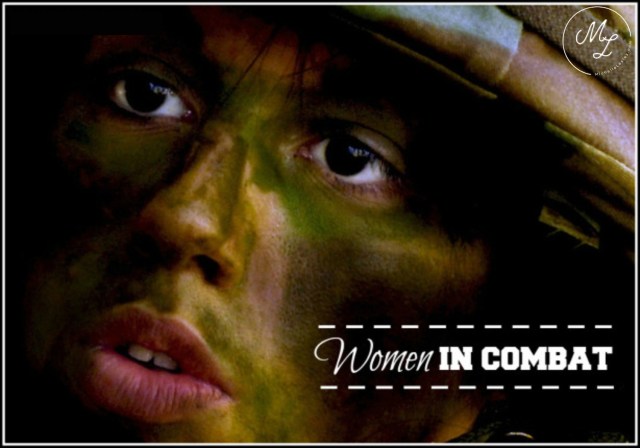
Women In Combat

Over the last few months, thereโ€™s been a lot of talk about the possibility of future U.S. military drafts including young women in addition to young men. Iโ€™ve admired godly male friends who have spoken out vehemently against this and expressed concern about the government trying to press their daughters or wives into service. Some even vowed to lay their lives down protecting their women from having to face the horrors and dangers of war.

But I wonder if these men โ€“ husbands, fathers, pastors, elders – know that many of their wives, daughters, and sisters in Christ are already in the trenches fighting off the enemy with every ounce of our strength and every weapon at our disposal.

Itโ€™s not a war for territory or political control or freedom from dictatorial tyranny.

Itโ€™s a battle for the purity of the Bride. And the souls of our sisters.

Daily. Weekly. At church. On line. In our families. We strap on our Swords, march out to the front and engage in hand to hand combat with the Enemy.

His troops: false teachers.

His weapon of mass destruction: false doctrine.

Sometimes we stand as a shield between grenade-lobbing grunts and weak sisters who donโ€™t know how to fight, or even that theyโ€™re in a war. Who want nothing more than to knock us down into the mud as they desert our King and join our foes.

Sometimes we infiltrate the enemy camp to bring back intelligence on his troops to our commanders and generals, only to be ignored, reprimanded, or dishonorably discharged from the unit.

Sometimes we stand as guards at the walls of our churches, watching the adversary advance, sounding the alarm, and standing in stunned disbelief as our commanding officers smilingly welcome the enemy troops through the gate.

Why? Why, in a field of pink, are there so few Green Berets? Why is it that so many women are out on the front lines battling this insidious rival while most of our brothers in arms seem to be AWOL?

men1

As Steve Lawson famously said a few years ago, “Give us some men who know the truth!”

And to that I respond with a hearty amen. But with much love and respect to Brother Steve, I would add:

Give us some men who will DEFEND the truth.

And the weak women the enemy seeks to capture.

And the strong women who should be protected, working safely away from the line of fire to support the troops and nurse the casualties back to health.

Give us men who willโ€ฆ

โ€ฆthoroughly vet any curricula, books, or materials used by their churchโ€™s Bible study classes.

โ€ฆtrain all of their churchโ€™s teachers to properly handle and exegete the word of God.

โ€ฆtake a close look at the authors of the books and blogs their wives or church members are reading and the speakers at the conferences and retreats theyโ€™re attending.

โ€ฆexamine the doctrine of the singers their daughters or youth listen to and the leaders of the youth camps they attend.

โ€ฆspeak out with godly boldness (not jerkiness- godly boldness) against false doctrine and false teachers on social media, in Sunday School, in the sanctuary, in their homes, and in every arena in which they have influence.

โ€ฆjoin the few brave brothers who are already standing in the gap to present a united front to ward off the enemy.

Godly men on active duty in their churches, homes, and in the public square are out there. Iโ€™m privileged to know several. But they need a bigger band of brothers to join them in fighting the good fight.

We need men who will gird up, gear up, and stand up. Because some women in combat are wounded, battle fatigued, and in need of some R&R. And we canโ€™t keep fighting this battle without a few more good men.

1 cor 16 13

Christian women, Ministry

Mary and Martha and Jesus and Women’s Ministry

You remember the story. Jesus comes to Mary and Martha’s house. Martha’s Pinteresting up the place while Mary sits at Jesus’ feet to listen to Him teach. Martha gripes to Jesus that Mary should help her and Jesus says no because it’s better for her to listen to Him than fold napkins into the shape of swans or whatever. Moral of the story- Martha needs to relax and not let other things distract her from Jesus.

Thatโ€™s a good, true, and important takeaway from this passage, and one that we would all do well to heed.

But did you ever stop to think that Mary and Martha arenโ€™t the main characters in this story? Jesus is. Jesus is the main character in every Bible story, so our primary focus should always be on Him: what He said and did and was like.

Did you ever stop to think that Mary and Martha arenโ€™t the main characters in this story? Jesus is.

What was Jesus teaching that day at Mary and Marthaโ€™s house? The passage doesnโ€™t tell us the topic He was speaking about, but we are privy to a very important lesson He imparted through the scenario with Mary and Martha. A lesson about the way God loves and values women.

Remember how women were generally regarded at that time? They didnโ€™t have much more value than livestock, furniture, or a manโ€™s other possessions. They were considered intellectually inferior, they werenโ€™t formally educated, and their legal and social standing were often tenuous at best. They could not go beyond the Court of the Women at the temple for worship. There was even a traditional prayer Jewish men recited in which they thanked God for not making them a woman, a Gentile, or a slave. Women were low man on the totem pole, so to speak.

And thatโ€™s where we find Martha. She wasnโ€™t doing anything wrong that day. In fact, in her culture, she was doing everything right. If anything, Mary would have been the one viewed as being in the wrong because the teaching was for the men, and it was the womenโ€™s job to bustle around taking care of all the hospitality duties. Martha knew this. Mary knew this. Jesus knew this. Everyone else present knew this. Martha must have wondered why someone hadnโ€™t yet shooed Mary out of the living room and into the kitchen. So her statement to Jesus in verse 40, โ€œLord, do you not care that my sister has left me to serve alone? Tell her then to help me,โ€ was probably not just, โ€œI need another pair of hands,โ€ but also a bit of, โ€œMary is forgetting her place. This isnโ€™t what proper women do.โ€

Oh yes, it is.

Whatever else He might have been lecturing about that day, that was one of the lessons Jesus taught Mary, Martha, the rest of their guests, and Christendom at large.

Women arenโ€™t second class citizens in the Kingdom of God. We are precious and valuable to Him. He has important, worthwhile work for us to do โ€“ His way – in the body of Christ. And He wants us trained in His Word in order to carry out that work.

How did Jesus teach that lesson?

First, He allowed Mary to stay and receive His teaching (39). (We see this echoed in Godโ€™s instruction to the church in 1 Timothy 2:11: โ€œLET a woman learnโ€ฆโ€) It hadnโ€™t slipped Jesusโ€™ mind that she was sitting there. He could have told her to leave, but He had no intention of doing so. Jesus wanted Mary there. He wanted to teach her and to have her learn Godโ€™s word from Him.

Next, when someone tried to take Mary away from hearing and being trained in Godโ€™s word, Jesus โ€“ God Himself โ€“ answered with a resounding NO. This โ€œwill not be taken away from her,โ€ Jesus said. Mary, and Martha too (41), could arrange centerpieces or turn a cookie into a work of art any time or never. But this, the teaching of Godโ€™s Word, was urgent. Vital. Jesus didnโ€™t want either of them to miss it by focusing on the trivial things they thought they should be pursuing.

And He doesnโ€™t want us to miss it either, ladies.

Jesus pulled women out of the craft room and into the study. Is the womenโ€™s ministry at your church trying to pull them back?

Jesus pulled women out of the craft room and into the study. Is the womenโ€™s ministry at your church trying to pull them back?

Is the womenโ€™s events page on your churchโ€™s web site filled exclusively with painting parties, fashion shows, ladiesโ€™ teas, and scrapbook sessions?

Does your womenโ€™s ministry do canned โ€œBibleโ€ studies authored by women who offer nothing but personal stories, experiences, and false doctrine?

Are the Marys in your church who want to sit at the feet of Jesus and hear His word rightly handled and taught being scolded by the Marthas for not staying in their place and embracing the banality the womenโ€™s ministry is doling out?

Are the Marys in your church who want to sit at the feet of Jesus and hear His word rightly handled and taught being scolded by the Marthas for not staying in their place and embracing the banality the womenโ€™s ministry is doling out?

Is this it? Is this all women are good for in the church- fluff and false doctrine?

Jesus didnโ€™t think so.

Letโ€™s have our women’s ministries train women in the full scope of biblical womanhood. Let’s be serious students of Godโ€™s Word by picking it up and studying it like mature women. Letโ€™s get equipped to teach and disciple other women who are babes in Christ. Letโ€™s share the gospel with the lost. Letโ€™s learn how to train our own children in the Scriptures and be the ones to raise the bar for what the kids at our church are being taught. Letโ€™s roll up our sleeves and get our hands dirty ministering to those who are ill, in prison, lonely, poor, elderly, considering abortion, experiencing crisis; who have wayward children, problems in their marriages, a parent with Alzheimerโ€™s, or have lost a loved one.

Is this it? Is this all women are good for in the church- fluff and false doctrine?

Women are worth more and capable of more than the bill of goods theyโ€™re being sold by โ€œChristianโ€ retailers suggests. More than cutesy crafts and fairy tales masquerading as biblical teaching. Letโ€™s put the โ€œministryโ€ โ€“ ministry of the Word and ministry to others โ€“ back in โ€œwomenโ€™s ministry.โ€

Women are worth more and capable of more than the bill of goods theyโ€™re being sold by โ€œChristianโ€ retailers suggests.