What a summer! From a lovely trip to visit with my family to the Open Letter to Beth Moore (by the way, ladies, you can still sign it if you haven’t already) to podcast interviews to a hurricane (everything’s fine, thanks – praise God!) to both of my young adult children’s cars dying in the same week and my husband and me playing chauffeur for them (please pray that God will provide the vehicles they need), my summer has been a non-stop whirlwind. I can’t believe next week will already be August!

Let’s jump into some Random Ramblings, Ruminations, and Resources, shall we?

Light (Blog) Housekeeping
 If you’re relatively new to the blog, you might not be aware of all the features and resources available to you here. Check out Blog Orientation for New Readers and Old Friends.
But even if you’ve been around a while, I’ve updated a few things you might not have noticed:
I’ve changed the Popular False Teachers tab (at the top of this page) to Popular False Teachers & Unbiblical Trends. That’s because I’ve added resources on the Enneagram and I’m planning to add info on more unbiblical trends in the future. I’ve also added information on MOPS to this tab in case I forgot to mention it.
I think The Servanthood Survey (published last week) is going to be a helpful resource for churches (and individuals), so I created a new tab to have that always at the ready.
If you’ve used my discernment article on Beth Moore lately, you may have noticed that it has a new look. I’ve changed the title and the introduction, fixed broken links and added a few new ones, and added some updated material, but it’s still the same article with the same link: Living Proof You Should Follow Beth (No) Moore.
Recently, I was put in “Facebook timeout” (I couldn’t post to my Facebook page from certain devices) for sharing what the powers that be deemed to be “hate speech” – a meme that quoted 1 Timothy 2:12. If you’re on Facebook, you’re probably hearing more and more about things like this happening to Christians for posting biblical views (no matter how kindly worded).
As many are predicting, there will probably come a time when Christians who share biblical posts will be banned from Facebook. In case something like this happens to me, I’ve opened up a MeWe page. MeWe is a social media platform that’s extremely similar to Facebook, except they pride themselves on their customer service, their  privacy policy, and their “no political agenda” policy (meaning they don’t censor every little thing like Facebook does). If you’re familiar with Facebook, you’ll find MeWe’s interface nearly identical, plus it has a few neat features Facebook doesn’t have.
If you’d like to connect on MeWe, set up an account, then, just search Michelle Lesley, or go directly to my page and click the “add contact” button. If you’d rather do it later, I’ve added a link to my MeWe page to the Contact and Social Media tab at the top of this page.
And finally, would you like to write up a testimony (anything from a paragraph to a full length article) for Testimony Tuesday or an article or book review for a guest post? If your theology pretty much matches up with mine (see the Statement of Faith and Welcome tabs at the top of this page), look over the articles at these two links to get a feel for what I’m looking for and drop me an e-mail so we can chat about it.
Book Report
I’ve mentioned before that I don’t write solicited book reviews, but there are extremely rare circumstances in which I will break that rule. There are also occasions when I will pick up a book of my own volition and commend it to you if I end up liking it. Today, you’re getting one of each.
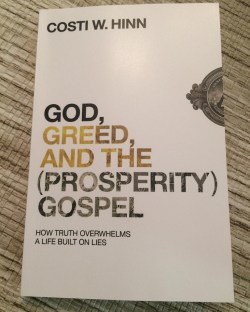
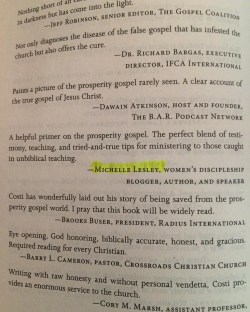
A few months ago, Costi Hinn reached out and asked if I’d read and write an endorsement for his new book, God, Greed, and the (Prosperity) Gospel. While his first book, Defining Deception, was an instructional introduction to the history and doctrine of the New Apostolic Reformation, I had been keeping up with Costi, and I knew that this second book was going to approach NAR/prosperity gospel false doctrine from the perspective of his personal testimony of growing up in (and being saved out of) Benny Hinn’s “ministry”. I had already heard Costi’s testimony several times and I knew my readers would find it encouraging and edifying. God, Greed, and the (Prosperity) Gospel did not disappoint, and it is my joy to commend it to you:
A helpful primer on the prosperity gospel. The perfect blend of testimony, teaching, and tried-and-true tips for ministering to those caught in unbiblical teaching.
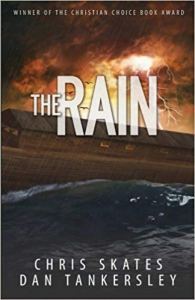
My two favorite genres of fiction are biblical historical fiction, and legal/political thrillers. Chris Skates writes both, so I’m looking forward to reading more of his books.
In order for me to enjoy a work of biblical historical fiction (a fictionalized account of a true Bible story), it has to be true to everything Scripture actually says happened (events, dialogue, chronology, etc.), and whatever the author “fills in the blanks” of the biblical account with has to be biblically and culturally plausible, and must not directly contradict clear Scripture.
Chris accomplished this beautifully in his first book, The Rain, his rendition of Noah and the ark. Chris paints a grim picture of a debauched society that refuses to repent. Noah’s wife and daughters-in-law receive names, and we get to imagine what they and Ham, Shem, and Japheth might have been like. It was interesting to ponder along with the story just how long, tedious, and treacherous the journey on the ark was. And let’s not forget the lack of light and air conditioning and…well…the lovely smells of all those animals!
The Rain is a fun, leisure time read. I think you’ll like it if you enjoy biblical historical fiction.
Stop Jumping the Gun
Y’all know I’m all about discernment, right? I mean, I think my track record speaks for itself. But there’s an area of discernment we all need to get serious about right quick.
It’s that “right quick” part. We need to stop being reactionary and haphazardly tossing the “false teacher” label (or other spiritual aspersions) around any time somebody says something that causes us to raise an eyebrow, especially when that person has an impeccable record of sound doctrine, faithful preaching, and contending for the faith once for all delivered to the saints.
Since Tuesday’s release of the Founders Ministries cinedoc trailer By What Standard? God’s World…God’s Rules, I have been appalled at the rush to judgment regarding Tom Ascol and Albert Mohler. Neither of these brothers has committed any clear-cut sin, but I want to put the details of the accusations aside and focus on the general principle of jump-the-gun aspersion-casting against these two men and others like them.

Each of these gentlemen, as well as Founders Ministries itself, has a decades-long track record of being doctrinally sound and fighting the good fight for biblical truth – longer than some of you younger sisters have been alive. They, and other pastors, teachers, and folks in long-time doctrinally sound ministry, have earned the right to have brothers and sisters in Christ – especially mature and discerning brothers and sisters in Christ – give them the benefit of the doubt when no clear-cut sin has been committed.
Obviously, when we’re talking about high profile pastors and teachers we don’t know personally, this isn’t a local church issue, but I think we would do well to remember the principles behind 1 Timothy 5:17,19-20.
Let the elders who rule well be considered worthy of double honor, especially those who labor in preaching and teaching…Do not admit a charge against an elder except on the evidence of two or three witnesses. As for those who persist in sin, rebuke them in the presence of all, so that the rest may stand in fear.
We rebuke those who persist in sin in the presence of all. We do not make off the cuff accusations, based on a single “iffy” incident or presumptions, against doctrinally sound elders who have proven themselves faithful through the years. And we also need to remember that in situations like these we don’t know the whole behind-the-scenes story. I think we could extend some grace, give them the honor and respect Scripture says they’re due, and reserve judgment until sin is committed or the incident is resolved.
Scripture calls us to be better than this to our elders. Let’s live up to that.
Is it really God’s judgment?

My daughter texted me this shortly after the recent earthquake in California. And when your heart of hearts asks you to write an article, you write an article! (Only I didn’t think it needed to be as long as a full article, so you’re getting it here instead, Sweetie.❤)
For those of us who don’t live in California, some of the news stories we hear about the sinful things going on there leave us slack-jawed. And for Christians, our frame of reference for gobsmacking sin is the Old Testament. God dealt with sin in some pretty intense ways in the OT, not the least of which, in one case, was causing the ground to split apart and swallow sinners alive. So I guess there is precedent for God using an earthquake to deal with sin. Is it possible the earthquake in California was God’s judgment upon their sin? Yes, it’s within the realm of possibility.
However, that kind of judgment is not normative, especially after the cross, and there are a lot of holes in that theory. If you’re tempted to use the line of reasoning that a natural disaster is, definitively, God’s judgment on California (or any other place) for their sin, could I just encourage you to think through the following points?
•In the past few months New York and Illinois have both passed hideous, from-the-bowels-of-hell laws protecting the sins of abortion and infanticide. Where are their earthquakes?
•Louisiana just passed one of the most abortion-restrictive laws in the nation. And then we had a hurricane. Was that storm a judgment on Louisiana?
•If “it is time for judgment to begin at the household of God…” (1 Peter 4:17), why wasn’t Redding, California – where Bethel “Church” is located – at the epicenter of the earthquake?
•Is it God’s judgment on sin if a tornado hits a doctrinally sound church in the Midwest?
•North Korea has been at the top of the list for years as the world’s worst persecutor of Christians. Why don’t we ever hear about natural disasters there?
•There are scads of doctrinally sound churches (including John MacArthur’s church) and Christians in California. Wouldn’t God protect California on their account or at least get them out of California before He exercises judgment there? There’s biblical precedent for that, too.
I don’t think we can biblically say that a natural disaster is definitely God’s judgment on California’s, or any other state’s or nation’s sin. God will judge the world in righteousness when Christ returns. Until that time, what we can biblically say about natural disasters is that they are the result of the Fall. And that sometimes they’re the best thing in that could ever happen to someone. Because sometimes during a natural disaster, people hear the gospel or cry out to God and get saved.